



Die Geschichte von Aalborg Synagogue
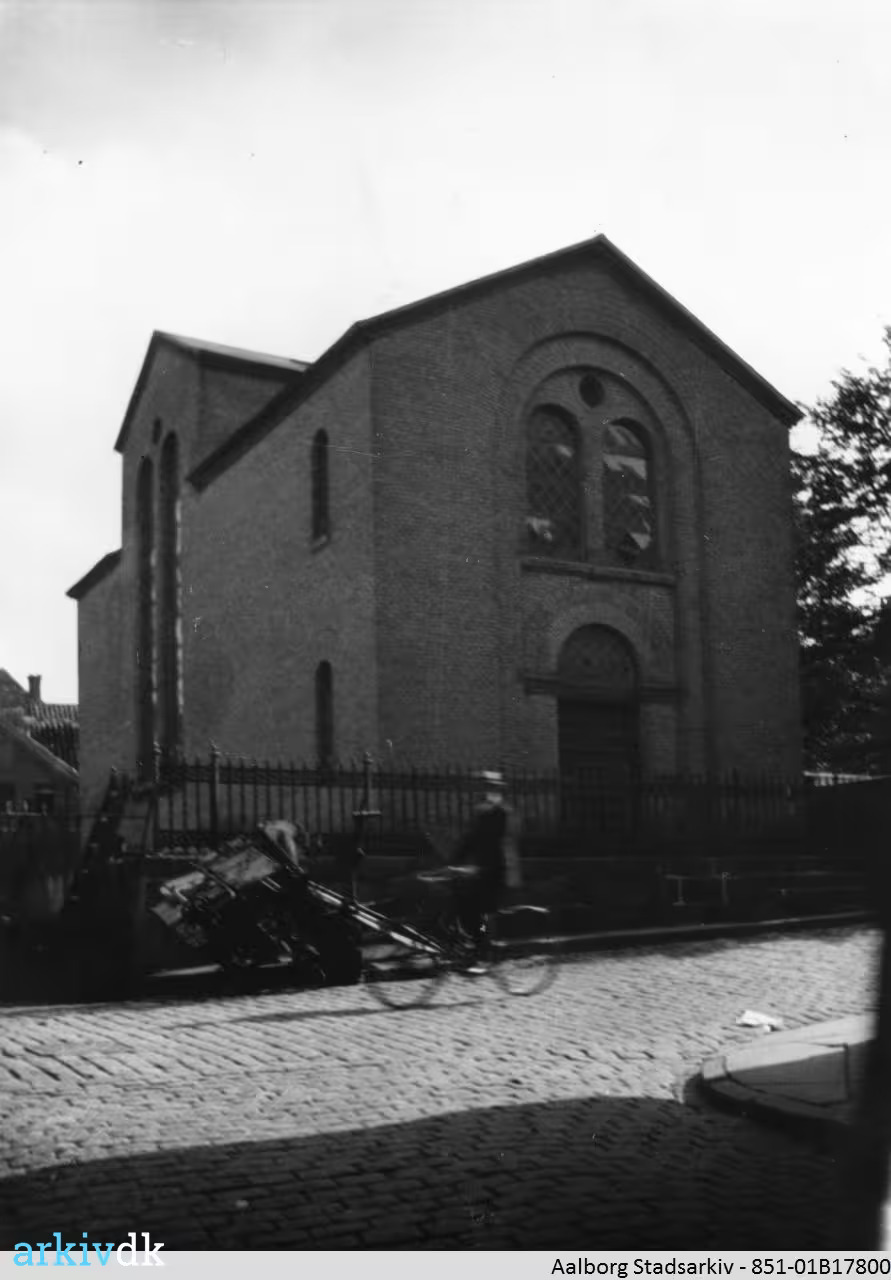
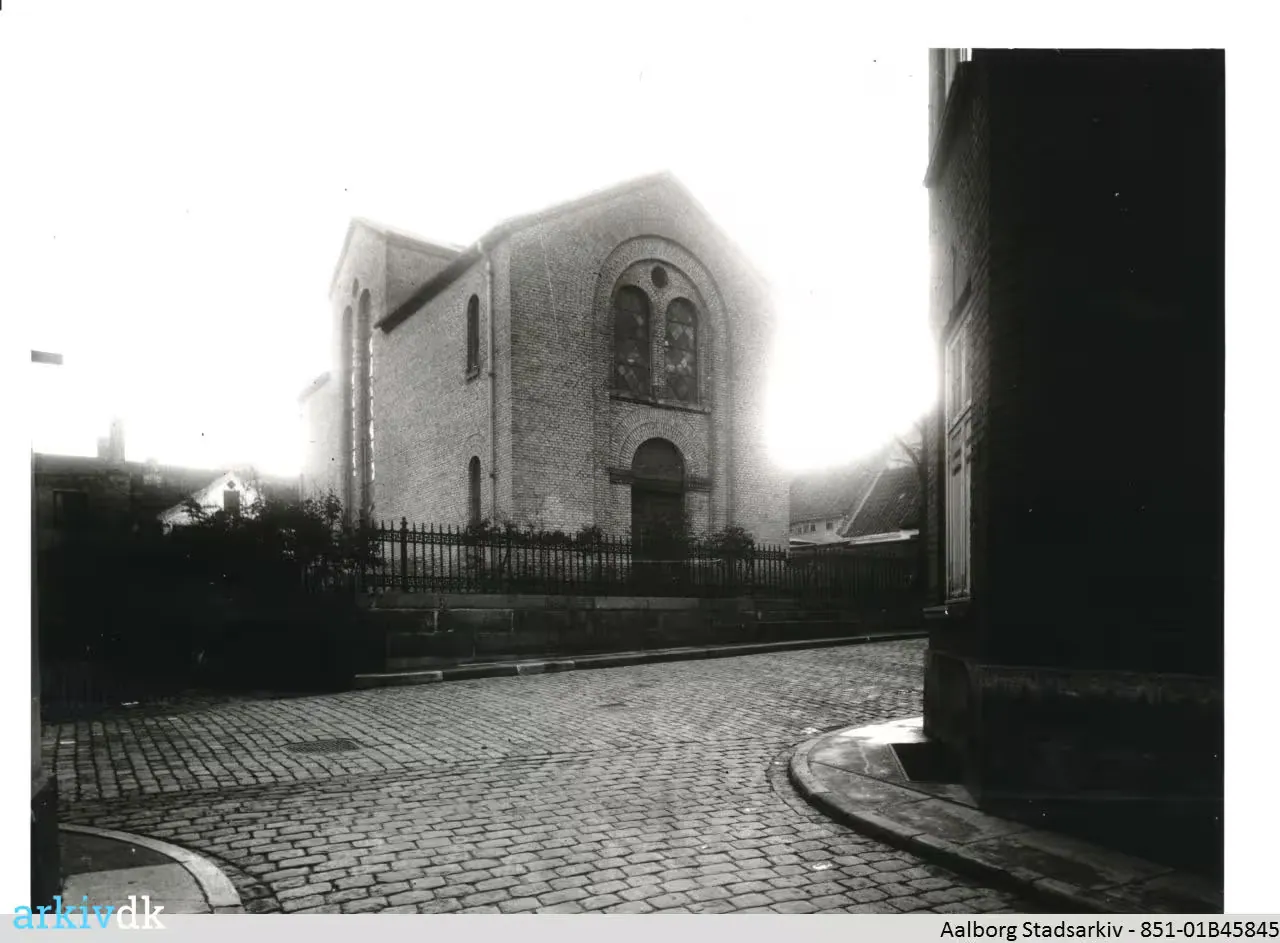
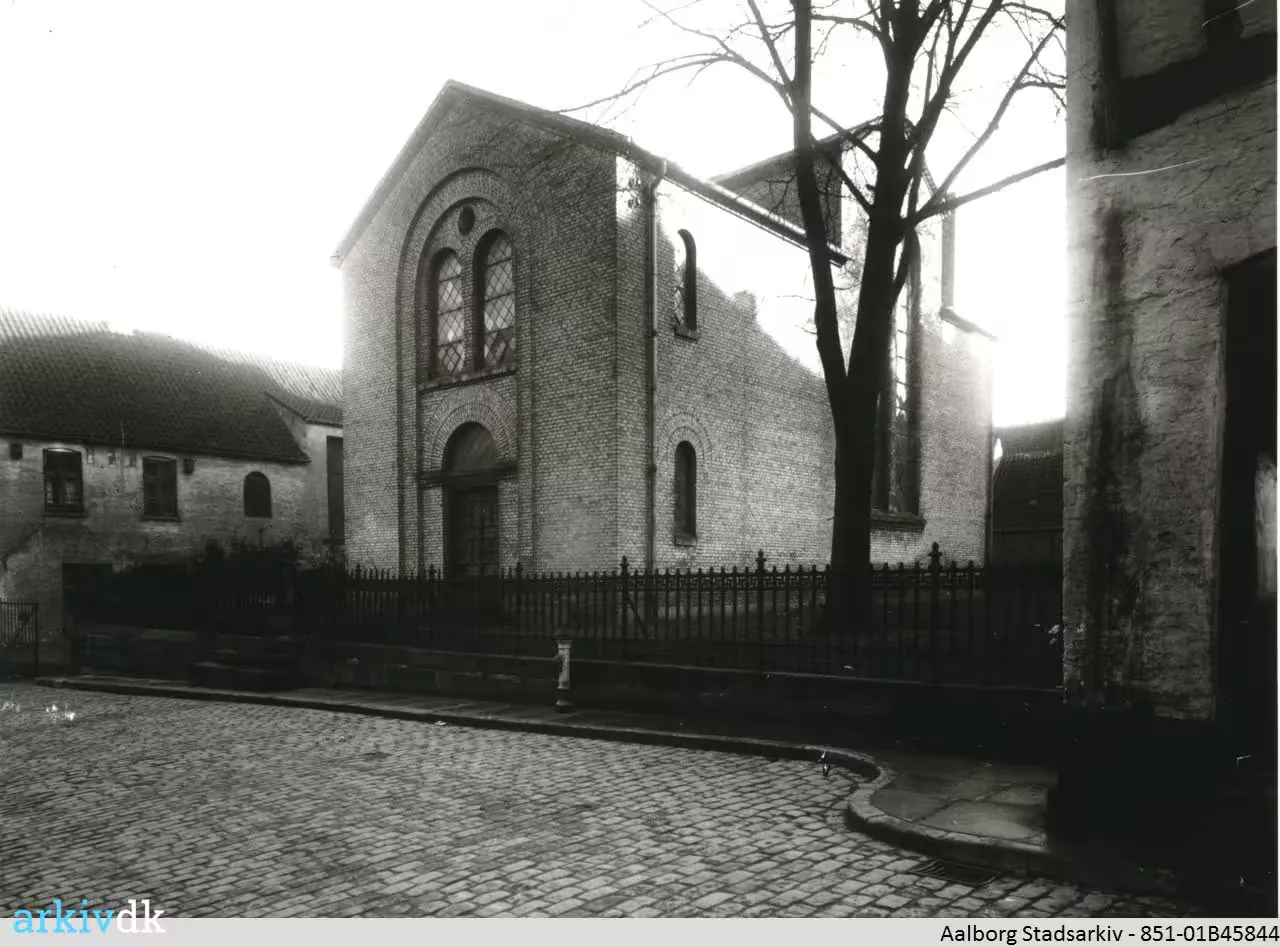
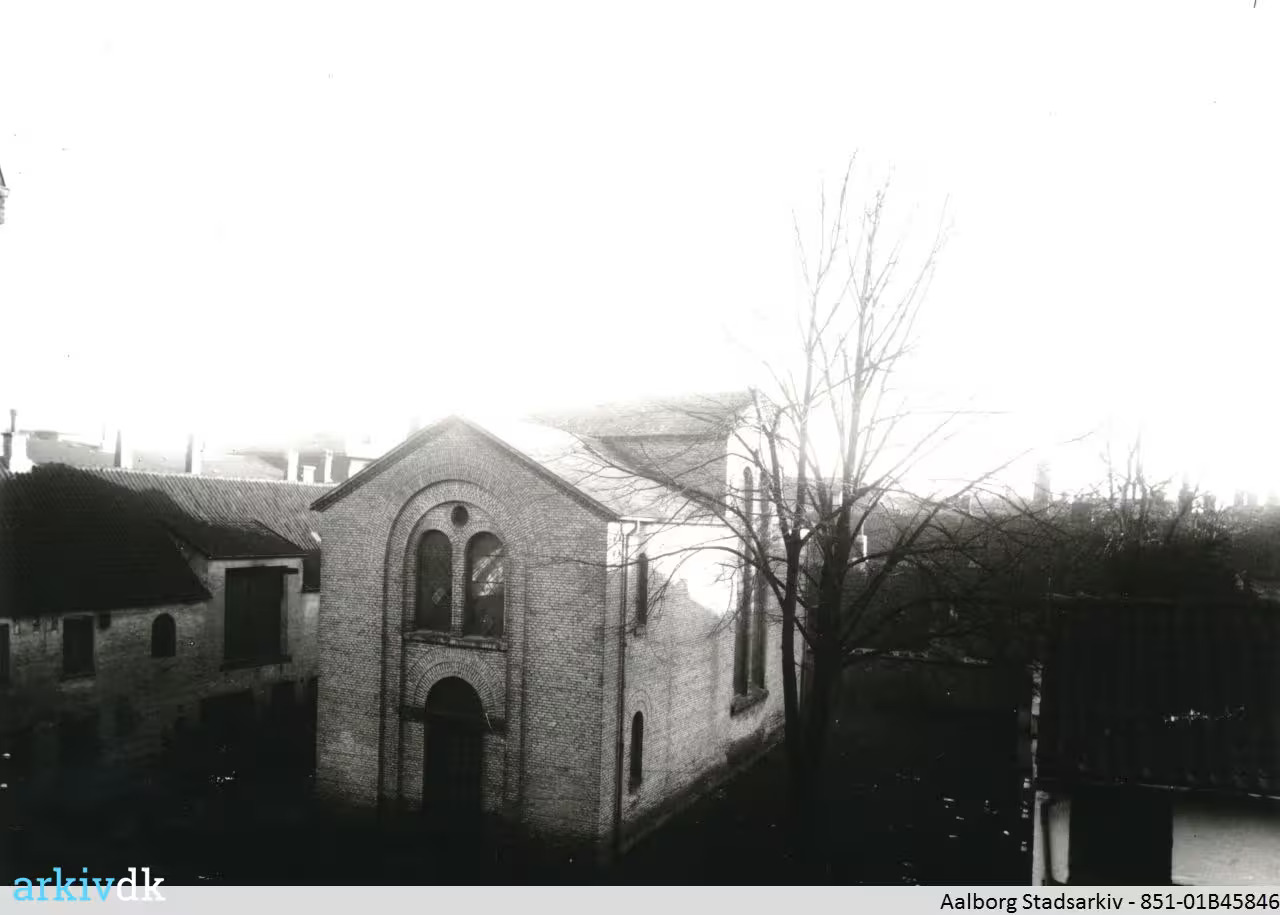
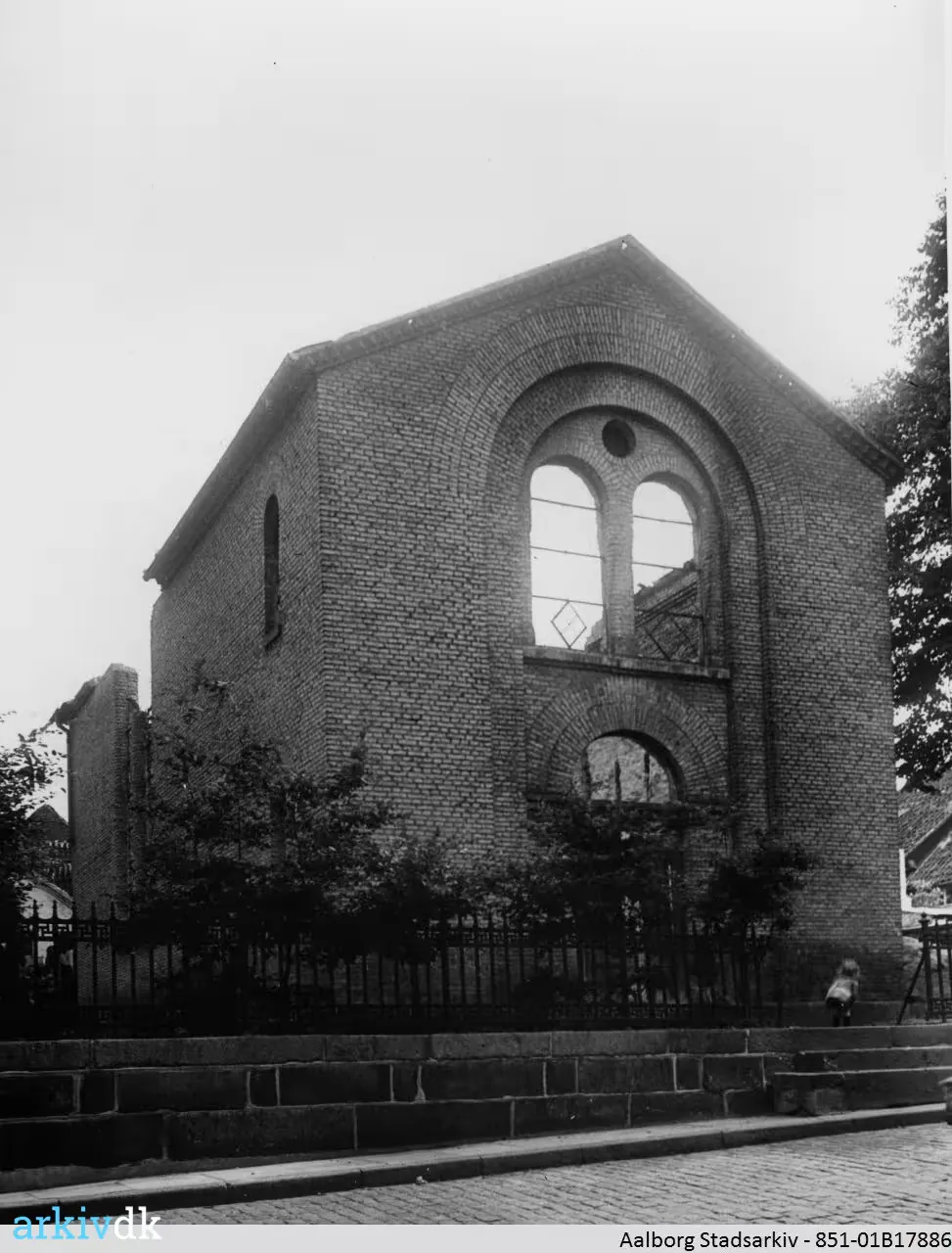
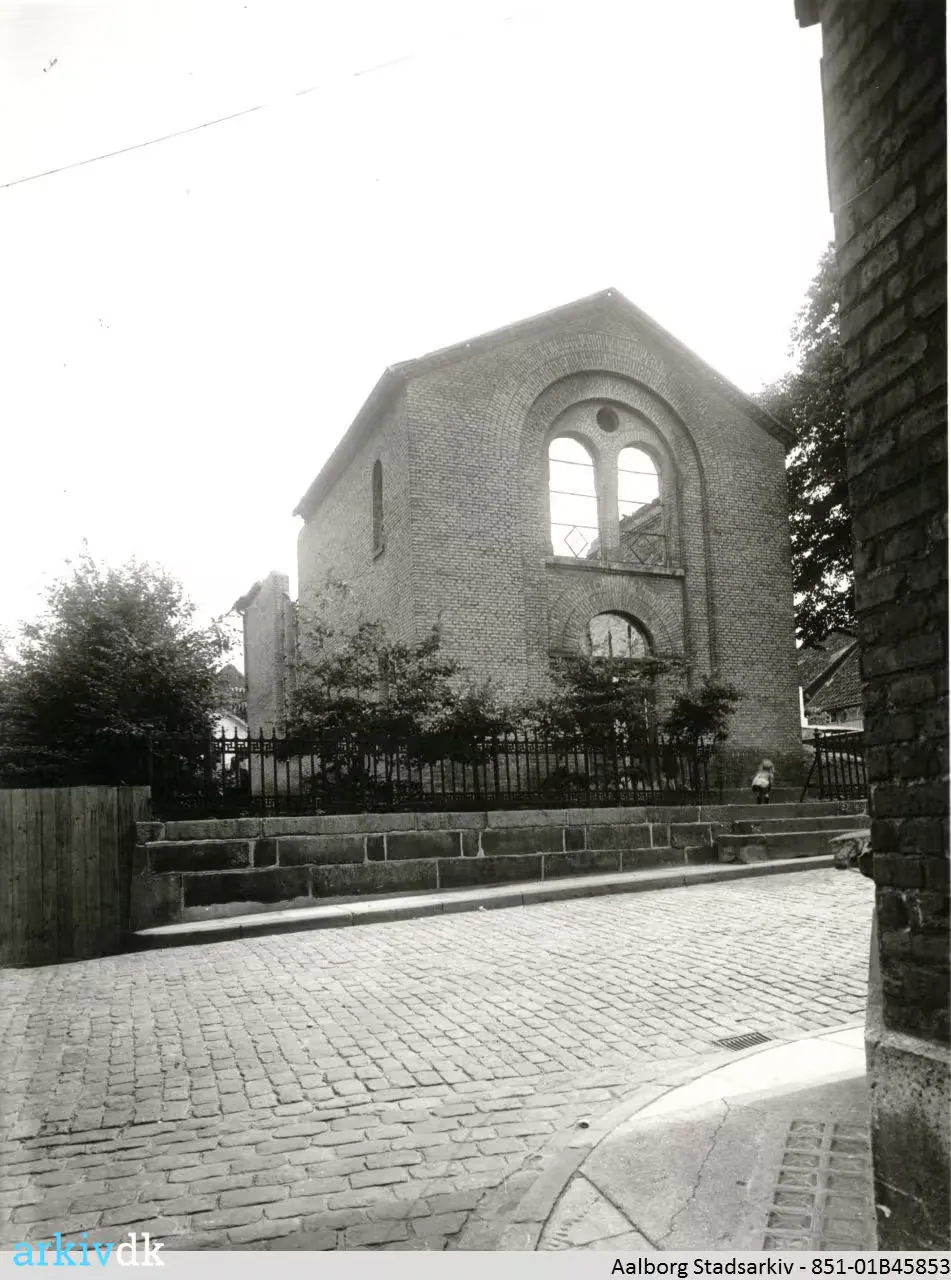
Jews settled in Aalborg from 1807, when the merchant Aron Jacob moved there from Viborg and asked permission to hold services. The community never grew large: it counted 119 people in 1834 and 123 in 1854, the year it built its synagogue. The building stood on Gråbrødregade at the corner of Synagogegade, the small street named after it, behind the houses of Østerå in the old town. It was a free-standing brick hall with a tall gabled front and round-arched windows, set behind an iron railing on a stone base.
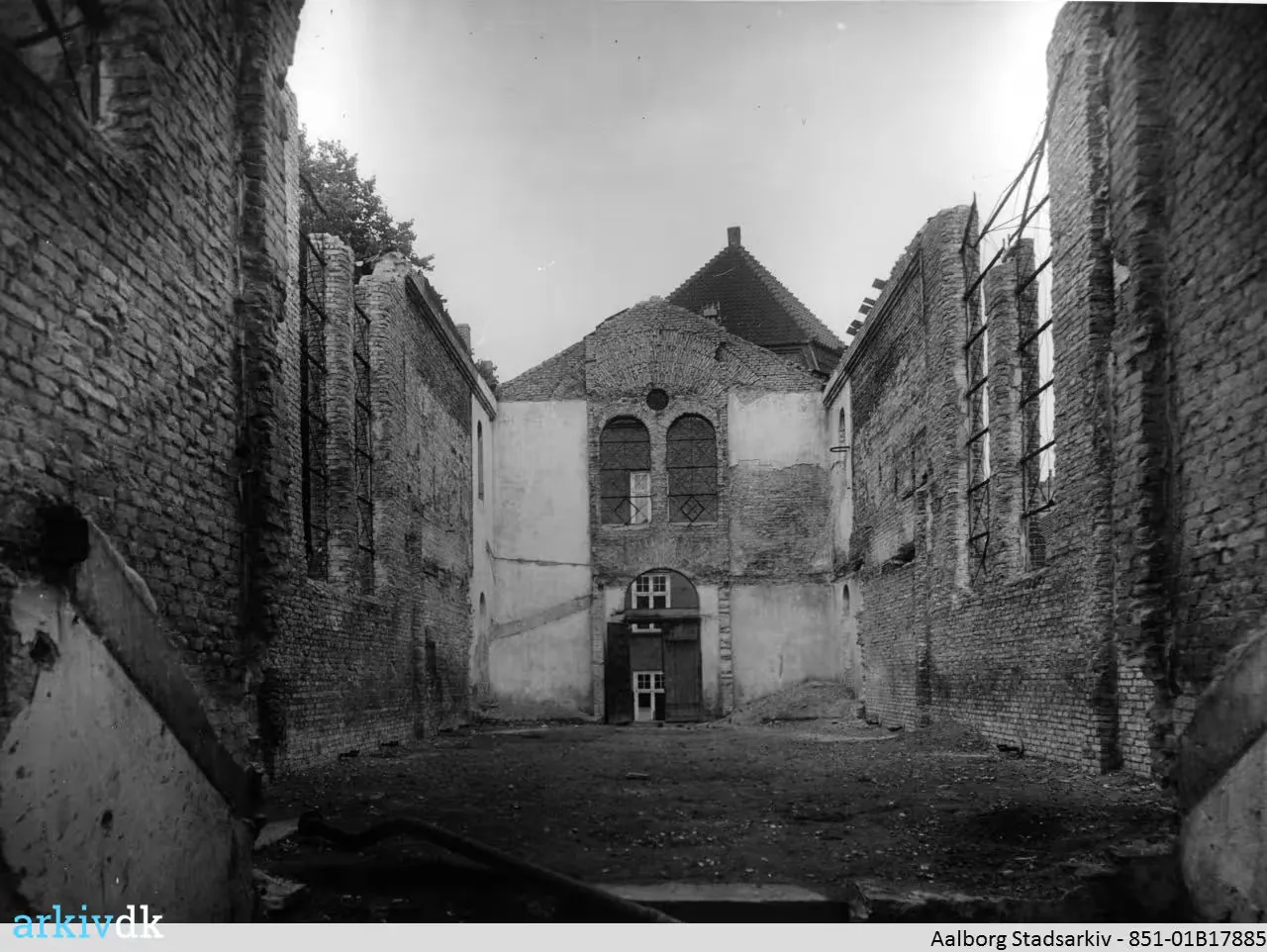
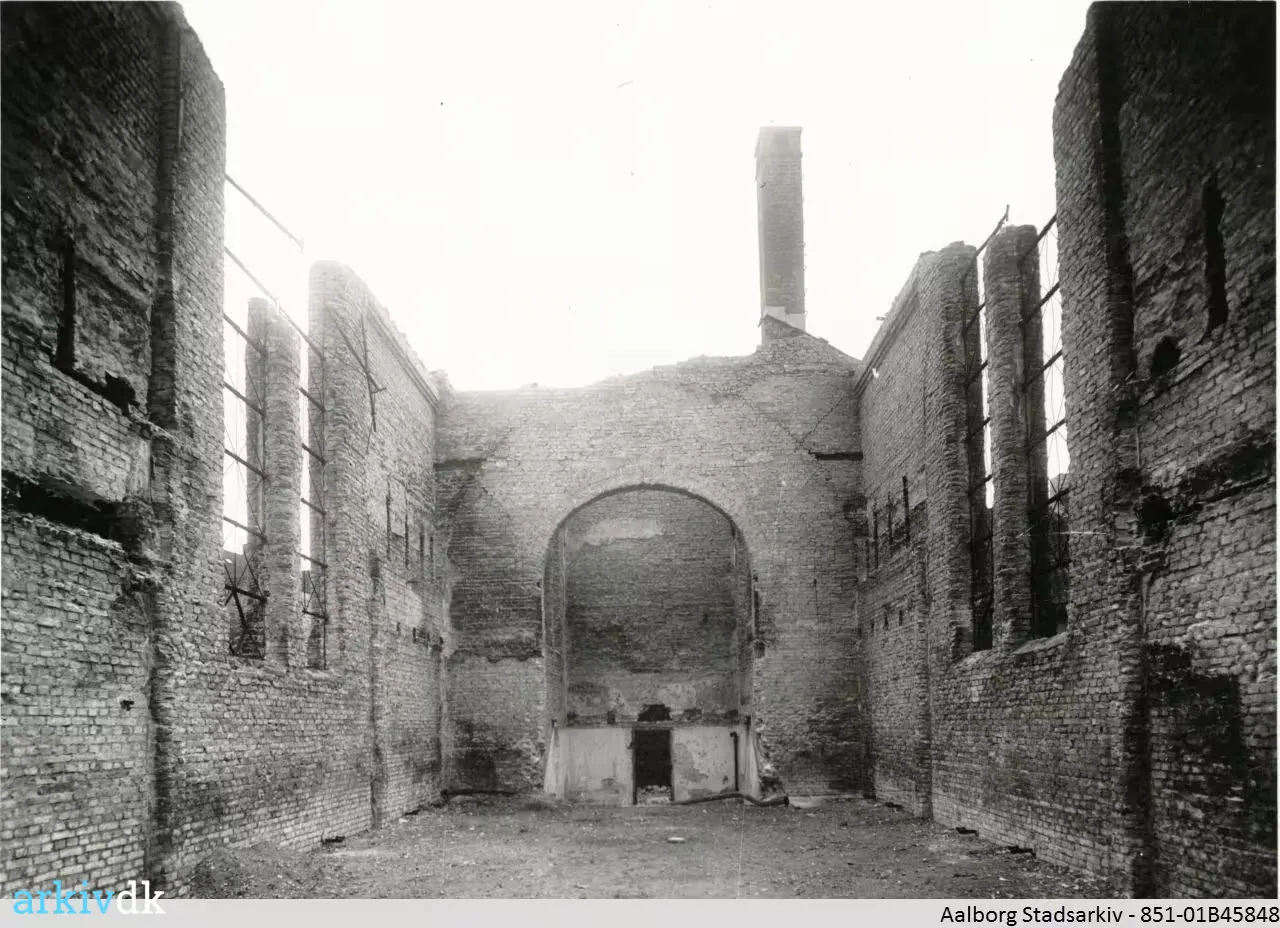
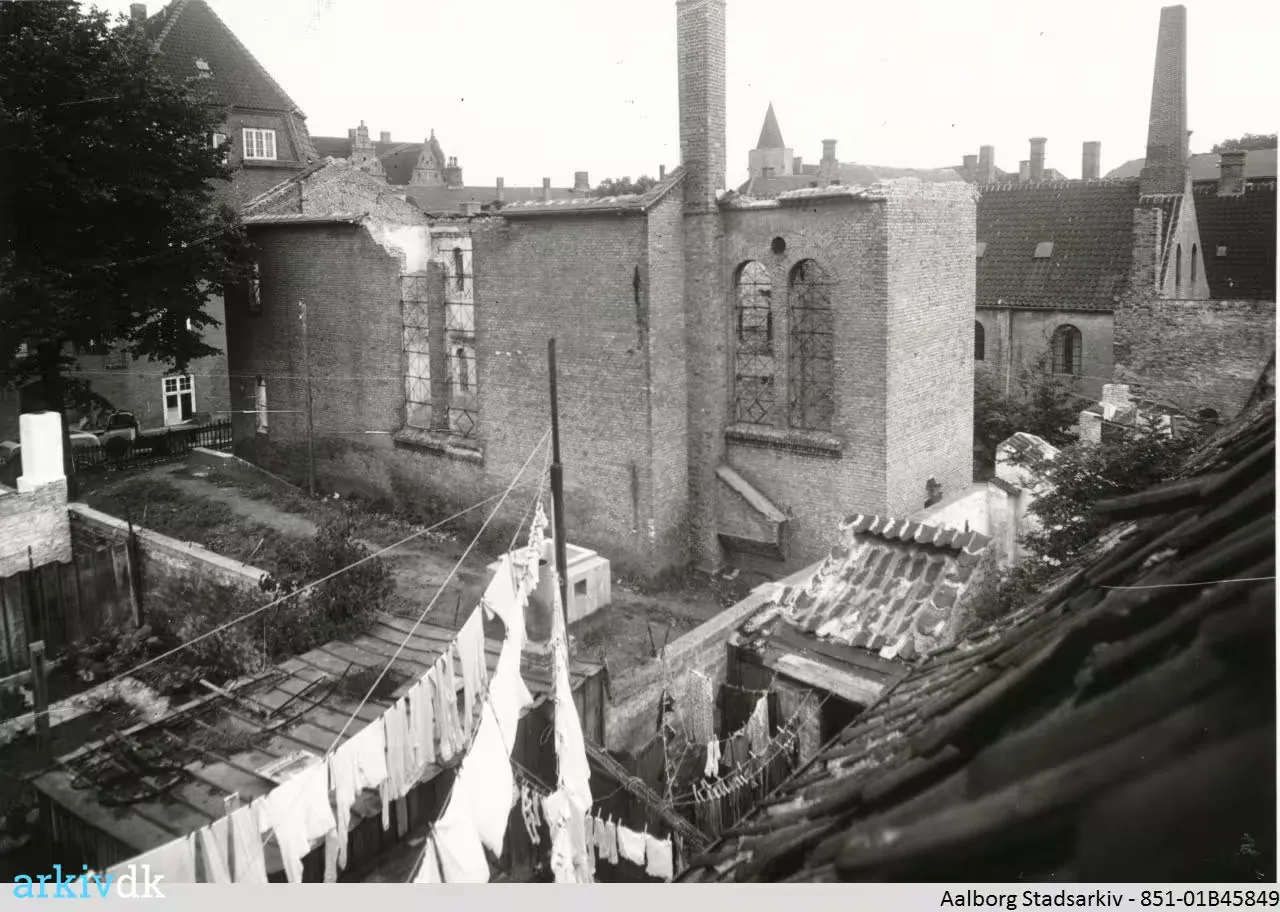
Salomon Mielziner, officially titled the community's 'Jewish priest', took up office in the year the synagogue opened and served for some 35 years. As in many Danish provincial towns the congregation then dwindled, and regular services ended in the 1880s. In 1924 the building was given to the municipality, which fitted it out as the Aalborg City Archives while keeping its galleries and chandeliers. On 19 March 1945, in the last weeks of the Nazi German occupation, a gang led by the informer Frantz Toft and described as members of the Schalburg Corps blew up and burned the building as a reprisal action. The fire gutted it and destroyed the archive inside, leaving only a roofless brick shell.
Where it stood for 91 years
Historic: Gråbrødregade, corner of Synagogegade, behind Østerå 6, Aalborg (house number unknown). Today: junction of Gråbrødregade and Synagogegade, 9000 Aalborg (approximate).
Größere Karte öffnen →Die jüdische Gemeinde
The first Jew known to have settled in Aalborg was Aron Jacob, also called Jacobsen, a merchant from Frederiksstad (Friedrichstadt) in Schleswig. In 1799 he received permission to live in Viborg, where a small group met for prayer in a rented room, and in 1807 he moved to Aalborg. Together with the merchant Henrik Wulff Bendix he applied for leave to open a synagogue; Rafael Hartvig Cohn, also of Aalborg, sent a rival application, and the government chancellery refused to decide until the two parties came to terms. The community's cemetery was in use by 1810: Aron Jacob's daughter Phillippine was the first person buried there, on 14 February 1810. The congregation had 119 members in 1834 and 123 in 1854. The Danish Jewish Museum names the spirits manufacturer Isidor Henius (1820-1901) and Bernhard Rée (1813-1868), editor of the newspaper Aalborg Stiftstidende, among the Jews of nineteenth-century Aalborg. Like many provincial Danish communities it declined in the later nineteenth century; the sources found do not give later membership figures.
Architektur und Gestaltung
The architect is unknown. Photographs taken between about 1910 and 1930 show a free-standing, gabled hall of exposed brick with its entrance front on Gråbrødregade. The front was framed by a large round arch rising almost to the gable; inside it sat a pair of tall round-headed windows under a small round opening, and below them a round-headed doorway reached by a few steps. The long side walls had tall round-arched windows. A cast-iron railing on a dressed stone plinth enclosed a narrow forecourt planted with shrubs, and the street around it was cobbled. Two interior views taken on 20 May 1933, when the building was the city archives, show a galleried hall: a gallery with a geometric fretwork balustrade ran along the sides on square piers, reached by stairs, and tall windows glazed in small diamond panes rose behind it. The east end was closed by a broad arch. Brass chandeliers hung from the ceiling. The seating capacity is unknown, and no photograph of the Torah ark in place was found.
Leben in der Synagoge
The synagogue served a small congregation, counted at 123 people in the year it opened. From its opening in 1854 the religious leader was Salomon Mielziner, who held the official Danish title of 'Jewish priest' and served the community for about 35 years. The Jewish Encyclopedia calls him minister in Aalborg and names him as a brother of Moses Mielziner. The community kept its own burial ground, used from 1810 until 1968; its tombstones carry Hebrew inscriptions that were later translated into Danish by Julius Margolinsky. After Mielziner's long tenure no successor is recorded in the sources found. Services in the synagogue ended in the 1880s: the city archives give 1884 as the last year the Mosaic community used the building, while the JewishGen account says there were no services from 1890. The building then stood without regular use for more than three decades, until it was donated to the municipality in 1924. The city kept the interior fittings, and the 1933 photographs show archive shelving set between the galleries under the old chandeliers.
Zerstörung
On 19 March 1945 the former synagogue, then holding the Aalborg City Archives, was destroyed by explosion and fire. Captions on contemporary photographs in Aalborg Stadsarkiv, taken from the local wartime chronicle 'Vor vej til 5. maj', call the attack a schalburgtage, the name Danes gave to the reprisal bombings carried out by Danish Nazi collaborators in German service, and say the gang that carried it out was led by the informer Frantz Toft. The JewishGen account states that members of the Schalburg Corps, a Danish SS-affiliated collaborationist corps, set the building on fire. According to the chronicle, all the drawings of Aalborg harbour, which the Nazi German authorities had repeatedly tried to obtain, were destroyed with the archive. Photographs from March 1945 show the roof and interior completely burned out, leaving only the brick walls and the front gable standing around a heap of rubble. Who later cleared the shell, and when, is not recorded in the sources found.
Das Schicksal der Gemeinde
The congregation had already dwindled away before the synagogue was destroyed. Regular services ended in the 1880s and the building passed to the city in 1924, so no congregation was using it in 1945, and the attack destroyed a municipal archive in a former synagogue rather than a working house of prayer. No source read in this research gives the number of Jews living in Aalborg in the 1930s, or records what happened to them during the Nazi German occupation of Denmark. The Schalburg Corps itself took part, alongside the German security police, in the action against Denmark's Jews in October 1943. The Jewish cemetery of Aalborg, opened in 1810, remained in use long after the synagogue closed: about 149 burials are known there, the last on 12 June 1968. Its stones, including that of the founder Aron Jacobsen, have been photographed and their inscriptions translated. Jewish life in the town in the nineteenth century is now presented by the Danish Jewish Museum in a travelling exhibition.
Der Ort heute
The synagogue stood on Gråbrødregade at its corner with Synagogegade in the old centre of Aalborg, behind the houses on Østerå. Both street names survive: Synagogegade is today a short service lane and Gråbrødregade a pedestrian and service street in the city centre. No source found describes a building or structure of the synagogue surviving on the plot, and the 1945 fire left only a roofless shell, so the exact present use of the footprint has not been confirmed. The map pin marks the junction of the two streets as mapped in OpenStreetMap. Fixing the exact plot will need the city's cadastral maps or the 1859 street drawing in Aalborg Stadsarkiv, which marks the synagogue.
Bedeutende Namen
Salomon Mielziner
Unknown'Jewish priest' (minister) of the Aalborg congregation, from 1854 for about 35 yearsMielziner began his service to the Aalborg Jewish community in 1854, the year the synagogue was built, and held the office for some 35 years under the official Danish title of 'Jewish priest'. The Jewish Encyclopedia records him as minister in Aalborg and as a brother of Moses Mielziner, whose father was Benjamin Mielziner. His tenure covered nearly the whole working life of the synagogue, which held no regular services after the 1880s.
Biografie oder Quelle →Aron Jacob (Jacobsen)
died after 1810Founder of the Aalborg Jewish communityA merchant from Frederiksstad (Friedrichstadt) in Schleswig, Aron Jacob was allowed to settle in Viborg in 1799, where a small group prayed in a rented room. He moved to Aalborg in 1807 and with the merchant Henrik Wulff Bendix applied for permission to open a synagogue there, beginning organised Jewish worship in the town. His daughter Phillippine was the first burial in the community's cemetery in 1810, and his own tombstone survives there.
Biografie oder Quelle →Haben Sie etwas beizutragen?
Fotos, Dokumente, Familiengeschichten oder Erinnerungen an diese Synagoge und ihre Gemeinde halten ihre Geschichte lebendig.
- Aalborg (Scandinavia SIG town page)
- Schalburgtage mod synagogen (B2754)
- Synagogen i Aalborg brændt (B2607)
- Synagogen, Gråbrødregade (B45846)
- Forrest t.v. synagogen, bag Østerå 6, Aalborg (B46822)
- Synagogen, interiør fra salen; Synagogen, den østlige ende af synagogesalen, mens bygningen var Stadsarkiv (B17216, B17215)
- Tegning af gadeforløb i Aalborg 1859
- MIELZINER, MOSES
- Schalburgkorpset
- Vandreudstillingen er kommet til Aalborg
- Synagogegade and Gråbrødregade, Aalborg (OpenStreetMap ways 1348175152, 88298968)
Share a memory or thought
No comments yet. Be the first to add one.