
La storia di Central Synagogue of Aleppo
The Central or Great Synagogue stands in Bahsita, the old Jewish quarter of Aleppo, and was the main house of prayer of one of the oldest Jewish communities in the diaspora. Aleppan tradition says it was founded by Joab, King David's general, after he took the city, which Jews called Aram Soba. Historians are more cautious: the western wing, the oldest part, is dated to the 5th or 6th century CE, and the oldest surviving inscription is said to date from 834 CE. The building was destroyed in 1400, when Timur's army sacked Aleppo, and rebuilt between 1405 and 1418 on a smaller scale. After Sephardi exiles arrived in the 15th and 16th centuries an eastern wing was added for them, and the whole complex was renovated in 1855.
For centuries the synagogue housed the Aleppo Codex, the tenth-century Masoretic Bible known as the Crown of Aleppo, kept in a safe in the Cave of Elijah. On 1 December 1947, two days after the UN vote to partition Palestine, Arab mobs set the synagogue on fire. The roof fell in but the walls stood, and the codex was damaged. Most of the community left in the following years. The building lay in ruins until New York's Syrian Jewish community paid for its rebuilding in 1990-1992; it was damaged again during the Syrian civil war and in the 2023 earthquake, and it still stands, without a congregation.
Where it stood for roughly 1350 to 1550 years
Historic: Great Synagogue, Bahsita Jewish quarter, Aleppo. Today: al-Farafira/Bahsita district of the Old City of Aleppo, north-west of the Citadel; the building stands. Pin approximate.
Apri la mappa grande →La comunità ebraica
Jews lived in Aleppo from antiquity; the Biblical Archaeology Society article on the synagogue dates the community back to the Second Temple period. The long-settled Arabic-speaking Jews, the Musta'arabim, prayed in the western wing of the Great Synagogue. From the 15th century Jews expelled from Spain, and later Italian Jews, settled in the city. They first kept apart from the native community and spoke Ladino, which had died out in Aleppo by the middle of the 18th century, and they were given their own eastern wing in the synagogue. Aleppo's rabbis were known for learning in Talmud and Kabbalah and dealt with marriage, inheritance and commercial contracts for the community. Morashá magazine puts the Jewish population at about 10,000 in November 1947, on the eve of the riots. Thousands fled in the months that followed, many in secret through Turkey and Lebanon, leaving their property behind, and the community never recovered. The names of the synagogue's rabbis, wardens and cantors were not found in the sources read for this entry.
Architettura e design
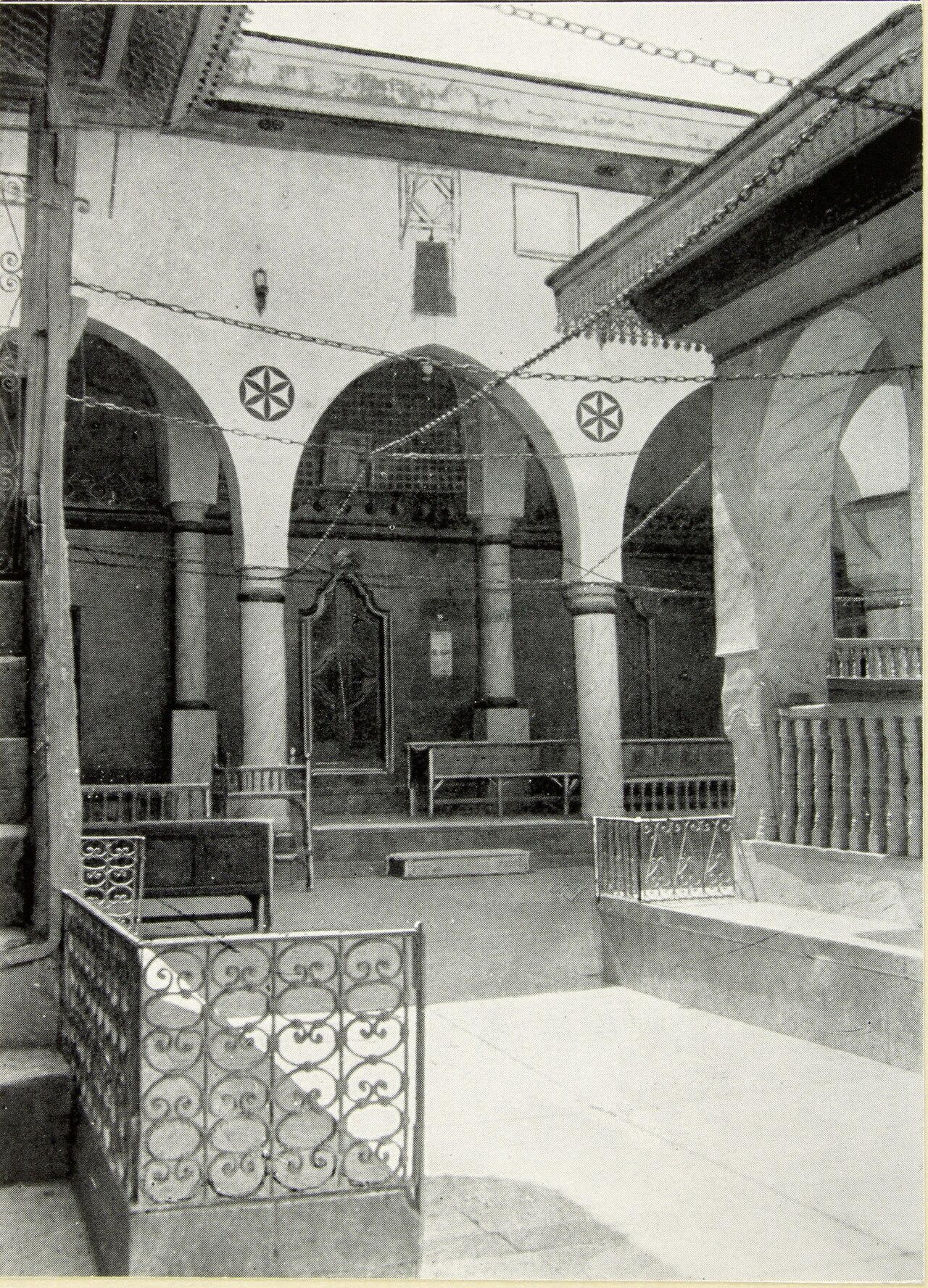
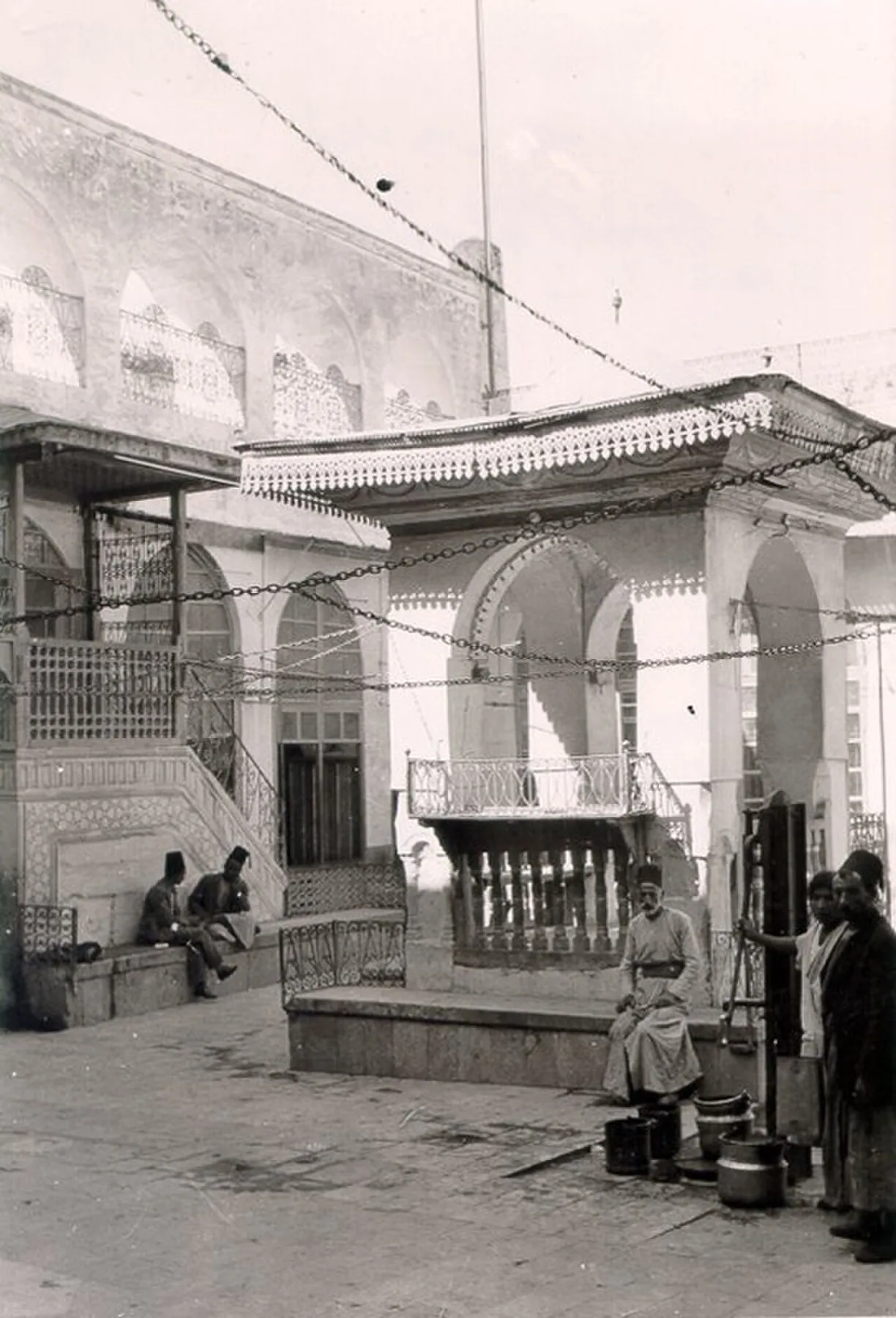
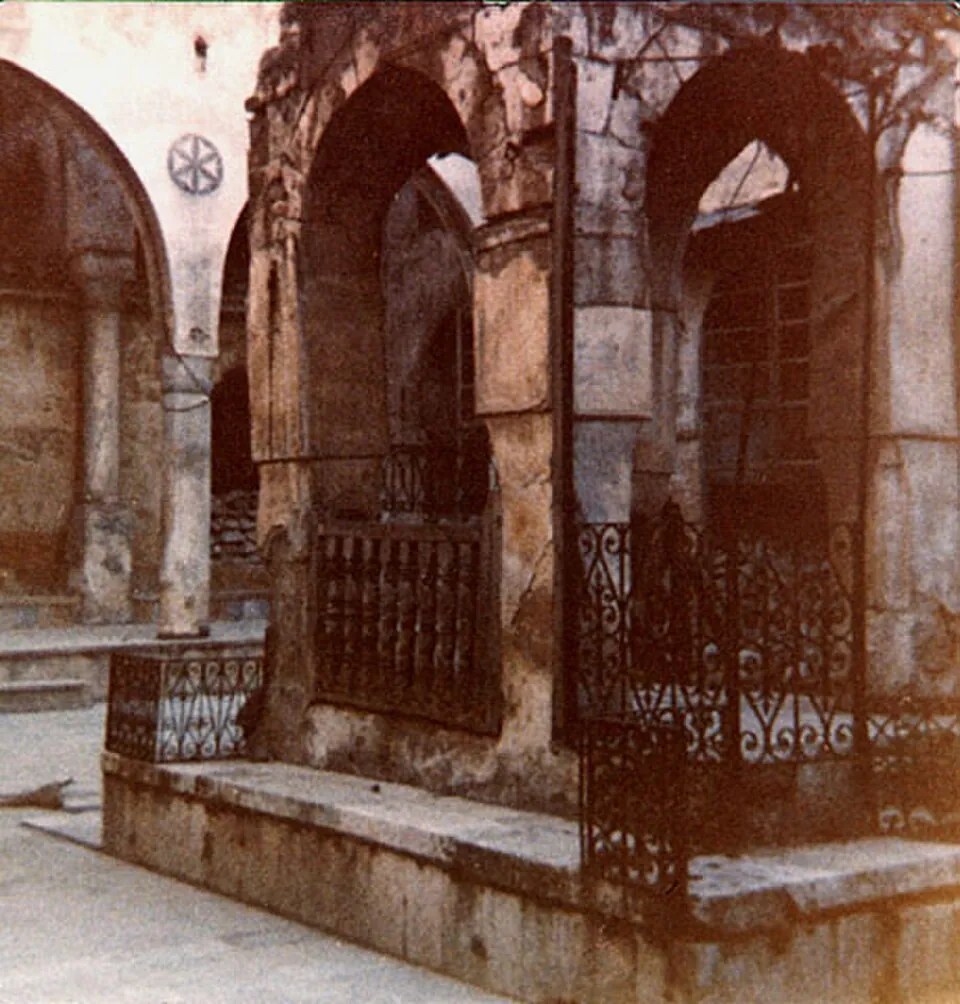
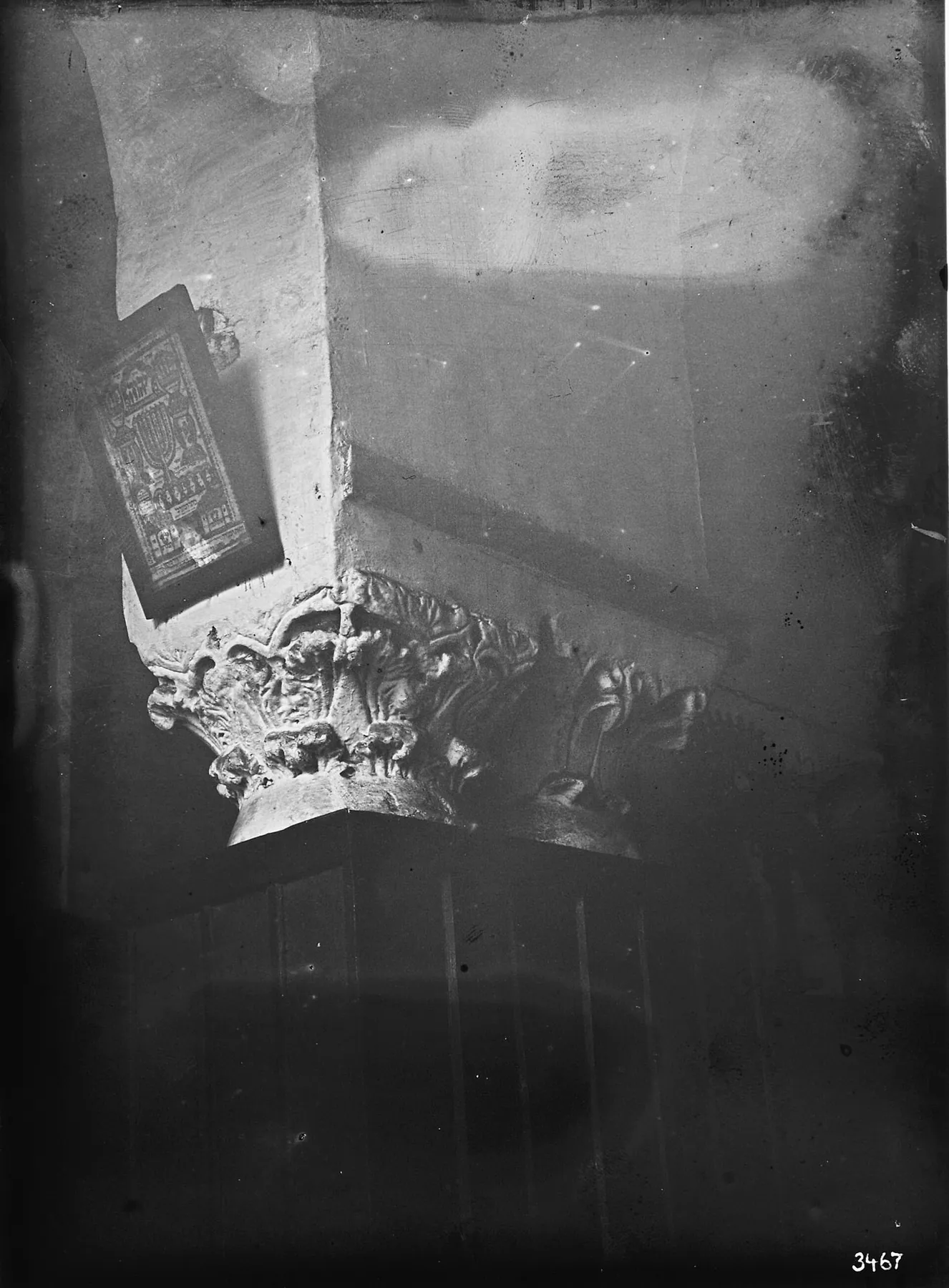
The synagogue was a group of buildings around an open courtyard, a plan the CUNY study links to Syrian mosque design, with the arks recalling the mihrab. It had three parts. The western wing, the oldest, had three aisles divided by columns, a carved wooden tevah with six steps in the centre and arks on the south wall facing Jerusalem; its west wall had windows of different shapes, said to reflect Kabbalistic ideas, which have since been sealed. The open middle courtyard, surrounded by pillars, was used as a sanctuary in fair weather. It had an outdoor tevah under a dome on four columns and the Ark of Tekiah, the largest ark, reached by nine steps, where circumcisions were performed and the shofar was blown. The eastern, Sephardi wing had two aisles, its own tevah and, at its south end, the Cave of Elijah, where the codices were kept. Rabbi David Laniado wrote that the building had seven arks and seventy-two pillars. Early photographs show round arches on columns, carved capitals, rosettes, iron railings and wooden balconies. The architect, overall size and seating capacity are unknown.
La vita nella sinagoga
The western wing was the synagogue of the native Musta'arabi Jews and the eastern wing that of the Sephardim, so two rites were followed under one roof. In good weather services moved into the open courtyard, around the domed outdoor tevah. The Ark of Tekiah in the courtyard was the setting for circumcisions and for the blowing of the shofar at the New Year. Each of the seven arks along the south wall had two doors, and worshippers removed their shoes before entering them. The Cave of Elijah in the eastern wing held a safe with four codices, among them the Aleppo Codex, which the community regarded as its greatest treasure; oaths were taken in front of it. A genizah for worn-out sacred texts was kept in one of the smaller chapels. Morashá reports that about 40 Torah scrolls and nearly 2,000 pairs of tefillin were burned in the synagogue in 1947, which gives a sense of how much ritual property it held. After the fire the restored eastern section served the remaining worshippers for some years.
Distruzione
The synagogue had been destroyed once before, when Timur's forces took Aleppo in 1400. The damage that ended its life as a working synagogue came on 1 December 1947. After the UN General Assembly voted on 29 November to partition Palestine, Aleppo's Arabs declared a strike, and on 1 December Arab mobs attacked the Jewish quarter, setting fire to synagogues, schools, shops and homes. The CUNY study says Arab rioters set the Great Synagogue alight; it was badly damaged and its roof caved in, but the walls remained standing. Morashá magazine adds that the attack on the synagogue came in the late afternoon, that the government had permitted attacks on Jewish property as long as Jews were not killed, that soldiers posted to guard the synagogue did not stop the mob and reportedly joined in, and that firemen poured diesel and kerosene on the books instead of water. About 40 Torah scrolls were burned there. The Aleppo Codex was damaged and many leaves were lost, though most of it was rescued and later smuggled to Israel. Morashá counts 18 synagogues destroyed in the city that day.
Il destino della comunità
The riots of December 1947 broke Aleppo's Jewish community. Morashá magazine reports that besides 18 synagogues, about 150 homes, 50 shops, five schools, an orphanage and a youth club were destroyed, along with some 1,500 Torah scrolls and many books, with losses estimated at 2.5 million US dollars at the time. More than 6,000 Jews are said to have left in the following days and months, most of them illegally through Turkey and Lebanon, abandoning their property. By 1960 about 1,000 remained. According to NPR, the last of the community left Aleppo in the early 1990s, and a small synagogue its reporter saw there after December 2024 had stood abandoned since then. Aleppan Jews rebuilt their communities in Israel, Brooklyn, Latin America and elsewhere. The Aleppo Codex, entrusted to President Yitzhak Ben-Zvi, is kept by the Ben-Zvi Institute in Jerusalem. In December 2024 the new Syrian authorities transferred control of Jewish religious sites to a foundation led by the Syrian-American cantor Henry Hamra.
Il luogo oggi
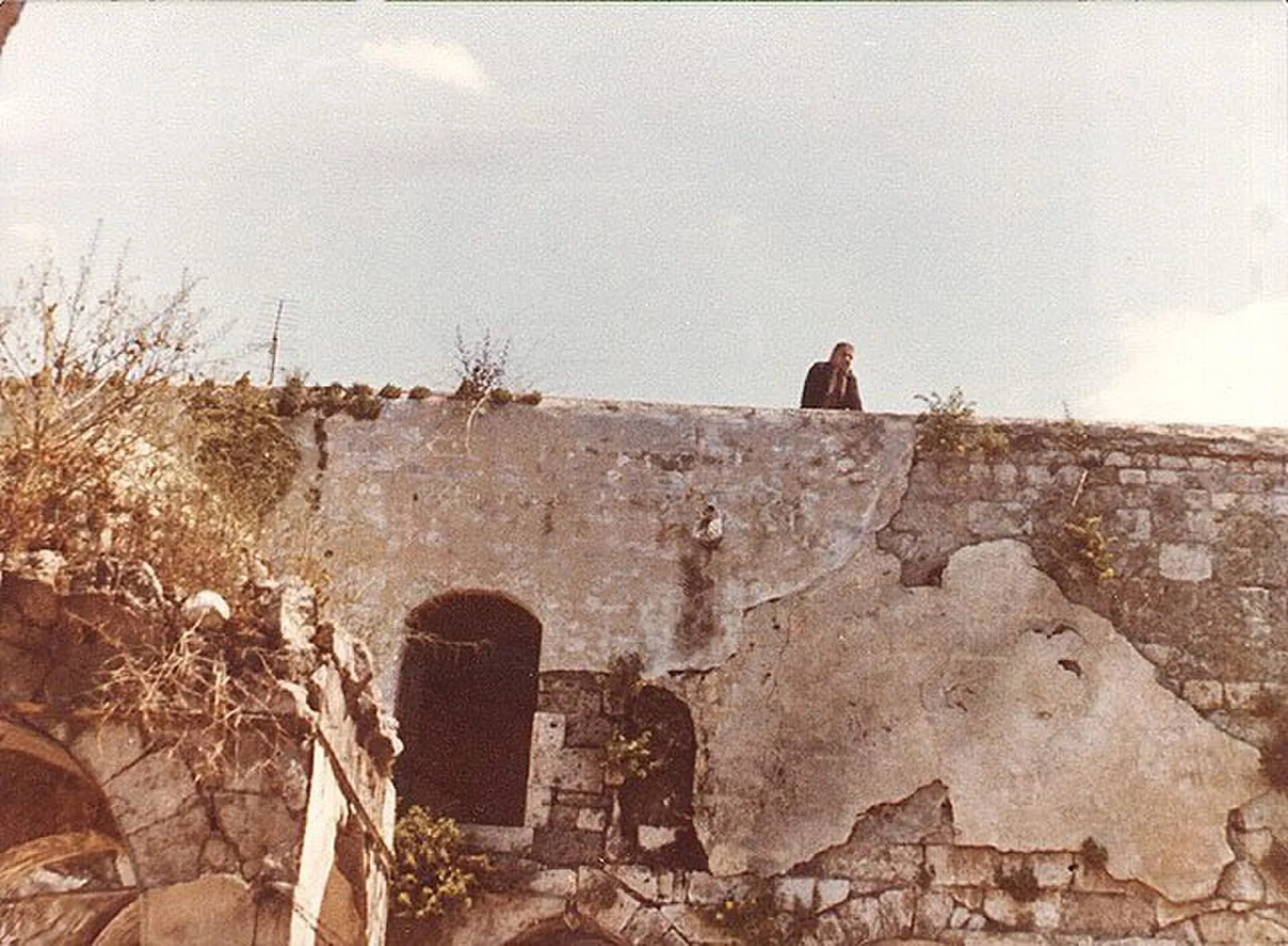
The building still stands in the Bahsita quarter. After 1947 it lay largely in ruins, with only the eastern section restored for prayer, until the Syrian Jewish community of New York paid for its rebuilding in 1990-1992. During the civil war the quarter lay on the front line: photos sent in February 2016 showed a shell had damaged one corner, and one 2022 article says it was destroyed in 2016, which the photos do not support. The 2023 earthquakes caused further damage. When Henry Hamra was shown the synagogue after the fall of the Assad government, NPR described stone arches on Roman columns, courtyards, marble floors and the women's gallery with iron screens, in a heavily damaged neighbourhood. A plaque recalls the events of December 1947.
Hai qualcosa da condividere?
Fotografie, documenti, storie di famiglia o ricordi di questa sinagoga e della sua comunità aiutano a mantenerne viva la storia.
- Central Synagogue of Aleppo
- History of the Great Synagogue
- The Aleppo Pogrom (Morashá, edition 59, November 2007)
- Aleppo synagogue sustains minor damage in Syria fighting (10 Feb 2016)
- Assad's downfall spurs effort to assess fate of Jewish relics in Syria (13 Dec 2024)
- Syria, once home to a large Jewish community, takes steps to return property to Jews (Feb 2026)
- Step into the Aleppo Synagogue (10 Oct 2022)
- File:Aleppo, Great Synagogue, courtyard.jpg
- File:Aleppo Central Synagogue.jpeg
Share a memory or thought
No comments yet. Be the first to add one.