
Die Geschichte von Major Synagogue of Barcelona
Barcelona's Jewish community, its aljama, was the largest in the Crown of Aragon, and by the late fourteenth century it had five synagogues in the Call Major, the quarter beside the cathedral. The chief of them, the Sinagoga Major, gave its name to the street now called Carrer de Sant Domènec del Call. The Barcelona History Museum (MUHBA) places it inside the block bounded by Sant Domènec, Marlet, Arc de Sant Ramon del Call and the modern Plaça de Manuel Ribé, with doors on all three streets and its main entrance where Sant Domènec 9 stands today.
On 5 August 1391 a crowd of seafarers and the city's common people attacked and pillaged the Call, part of the wave of anti-Jewish riots that began in Seville. About three hundred Jews were killed and most of the rest converted or fled; the Call and the aljama were never restored.
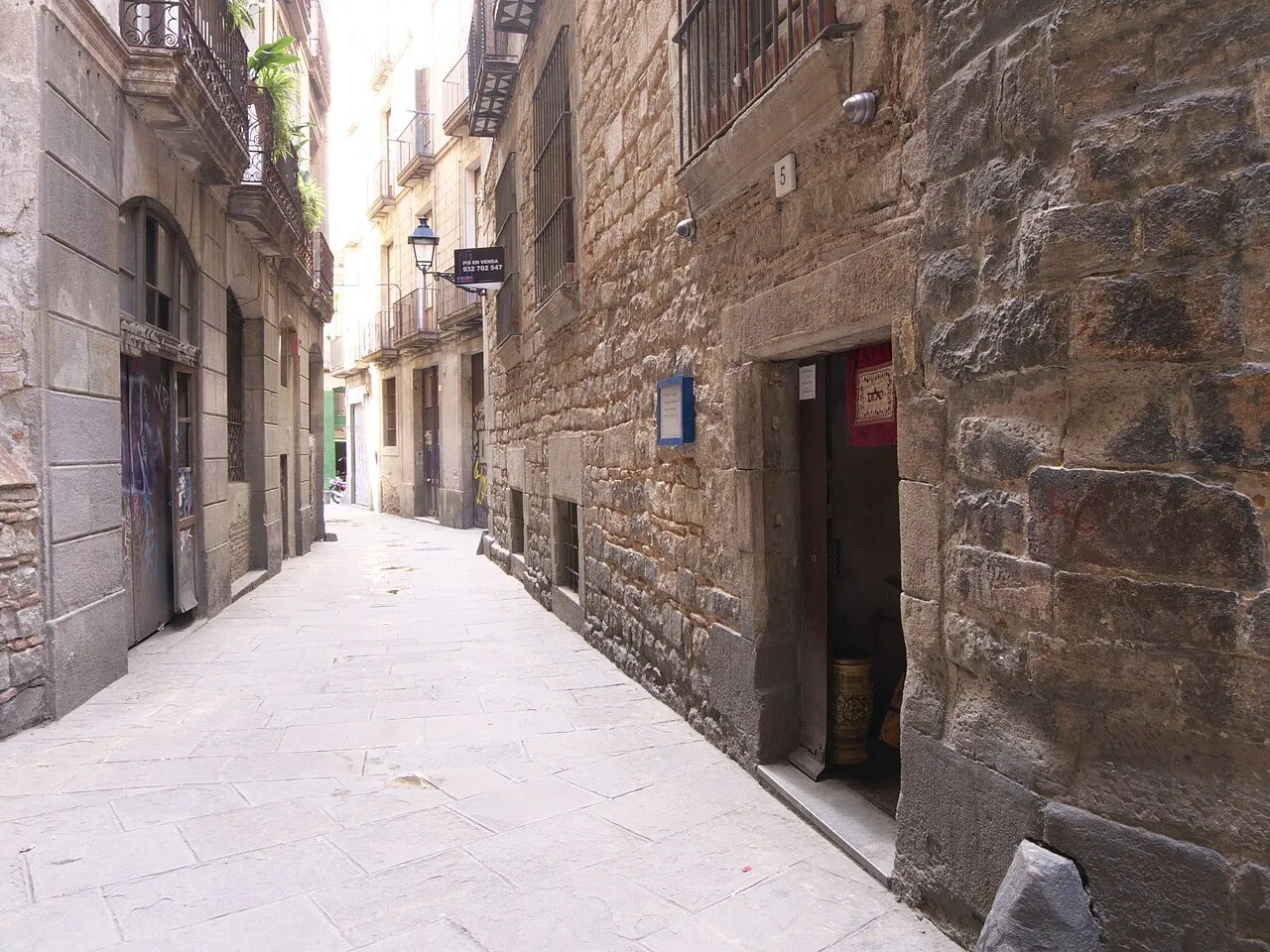
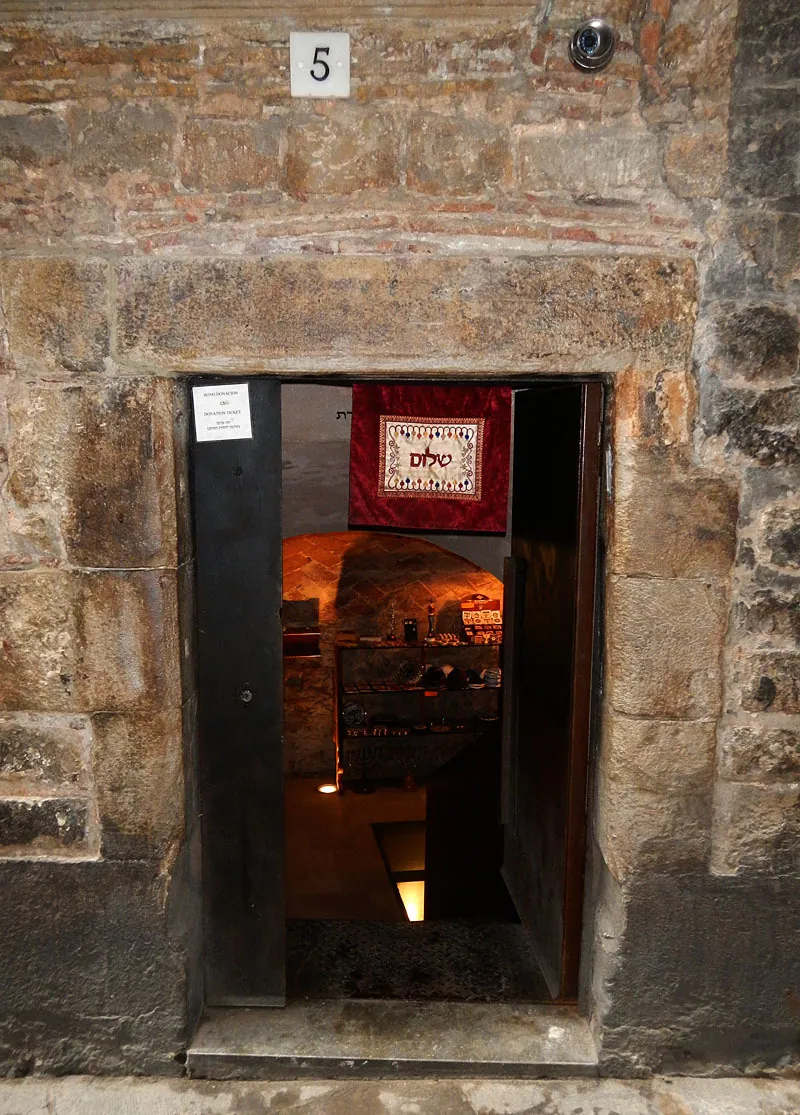
In 1995 the Argentine-born businessman Miguel Iaffa bought a building at Carrer de Marlet 5 that the historian Jaume Riera i Sans had proposed, from research begun in 1987, as the site of the synagogue. After excavation and restoration it opened in 2002. A MUHBA historian, Victòria Mora, and a 2002 documentary study of Sant Domènec 9 reject the identification, and archaeologists sent by the Generalitat reported finds of the eleventh and seventeenth centuries rather than of the synagogue's period.
Where it stood
Historic: Carrer de la Sinagoga Major (now Carrer de Sant Domènec del Call), Call Major, Barcelona; complex inside the block bounded by Sant Domènec, Marlet, Arc de Sant Ramon del Call and Plaça de Manuel Ribé. Today: museum at Carrer de Marlet 5, 08002 Barcelona; main entrance of the medieval synagogue placed by MUHBA at Carrer de Sant Domènec 9 (approximate).
Größere Karte öffnen →Die jüdische Gemeinde
By the fourteenth century the city's aljama was the largest in the lands of the Crown of Aragon. Its quarter, the Call Major, lay beside the cathedral, with a smaller Call Menor nearby. MUHBA's guide lists what the quarter held: synagogues, a kosher butcher's shop, a fishmonger's, a bakery, taverns, ritual baths, a brothel and a charity house founded by the rabbi and communal leader Samuel ben Isaac ha-Sardi near the corner of Marlet and Arc de Sant Ramon. Shlomo ben Aderet, known as the Rashba, a prominent Talmudist, wrote thousands of responsa, and Moshe ben Nathaniel of Tàrrega was a rabbi, poet and trader. King James I is reported to have visited the synagogue in 1263, after the Barcelona Disputation. Hasdai Crescas, an official of the aljama, tried after 1391 to rebuild the community, without success.
Architektur und Gestaltung
No description, plan or picture of the Sinagoga Major from before 1391 is known from the sources consulted, so its size, form and builder are unknown. MUHBA's Call guides describe it only as a complex of the synagogue with attached rooms and offices filling the inside of a block, reached by three doors: one on Carrer de Marlet, one through the blind arch at Arc de Sant Ramon del Call 8, and the main one at what is now Sant Domènec 9. The building at Marlet 5 that is shown as the synagogue is a narrow stone house on a corner. Supporters of the identification point to its walls set facing east towards Jerusalem, at an angle to the street grid, and to two small windows in the east wall; English Wikipedia, drawing on the Associació Call de Barcelona, reports that its lowest structure dates from the third or fourth century and was enlarged in the thirteenth, while noting that it cannot be said with certainty that the early structure was a synagogue. Victòria Mora objects that it would be very strange for a synagogue to have a corner angle of this kind.
Leben in der Synagoge
The Sinagoga Major was the principal house of prayer of the Barcelona aljama and the centre of its religious life. English Wikipedia, citing published accounts of the site, states that Shlomo ben Aderet served as rabbi of the Sinagoga Major for some fifty years in the late thirteenth century; MUHBA describes him as a prominent Talmudist who wrote thousands of responsa, or rulings. The same source reports that King James I visited the synagogue in 1263 after the Barcelona Disputation. Street life around the building was dense: MUHBA calls the street of the Sinagoga Major, today's Carrer de Sant Domènec, the nerve centre of the quarter, and the charity house of Samuel ha-Sardi stood a few steps away, marked by a Hebrew inscription whose copy is now set into the wall of Marlet 1. Details of the synagogue's own officers, cantors, seating and furnishings were not found in the sources read.
Zerstörung
In the summer of 1391 anti-Jewish riots spread from Seville, where the preaching of the archdeacon Ferrand Martínez of Écija had stirred them, to the cities of the Crown of Aragon. In Barcelona the Call was attacked and pillaged on 5 August 1391. MUHBA's English guide names the attackers as a crowd of seafarers, mercenaries waiting to sail on a military expedition to Sicily, joined by ordinary townspeople; its Catalan guide speaks of the poble menut, the common people. Jews who took refuge in the royal Castell Nou were forced out on 7 August when the crowd set the building on fire. About three hundred Jews died and most of the rest accepted baptism or fled. No source read describes what the rioters did to the Sinagoga Major itself, but the community that used it ceased to exist: the Call and the aljama were never re-established. According to Victòria Mora of MUHBA, the synagogue property was afterwards sold to a royal official, and the title passes through Sant Domènec 9. The building's use as a synagogue ended in 1391.
Das Schicksal der Gemeinde
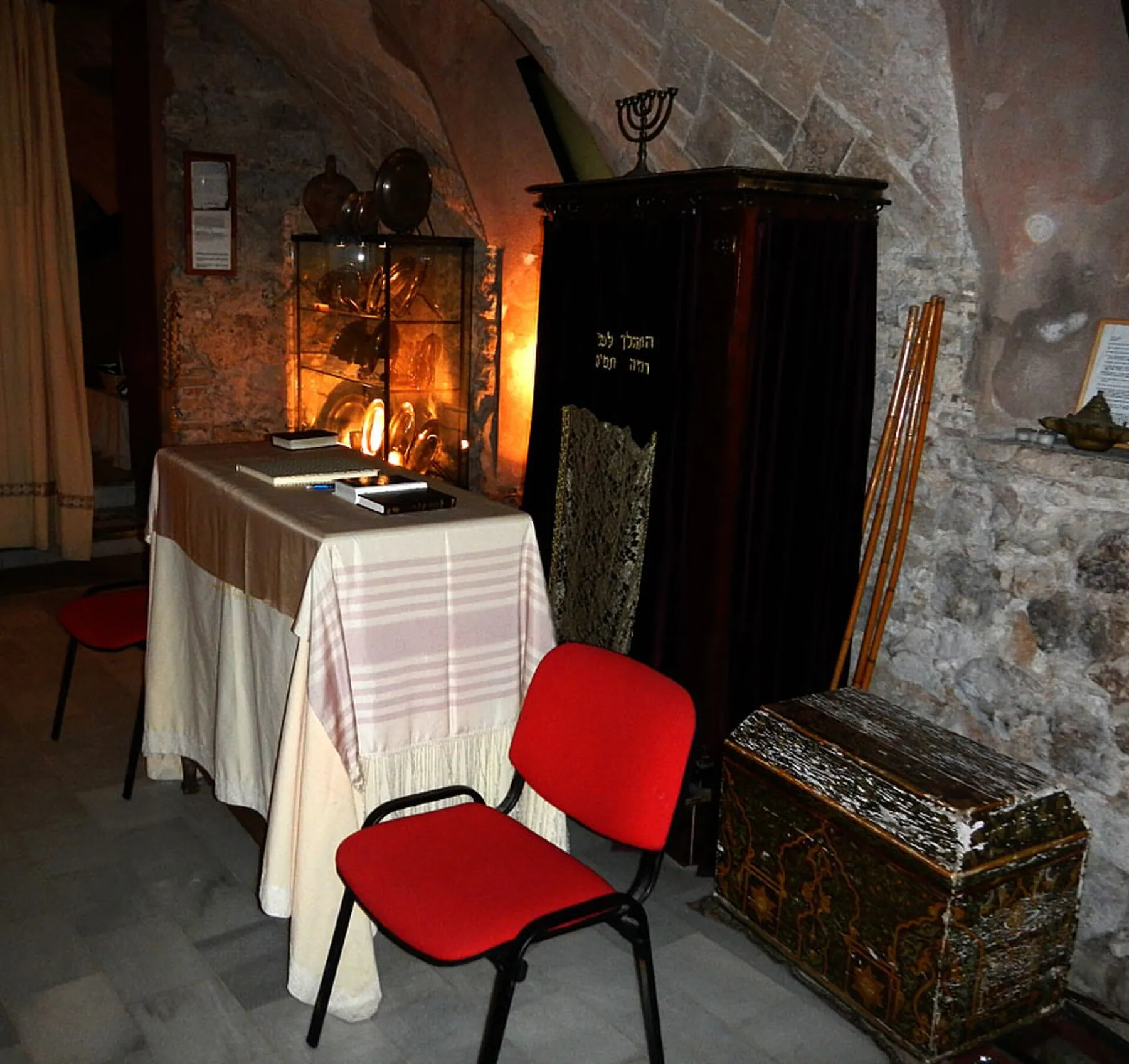
The assault of August 1391 ended organised Jewish life in Barcelona. MUHBA puts the dead at about three hundred; a later newspaper account gives at least two hundred and possibly up to a thousand. Most survivors converted to Christianity, and others left the city. Hasdai Crescas, a leader of the Jews of the Crown of Aragon, tried to restore the Barcelona community after the riots, but MUHBA states that the Call and the aljama were never re-established. The space at Marlet 5 is now run by the Associació Call de Barcelona; it has no regular congregation but has hosted ceremonies such as a wedding in 2003, described as the first wedding there in more than six hundred years.
Der Ort heute
The block that held the Sinagoga Major still stands inside Barcelona's Gothic Quarter, but it consists of later houses, and no part of the medieval synagogue has been confirmed above ground. At Carrer de Marlet 5 a stone corner house has a vaulted ground floor and basement, excavated and restored by the Associació Call de Barcelona under Miguel Iaffa, which opened to the public in 2002 as the Sinagoga Major or Sinagoga Shlomo ben Adret, a small museum and occasional place of prayer. How much of it is medieval, and whether it belonged to the synagogue at all, is disputed: MUHBA's historian Victòria Mora and a 2002 study place the synagogue at Sant Domènec 9, and Generalitat archaeologists reported eleventh- and seventeenth-century remains at Marlet 5.
Bedeutende Namen
Shlomo ben Aderet (the Rashba)
Unknown (late 13th century)Rabbi of the Sinagoga Major, late 13th centuryShlomo ben Aderet, known as the Rashba, was the leading rabbinic authority of Barcelona in the late thirteenth century. English Wikipedia, drawing on published accounts of the site, says he served as rabbi of the Sinagoga Major for about fifty years, and MUHBA's guide to the Call describes him as a prominent Talmudist who wrote thousands of responsa, rulings given in answer to questions of Jewish law. The museum at Marlet 5 bears his name.
Biografie oder Quelle →Hasdai Crescas
Unknown (active 1391)Official of the Barcelona aljama; tried to restore the community after 1391Crescas was an official of the Barcelona aljama to which the Sinagoga Major belonged. MUHBA's guide to the Call records that after the riots of August 1391 he tried to re-establish the Jewish community of Barcelona, an effort that failed: the Call and the aljama were never restored, and the synagogue was never again used by the community.
Biografie oder Quelle →Haben Sie etwas beizutragen?
Fotos, Dokumente, Familiengeschichten oder Erinnerungen an diese Synagoge und ihre Gemeinde halten ihre Geschichte lebendig.
Share a memory or thought
No comments yet. Be the first to add one.