
La historia de Beth Alpha Synagogue
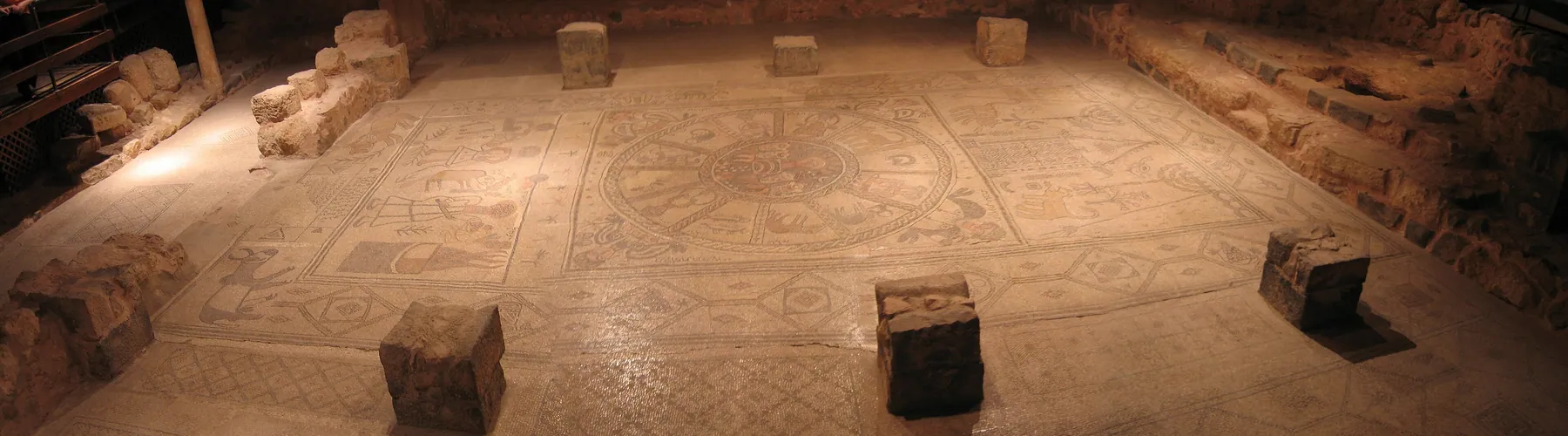
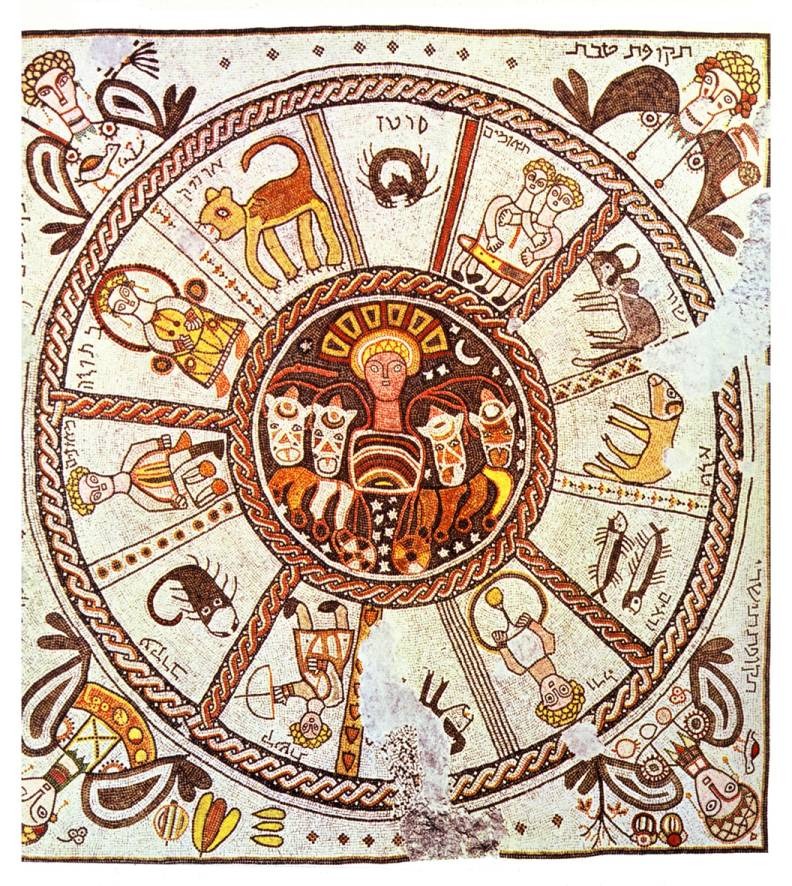
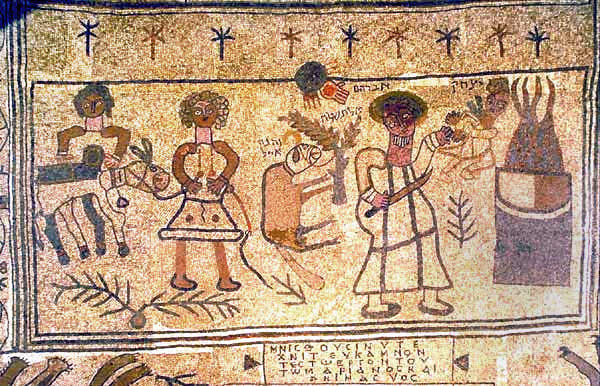
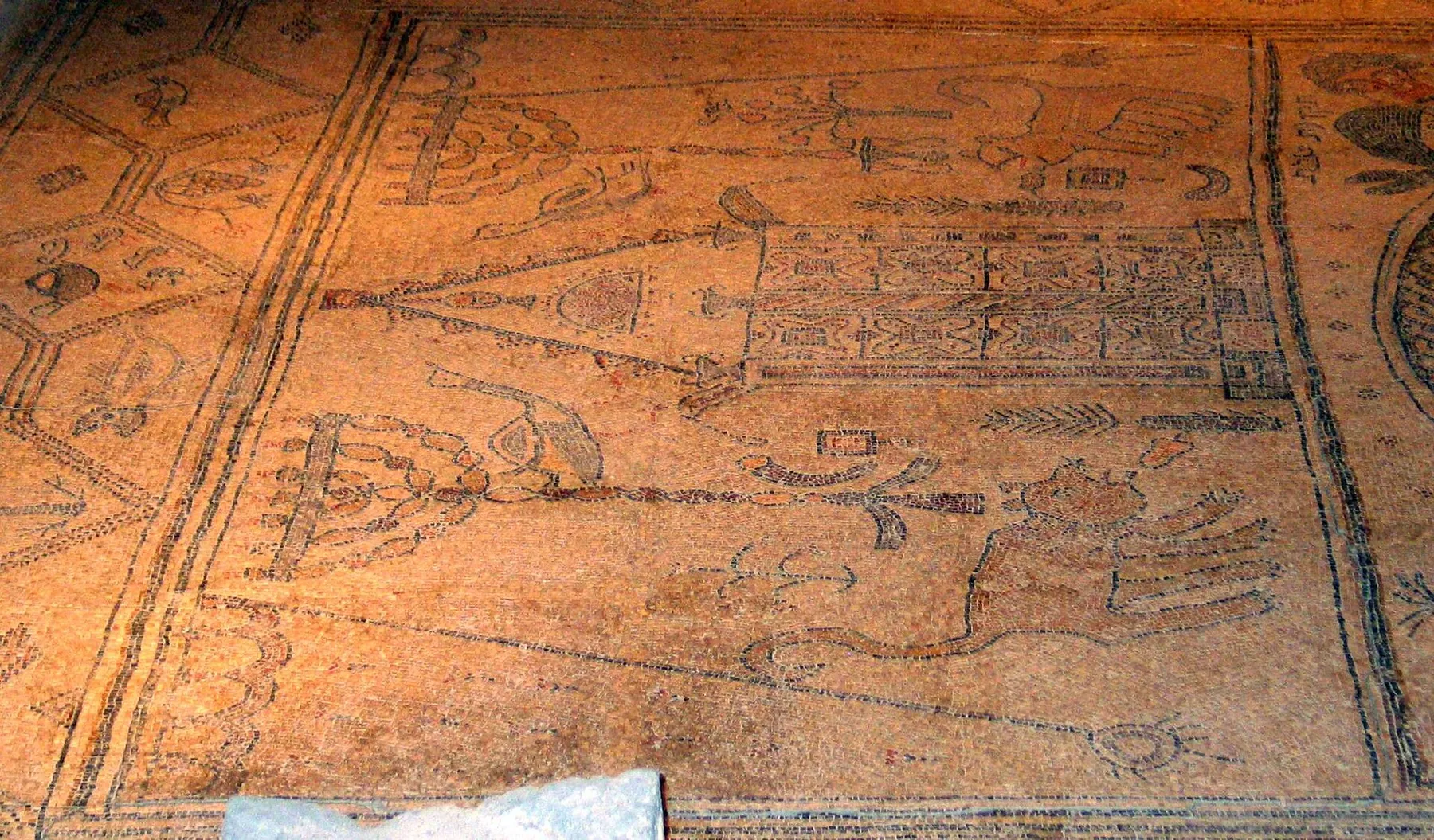
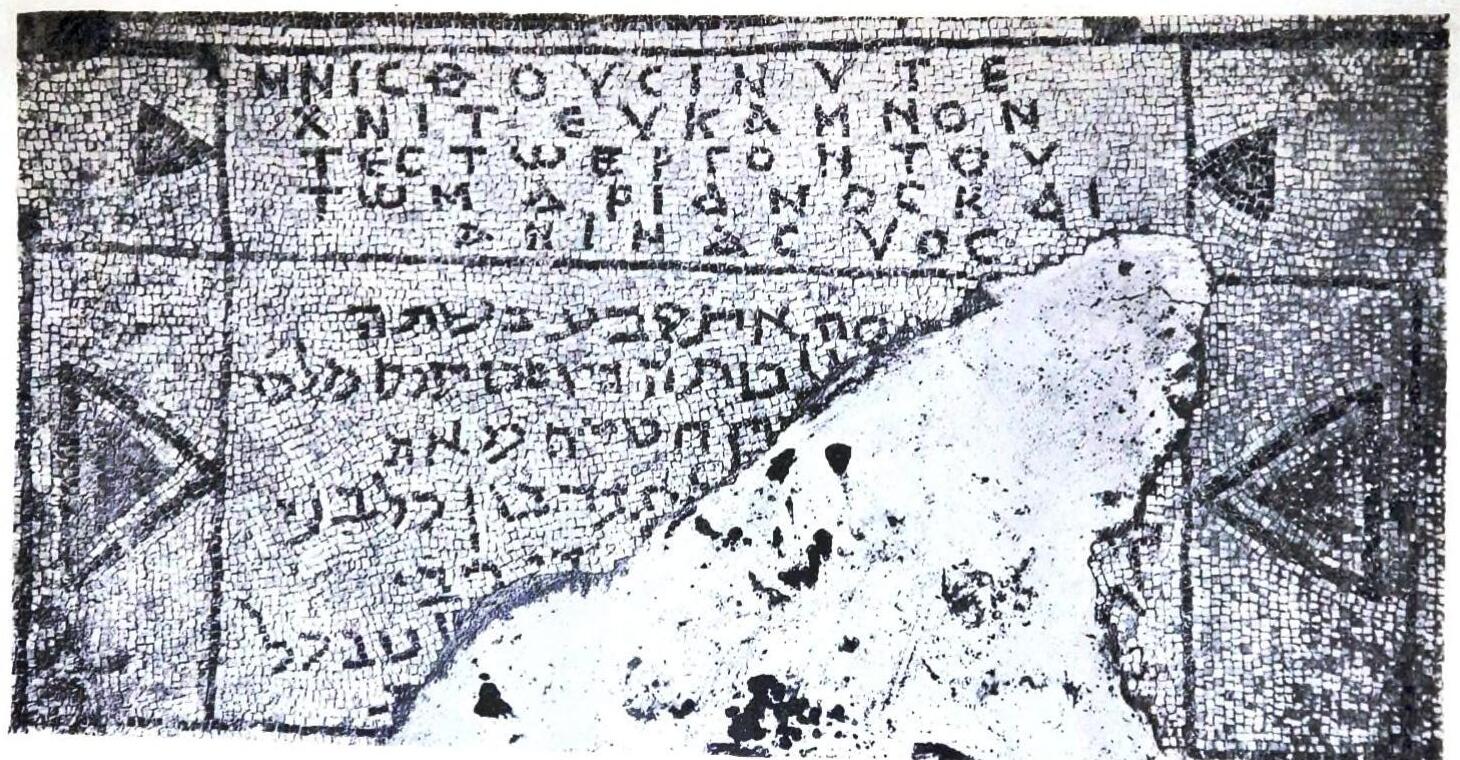
The synagogue stood on the lower northern slope of Mount Gilboa, at the ruin its excavator recorded as Khirbet Beit Ilfa, now inside Kibbutz Hefzibah in the Beit She'an Valley. It was a small basilica of rough limestone with a courtyard, a vestibule, a hall divided by two rows of basalt pillars and an apse for the Torah ark on the side facing Jerusalem. E. L. Sukenik, who excavated it for the Hebrew University in 1929, judged from pottery and coins that the building went up in about the 5th century CE. Its mosaic floor is later. An Aramaic inscription at the main door dates the laying of the mosaic to the reign of an emperor Justin, generally taken to be Justin I (518-527 CE), and a Greek inscription beside it asks that the craftsmen Marianos and his son Hanina be remembered. The floor has three panels: the Binding of Isaac, a zodiac wheel around the sun in his chariot, and the Torah ark flanked by menorahs and lions.
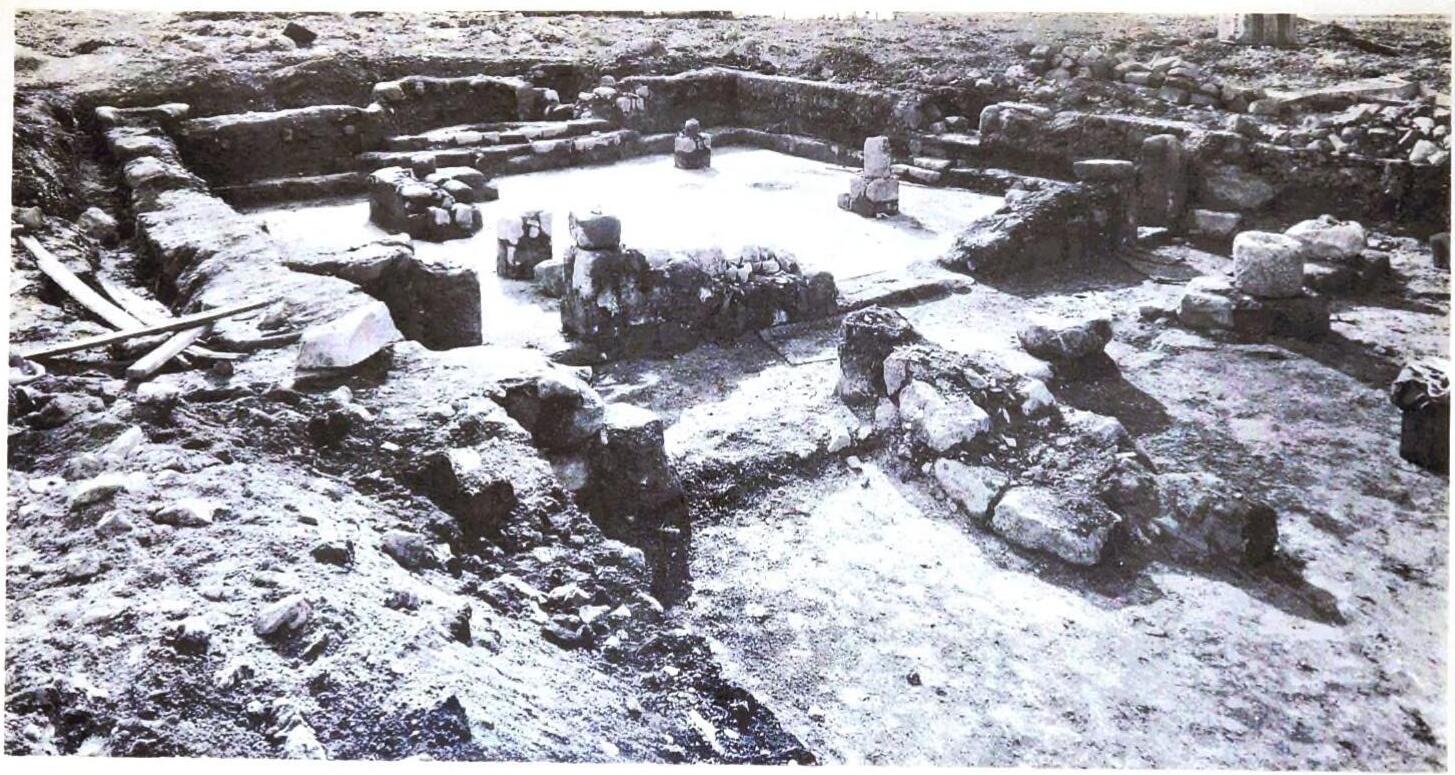
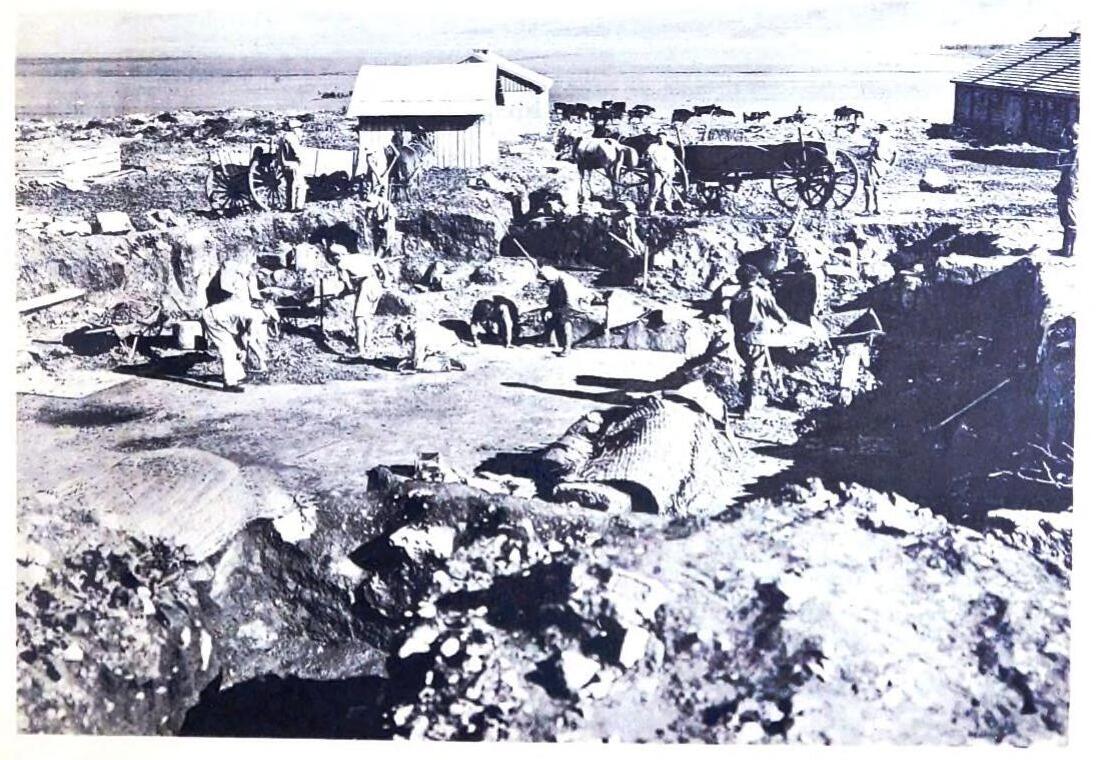
The building was thrown down by an earthquake. Sukenik found its pillar stones lying east and west of their bases and a thick layer of fallen plaster that had sealed and protected the mosaic. The date of the earthquake is not fixed. Settlers found the floor at the end of December 1928 while digging an irrigation channel. Low walls and the mosaic are preserved under a modern building in Bet Alfa Synagogue National Park.
Where it stood
Ancient site: Khirbet Beit Ilfa, northern foot of Mount Gilboa (no ancient address). Today: Bet Alfa Synagogue National Park, in the grounds of Kibbutz Hefzibah (Heftsiba), Gilboa Regional Council, Beit She'an Valley, Northern District, Israel. Exact: the pin marks the excavated synagogue inside the park building.
Abrir mapa ampliado →La comunidad judía
No ancient text mentions the village, and its ancient name is not recorded; Sukenik thought it survived in the Arabic name Beit Ilfa. He found no trace of occupation earlier than the end of the Roman period. The broken Aramaic inscription shows, in his reading, that the whole community gave towards the mosaic, with a separate gift from a man, or the sons of a man, titled Rabbi, whose name is lost after its first letter. The word for a hundred and the word for wheat survive in the text, and Sukenik concluded that the congregation were workers on the land who paid partly in produce. The Parks Authority brochure likewise describes the floor as paid for with a hundred measures of grain donated by the villagers. A stone-lined grave 27 metres south-east of the synagogue held a skeleton and Byzantine pottery, and Sukenik took it for a Jewish burial. A second dig in 1962 uncovered further buildings around the synagogue. The number of inhabitants and the names of the community's officers are unknown. The same two mosaicists also signed a floor in nearby Scythopolis (Beit She'an).
Arquitectura y diseño
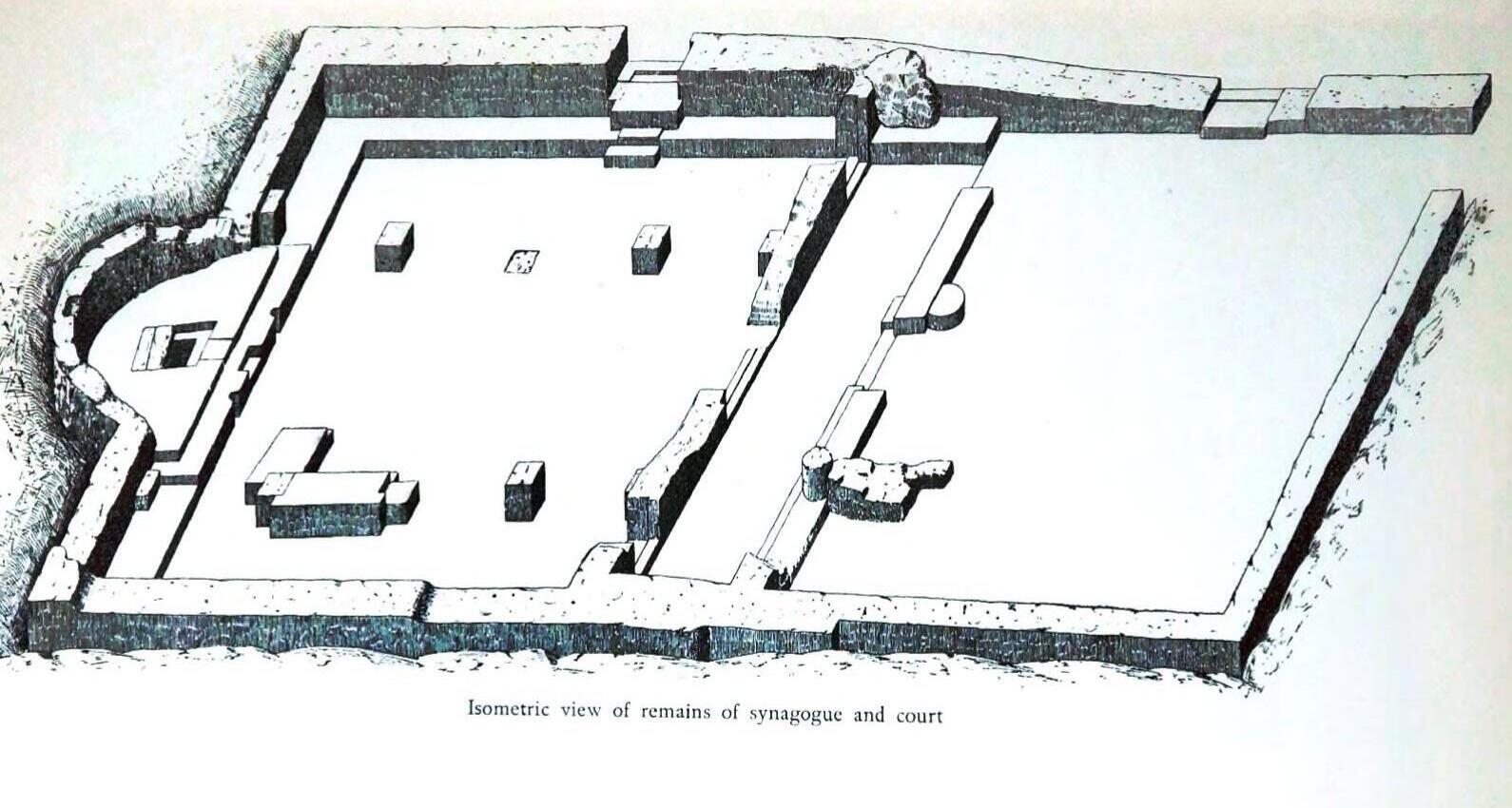
Sukenik measured the whole complex at 27.70 metres long and about 14.20 metres wide, with walls of untrimmed limestone 70 to 85 cm thick, plastered inside. It is aligned roughly south, 27 degrees west of south by compass, towards Jerusalem. A courtyard 9.65 metres long, entered from the west, led to a vestibule 2.57 metres wide and through three doors into the hall, which was about 10.75 metres long and 12.40 metres wide inside. Two rows of five square basalt pillars divided it into a nave 5.40 metres wide and two aisles; stone benches ran along the walls. At the south end three steps rose to a platform 75 cm high in an apse 2.40 metres deep, where the ark stood; two sockets probably held posts for its curtain. A room adjoined on the west. Column fragments led Sukenik to reconstruct a gallery over the aisles, which he called the women's gallery; that use has since been disputed. The roof was of flat and curved clay tiles laid on mortar. A small bema and extra benches were added after the mosaic was laid, since they cover parts of it. The builder is unknown.
La vida dentro de la sinagoga
Worshippers entered from the north and faced south towards the ark in the apse, crossing the three mosaic panels in turn: first the Binding of Isaac, with Abraham, Isaac, the ram and the hand of God labelled in Hebrew; then the zodiac, its twelve signs and four seasons named in Hebrew around the sun in a four-horse chariot; and nearest the apse the ark with a hanging lamp, two menorahs, lions, birds, a shofar, lulav, etrog and incense shovel between drawn curtains. A lion and a bull flank the two inscriptions at the main door. Sukenik counted 21 shades of stone and glass in the floor. People sat on plastered stone benches along the walls. A plastered cavity in the floor of the apse held 36 bronze coins, the legible ones running from Constantine the Great to Justin I, and Sukenik thought it was the synagogue's treasury. Fragments of glass lamp stems were found, and the courtyard seems to have had a water vessel for washing hands. The floor was patched in antiquity, once clumsily with tesserae at the sign of Capricorn. The order of prayer and the names of those who led it are unknown.
Destrucción
Sukenik wrote that it was plain within a fortnight of digging how the synagogue had been destroyed. The basalt blocks of the pillars lay in every case east and west of their bases, which he read as the effect of a strong earth tremor running roughly west to east. Plaster 20 to 25 cm deep covered the floor of the nave; it had fallen first from the roof, pillars and walls, and so cushioned the mosaic when roof tiles and masonry came down afterwards. The stones did most damage beside the main door, where they destroyed more than half of the Aramaic inscription. He concluded that the building was destroyed by an earthquake, perhaps one of the twenty listed for Palestine in the 6th century, and noted an earlier, hasty repair of the north wall that may have followed a previous tremor. The Israel Nature and Parks Authority says the synagogue was probably destroyed by an earthquake at the end of the 6th century CE. BibleWalks instead names the earthquake of 749 CE. The fallen plaster and rubble were still lying on the floor when the excavators reached it.
El destino de la comunidad
What became of the villagers after the earthquake is not documented. Sukenik wrote that it is difficult to say how long the Jewish settlement lasted, and assumed that it did not continue long after the beginning of the 7th century, since the Persian conquest and the Arab conquest that soon followed left little chance for a small Jewish village at the entrance to the Jezreel Valley. That is his judgement, not a recorded event. He also observed that the figures in the mosaic were never defaced, so the synagogue had fallen before the later hostility to animal images in synagogue decoration. A few pieces of Arab pottery lay in the top layer of debris over the ruin, and a foundation of some later building of unknown purpose was set on the courtyard mosaic. Travellers in the 19th century found only ruins: E. G. Schultz in 1847 described desolate remains and rough sarcophagi, and Victor Guérin in 1870 saw an abandoned Arab hamlet with heaps of large stones to its south. The Jewish National Fund bought the land in 1921, and two settlement groups were established there in 1922.
El lugar hoy
The remains lie in the grounds of Kibbutz Hefzibah at the foot of Mount Gilboa, in Bet Alfa Synagogue National Park, run by the Israel Nature and Parks Authority. After the 1929 dig the mosaic had to be covered with earth again until the Mandate Department of Antiquities put up a building over it; a photograph on Wikimedia Commons is captioned as that building's inauguration in 1933. The Parks Authority says it has since roofed the mosaic and landscaped the area. Inside the present building the original floor lies where it was laid, with the stumps of the pillars, the benches, the apse and the low walls, which Sukenik recorded as standing 0.55 to 1.65 metres high. A model of the synagogue stands outside.
Nombres destacados
Marianos
active 6th century CEMosaic craftsman who laid the synagogue floorMarianos is named in the Greek inscription at the main door of the hall, which Sukenik translated: 'May the craftsmen who carried out this work, Marianos and his son Hanina, be held in remembrance.' Sukenik noted that naming the craftsmen is unusual in synagogue inscriptions and thought they were strangers to the village, fed with wheat given by the congregation. A second floor signed by the same father and son was found in a synagogue at Beit She'an. Nothing else is known of his life.
Biografía o fuente →Hanina
active 6th century CEMosaic craftsman, son of MarianosHanina, written Aninas in Greek, is named with his father Marianos in the Greek inscription of the Beth Alpha floor as one of the two craftsmen who carried out the work. A mosaic inscription from a synagogue at Scythopolis (Beit She'an), published as CIIP V 7590, reads 'Handiwork of Marianus and his son Aninas', and its editors identify the pair with the Beth Alpha craftsmen. He is known only from these two signatures.
Biografía o fuente →¿Tiene algo que aportar?
Fotografías, documentos, historias familiares o recuerdos de esta sinagoga y su comunidad ayudan a mantener viva su historia.
- The Ancient Synagogue of Beth Alpha: An Account of the Excavations Conducted on Behalf of the Hebrew University, Jerusalem (1932)
- Bet Alfa Synagogue National Park (visitor brochure, PDF)
- Bet Alfa Synagogue National Park (park page)
- Beit Alpha (archaeoseismic site page)
- Beit Alpha: Ancient Synagogue and Zodiac mosaic
- Marianos
- Inscription 274: mosaic inscription from Scythopolis (Beth Shean), CIIP V 7590
- Beth Alpha
- Beth Alpha (site record)
- Category: Ancient synagogue in Beth Alpha
- Ancient synagogue of Beit Alfa (OpenStreetMap node 1475115327)
Share a memory or thought
No comments yet. Be the first to add one.