
La storia di House of Leontis Synagogue, Beth Shean
Beth Shean, the Nysa Scythopolis of Greek and Roman times, became the capital of the province of Palaestina Secunda in 409 CE and had a mixed population of Christians, Jews, Samaritans and pagans. One of its buildings is known from its inscriptions as the House of Kyrios Leontis. It was only partly excavated, by two expeditions working at different times: Nehemiah Tzori (Zori) published the first part in 1966, and Dan Bahat excavated the prayer room in 1970-1972.
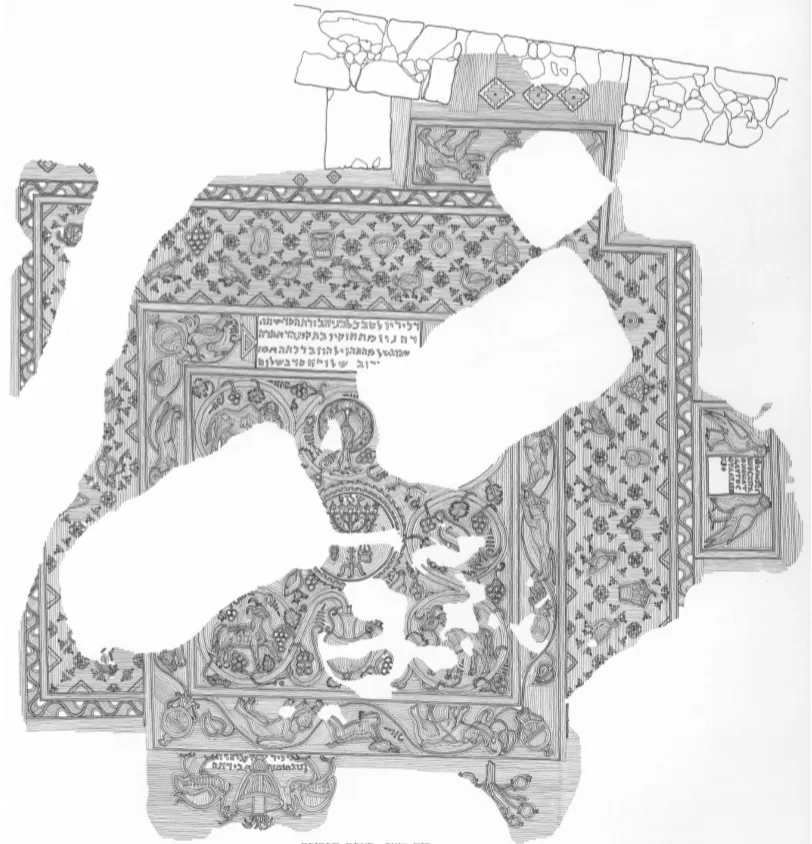
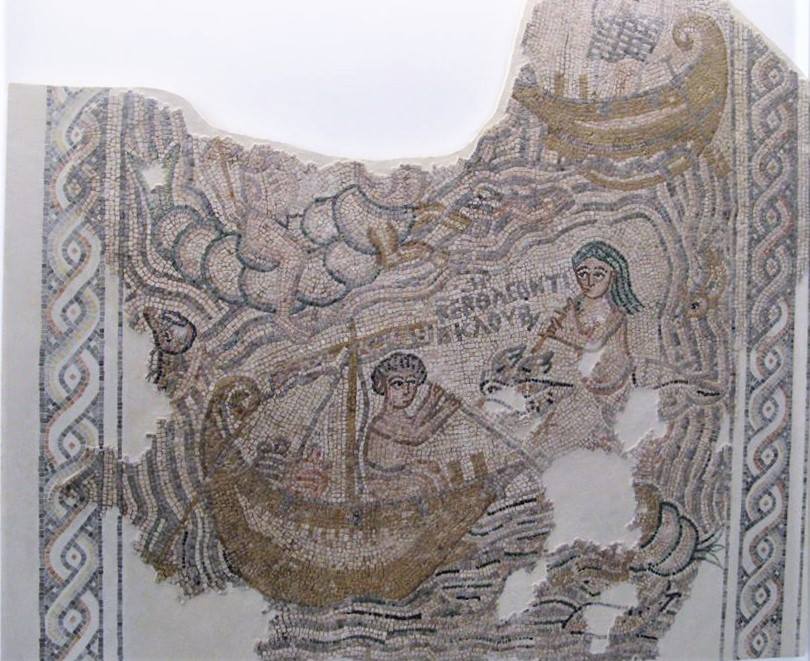
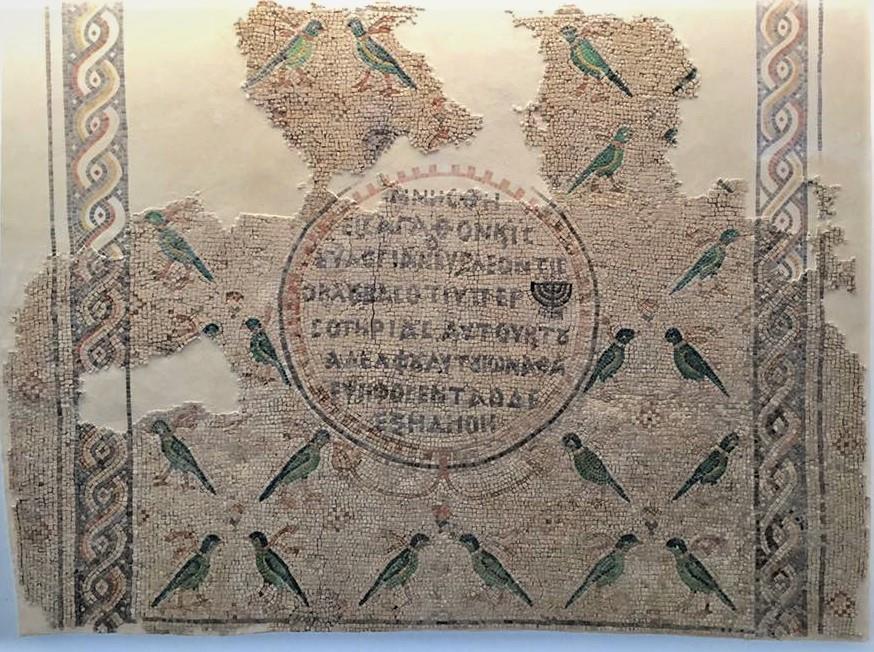
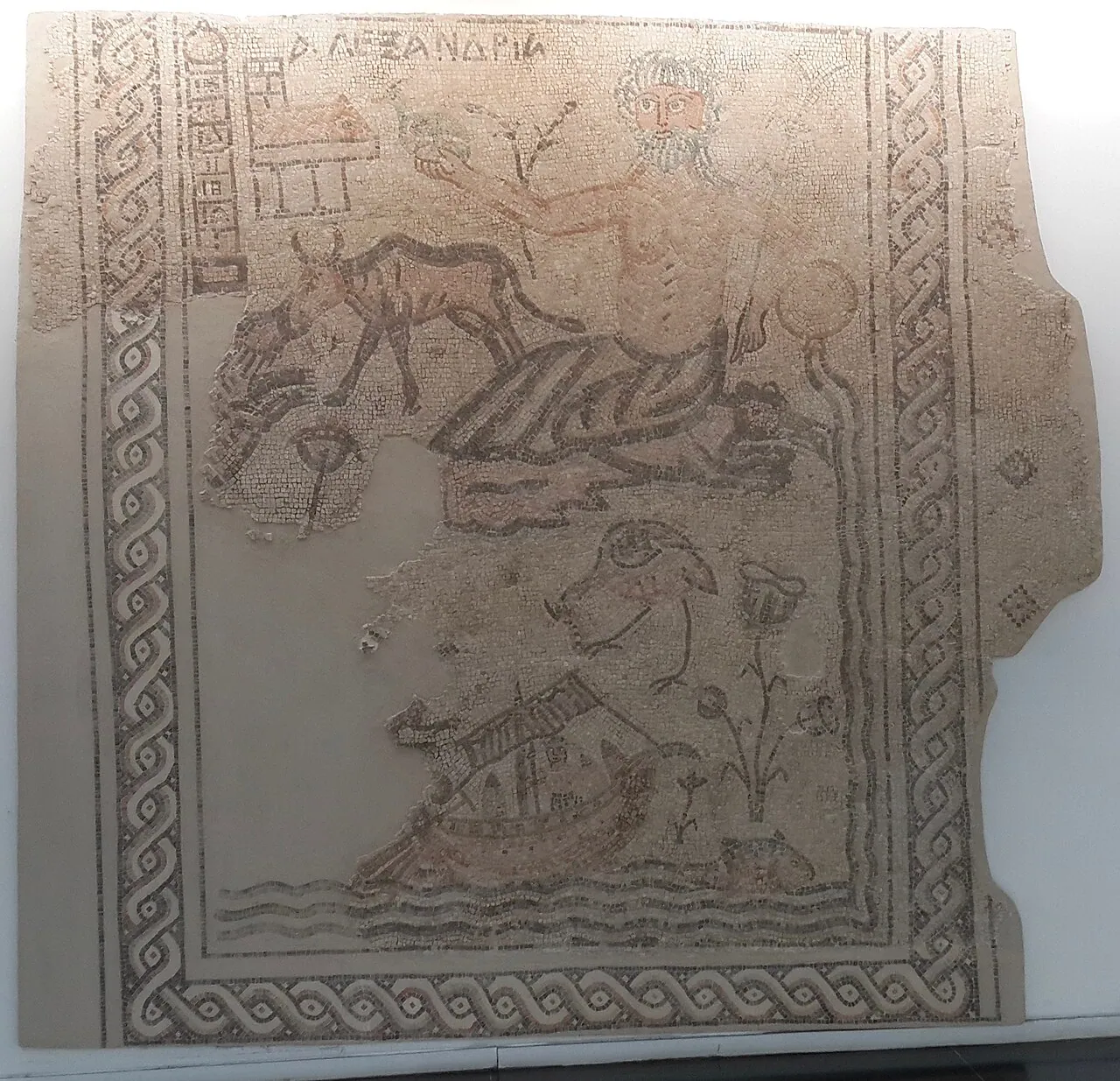
Two mosaic-paved halls are known. One has a three-panel floor showing Odysseus and the Sirens, a Greek dedication ringed by birds, and a Nile scene labelled Alexandria; its inscriptions name Leontis Kloubas and his brother Jonathan. The other, a single room about seven metres square, is the one read as a prayer room or small synagogue. Its floor carries a seven-branched menorah, the Hebrew word shalom, and Aramaic inscriptions blessing the members of a 'holy society' who paid for repairs to 'the holy place'.
Scholars do not agree on what the complex was: a private house with a prayer space, or a more public building such as a hostel for travellers. One description calls the room a possible study house. The mosaics are dated to the fifth or sixth century CE. They were lifted after the excavations, and nothing can be seen at the site today. A second ancient synagogue at Beth Shean, usually called Samaritan, is a different building.
Where it stood
Historic: within Byzantine Nysa Scythopolis; ancient street unknown. Today: about 12-16 Ava Boyar Street (אווה בויאר), Nof Ganim neighbourhood, Beit She'an, Northern District, as given by the Kinneret College synagogue database; approximate, nothing visible on the ground.
Apri la mappa grande →La comunità ebraica
The only people the building records are those named or blessed in its mosaics. The main Aramaic inscription of the prayer room asks that 'all the members of the holy society' (havurta qadisha) be remembered for good, because they supported 'the repair of the holy place and its completion'. Who belonged to this society, how many they were and what else they did is unknown. In the neighbouring hall two Greek inscriptions name the donor of that floor as kyrios Leontis Kloubas, a byname that the Inscriptions of Israel/Palestine project, following Lea Roth-Gerson, translates as 'cage maker'. He paid for the mosaic from his own means for his salvation and that of his brother Jonathan. The inscriptions of the complex are in Hebrew, Aramaic and Greek. Lihi Habas, who studied the floors in 2021, reads their mixture of Homeric, Nilotic and Jewish imagery as the taste of a well-educated household in a city of mixed population. Scythopolis as a whole was mainly Christian in this period, with Jewish and Samaritan communities beside the Christian majority. No figure for the Jewish population of the town was found.
Architettura e design
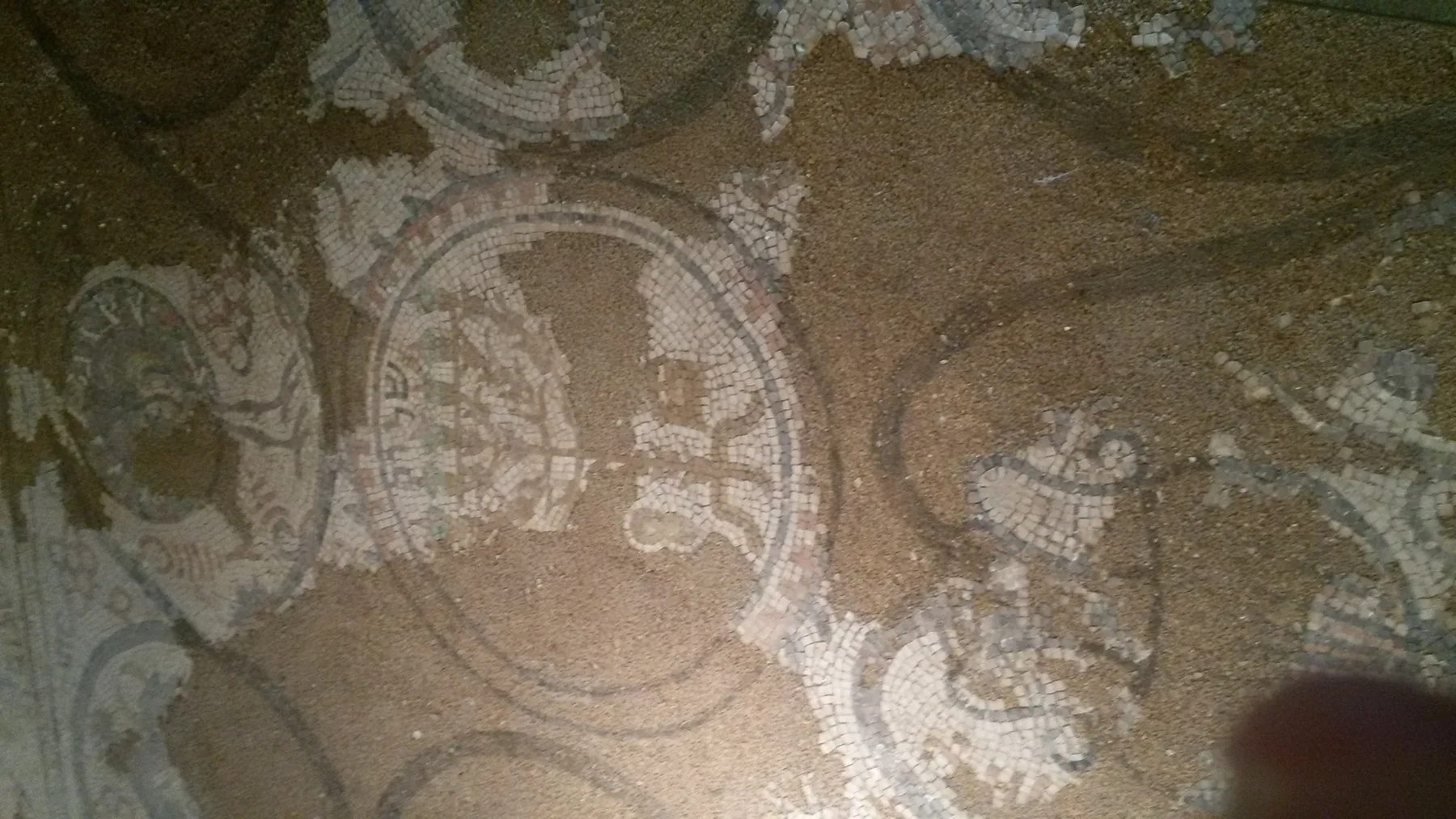
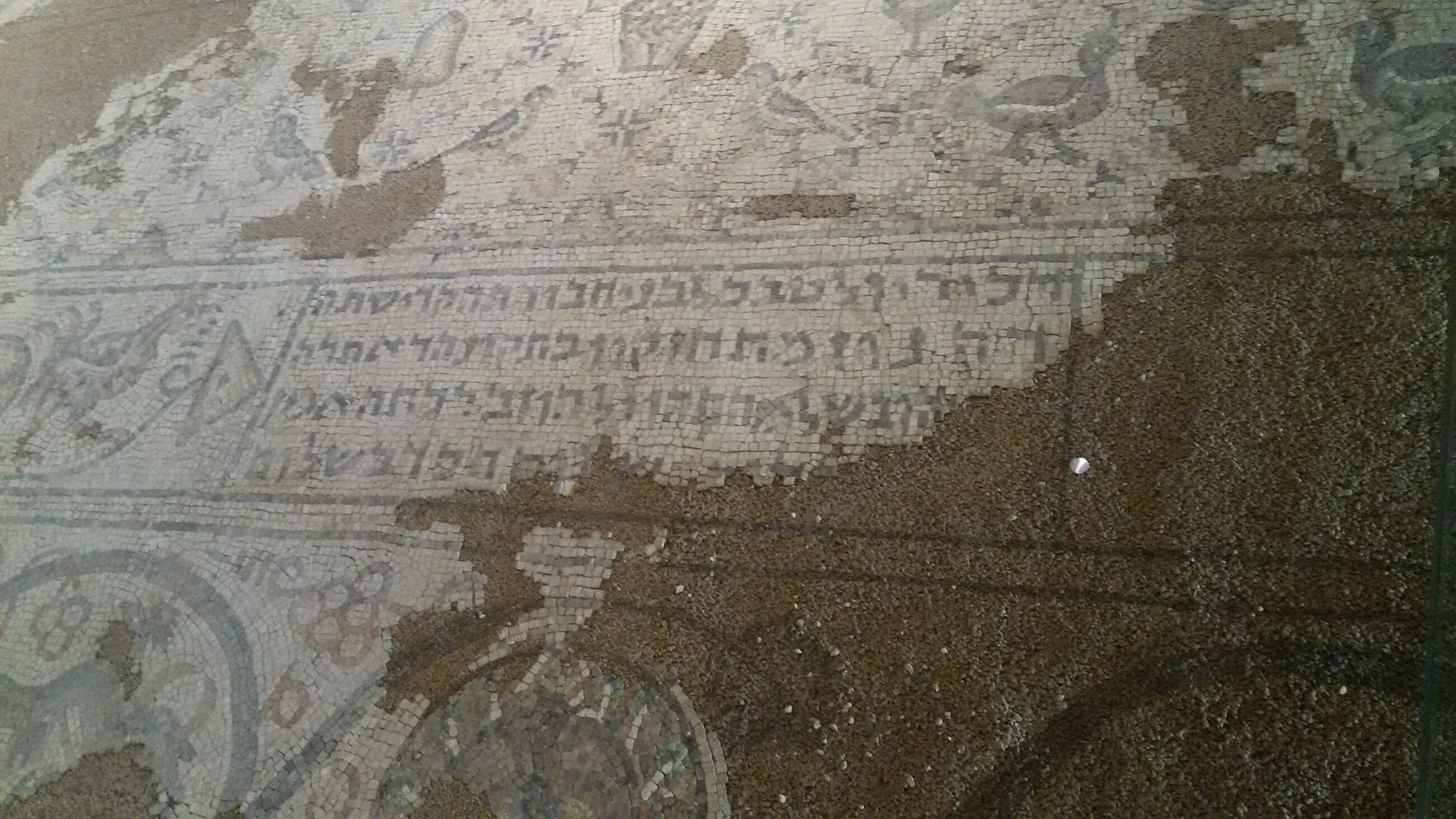
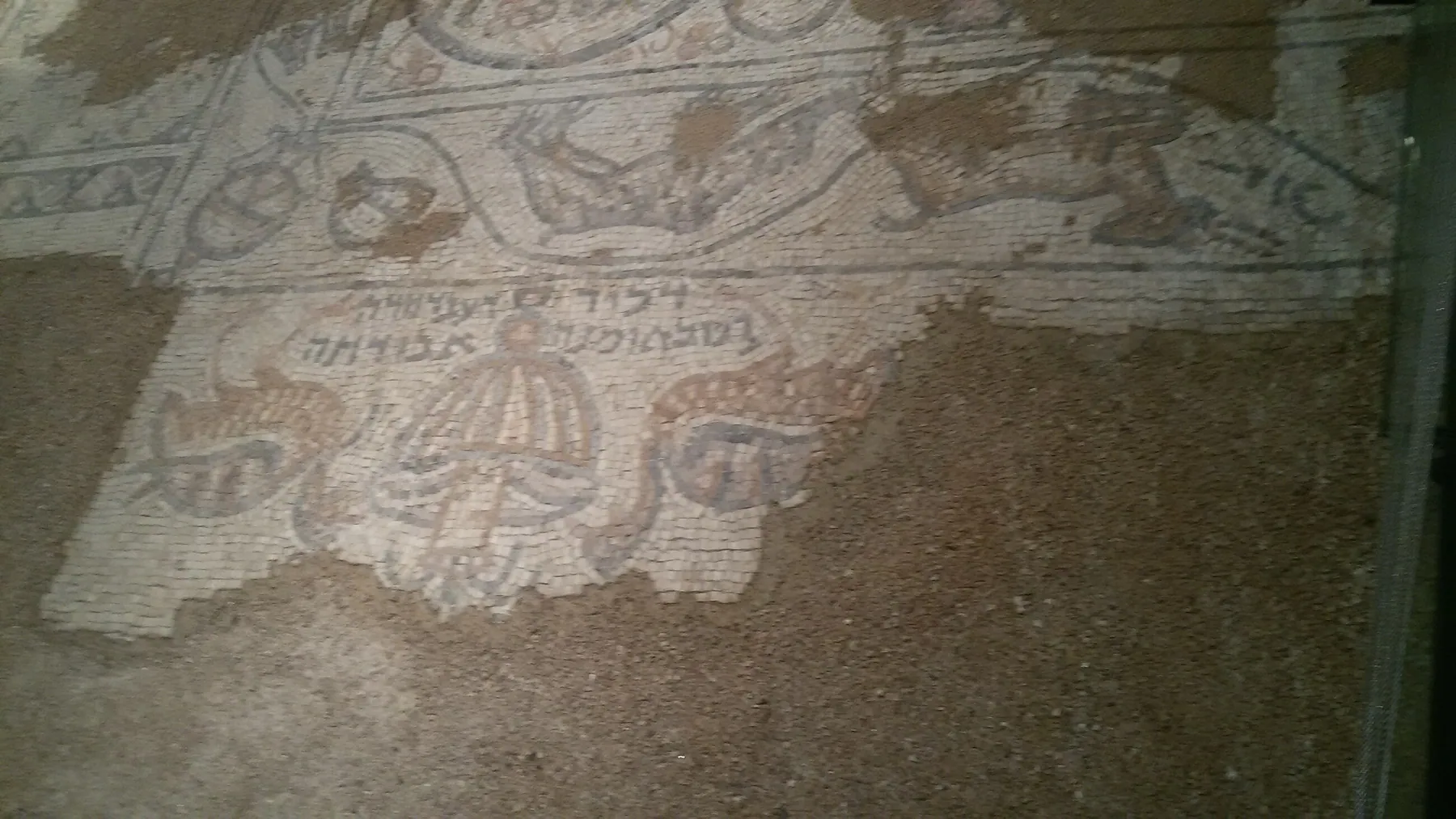
The prayer room was a single chamber inside a courtyard building, entered through doorways in its north and east walls. One description gives its size as about seven metres square, and the Kinneret College synagogue database notes that it had no columns. No Torah shrine, niche or bench is reported in the sources read. What is known of the room is its mosaic floor. A broad geometric border surrounds a field of vine scrolls populated with animals. In the central medallion stands a seven-branched menorah with a citron, an incense shovel and a ram's horn, together with the Hebrew word shalom. On the north border of the central panel a four-line Aramaic text is set in a tabula ansata; it was originally flanked by two birds, described as roosters, of which only the left one survives. South of the central field two guinea fowl face each other across a bowl or chalice, with a second Aramaic inscription. At the northern threshold two lion cubs flank a chalice, and at the eastern threshold a Greek inscription sits between two pheasants. The excavators judged this Greek inscription a later insertion, because its frame cuts into the birds.
La vita nella sinagoga
Nothing is recorded about the services, teaching or meetings held in the room, and the sources read do not agree on its use. Lihi Habas calls it a prayer room or small synagogue; the Center for Online Judaic Studies describes it as a possible 'study house' on the strength of its inscriptions; and a Warsaw University database of late antique buildings leaves open whether it served a private household or a more public establishment such as a hostel for travellers. The inscriptions themselves speak of 'the holy place' and of a 'holy society' whose members paid for its repair and completion, which shows that the room was renovated at least once while in use and that a group, not one owner, took responsibility for it. They close with a wish for blessing, 'abundant peace' and kindness. The people who met here used Aramaic and Hebrew on the floor of the room and Greek at its eastern door. They did so a few steps from a hall whose floor showed Odysseus tied to the mast of his ship, a Siren, the god of the Nile and the city of Alexandria.
Distruzione
No source read says when or how the prayer room went out of use, and none names anyone who destroyed it. The Inscriptions of Israel/Palestine project dates its Aramaic inscription only within the range 400 to 700 CE, and the Kinneret College database gives the period as Late Roman and/or Byzantine without an end date. Two events in the later history of the town are documented in general accounts: the Muslim conquest of 634, after which the town is said not to have been damaged, and the earthquake of 18 January 749, which devastated it. No source read connects either event with this building, so neither can be given as the cause. Dan Bahat's excavation reports of 1972 and 1981, which may record evidence of burning, collapse or abandonment, could not be read. What is certain is that the room no longer exists as a building. It was found as a damaged floor in the excavations of 1970-1972; the mosaic was afterwards lifted and removed to a museum, and according to the Kinneret College database nothing is visible at the site.
Il destino della comunità
What became of the 'holy society' that maintained the room is unknown: no source read follows the Jews of Scythopolis beyond the inscriptions on their floors. The general history of the town is better known. In 634 Byzantine forces were defeated by the Muslim army, and the city, which returned to its Semitic name Baysan, became a district centre of the province of Jund al-Urdunn. General accounts say that it was not damaged in the conquest and that Muslim newcomers lived beside the existing Christian population until the eighth century. On 18 January 749 an earthquake devastated the town. A few residential quarters grew up among the ruins, probably founded by survivors, but the city never recovered its former standing and its centre later moved to the southern hill. Whether any Jewish congregation still met in the town at that date, in this room or elsewhere, was not established from the sources read, and no later record of the society or of the family of Leontis was found.
Il luogo oggi
The Kinneret College synagogue database places the site at about 12-16 Ava Boyar Street in the Nof Ganim neighbourhood of modern Beit She'an and states that nothing is visible there. The prayer-room mosaic, according to the same database, is displayed at the Hecht Museum of the University of Haifa, where its photographs were taken. The three-panel floor from the neighbouring hall of the House of Leontis is in the Israel Museum in Jerusalem, where it was conserved in view of the public with support from the A. G. Leventis Foundation and is shown in the museum's Route of Passage. An older epigraphic record gives the Beth Shean archaeological museum as the location of the Greek inscriptions.
Hai qualcosa da condividere?
Fotografie, documenti, storie di famiglia o ricordi di questa sinagoga e della sua comunità aiutano a mantenerne viva la storia.
- The mosaic floors of the house of Kyrios Leontis in Nysa Scythopolis (Beth Shean), Journal of Mosaic Research 14 (2021), 169-197 (repository record with abstract)
- House of Leontis Complete (building 109)
- Beth Shean Leonitis
- Inscription BSHE0158 (Aramaic dedicatory mosaic inscription, Scythopolis)
- Inscription BSHE0010 (Greek, 'Lord help Leontis')
- Inscription BSHE0011 (Greek dedication of Leontis Kloubas)
- Beit Shean Synagogue Inscription
- Nilometers in the Land of Israel
- Conservation of the Beth Leontis and El Maker mosaics at the Israel Museum, Jerusalem
- File:Odysseus and the Nile Mosaic floor from "The House of Leontis" in Beth Shean, 6th century CE.jpg
- Beit She'an
- Ava Boyar Street, Beit She'an (OpenStreetMap way 228225430)
Share a memory or thought
No comments yet. Be the first to add one.