

Historia Bihać Synagogue
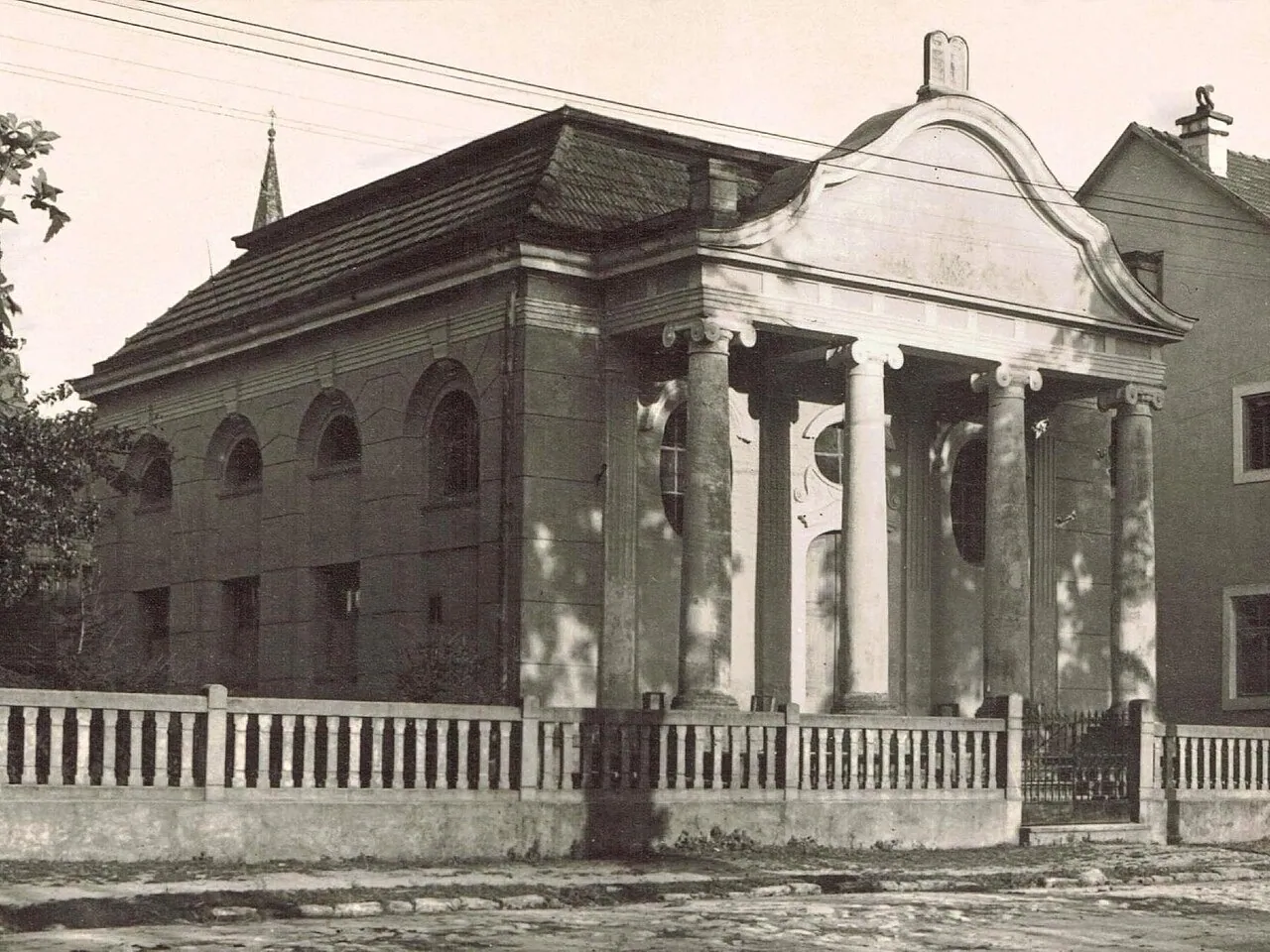
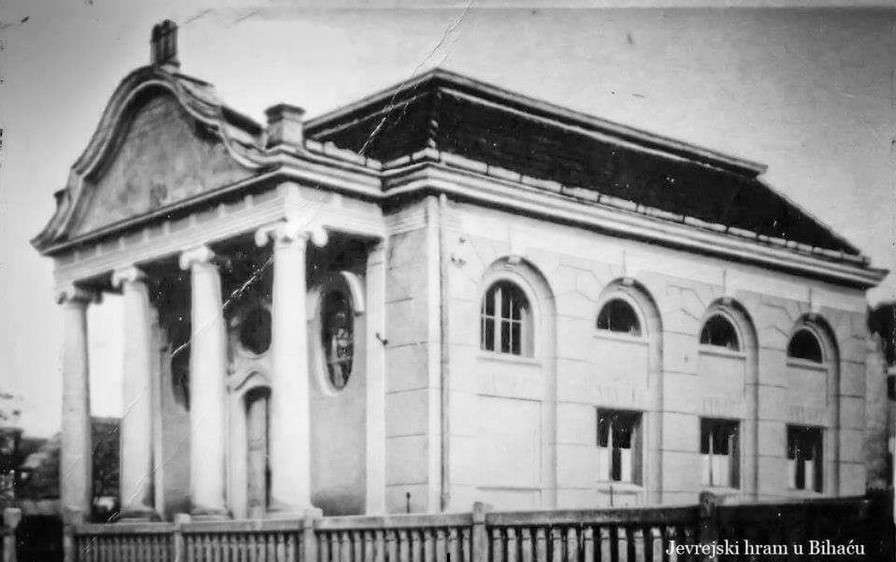
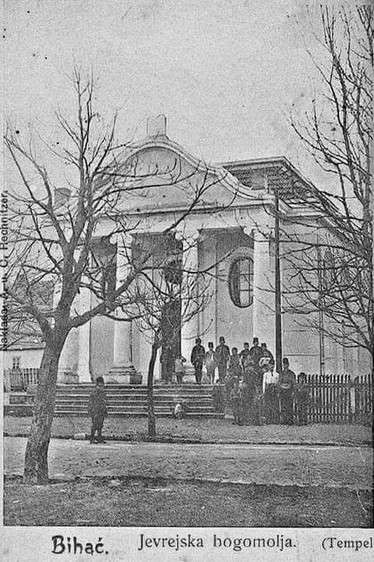
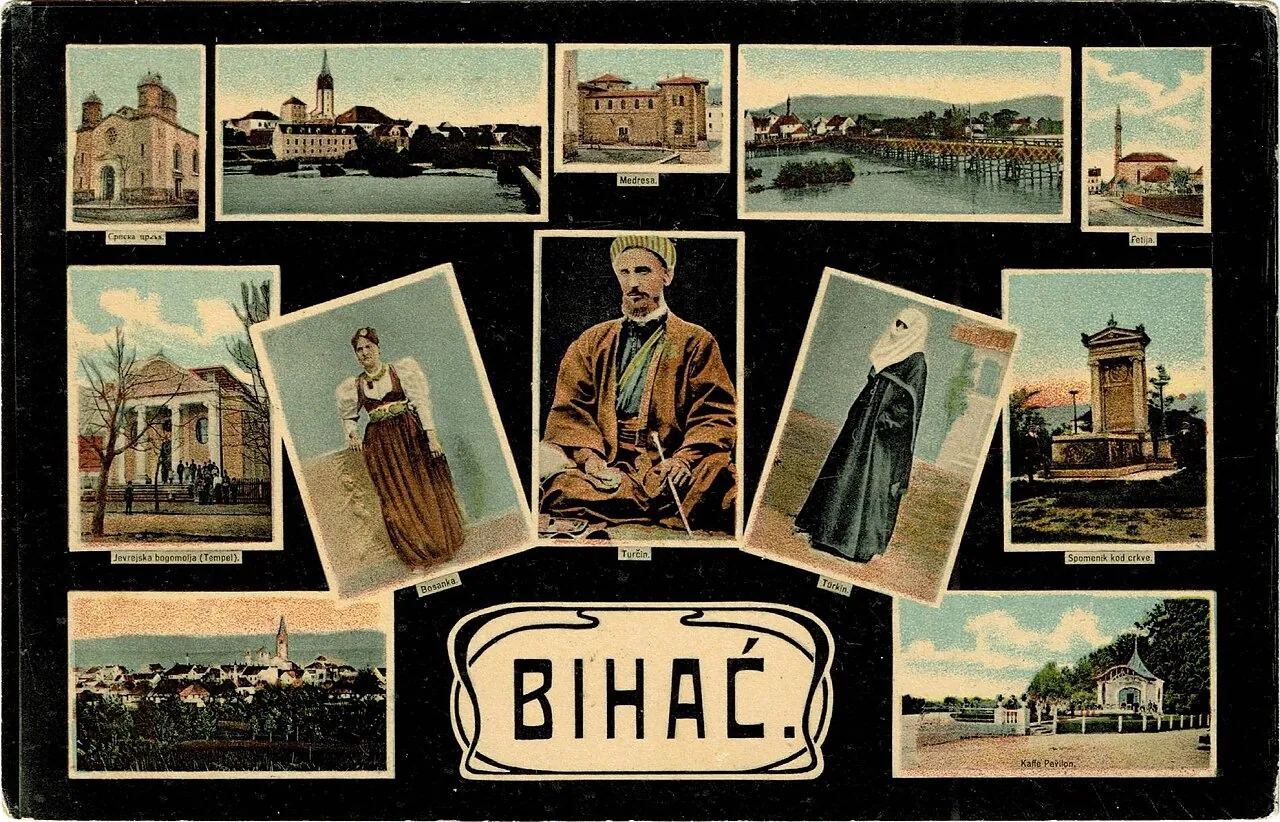
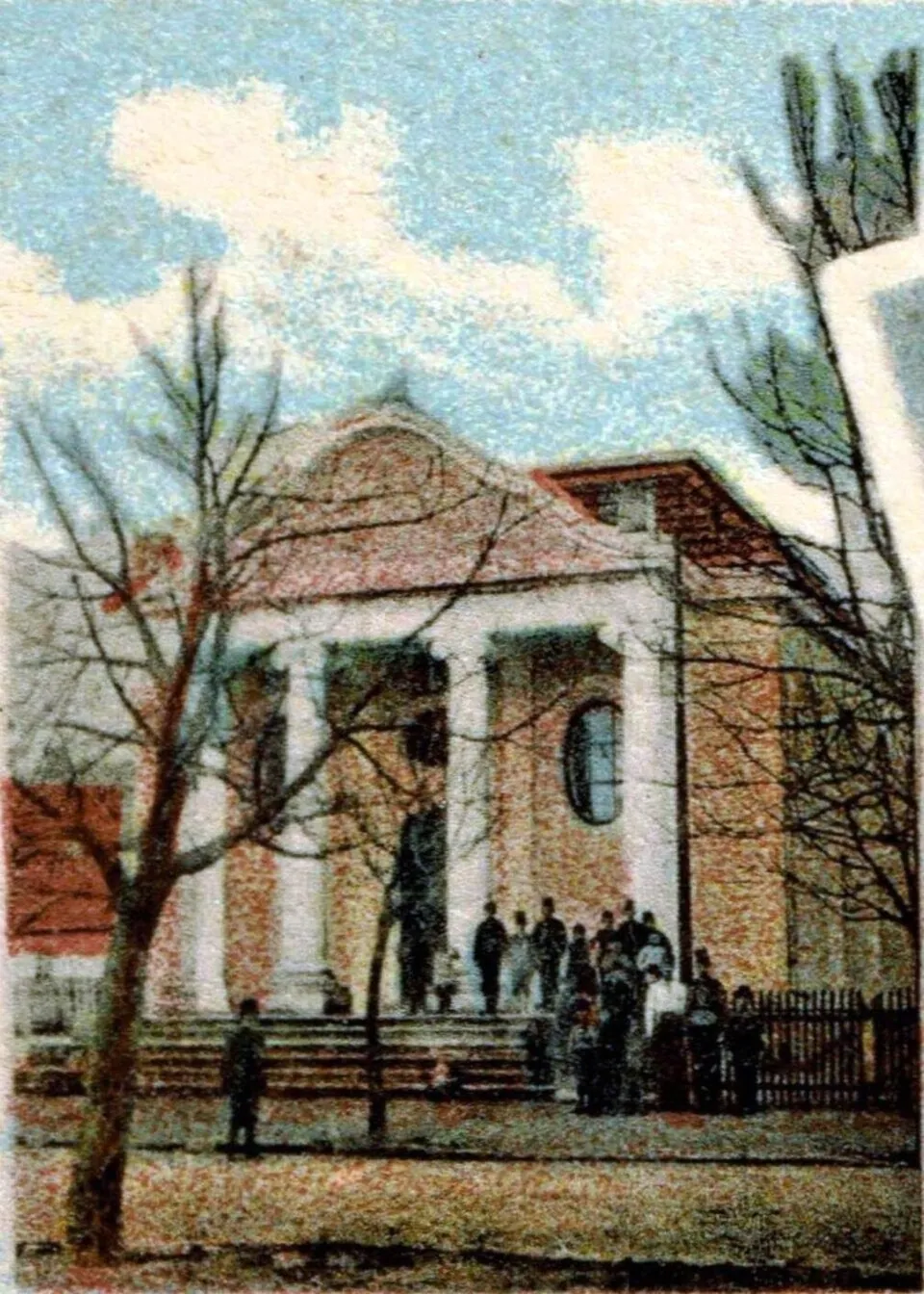
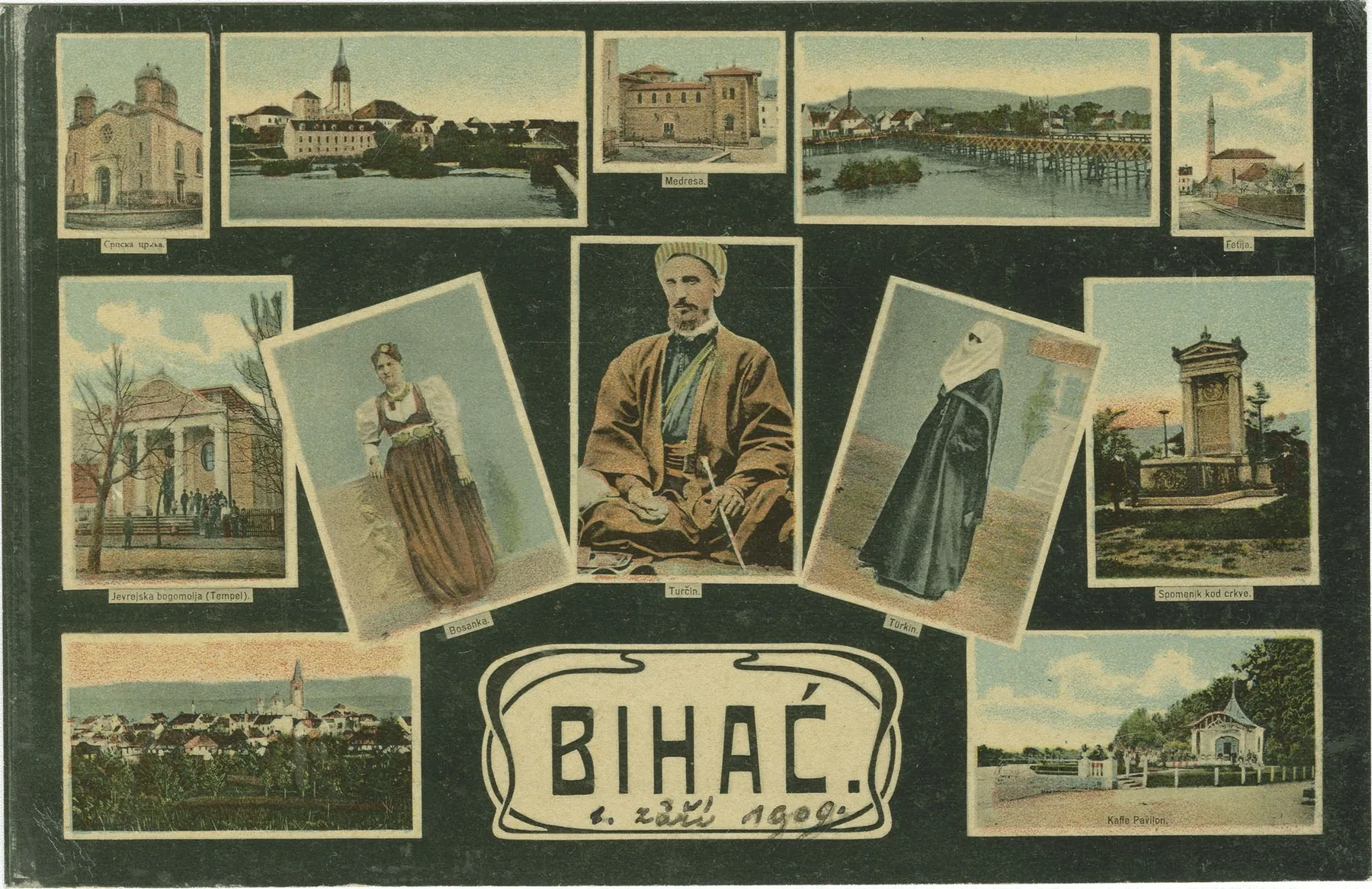
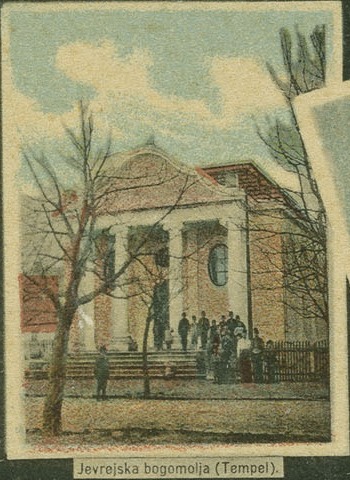
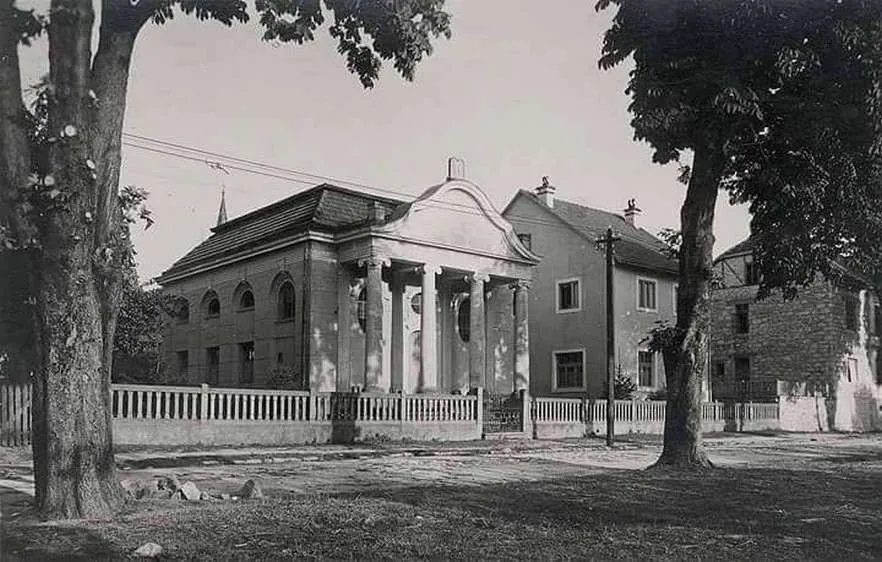
The synagogue stood in the very centre of Bihać, on the street then called Gajevo šetalište and now known as Bedem, facing an avenue of horse-chestnut trees. Jews had settled in the town from Sarajevo, Travnik and Banja Luka in the last decades of Ottoman rule, and for years they prayed in private homes and two makeshift prayer rooms. After a Jewish community was formally organised in 1903–04, Rabbi Avram Juda Atijas led the effort to build a proper house of worship. Financed by the community, it was built and consecrated in 1906, with Jewish guests from Sarajevo, Travnik and Banja Luka and the town's civil and military officials present. Its most striking feature was a portico of four columns under a curved Baroque gable; contemporaries praised it as functional, acoustically good and full of light. Postcards from 1909 onward show it as one of the sights of Bihać. In April 1941 the town came under the Ustaše regime of the Independent State of Croatia. The synagogue's silver was surrendered to the Ustaše as part of a forced levy, and its library and textiles were looted after the town's Jews were rounded up and expelled on 24 June 1941. In the autumn of 1942 it was turned into an ammunition store, and by the end of the war it had been destroyed so completely that not a stone remained. Only 25 of Bihać's 168 Jews survived.
Where it stood for nearly 40 years
Historic: Gajevo šetalište, Bihać. Today: Bedem street, Centar, Bihać (exact plot unknown).
Otwórz większą mapę →Społeczność żydowska
Jews arrived in Bihać one family at a time in the mid-nineteenth century, mostly Sephardim from Sarajevo, Travnik and Banja Luka; the oldest tombstone in their cemetery dates from 1860, and the cemetery itself was formally founded in 1875. A few Ashkenazi families followed the Austro-Hungarian occupation of 1878. The community never exceeded about 165 people: in 1910 the town had 128 Sephardim and 37 Ashkenazim, who worshipped together in a single Sephardi community founded in 1903–04, without the friction between the two groups seen in larger towns. Its members were small traders, fruit sellers and above all craftsmen such as shoemakers, tinsmiths, barbers and upholsterers, alongside a few doctors, judges, teachers and surveyors. Families such as Atijas, Alhalel, Kavezon, Levi, Papo, Pinto and Rehnicer lived scattered across the town among their neighbours, and almost every family sent children to the town's classical gymnasium. On the eve of the Second World War 168 Jews lived in Bihać.
Architektura i projekt
The synagogue was a free-standing, purpose-built hall with a hipped tiled roof, set behind a low wall topped with a balustrade. Its entrance front carried a deep portico of four tall columns, described by Bosnian sources as Greek or Doric, with Ionic-style capitals visible in photographs, supporting a curved, scrolled gable crowned by a small pedestal that may once have held the Tablets of the Law. Behind the portico a round window lit the façade above the main door. The long side walls had two storeys of windows: tall round-headed windows above, probably lighting the women's gallery, and rectangular windows below. Writers describe the style as an eclectic mix of classicism with pronounced Baroque elements. The architect is not recorded, but the original plans survive in the Archive of the Una-Sana Canton in Bihać. Its capacity and interior arrangement are not documented in the sources consulted.
Życie w synagodze
The synagogue was the centre of a close community. Rabbi Avram Juda Atijas, born in Banja Luka in 1877, served Bihać from about 1900 until 1941. He had come as a young man, full of energy and musically gifted, and was respected well beyond his own congregation; he also taught religious instruction in the town's elementary schools and its gymnasium. The synagogue owned a large collection of parochot, the richly embroidered curtains hung before the Torah ark, as well as silver candlesticks and Torah ornaments and a library. It was used for festivals such as Passover and for family occasions, including weddings of local families such as the Levi and Atijas. Sephardi and Ashkenazi Jews prayed together in it, and the building was one of the pictured sights of Bihać on early twentieth-century postcards.
Zniszczenie
The Ustaše of the Independent State of Croatia took power in Bihać in April 1941, after Nazi German troops entered the town on 13 April and Italian troops on 17 April. The Ustaše demanded a levy of 25 kg of gold and 100 kg of silver from the town's Jews; when they could not meet it, the synagogue's silver candlesticks and Torah ornaments were handed over to the local Ustaše commander. After the Ustaše expelled the Jews on 24 June 1941, the synagogue's library, parochot and other valuables were looted. In the autumn of 1942 the building was turned into an ammunition store. According to Avram Pinto's history of Bosnian Jewry, the Ustaše then demolished the synagogue, smashed the cemetery wall and toppled gravestones. Another local account attributes the destruction to wartime bombing; the town was bombed by Allied aircraft in 1943. All agree that nothing of the building remained by 1945.
Los społeczności
On 23 June 1941, the day after Germany invaded the Soviet Union, the Ustaše authorities in Bihać resolved to remove the town's Serbs and Jews. Prominent Jews, among them Rabbi Atijas, were seized as hostages, and Jewish communists were arrested and killed. At dawn on 24 June the Ustaše rounded up all the Jews and Serbs and drove them away in 24 lorries to Kulen Vakuf. The Jews were moved on to Bosanski Petrovac and Prijedor and forbidden to return. Those who reached Cazin were brought back and shot at Žegar near Bihać; most of those in Prijedor were later sent to camps and murdered, while some young people joined the Partisans on Kozara and Grmeč. Rabbi Atijas was killed in the Jasenovac camp in 1941. Of 168 Bihać Jews, 25 survived, and no Jews live in the town today.
Miejsce dzisiaj
Nothing survives of the synagogue, and its exact plot on Bedem street, the former Gajevo šetalište in central Bihać, is not marked in the sources consulted. The chestnut avenue that faced it was cut down after the war when the street was widened. The main surviving trace of the community is the Jewish cemetery on Islamovac hill, declared a National Monument of Bosnia and Herzegovina in 2012, with fewer than a hundred gravestones, many displaced. A faded shop sign of the merchant Aron Kavezon also survives on a building in the town centre.
Ważne postacie
Avram Juda Atijas
1877–1941Rabbi of Bihać, c. 1900–1941Avram Juda Atijas, born in Banja Luka on 18 March 1877, was the third and last rabbi of Bihać and the initiator of the synagogue built in 1906. Admired across the town, he also taught religion in its schools and gymnasium. He was taken hostage by the Ustaše in June 1941 and murdered at Jasenovac.
Biografia lub źródło →Czy masz coś do przekazania?
Zdjęcia, dokumenty, historie rodzinne lub wspomnienia o tej synagodze i jej społeczności pomagają zachować jej historię.
- Bihać (from Jevreji Sarajeva i Bosne i Hercegovine, 1987)
- Sarajevski pinkas
- Kameni spavači pod Debeljačom – svjedočanstvo o bihaćkim Jevrejima
- Jevrejsko groblje u Bihaću
- Židovi Bihaća
- Jevreji Bihaća u periodu 1941–1945
- Izgubljeno u holokaustu: jevrejski kamaluk u Bosni i Hercegovini – Bihać (exhibition panel)
- Jewish Heritage Sites in Bosnia-Herzegovina (survey report)
- List of synagogues in Bosnia and Herzegovina
- Iako u Bihaću više nema Jevreja, tragovi njihovog postojanja još su vidljivi
- Bedem street, Bihać (OSM way 82905015, geocoded via Nominatim)
- [Landmarks of Bihać] postcard
Share a memory or thought
No comments yet. Be the first to add one.