

The story of Bijeljina Synagogue
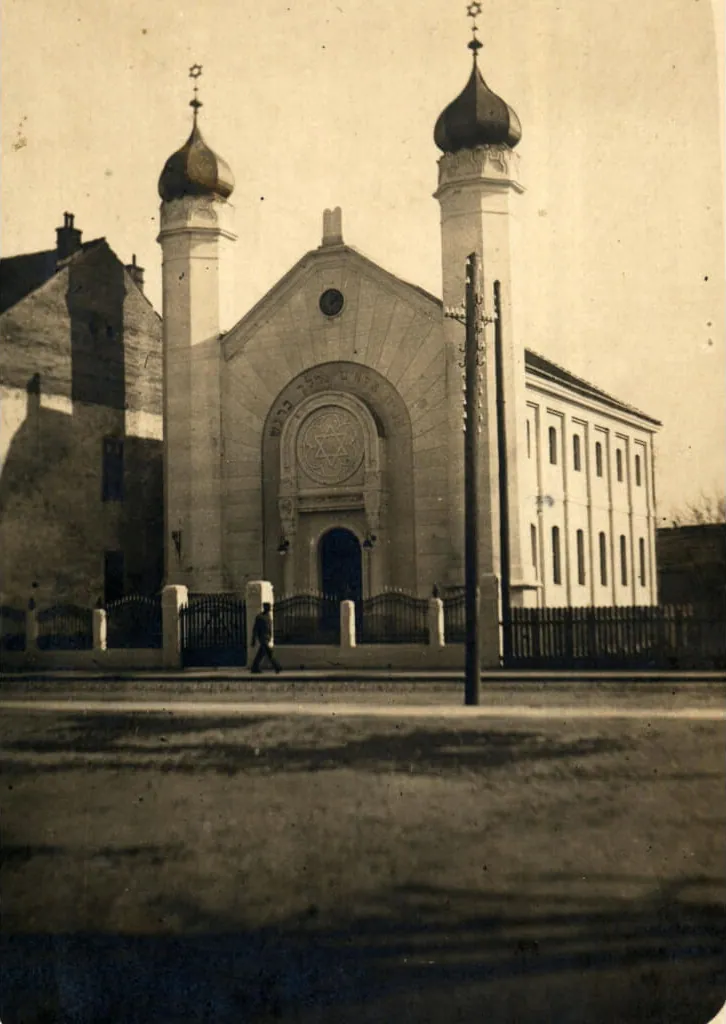
Bijeljina, the chief town of the Semberija plain in north-eastern Bosnia, had a Jewish community from the mid-nineteenth century. For decades its Sephardi and Ashkenazi Jews prayed separately, until Avram Levi, first president of a joint Jewish community, took the initiative for one common synagogue. Local sources date it variously to 1895, 1899 or about 1900; the Sarajevo chronology of the elmundosefarad site and the town historians Lj. Božić and the Historical Museum of Bosnia and Herzegovina give 1900. It stood on the town's main street, then called Wilmastrasse, in the Ćoralića mahala, across from the present Hotel Drina at the corner of Kneza Miloša and Karađorđeva streets. With its two towers it was one of the most conspicuous buildings of the town centre, and older residents long called the spot the 'Jewish meraja'. Two photographs from the collection of the Center for Jewish Art in Jerusalem show it intact. In 1941 the building was looted and wrecked and turned into a stable. It survived the war as a ruin and was then demolished; a small park and car park now occupy the site.
Where it stood for nearly 45 years
Historic: main street (Wilmastrasse), Ćoralića mahala, Bijeljina. Today: corner of Kneza Miloša and Karađorđeva streets, opposite Hotel Drina (Kneza Miloša 1), 76300 Bijeljina; approximate.
Open larger map →The Jewish community
According to Lj. Božić, Jews settled in Bijeljina after the Ottoman reforms of Omer Pasha in 1851, and they never made up more than one to three per cent of the town's population. Before the joint synagogue was built the community had a small prayer house with two rabbis and an elementary school. Saud Grabčanović's series on the Jews of Bijeljina describes a community active in civic life: the Sephardi rabbi Menahem Salom sat in the town's majlis and was in the delegation that handed the keys of the town to Austro-Hungarian troops in 1878; Menahem Salom, Haim Papo and Josip and Haim Alkalaj sat on the town council before 1914, and Haim Papo, Rabbi Baruh Zadik, Leon Nusbaum, Vilim Švicer and the landowner and benefactor Avram Finci in 1919. From 1914 Rabbi Zadik Baruh headed the Sephardi religious community. A yellow house belonging to Iko Alkalaj, with Stars of David on its front, served as the seat of the Jewish community, and a street was popularly called 'Galamića sokak'. Before the Second World War about 350 Jews lived in the town.
Architecture and design
The synagogue was a large, free-standing hall built for a joint Sephardi and Ashkenazi congregation. Grabčanović gives its floor area as 625 square metres, with a courtyard of 388 square metres and a garden; Božić mentions a large, well-paved courtyard. The entrance front faced north and was flanked by two tall, slender polygonal towers, described as hexagonal by the Historical Museum and octagonal by German Wikipedia, each crowned by an onion dome; the photographs show a Star of David on each finial. The museum notes that the towers reminded people of the minarets of mosques. Between them the gabled centre of the facade has a large round-arched recess framing a round window or rose and the entrance door, with a round oculus in the gable above. The long side wall has two storeys of tall windows, matching the written descriptions of galleries on the upper floor. A low wall with piers and railings separated the forecourt from the street. The architect, builder and seating capacity are unknown.
Life inside the synagogue
The synagogue served both rites of the town's Jews under one roof. In the last years before the Second World War it was served by two rabbis, whom older people of Bijeljina called the 'Jewish hodžas'. According to Grabčanović they worked without pay, chosen by the community as its most learned and pious members, and earned their living in trade; Rabbi Zadik Baruh, for example, kept a general store. The Historical Museum of Bosnia and Herzegovina lists their duties as leading worship, ritual slaughter and teaching children at the meldar, the traditional religious school. A photograph published by the museum shows the interior in 1936 with Rabbi Rafael Levi. Grabčanović records that the synagogue owned eight Torah scrolls written on parchment with gold ornament, which were carried off when it was plundered. No description of the ark, the bimah or the furnishings survives in the sources read.
Destruction
The sources agree that the synagogue was looted and wrecked at the start of the Second World War, after Bijeljina became part of the Ustaša-ruled Independent State of Croatia in 1941, and that it was turned into a stable. They differ on who did it. Saud Grabčanović writes that local ethnic Germans, especially from Franz-Josefsfeld (Novo Selo), led by Karl Leitenberger of the Kulturbund, carried out a pogrom against the synagogue, wrecked and plundered it and took away its eight Torah scrolls, and that it then served as a stable for the horses of the German army. Radio-Television BN says it was turned into a stable under the Ustaša regime. German Wikipedia, citing Francine Friedman, adds that it later burned. The shell survived the war. All sources say it was then completely demolished; Lj. Božić writes that it was pulled down by the new Communist authorities. No source gives the year of the demolition.
The community’s fate
In April 1941 Bijeljina was incorporated into the Independent State of Croatia, and its Jews fell under the Ustaša regime. According to Lj. Božić, 318 Jews from the Bijeljina municipality died in camps and other terror during the war; the Ustaše killed 242 of them, 193 in the Jasenovac concentration camp. Of about 350 Jews living in Bijeljina, only a few dozen survived. The memorial plaque on the synagogue site, set up in May 2006 by the citizens of Semberija, likewise names them as victims of Ustaša crimes of 1941 to 1945. After the war the few survivors soon left Bijeljina, and no Jewish community was re-established. Božić wrote in 2020 that not a single Jewish family remained in the town. The Jewish cemetery is the other surviving trace of the community.
The site today
The synagogue stood on the corner of Kneza Miloša and Karađorđeva streets, opposite the Hotel Drina and near the old bus station. After its demolition the plot remained empty and was laid out as a small park; Radio-Television BN describes the corner as a car park today. Nothing of the building is known to survive. A memorial plaque to the town's Jews, placed in May 2006 by the citizens of Semberija, marks the place where the synagogue stood. The exact boundaries of the plot have not been checked against a cadastral map.
Notable names
Rafael Levi
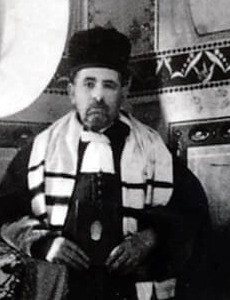
UnknownRabbi of Bijeljina, in office in 1936Rabbi Rafael Levi (given as Levi Rafael) appears, in prayer shawl at the reader's platform, in a 1936 photograph of the interior of the Bijeljina synagogue published by the Historical Museum of Bosnia and Herzegovina. He was presumably one of the two rabbis who served the synagogue in the years before the Second World War, but the source names him only in the caption, and nothing else about his life or fate was found.
Biography or source →Avram Levi
UnknownFirst president of the joint Jewish community of Bijeljina; initiator of the synagogueLevi is named by Saud Grabčanović and by the Historical Museum of Bosnia and Herzegovina as the president of the first joint Jewish community of Bijeljina and the person whose initiative led to the building of one common synagogue for the town's Sephardi and Ashkenazi Jews around 1900. German Wikipedia calls him a rabbi who reconciled the two congregations. Nothing more about his life was found.
Biography or source →Zadik Baruh (Baruh Zadik)
UnknownRabbi; head of the Sephardi religious community of Bijeljina from 1914Grabčanović writes that from 1914 Rabbi Zadik Baruh stood at the head of the Sephardi religious community in Bijeljina, and that he also sat on the municipal council in 1919. Like the other unpaid rabbis who served the synagogue, he earned his living in trade, owning a general store and a scrap business. His fate in the Holocaust was not found.
Biography or source →Do you have something to contribute?
Photographs, documents, family stories or memories of this synagogue and its community help keep its history alive.
- Bijeljinski Jevreji X dio
- Jevreji u Bijeljini
- Jevrejska meraja, mjesto nekadašnjeg zajedničkog hrama Aškenaza i Sefarda u Bijeljini
- Bijeljinske ulice sa šarmom starih vremena
- Synagoge (Bijeljina)
- Sarajevski pinkas (chronology)
- List of synagogues in Bosnia and Herzegovina
- Category:Bijeljina Synagogue
- Spomen ploča na mjestu nekadašnje sinagoge 01.jpg
- Bijeljina Synagogue (Q29110695)
- Hotel Drina, Kneza Miloša 1 (OSM way 542570648)
Share a memory or thought
No comments yet. Be the first to add one.