
Die Geschichte von Kal Aragon Synagogue, Bitola
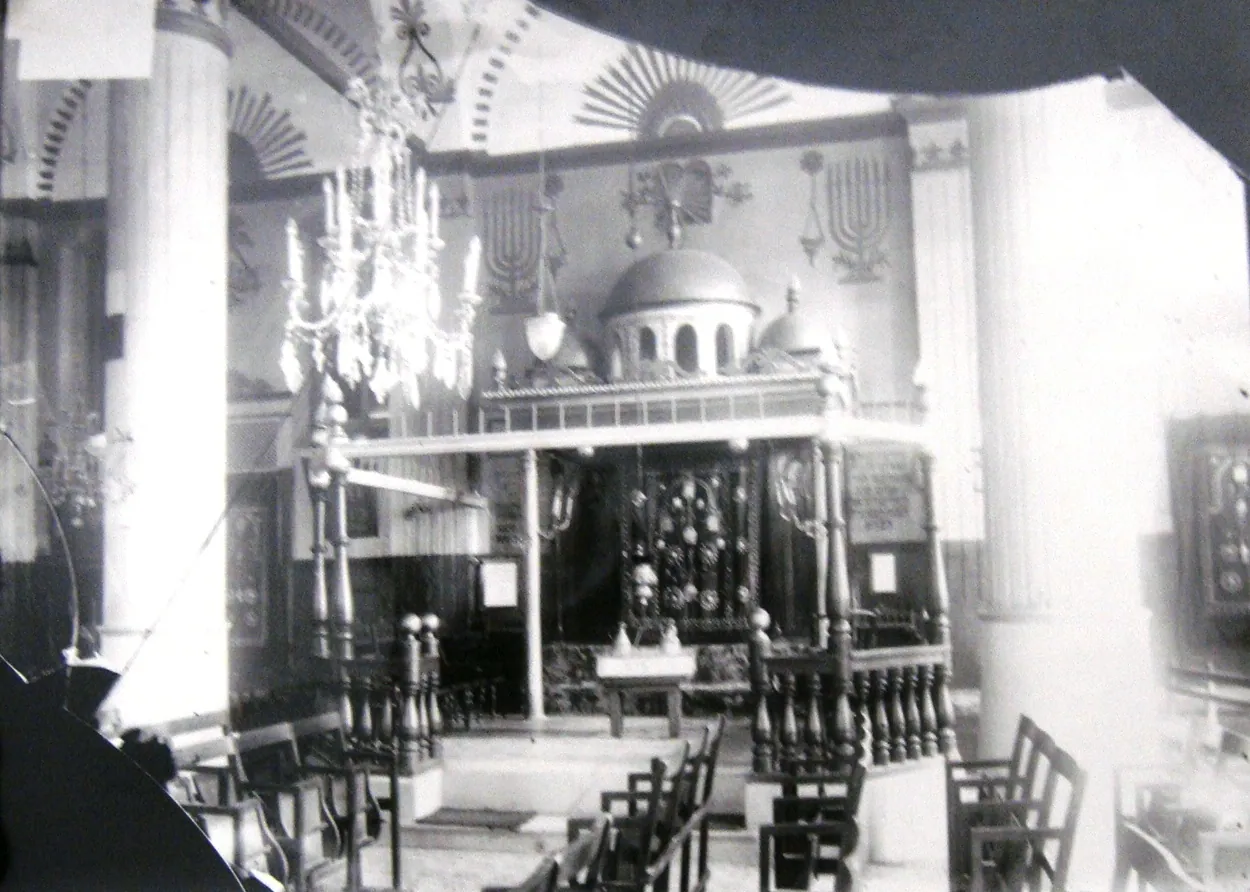
Kal Aragon stood in the Jewish courtyard quarter of Bitola, on what is now Taki Daskalo street near the city's main mosque. Founded by exiles from Aragon in the mid-sixteenth century, around 1545–1550, it was the synagogue of the 'upper' congregation and became the largest and most important synagogue of Monastir. It burned in the late sixteenth century and was rebuilt in the seventeenth, burned again in the great fire of 1863 and was rebuilt from donations, and suffered another fire in 1897. During the First World War, when Bitola lay on the Macedonian front, shelling brought down its dome and destroyed a Torah scroll said to have been brought from Spain; the building was restored after the war and served as the community's main synagogue. It was a large stone building in Ottoman style, its roof carried on four pillars and crowned by a drum with tall windows, a central dome and two smaller domes; the walls were painted with a menorah and a rising sun. Under Bulgarian occupation the Jews of Bitola were deported to Treblinka in March 1943. The occupiers turned the synagogue into a slaughterhouse for pigs and, before withdrawing in 1944, wrecked and looted it. In 1947 the post-war authorities razed the ruins.
Where it stood
Historic: Kal Aragon, Jewish courtyard quarter (Taki Daskalo street), beside the main mosque, Bitola. Today: site of the Dr Haim Abravanel health centre, Bitola. Approximate.
Größere Karte öffnen →Die jüdische Gemeinde
Bitola, called Monastir by its Jews and the Ottomans, received Sephardic exiles from Spain and Portugal at the end of the fifteenth and in the sixteenth century; the first Jewish cemetery is dated to 1497. The community lived in a walled courtyard quarter beside the Dragor river, divided into three cortijos, Aragon, Portugal and Ozer Dalim, each with its own central synagogue. In 1863 about 3,000 Jews lived in the city, and by the early twentieth century the community reached 10,000 or more, though many emigrated to the Americas and Palestine after the Balkan Wars and the First World War, when Bitola lay on the Macedonian front. On the eve of the Second World War about 3,300 Jews remained, most of them poor artisans and small traders speaking Ladino. Kal Aragon was the synagogue of the Aragon courtyard and of the 'upper' congregation.
Architektur und Gestaltung
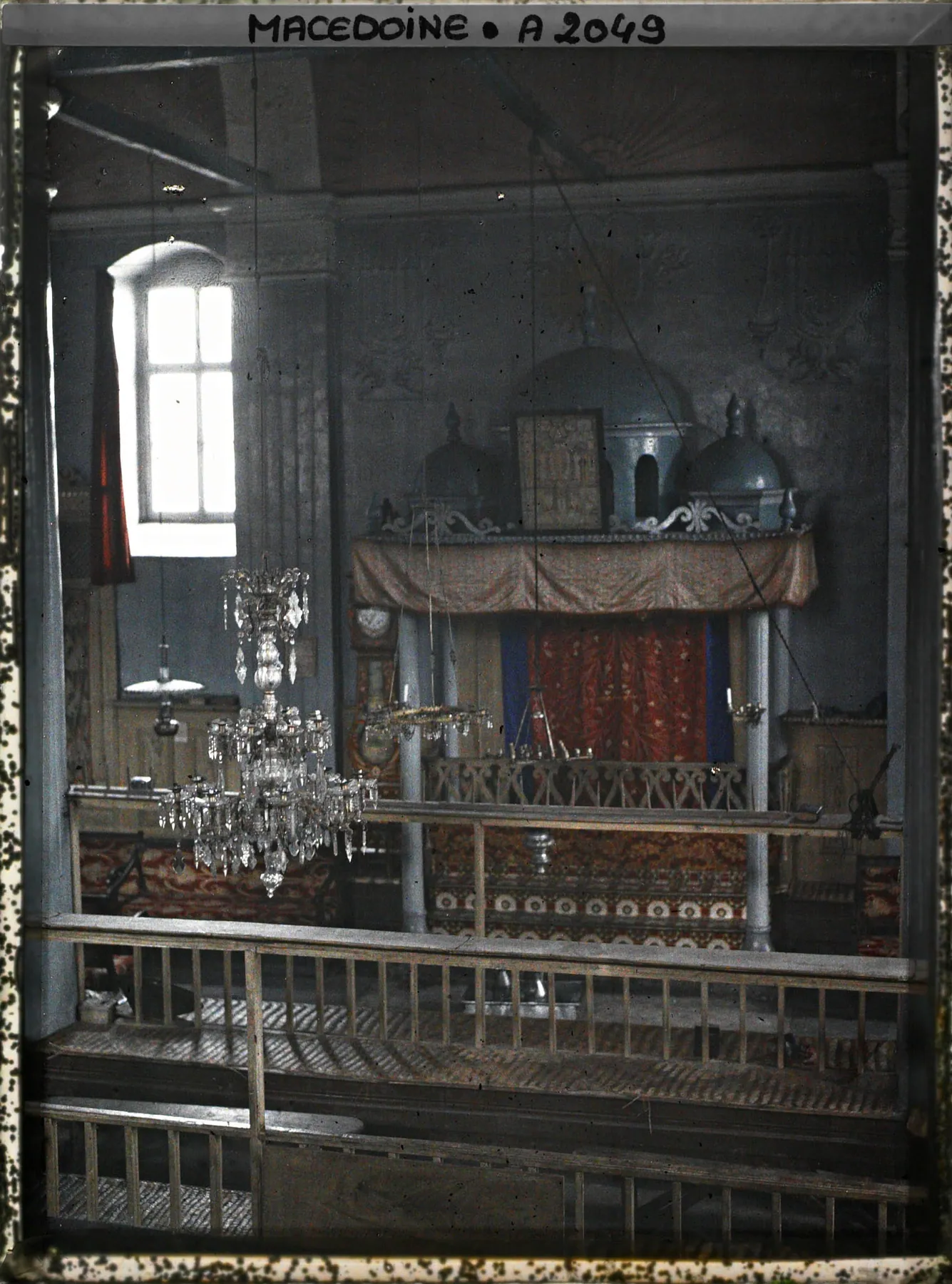
Kal Aragon was a large building described by Hebrew sources as being in Islamic style, standing beside the main mosque of the city. Its roof rested on four pillars, and above it rose a round drum pierced by tall windows, carrying a large central dome flanked by two smaller domes. The walls were painted with a menorah and a rising sun, and a large chandelier hung in the hall. The Torah ark was set in a covered niche in the east wall. Photographs of 1913 and of the inter-war years show an elaborately carved and painted ark and an enclosed bimah with turned balusters and hanging lamps. The building was repeatedly rebuilt after fires, most recently after 1863 and 1897, and its dome was rebuilt after it collapsed under shelling in the First World War. The architect of the last building is unknown.
Leben in der Synagoge
Kal Aragon was the principal synagogue of Monastir and the seat of its rabbis. Rabbis associated with the community over the centuries include David Adiges (1575), Avraham Falcon (1643), Shmuel Tsadok, Benjamin Medina (1730), Avraham and David de Buton (eighteenth century), Mercado Kamhi (1838), Ariel Ben-Zion (1913) and Shabtai Djaen (1924). The last rabbi, Avraham Moritz Romano, took office in 1931 and was murdered at Treblinka in 1943. Services followed the Sephardic rite in Hebrew, with sermons and community life in Ladino. In May 1913 the French photographer Auguste Léon of Albert Kahn's Archives of the Planet photographed the interior in colour, and the Manaki brothers, Bitola's pioneering photographers, recorded the ark and bimah between the wars.
Zerstörung
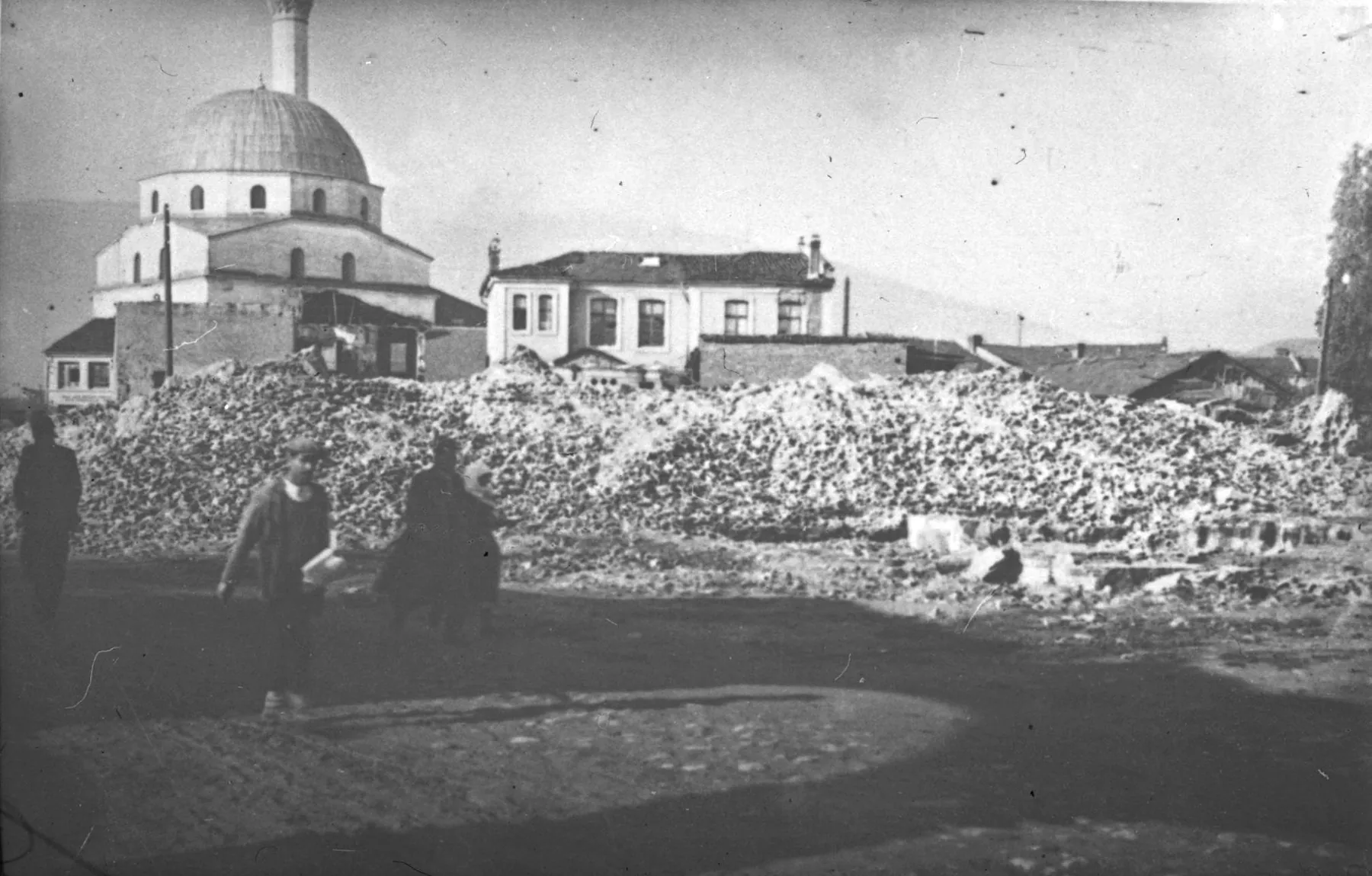
During the First World War shelling caused the dome to collapse and burned the community's ancient Torah scroll, but the synagogue was restored. In April 1941 Bitola was annexed by Bulgaria, an ally of Germany. After the Bulgarian police and army deported the city's Jews on 11 March 1943, the Bulgarian occupiers turned Kal Aragon into a slaughterhouse for pigs. In 1944, before withdrawing, they wrecked and looted the building; Macedonian sources say it was set alight. In 1947 the post-war Yugoslav authorities razed the ruins, which a photograph of that year shows as a roofless shell with its dome amid rubble.
Das Schicksal der Gemeinde
In April 1941 Bitola was occupied and annexed to Bulgaria, an ally of Nazi Germany. Under the agreement of 22 February 1943 between the SS officer Theodor Dannecker and the Bulgarian commissar Aleksandar Belev, Bulgarian police and soldiers rounded up the Jews of Bitola on 11 March 1943 and took them to the Monopol tobacco warehouse in Skopje. From there they were deported in three transports, on 22, 25 and 29 March 1943, to the Treblinka extermination camp, where they were murdered on arrival; the 29 March train carried about 2,300 Jews from Bitola. About 3,276 Bitola Jews were deported and none of them survived.
Der Ort heute
Nothing of the synagogue survives. The site is now occupied by the Dr Haim Abravanel health centre, known locally as 'Uredot', near the main mosque in the centre of Bitola. The Jewish courtyard quarter around it disappeared after the war, and Bitola has no Jewish community today. The city's Jewish cemetery, one of the oldest in the Balkans, survives on the edge of town. The other two great synagogues of the quarter, Kal Portugal opposite and Ozer Dalim nearby, have also vanished, so that no synagogue building of Monastir's three courtyards remains standing.
Bedeutende Namen
Avraham Moritz Romano
Unknown–1943Rabbi of Monastir, 1931–1943Avraham Moritz Romano became rabbi of Monastir in 1931 and led the community from its main synagogue, Kal Aragon, until the deportation of March 1943. He was deported with his congregation by the Bulgarian authorities and murdered at Treblinka.
Biografie oder Quelle →Haben Sie etwas beizutragen?
Fotos, Dokumente, Familiengeschichten oder Erinnerungen an diese Synagoge und ihre Gemeinde halten ihre Geschichte lebendig.
Share a memory or thought
No comments yet. Be the first to add one.