

История Kal Portugal Synagogue, Bitola
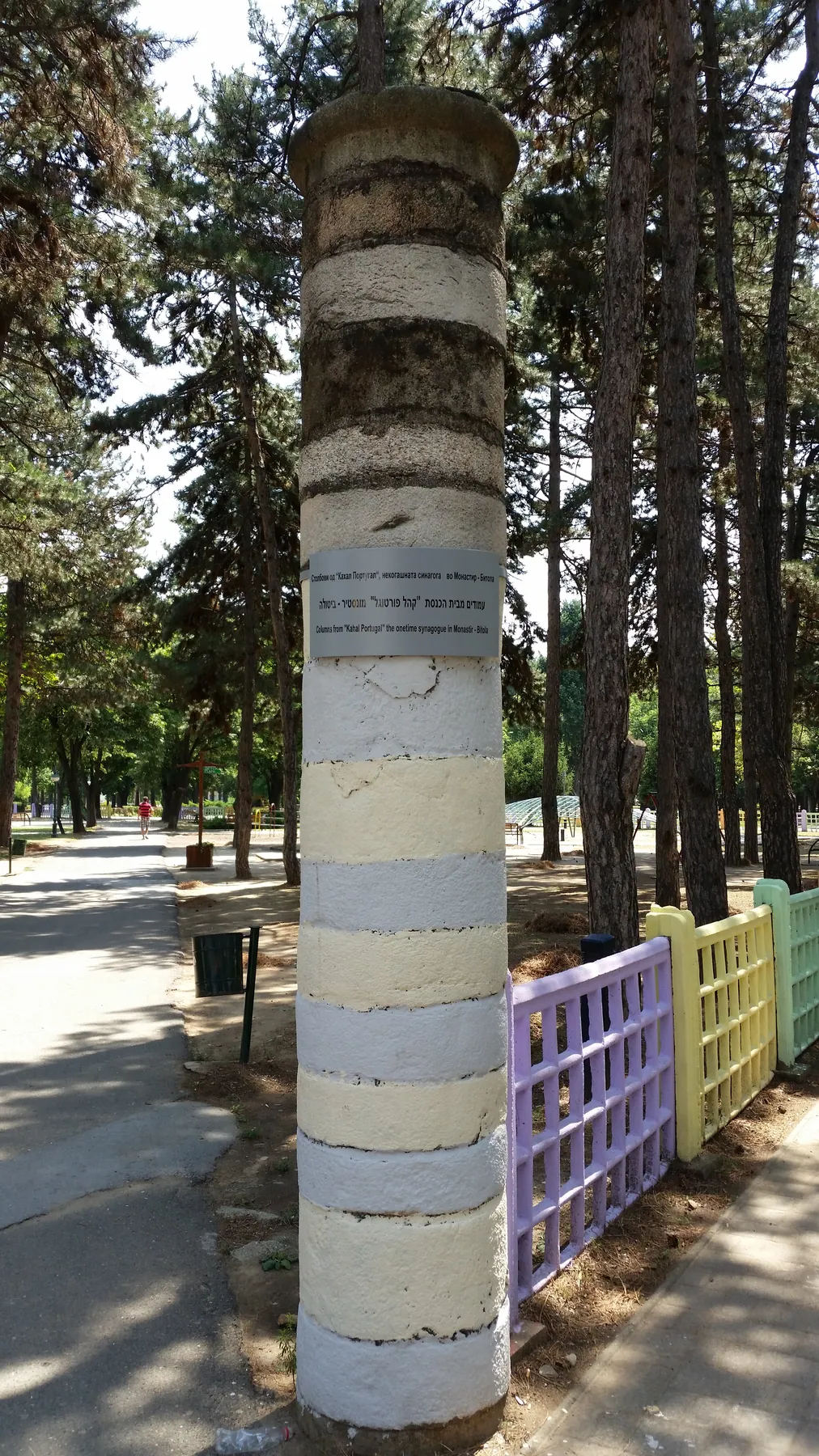
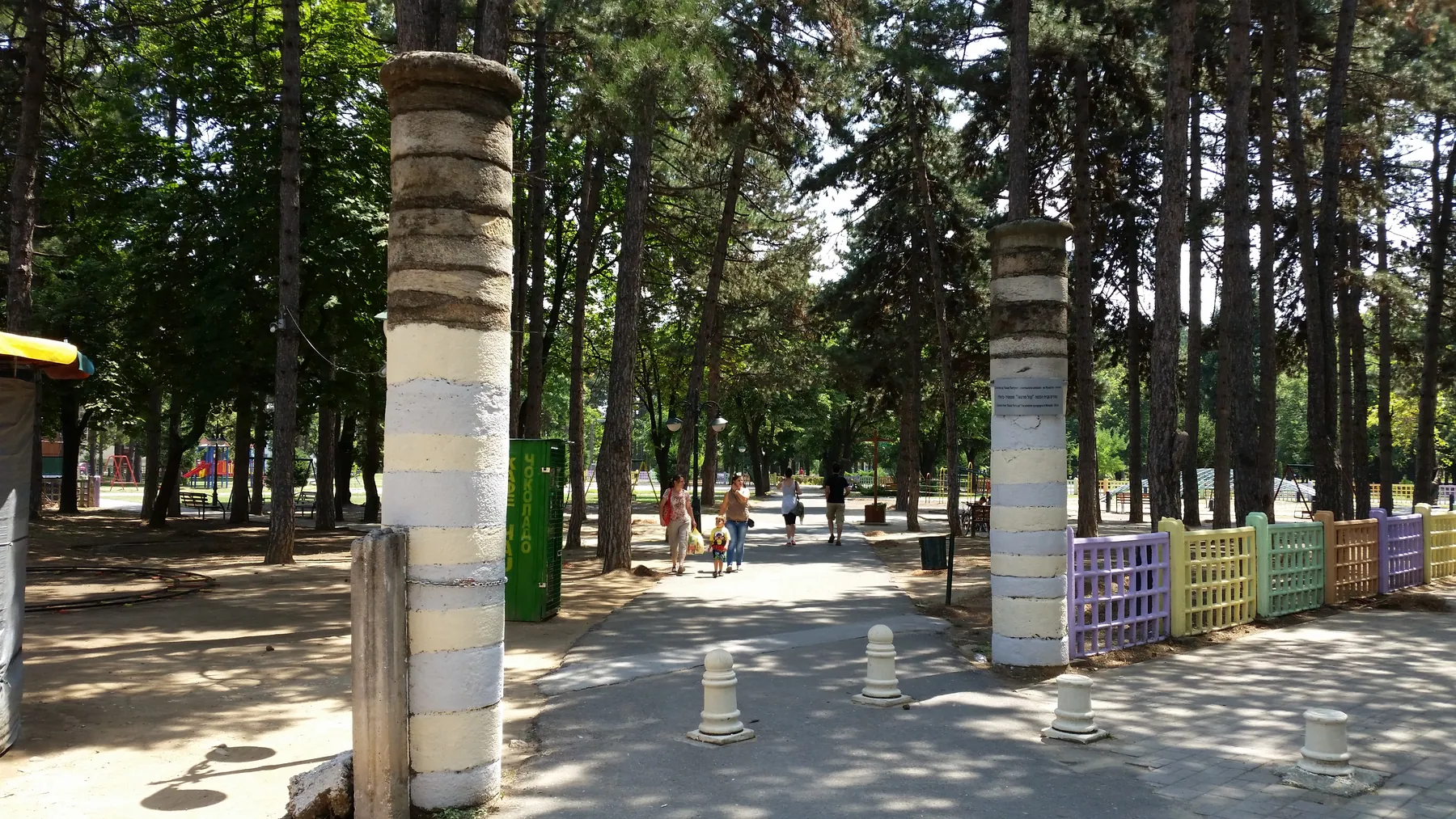
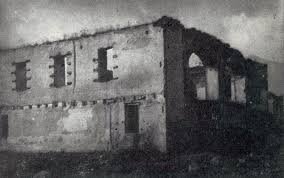
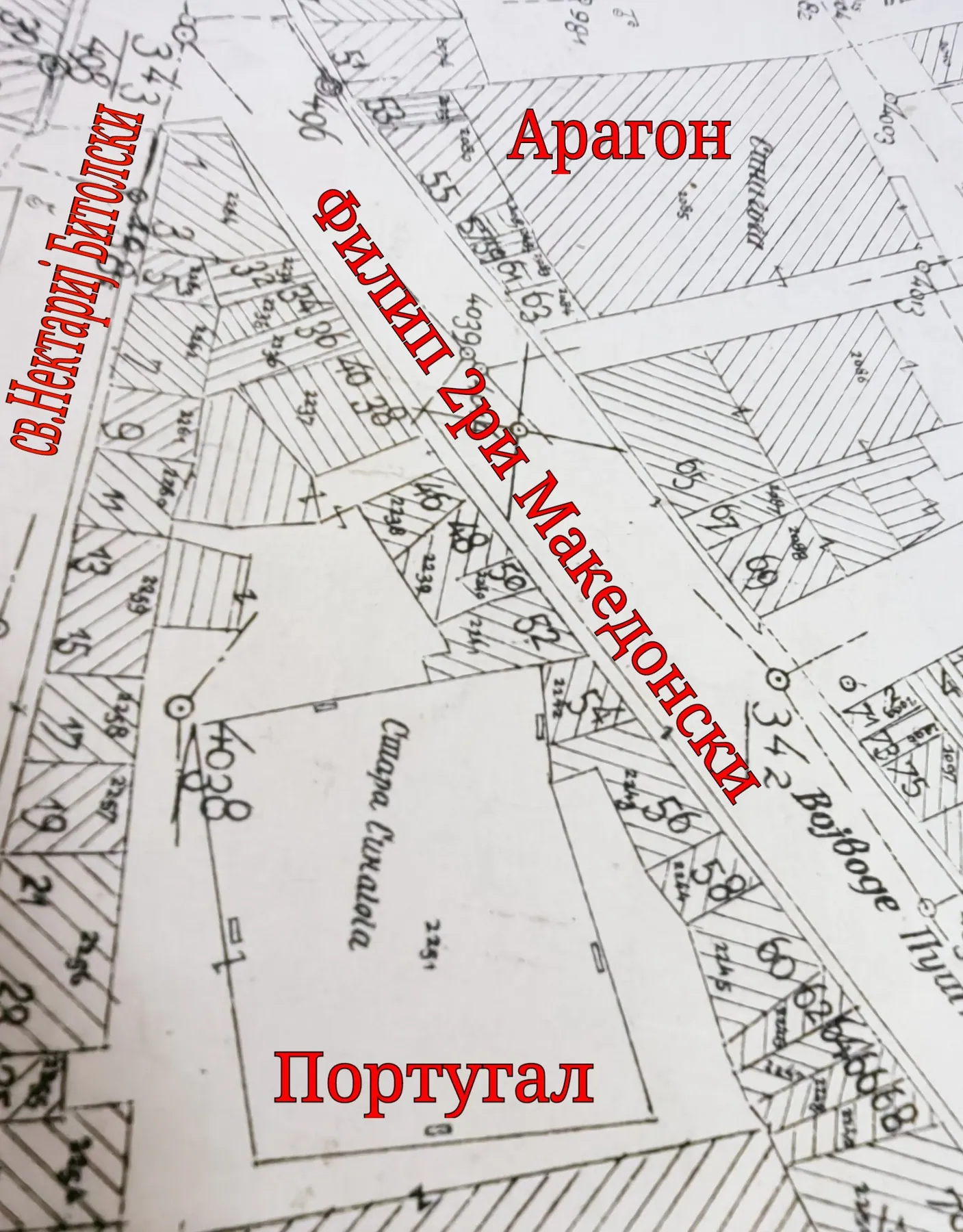
Kal Portugal stood opposite Kal Aragon in the Jewish courtyard quarter of Bitola, at the corner of today's Filip II Makedonski and Sv. Nektarij Bitolski streets. Founded by Jews from Portugal after 1580, around 1590, it was the synagogue of the 'lower' congregation and of the Portugal courtyard (cortijo chico). Like its neighbour it burned several times, in the late sixteenth century, in the great fire of 1863 and in 1897, and was rebuilt each time. A traveller described its interior of three rows of columns carrying twelve domes, which gave it the look of a mosque or bath-house. During the First World War Bitola lay on the Macedonian front and was heavily shelled from the surrounding mountains. In 1917 the bombardment destroyed Kal Portugal; unlike Kal Aragon, it was never restored, as the war and emigration had reduced the community. The Manaki brothers photographed its burnt-out shell after the war. In 1929 the municipality razed the ruins. Two of its columns stand today at the entrance to the city park beside the Hotel Grand Central, which occupies part of the site. The Jews who had worshipped there were deported to Treblinka by the Bulgarian authorities in March 1943.
Where it stood for nearly 330 years
Historic: Kal Portugal, opposite Kal Aragon in the Jewish courtyard quarter, Bitola. Today: corner of Filip II Makedonski and Sv. Nektarij Bitolski streets, site of the Hotel Grand Central and city park entrance, Bitola. Approximate.
Открыть большую карту →Еврейская община
Bitola, called Monastir by its Jews and the Ottomans, received Sephardic exiles from Spain and Portugal at the end of the fifteenth and in the sixteenth century; the first Jewish cemetery is dated to 1497. The community lived in a walled courtyard quarter beside the Dragor river, divided into three cortijos, Aragon, Portugal and Ozer Dalim, each with its own central synagogue. In 1863 about 3,000 Jews lived in the city, and by the early twentieth century the community reached 10,000 or more, though many emigrated to the Americas and Palestine after the Balkan Wars and the First World War, when Bitola lay on the Macedonian front. On the eve of the Second World War about 3,300 Jews remained, most of them poor artisans and small traders speaking Ladino. Kal Portugal served the Portugal courtyard and the 'lower' congregation.
Архитектура и дизайн
Kal Portugal was built in the Ottoman manner, with a hall of three rows of columns carrying twelve domes, according to a traveller's description cited by the local press; the effect was compared with a mosque or a hamam. Like Kal Aragon it was a stone building rebuilt several times after fires, the last major rebuilding following the fire of 1863. A photograph by the Manaki brothers taken after the First World War shows the burnt-out shell with its walls and arched openings standing among trees. Two stone columns from the synagogue survive at the entrance to Bitola's city park; they are not protected as monuments and were painted green in 2020. The architect is unknown, and no interior photographs of the intact building have been found.
Жизнь в синагоге
Kal Portugal was one of the three main synagogues of Monastir, each tied to one of the courtyards of the Jewish quarter and to the descendants of a group of exiles; its congregation traced its origins to Portugal, while Kal Aragon served those from Aragon. Services followed the Sephardic rite. The rivalry and cooperation of the congregations shaped communal life: Yad Vashem records that after the fire of the late sixteenth century the two synagogues were rebuilt from a joint fund, with the order decided by lot. By the early twentieth century the congregation was shrinking through emigration, and after 1917 its members joined the other synagogues of the city.
Разрушение
Kal Portugal survived the fires of 1863 and 1897 but not the First World War. Bitola, held by Bulgarian and German forces in the hills and by the Entente in the town, lay on the Macedonian front from 1916 to 1918 and was shelled heavily from Mount Baba. In 1917 the bombardment destroyed the synagogue, leaving only a gutted shell. With the community diminished by war and emigration, it was never rebuilt. In 1929 the municipality razed the ruins. The sources consulted do not say which side's shells struck the building. The same shelling brought down the dome of Kal Aragon opposite and burned its Torah scroll from Spain, but Kal Aragon was repaired after the war.
Судьба общины
In April 1941 Bitola was occupied and annexed to Bulgaria, an ally of Nazi Germany. Under the agreement of 22 February 1943 between the SS officer Theodor Dannecker and the Bulgarian commissar Aleksandar Belev, Bulgarian police and soldiers rounded up the Jews of Bitola on 11 March 1943 and took them to the Monopol tobacco warehouse in Skopje. From there they were deported in three transports, on 22, 25 and 29 March 1943, to the Treblinka extermination camp, where they were murdered on arrival; the 29 March train carried about 2,300 Jews from Bitola. About 3,276 Bitola Jews were deported and none of them survived.
Место сегодня
Nothing of the building stands except two columns, which were set up at the entrance to the city park of Bitola near the Hotel Grand Central, built on part of the synagogue's site at the corner of Filip II Makedonski and Sv. Nektarij Bitolski streets. They are not protected as monuments and were painted green in 2020. Kal Aragon, which stood opposite, has also vanished, and the Jewish quarter around both synagogues has been built over.
Вам есть чем поделиться?
Фотографии, документы, семейные истории и воспоминания об этой синагоге и её общине помогают сохранить её историю.
Share a memory or thought
No comments yet. Be the first to add one.