
Die Geschichte von Brezovica nad Torysou Wooden Synagogue
Brezovica, called Berzevicze in Hungarian and Brezovica nad Torysou for part of the twentieth century, lies in the upper Torysa valley in the Sabinov district of eastern Slovakia. Jewish families from Galicia settled there in the second half of the eighteenth century, and by the 1830s the township was the seat of a rabbinate serving Jews in more than a dozen surrounding villages. Services were first held in a private house; a first wooden synagogue was dedicated in 1828, and around 1870, soon after the community joined the Orthodox union, a new synagogue measuring about 18 by 14 metres was built next to a beth midrash and a yeshiva.
Maroš Borský, in his survey of Slovak synagogue architecture, describes this building as wooden and calls it the last wooden synagogue still standing in Slovakia when Eugen Bárkány found it in the 1960s. Bárkány's schematic plan and side elevation, kept in the archive of the Museum of Jewish Culture in Bratislava, are the only visual record Borský knew of, and no photograph of the building was found for this entry. The community was led by rabbis of wide reputation, among them Shlomo Ganzfried, later author of the Kitzur Shulchan Aruch, who served here before the new building was put up. The sources disagree on when the synagogue disappeared, and they are compared under destruction.
Where it stood
Historic: Berzevicze, Sáros county, Kingdom of Hungary; street and plot unknown. Today: Brezovica, okres Sabinov, Prešovský kraj, 082 74 Slovakia; placeholder pin at the village centre (approximate).
Größere Karte öffnen →Die jüdische Gemeinde
Pinkas Hakehillot Slovakia records that no Jews appear in the Šariš county taxpayers' list of 1768, but that families from Galicia settled in Brezovica in the second half of that century; by tradition an independent community formed in the 1820s. Mordechai Holländer, one of its founders, headed the Jews of Šariš county before moving to Prešov. A burial society and cemetery date from about 1830. The township had 148 Jews in 1828, 272 in 1880 (16.5 per cent of the population) and 161 in 1900, after young people began leaving for the cities. Community heads included Heinrich Klein and Joseph Länger, and in 1922 Siegmund Klein. In that year the community had 32 tax-paying family heads, an annual budget of 19,000 Czechoslovak crowns and four employees, and Jews of fourteen other villages belonged to its rabbinate. In 1928 the 38 Jewish families included traders, farmers, craftsmen and three mill owners; in the 1930s Jews kept seven shops, two butcheries, a pub and a brick works, and a Zionist branch was founded. A fire in 1925 burnt half the township and destroyed the rabbi's house.
Architektur und Gestaltung
The synagogue of about 1870 is known chiefly from Borský's description of Bárkány's plan and south elevation. It was a simple timber building under a hipped roof, but its forms followed those of the traditional masonry synagogues of the region rather than a distinct wooden type. Its plan could be read from the outside. At the western end lay the entrance vestibule and a hall for daily prayer, and above them the women's gallery, reached by an external staircase built against the west front. The main sanctuary occupied the eastern part, with the bimah in the centre of the hall and the Torah ark on the east wall between two windows. Pinkas Hakehillot gives the building's size as 18 by 14 metres and says it stood next to a beth midrash and a yeshiva; whether those were separate structures, and what they were built of, is unknown. Borský names only one other wooden synagogue in Slovakia known from images, at Veličná in Orava. The builder, the seating capacity, the interior decoration and the exact site are unknown.
Leben in der Synagoge
The congregation was Orthodox and joined the Orthodox union after the split of Hungarian Jewry in 1869. Its rabbinate was among the more prestigious in the region. The first rabbi, Michael Hirtenstein, served the whole district; Shlomo Ganzfried officiated in the earlier wooden synagogue in the 1830s and 1840s; Shimon Ehrenfeld, a grandson of the Chatam Sofer, left Brezovica to become chief rabbi of Michalovce; Yeshayahu Ehrenfeld moved on to Šurany; and Menahem Braun followed as chief rabbi. Between the wars Rabbi Israel Braun led the community and ran a yeshiva that Pinkas Hakehillot calls unique in Slovakia, because its students learned a trade alongside their religious studies; a regional tourism page also says the yeshiva produced many outstanding rabbis and was known for this craft apprenticeship. Besides the synagogue the community kept a beth midrash, a ritual bath, a slaughterhouse, a Talmud Torah and an elementary school attended by children from nearby villages, with a burial society and other charitable societies.
Zerstörung
No source found describes damage to the synagogue during the Second World War; after the deportations of 1942 and the dispersal of the survivors it stood without a congregation. The sources then disagree. The Šariš regional tourism site says the wooden synagogue disappeared shortly after the war, having briefly been used as a barn for hay, and that the years of its building and destruction are unknown. Borský, whose research drew on Bárkány's survey of the 1960s, states that Bárkány found it still standing in that decade and gives its demolition as the 1960s; the English Wikipedia list of Slovak synagogues gives 1965 without a source. Pinkas Hakehillot, published in 2003, says the synagogue and yeshiva were still standing, deserted, in the 1980s. Borský, writing in 2005, says that no wooden synagogue survives in Slovakia. On balance the building appears to have been demolished under Communist rule, most likely in the 1960s, but who ordered or carried out the demolition is not recorded in any source read.
Das Schicksal der Gemeinde
In 1940 about 90 Jews lived in Brezovica, by then under the community of nearby Lipany. The authorities of the Slovak State, allied with Nazi Germany, closed most Jewish businesses in 1941 and handed five larger ones, among them Adolf Fleischer's sawmill and the Riegelhaupt brothers' distillery, to non-Jewish owners. Deportations began in late March 1942, when young people were sent through the transit camps of Poprad and Žilina to Nazi camps in occupied Poland. On 20 May 1942 the families were taken to the transit camp at Sabinov and on 23 May deported to the Rejowiec ghetto in the Lublin district. A few families holding exemption certificates, including that of Rabbi Israel Braun, stayed until the Jews of eastern Slovakia were moved west in May 1944; after the Slovak National Uprising began in August 1944 some escaped to partisan-held areas and survived in hiding. Brezovica was liberated by the Red Army in January 1945. Only a few families returned, community life was not restored, and the five Jews left in 1948 emigrated to Israel within a year.
Der Ort heute
The exact plot on which the synagogue stood has not been identified in any source read, so it cannot be said what occupies it today. The village, officially named Brezovica again, has no recorded remains of the synagogue, the beth midrash or the yeshiva, and Borský states that no wooden synagogue survives anywhere in Slovakia. The Jewish cemetery outside the village survives and is listed by the European Jewish Cemeteries Initiative and the Šariš regional tourism site. The map pin for this entry marks the centre of the village and is not the synagogue's location.
Bedeutende Namen
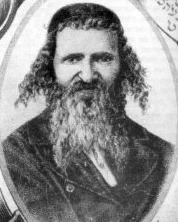
Shlomo Ganzfried
1804-1886Rabbi of Brezovica, 1830-1849 (Pinkas: 1843-1851)Ganzfried, born in Ungvár, gave up the wine trade in 1830 to become rabbi of Brezovica and served the community until 1849, when he returned to Ungvár as a rabbinical judge; Pinkas Hakehillot dates his tenure 1843-1851. He later wrote the Kitzur Shulchan Aruch, one of the most widely used handbooks of Jewish law. He officiated in the congregation's first wooden synagogue of 1828, not in the building of about 1870.
Biografie oder Quelle →Shimon Ehrenfeld
UnknownRabbi of Brezovica, later chief rabbi of MichalovcePinkas Hakehillot names Shimon Ehrenfeld, a grandson of the Chatam Sofer, among the reputable rabbis who succeeded Ganzfried at Brezovica and later headed important yeshivas. He left Brezovica to become chief rabbi of Michalovce. Pinkas does not give the years of his service, so it is not known whether he officiated in the synagogue built around 1870 or in its predecessor.
Biografie oder Quelle →Israel Braun
UnknownRabbi of Brezovica between the world warsIsrael Braun was rabbi of Brezovica after the First World War, when Jews of fourteen villages belonged to its rabbinate. On his own initiative he ran a yeshiva that combined religious study with vocational training, which Pinkas Hakehillot calls unique in Slovakia. His house burnt down in the fire of 1925 and he moved for a time to Lipany. His family held an exemption certificate and escaped the deportations of 1942.
Biografie oder Quelle →Siegmund Klein
UnknownHead of the Brezovica Jewish community, in office in 1922Pinkas Hakehillot names Siegmund Klein as head of the community in 1922, when it numbered about 300 people, half of them from nearby villages, with 32 tax-paying family heads, an annual budget of 19,000 Czechoslovak crowns and four paid employees. As lay leader he was responsible for the synagogue, beth midrash, ritual bath, school and cemetery. Nothing more about his life or fate was found.
Biografie oder Quelle →Haben Sie etwas beizutragen?
Fotos, Dokumente, Familiengeschichten oder Erinnerungen an diese Synagoge und ihre Gemeinde halten ihre Geschichte lebendig.
- Brezovica (Pinkas Hakehillot Slovakia, pp. 119ff., trans. Shaul Sharoni)
- Synagogue Architecture in Slovakia: Towards Creating a Memorial Landscape of Lost Community (2005), entry S0P1801 and ch. 4 with note 6
- Jewish cemetery Brezovica
- Brezovica Jewish Cemetery
- List of synagogues in Slovakia
- Zoznam existujúcich synagóg
- Shlomo Ganzfried
- Brezovica (OpenStreetMap relation 2277119)
Share a memory or thought
No comments yet. Be the first to add one.