
הסיפור של Kispest Synagogue
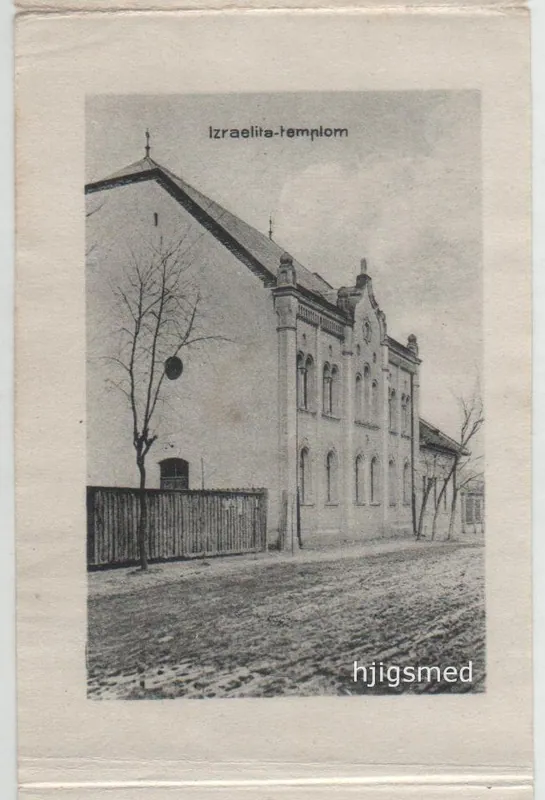
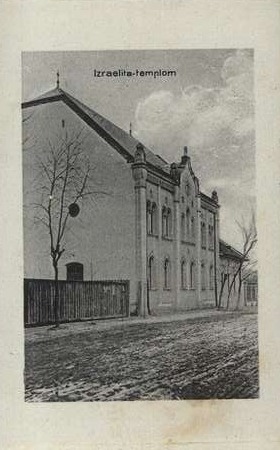
Kispest was a separate town on the south-eastern edge of Budapest until 1950, and its Jewish congregation worshipped on a plot it owned in Petőfi utca. The first prayer house there was an unusual one: the forestry pavilion of the 1896 Millennium Exhibition, bought by the community and re-erected on the site. In 1908 a whirlwind brought down part of that structure, and because repair looked too costly the congregation decided to build afresh. The new, larger synagogue was handed over in 1909. A fold-out postcard printed in Kispest by Henrik Fischhof and posted in 1912 shows it as a two-storey, gabled building standing directly on the unpaved street. For thirty-five years it was the centre of a community that grew to about 4,000 people, led from 1912 by Chief Rabbi Zoltán Bánde. Its windows were smashed during antisemitic disturbances in 1937. The synagogue was closed in May 1944, and at the end of June the Jews of Kispest were deported. The district's own account says only that the building was not rebuilt after the war. By August 1948 the survivors were praying in a former school, and in 1951 the Kispest specialist clinic opened on the synagogue plot.
Where it stood for nearly 35 years
Historic: Petőfi utca 51, Kispest (temple and community office, 1922–23 directory). Today: Petőfi utca entrance of the Kispesti Egészségügyi Intézet (Petőfi utca 49 / Ady Endre út 122–124), 1195 Budapest, XIX. kerület.
פתיחת מפה גדולה ←הקהילה היהודית
A Jewish community of Kispest appears in the register of the National Israelite Office as early as 1881. In 1890 what was then styled the Kispest–Lőrinc branch community bought land in Rózsa utca for a cemetery, and in 1898 a joint Kispest–Szentlőrinc burial society (Chevra Kadisha) was founded; neighbouring Pestszentlőrinc remained a branch of Kispest into the 1930s. The congregation owned a plot in Petőfi utca, where it set up the former forestry pavilion of the 1896 Millennium Exhibition as its prayer house. After storm damage in 1908 it replaced the pavilion with the larger synagogue dedicated in 1909. In 1922 the community sent its statutes for approval and formed its own registry district, and the 1922–23 Budapest directory lists the temple and community office at Petőfi utca 51, with Dr Zoltán Bánde as rabbi and Dr József Edelmann as president. In 1928 the school director Lipót Erdélyi published a newspaper article on a monumental new temple and cultural building the community intended to erect; no evidence was found that it was built.
אדריכלות ועיצוב
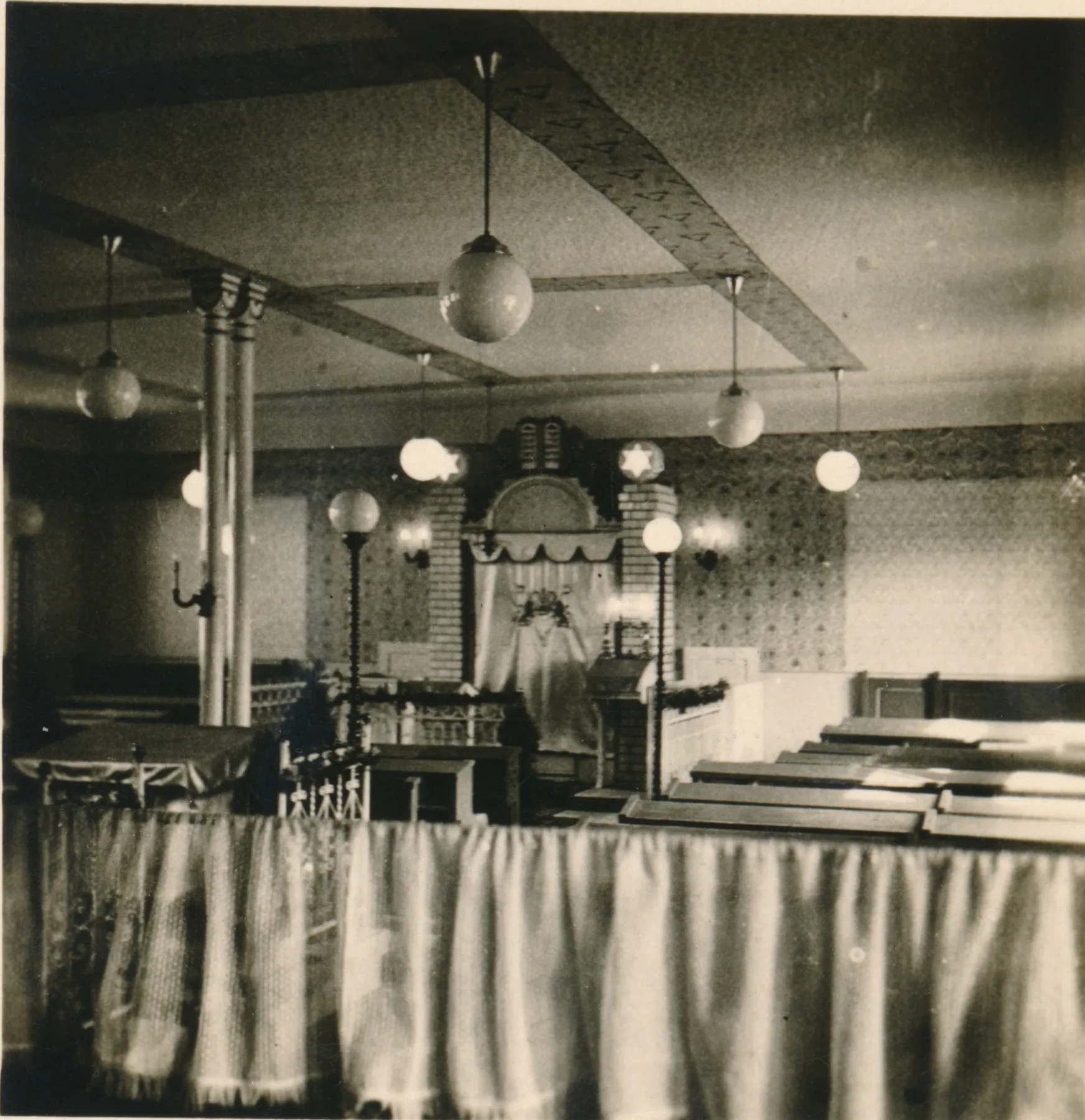
No plans or architect's name were found, so the description rests on the 1912 postcard view. It shows a rectangular, two-storey building with a pitched roof, set gable-end to the street, its long side wall plain and rendered and pierced by a single round window. The street front is the only decorated part: it is divided by pilasters into bays, with round-arched windows on both floors, those of the upper floor grouped in pairs, which suggests a women's gallery inside. The centre bay rises into a shaped gable with a round window, flanked by small pinnacles and crowned by a finial. A timber fence closes the yard beside it. A small undated photograph in the Hungarian Jewish Museum and Archives, titled as the interior of the Kispest synagogue, appears to be taken from a curtained gallery: it shows a flat ceiling with painted bands, slender paired columns, globe lamps, rows of benches, and an Ark framed in banded masonry beneath the Tablets of the Law, with a Star of David lamp on either side.
החיים בבית הכנסת
The congregation belonged to the Neolog (Congress) organisation: its business passed through the National Israelite Office and the sixth community district, and its rabbi from 1912, Dr Zoltán Bánde, was a graduate of the Budapest Rabbinical Seminary, remembered as a fine preacher much concerned with Jewish education. In 1931 a separate Status Quo community was being organised in the town. Around the synagogue stood the usual institutions: the Chevra Kadisha, presided over in the 1920s and early 1930s by the printer Henrik Fischhof, and a Jewish elementary school founded in 1921 under Lipót Erdélyi, which received its own building in 1924. The community office and school were on Eggert utca, which the district today places at the corner of József Attila utca and Kisfaludy utca. In 1937 the windows of the synagogue and the school were broken during antisemitic disturbances, a case raised in Parliament by the deputy Béla Fábián. An émigré writing in 1977 recalled hearing 'Uncle Feldmár' chant there in broad Ashkenazi pronunciation some forty years earlier.
הרס
The synagogue was closed in May 1944, when the Jews of Kispest were forced into designated houses under Nazi German occupation. What happened to the building over the following months is poorly documented. The district's account for the eightieth anniversary of the deportation states only that it was not rebuilt after the war, which implies that it came out of 1944–45 ruined or unusable; no source found says whether this was caused by bombing, by the fighting for Budapest, or by looting and neglect. A photograph of August 1948 in the Hungarian Jewish Museum and Archives shows the building then serving as the congregation's temple: a former school. The synagogue plot was then taken for a state health project: the Kispest specialist clinic, designed by Lajos Hidasi, opened there on 1 November 1951. Whatever still stood of the synagogue was therefore demolished by the Communists at the latest when the clinic was built, around 1950. The exact date of demolition is Unknown.
גורל הקהילה
According to Randolph Braham, about 4,000 Jews lived in Kispest in 1944. Between 15 and 30 May they were crowded into 548 rooms in designated buildings spread over 53 streets, under a Jewish Council that the mayor enlarged from six to ten members. On 30 June 1944 Hungarian authorities and gendarmerie, acting under Nazi German occupation, took about 3,500 people from Kispest railway station to the brickworks at Monor, from where they were deported to Auschwitz in July. Chief Rabbi Zoltán Bánde, who had served the town since 1912, was among those deported and was killed in 1944; his daughter was also murdered. The survivors who returned re-formed a small congregation. By August 1948 they were worshipping in a former school building, and a Kispest Jewish prayer house at József Attila utca 71 is recorded in later decades. Kispest became the 19th district of Budapest in 1950. Today the South Pest district of the Budapest Jewish Community worships at a prayer house in neighbouring Pesterzsébet.
האתר כיום
The site is occupied by the Kispesti Egészségügyi Intézet, the district's outpatient health centre, whose main address is Ady Endre út 122–124 and which has a side entrance on Petőfi utca. The core of the complex is the specialist clinic designed by Lajos Hidasi and opened on 1 November 1951, described as one of the last modern-style public buildings erected in Budapest before Socialist Realism was imposed. Nothing of the synagogue is visible. The district identifies the Petőfi utca entrance as the place where the synagogue stood, and since 2024 it has been the first stop of a local Holocaust remembrance walk, marked with a QR-code information point.
שמות בולטים
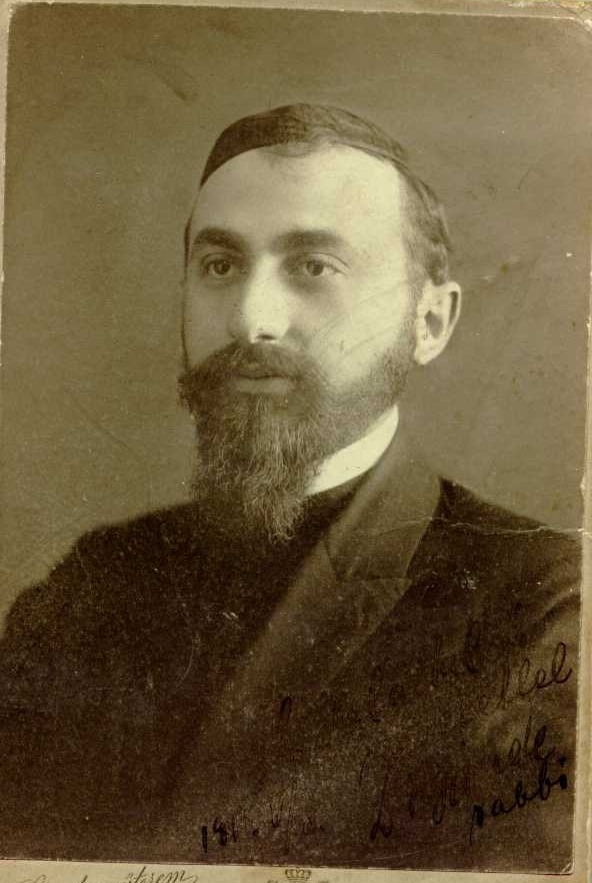
Zoltán Bánde
1883–1944Chief Rabbi of Kispest, 1912–1944Born in Ráckeve, Bánde studied at the Budapest Rabbinical Seminary from 1897 to 1907, took a doctorate in 1906 and was ordained in 1908. After four years as rabbi of Csongrád he became chief rabbi of Kispest in 1912, three years after the Petőfi utca synagogue was dedicated, and served there for the rest of its existence. The 1929 Jewish lexicon describes him as a notable preacher much occupied with Jewish education. He was deported in 1944 and killed.
ביוגרפיה או מקור ←Lipót Erdélyi
1861–1943Founding director of the Kispest Jewish elementary school; president of the community school boardA teacher and journalist from Gyöngyös who had led the Jewish school at Nyitra, Erdélyi taught in Kispest from 1919. From 1921 he was founding director of the community's elementary school, which received its own building in 1924, and later presided over the community's school board. In July 1928 he published an article announcing the congregation's plan for a monumental new temple and cultural building. He is buried in the Kispest Jewish cemetery.
ביוגרפיה או מקור ←Henrik Fischhof
UnknownPrinter; president of the Kispest Chevra KadishaFischhof ran a printing house in Kispest and is listed as president of the Kispest Israelite burial society (Chevra Kadisha) in both the 1922–23 Budapest directory and the 1931 county directory. His press published the fold-out 'Greetings from Kispest' postcard of about 1912 whose panel captioned 'Izraelita templom' is the only known mass-produced view of the synagogue.
ביוגרפיה או מקור ←József Edelmann
UnknownPresident of the Kispest Jewish community (recorded 1922–23)Dr József Edelmann is named as president of the Kispest Jewish community in the 1922–23 Budapest directory, alongside Rabbi Zoltán Bánde, at the time the temple and community office stood at Petőfi utca 51. A charitable foundation in his and his wife's name was administered by the community in the early 1920s, according to the National Israelite Office register.
ביוגרפיה או מקור ←יש לכם משהו לתרום?
תמונות, מסמכים, סיפורי משפחה וזיכרונות מבית הכנסת ומהקהילה שלו עוזרים לשמור על ההיסטוריה שלו בחיים.
- Holokauszt 80 – megemlékezések az évforduló alkalmából
- A régi Kispest – Kispesti képeslapok 1906–1920 I.
- Kispest, Üdvözlet Kispestről … Izraelita templom … (leporello postcard, posted 1 September 1912)
- Budapesti Czim- és Lakásjegyzék 1922–1923, part 2, D) Kispest, p. 1596
- Bánde Zoltán (entry), Magyar Zsidó Lexikon (1929)
- Bánde Zoltán fényképe (inv. 66.530)
- Kispesti zsinagóga belülről (inv. F2025.3)
- Kispest, Zsinagóga (előtte iskola), August 1948 (inv. F16.047)
- A népirtás politikája: a holocaust Magyarországon, p. 739
- Képviselőházi napló 1935–1940, vol. XV, sitting 239 (1937), pp. 119–121: interpellation of Fábián Béla on the Kispest disturbances
- Budapest történetének bibliográfiája 6: Kultúra 1686–1950, p. 734
- Az Országos Izraelita Iroda iktatónaplója 6001–8000 (1880–1883)
- Az Országos Izraelita Iroda iktatónaplója 43886–46880 (1919–1922)
- Az Országos Izraelita Iroda iktatónaplója 55364–61355 (1930–1933)
- Pest-Pilis-Solt-Kiskun vármegye általános ismertetője és címtára, negyedik körzet (1931), p. 296
- A budapesti egységes hálózat betűrendes távbeszélő névsora, May 1939, p. 189
- Pestszentlőrinc zsidóságának története (zsidotort-1.pdf)
- Menora Egyenlőség, 19 February 1977 (no. 645)
- Szocreál. Budapest építészete 1945 és 1959 között, p. 25
- Fogorvosi Szemle 75 (1982), p. 284
- Budapest története képekben 1493–1980. Képkatalógus, Mutató, p. 243
- Helytörténeti kutatás és emlékezés Kispesten
- Bánde Zoltán
- Erdélyi Lipót
- Zsinagógáink – Pesterzsébeti imaház (Dél-Pesti Körzet)
- Kispesti Egészségügyi Intézet, Ady Endre út 122–124 (OpenStreetMap way 238945173; Petőfi utca 49 entrance geocoded with Nominatim)
Share a memory or thought
No comments yet. Be the first to add one.