
Die Geschichte von Orczy House Synagogues
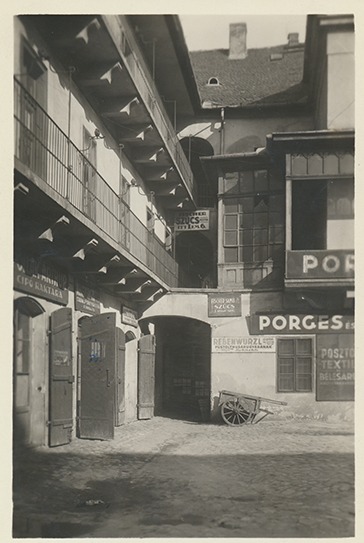
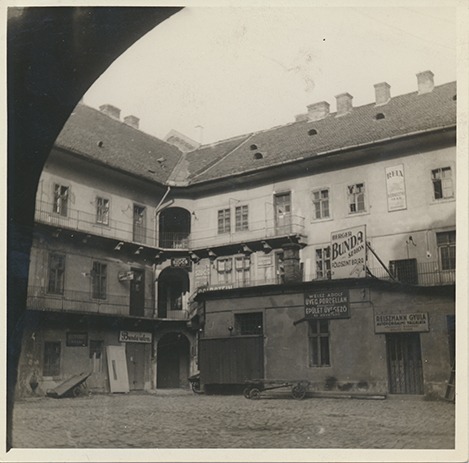
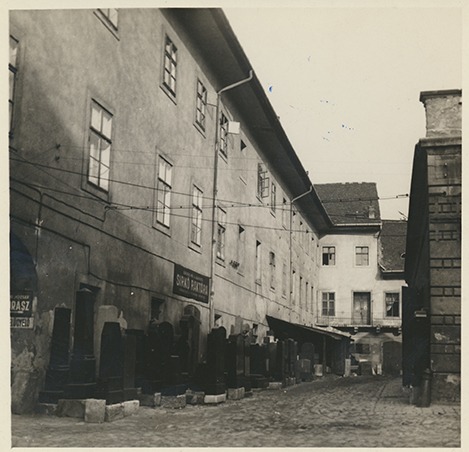
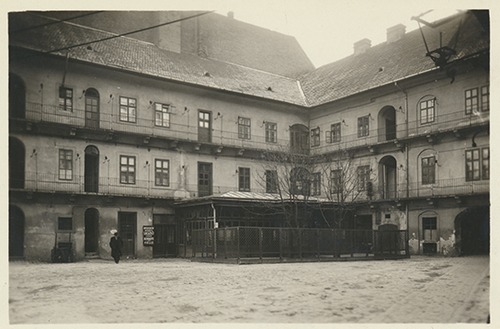
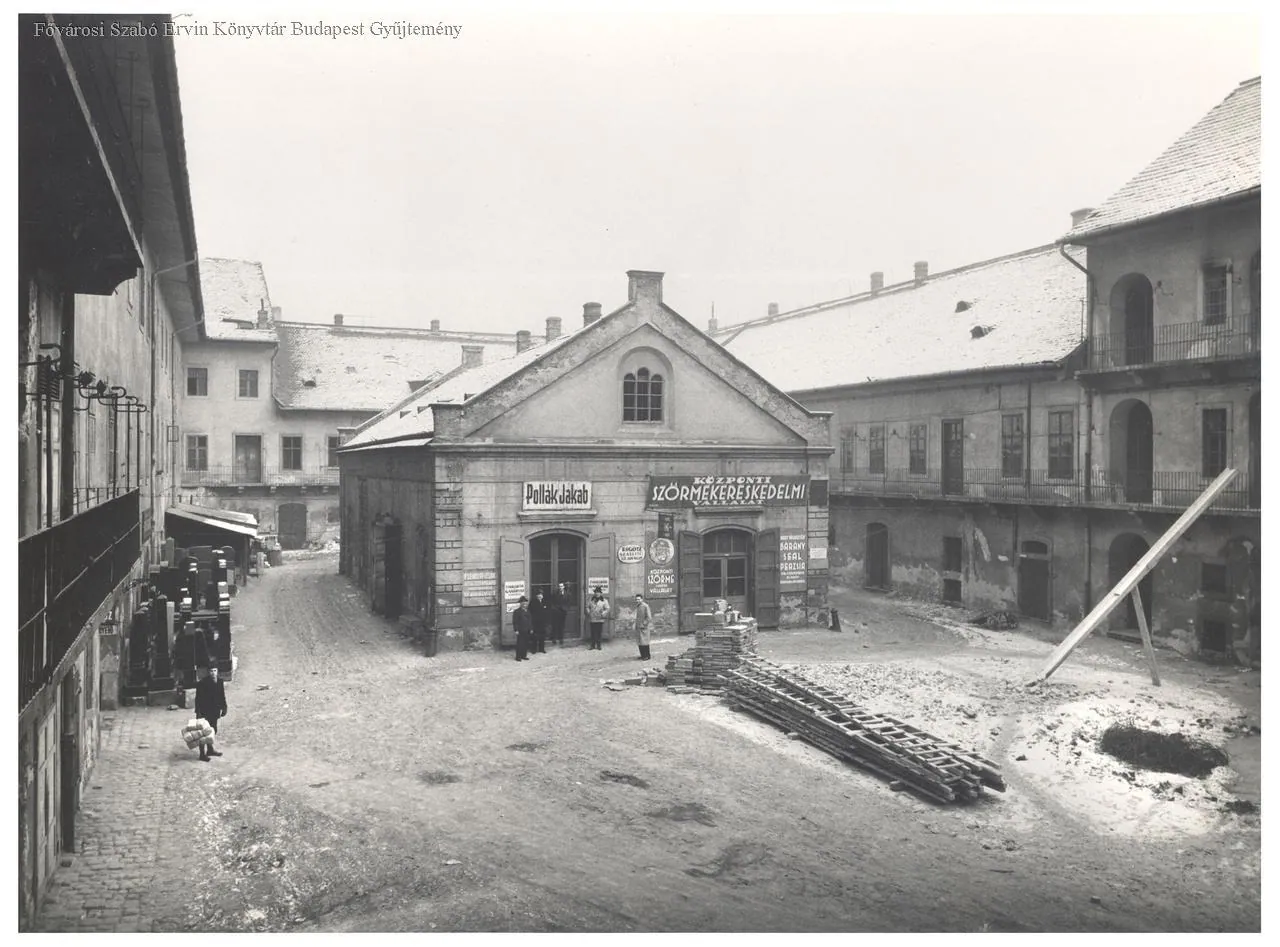
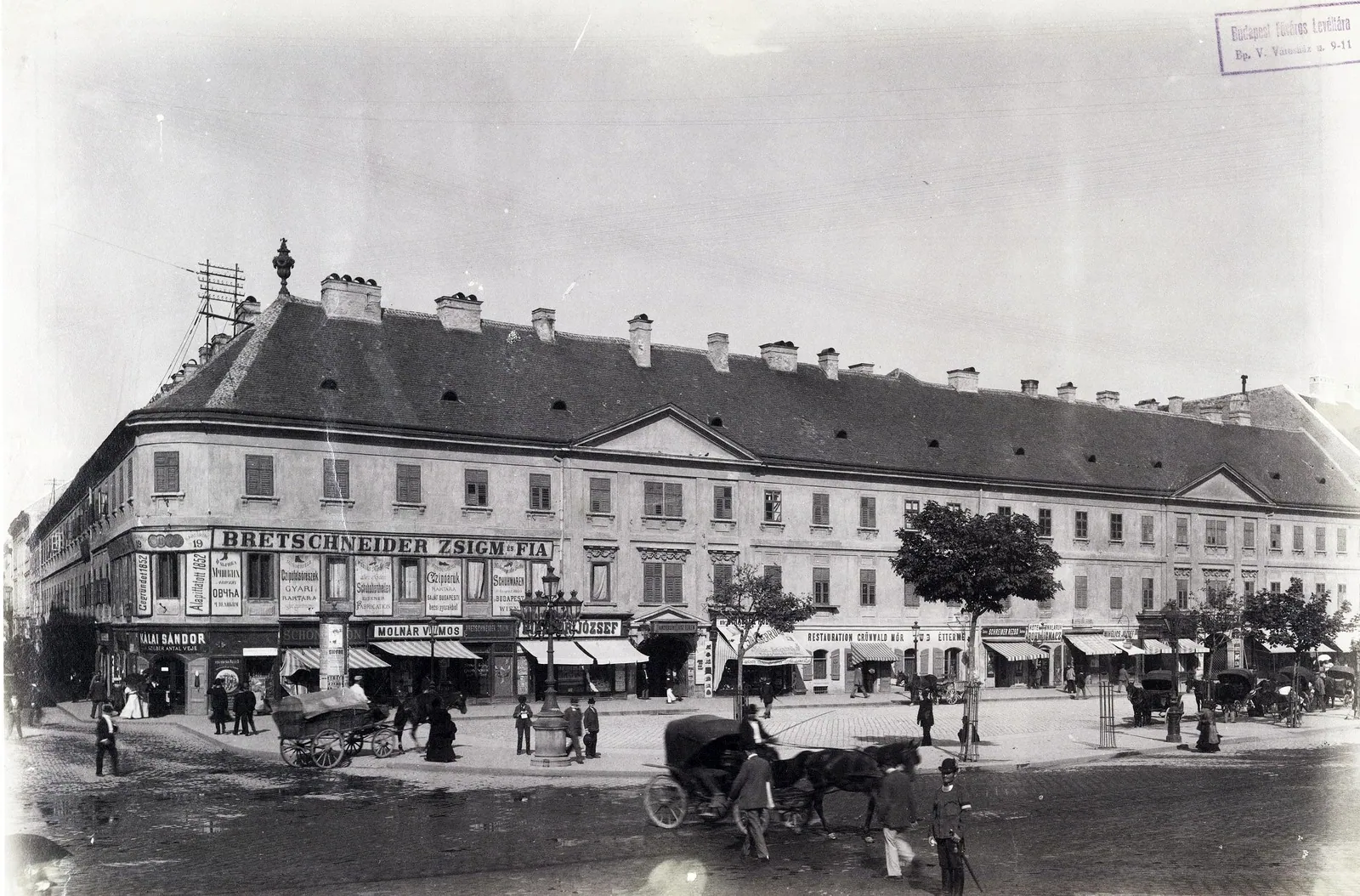
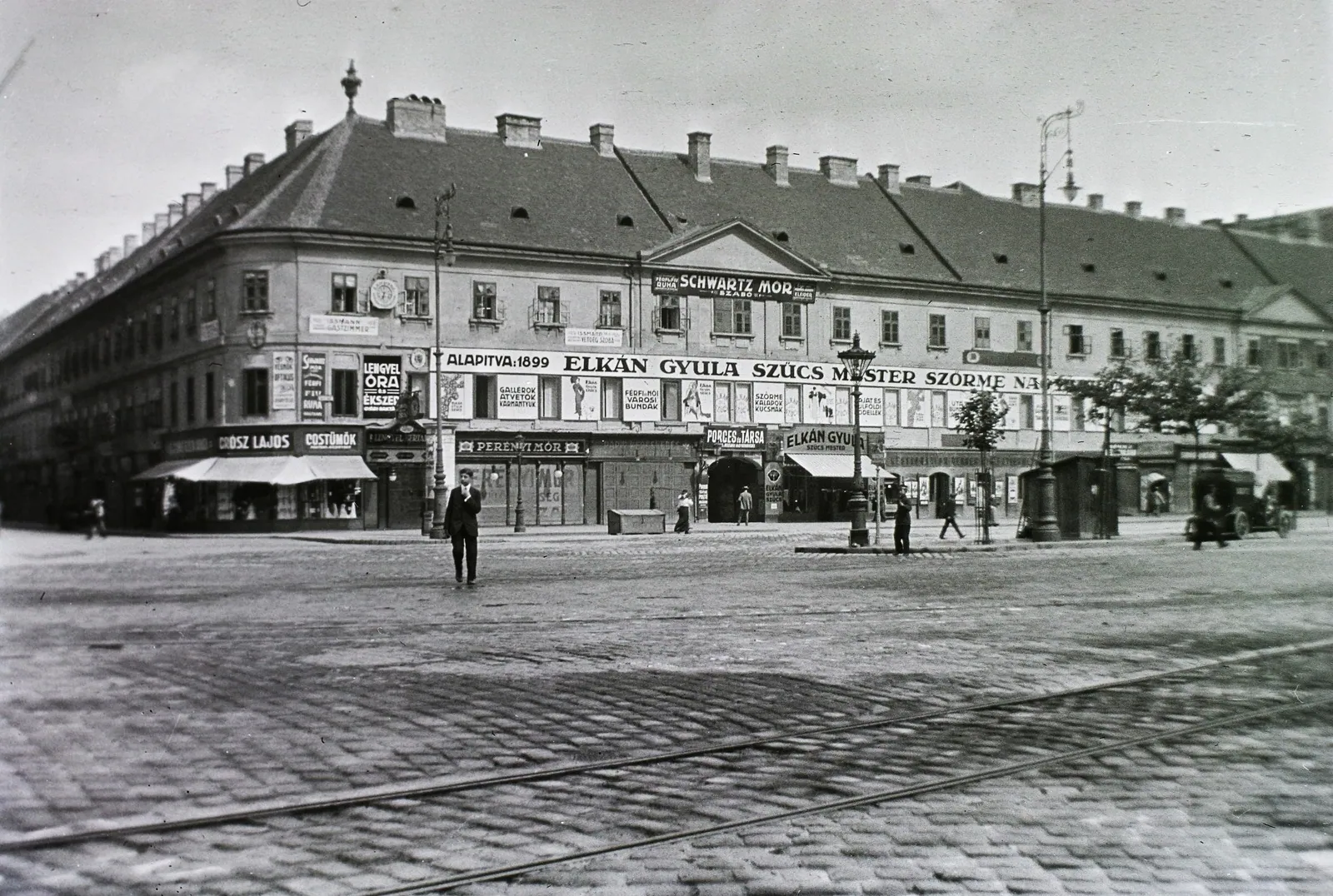
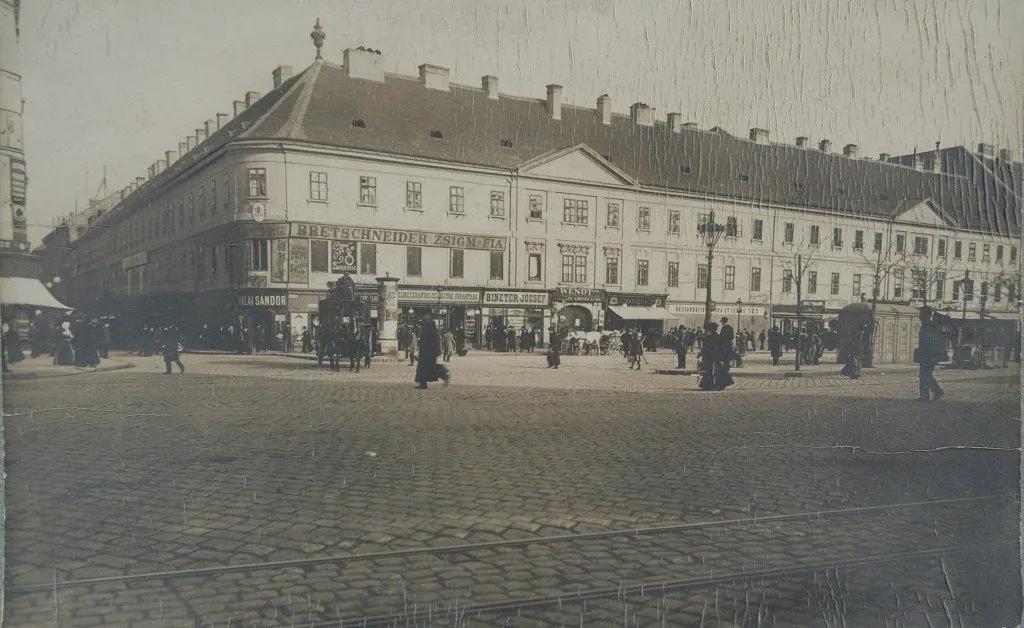
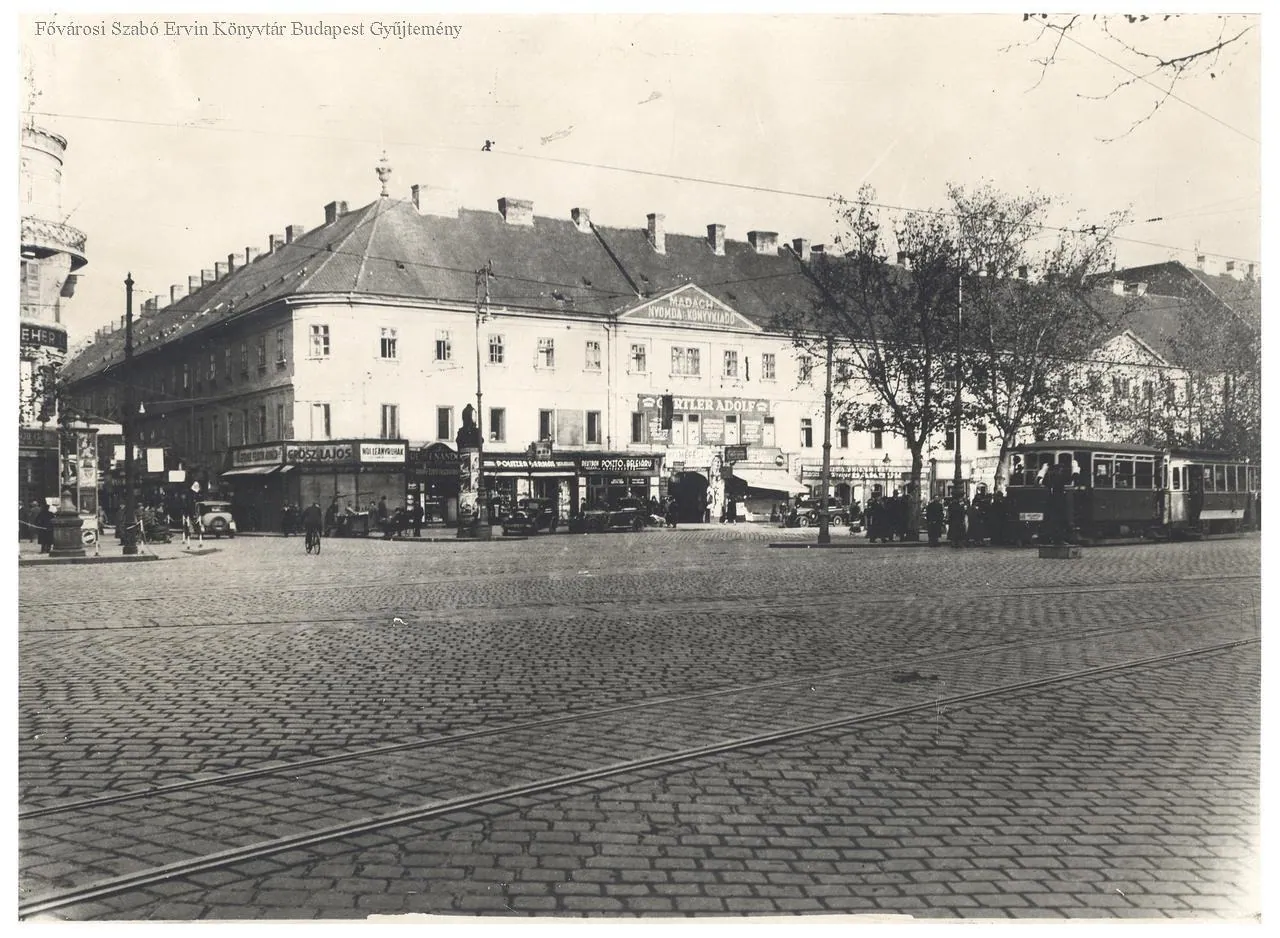
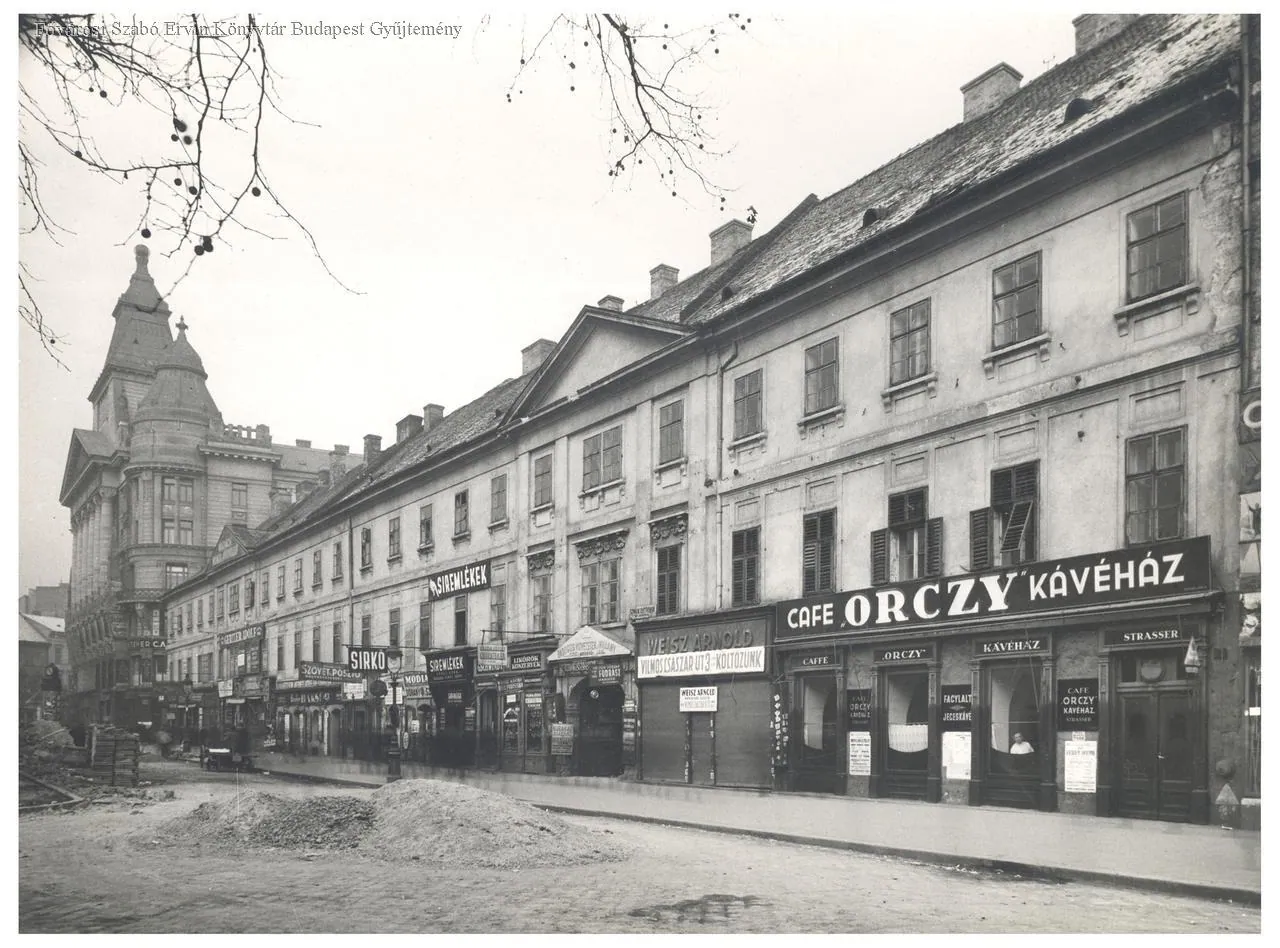
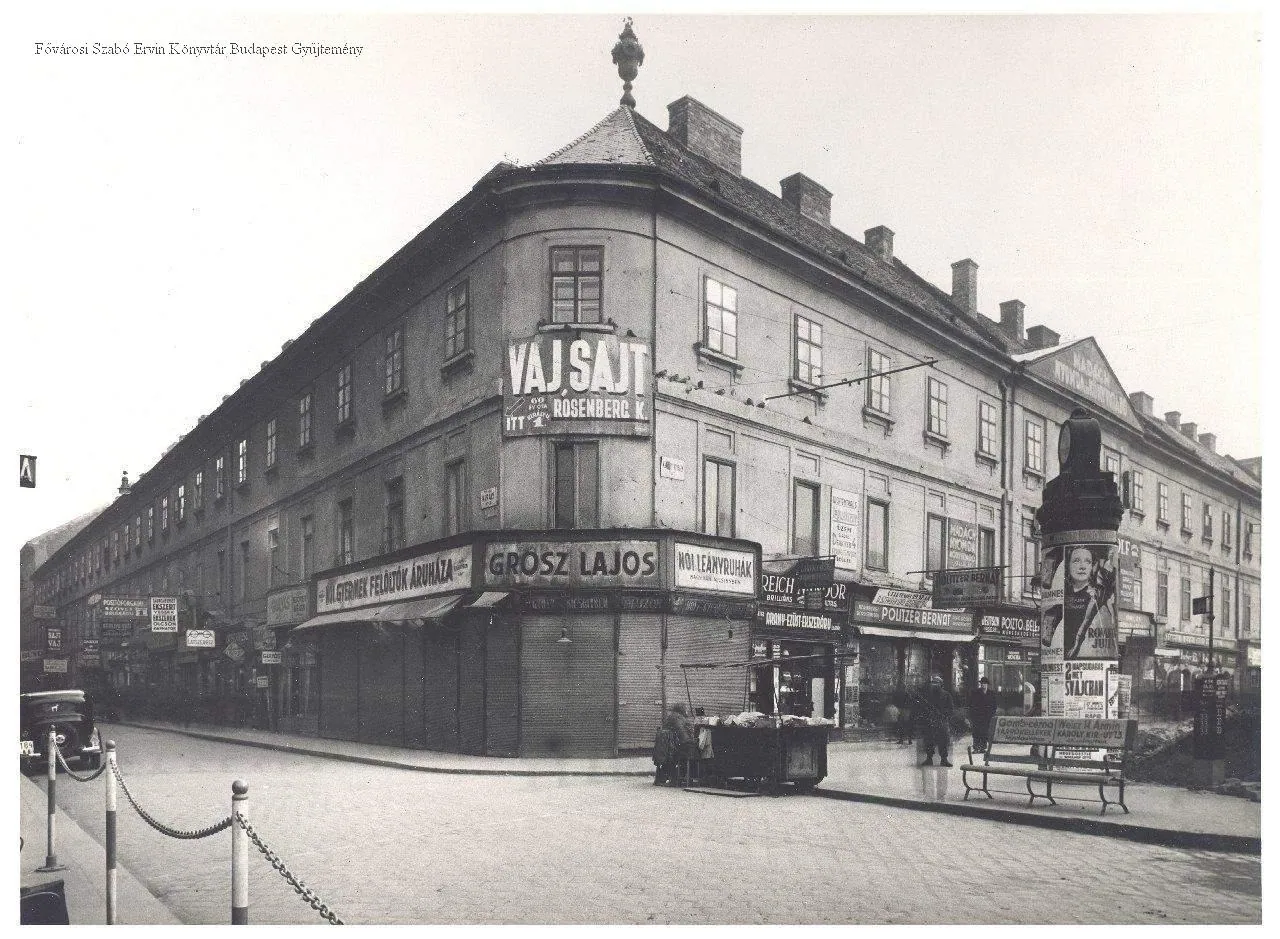
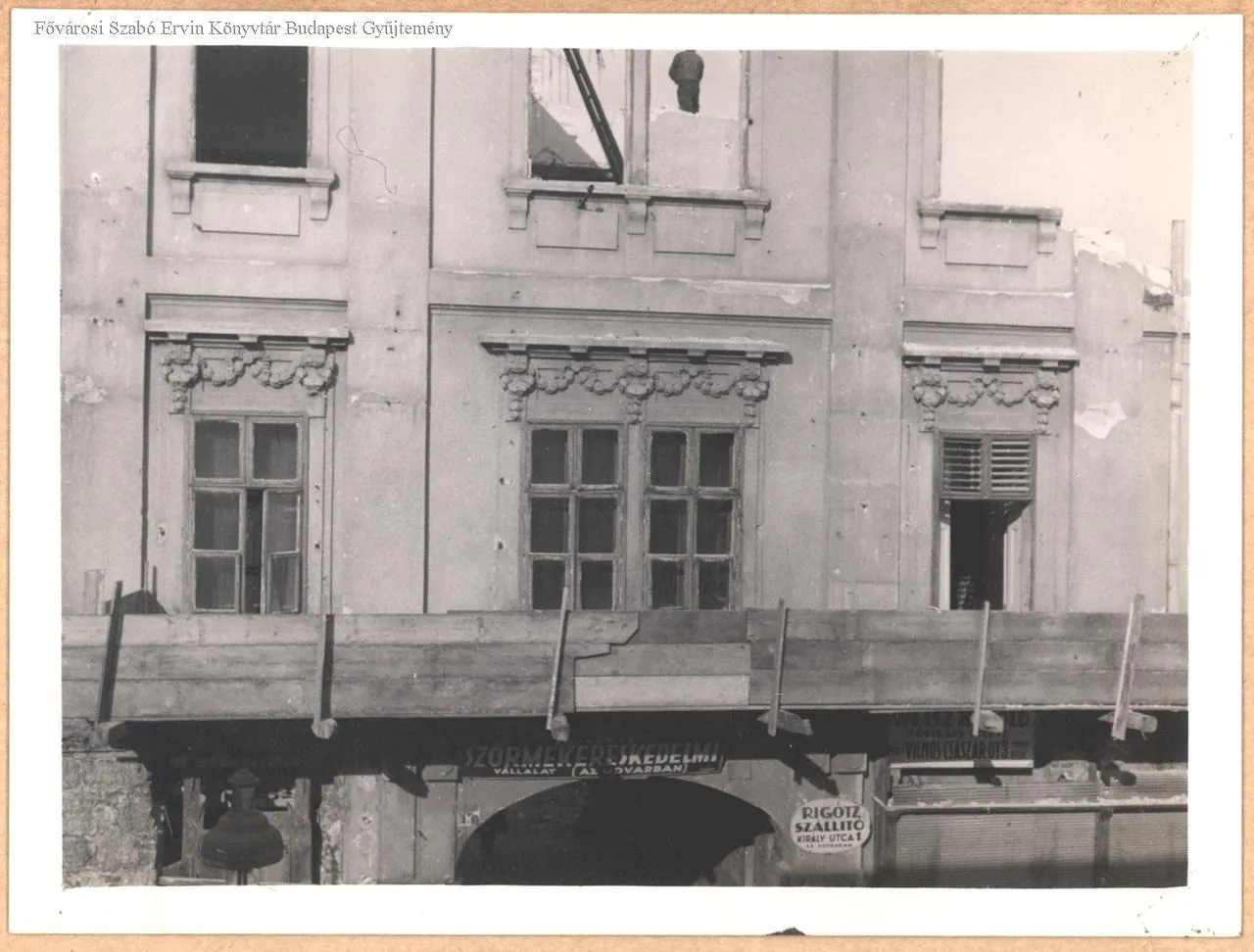
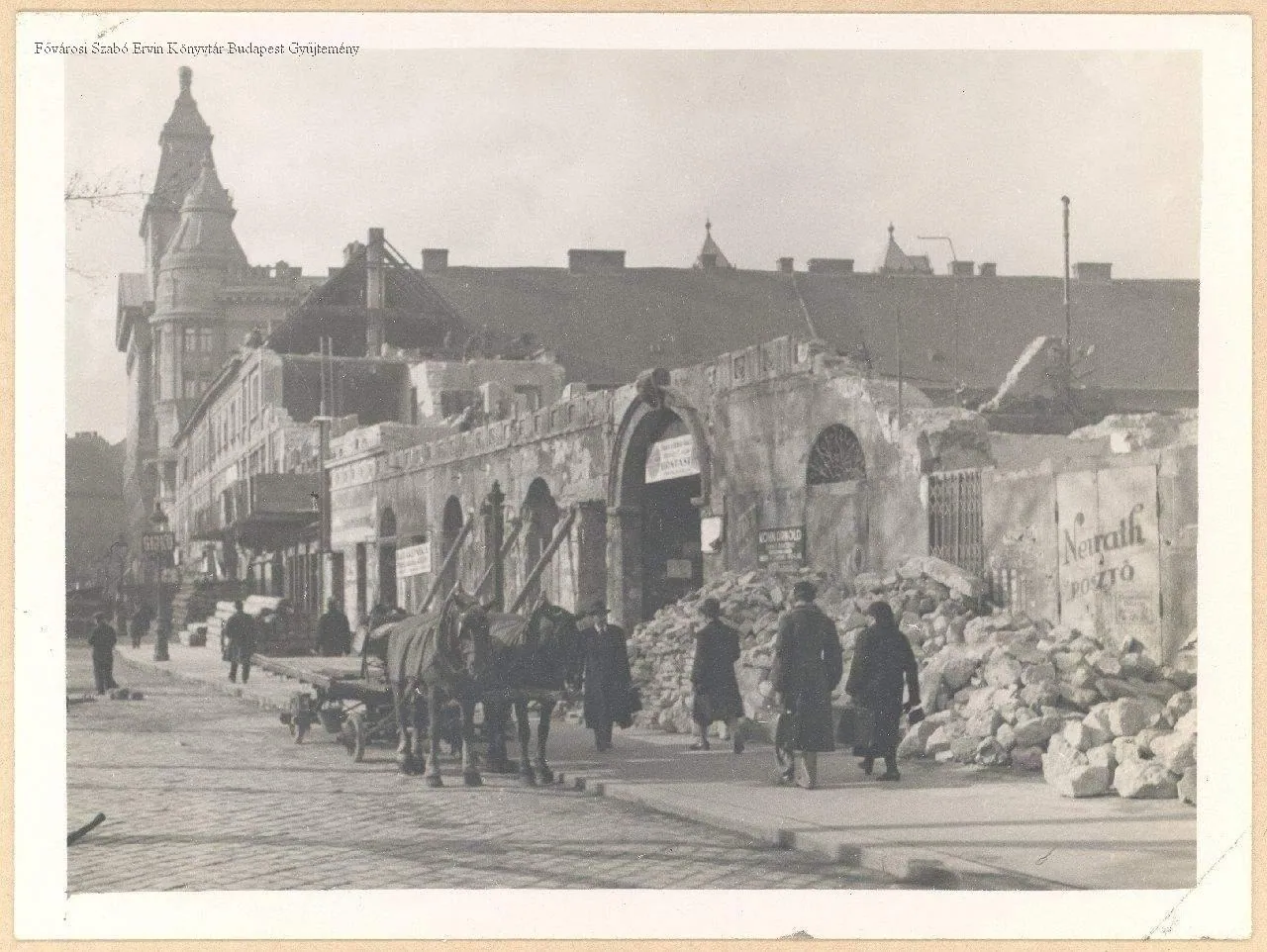
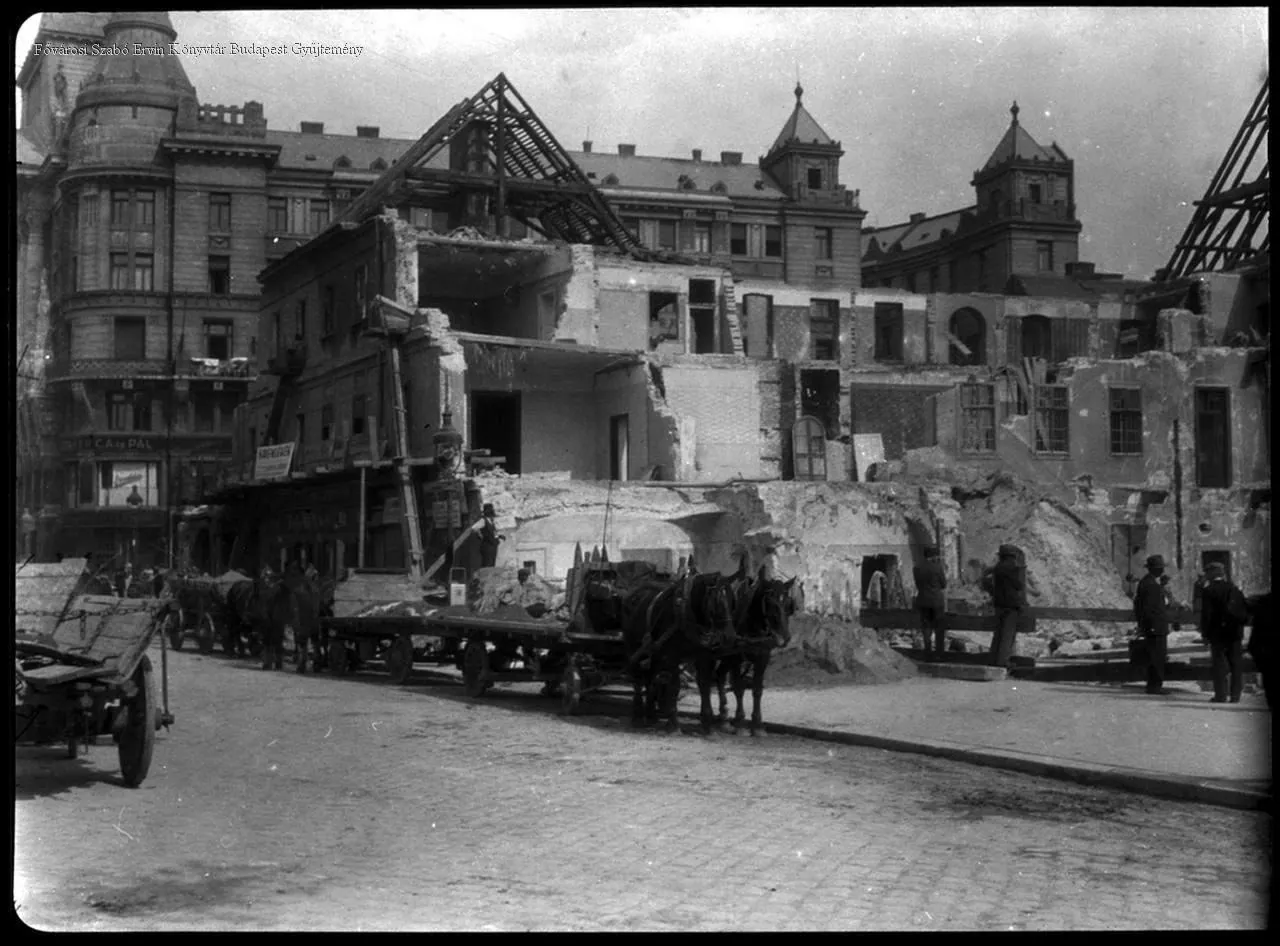
Pest's Jews, barred from the walled city, settled from the 1780s in the suburb of Terézváros, and on 15 April 1796 their community signed a lease with Baron József Orczy for a prayer house in his great tenement on the Landstrasse, at the corner of Király utca. The Orczy House became the cradle of the Pest community: the rabbi, the notary, the school, the kosher butcher and, by 1809, two synagogues were all under its roof. A larger synagogue was fitted out about 1820, and in 1829–30, when the Orczy family rebuilt the wings between the courtyards, the master builder Lőrinc Zofahl created two double-height halls next to each other. The older "German" or Great Synagogue was enlarged with a women's gallery for the traditionalists; beside it rose the new Cultustempel, or Choir Temple, of the reform-minded Hesed Neurim society, modelled on Vienna's Seitenstettengasse temple. Rabbi Löw Schwab led both from 1836. The Cultustempel closed when the Dohány Street Synagogue opened in 1859 and became a bank, ballroom, warehouse and print shop; the Great Synagogue passed in 1875 to the new Orthodox community, which prayed there until 1 June 1937. That year the house's owner, a property company, pulled the whole complex down for the Madách Imre út redevelopment.
Where it stood for 107 years
Historic: Orczy House, Károly körút (Landstrasse / Országút, later Károly király út) 17–19 and Király utca 1, Pest. Today: Madách houses, Károly körút 17–19 / Király utca 1 / Asbóth utca, 1075 Budapest (District VII).
Größere Karte öffnen →Die jüdische Gemeinde
Jews were kept out of Pest until Joseph II's reforms of 1783, after which leaseholders of kosher eating houses from Óbuda formed the nucleus of a community in the suburb outside the walls. It grew from 114 people in 1787 to 1,075 in 1799, about 2,090 in 1804 and nearly 8,000 in 1843, passing 10,000 by 1845. Israel Wahrmann became its first recognised rabbi in 1799 and drew up its first statutes. In the 1820s the community was divided between "German" and "Polish" congregations and a growing reform party; under the settlement of 1829–30 the Polish synagogue merged into the Great Synagogue, the reformers gained their own temple, and private prayer rooms were to be closed. Traditional and reforming wings stayed in one community under Rabbi Löw Schwab, which later built the Dohány Street (1859) and Rumbach Street (1872) synagogues. After the schism of 1868–71 the separate Orthodox community, recognised in 1871, made the Orczy House its seat from 1875 until its Kazinczy Street centre opened in 1913.
Architektur und Gestaltung
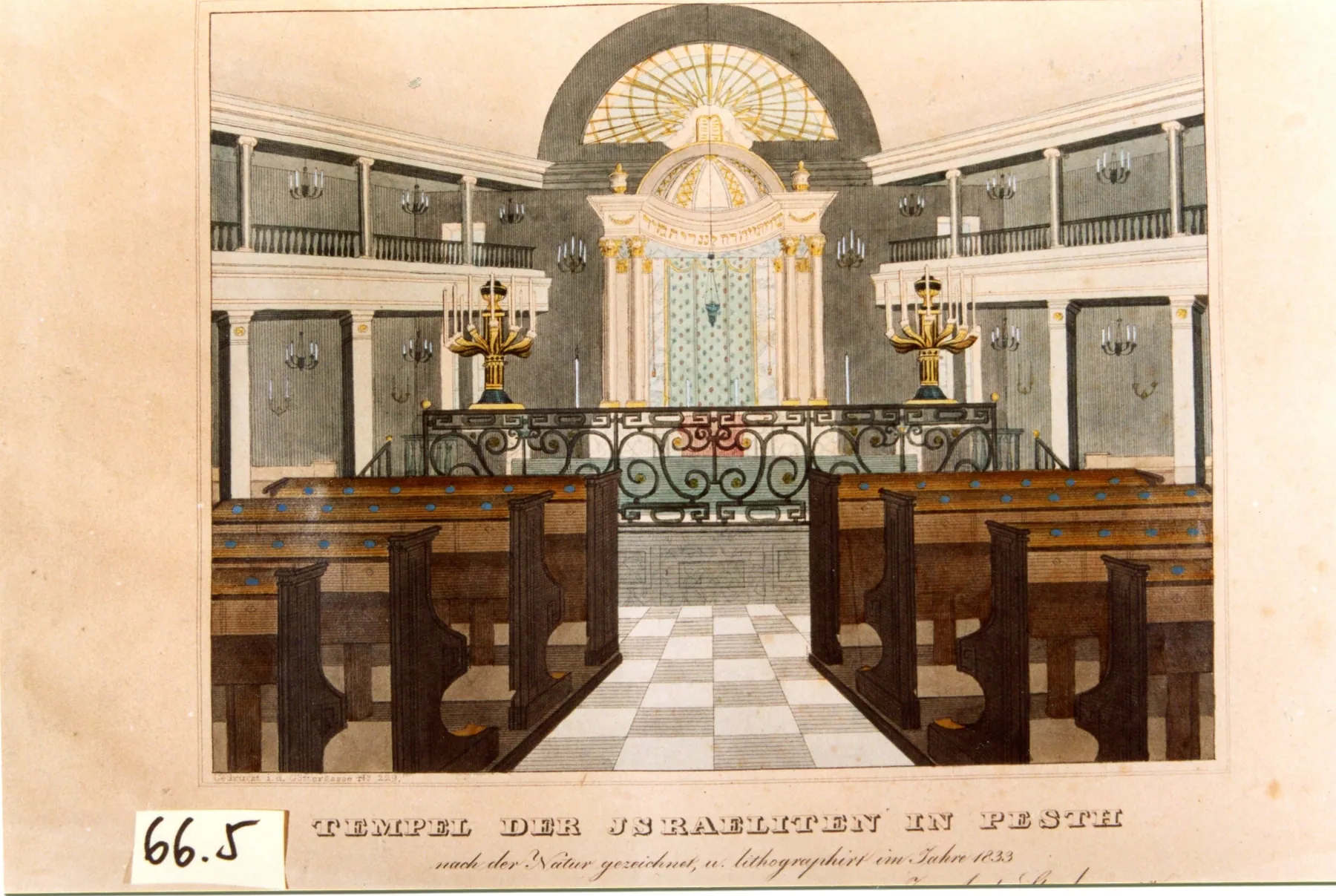
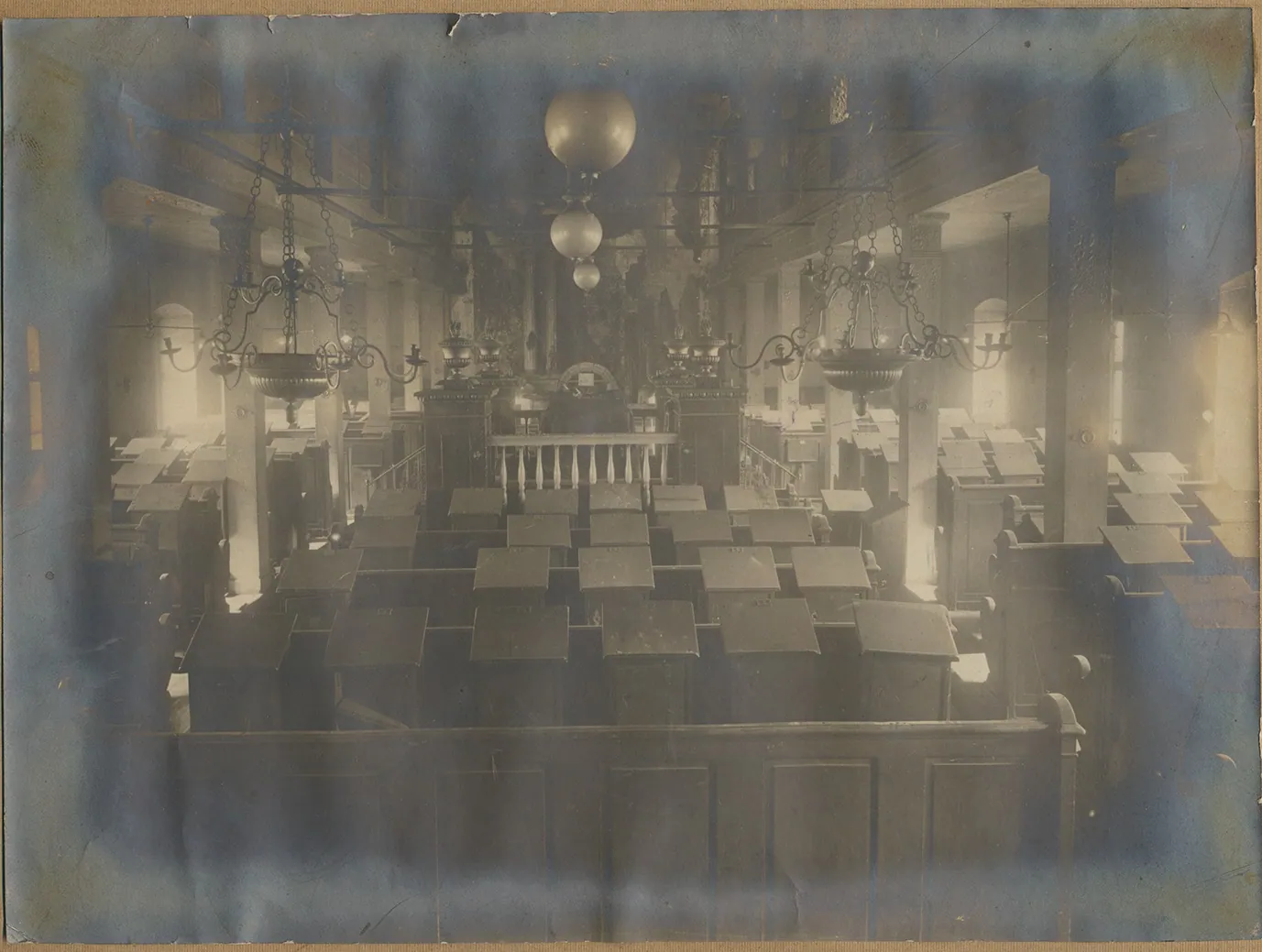
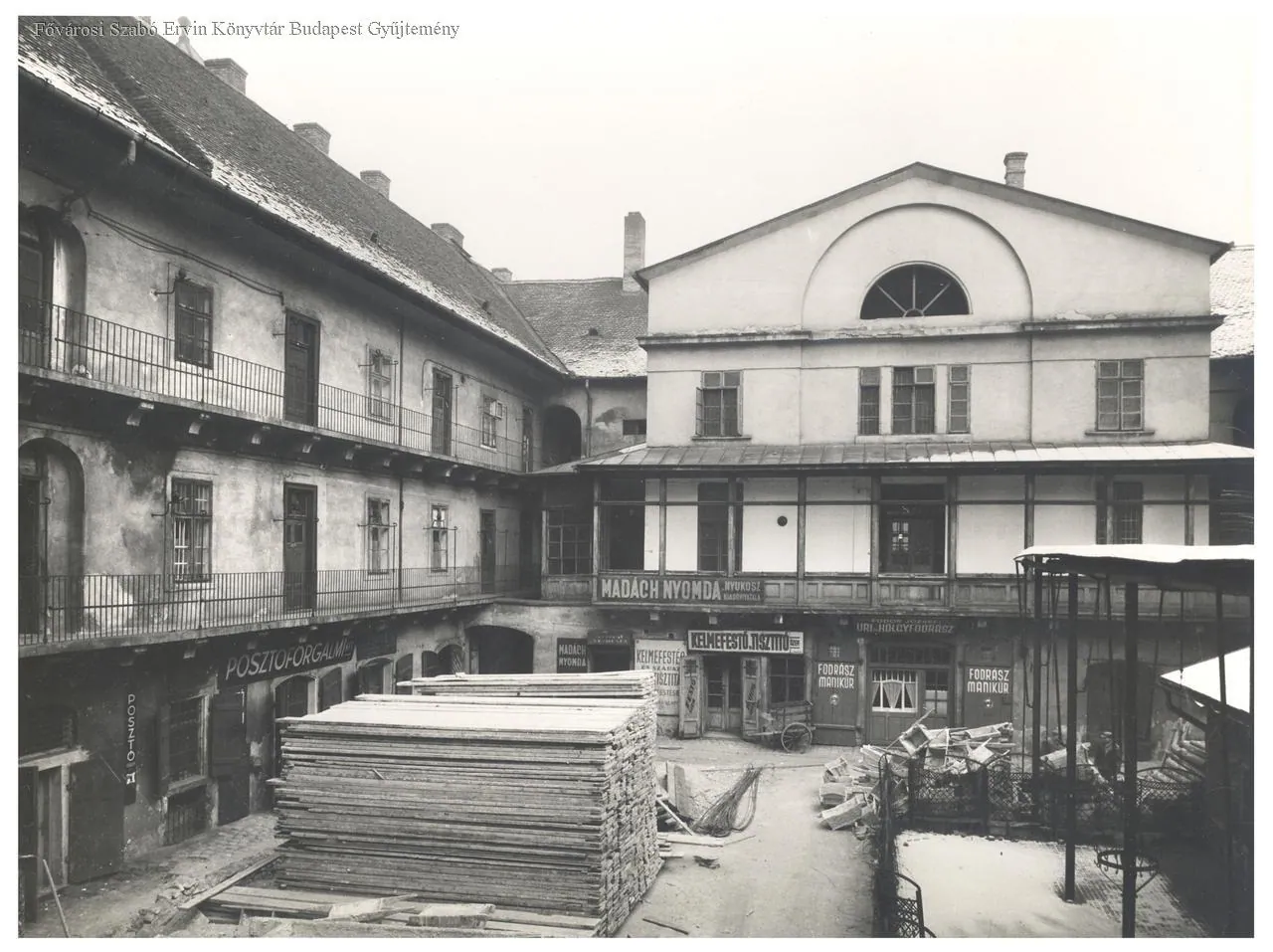
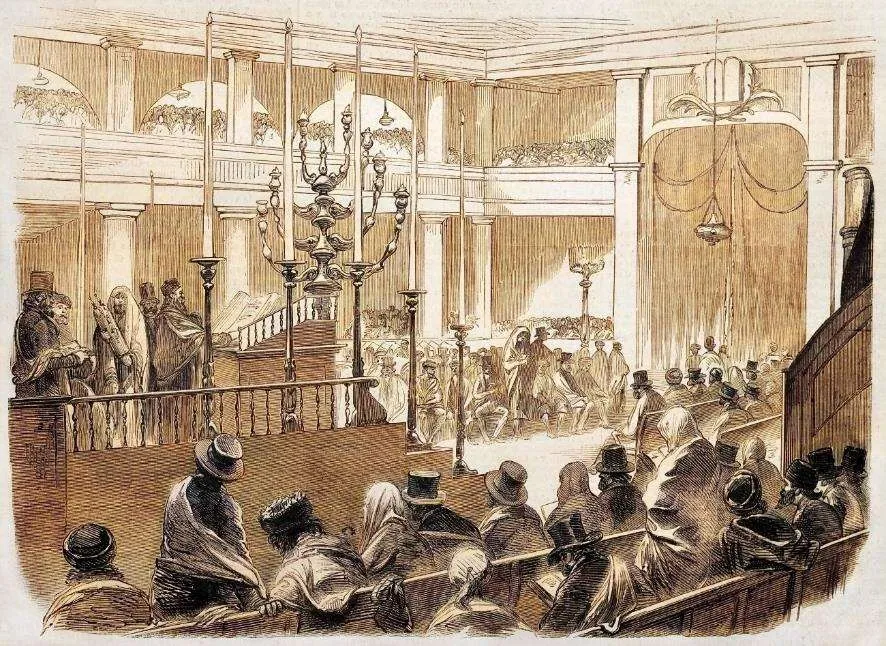
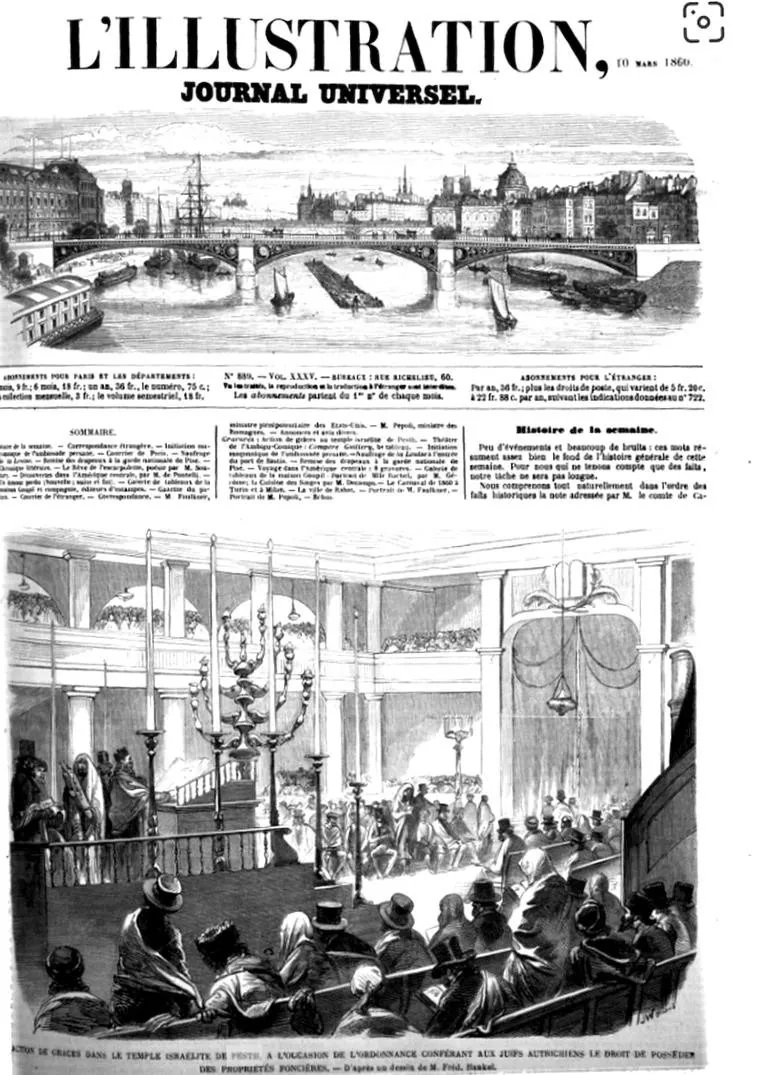
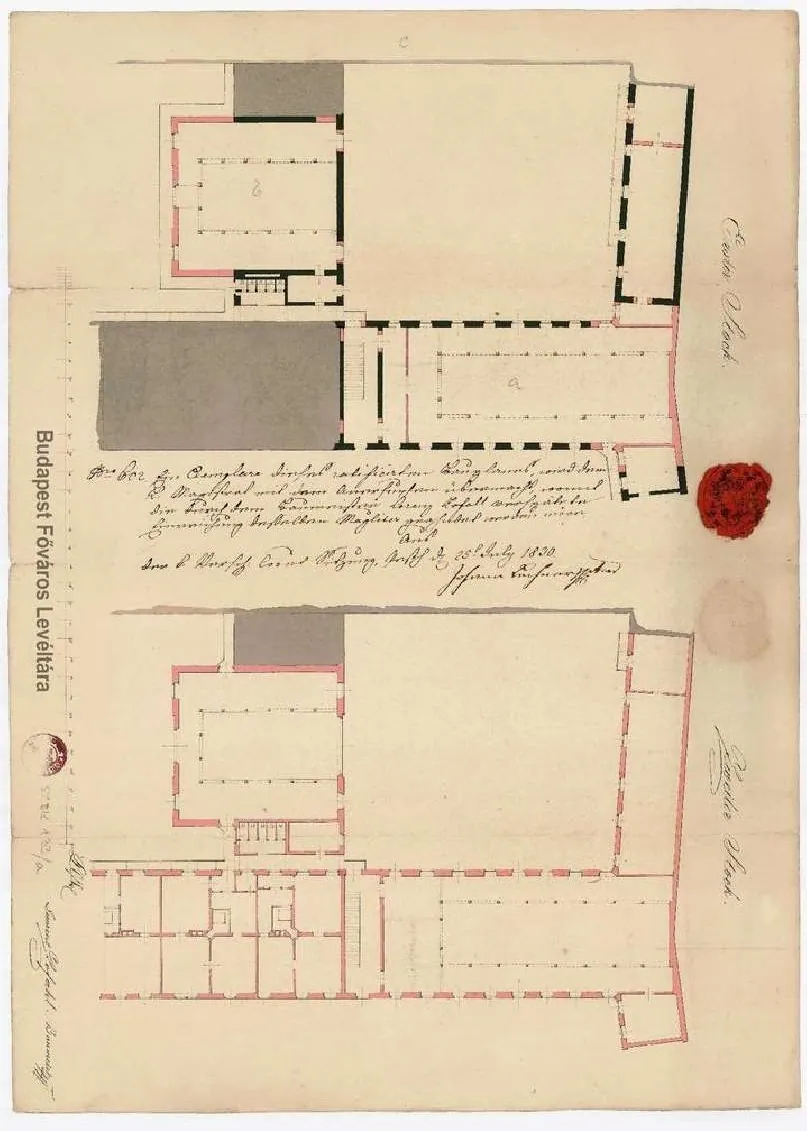
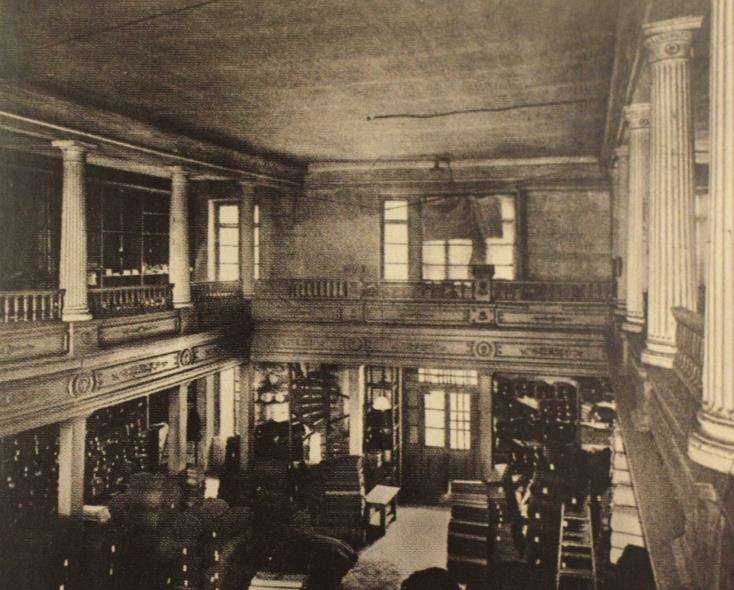
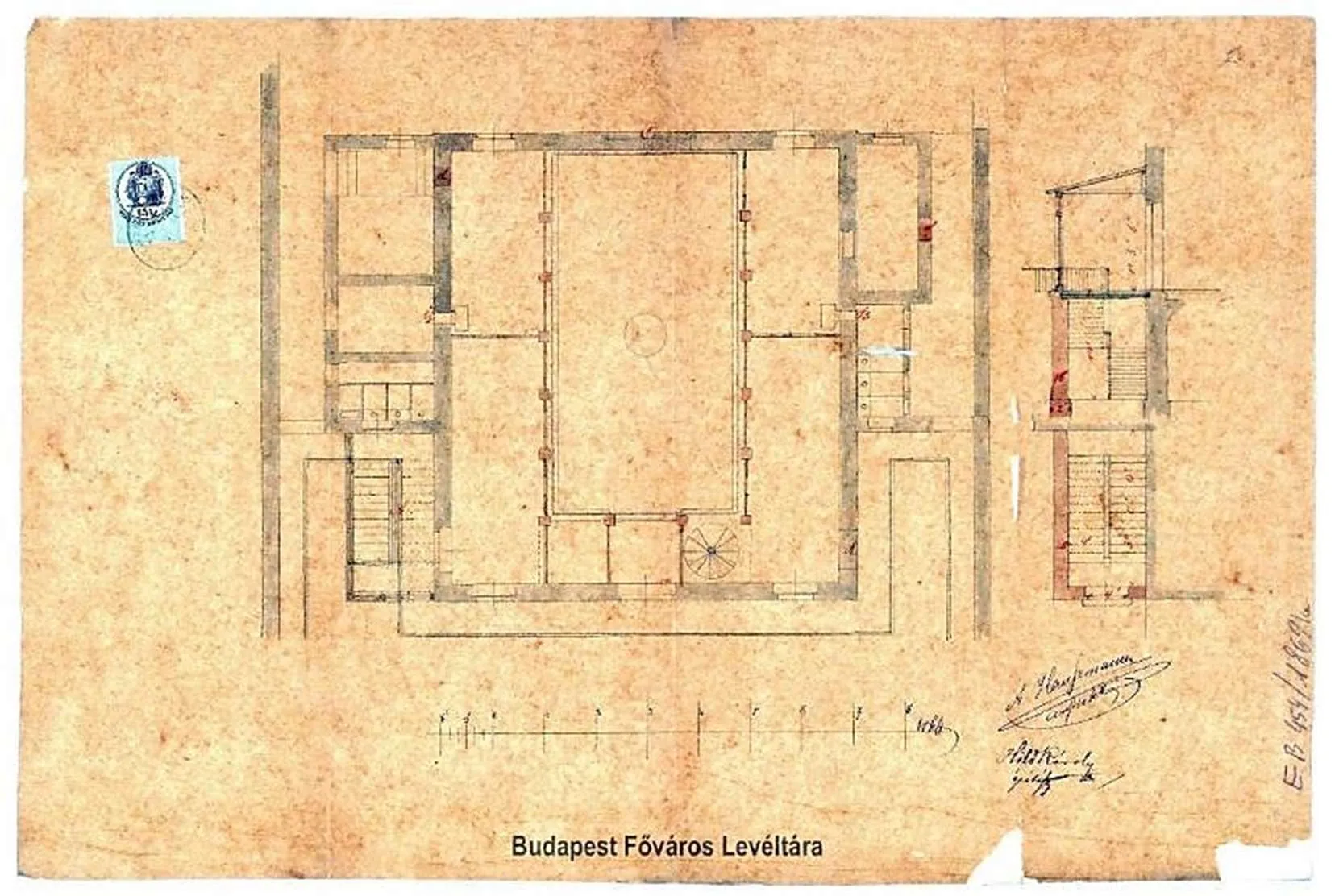
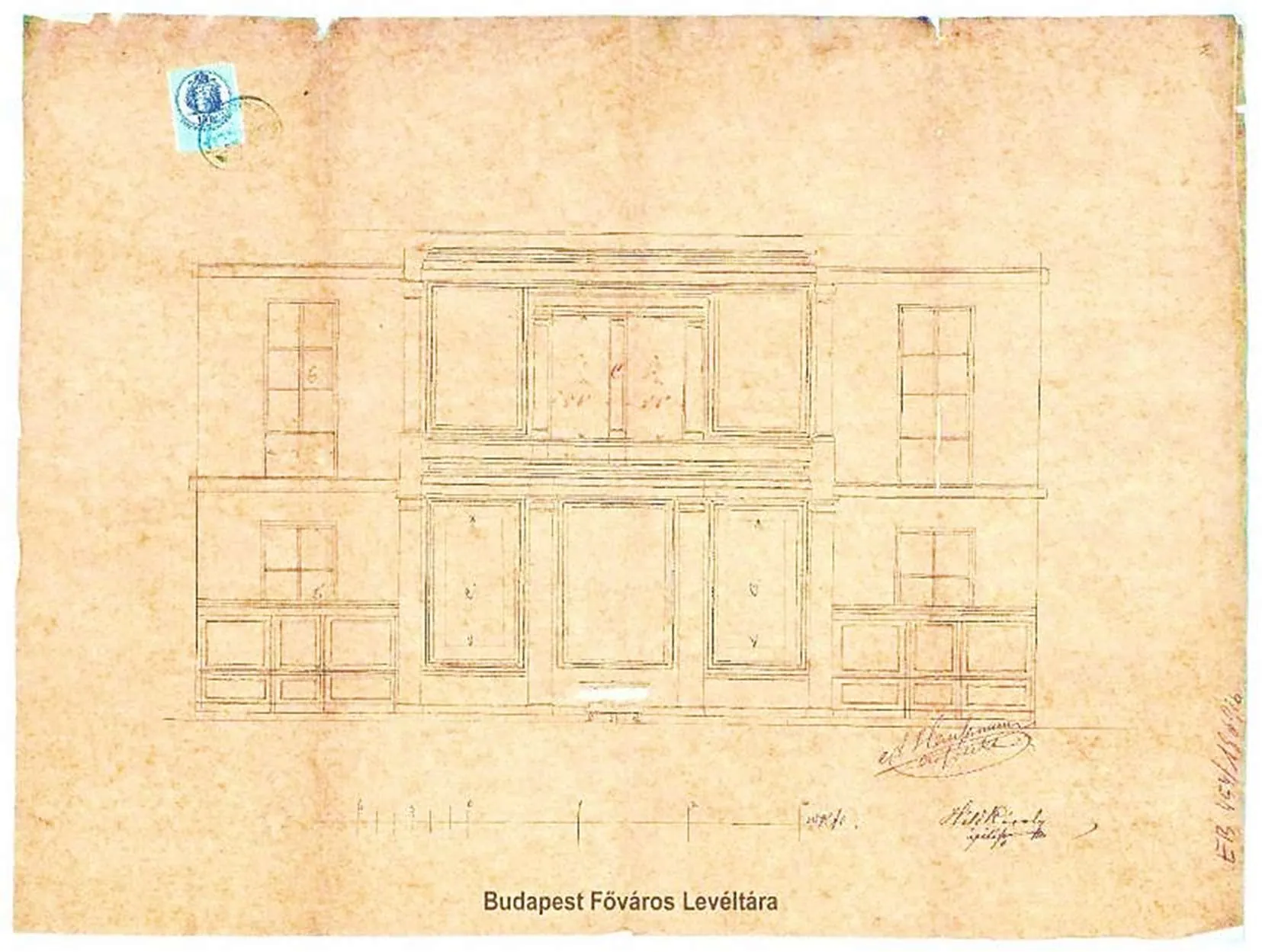
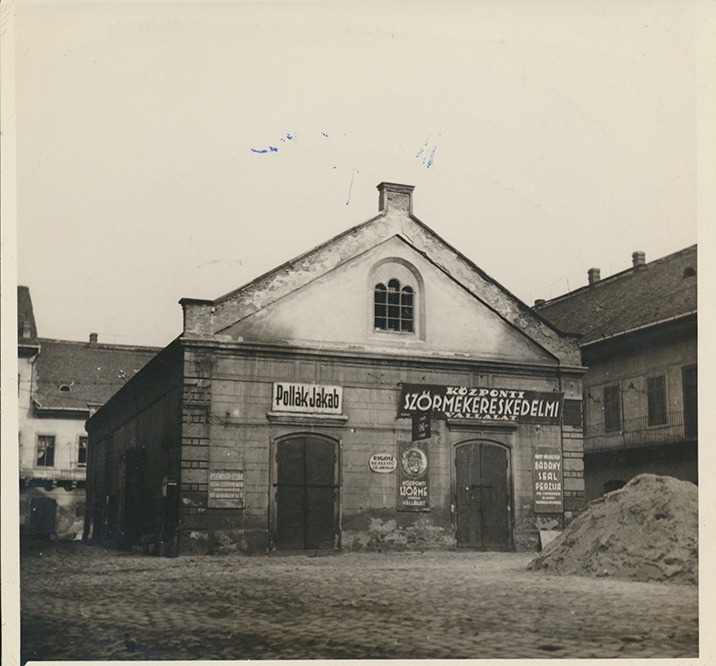
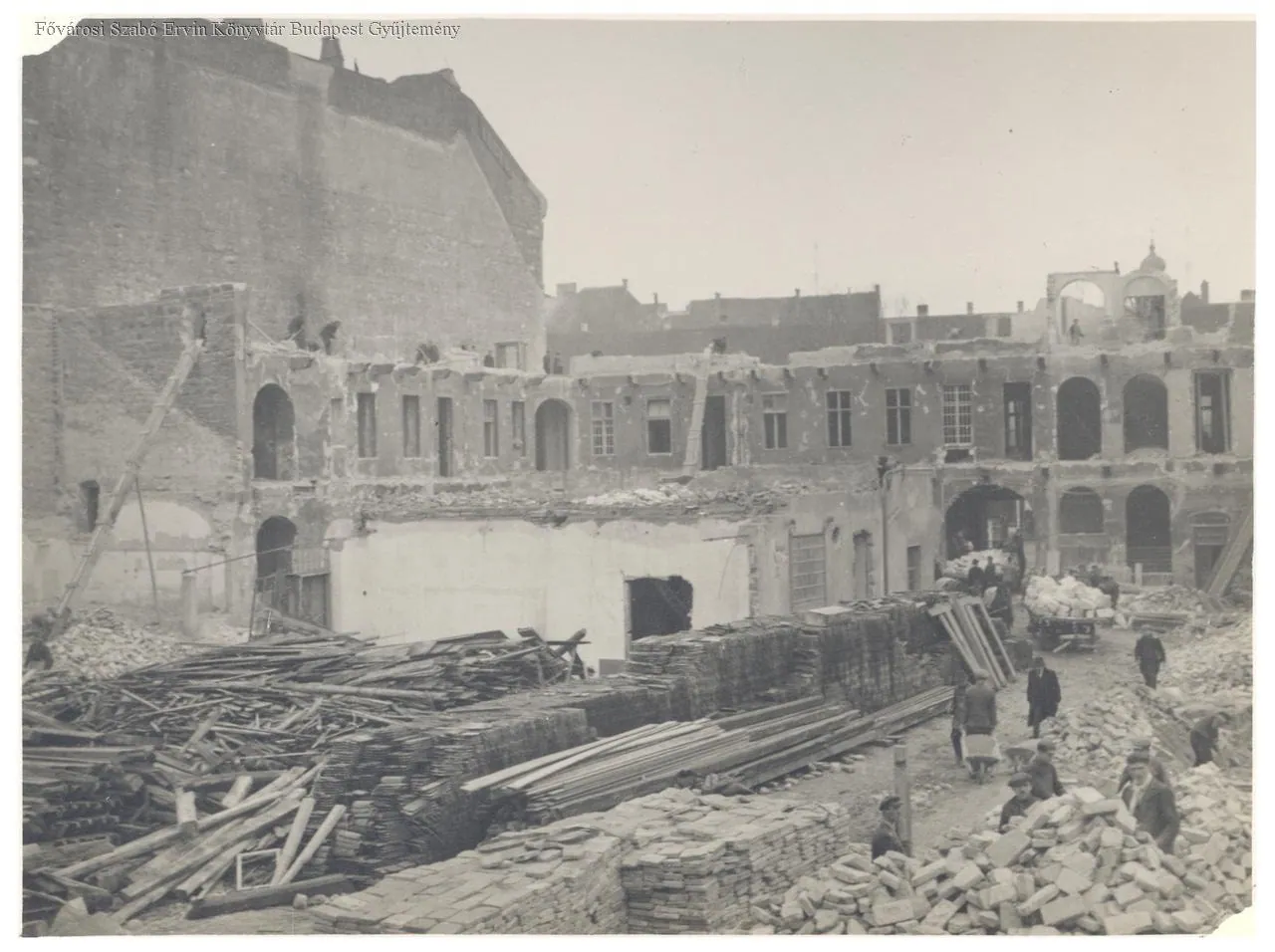
Both halls were hidden in the inner wings of a plain tenement of two upper floors, Baroque shading into Neoclassical, and could not be seen from the street. Zofahl's plan, approved on 25 July 1830, shows them side by side on the first floor, divided by a row of privies, with women's galleries on the second floor. The Great Synagogue was long and narrow, on a site of about 320 square metres, with a latticed gallery on eighteen columns, eight windows on each side, a central bimah, plain undecorated columns and a ceiling painted with stars; it had 585 seats, 336 for men and 249 for women. The Cultustempel, built out from the cross wing, measured about 16 by 15 metres and 11.4 metres high, with a curved ceiling for acoustics opened into the roof space for light from above. The women's gallery, lined with fluted columns, was left without a lattice; the bimah stood directly before an aedicule-like ark under a semicircular window, inside a scrolled iron railing as in Vienna. It seated about 491–495. To the courtyard it showed a pedimented front with a lunette.
Leben in der Synagoge
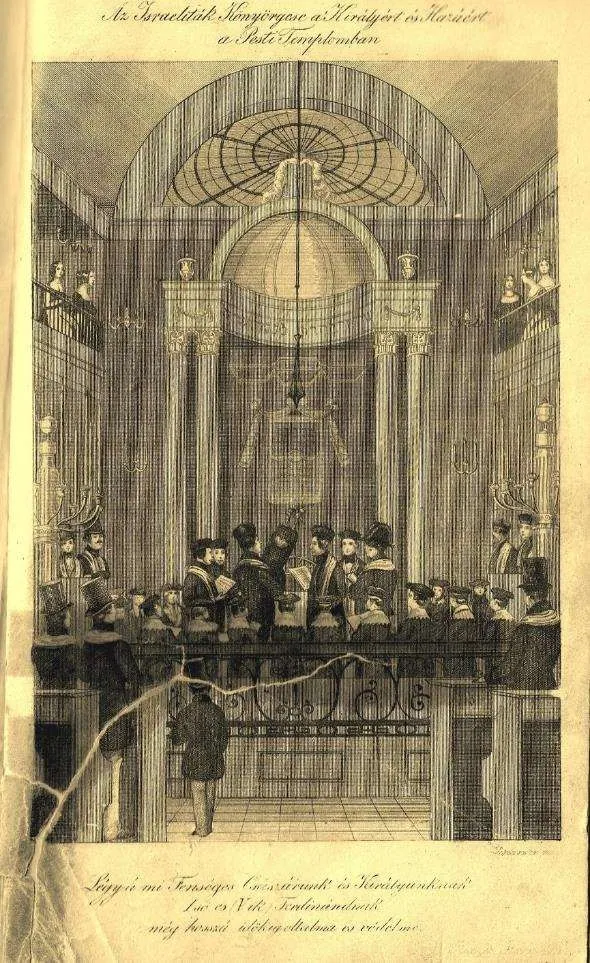
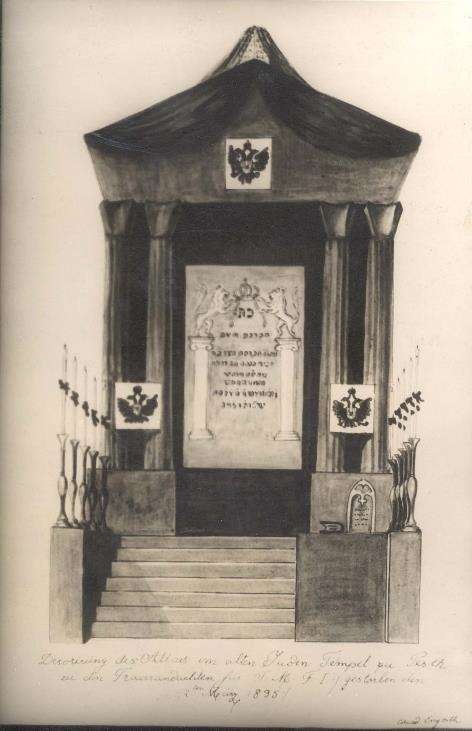
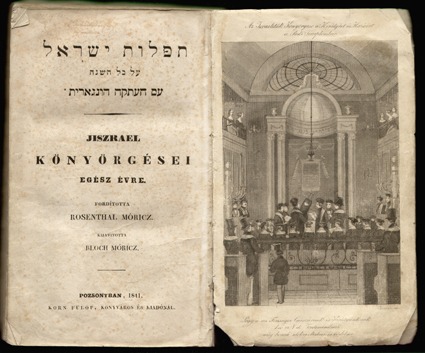
The two halls offered two kinds of worship under one rabbi. In the Great Synagogue the Galician-born cantor David Brod (Strelisker) led a four-voice choir by the light of some eighty candle-holders, and from 1836 Löw Schwab preached there. In the Cultustempel the Vienna-trained cantor Karl Eduard Denhof and a robed choir of boys and men sang Hebrew choral music, the preacher Joseph Bach gave sermons in German, weddings were held inside the temple and youth and women's services were introduced; an organ followed in 1851. Christians came to listen: the writer Péter Vajda praised the choir in 1833, and on 11 August 1837 Archduchess Maria Dorothea, wife of the Palatine, attended a Friday evening service. Rabbi Wolf Alois Meisel collapsed while preaching in the old synagogue on 30 November 1867 and died that evening. In 1880 the Orthodox held their national congress in the hall. A fire on the night of 25–26 November 1920 destroyed its gold-embroidered ark curtain and burned Torah scrolls, whose remains were buried in the Csörsz Street cemetery.
Zerstörung
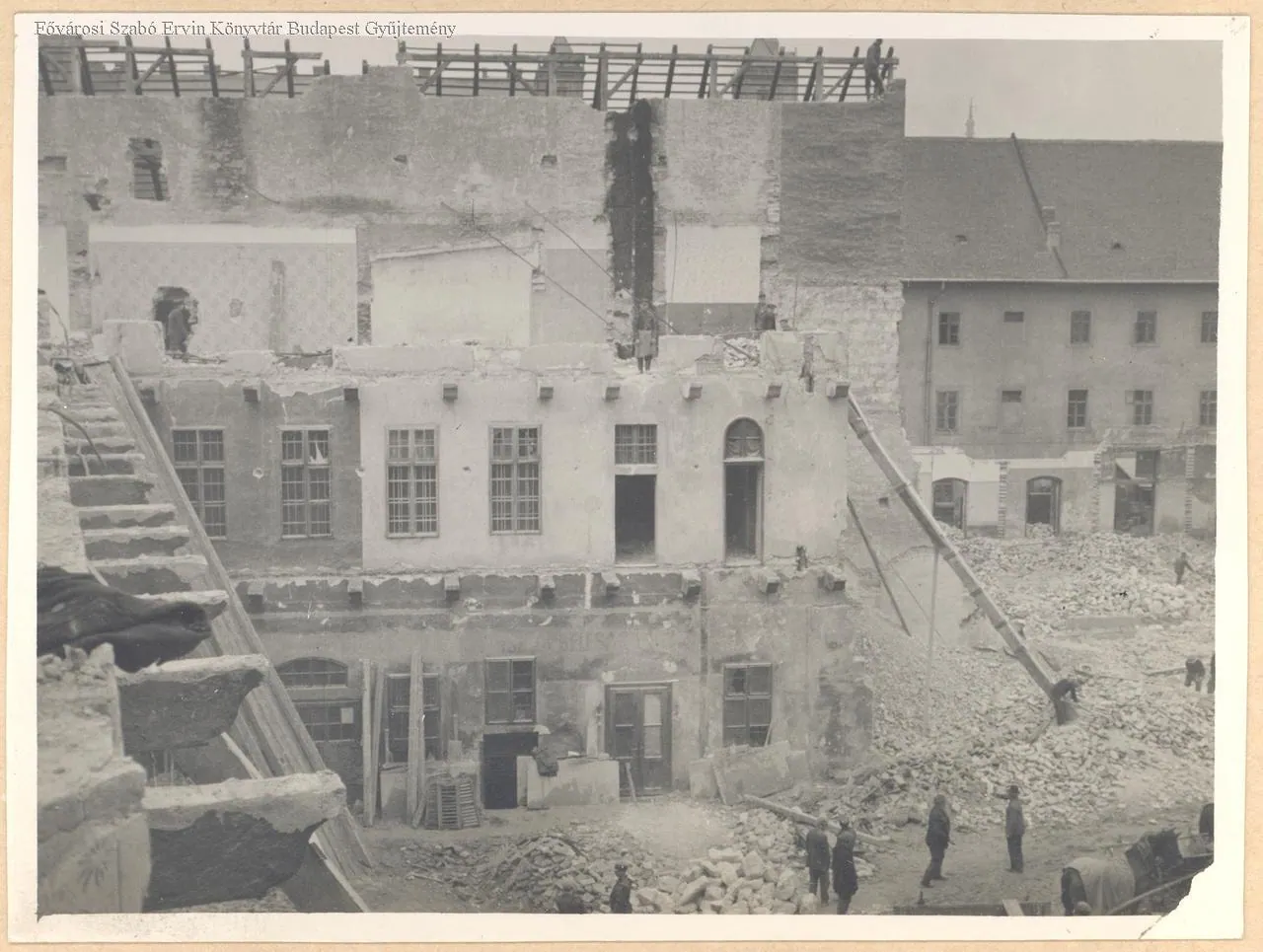
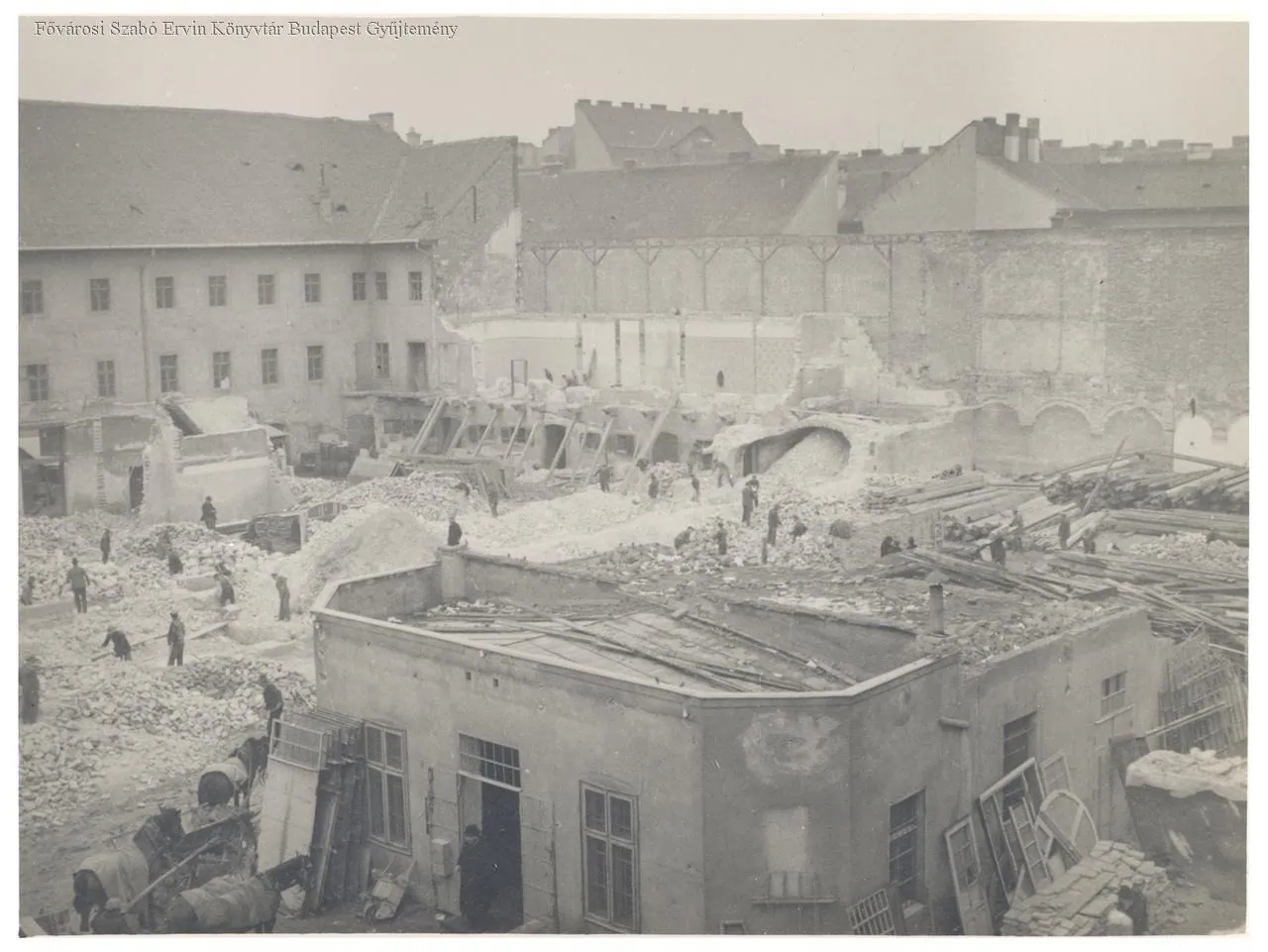
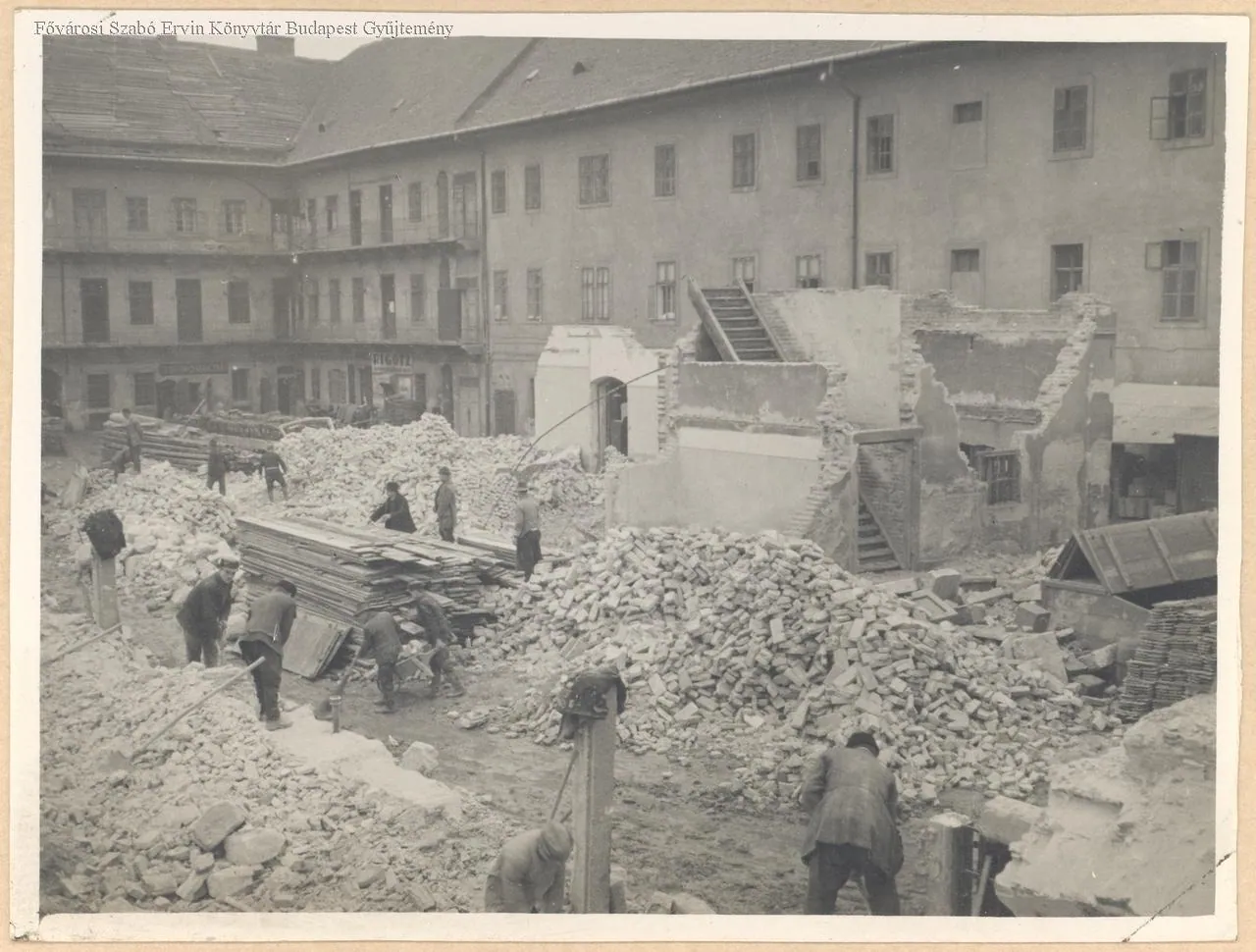
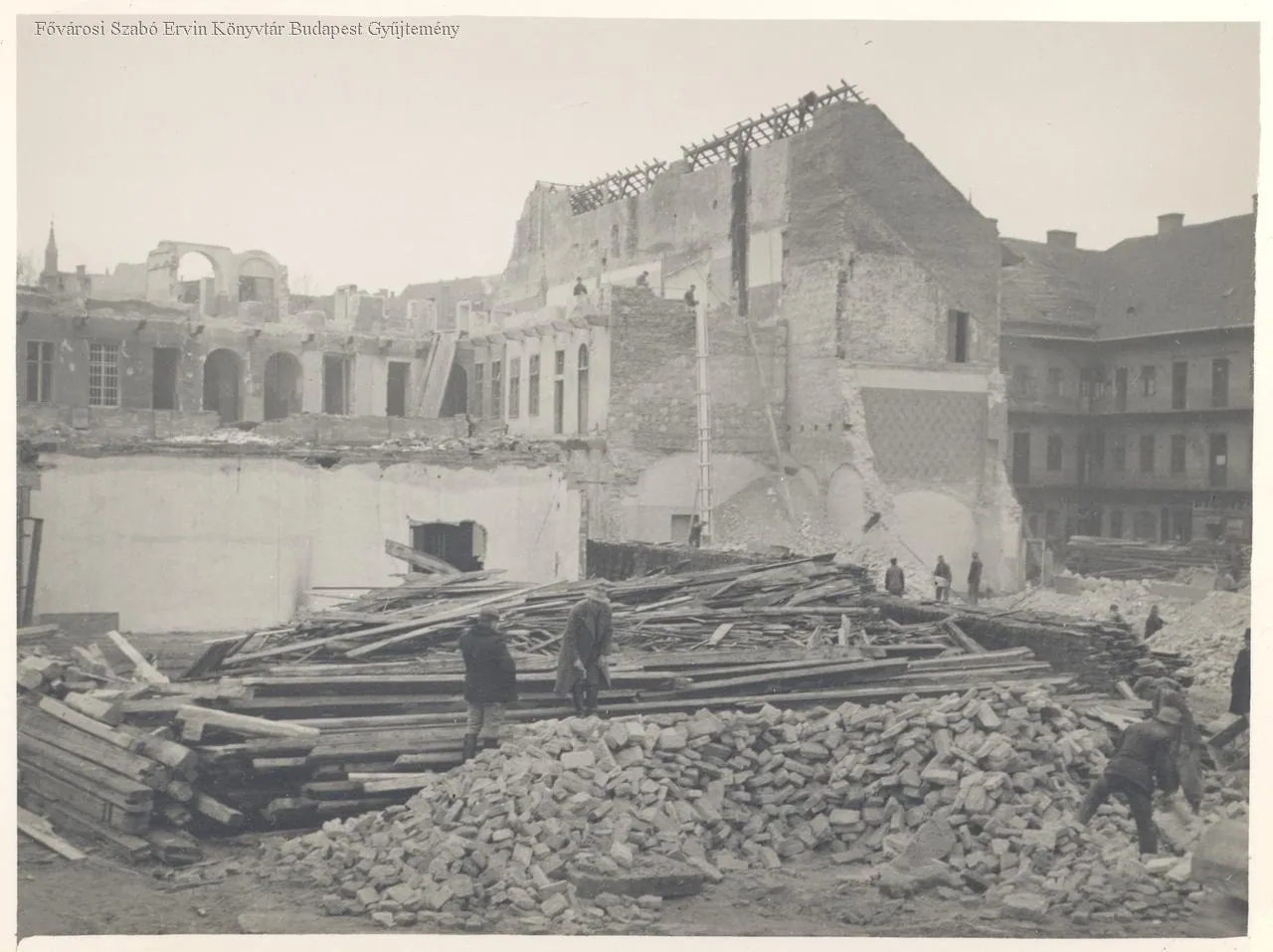
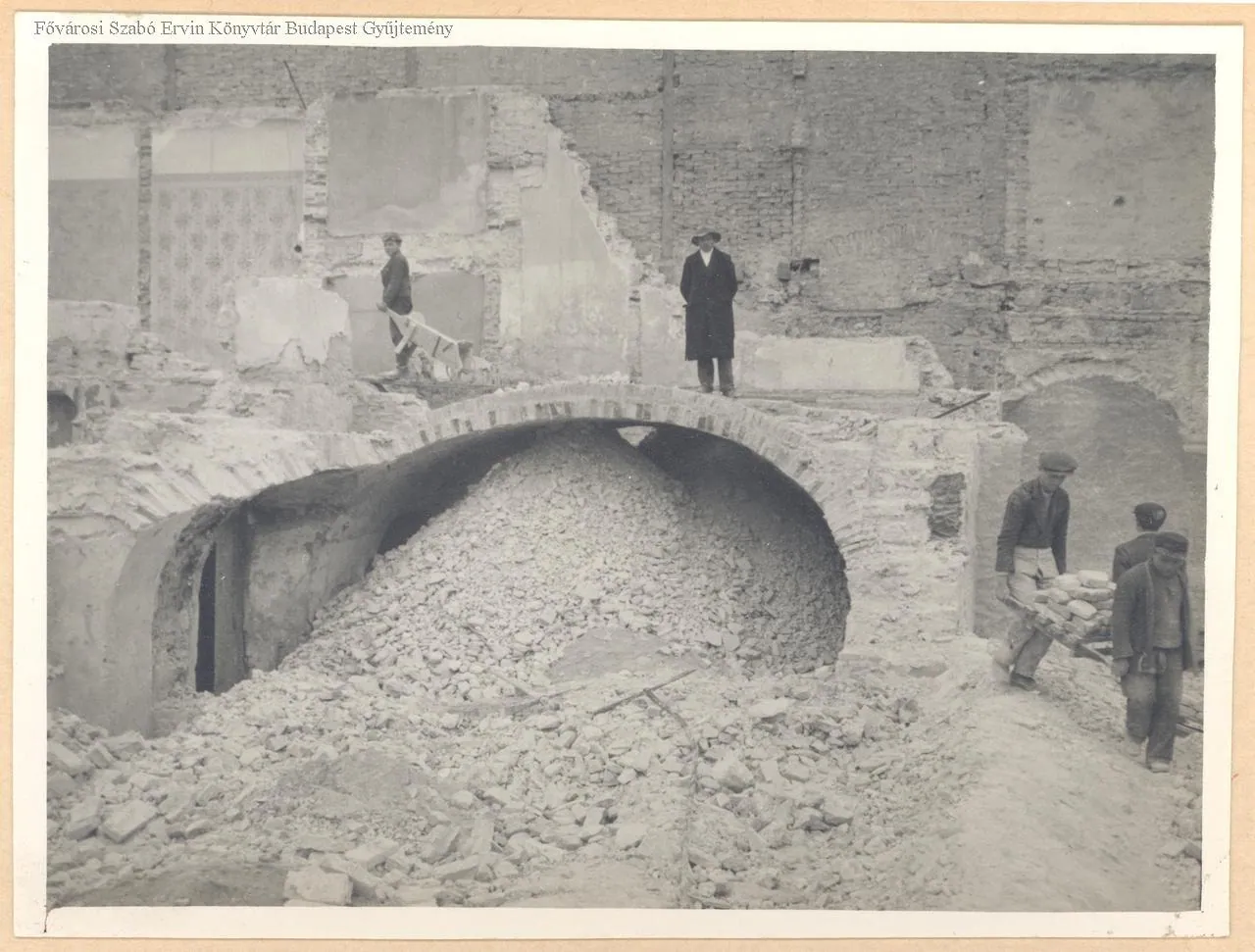
The Orczy family passed the decaying house to a joint-stock company in 1907; investors bought that company in 1927 and in 1933 merged it into the Helvetia Building and Real Estate Company. Budapest's Council of Public Works had long planned a new avenue, eventually named Madách Imre út, opening from Károly körút beside the house, and in June 1935 it gave Helvetia permission in principle to rebuild the plot; a finance ministry decree of November 1936 granted the new buildings a long tax exemption. Tenants were moved out during 1936. In 1937 the Helvetia Building and Real Estate Company, the owner, demolished the Orczy House with both synagogue halls. Work began on 15 January 1937 at Károly körút 17, and the Orthodox synagogue was left until last. On the evening of 1 June 1937 the congregation, led by the community president Ábrahám Freudiger, held a farewell service while workmen hammered at the roof, then carried fifteen Torah scrolls in procession to a new prayer room at Király utca 16. The former Cultustempel, by then a print shop, went with the rest.
Das Schicksal der Gemeinde
The congregation was not destroyed with its building in 1937. The Orthodox Shas Chevra (Talmud Society), which had used the hall since 1921, moved its scrolls and ark to Király utca 16, and the Orthodox community's main synagogue had stood in Kazinczy Street since 1913. But Hungary's anti-Jewish laws began the following year, and many of the small Jewish traders displaced from the Orczy House never re-established themselves. About 200,000 Jews lived in Budapest before the war. After Nazi Germany occupied Hungary in March 1944 they were forced into marked houses; from November 1944 the Arrow Cross confined about 70,000 in a closed ghetto in the old Jewish quarter of Erzsébetváros, drove tens of thousands more on death marches towards Austria and shot thousands on the Danube bank. Soviet forces liberated the ghetto on 17 January 1945. More than 100,000 Jews were still alive in the city at liberation, and the Orthodox community of Kazinczy Street continues today.
Der Ort heute
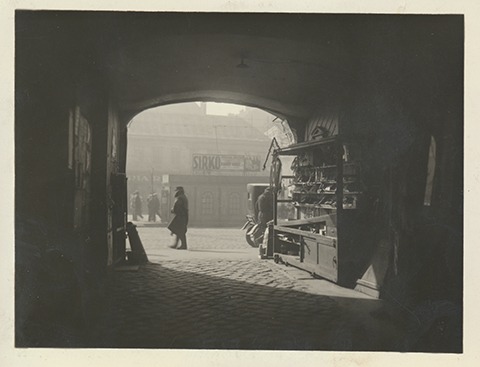
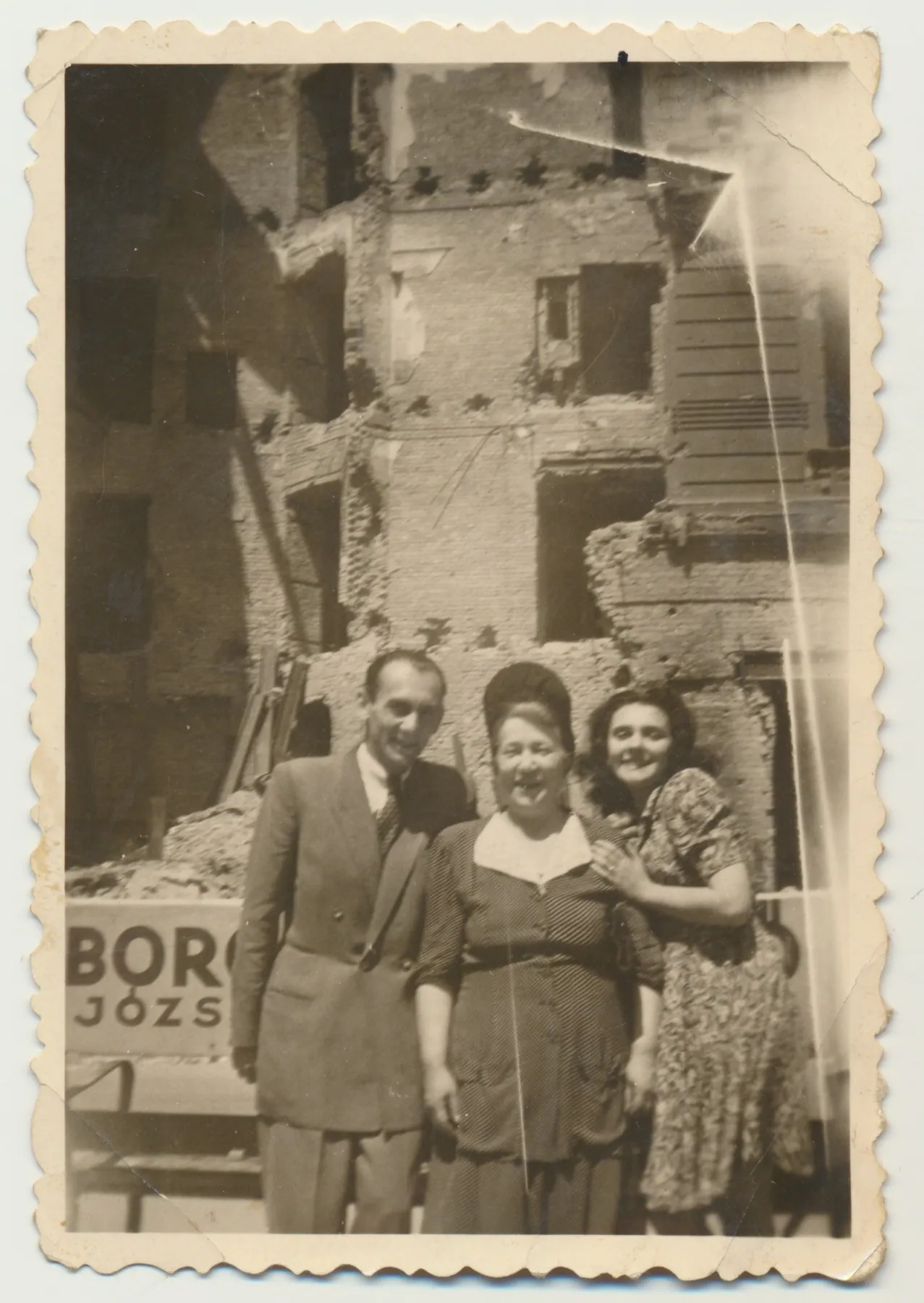
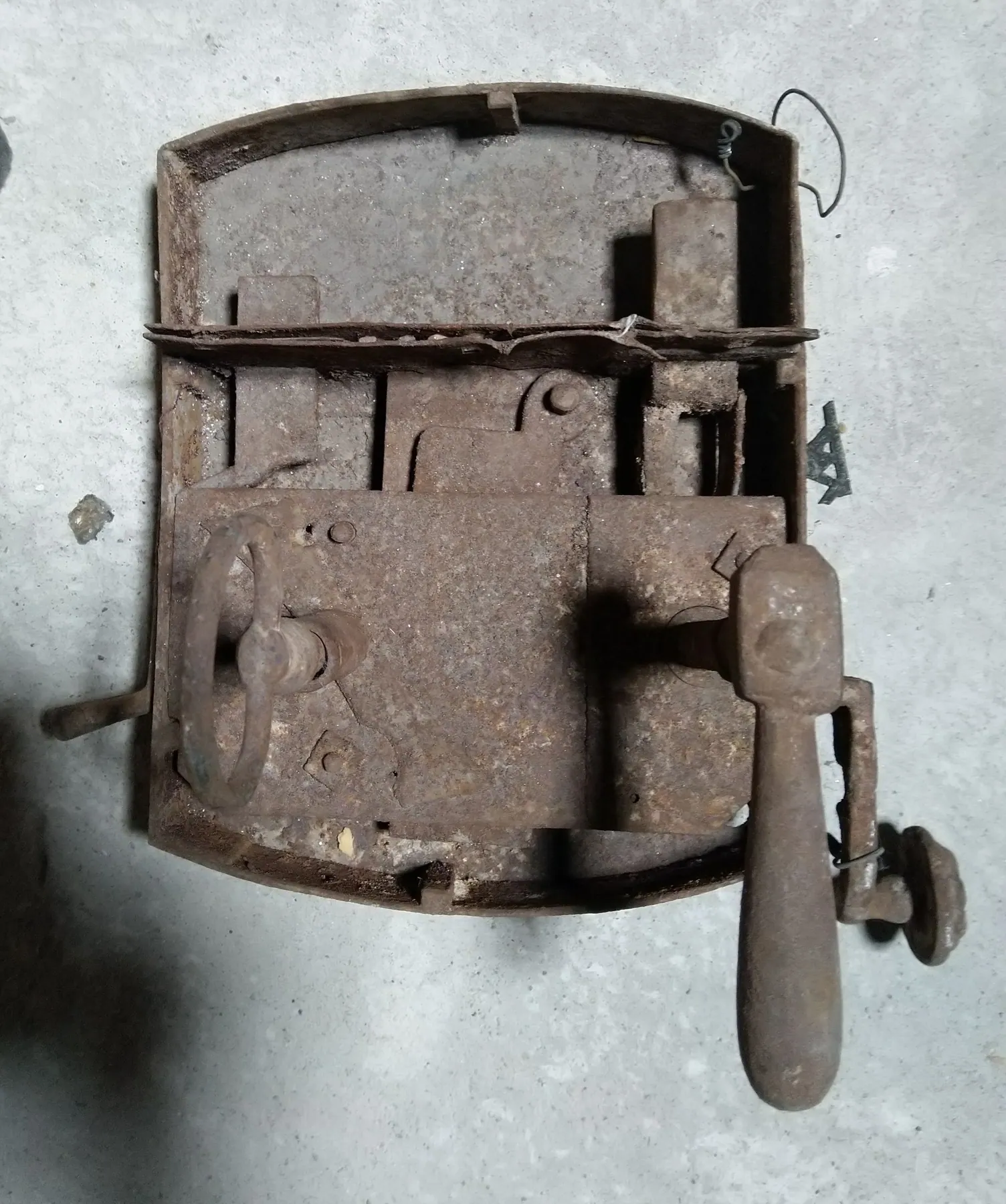
The site is covered by the Madách houses, the dark clinker-brick apartment blocks with ground-floor arcades whose uniform fronts were designed by Gyula Wälder for the Council of Public Works and built in 1937–40 along Károly körút and the start of Király utca; the great archway of Madách Imre tér stands just to the south. Asbóth utca, cut through the old plot as a continuation of Anker köz, runs where the courtyards were. Nothing of the Orczy House or its synagogues remains above ground. The iron lock of the synagogue door, the 1833 lithograph of the Cultustempel, seat tickets and photographs are kept in the Hungarian Jewish Museum and Archives, and Zofahl's 1830 plan is in the Budapest City Archives.
Bedeutende Namen
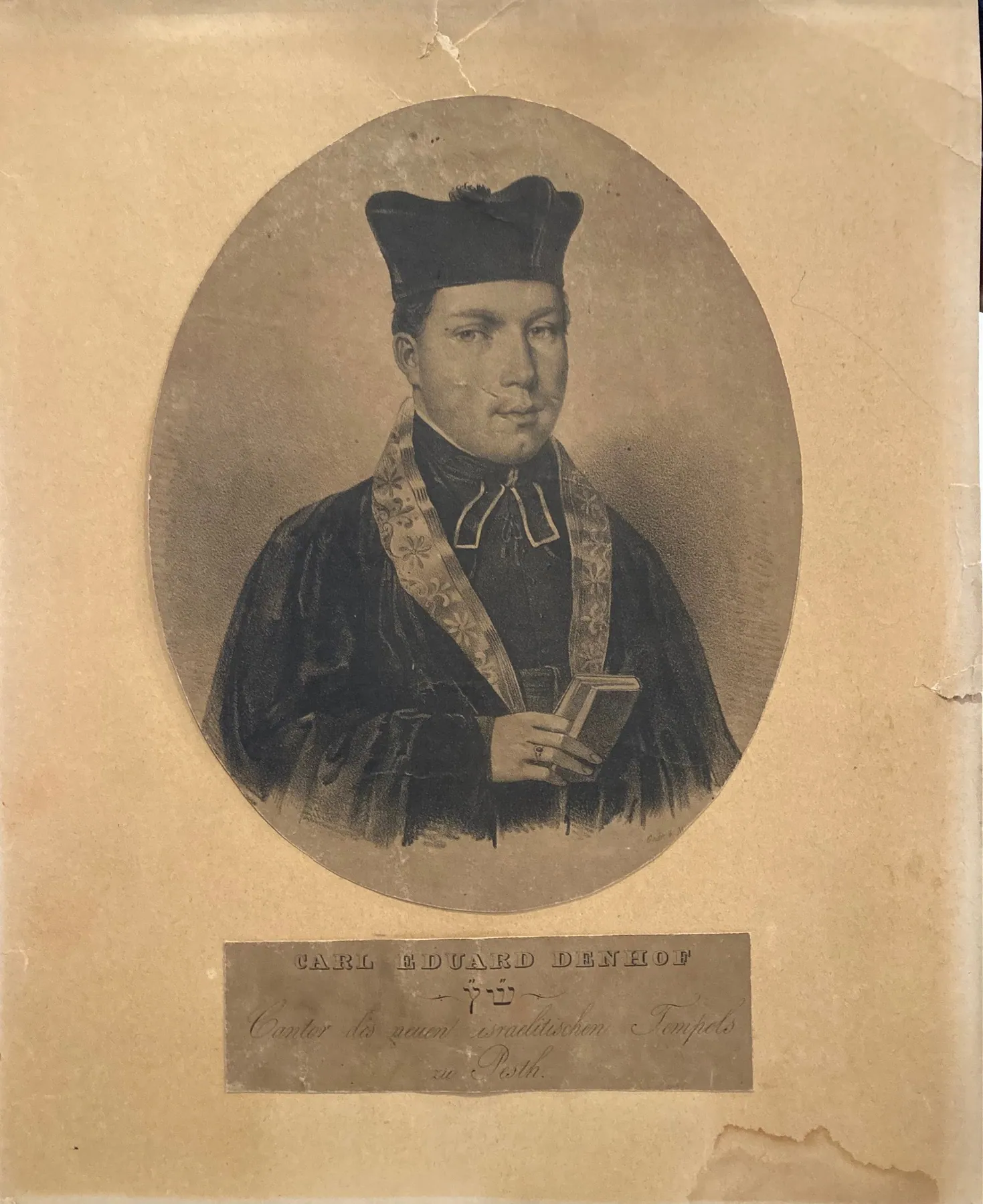
Karl Eduard Denhof
1800–1840Cantor of the CultustempelKarl Eduard (Ede Károly) Denhof was the first cantor of the reform temple in the Orczy House. The Pest reformers sent him to Vienna to train under Salomon Sulzer, and in the Cultustempel he led a robed choir of boys and men in Hebrew choral music that drew Christian visitors as well as worshippers. A lithograph portrait shows him in his cantor's cap, gown and stole.
Biografie oder Quelle →
David Brod (Strelisker)
1783–1848Chief cantor of the Great SynagogueBorn in Brody in Galicia and known as Dovidl Brod, David Strelisker was a self-taught singer who became a professional cantor in 1822 and came to Pest in 1830, serving until his death. In the traditional Great Synagogue of the Orczy House he led a four-voice choir of bass, tenor, falsetto and boy singer; he could not read music and improvised his own melodies, which shaped the style of many Hungarian and Galician cantors.
Biografie oder Quelle →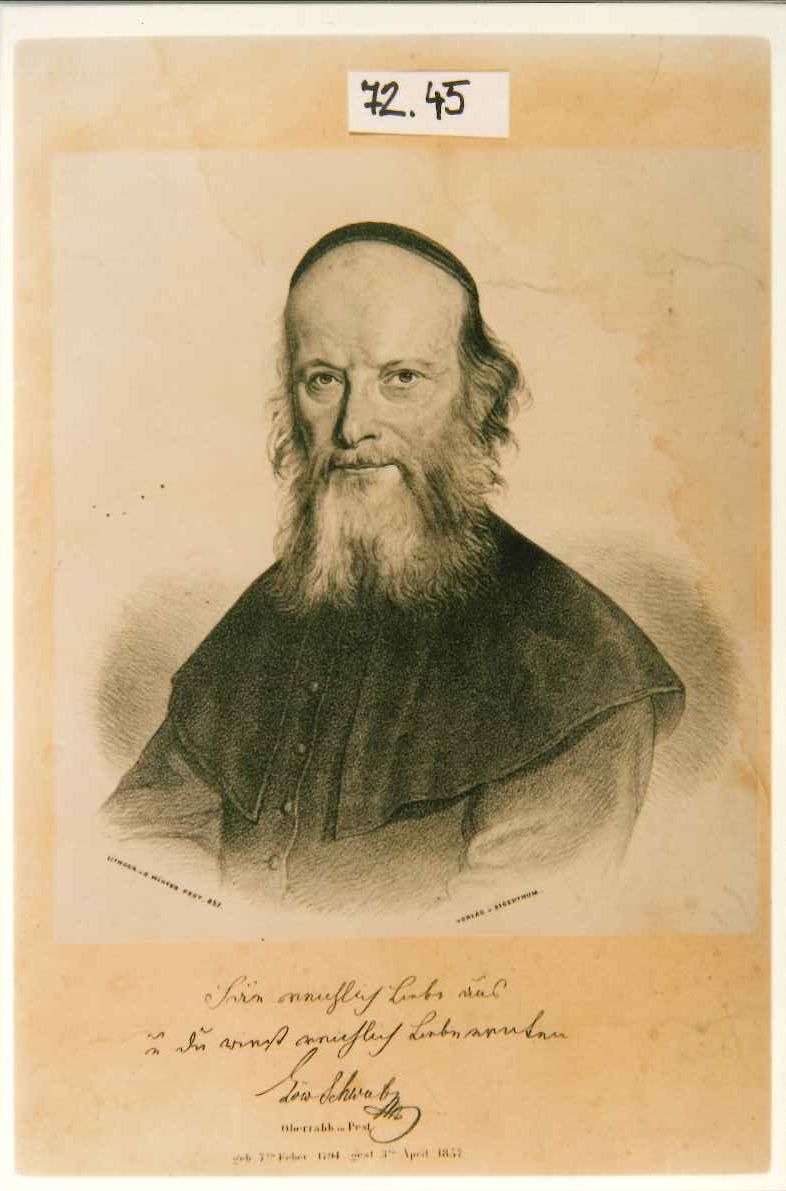
Löw Schwab
1794–1857Chief Rabbi of Pest, 1836–1857Löw Schwab, rabbi of Prossnitz in Moravia, was invited to Pest in 1835 on the recommendation of Vienna's Isaak Noah Mannheimer and installed on 28 January 1836. He was rabbi of the traditional Great Synagogue but made it a condition that the Cultustempel also come under his authority, preaching in both halls of the Orczy House and so holding the two wings of Pest Jewry together for decades.
Biografie oder Quelle →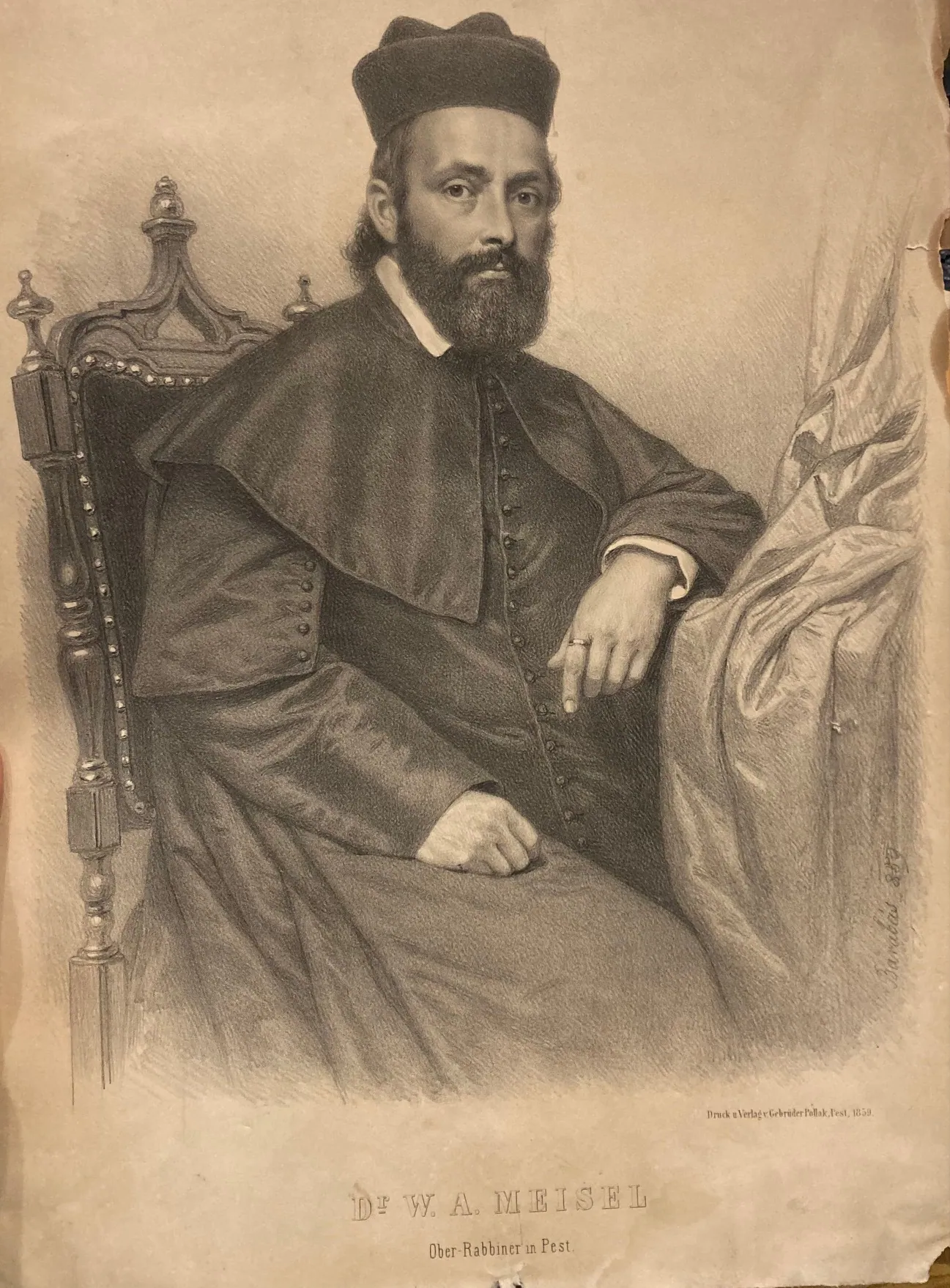
Wolf Alois Meisel
1815–1867Chief Rabbi of Pest, 1859–1867Called from Stettin after Schwab's death, Wolf Alois (Farkas Alajos) Meisel preached on alternate Sabbaths in the Cultustempel and the old synagogue of the Orczy House before becoming the first rabbi of the Dohány Street Synagogue. On Saturday 30 November 1867, while preaching in the old Orczy House synagogue about those who quarrel, he was taken ill and died the same evening; his last word was said to be 'peace'.
Biografie oder Quelle →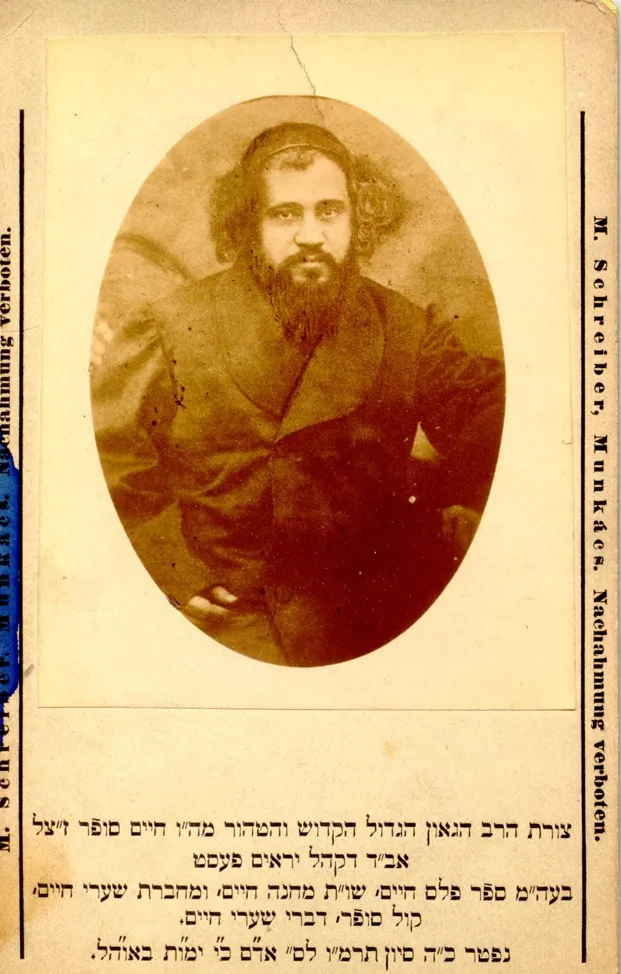
Chaim Sofer
1821–1886Orthodox Chief Rabbi of Pest, 1879–1886Chaim ben Mordechai Efraim Fischl Sofer (Schreiber), author of Machne Chaim, was called from Munkács in 1879 as chief rabbi of the autonomous Orthodox community of Pest. He lived in the Orczy House and led its synagogue, the former Great Synagogue, which the Orthodox had leased in 1875; the Orthodox national congress met there in 1880. The Budapest press mocked his Yiddish and his reputation as a wonder-rabbi.
Biografie oder Quelle →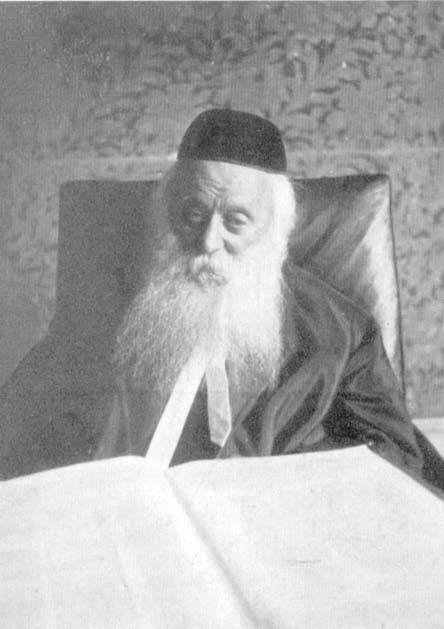
Koppel Reich
1838–1929Orthodox Chief Rabbi of Budapest, 1890–1929Jaakov Koppel Reich, a delegate at the 1868–69 congress, was elected chief rabbi of the Budapest Orthodox community in 1890. The Orczy House synagogue was the community's main house of prayer and its office throughout the first half of his tenure, until the Kazinczy Street synagogue and Dob Street headquarters opened in 1913; a thanksgiving service for Franz Joseph's birthday was held there with him in 1910.
Biografie oder Quelle →Lőrinc Zofahl
1791–1863Master builder; architect of both halls (1830)The Pest master builder Lőrinc (Laurenz) Zofahl, who himself rented a flat in the Orczy House, drew the plans for rebuilding its inner wings in 1829 and designed and built both double-height halls between February and August 1830: the enlarged Great Synagogue and the new Cultustempel, modelled on Vienna's Seitenstettengasse temple. His plans were checked by Mihály Pollack and approved on 25 July 1830.
Biografie oder Quelle →Israel Wahrmann
1755–1824/1826First rabbi of Pest, 1799–1820sBorn in Óbuda, Israel ben Solomon Wahrmann was called to Pest in 1799 as the community's first officially recognised rabbi and drew up its first statutes. He lived on the first floor of the Orczy House and led worship in its synagogue, where in 1814 the wall between the men's and women's rooms was taken down for the visit of the three allied monarchs. His widow kept a flat in the house after his death.
Biografie oder Quelle →Gábor Ullmann
1792–c. 1843Community leader; founder of the CultustempelThe Pozsony-born wholesaler Gábor (Gabriel) Ullmann led the Hesed Neurim society, which introduced the rite of the new Vienna temple in Pest from 1827. With Sámuel Wodianer and ten others he signed the lease of 19 February 1830 under which the Orczy family built the Cultustempel. A community elder from 1830 and its first president under the 1833 statutes, he pressed from 1834 for the reform temple to be taken into the community's care, which followed at the end of 1836.
Biografie oder Quelle →Joseph Bach
1784–1866Preacher of the CultustempelJoseph Bach of Óbuda, a former merchant and teacher who had studied in Prague, became the preacher of Pest's reform congregation in 1827 and served for more than thirty years. In the Cultustempel of the Orczy House he gave moral sermons in German, wearing the black gown, silk stole and velvet cap adopted from Vienna; after Isaak Noah Mannheimer he is counted the first German-language Jewish preacher in the Habsburg lands.
Biografie oder Quelle →Haben Sie etwas beizutragen?
Fotos, Dokumente, Familiengeschichten oder Erinnerungen an diese Synagoge und ihre Gemeinde halten ihre Geschichte lebendig.
- A modern kori (buda)pesti zsidóság emblematikus épülete (Orczy-ház) és társadalma a források és a sajtó tükrében (PhD dissertation)
- A modern kori (buda)pesti zsidóság emblematikus épülete (Orczy-ház) … – Mellékletek (appendices)
- Record page of the dissertation (metadata, DOI 10.13146/OR-ZSE.2025.003)
- Synagogues (Our Budapest series), chapter "Beginnings in Pest: the Former Orczy House and the Synagogues of the Association"
- Az izraeliták temploma Pesten (Orczy ház), coloured lithograph after J. A. Strohmeyer, 1833 (inv. 66.5)
- Orczy ház zsinagógája, photograph, 1936 (inv. F2021.77)
- Imakönyv / Prayerbook (Rosenthal Móricz, Jiszrael könyörgései, Pozsony 1841)
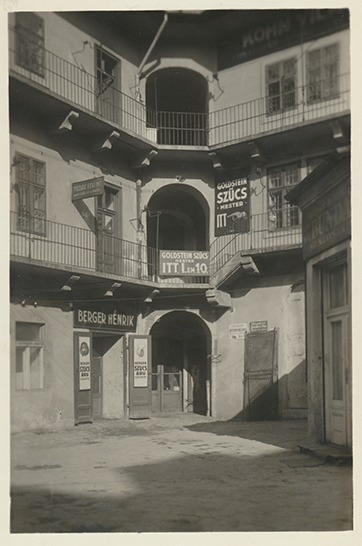
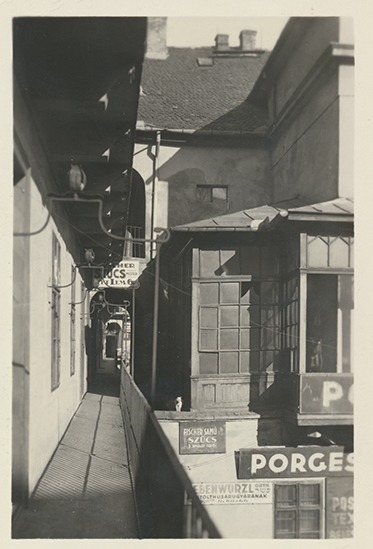
- Orczy-ház udvarrészlete I. (northern courtyard beside the Choir Temple) and related courtyard photographs
- Meghívólevél (letter of invitation to Rabbi Löw Schwab), 1835
- [Orczy-ház udvara raktárakkal, üzletekkel], photograph, c. 1930 (image no. 021265)
- [A Károly körút 15. és 17-19. (Orczy-ház) bontása], photographs, 1937
- Király utca 5. (building history of the Madách houses)
- Pesti Izraelita Hitközség
- Bach, Joseph
- Wahrmann, Israel b. Solomon
- Schreiber Chaim fényképe (portrait card of Rabbi Chaim Sofer)
- Budapest
- Budapest Ghetto
- OpenStreetMap map of the Madách houses block; Nominatim geocoding of "Károly körút 17–19, Budapest" (Madách-házak) and "Király utca 1, Budapest"
- Károly körút, balra a Király utca, Orczy-ház (photo 82507) and photo 86070
- Az Orczy-ház a Károly körút felől (KM_FKL_2150)
Share a memory or thought
No comments yet. Be the first to add one.