
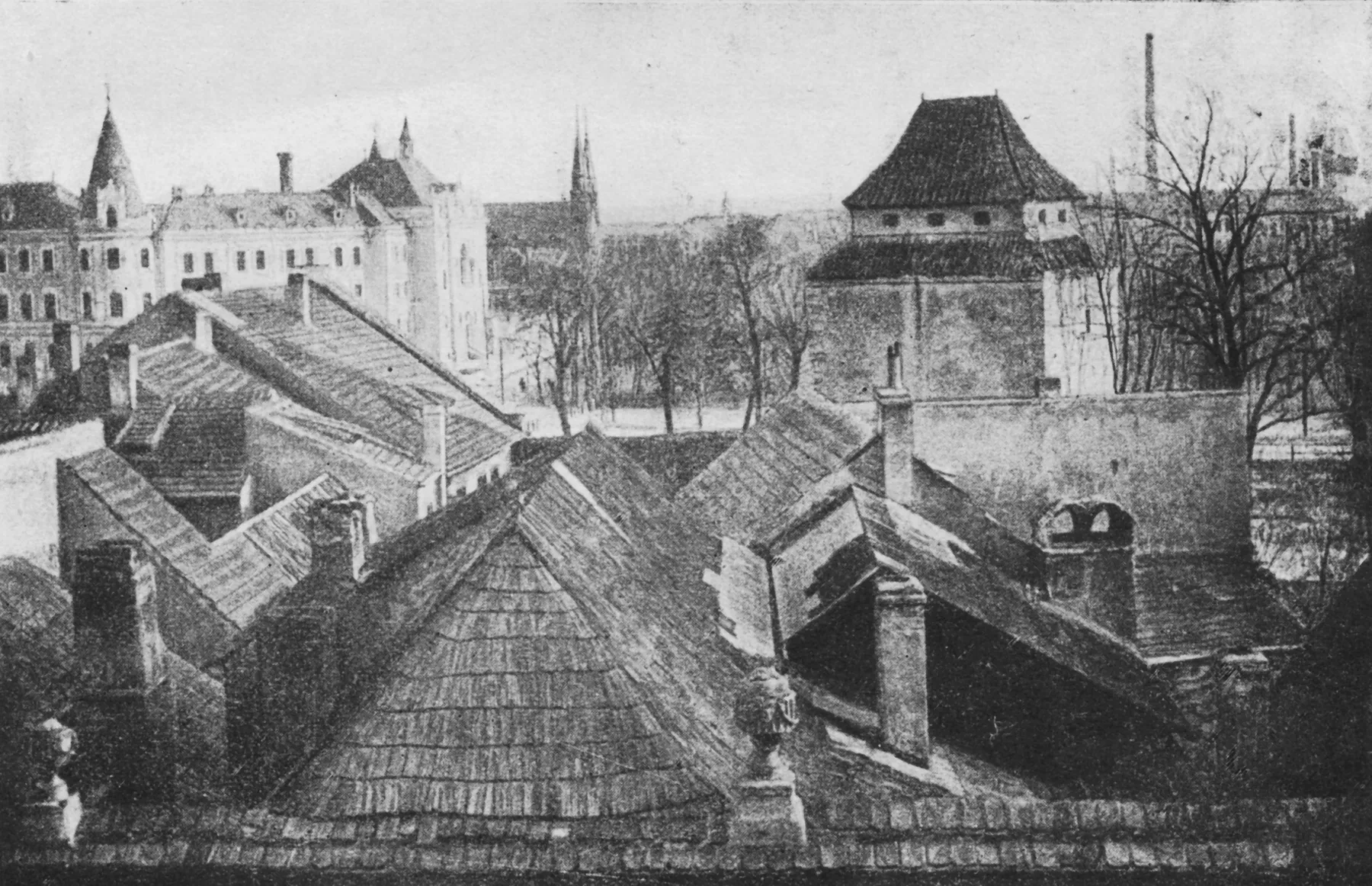
הסיפור של Synagogue of České Budějovice
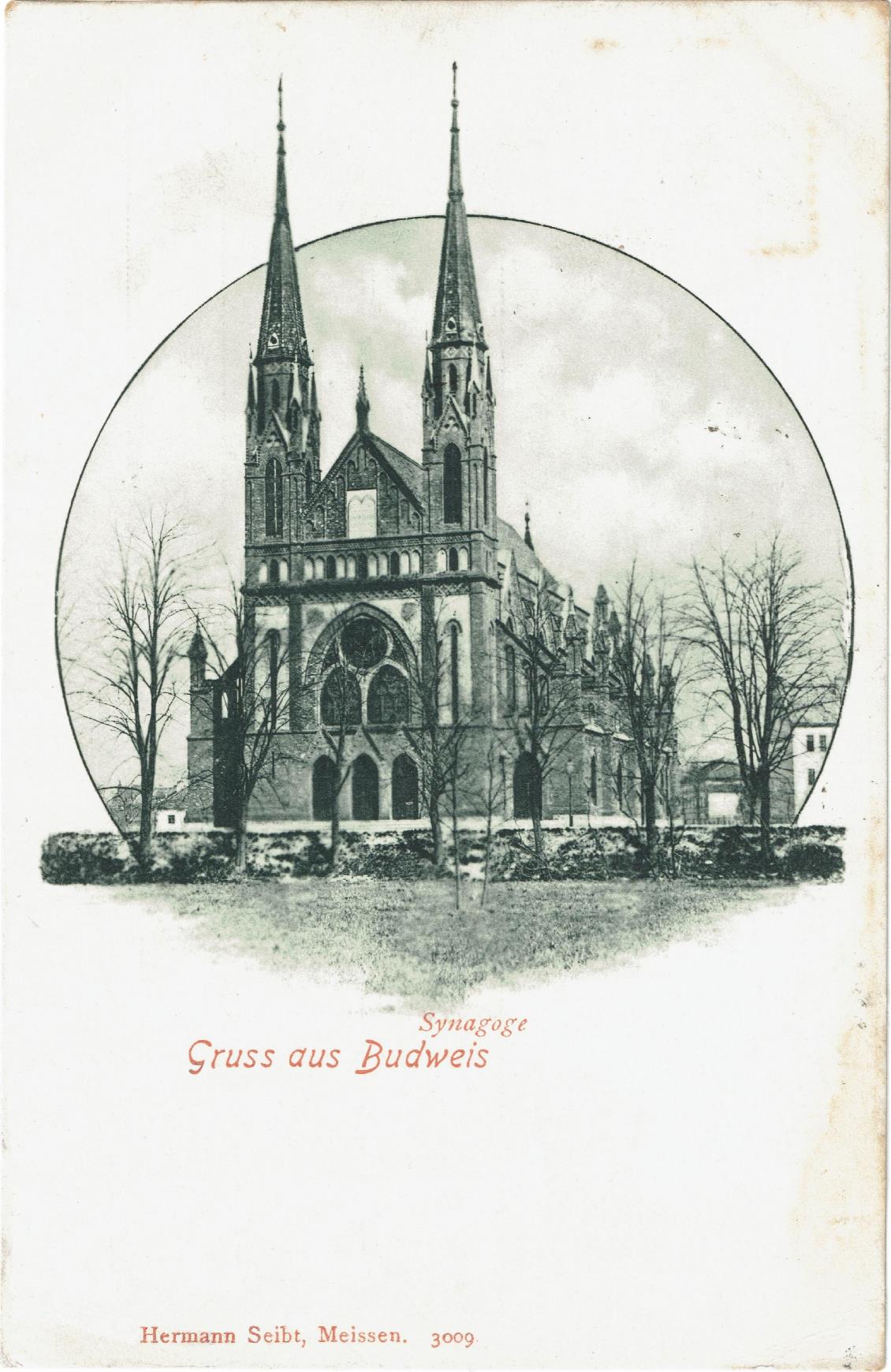
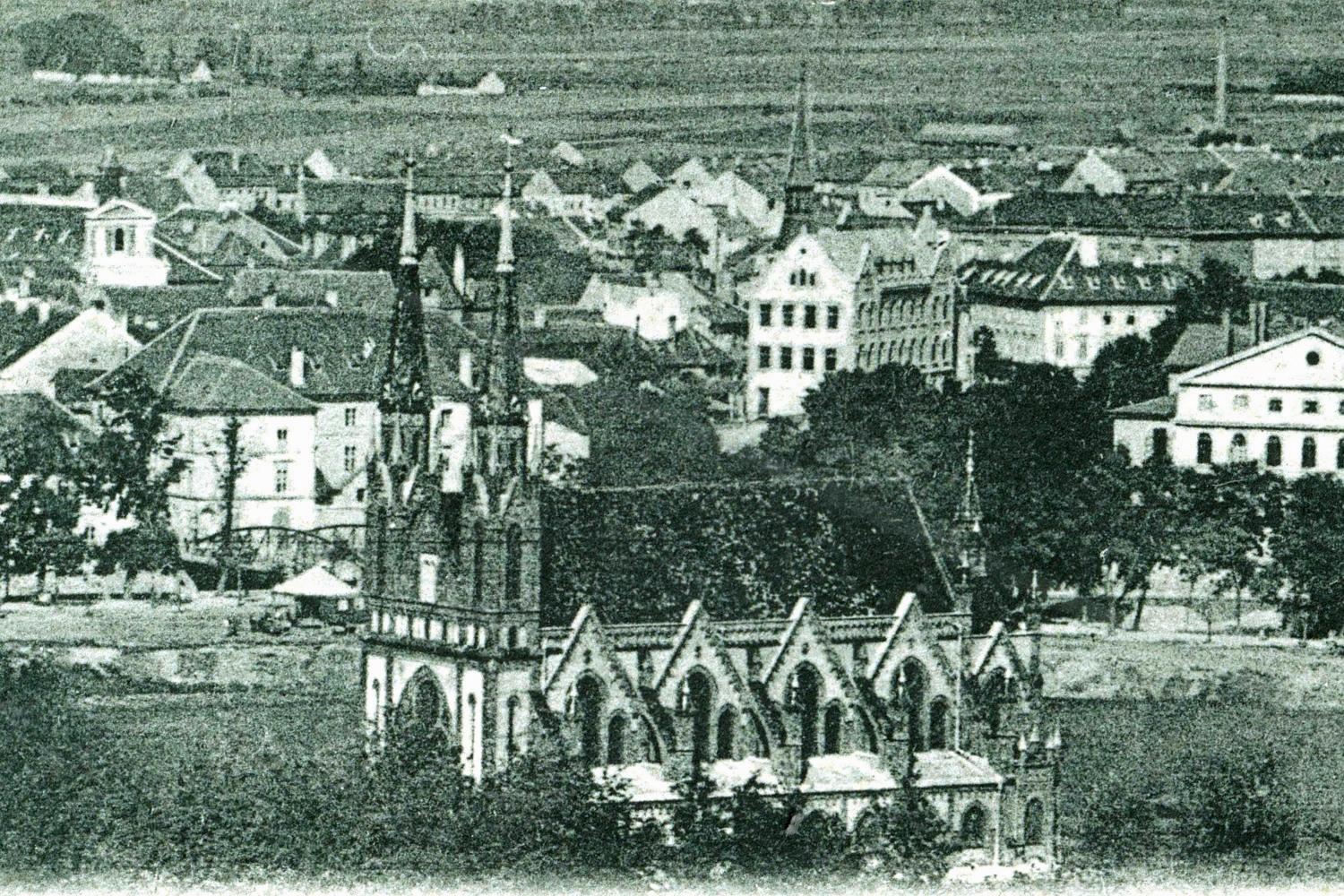
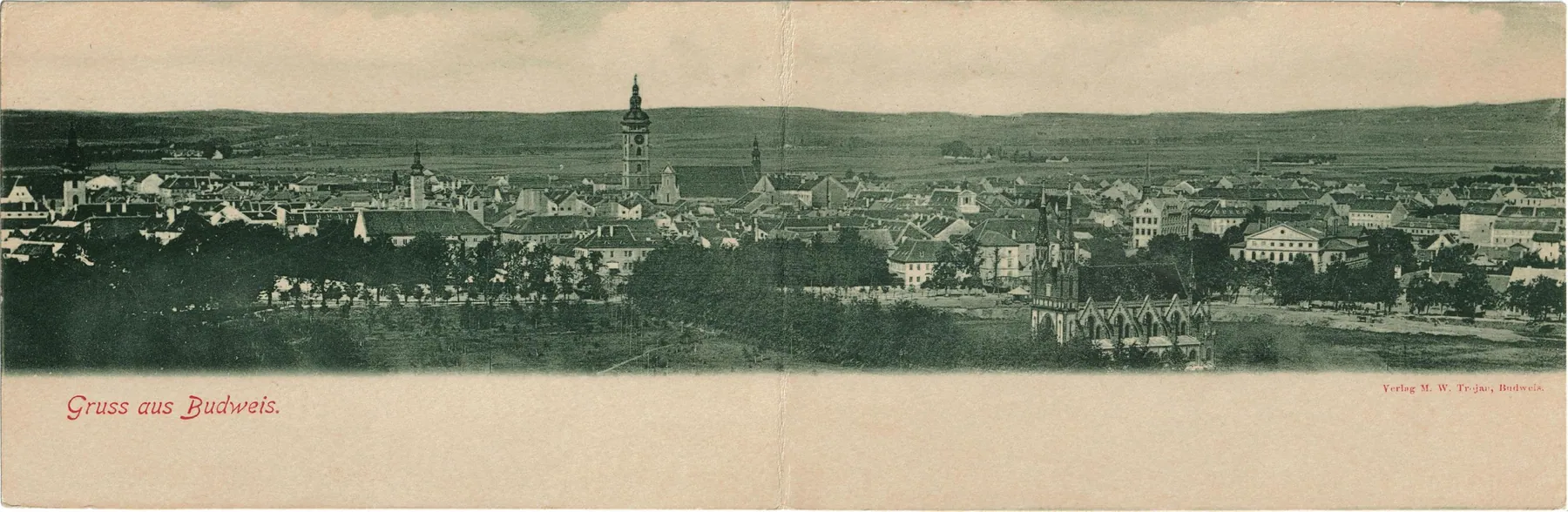
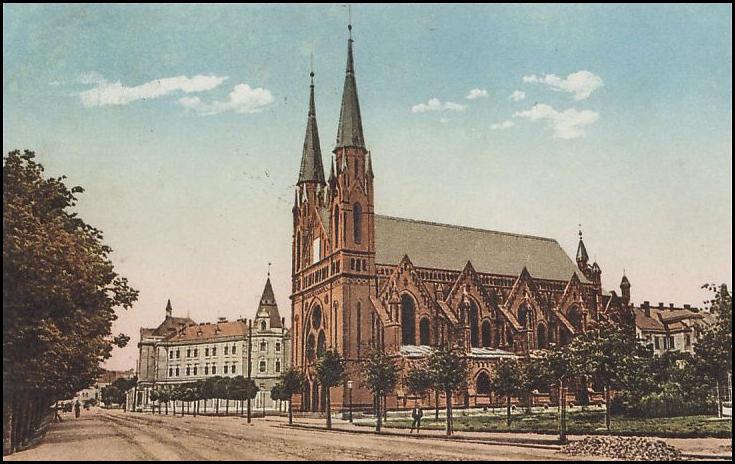
České Budějovice, known in German as Budweis, is the chief city of southern Bohemia. A medieval Jewish community there was destroyed in 1505–1506, when 24 Jews were burned or drowned after a false ritual-murder charge and the rest were expelled. Jews could settle again only after 1848, and a new religious community was founded in 1859. Its growing prosperity found expression in a new synagogue on the site of the Krumlov pond, today F. A. Gerstnera street beside the Palace of Justice. It was designed by the Viennese architect Max Fleischer, the leading builder of Neo-Gothic synagogues in the Habsburg lands, and built in 1887–1888 by the Prague builder Alfons Wertmüller. The red-brick building, with two towers flanking its front, closely resembled a Gothic church. In 1898 an organ was installed on the western choir gallery. After Germany occupied Bohemia and Moravia in March 1939, the community had to hand the building over to the town. In April 1942 more than 900 Jews were deported, and in the summer of 1942 the German town commissioner Friedrich David had the synagogue blown up.
Where it stood for 54 years
Historic: Krumlauer Teich / Gerstgasse, Budweis. Present day: F. A. Gerstnera street, next to the Palace of Justice, České Budějovice, Czech Republic. Approximate.
פתיחת מפה גדולה ←הקהילה היהודית
A small Jewish community is recorded in Budweis from the first half of the fourteenth century. It was destroyed in 1337, re-established under King John of Luxembourg, and had its own street and a synagogue by about 1380. After a fire in 1480 and repeated riots, the Jews were expelled in 1505–1506 on a ritual-murder accusation: 24 were publicly burned or drowned, children were forcibly baptised, and the synagogue became a chapel. For more than three centuries Jews could enter the city only for markets. After 1848 they arrived in large numbers; the modern community was founded in 1859 and opened a cemetery with a ceremonial hall in the mid-1860s. At the beginning of the 1930s about 1,100 Jews lived in Budweis, around 2.5 per cent of the population, in a community district that included 19 surrounding congregations.
אדריכלות ועיצוב
The synagogue was a two-towered brick building in the Neo-Gothic style, built in 1887–1888 by the Prague builder Alfons Wertmüller to plans by the Viennese architect Max Fleischer. Built of red brick, it looked very like a Gothic church, with a tall gabled front between two towers, as the surviving postcards show. Fleischer used the same Neo-Gothic style for several other synagogues in Vienna and Moravia. A choir gallery ran along the west wall, and in 1898 it received a two-manual organ with 13 speaking stops by the organ builder Karl Eisenhut. A model of the synagogue can be seen today in the lobby of an energy company across the street from the site.
החיים בבית הכנסת
The synagogue was the centre of a prosperous community that led the Jewish district of Budweis, which took in 19 congregations in the surrounding towns and villages. The installation of an organ in 1898, on the choir gallery along the west wall, suggests that services were accompanied by organ and choir, as in many Bohemian city synagogues of the period. The community also maintained a cemetery with a ceremonial hall, opened in the 1860s, and religious and charitable institutions. The names of its rabbis and cantors are not recorded in the sources consulted for this entry. By the early 1930s its roughly 1,100 members made up about 2.5 per cent of the population of the city.
הרס
After Germany occupied Bohemia and Moravia in March 1939, the Jews of Budweis were pushed out of public life. In July 1939 Jewish shops were wrecked, and the Jewish community informed the police that it was ready to hand its synagogue over to the administration of the town. In April 1942 the remaining Jews were deported. Shortly afterwards, on the orders of the German town commissioner Friedrich David, the Nazi authorities blew up the synagogue: German Wikipedia gives the date as 5 July 1942, jüdische-gemeinden.de as June 1942. The site was never built on again, and it lies between car parks next to the Palace of Justice.
גורל הקהילה
In July 1939 Jewish shops in Budweis were demolished, and in 1940 the city's Jews were crowded into old, run-down buildings, where they lived in wretched conditions until their deportation. In mid-April 1942 more than 900 Jews were deported to Terezín and from there to Auschwitz and other camps; most were murdered, and only 28 returned to the city. Among the victims remembered by Stolpersteine is a pupil, Harry Kende, who was deported to Terezín in 1942 and murdered in Flossenbürg in March 1945. A small community formed again after the war but dissolved after 1970. The Jewish cemetery, devastated in 1942, has a memorial to the victims from 1950.
האתר כיום
Nothing of the synagogue survives. It stood on F. A. Gerstnera street next to today's Palace of Justice, opposite the winter stadium. On the 50th anniversary of its destruction, in 1992, a Holocaust memorial by the sculptor Roman Brichcín was unveiled on the grassy area between two car parks: a stone hand in the shape of a menorah with a Star of David. An information board explains the history of the site, and a model of the synagogue is displayed in the lobby of the energy company across the street.
שמות בולטים
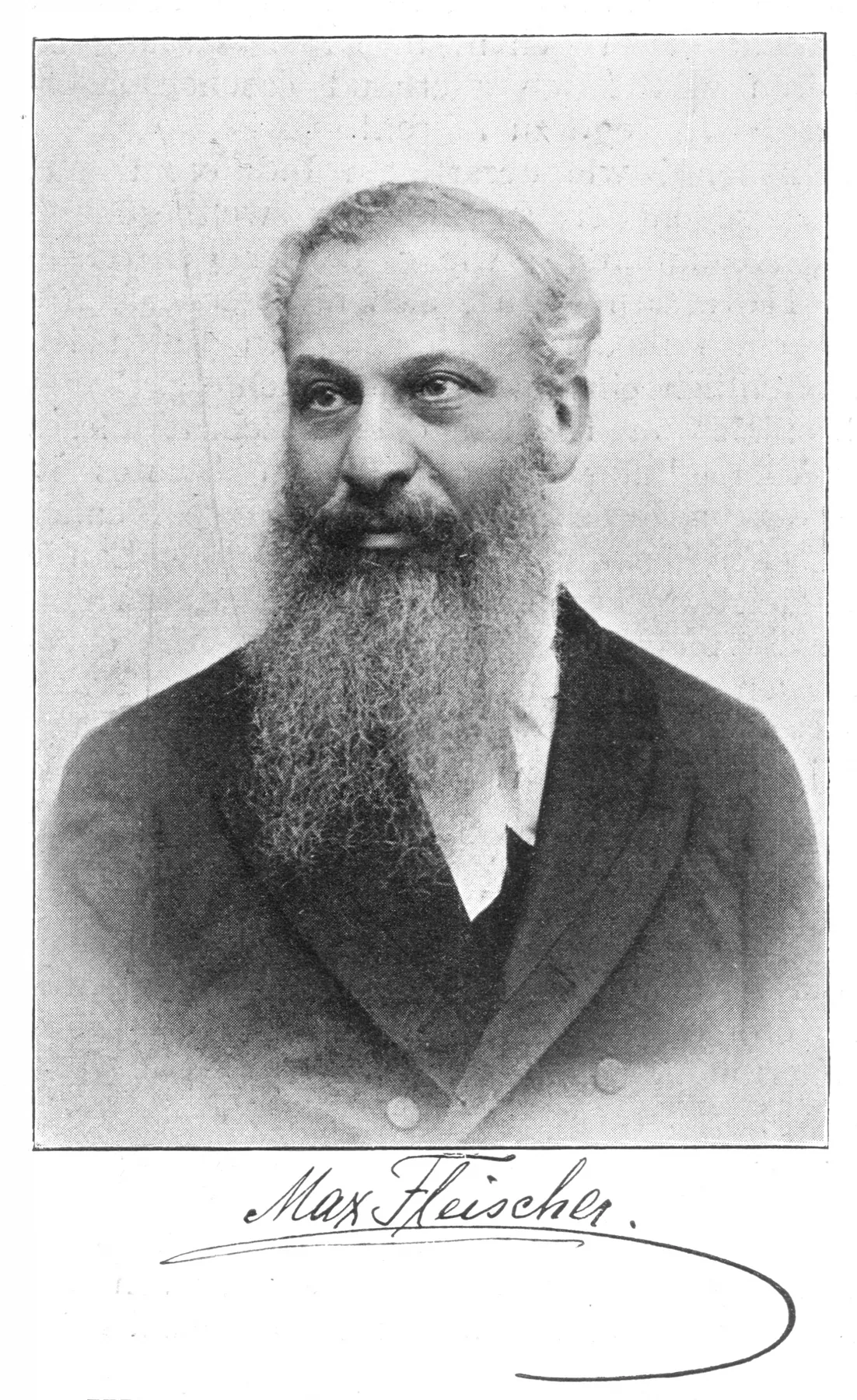
Max Fleischer
1841–1905ArchitectThe Viennese architect Max Fleischer, born in Prostějov in Moravia, was the leading designer of Neo-Gothic synagogues in the Habsburg lands. He designed the synagogue of České Budějovice, built in 1887–1888, as a red-brick, twin-towered building that closely resembled a Gothic church, a style he also used for synagogues in Vienna and Moravia.
ביוגרפיה או מקור ←יש לכם משהו לתרום?
תמונות, מסמכים, סיפורי משפחה וזיכרונות מבית הכנסת ומהקהילה שלו עוזרים לשמור על ההיסטוריה שלו בחיים.
Share a memory or thought
No comments yet. Be the first to add one.