

הסיפור של Csongrád Synagogue
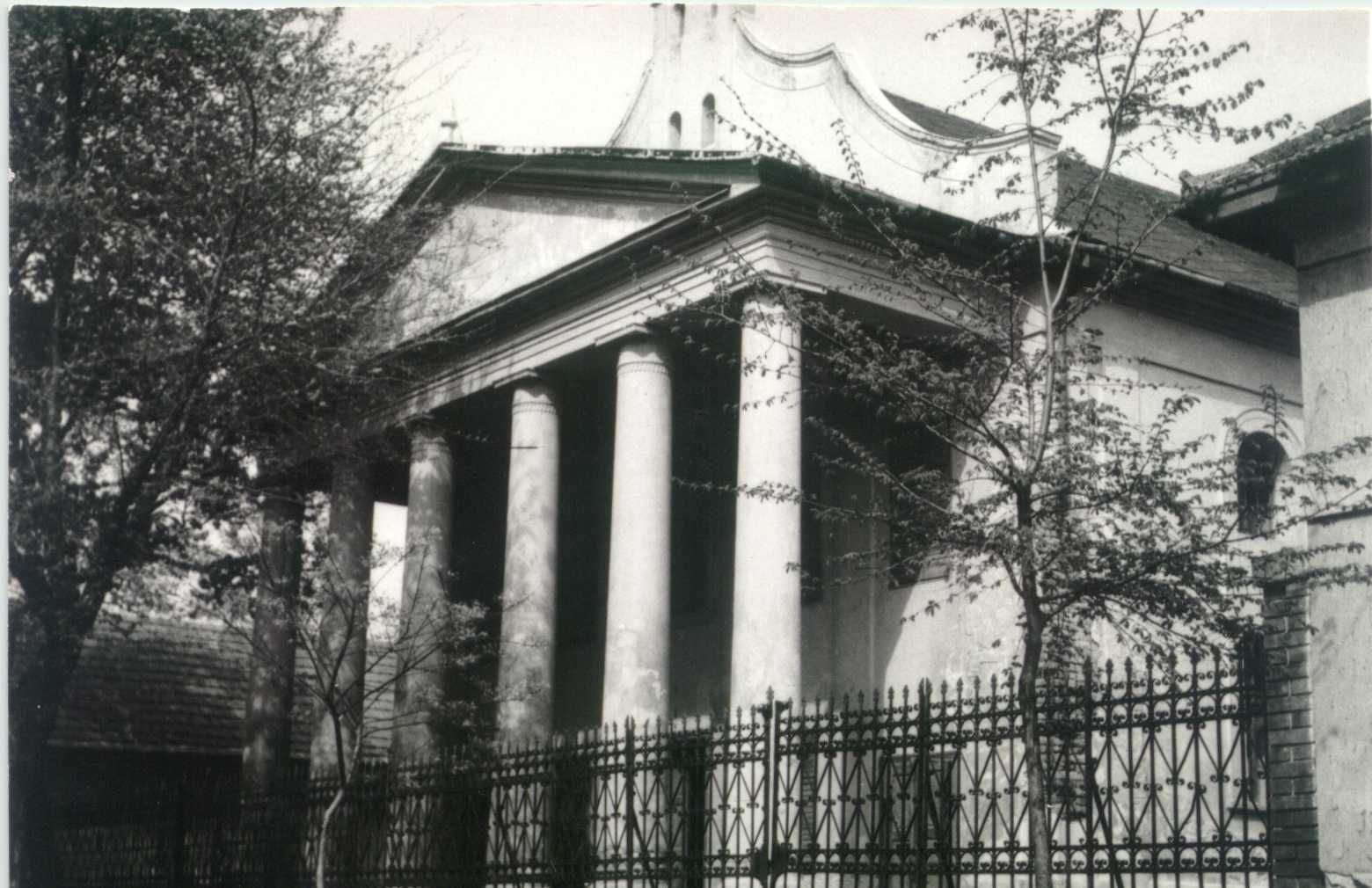
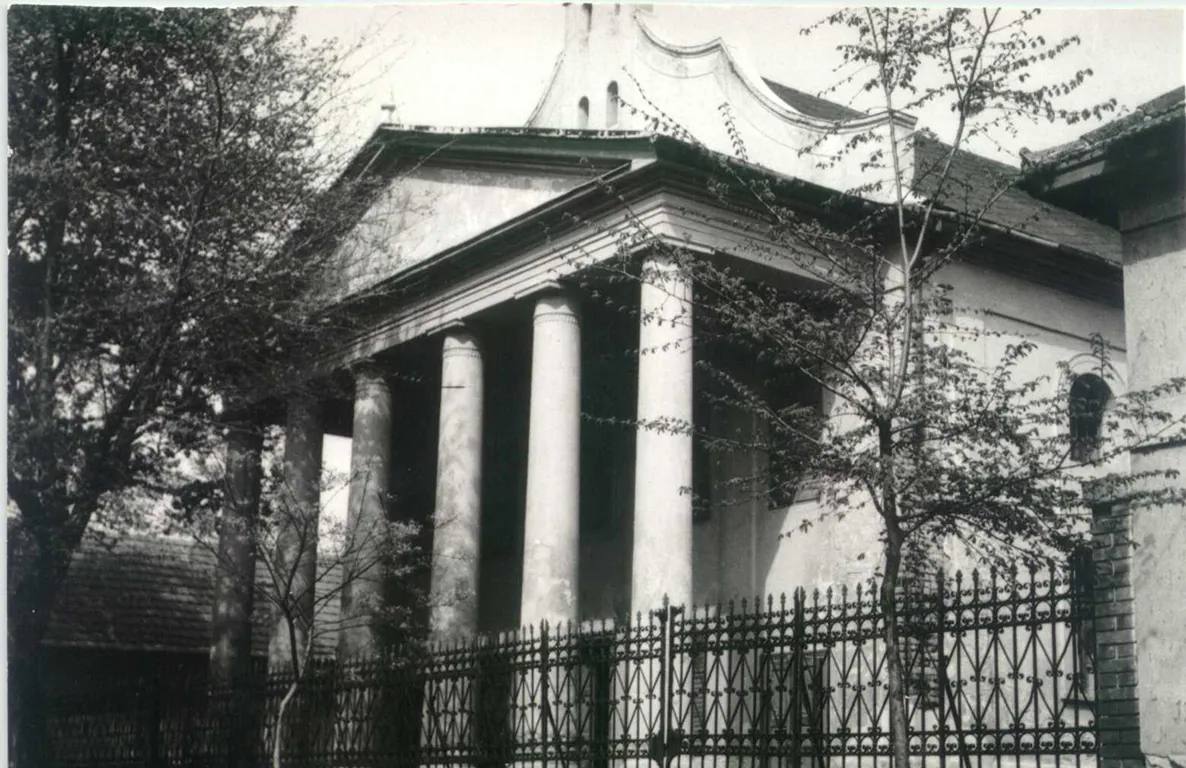
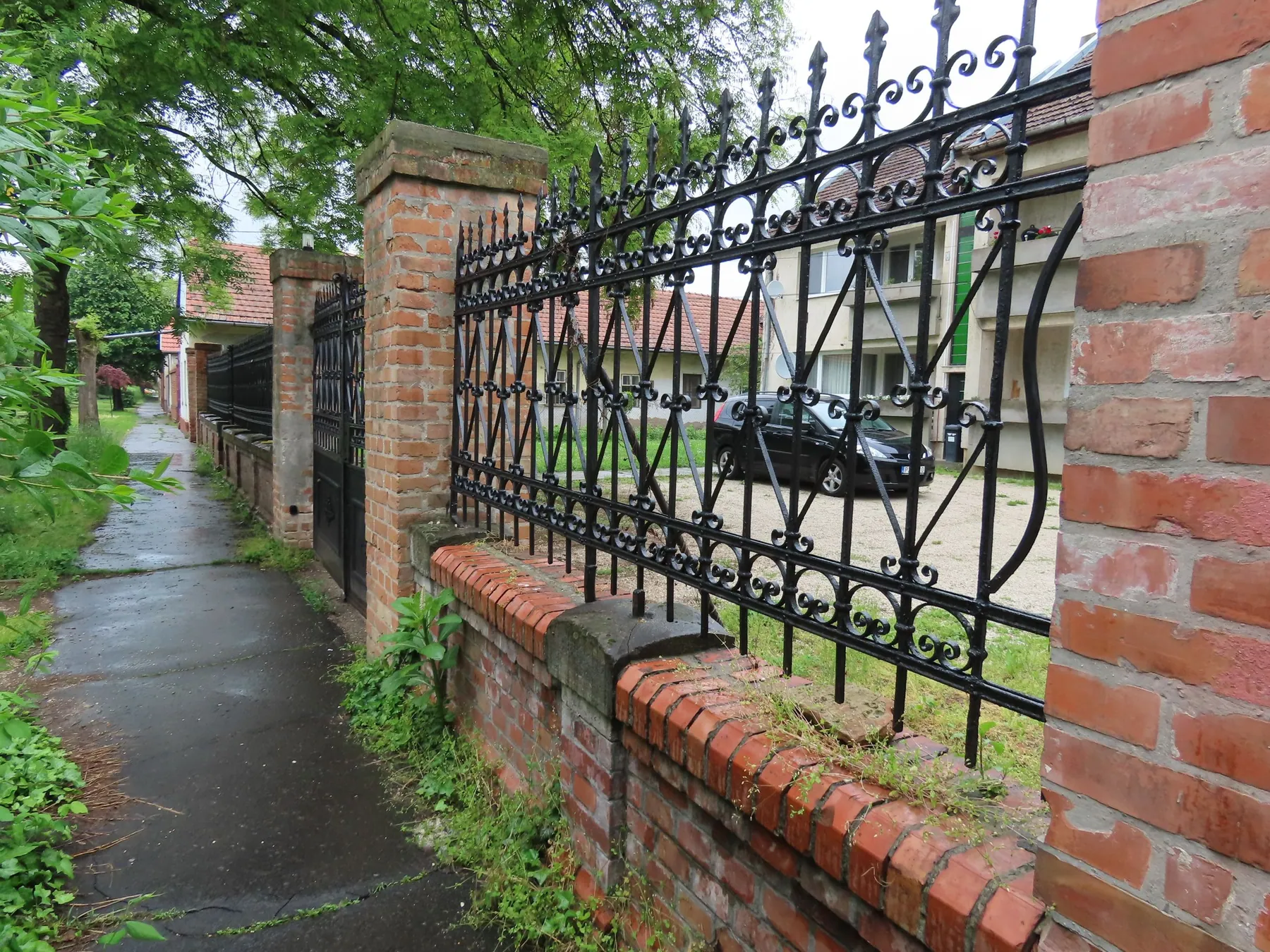
The synagogue stood in Csongrád, a market town on the Tisza in southern Hungary, on a plot running between today's Csemegi Károly utca 7 and József Attila utca 10. The Jewish community, which had grown sharply after families from Ürmény in Nyitra County settled in the town in 1848, began building in 1852 from its own resources and members' donations, and the temple was finished in 1854. A school, a community hall and several dwellings shared the plot. The building was a plain hall in a late Neoclassical style, oriented west to east and fronted by a six-column portico under a pediment. The congregation joined the Neolog (Congress) movement in 1869, and the temple was repainted in 1902. In May 1944 the ghetto was set up around the synagogue; in June 237 people were taken from it to Kecskemét and deported to Auschwitz. The few survivors held a last wedding in the building on 8 May 1947, and the congregation died out around 1949. The town bought the empty temple in 1956, intending it for the cinema, and sold it in 1960 to the Petőfi agricultural co-operative, which used it as a granary and store. In 1969 it was pulled down, and a two-storey block of flats was built in its place. The fence is the only part still standing.
Where it stood for 115 years
Plot between Csemegi Károly utca 7 and József Attila utca 10, 6640 Csongrád, Hungary (today a two-storey block of flats; the synagogue fence survives).
פתיחת מפה גדולה ←הקהילה היהודית
Jews were allowed to trade in Csongrád County from 1760, and the first Jewish residents are recorded in the town around 1790. Four families appear in the toleration-tax roll of 1808–09. The burial society (Chevra Kadisha) was founded in 1806, the date of the oldest gravestone in the cemetery. Numbers rose from 10 in 1827 and 26 in 1840 to 319 in 1850, after families from Ürmény in Nyitra County settled here in 1848, and reached 527 in 1866. The community kept a school, which burned down in 1860 and was closed for good in 1886, a women's association founded in the early 1870s, a Talmud Torah and, from 1912, a youth Bible circle. It joined the Neolog (Congress) movement in 1869. Jews ran many of the shops and workshops on the main street and traded in grain and wine, and in the 1920s members served as town notary, town engineer and county chief prosecutor. In 1914–18, 107 members served in the army and twelve were killed. The population fell to 415 in 1910, 345 in 1930 and 286 in 1941, about 1.1 per cent of the town.
אדריכלות ועיצוב
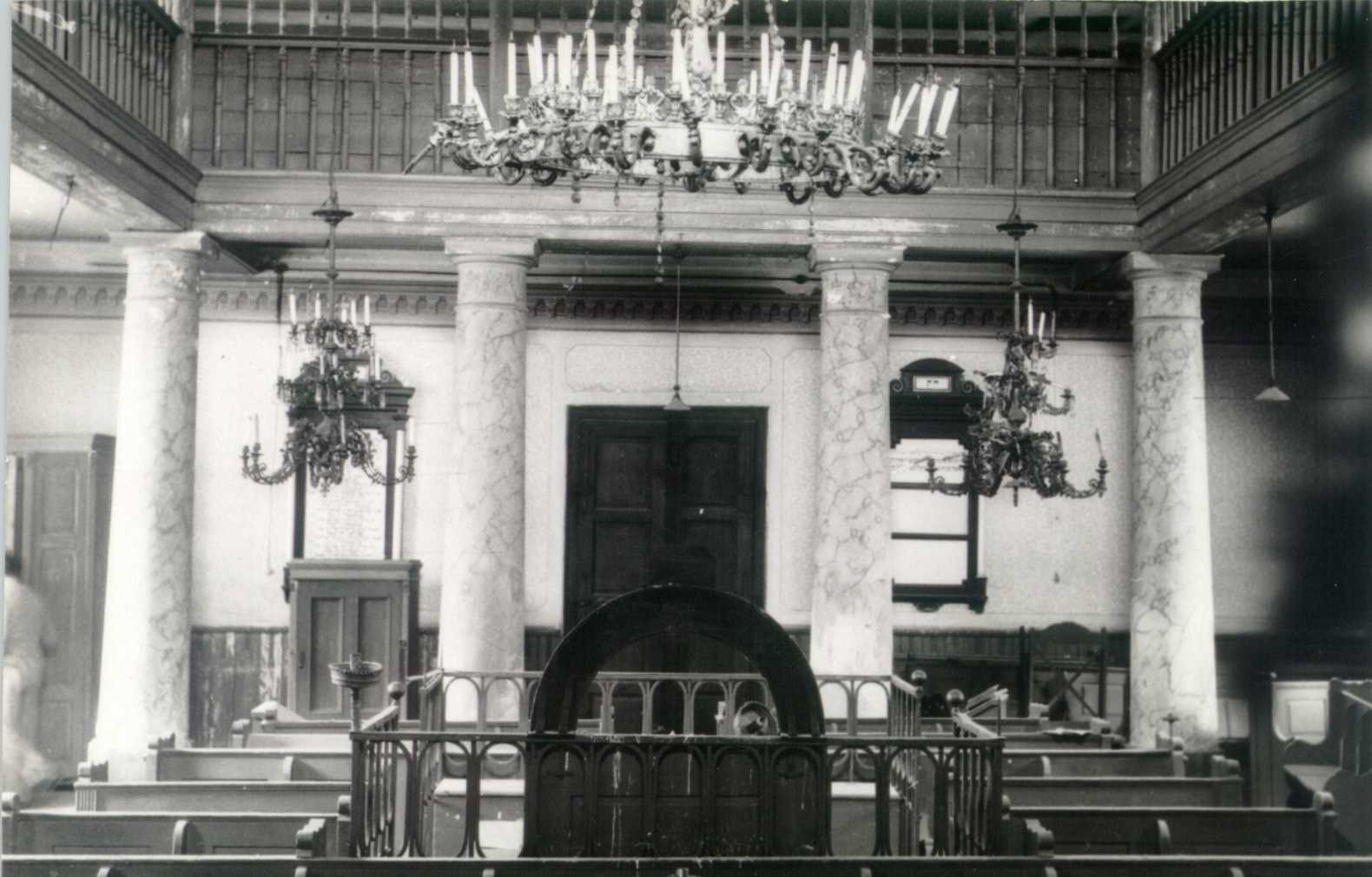
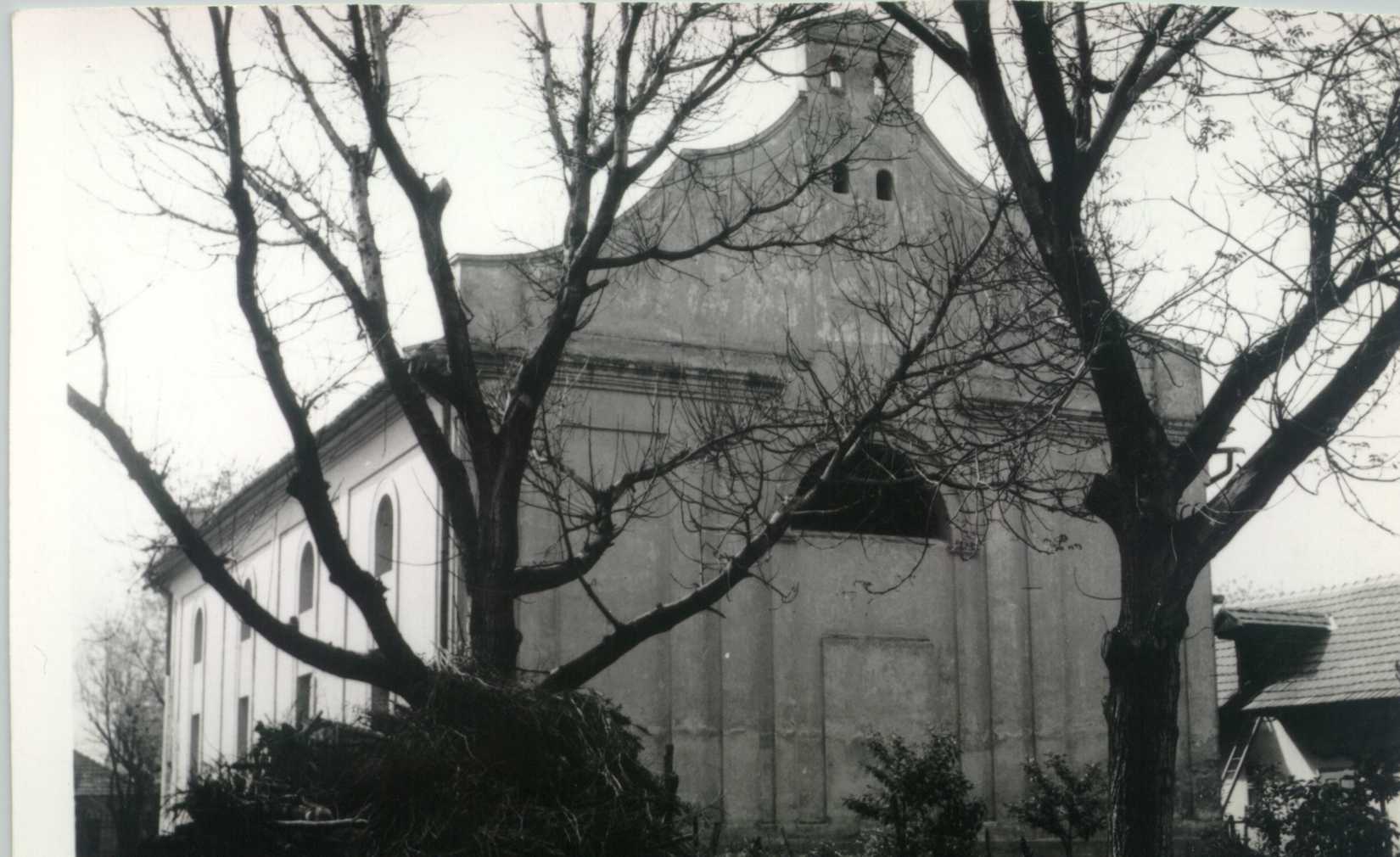
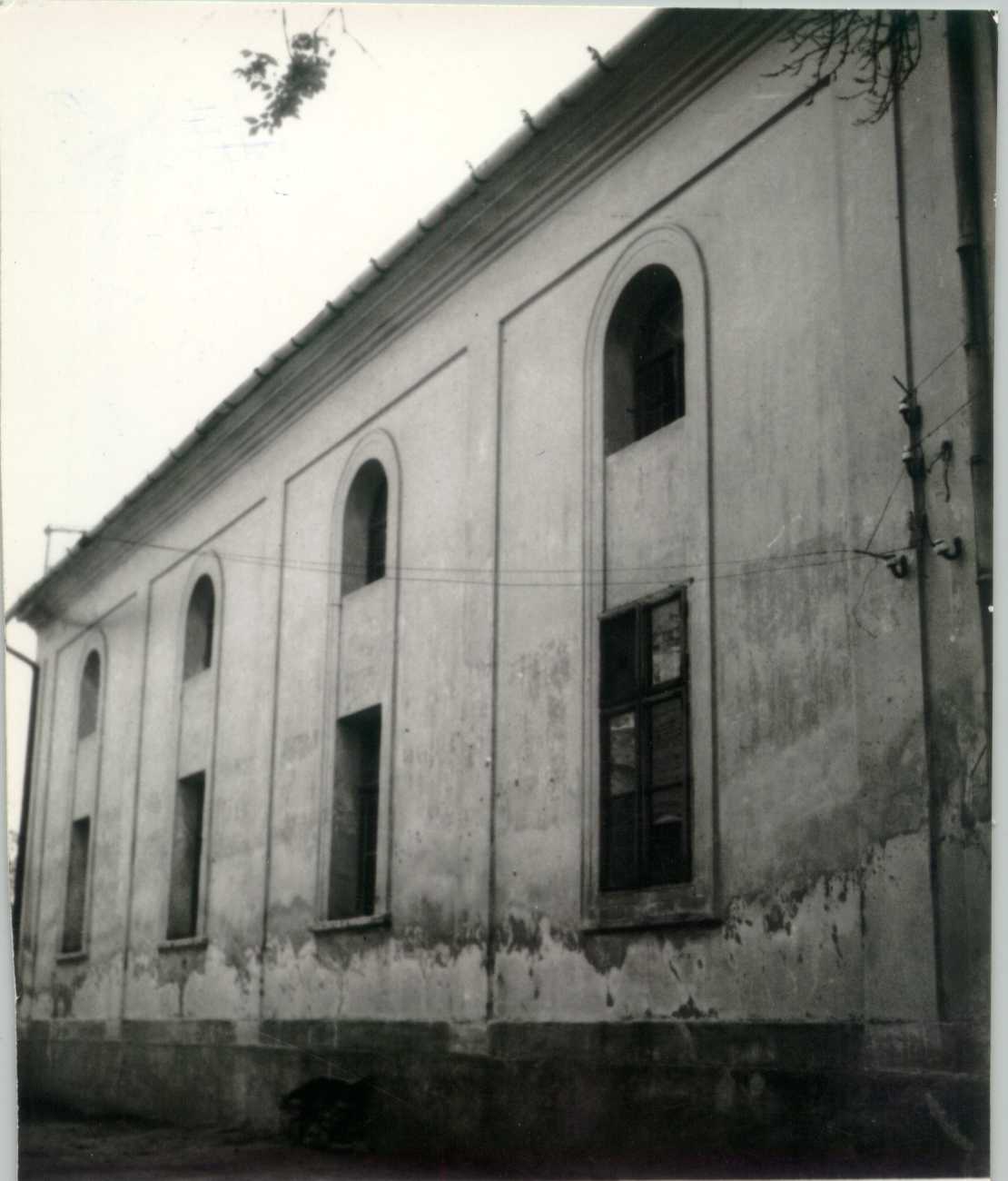
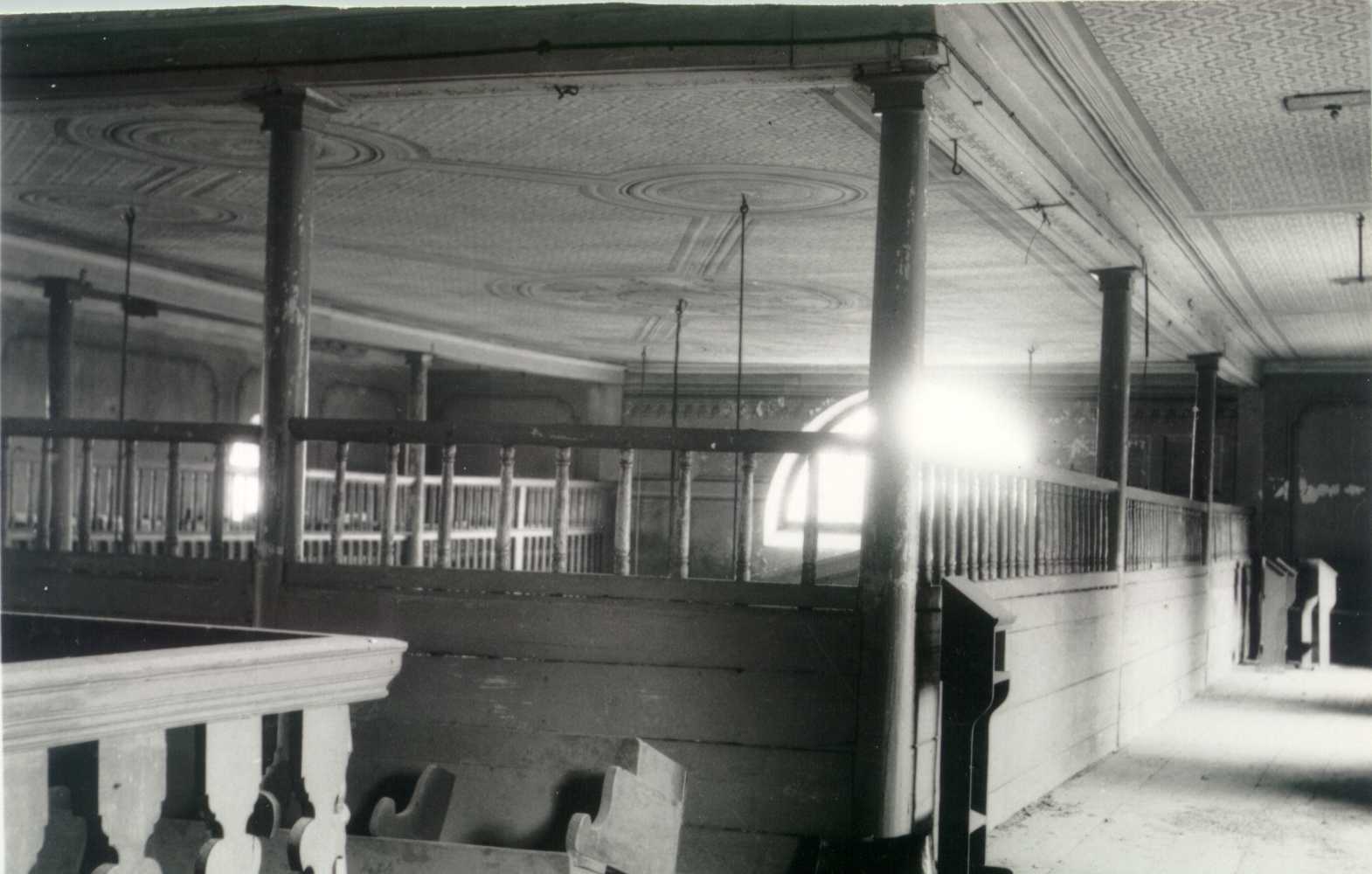
The designer is not recorded. Local historians describe the building as late Neoclassical and oriented west to east. In front of the west façade stood a portico of six columns carrying a pediment; photographs show a curved gable with small round-arched openings rising behind it, and side walls with tall round-arched windows set in shallow panels. Inside, a gallery ran along the entrance side on a row of columns, with a high wooden lattice parapet. A platform enclosed by an iron railing, the bimah, stood in the middle of the hall. The Torah ark was at the centre of the east wall, flanked on each side by two smooth-shafted columns with capitals, under a broad cornice crowned by a pediment, with the Tablets of the Law at the centre of the cornice. The flat stuccoed ceiling was carried on timber beams, and an ornate chandelier hung from its centre. A wrought-iron fence on brick piers closed the plot towards the street. The interior was repainted in 1902.
החיים בבית הכנסת
According to the community registers, the first rabbi of the new synagogue was Jakab Heilbrun, who served from 1854 to 1862. He was followed by József Nobel (1862–68), whose arrival the newspaper Idők Tanúja reported in August 1862, noting with some envy that the congregation welcomed its rabbi to a fully furnished and provisioned home. For long stretches there was no permanent rabbi, and deputy rabbis or leading members led the services, among them Lázár Weisz. Márton Büchler was chief rabbi from 1887 to 1901 and founded the Talmud Torah. Mihály Guttmann, later head of the Budapest Rabbinical Seminary, was installed in the temple with great ceremony on 1 November 1903, and Zoltán Bánde succeeded him in 1908. In the late 1920s Jakab Glück was chief cantor, Ignác Reismann second cantor and Lipót Berényi teacher of religion. The burial society's statutes of 1896 allowed collections in the synagogue during services and required the rabbi to give funeral addresses only in Hungarian. György Kalmár, rabbi from 1938, was the last.
הרס
The synagogue came through the Second World War standing. The handful of survivors who returned held the last wedding in it on 8 May 1947, the congregation died out around 1949, and the temple was left unused. Under Communist rule the town bought it in 1956 for 107,000 forints, intending it for the cinema, and in 1960 sold it on for 168,000 forints to the Petőfi Agricultural Producers' Co-operative, the local collective farm, which used the former temple as a granary and storehouse. In 1969 the Communists demolished the synagogue, and a two-storey block of flats was put up on the site. The published accounts do not record which body took the decision or who carried out the work. Photographs in the Hungarian Jewish Museum and Archives show the building in its last years, with the portico and ark intact but the furnishings in disorder.
גורל הקהילה
After Nazi German forces occupied Hungary on 19 March 1944, the Hungarian administration and gendarmerie moved quickly against the town's Jews. Jewish timber merchants' stocks were frozen that day, and most Jewish shops were closed on 24 April. On 27 April Rabbi György Kalmár was named head of the Jewish Council. A census that month counted 270 members of the Congress community. In May the ghetto was set up in the synagogue and the houses around it, fenced and guarded; the move was complete by 12 May, and the inmates were put to work at a straw-baling yard. In June 237 people were loaded into wagons and taken to the collection camp at Kecskemét, from which two transports left for Auschwitz, crossing the border at Kassa on 27 and 29 June. Kalmár, his wife and their small son were murdered at Auschwitz. Only three or four of the deportees came home. With men returning from forced labour, 66 Jews lived in Csongrád in 1946 and 52 in 1949.
האתר כיום
A two-storey block of flats built after 1969 stands on the synagogue plot between Csemegi Károly utca 7 and József Attila utca 10. The synagogue's wrought-iron fence on brick piers still lines the street and is the only part of the complex to survive; nothing of the temple itself remains. The Jewish cemetery opposite the railway station, with about two hundred graves and a restored mortuary house, was renovated in 2014–16 and can be visited by appointment; a monument set up there on 10 July 1949 commemorates 233 Csongrád Jews murdered at Auschwitz. Photographs of the synagogue are kept in the Hungarian Jewish Museum and Archives in Budapest and in the Csongrád branch of the Hungarian National Archives.
שמות בולטים
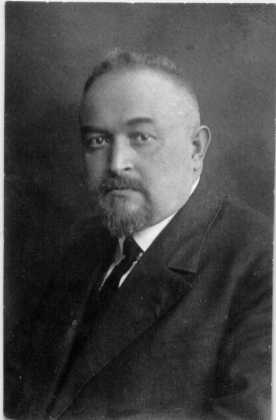
Mihály Guttmann
1872–1942Rabbi of Csongrád, 1903–1907Mihály (Michael) Guttmann, a graduate of the Budapest Rabbinical Seminary, was elected unanimously by the Csongrád community in October 1903 and installed in the temple on 1 November 1903. He left around 1907 to teach Talmud at the Seminary, later taught in Breslau and Jerusalem, and from 1933 until his death was head of the Budapest Seminary and a leading scholar of rabbinic literature.
ביוגרפיה או מקור ←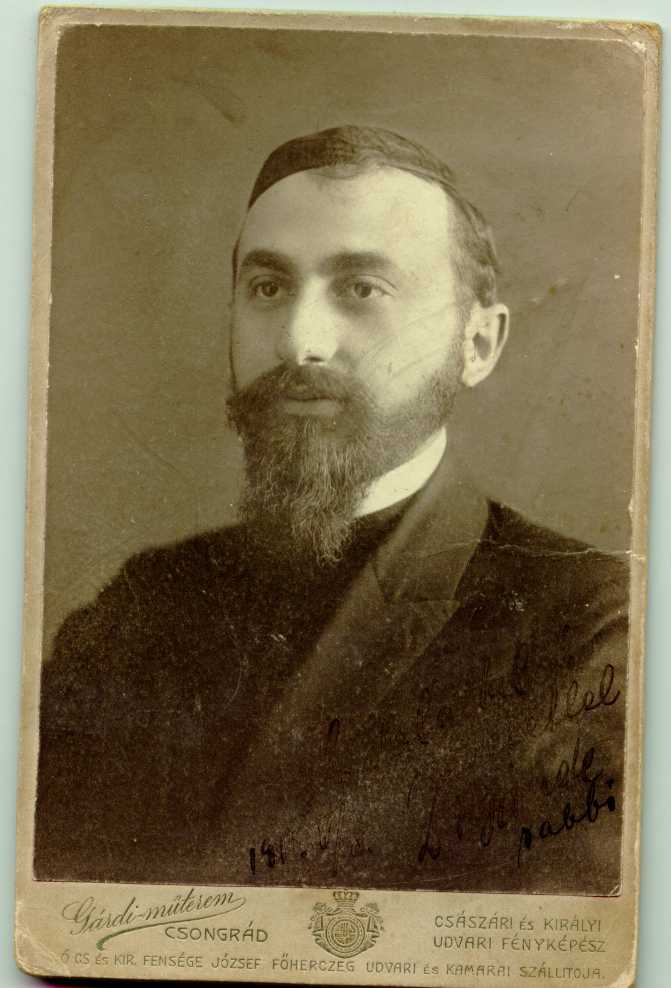
Zoltán Bánde
1883–1944Rabbi of Csongrád, 1908–c. 1912Born in Ráckeve and ordained in 1908, Zoltán Bánde came to Csongrád that year as Guttmann's successor; a signed portrait from the Gárdi studio in Csongrád is dated 1911. Sources give the end of his tenure as 1912 or 1914. He became chief rabbi of Kispest, was deported to Auschwitz in July 1944 and died that year.
ביוגרפיה או מקור ←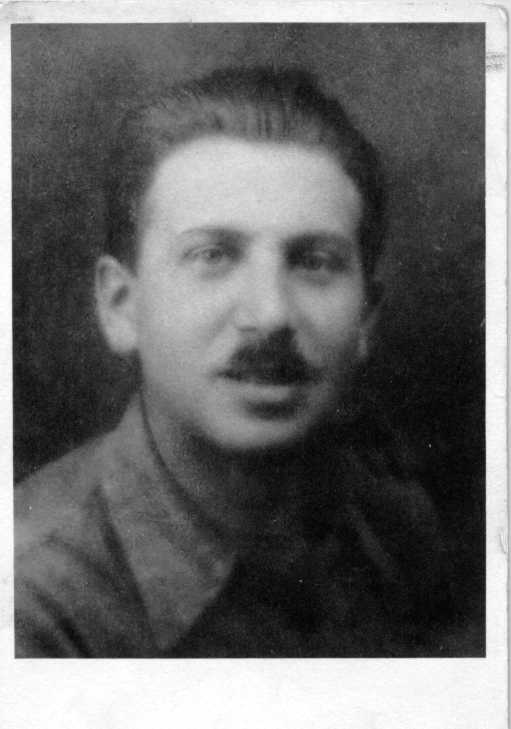
György Kalmár
1911–1944Last rabbi of Csongrád, 1938–1944György Kalmár was the last permanent rabbi of the Csongrád community, serving from 1938. On 27 April 1944 he was appointed head of the Jewish Council to manage the affairs of the ghetto set up around his synagogue. He was deported in June 1944 and murdered at Auschwitz with his wife, Veronika Kis, and their small son Pál.
ביוגרפיה או מקור ←Jakab Heilbrun
UnknownFirst rabbi of the synagogue, 1854–1862The community's marriage registers name Jakab Heilbrun as the first rabbi of the temple completed in 1854. He led the Csongrád congregation for its first eight years, until 1862, in the period when the community, swollen by the settlers from Ürmény, was at its largest. Nothing further about his life was found in the sources consulted.
ביוגרפיה או מקור ←József Nobel
c. 1830–1920Rabbi of Csongrád, 1862–1868József Nobel led the Csongrád congregation from 1862 to 1868. The newspaper Idők Tanúja reported his arrival in August 1862 and the furnished home the community had prepared for him. According to the local historian Péter Fodor he was later a rabbi in Tata and, from the 1880s until his death, in Halberstadt in Germany, and wrote for the Jüdische Presse.
ביוגרפיה או מקור ←Márton Büchler
UnknownChief rabbi of Csongrád, 1887–1901Born in Jászberény, Márton Büchler was chief rabbi of Csongrád from 1887 to 1901 and served as secretary of the burial society when it adopted its statutes in 1896. The community's Talmud Torah was founded during his tenure. He left for Orosháza, and his name appears again among those who performed rabbinical duties in Csongrád between 1914 and 1938.
ביוגרפיה או מקור ←יש לכם משהו לתרום?
תמונות, מסמכים, סיפורי משפחה וזיכרונות מבית הכנסת ומהקהילה שלו עוזרים לשמור על ההיסטוריה שלו בחיים.
- Szemelvények a csongrádi zsidóság történetéből
- Az egykori csongrádi zsinagógából már csak a kerítés maradt – Fotók
- Csongrádi zsinagóga
- Csongrádi zsinagóga bejárata (F70.94.1)
- Csongrádi zsinagóga keleti fala (F70.94.2)
- Csongrádi zsinagóga oldalfala (F70.94.3)
- Csongrádi zsinagóga belső képe: bima és csillár a karzatról (70.97)
- Csongrádi zsinagóga belső képe: a bima (F70.96)
- Csongrádi zsinagóga belső képe: a karzat padlózata (F70.95)
- Kalmár György fényképe (F96.385)
- Bánde Zoltán fényképe (66.530)
- Guttmann Mihály fényképe (F66.468)
- Guttmann Mihály
- Bánde Zoltán
- Austerlitz Mayer
- A népirtás politikája – A holokauszt Magyarországon, ch. 21 (Zone IV)
- A csongrádi holokauszt áldozatok emlékére. "Hihette-e az ész, hogy az ember az ő embertársait tűzben elhamvasztja..."
- OpenStreetMap way 711019961 (Csemegi Károly utca, odd house numbers; no. 7 geocoded with Nominatim, together with József Attila utca 10 on way 711019959)
Share a memory or thought
No comments yet. Be the first to add one.