
Die Geschichte von Csurgó Synagogue
The synagogue of Csurgó was built in 1840, when the Jewish community of this market town in south-western Somogy was barely a generation old. The Magyar Zsidó Lexikon of 1929 credits the landowner Salamon Mayerhofer with founding the community early in the nineteenth century and its burial society in 1827; he led both for 53 years. A later newspaper report places the building on the main square. It was the centre of a small but well-organised community that kept a six-class school from 1850 and, between the 1880s and 1907, engaged a series of young graduates of the Budapest Rabbinical Seminary who went on to distinguished careers, among them the orientalist Márton Schreiner and the historian Lajos Venetianer. The building was attacked during the anti-Jewish riots of August 1883, and in 1921 a marble tablet to the congregation's First World War dead was unveiled inside it. In spring 1944 the Jews of Csurgó were rounded up by Hungarian gendarmes and later deported to Auschwitz; almost none came back. The synagogue outlived its congregation by about a decade. In the first half of the 1950s it was demolished under Communist rule, and its stones went into the covered grandstand of the town's new sports ground. No photograph or drawing of the building has been traced.
Where it stood for nearly 120 years
Historic: main square (Főtér) of Csurgó, Somogy county; the community's school building stood at Petőfi tér 6 (1946 numbering). Today: Petőfi tér / Széchenyi tér, 8840 Csurgó, Hungary (exact plot not identified).
Größere Karte öffnen →Die jüdische Gemeinde
Jews settled in Csurgó, a market town and district seat near the Drava, from the early nineteenth century. According to the Magyar Zsidó Lexikon the community was founded by the landowner Salamon Mayerhofer, who also set up the Chevra Kadisha in 1827 and led both bodies for 53 years until his death in 1880. The synagogue followed in 1840; who designed and paid for it is not recorded in the sources consulted. In 1850 the community opened a six-class elementary school with two teachers, where Hungarian became the language of instruction in 1868, and a women's society was founded in the same year. The first rabbi, Sámuel Lőwi, was elected in 1859. The 1881 census counted 276 Jews in Csurgó, 8.5 per cent of its 3,231 inhabitants. The Lexikon gives the community 307 members in 65 families in 1929, most of them merchants, with craftsmen, farmers, lawyers and two large landowning families, Mayerhofer and Meller. The 1941 census recorded 123 Jews in the town itself.
Architektur und Gestaltung
Very little is known about the building's appearance. It was erected in 1840, before Jewish emancipation in Hungary, for a young rural community, and Hungarian sources call it simply the temple or Israelite temple. A 1993 newspaper report states that it stood on Csurgó's main square and that its stones were reused after demolition, which indicates a masonry structure of some size. A contemporary account of the 1883 riots says the attackers did not spare the synagogue and broke doors and shutters. A marble tablet commemorating the congregation's dead of the First World War was installed inside in 1921. The community's school was a separate building with an upper floor, standing at what was by 1946 Petőfi tér 6. The architect, builder, style, plan, seating capacity and interior fittings are all unknown: no photograph, postcard, plan or description of the synagogue was found in the online collection of the Hungarian Jewish Museum and Archives, the Hungaricana postcard collections or Wikimedia Commons.
Leben in der Synagoge
The congregation's rabbis from the 1880s were trained at the Budapest Rabbinical Seminary, the school of the Neolog movement, though the sources consulted do not state the community's formal affiliation. Sámuel Lőwi served from 1859 until his death in 1874 and Lajos Lichstein until 1885; they were followed by Márton Schreiner (1887–1891), Lajos Venetianer (1892–1896), Gyula Wellesz (1898–1900) and Lajos Vágvölgyi (1906–1907). Schreiner published a volume of sermons at Csurgó in 1887 and Venetianer his inaugural sermon there in 1892; Venetianer also taught Hungarian and German at the town's Reformed grammar school. By 1929 there was no rabbi, and Sámuel Fried acted as deputy rabbi and registrar. Beside the synagogue the community maintained a Chevra Kadisha, a women's society of 50 members and its elementary school, which had closed by 1937, when the building was being lent free of charge to the Reformed grammar school as a boarding house. On 28 August 1921 a marble tablet to fourteen fallen members, initiated and paid for by the wife of the leaseholder Henrik Meller, was unveiled in the synagogue.
Zerstörung
The synagogue was first damaged on the night of 25–26 August 1883, when a crowd of several hundred attacked Jewish homes and shops in Csurgó and did not spare the school and prayer house; a newspaper reported doors and shutters broken. It remained in use until 1944. What happened to the building during the deportations and the fighting of 1944–1945 is not recorded in the sources found. The synagogue was demolished by the Communists in the first half of the 1950s: a 1993 report in the county newspaper states that the covered grandstand of the Csurgó sports ground was built by voluntary labour from the stones of the demolished Israelite temple on the main square. Work on that grandstand began in November 1953, and the finished ground was handed over to the chairman of the Csurgó council's executive committee in September 1956. The exact date of the demolition and the body that ordered it were not found.
Das Schicksal der Gemeinde
After the Nazi German occupation of Hungary in March 1944 the Jews of Csurgó, which lay in the southern border zone, were among the first in the country to be removed. In mid-April 24 were interned. On 26 April Hungarian gendarmes, briefed in Pécs two days earlier, arrested the Jewish families of the district at dawn, searched and sealed their homes and took 165 of the district's roughly 205 to 220 Jews to a disused mill in Barcs, where they were held for almost two months under Nazi German command with Hungarian guards. In June or early July they were moved to Kaposvár, and in early July 1944 they were deported with the Jews of Somogy county to Auschwitz. Very few returned. A Csurgó Israelite Community still existed in 1946, when it owned the former school building on Petőfi tér and took part in negotiations with the municipality over its use; its later history was not found. The names of many victims from Csurgó are listed in the county archive's 1994 volume on the Jews of south-east Transdanubia.
Der Ort heute
The exact plot of the synagogue has not been identified. Csurgó's main square is today a long landscaped space made up of Széchenyi tér and the park of Petőfi tér, lined by public buildings such as the former savings bank. Stones from the synagogue were built into the covered grandstand of the municipal sports ground, which was later declared unsafe, renovated and ceremonially reopened at the end of May 1993. The Jewish cemetery of Csurgó survives; money was being raised to put it in order in 2000, and in April of that year a national Holocaust commemoration attended by President Árpád Göncz, church leaders and Chief Rabbi József Schweitzer was held in the town and at the cemetery.
Bedeutende Namen
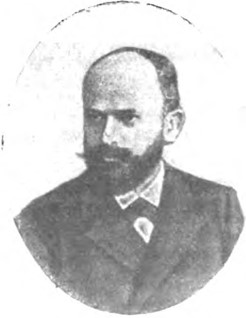
Márton Schreiner (Martin Schreiner)
1863–1926Rabbi of Csurgó, 1887–1891; orientalistA pupil of Ignác Goldziher and graduate of the Budapest Rabbinical Seminary, Schreiner came to Csurgó as rabbi in 1887, the year of his ordination, and published a volume of sermons there. He left around 1890–1891 to teach at the Jewish teachers' college in Budapest and from 1894 at the Lehranstalt für die Wissenschaft des Judentums in Berlin, becoming a leading scholar of Judaeo-Arabic literature and religious philosophy.
Biografie oder Quelle →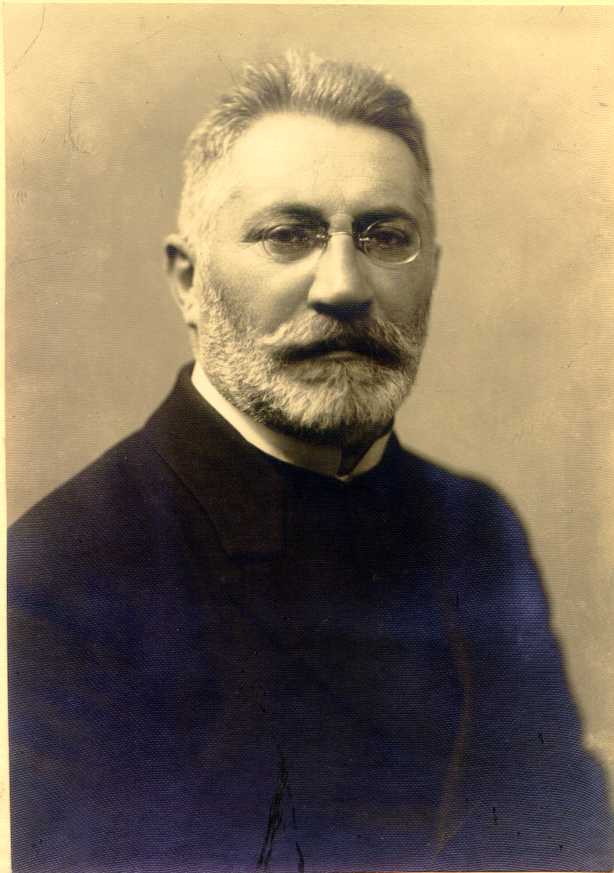
Lajos Venetianer
1867–1922Rabbi of Csurgó, c. 1892–1896; historianOrdained in 1892, Venetianer served the Csurgó congregation until 1896 and printed his inaugural sermon in the town. While rabbi he also taught Hungarian and German at Csurgó's Reformed grammar school. He moved to Lugos and in 1897 became chief rabbi of Újpest, later teaching at the Budapest Rabbinical Seminary and writing a history of Hungarian Jewry published in 1922.
Biografie oder Quelle →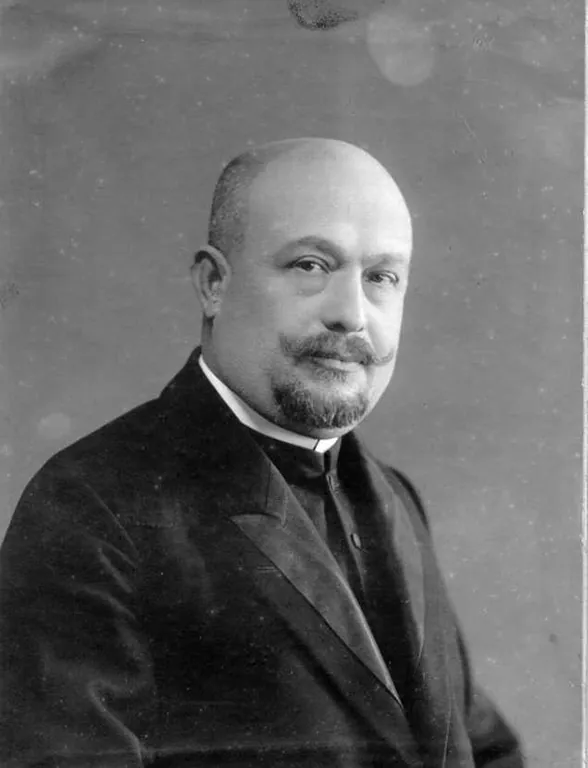
Jakab Singer
1867–1939Rabbi of Csurgó, c. 1896–1897Singer studied at the Budapest Rabbinical Seminary and was ordained in 1896. His Hungarian Wikipedia biography lists Csurgó as his first pulpit, followed by Szentes and, from 1897, the Gyárváros congregation of Temesvár, where he became chief rabbi and a historian of the Jews of the Banat. The Magyar Zsidó Lexikon's entry on Csurgó does not name him, so his stay was evidently brief.
Biografie oder Quelle →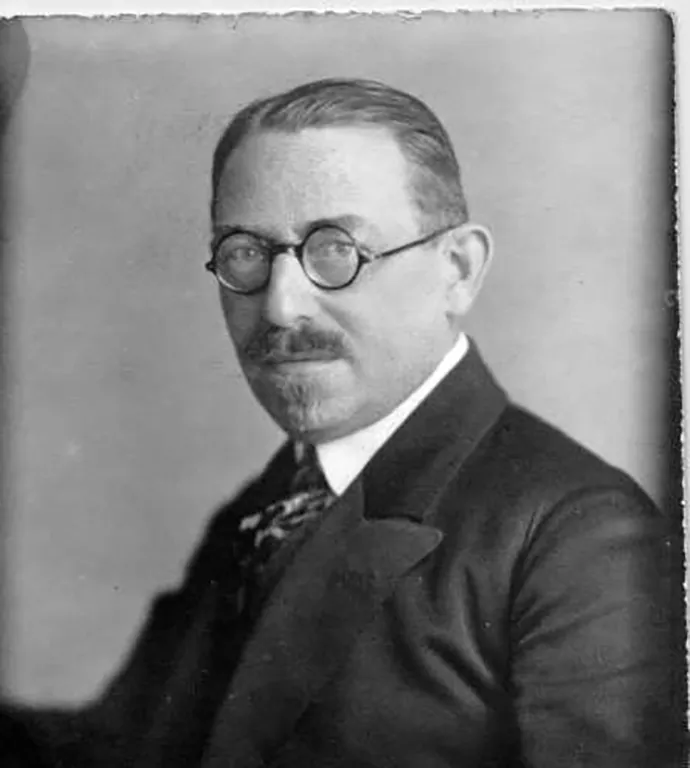
Lajos Vágvölgyi (born Lajos Kohn)
1877–1941Chief rabbi of Csurgó, 1906–1907Vágvölgyi trained at the Budapest Rabbinical Seminary and was ordained in 1905. He served Csurgó as chief rabbi in 1906–1907, soon after his ordination, and is the last rabbi named in the Magyar Zsidó Lexikon's account of the community. From 1909 until his death he led the Neolog community of Arad, where he edited Jewish calendars and sat on the board of the Transylvanian and Banat rabbinical association.
Biografie oder Quelle →Salamon Mayerhofer
died 1880Founder and long-serving head of the communityA landowner at Csurgó, Mayerhofer is named by the Magyar Zsidó Lexikon as the founder of the Jewish community in the early nineteenth century and of its Chevra Kadisha in 1827. He led both the community and the burial society for 53 years, so the synagogue of 1840 was built under his leadership. His family remained among the district's largest landowners in the 1920s.
Biografie oder Quelle →Sámuel Lőwi
died 1874First rabbi of Csurgó, 1859–1874Lőwi was elected in 1859 as the first rabbi of the Csurgó community, nineteen years after the synagogue was built, and served there until his death in 1874. He is described in a printed eulogy of 1875 as district rabbi of Csurgó. His successor was Lajos Lichstein, who died in 1885.
Biografie oder Quelle →Gyula Wellesz
1873–1915Rabbi of Csurgó, 1898–1900Born in Budapest, Wellesz was elected rabbi of Csurgó in 1898 and served the congregation for two years before moving to Nagybiccse in 1900; in 1910 he became chief rabbi of Óbuda. He was a noted scholar of medieval Franco-Jewish history and the author of a Hungarian biography of Rashi.
Biografie oder Quelle →Haben Sie etwas beizutragen?
Fotos, Dokumente, Familiengeschichten oder Erinnerungen an diese Synagoge und ihre Gemeinde halten ihre Geschichte lebendig.
- Csurgó (entry in Magyar Zsidó Lexikon, 1929)
- Zsidóság Somogy megyében 1686–1938: betelepedés, befogadás, asszimiláció
- Ünnepségre készül Csurgó, Somogyi Hírlap, 29 May 1993, p. 7
- Fedett tribün épül a csurgói sportpályán, Somogyi Néplap, 27 November 1953
- Sportpályaavatás Csurgón, Somogyi Néplap, 26 September 1956, p. 4
- Magyarországi zsinagógák listája
- Az első világháború kaposvári emlékezethelyeinek történetéből, in Somogy megye múltjából 45–46 (2018), p. 123
- Zsidósors Délkelet-Dunántúlon a XVIII. századtól a holocaustig (Kaposvár, 1994), p. 91: the 1883 riots
- Zsidósors Délkelet-Dunántúlon (1994), p. 85: population tables for 1881
- Zsidósors Délkelet-Dunántúlon (1994), p. 123: 1941 census
- Zsidósors Délkelet-Dunántúlon (1994), pp. 136–138: persecution in Somogy, March–July 1944
- Report on the anti-Jewish riots, Nemere, 2 September 1883, p. 282
- A magyar államrendőrség megszervezése Somogy vármegyében 1945–1946-ban, in Somogy megye múltjából 43–44 (2014), pp. 272–273
- Dunántúli Protestáns Lap, 3 October 1937, p. 180
- Egyetlen áldozat is több, mint ami elfogadható, Somogyi Hírlap, 22 April 2000, p. 13
- Rendhagyó történelemóra Csurgón, Somogyi Hírlap, 19 April 2000, p. 1
- Somogyi Hírlap, 10 March 2000 (note on the Csurgó Jewish cemetery)
- Marczali Mihály
- Schreiner Márton
- Venetianer Lajos
- Wellesz Gyula
- Vágvölgyi Lajos
- Singer Jakab
- Dr. Vágvölgyi Lajos fényképe (F66.508)
- Venetianer Lajos fényképe (F66.210)
- Dr. Singer Jakab fényképe (F66.540)
- File:Martin Schreiner (1907).jpg
- Nominatim search: Petőfi tér, Csurgó
Share a memory or thought
No comments yet. Be the first to add one.