

La historia de Delos Synagogue
Delos, a small island in the Cyclades sacred to Apollo, became a free port in 167 BCE and drew merchants from across the eastern Mediterranean. On its east shore, in the Bay of Gournia outside the town walls, lies a ruin that archaeologists number GD 80. André Plassart of the École française d'Athènes excavated it in two weeks in 1912 and 1913 and declared it a synagogue, chiefly because of Greek dedications to Theos Hypsistos, 'God Most High', found in and near it.
The identification has been argued over ever since. Belle Mazur rejected it in 1935, and Lidia Matassa concluded in 2007 that nothing of a Jewish nature was found in the building. Philippe Bruneau, who re-examined it in 1962, and Monika Trümper, who studied its fabric between 2000 and 2003, hold that it was a synagogue, and Trümper describes this as still the predominant view. Two stelae set up by 'Israelites on Delos' who honoured Mount Gerizim, found nearby in 1979, show that Samaritans were present too.
Trümper distinguishes five building phases: two before 88 BCE, when the forces of Mithridates sacked Delos, and three after it. Neither that sack nor the pirate raid of 69 BCE ended the building. It was altered and used until about the end of the second century CE and then abandoned. Its walls fell, a lime kiln was built in its hall, and the sea took its eastern side.
Where it stood
Building GD 80 (Guide de Délos no. 80), east shore of Delos in the Bay of Gournia, just east of the ancient stadium, inside the Archaeological Site of Delos, Mykonos municipality, South Aegean, Greece. There is no street address; the pin marks the ruin itself (exact).
Abrir mapa ampliado →La comunidad judía
No ancient text mentions a synagogue on Delos, and very little is known of the people who used GD 80. The earliest literary reference usually cited for Jews on the island is 1 Maccabees 15:15-23. Josephus (Antiquities 14.213-216) preserves a letter of a Roman magistrate to the magistrates, council and people of the Parians, written after Jews of Delos complained that a decree stopped them following their ancestral customs; he allowed them to assemble, collect contributions and hold common meals. Grave stelae of the late second century BCE from the neighbouring island of Rheneia call on Theos Hypsistos in language close to the Septuagint. Two stelae found in 1979 about 92 metres north of GD 80 were set up by 'Israelites on Delos' who made offerings to 'holy Argarizein', that is Mount Gerizim. They honour Sarapion son of Jason of Knossos, awarded a gold crown, and Menippos son of Artemidoros of Herakleia, and are read as Samaritan. Whether Jews, Samaritans or both met in GD 80 is not settled; L. Michael White thought it most likely a Samaritan synagogue. The size of the congregation is unknown.
Arquitectura y diseño
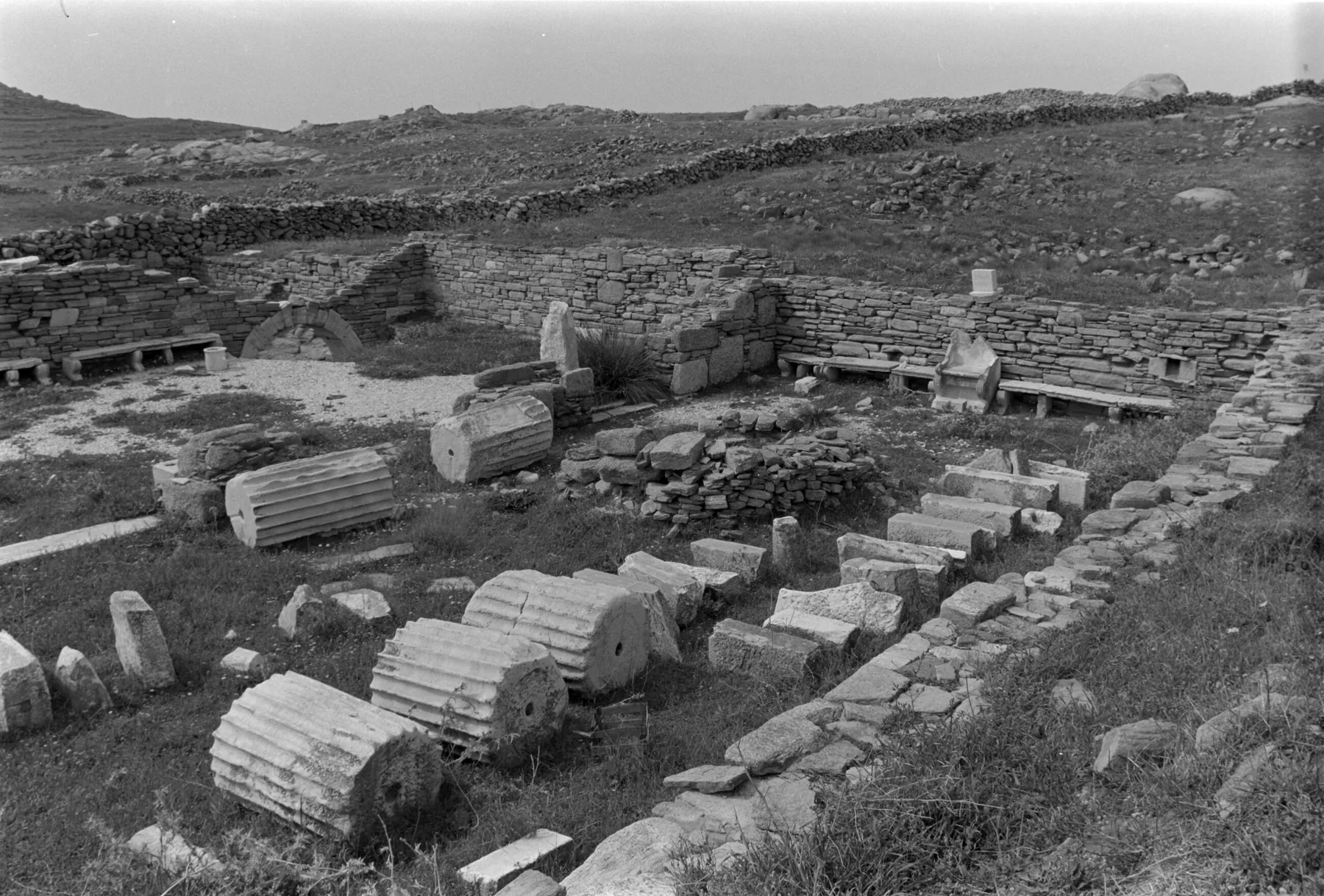
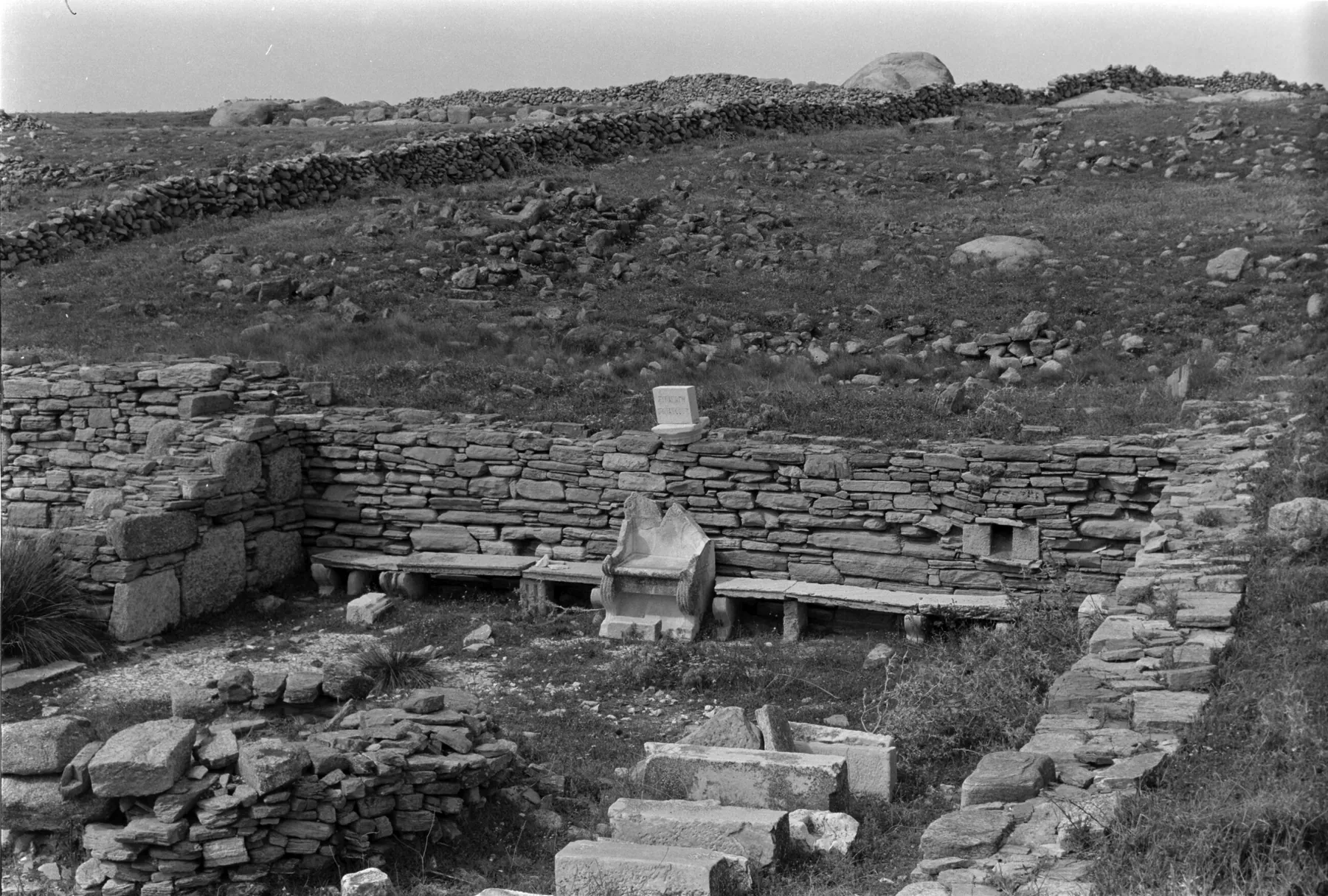
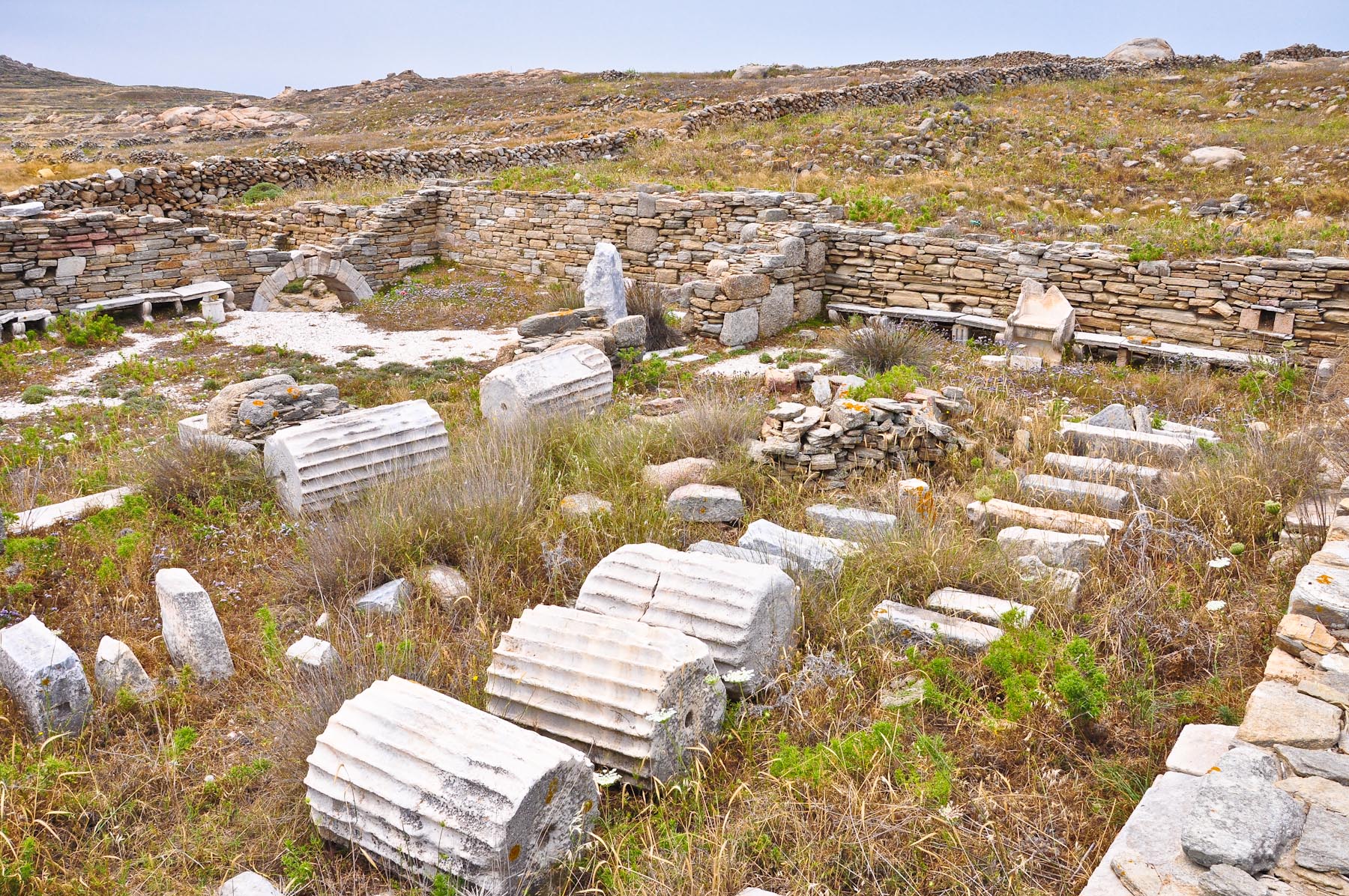
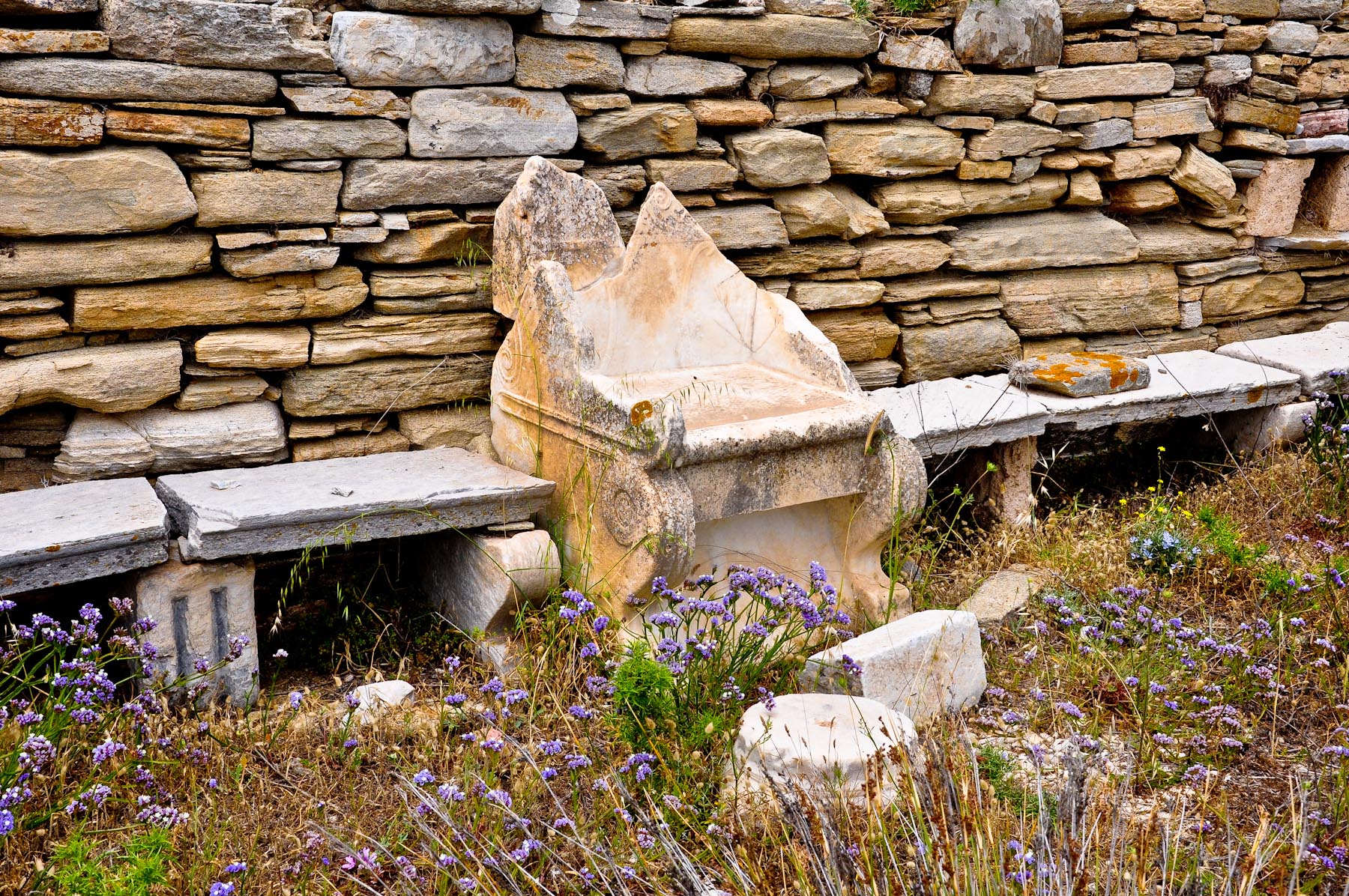
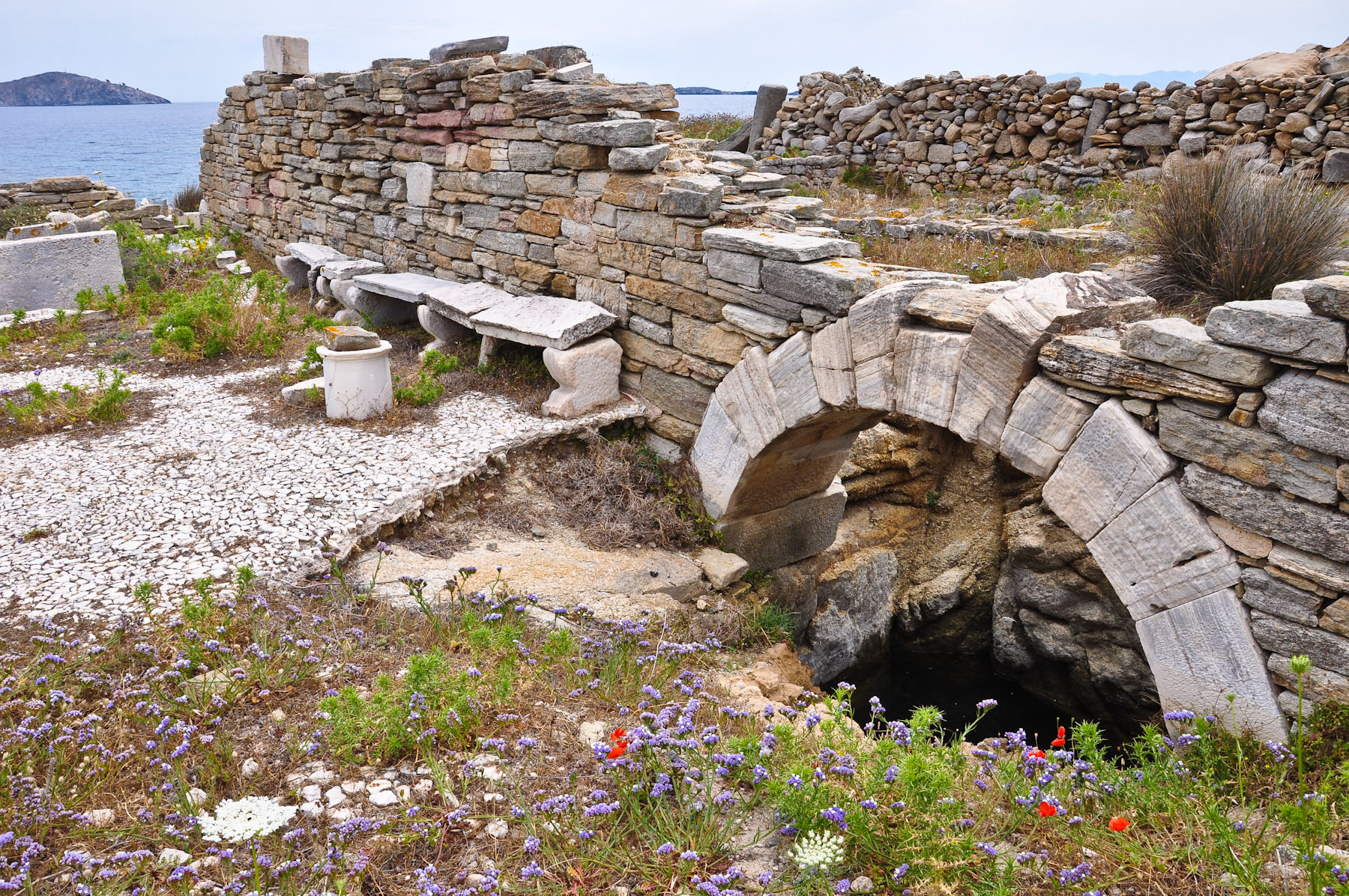
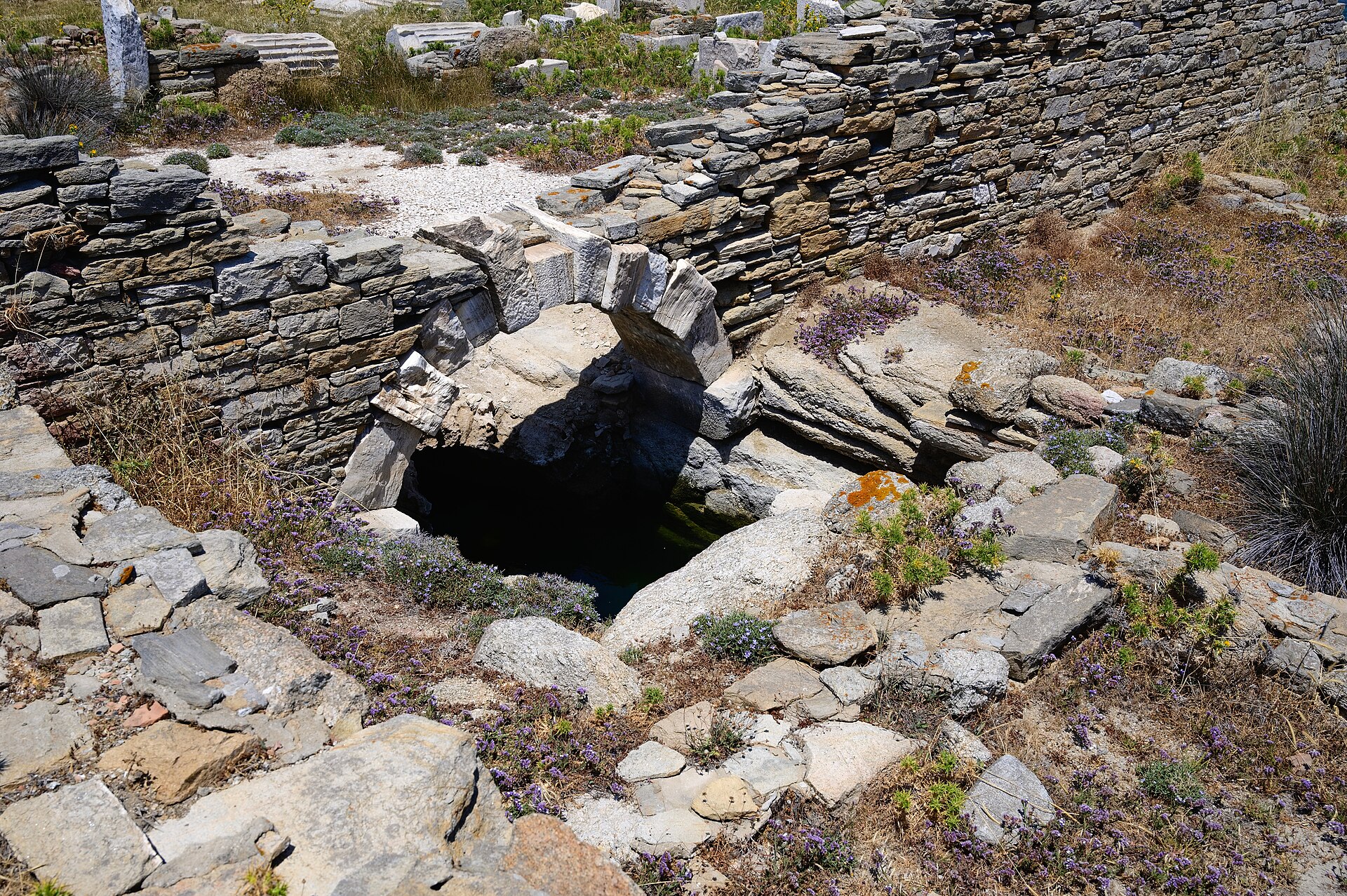
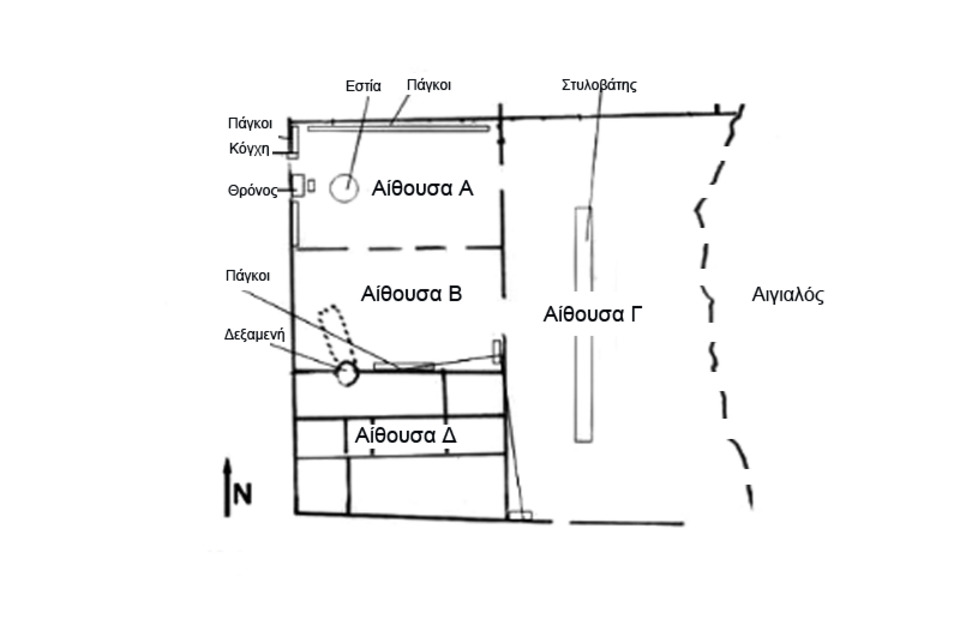
GD 80 occupies a lot of 28.30 by 30.70 metres at the water's edge and faces east. Its core is a hall about 16.90 metres north to south and 14.40 metres east to west, which Trümper finds undivided through her first four phases. A cross wall of gneiss, rubble and reused marble, pierced by three doorways that were later blocked, divides it into room A on the north and room B on the south. Marble benches line walls in both rooms, and midway along the west wall of room A stands a carved marble throne with a footstool, found in place. Trümper assigns benches and throne securely only to the last phase. Her third phase reused inscribed bases from the nearby gymnasium, presumably abandoned after 88 BCE; Matassa notes that the benches too are reused pieces. East of the hall lay area C, about 18 metres square, with a north-south marble stylobate for a portico; its seaward part is lost. On the south, small rooms (D) give access to a water reservoir in a natural rock cleft 6.08 metres long, spanned by a marble arch. Part of the floor is paved with marble chips.
La vida dentro de la sinagoga
What happened inside is known only from objects. Five small inscribed marble offerings were found in rooms A and B, some shaped like incense burners. Lysimachos set up a small column to Theos Hypsistos as a thank-offering; Laodike dedicated a base to Theos Hypsistos in fulfilment of a vow after being healed; Zosas of Paros and Markia made offerings to the 'Most High'; a fifth base records a manumission. Trümper dates the first two by their lettering to the early first century BCE and the others, following Bruneau, to the first or second century CE. A sixth text, in which Agathokles and Lysimachos give 'for a proseuche', a word meaning prayer or prayer-house, was found in a house of the Stadium Quarter about 90 metres away. About forty lamps came from the building. Supporters picture a congregation seated around a seat of honour, often called a 'seat of Moses'; Binder suggested in 1999 that the reservoir served as a ritual bath, which Matassa rejects. Critics answer that Theos Hypsistos was also invoked by pagans, that the dedicators' names recur in lists from pagan sanctuaries, and that similar benches stood in other Delian buildings.
Destrucción
No source records a single act that destroyed GD 80. Troops of Mithridates VI of Pontus sacked Delos in 88 BCE, and pirates under Athenodoros, his allies, attacked it again in 69 BCE; some accounts suppose that the synagogue perished then. The building evidence points the other way. Trümper places three of her five phases after 88 BCE, among them the reuse of stones from the abandoned gymnasium, and argues that the building served as a synagogue until it was abandoned at the end of the second century CE. Bruneau likewise found evidence of use into the late second or early third century CE. Matassa, who doubts any synagogue use, dates the benches to the years after the Mithridatic wars. Why it was given up is unknown. After abandonment the upper parts of the walls collapsed, which Plassart thought had buried the benches and so saved them. Later, perhaps in the third or fourth century CE in Matassa's view, a lime kiln about two metres across was built in room A. The sea, which has risen about 2.5 metres since antiquity, has destroyed the eastern part of the building.
El destino de la comunidad
What became of the people who used the building is unknown. Delos never recovered from the attacks of 88 and 69 BCE: accounts drawn from Appian and Pausanias speak of up to 20,000 dead in the first, and by the middle of the first century BCE the island had lost its place in trade. The letter preserved by Josephus shows Jews living on Delos under Roman rule and defending their right to meet, and Bruneau held that their worship continued after both sacks. The offerings of Zosas and Markia and the manumission text, dated to the first or second century CE, are the latest traces of those who used the building. In the second century CE Hadrian tried to revive the island's festivals and failed, and Pausanias described Delos as sparsely inhabited. No later record of Jews or Samaritans on the island was found. According to Matassa the island was abandoned around the fifth century CE; UNESCO describes it as uninhabited since the seventh.
El lugar hoy
The ruin lies within the archaeological site of Delos, which was inscribed on the UNESCO World Heritage List in 1990 and is managed by the Ephorate of Antiquities of Cyclades. It stands on the north-east shore, just east of the stadium and north-east of the gymnasium. Photographs taken in 1992, 2013 and 2022 show stone walls standing roughly waist to chest high, the marble benches and the throne still in place against the west wall of room A, the marble arch over the reservoir, a patch of marble-chip floor, and fluted column drums and marble blocks lying in the hall. On the seaward side the ground drops sharply to the beach about a metre beyond the surviving stylobate.
Nombres destacados
Laodike
active early 1st century BCEDedicator of an offering found in room ALaodike is known only from a small marble base (Inscriptions de Délos 2330) found on a bench in room A. Its Greek text says that she dedicated it to Theos Hypsistos, 'God Most High', in fulfilment of a vow after being healed of her infirmities. Trümper dates the lettering to the early first century BCE. Whether she was Jewish, Samaritan or a pagan worshipper of the Most High is part of the dispute over the building.
Biografía o fuente →Lysimachos
active early 1st century BCEDedicator of an offering found in room BLysimachos dedicated a small marble column to Theos Hypsistos as a thank-offering on his own behalf (Inscriptions de Délos 2328); Plassart found it at the foot of the west wall of room B. A Lysimachos also appears with Agathokles on a dedication 'for a proseuche' found in a house of the Stadium Quarter about 90 metres away. Matassa points out that both names recur in donor lists from a Delian sanctuary of Sarapis, so his religion is not certain.
Biografía o fuente →Zosas of Paros
active 1st or 2nd century CEDedicator of an offering found in the buildingZosas, who names himself as from the island of Paros, dedicated a small marble base of incense-burner type to Theos Hypsistos (Inscriptions de Délos 2331). Bruneau dated its lettering to the first or second century CE, which makes it, with the similar offering of a woman named Markia, part of the evidence that the building was still used long after the sacks of 88 and 69 BCE. Nothing else is known of him.
Biografía o fuente →¿Tiene algo que aportar?
Fotografías, documentos, historias familiares o recuerdos de esta sinagoga y su comunidad ayudan a mantener viva su historia.
- The Synagogue in Delos Revisited (in L. Doering and A. R. Krause, eds., Synagogues in the Hellenistic-Roman Period, 2020, pp. 81-123)
- The Oldest Original Synagogue Building in the Diaspora: The Delos Synagogue Reconsidered, Hesperia 73 (2004), pp. 513-598 (abstract page)
- Unravelling the Myth of the Synagogue on Delos, Bulletin of the Anglo-Israel Archaeological Society 25 (2007), pp. 81-115
- Delos (Encyclopaedia Judaica, 2nd ed., 2008)
- Invention of the First-Century Synagogue (Ancient Near East Monographs 22, 2018), front matter and introduction
- The Synagogue on the Island of Delos and the Epistle of James
- Josephus, Antiquities of the Jews 14.213-216 (Whiston translation)
- Delos (World Heritage List no. 530)
- Delos Synagogue (photo set GIDLSY01-09)
- Photograph of the Synagogue of Delos, 'Throne of Moses' (1P_00007), 1992
- Photograph of the Synagogue of Delos, 'Throne of Moses' (1P_00006), 1992
- File:Synagogue of Delos, 224595.jpg
- File:Synagogue of Delos, 224594.jpg
- File:Gd-80-after-mazur1935-el-reframing.png
- Delos Synagogue
- Synagoge auf Delos
- Delos Synagogue (Synagogues 360)
- Oldest Synagogue Outside Israel Found on Delos, the Sacred Greek Island
Share a memory or thought
No comments yet. Be the first to add one.