
Historia Dinxperlo Synagogue
Dinxperlo lies in the east of Gelderland, in the Achterhoek, directly on the border with Germany, opposite the German village of Werth. Jews lived there in the eighteenth century, and by about 1815 they prayed in a room in the house of the merchant and butcher Mozes Israel Fuldauer, which also held Jews from neighbouring Werth across the border. The community belonged first to Winterswijk and then to Aalten, and became independent around 1830. For decades its prayer room and ritual bath were described in reports as poor, and from 1865 it used a rented hall.
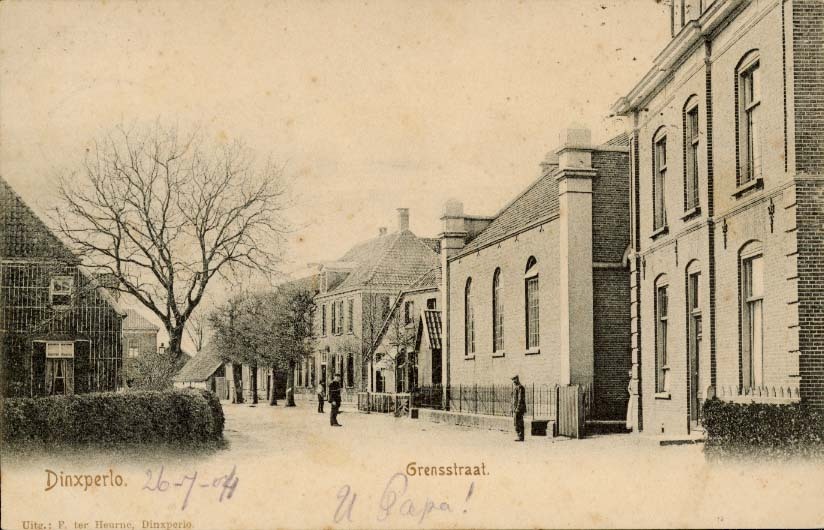
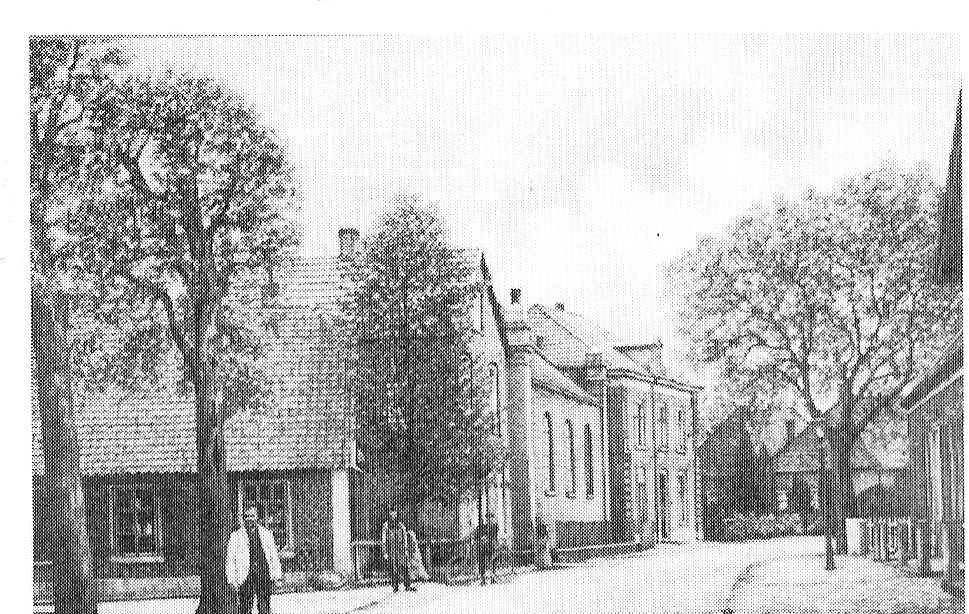
A purpose-built synagogue was finally consecrated on Sunday 17 February 1889. It was a modest brick hall standing in a row of houses at the meeting of Dinxperlo's Grensstraat and Kwikkelstraat, the street names given in captions of different dates. It served a community of between forty and sixty-three people, many of them poor, alongside the more prosperous families of butchers, traders and the Prins carpet manufacturers. The congregation celebrated the building's fiftieth anniversary in a subdued ceremony in March 1939 overshadowed by events in Germany. After the war the damaged synagogue was pulled down, and in 1947 the few survivors were attached to the congregation of Aalten.
Where it stood for 56 years
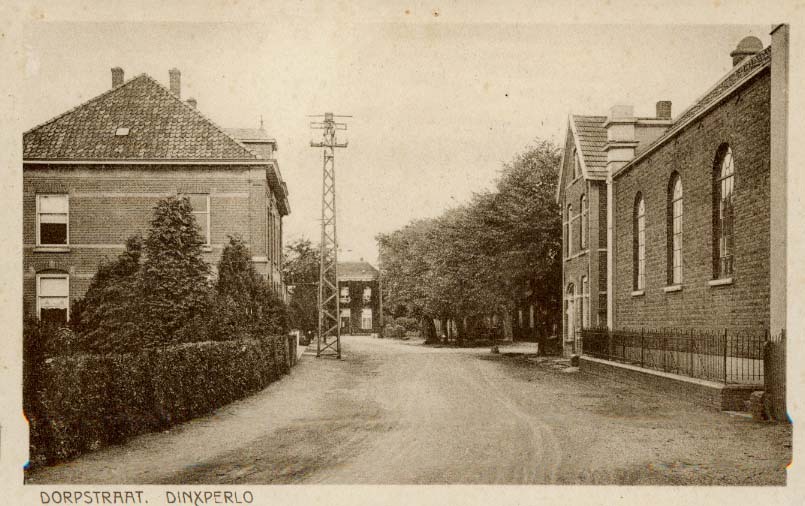
Historic: Grensstraat / Kwikkelstraat (also captioned Dorpstraat c. 1930), Dinxperlo; house number unknown. Today: Kwikkelstraat near the Grensstraat junction, 7091 Dinxperlo, municipality of Aalten (approximate).
Otwórz większą mapę →Społeczność żydowska
Records name individual Jews in Dinxperlo from 1715, including Jacobus Benjamin, who lived near the border with his mother in 1748. In 1810 there were 27 Jews in Dinxperlo and 15 in Werth; the community counted 19 in 1809, 28 in 1840, 49 in 1869, 63 in 1899 and 41 in 1930, with 57 recorded in 1860. Around 1815 most heads of household were described as living by begging, and poverty persisted into the twentieth century. Better-off families included the Fuldauers, one of whom started a textile dyeing works in 1830, the butchers Pagrach and Heilbron, and the Prins family, carpet manufacturers from Deventer who were granted a permit for a weaving mill and dye-house in 1882 and became an important local employer. Benjamin Prins sat on the town council from 1920 to 1929, and Maurits Philip Prins was councillor from 1929 and alderman and deputy mayor from 1933 until April 1940. In the 1930s many refugees from Nazi Germany crossed into Dinxperlo, and Mayor Hendrik Verbeek, who helped them, was dismissed for it.
Architektura i projekt
The building is known only from three street views. A postcard published by F. ter Heurne and postmarked 26 July 1904, captioned 'Grensstraat', shows it as a pale brick hall set back slightly behind iron railings, with three tall round-arched windows in its long side wall and a front gable framed by broad pilasters ending in square piers above the roofline. To its right stands a larger two-storey house with round-headed windows. A photograph dated 1900 and captioned as showing the synagogue in the Kwikkelstraat, the fifth building from the right, shows the same hall from the other direction, among low tiled houses and trees. A postcard of about 1930 captioned 'Dorpstraat' shows the darker brick side wall with its arched windows, the railings and the piered gable. Nothing is known of the architect, the builder, the seating or the interior. The 1889 consecration report mentions a choir, which suggests there was room for singers, but the plan and furnishings are unknown.
Życie w synagodze
The synagogue was consecrated on Sunday 17 February 1889: the Torah scrolls were carried over from the old prayer room and a choir sang a song of welcome based on Psalm 118, and Chief Rabbi L. Wagenaar spoke at a service. Services were held on Friday evenings, three times on the Sabbath and on festivals. From 1886 the community's religious teacher and cantor was I. Menist (also spelled Mennist), who had come from Amsterdam; he also worked as bookkeeper of a butter factory and as a newspaper correspondent, and on his seventy-fifth birthday Chief Rabbi Levisson congratulated him on fifty-five years of service. From November 1938 a special prayer was said at services because of the plight of Jews in Germany. The fiftieth anniversary on Tuesday 7 March 1939 was deliberately kept low-key; Abraham Fuldauer and Leo Heilbron, who had both attended the consecration fifty years earlier, were guests of honour. From September 1941 Jewish children were barred from public schools and had to attend the regional Jewish school in Doetinchem.
Zniszczenie
The synagogue stood empty after the deportations of November 1942. The JCK community encyclopedia, which follows the Encyclopedia of Jewish Communities (Pinkas Hakehillot) for the Netherlands, says only that the building was damaged and that after the war it was pulled down. No source read says who damaged it or how. Whether it was wrecked by the Nazi occupiers, by Dutch Nazis (NSB members) or in the fighting of 1945 is not documented in the sources consulted; nor is how it was used while it stood empty. The date of the demolition, whether the building was first sold by the much reduced postwar community, which was merged into Aalten in 1947, and who carried out the work are not recorded.
Los społeczności
In November 1942 the Jews of Dinxperlo were deported together with those of the rest of Gelderland, and further members of the community followed in 1943. The Nazi occupiers had already taken over the butchery of Mozes Pagrach in 1942. The community's long-serving cantor and teacher I. Menist was deported to a concentration camp in 1943. The Digitaal Joods Monument records that the boy Isaac Menist, born in Dinxperlo in 1932, was sent from the camp at Vught by way of Westerbork to Sobibor on a children's transport and murdered there on 11 June 1943, aged eleven; his parents Leopold and Sophia Menist and his sister Jetty were also killed. The victims' register also lists other households in the town in 1941, among them the Spiegel family and Meta Wohrizek-Sternheim, who died in 1943. A memorial in the Kwikkelstraat names 43 Jewish residents of Dinxperlo who died in the Second World War. Only a few members of the community survived, and in 1947 the Jewish community of Dinxperlo was merged into that of Aalten.
Miejsce dzisiaj
The synagogue stood at or near the junction of the Grensstraat and the Kwikkelstraat in the centre of Dinxperlo, but its exact plot has not been identified in any source read, so it is not possible to say what occupies the site today. No part of the building is known to survive. A memorial to the 43 Jewish residents of Dinxperlo who died in the war stands in the Kwikkelstraat. The Jewish cemetery of the community, in the former hamlet of Beggelder, lies on what is now the Meniststraat, and its gravestones have been recorded in the Stenen Archief database.
Ważne postacie
I. Menist (Mennist)
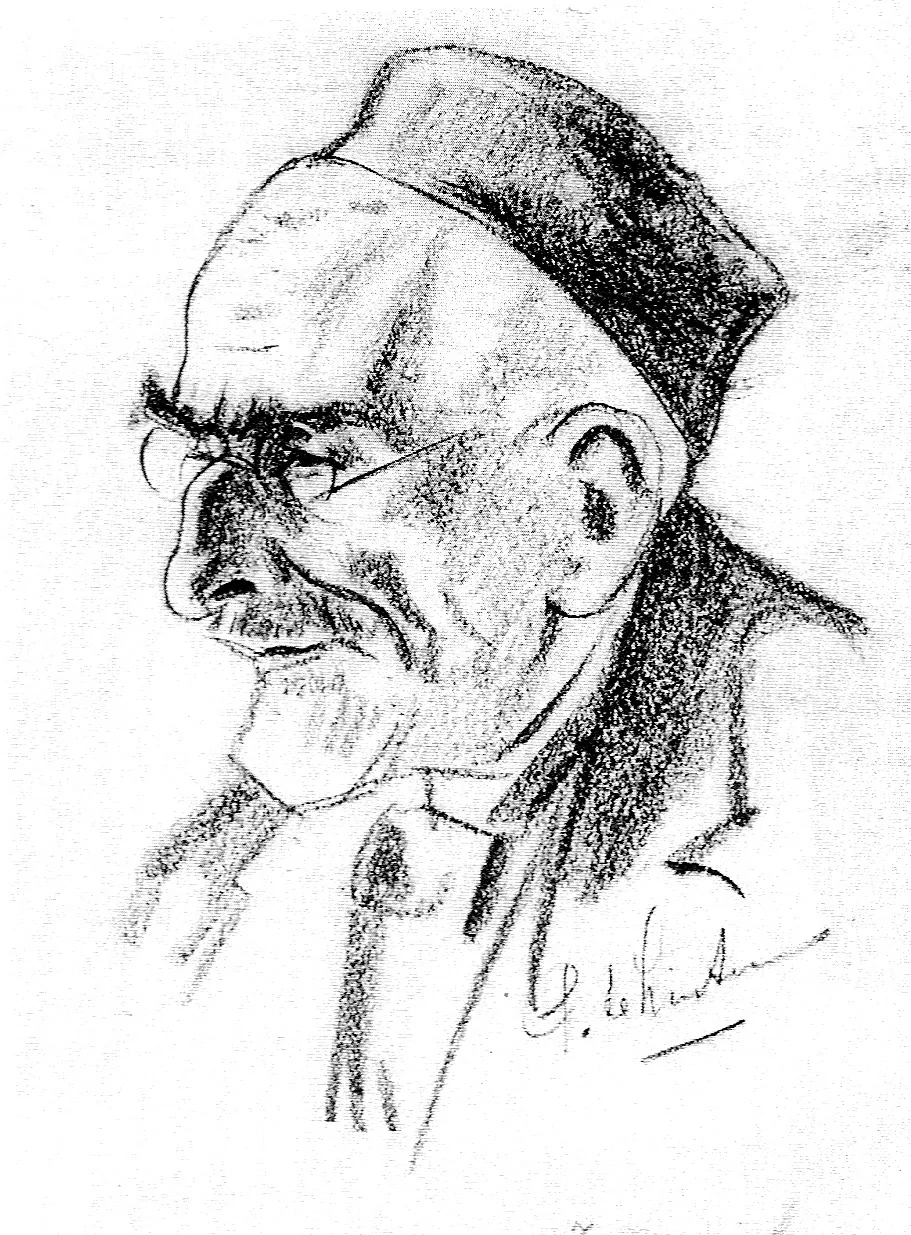
Unknown; deported 1943Religious teacher and cantor (chazzan) of Dinxperlo from 1886Menist came from Amsterdam in 1886 to be the community's teacher of religion and cantor, and so led the singing and prayers in the synagogue from its consecration in 1889 through its fiftieth anniversary in 1939. He also worked as bookkeeper of a butter factory and as a newspaper correspondent. Chief Rabbi Levisson congratulated him on his seventy-fifth birthday and fifty-five years of service. He remained in the Achterhoek until he was deported to a concentration camp in 1943.
Biografia lub źródło →Mozes Israel Fuldauer
UnknownHost of the house synagogue, c. 1815Fuldauer, a licensed merchant and butcher with a wife and six children, kept the community's prayer room in his own house around 1815 and paid its costs, including the rabbi's weekly fee of two guilders ten. About twenty people, including Jews from Werth across the border, prayed there. This house synagogue was the congregation's place of worship before the 1889 building replaced it.
Biografia lub źródło →Abraham Fuldauer
UnknownMember present at the consecration (1889) and fiftieth anniversary (1939)Abraham Fuldauer, of the family that had hosted the old house synagogue, attended the consecration of the new synagogue on 17 February 1889. Fifty years later, on 7 March 1939, he was one of two guests of honour, with Leo Heilbron, at the subdued celebration of the building's fiftieth anniversary, held under the shadow of events in Germany.
Biografia lub źródło →Leo Heilbron
UnknownMember present at the consecration (1889) and fiftieth anniversary (1939)Leo Heilbron, of a Dinxperlo family of butchers and tanners, attended the consecration of the synagogue in February 1889 and was a guest of honour, together with Abraham Fuldauer, at the synagogue's fiftieth anniversary on 7 March 1939, as one of the two people still living who had been present at its opening.
Biografia lub źródło →Czy masz coś do przekazania?
Zdjęcia, dokumenty, historie rodzinne lub wspomnienia o tej synagodze i jej społeczności pomagają zachować jej historię.
Share a memory or thought
No comments yet. Be the first to add one.