

La historia de Old Synagogue of Doboj
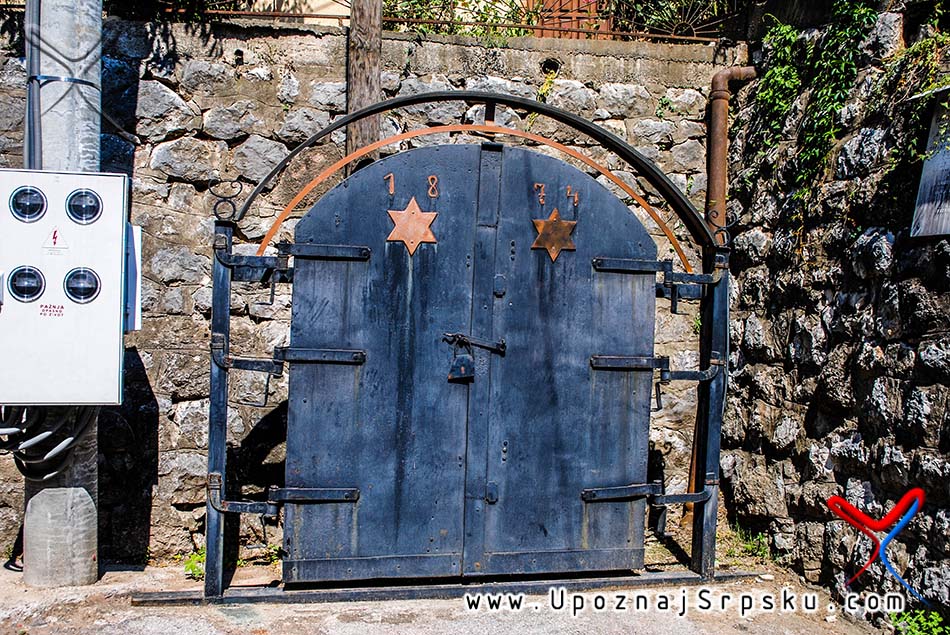
Doboj lies on the Bosna river in northern Bosnia, a market town and later a railway junction. A small Sephardic community, settled there by the early nineteenth century, formed the Jewish Community of Doboj in 1871. Three years later, in 1874, it built a Jewish communal house with a synagogue. A Yad Vashem encyclopaedia of Yugoslav communities instead gives 1880 as the year the synagogue was consecrated. No photograph, plan or description of the building has been found, and its exact site in the town is not recorded in the sources consulted. The community was always small: 13 Jews in 1879, about 100 in 1910, and 108 out of 4,881 inhabitants in 1931. It nevertheless kept a Talmud Torah school, a burial society, a youth society and its own cantors. In April 1941 Doboj became part of the Independent State of Croatia, ruled by the Ustaše. Jews were forced to wear yellow armbands, and in 1941 and 1942 most of the town's Jews were arrested and sent to Ustaše and Nazi camps, where around nine in ten were murdered. The synagogue was destroyed in 1941. Its double metal doors, dated 1874 and decorated with Stars of David, were found and restored in 2003 and now stand in the courtyard of the community's new Bet Shalom synagogue.
Where it stood for 67 years
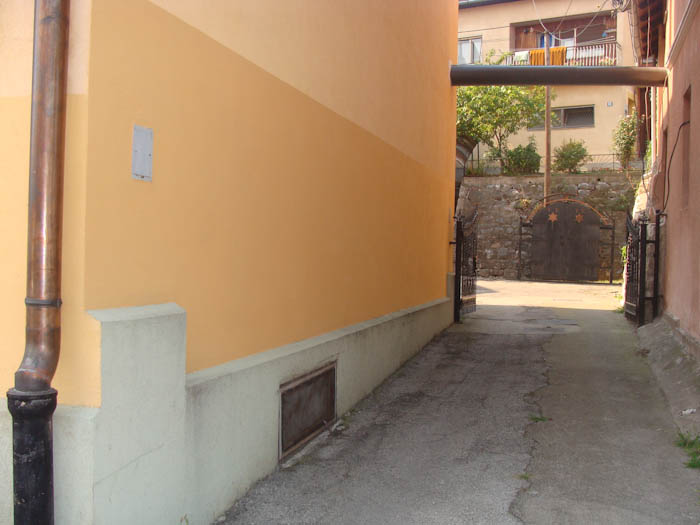
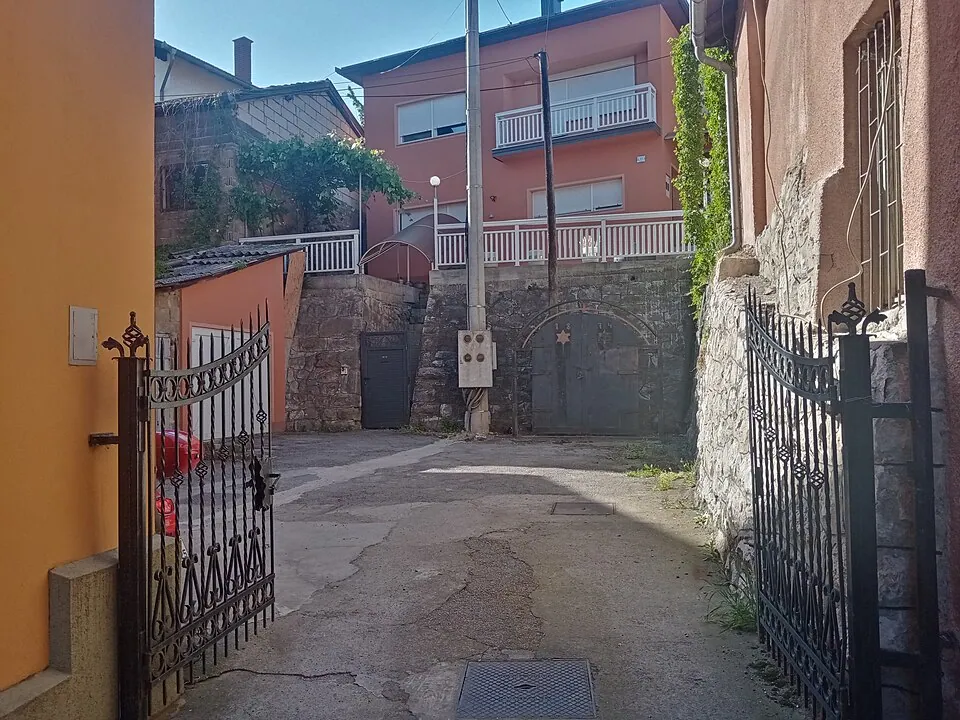
Doors of the old synagogue: courtyard of Bet Shalom Jewish Cultural Centre, Kralja Aleksandra 33, 74000 Doboj (original site of the 1874 synagogue unknown)
Abrir mapa ampliado →La comunidad judía
Sephardic Jews settled in Doboj by the early nineteenth century at the latest, and the town's Jewish Community was formally founded in 1871. Numbers remained modest: a count of 1879 found 13 Jews, rising to 101 in 1910, 108 in 1931 and about 60 on the eve of the Second World War. Later families traced their roots to Sarajevo and to nearby Gračanica and Klokotnica. Between the wars the community was led in turn by Dr Rihard Skotecki, Isak Albahari, Josef L. Pesah and Isak Levi, and Josef D. Pesah headed the burial society. Jews played an outsized part in the town's life: the first doctor, Simon Levi, the first lawyer, Emil Rubinstein, the first bank and printing press, the Pesah brothers' department store and the first hotel were all Jewish, and Dr Skotecki founded Doboj's first choral society in 1927.
Arquitectura y diseño
Almost nothing is known about the appearance of the old synagogue. The sources describe it as a Jewish communal house with a synagogue, built in 1874, which suggests a modest building combining a prayer room with rooms for the community rather than a large free-standing temple. No photograph, drawing, plan or measurement has been located, and no architect or builder is named. The only surviving fabric is its entrance: a pair of double-leaf metal doors with a rounded, arched top. Each leaf carries a Star of David, and the date 1874 is split across the two leaves, one pair of digits on each. In recent photographs the doors are painted dark grey, with horizontal metal bands and copper-coloured stars and numerals, and hang in an arched metal frame against a stone wall. Whether they formed the street entrance of the communal house or the door of the prayer hall itself is not recorded.
La vida dentro de la sinagoga
The synagogue served a small Sephardic congregation; inscriptions in the town's Jewish cemetery on the Bare hillside, founded between 1876 and 1888, are in Hebrew, Ladino, Serbo-Croatian and German, reflecting the languages of its members. The community kept a Talmud Torah school for religious instruction of its children. With no rabbi of its own recorded, services were led by cantors, among them Samuel Kabiljo and Avraham Romano. A burial society, the Hevra Kadisha, led by Josef D. Pesah, cared for the dead, and a youth society called Cijon (Zion) was active between the wars. The community's presidents in those years included Dr Rihard Skotecki, Isak Albahari, Josef L. Pesah and Isak Levi.
Destrucción
After the invasion of Yugoslavia in April 1941, Doboj was placed in the Independent State of Croatia under the Ustaše regime. The Ustaše grand prefect of Doboj, Dragutin Kamber, introduced the regime's race laws, ordering Jews to wear yellow armbands. The synagogue and communal house were destroyed in 1941, while the Ustaše were rounding up the town's Jews; the inscription on the surviving doors records simply that they were torn down in 1941. The sources consulted do not say exactly who carried out the demolition or how, and some accounts place it in 1942. Doboj also had a small German garrison guarding the railway, but no source attributes the destruction to Nazi German forces. Of the building only its metal entrance doors survived, rediscovered and restored in 2003.
El destino de la comunidad
Most of Doboj's Jews were arrested by the Ustaše in 1941 and 1942. Some were sent to Ustaše camps such as Jadovno, where four Jews from the Doboj district are recorded as killed, while women, children and the elderly were deported to the camp at Đakovo. Others died in Nazi camps in Germany. Leopold Renart, a merchant, and his wife took poison when they heard the Ustaše were coming for them. In all, 89 named Jews of Doboj were murdered in 1941 and 1942, about nine in ten of the community. A few survived: Jožo Elazar escaped from prison in Doboj; Miko Atijas was saved at the railway station by Rajko Zakonović and hidden for two years by the Smailbegović family; the Kovačević family saved the Pesah brothers. The community was revived after the war, numbering 27 in 1960.
El lugar hoy
The location of the old synagogue is not documented in the sources consulted. Its surviving doors now stand in the courtyard behind the Bet Shalom Jewish Cultural Centre and synagogue at Kralja Aleksandra 33, a 1922 family house of Aleksandar Vrhovski and Oto Kalmar, rebuilt with funds from Mira and Slobodan Pavlović of Chicago and opened in November 2003. A marble tablet below the doors records their history, and a memorial plaque with the names of 89 murdered Jews was unveiled on the centre in April 2022. The Jewish Community of Doboj, with about 45 members, still meets there.
Nombres destacados
Rihard Skotecki
UnknownPhysician; president of the Jewish Community of Doboj between the warsDr Rihard Skotecki (also spelled Skuteski) was one of the interwar presidents of the Jewish Community of Doboj, whose synagogue and communal house he would have presided over. A physician, he founded Doboj's first choral society in 1927, and his wife was remembered as the town's first nurse.
Biografía o fuente →Isak Albahari
UnknownPresident of the Jewish Community of Doboj between the warsIsak Albahari served as one of the presidents of the Jewish Community of Doboj in the period between the two world wars, leading the small Sephardic congregation that worshipped in the 1874 synagogue and communal house. Nothing further about his life or fate has been found.
Biografía o fuente →Josef L. Pesah
UnknownPresident of the Jewish Community of Doboj between the warsJosef L. Pesah was one of the interwar presidents of the Jewish Community of Doboj, which met in the communal house with the synagogue. The Pesah family were prominent merchants in Doboj, though the sources do not say how he was related to the brothers who ran the town's department store.
Biografía o fuente →Isak Levi
UnknownPresident of the Jewish Community of Doboj between the warsIsak Levi is listed among the presidents of the Jewish Community of Doboj between the two world wars, the last generation to use the 1874 synagogue before its destruction in 1941. No further details of his life or fate have been found in the sources consulted.
Biografía o fuente →Josef D. Pesah
UnknownHead of the Hevra Kadisha (burial society)Josef D. Pesah headed the Hevra Kadisha, the burial society of the Doboj community, which cared for the dead and the Jewish cemetery on the Bare hillside. The society was one of the central institutions of the congregation that worshipped in the old synagogue.
Biografía o fuente →Samuel Kabiljo
UnknownCantorSamuel Kabiljo served as a cantor of the Jewish Community of Doboj. With no resident rabbi recorded for the small Sephardic congregation, the cantors led prayers in the synagogue and conducted the community's religious services before the Second World War.
Biografía o fuente →Avraham Romano
UnknownCantorAvraham Romano was one of the cantors of the Jewish Community of Doboj before the Second World War, leading services in the synagogue of the communal house built in 1874. His later life and fate are not recorded in the sources consulted.
Biografía o fuente →¿Tiene algo que aportar?
Fotografías, documentos, historias familiares o recuerdos de esta sinagoga y su comunidad ayudan a mantener viva su historia.
- Sinagoga, Doboj (Jevrejski kulturni centar i sinagoga „Bejt Šalom“)
- O nama – Jevrejska opština u Doboju
- Doboj, in Pinkas jevrejskih opština Jugoslavije (Pinkas ha-Kehillot Yugoslavia)
- U Doboju memorijalna ploča Jevrejima ubijenim u Drugom svjetskom ratu
- Jevrejska općina Doboj (institution description)
- Sinagoga u Doboju
- Mala mjesta u Bosni (excerpt from Avram Pinto, Jevreji Sarajeva i Bosne i Hercegovine, Sarajevo 1987)
- Doboj
- Jewish Community of Doboj
- Jewish Heritage Sites of Bosnia-Herzegovina
- Doboj: Otkrivena spomen-ploča za 89 stradalih Jevreja
- Јevrejska opština Doboj obilježava 150 godina
- Hronologija ustaških zločina 1941.
- File:Sinagoga. Doboj 02.jpg
- Jewish Home "Bet Shalom", Doboj
Share a memory or thought
No comments yet. Be the first to add one.