

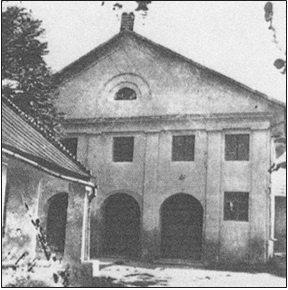
Die Geschichte von Dunaföldvár Synagogue
Dunaföldvár, a market town on the right bank of the Danube in Tolna county, had only fourteen Jewish residents in the 1830s. Within a generation the community had grown into one of the largest in the county, and in 1854, the year it was formally constituted, it built a synagogue and engaged a rabbi. The building stood on the town's main street, today Kossuth Lajos utca, and is described as classicising in style. It served the congregation for ninety years; after the national split of 1868–69 the community followed the Neolog (Congress) direction, while a small Orthodox group kept a separate prayer house. Local newspapers of the 1890s and 1900s show the building used for patriotic and civic services attended by townspeople of every denomination, with organ music and a children's choir. Its pulpit was held by notable figures: Antal Enoch Fischer, later chief rabbi of Makó; Dr Sámuel Pártos, who served for more than four decades; and finally the young scholar Dr Sándor Scheiber, later director of the Budapest Rabbinical Seminary. A museum photograph dated 1944 shows the interior in ruins, and a letter written by the handful of survivors in October 1945 reports that nothing of the community's property remained except the cemetery. The synagogue was never restored and no longer exists, but the date and circumstances of its removal have not been established.
Where it stood for 90 years
Historic: Kossuth Lajos utca 34 (the main street, earlier also called Öreg utca, Nagy utca, Posta utca and Fő utca), Dunaföldvár, Tolna county. Today: Kossuth Lajos utca 34, 7020 Dunaföldvár, Hungary (present use of the plot not confirmed).
Größere Karte öffnen →Die jüdische Gemeinde
Records count 14 Jews in Dunaföldvár around 1836–1840, more than 600 by 1870 and 673 in 1880, about five per cent of the town. Most were merchants, above all in the grain trade, which they largely took over from the town's Serbian traders; others were craftsmen, bankers and professionals, and several sat on the municipal and county councils. A burial society (Chevra Kadisha) was working from 1851. In 1854 Ignác Bergl, a merchant, Salamon Bischitz, a grain dealer, and Ignác Braun, a leaseholder, founded the organised community, which at once built its synagogue and created a rabbinate. A school followed and gained public status in 1862; it taught in Hungarian from early on, and in 1868 the president, Lipót Spitzer, had the prayer for the king recited in Hungarian rather than Hebrew. A women's charitable society was founded in 1868 and a poor-relief society, Maskil el Dal, also worked in the town. From the 1870s wealthier families moved away to Budapest, and numbers fell to 363 in 1930 and 355 in 1941.
Architektur und Gestaltung
Very little is recorded about the building, and no exterior view has been found. The historian Viktor Cseh describes it as a classicising synagogue standing at Kossuth Lajos utca 34, on the town's principal street; the Magyar Zsidó Lexikon dates its construction to 1854. No architect or builder is named. The only known image, a small photograph in the Hungarian Jewish Museum and Archives dated 1944, shows part of the interior after it had been stripped: plastered brick walls, a tall window with a shallow arched head set in a deep reveal, a flat ceiling whose timber beams are exposed, and on the left the moulded front of what appears to be a gallery carried on a slender post. At the right edge is an arched recess framed by pilasters, with a Hebrew inscription on a curved band above it, probably the niche of the Torah ark. A newspaper report of 1894 mentions an organ. In 1904–05 the congregation was raising money for the 'building of the temple', but it is not known whether the 1854 structure was then rebuilt, enlarged or only repaired.
Leben in der Synagoge
The synagogue was the house of worship of the Neolog (Congress) community, the larger of Dunaföldvár's two congregations; the Orthodox minority had its own prayer house, ritual bath and guest house by 1879 at the latest. Services were accompanied by an organ, and the community teacher led a choir of schoolchildren. Chief cantor Áron Adolf Engelberg served from 1905. The building also hosted public commemorations: Rabbi Eliezer Hirsch Kohn delivered a memorial address for Baron József Eötvös there in 1871, later printed in Pest; on 8 April 1894 townspeople of all faiths filled it for a memorial service for Lajos Kossuth, at which Dr Sámuel Pártos preached; in September 1898 it was draped in black for Queen Elisabeth; and on 8 August 1914 a patriotic prayer was said before the opened ark. Concerts with dancing were held in 1904 and 1905 to raise funds for the building. In the early 1940s Rabbi Sándor Scheiber also taught the community's elementary school himself after the teacher was called up for forced labour service.
Zerstörung
After the Nazi German occupation of Hungary on 19 March 1944, the Hungarian authorities confined the Jews of Dunaföldvár, with others brought from Bölcske and Nagydorog, in a ghetto; a local-history account places it in the synagogue and six neighbouring buildings. A photograph in the Hungarian Jewish Museum and Archives, dated 1944 and credited to the community, shows the synagogue interior in ruins, with bare walls and exposed ceiling beams. Who wrecked it is not recorded. Late in 1944 the town lay on the front line: retreating German troops blew up the Danube bridge on 14 November and the Soviet army took the town on 3 December, with few buildings left undamaged. On 4 October 1945 the survivors reported to the national Jewish office that the archive, registers, every Torah scroll, the ritual objects and the library had been destroyed and their belongings carried off; only the cemetery was left. The ruined synagogue was not restored and was cleared away at an unknown date after the war. No source found names the year or the body responsible.
Das Schicksal der Gemeinde
In April 1944 the Neolog community reported 289 members under its president, the merchant István Deutsch, and Rabbi Sándor Scheiber, with an elementary school of 18 pupils. The Dunaföldvár ghetto held about 350 local Jews together with 15 from Bölcske and 77 from Nagydorog. Hungarian authorities and gendarmerie, acting under Nazi German occupation, then moved them to the ghetto at Paks, and in the first days of July 1944 they were deported from Paks station to Auschwitz, where most were murdered. The last Orthodox rabbi, Zoltán Pollák, was among those murdered, and cantor Engelberg also died in 1944. Scheiber, who had travelled to Budapest on 19 March 1944, survived the war there. Only a small group returned; their letter of October 1945 bears a round seal reading 'Jewish Council, Dunaföldvár', and the standard county history notes that congregations were re-formed in Tolna county only at Szekszárd, Bonyhád and Paks. A 1960 report of the national Jewish body lists Dunaföldvár among the communities that had ceased to exist.
Der Ort heute
The address recorded for the synagogue, Kossuth Lajos utca 34, lies on the east side of Dunaföldvár's main street, north of the Reformed church. Nothing of the building is known to survive. The sources consulted do not say what was later built on the plot, and this needs to be checked on the ground or in the land registry. Elsewhere in the town, the Second World War memorial in the Fehérvári utca cemetery carries a line remembering 353 Jewish fellow citizens. The Jewish cemetery at the corner of Vadász utca survives with its mortuary building, erected in 1888 and given to the burial society in 1893.
Bedeutende Namen
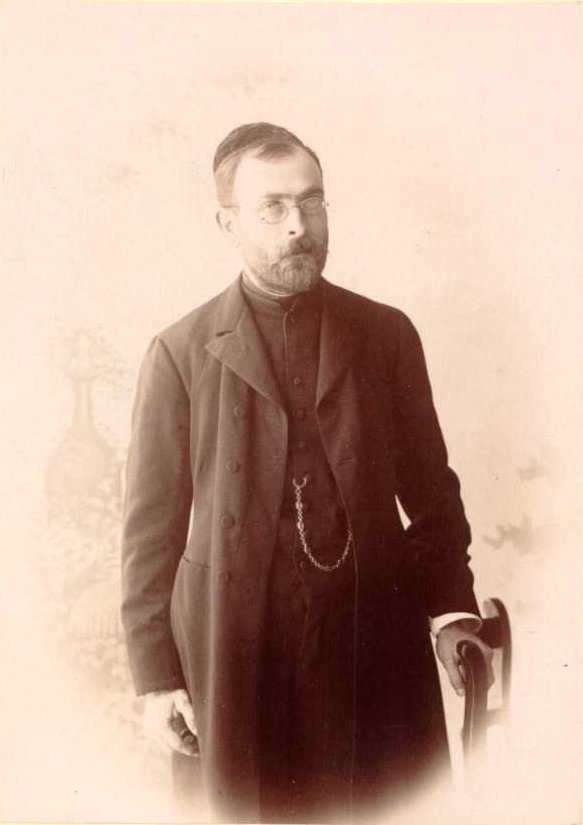
Dr Sámuel Pártos (Partos, born Pinkusfeld)
1858–1929Chief rabbi of Dunaföldvár, 1886/87–1929A native of Dunaföldvár and a graduate of the Budapest Rabbinical Seminary, ordained in February 1888, Pártos served the Neolog congregation for more than forty years. He preached at the civic services held in the synagogue, including the Kossuth memorial of 1894 and the mourning for Queen Elisabeth in 1898, and was a chief organiser of the 1905 benefit concert for the building, for which a Budapest paper printed in Hebrew letters attacked him.
Biografie oder Quelle →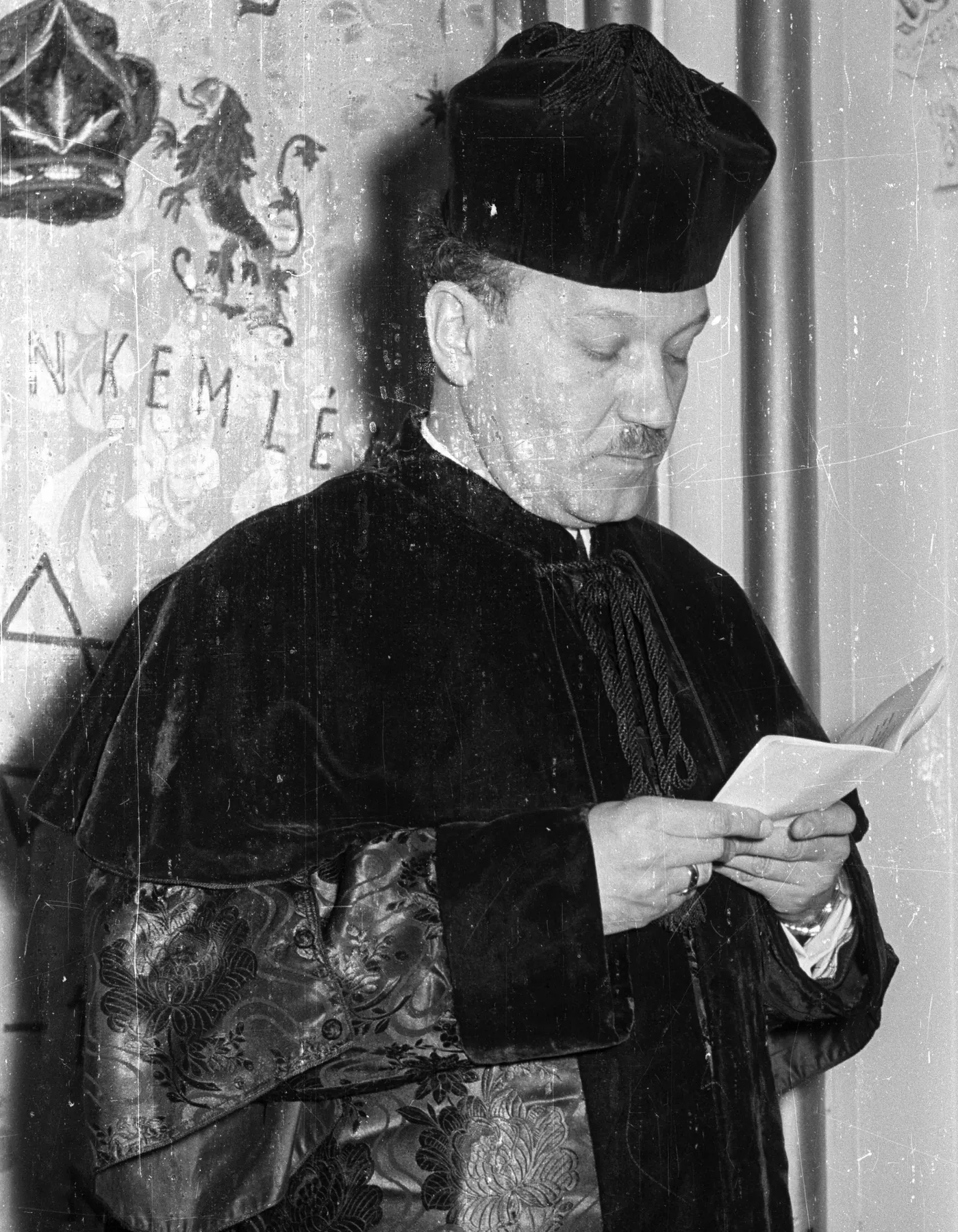
Dr Sándor Scheiber
1913–1985Last rabbi of the Neolog community, 1941–1944Scheiber, ordained in 1938, became rabbi of Dunaföldvár in 1941 and was the last to hold the synagogue's pulpit. When the community's teacher was called up for labour service he taught the elementary school himself. He was in Budapest on 19 March 1944 and survived there; his congregation was deported. From 1950 until his death he directed the Budapest Rabbinical Seminary and became a leading scholar of Hungarian Jewish history and folklore.
Biografie oder Quelle →Antal Enoch Fischer (Fischer Antal Énoch)
1826–1896First rabbi of DunaföldvárFischer was the first rabbi of the newly organised Dunaföldvár community and so the first to officiate in the synagogue built in 1854. Newspaper accounts date his service from 1852, the Magyar Zsidó Lexikon from 1854; he left in 1864 to become chief rabbi of Makó. He was the father of the poet and translator Emil Makai and of Sándor Halász, later director of the postal savings bank, who was born in 1859 during the Dunaföldvár years.
Biografie oder Quelle →Eliezer Hirsch Kohn (Kohn Eliezer Hirsch)
1837–1910Rabbi of Dunaföldvár, until 1880Kohn succeeded Fischer as rabbi and led the congregation through the years in which it adopted the Neolog (Congress) direction. In 1871 he delivered a memorial address for Baron József Eötvös in the synagogue, printed in Pest the same year. A local paper later criticised him for preaching in German at a funeral. In 1880 he left Dunaföldvár to become rabbi of Békéscsaba.
Biografie oder Quelle →Áron Adolf Engelberg
1865–1944Chief cantor, from 1905Engelberg came to Dunaföldvár in 1905 from Sieniawa (Sinawa) in Galicia and served as chief cantor of the Neolog synagogue for decades; the county press recorded his taking the Hungarian citizen's oath at Szekszárd in 1907. A report of a funeral service in the synagogue, apparently that of Rabbi Pártos in 1929, mentions his mourning chant. He died in 1944, the year the Dunaföldvár community was deported.
Biografie oder Quelle →Haben Sie etwas beizutragen?
Fotos, Dokumente, Familiengeschichten oder Erinnerungen an diese Synagoge und ihre Gemeinde halten ihre Geschichte lebendig.
- Dunaföldvár (entry in Magyar Zsidó Lexikon, 1929)
- A dunaföldvári zsidók a történelem viharos éveiben – 1. rész: a „boldog békeidők”
- Dunaföldvári zsinagóga romos belső (photograph, 1944, inv. F2021.135)
- A Tolna megyei zsidók története 1868–1944 (Tolna Megyei Levéltári Füzetek 2, 1991), p. 84: 1944 community data
- A Tolna megyei zsidók története 1868–1944, p. 86: ghettos and post-war communities
- A Tolna megyei zsidók története 1868–1944, pp. 53 and 77: population, occupations, Hungarian language
- Zsidó közösségek öröksége (Magyar Zsidó Levéltári Füzetek 7, 2010): reply of the Dunaföldvár Jewish Council, 4 October 1945
- Zsidó közösségek öröksége: 1960 situation report of the Magyar Izraeliták Országos Képviselete
- Tolnavármegye, 15 April 1894: A dunaföldvári izr. templomban
- Tolnamegyei Közlöny, 25 September 1898: Dunaföldvár
- Tolnavármegye, 21 August 1904: Hangverseny Dunaföldváron
- Közérdek, 22 July 1905: Durva támadás egy rabbi ellen
- Tolnavármegye és a Közérdek, 13 August 1914
- Kohn Eliezer Hirsch: Gyászbeszéd báró Eötvös József emlékünnepélyén (Pest, 1871)
- Kossuth Lajos utca (Dunaföldvár)
- Magyarországi zsinagógák listája (Tolna megye)
- List of synagogues in Hungary
- Dunaföldvár
- Paksi Hírnök, 26 September 1997: survivor's recollection of the Paks ghetto
- Zsidó közösségek öröksége: Bölcske entry of the post-war community survey
- Tolnai Népújság, 31 January 1998: Dr. Halász Sándor hasznos élete
- Sándor Scheiber
- Newyorki Figyelő, 4 March 1988: memoir of Sándor Scheiber
- Dr. Pártos Sámuel (portrait, inv. IV/39)
- File:Scheiber Sándor fortepan 114193.jpg
- File:Fehérváristrasse-Friedhof, Kriegerdenkmal, 2025 Dunaföldvár.jpg (description)
- File:Gebäude, Jüdischer Friedhof, 2025 Dunaföldvár.jpg (description)
- OpenStreetMap: Kossuth Lajos utca, Dunaföldvár (address points nos. 31 and 37)
Share a memory or thought
No comments yet. Be the first to add one.