

История Great Synagogue of Düsseldorf
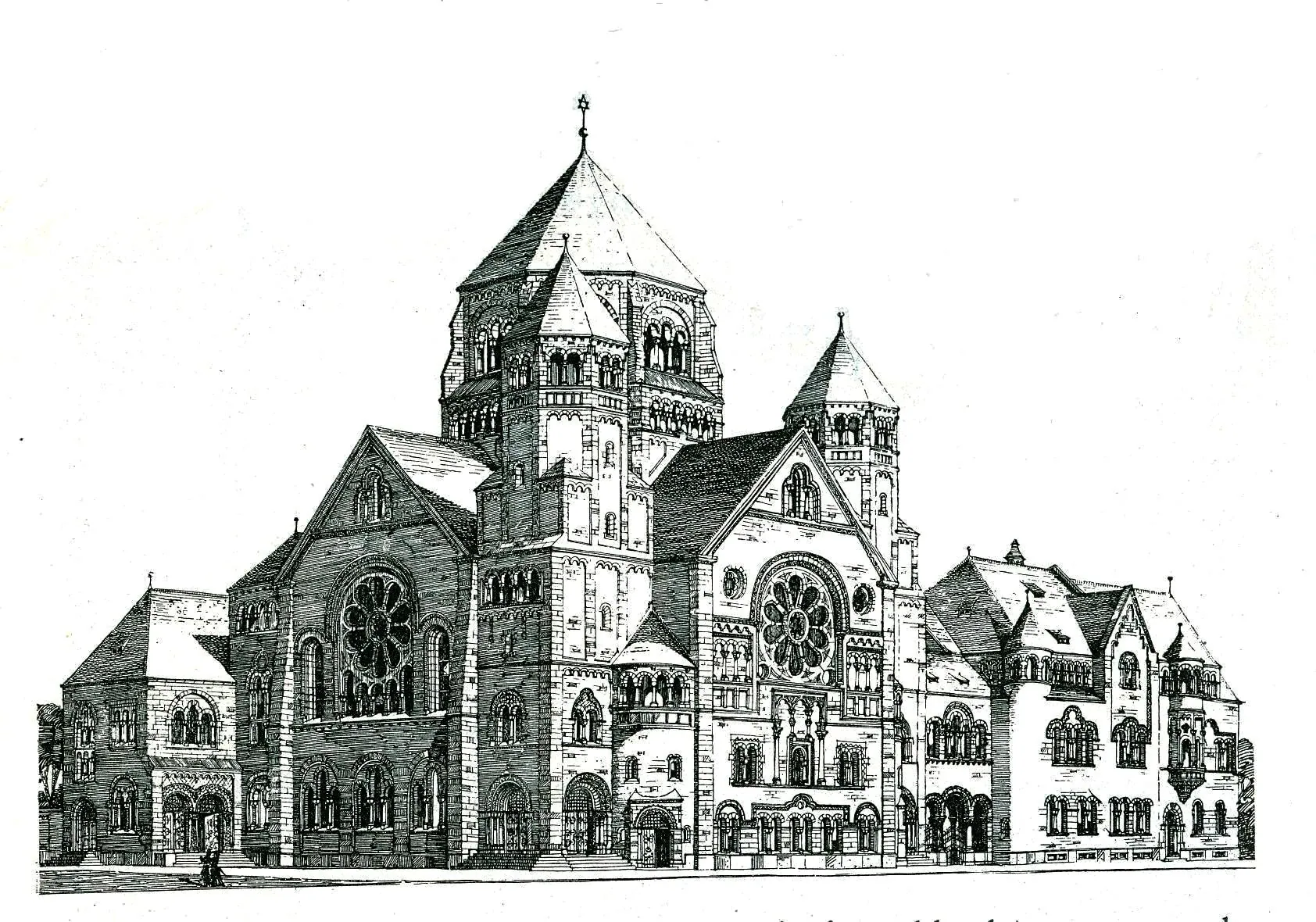
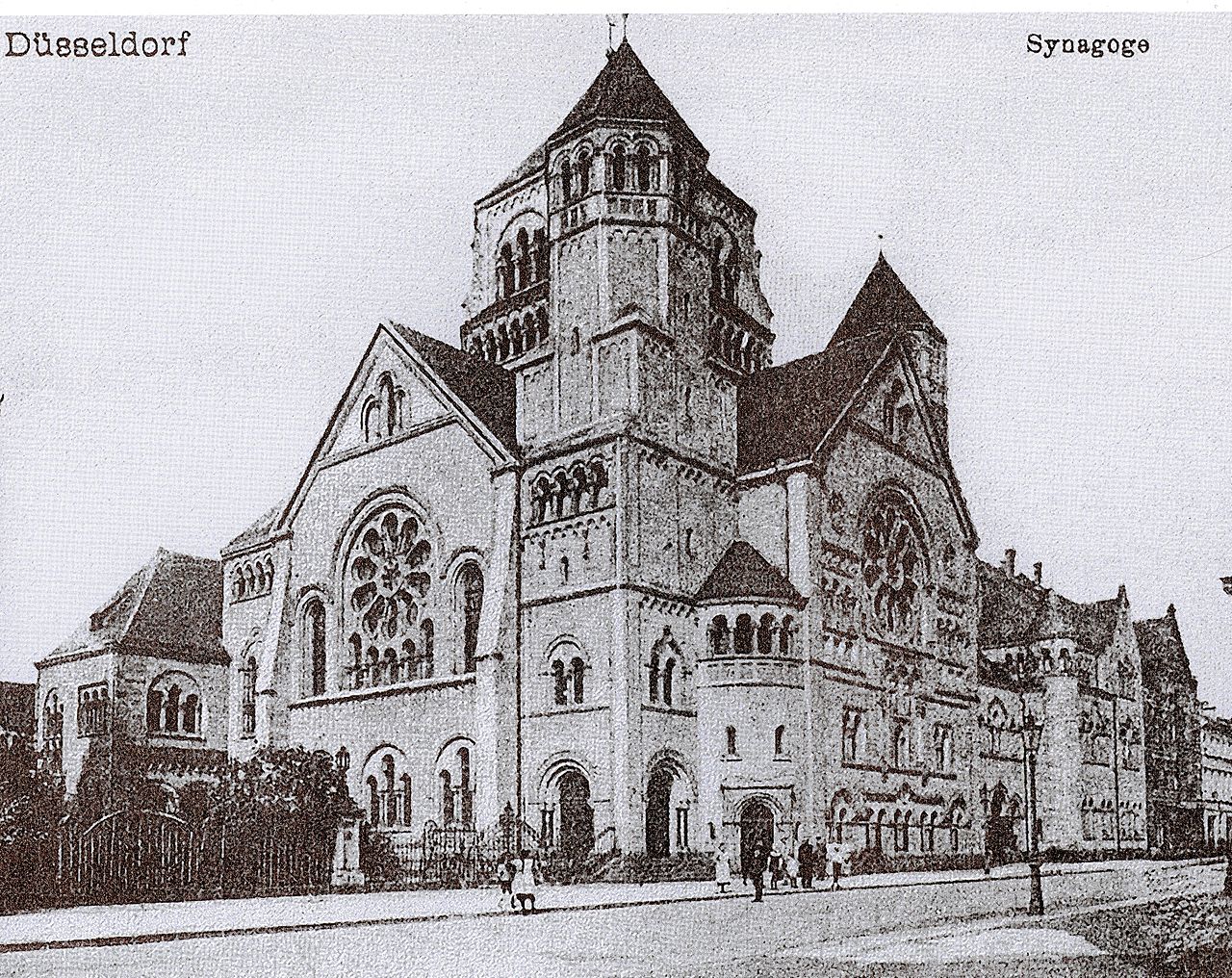
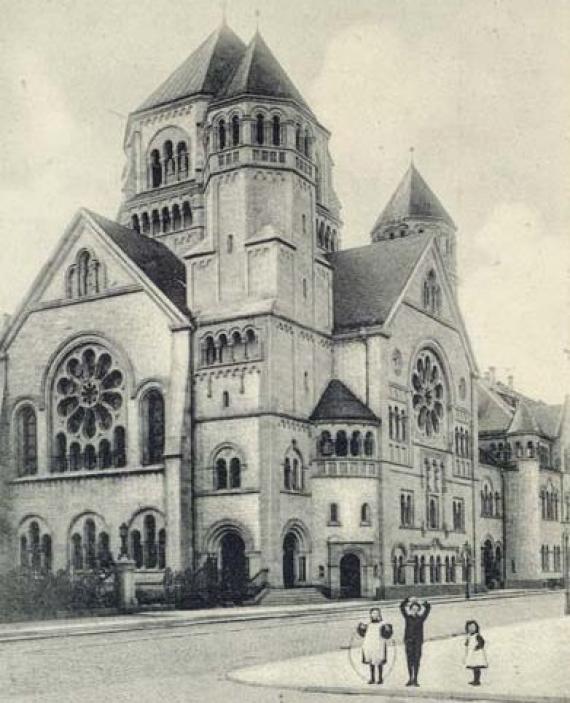
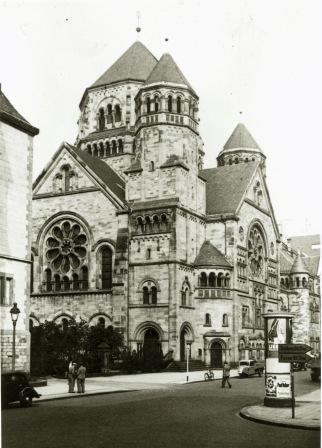
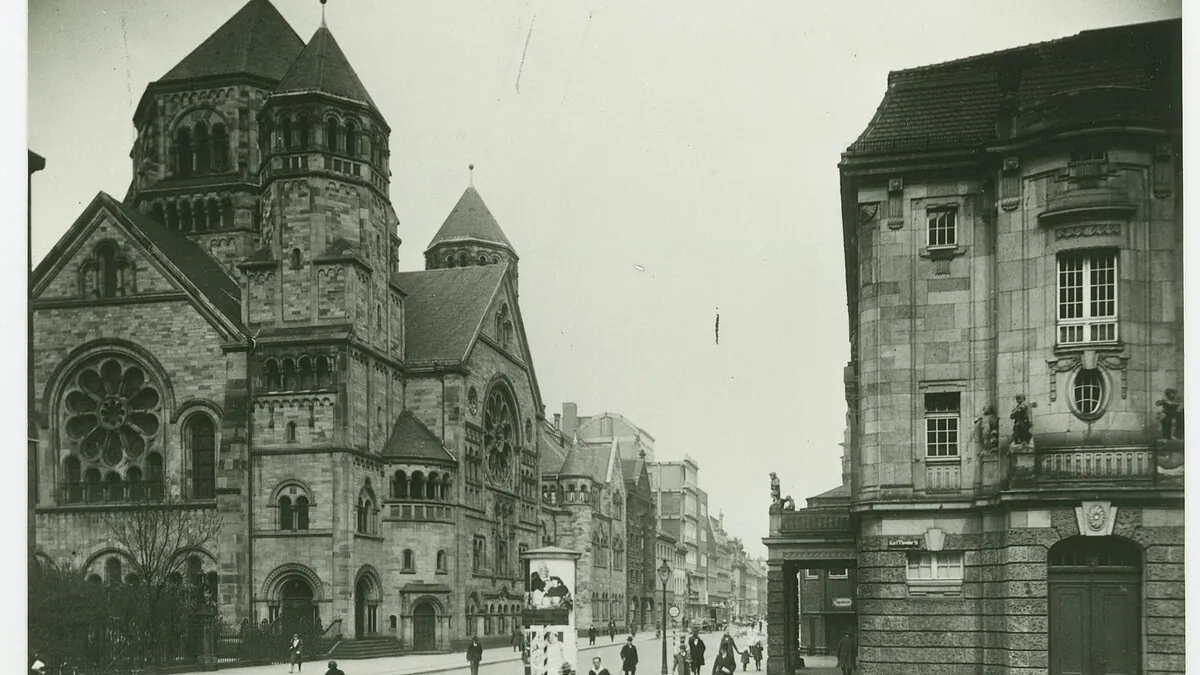
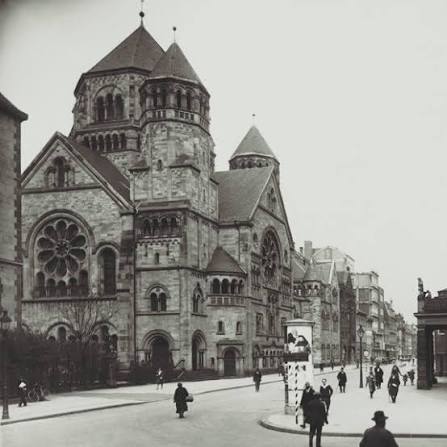
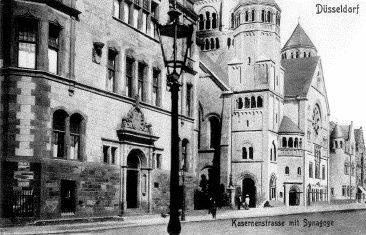
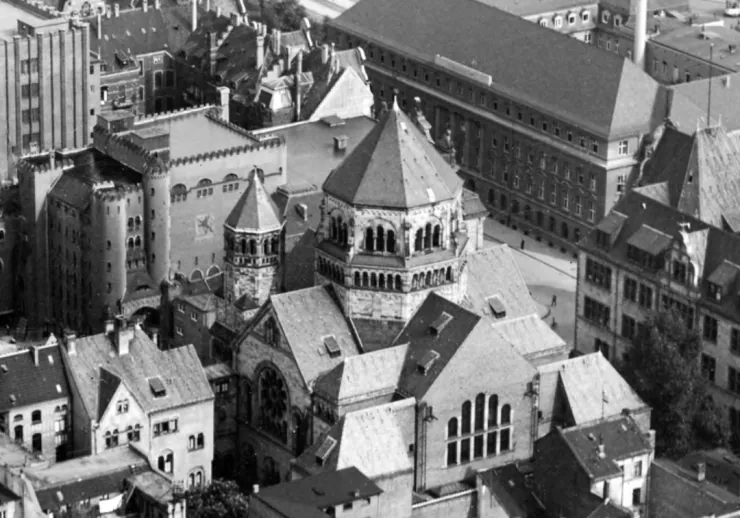
The Great Synagogue stood on Kasernenstraße in central Düsseldorf, in a district the city was redeveloping around 1900 after the relocation of the barracks that gave the street its name. By then the community's older synagogue had become too small for a congregation of nearly 3,000 members. The Cologne architect Ludwig Paffendorf produced a first design mixing Byzantine, early Christian and Romanesque motifs, but the executed building was designed by the Rhineland church architect Josef Kleesattel and built in 1903–1904. It was dedicated on 6 September 1904; the Cologne rabbi Dr. Francken praised it as an 'art temple'. With about 1,300 seats and an organ, it served Düsseldorf's liberal majority, while the smaller Orthodox community rejected it because of the organ and kept its own house of prayer. Two notable rabbis served here: Leo Baeck from 1907 to 1912, and Max Eschelbacher from 1912 until 1939. The building was defaced with antisemitic graffiti in 1929. During the November Pogrom of 1938, SA men wrecked the interior and set it on fire; demolition of the ruin began on 29 November 1938. An office building now stands on the site.
Where it stood for nearly 35 years
Historic: Kasernenstraße, Düsseldorf-Stadtmitte (house number unknown). Present: office building on Kasernenstraße marked by a memorial stone. Location approximate.
Открыть большую карту →Еврейская община
Jews had lived in Düsseldorf for centuries, and by the late nineteenth century the community had grown with the city's rise as an administrative, banking and steel-industry centre. Around 1905 it had about 2,900 members and by 1933 roughly 5,000, about one percent of the city's population. The community was largely acculturated and liberal, though an influential religiously traditional minority remained and maintained an Orthodox congregation at Poststraße 4 as well as smaller prayer rooms. Growth made the earlier synagogue on Kasernenstraße, dating from 1792, too small. When the city redeveloped the area around Königsallee and Kasernenstraße for banks and industrial administration after moving the barracks in 1897–1898, the community built a much larger, representative synagogue on the same street, with an adjoining rabbi's house and community building, placing its main house of worship among the new civic and commercial buildings of the city centre.
Архитектура и дизайн
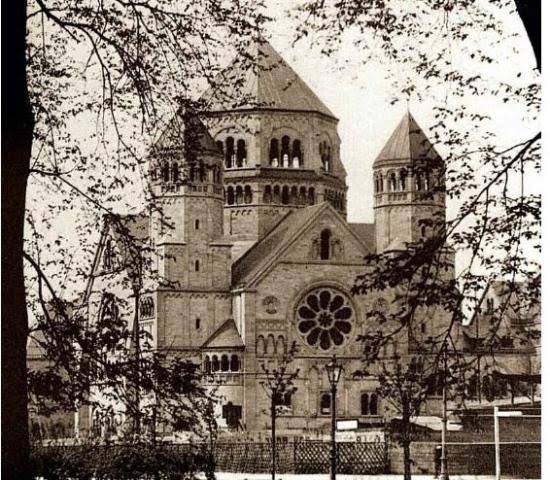
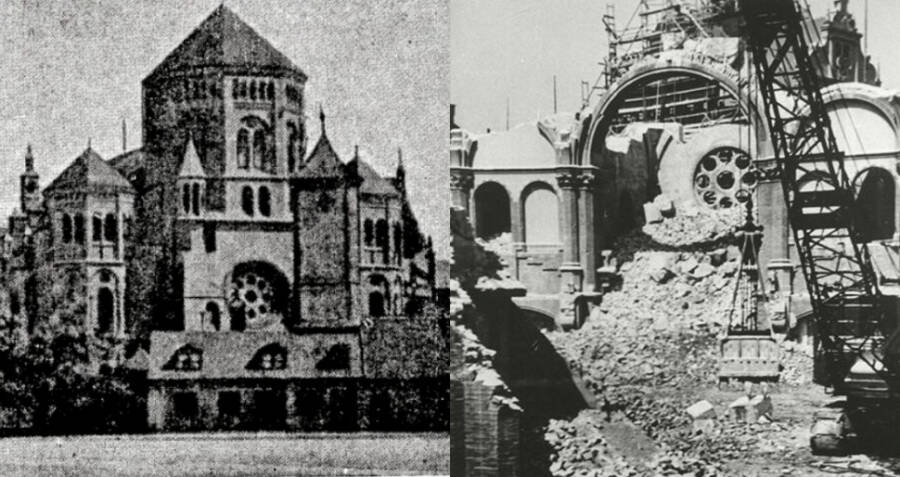
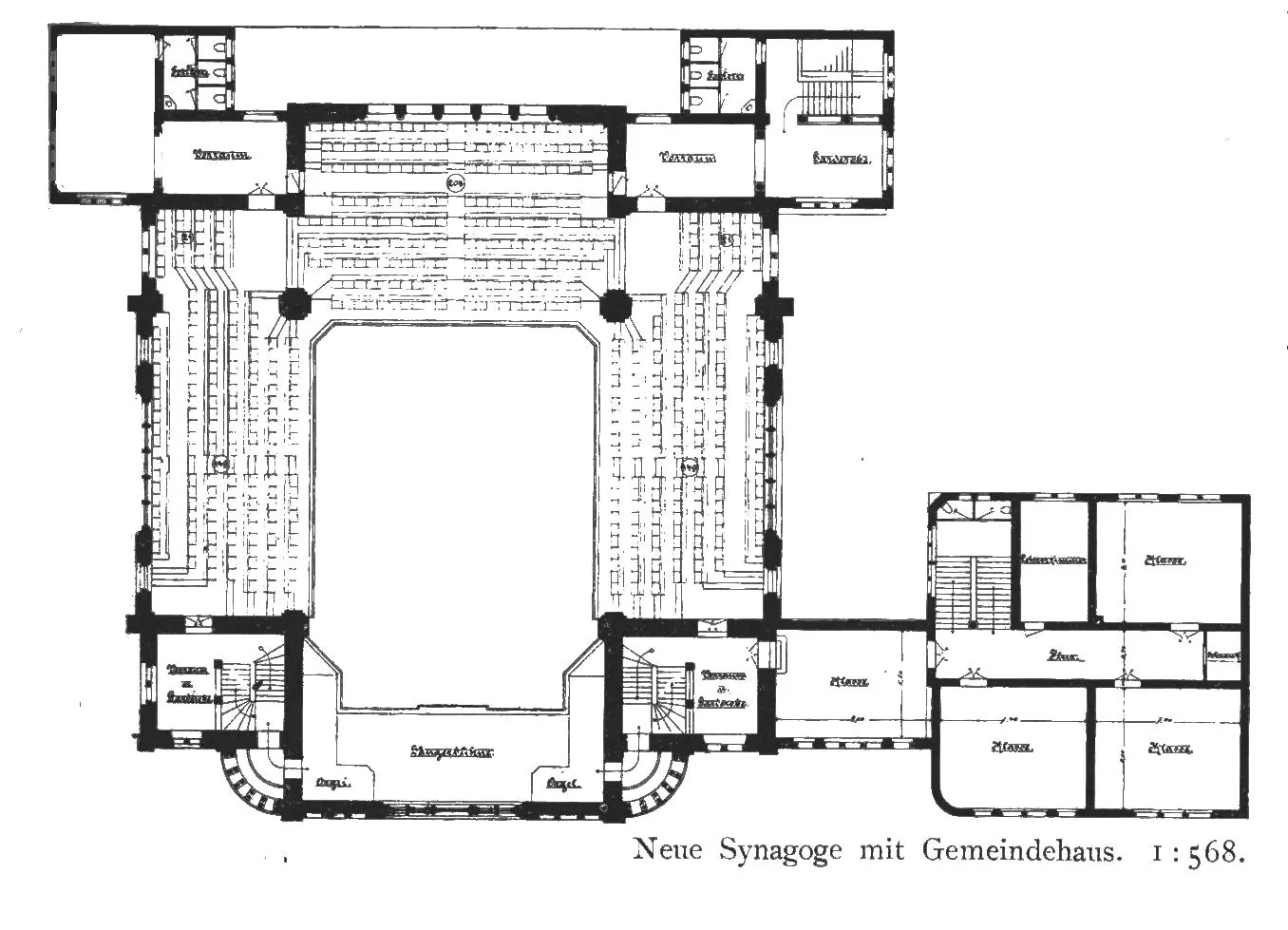
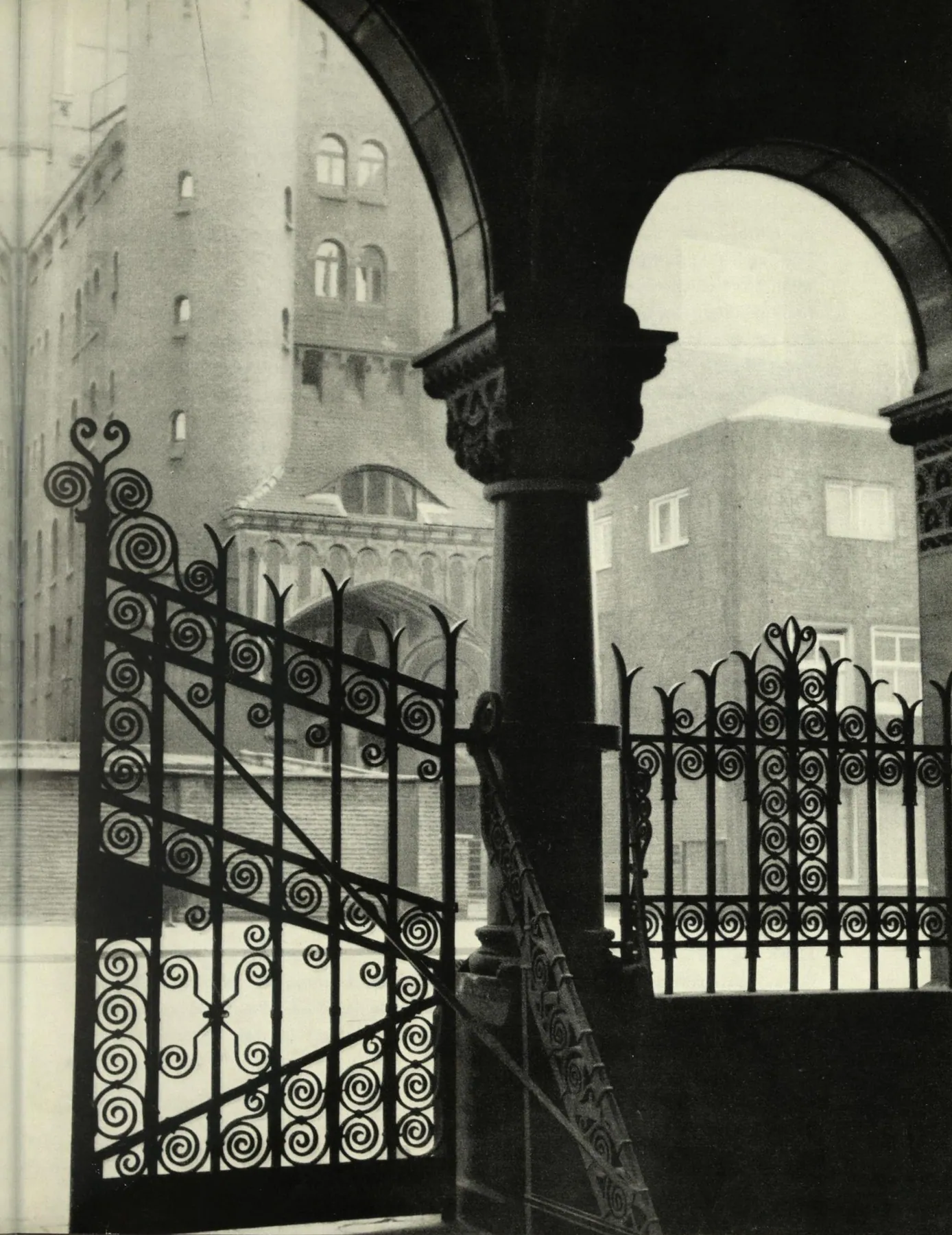
Kleesattel, best known for dozens of Neo-Romanesque Catholic churches in the Rhineland, gave the synagogue a centralised plan. A crossing about 15 metres wide was surrounded on three sides by women's galleries and on the fourth by a singers' gallery with the organ. The central space was crowned by a dome, flanked by corner towers with steep pyramidal roofs. The façades were clad in light Vosges sandstone over a base of Niedermendig basalt, with columns of Labrador granite; the dome and towers were roofed in copper and the rest in slate. Gabled fronts carried large rose windows and rows of round-arched windows, and an arcaded porch with wrought-iron gates led in from the street. Ancillary rooms included a vestibule and cloakrooms, and the complex connected to a rabbi's house and community rooms. Seating accommodated about 800 men and 500 women. A First World War memorial figure for fallen community members was later mounted on the south wall.
Жизнь в синагоге
The Great Synagogue was the house of worship of Düsseldorf's liberal Jewish community. Services were accompanied by an organ, a feature that led the city's Orthodox Jews to reject the building and maintain their own congregation on Poststraße. Its pulpit was held by two of the most important German rabbis of the period. Leo Baeck, later the leading figure of German Jewry under Nazi rule, served in Düsseldorf from 1907 to 1912 before moving to Berlin. He was succeeded by Max Eschelbacher, who led the congregation from 1912 through the Nazi period until his emigration in 1939. The adjoining rabbi's house and community building supported the congregation's administrative and educational work, and a Jewish public school operated nearby on Kasernenstraße. After the First World War, the community placed a memorial figure for its fallen soldiers on the synagogue's south wall, reflecting the patriotism of many members. Detailed records of the cantors, choir and weekly religious programme have not been verified.
Разрушение
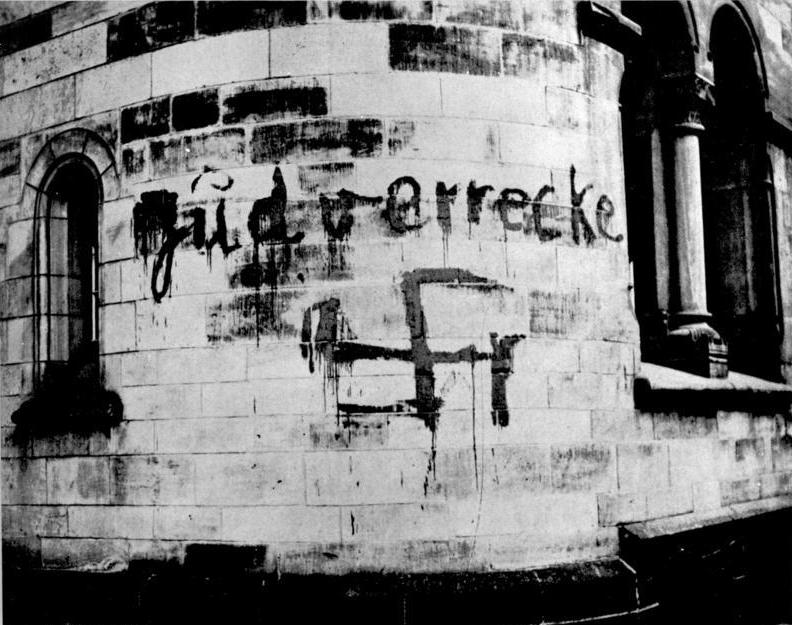
The synagogue was a target of antisemitic attack well before 1938: on 11 August 1929 its wall was daubed with the slogan 'Jud verrecke' and a swastika, an incident photographed at the time. During the nationwide November Pogrom, on the night of 9–10 November 1938, SA men forced their way into the synagogue, smashed its interior and set the building on fire. The adjoining community house on Kasernenstraße was also set alight and the neighbouring Jewish school was wrecked. Across Düsseldorf, homes and businesses were systematically destroyed, at least three people died immediately and more died of injuries or suicide in the following days; 166 men and youths and 20 women were arrested and 89 men sent to Dachau. Rabbi Max Eschelbacher was arrested and later wrote a detailed report of the events. Demolition of the burned ruin began on 29 November 1938. According to later reporting, a parking lot was then laid out on the site on the orders of Joseph Goebbels.
Судьба общины
Emigration reduced the community after 1933, and after the pogrom Rabbi Eschelbacher left for England at the end of January 1939. Mass deportations from Düsseldorf-Derendorf station began in October 1941, when 1,003 Jews were sent to the Łódź (Litzmannstadt) ghetto. About 1,000 were deported to Minsk on 10 November 1941 and about 1,000 to Riga on 11 December 1941, followed by transports to the Lublin district and to Theresienstadt from 1942 to 1944. At least seven major transports left the city. More than 2,300 Jews from Düsseldorf perished in ghettos and camps; the regional database gives over 2,600 victims when former residents are included. Only 57 survivors refounded a Jewish community in Düsseldorf in 1945, marking the end of the pre-war congregation that had worshipped on Kasernenstraße for more than three decades.
Место сегодня
No fabric of the synagogue survives above ground. After demolition the plot was reportedly used as a parking lot, and after the war it was built over; an office building now occupies the site on Kasernenstraße, housing financial-sector firms. The location is marked by a memorial stone installed in 1946 and supplemented in 1983 with a relief showing the former synagogue. Since 2023 a public art installation using an image of the synagogue has also marked the site, made permanent in October 2024. Commemorations of the November Pogrom are held at the site.
Значимые имена
Josef Kleesattel
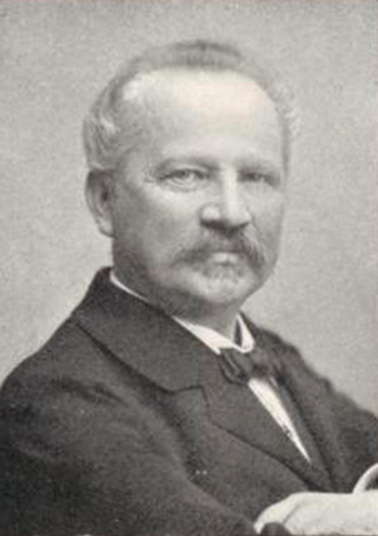
1 March 1852 – 29 March 1926ArchitectCologne-born architect based in Düsseldorf who designed the executed plans for the Great Synagogue, built in 1903–1904. Known chiefly for about forty Neo-Romanesque Catholic churches in the Rhineland, he applied the same Romanesque vocabulary to the synagogue's domed central plan, towers and stone façades.
Биография или источник →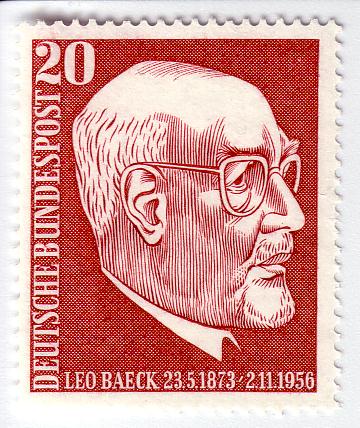
Leo Baeck
23 May 1873 – 2 November 1956Rabbi (1907–1912)Rabbi of the Düsseldorf community from 1907 to 1912, serving in the newly dedicated Great Synagogue before moving to Berlin. He later became the foremost leader of German Jewry under Nazi rule as president of the Reichsvertretung, survived Theresienstadt and died in London; his Düsseldorf years were an early stage of that career.
Биография или источник →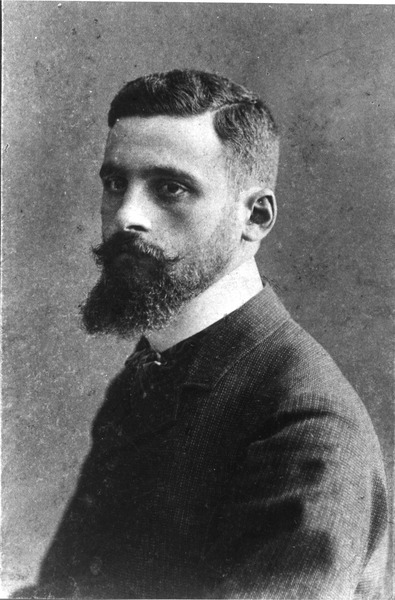
Max Eschelbacher
14 January 1880 – 20 April 1964Rabbi (1912–1939)Succeeded Leo Baeck as rabbi of Düsseldorf in 1912 and led the congregation of the Great Synagogue for more than 25 years, through the Nazi period. He was arrested during the November Pogrom of 1938, wrote a detailed report of the events, and emigrated to England at the end of January 1939.
Биография или источник →Вам есть чем поделиться?
Фотографии, документы, семейные истории и воспоминания об этой синагоге и её общине помогают сохранить её историю.
Share a memory or thought
No comments yet. Be the first to add one.