

La storia di Synagogue of Dvůr Králové nad Labem
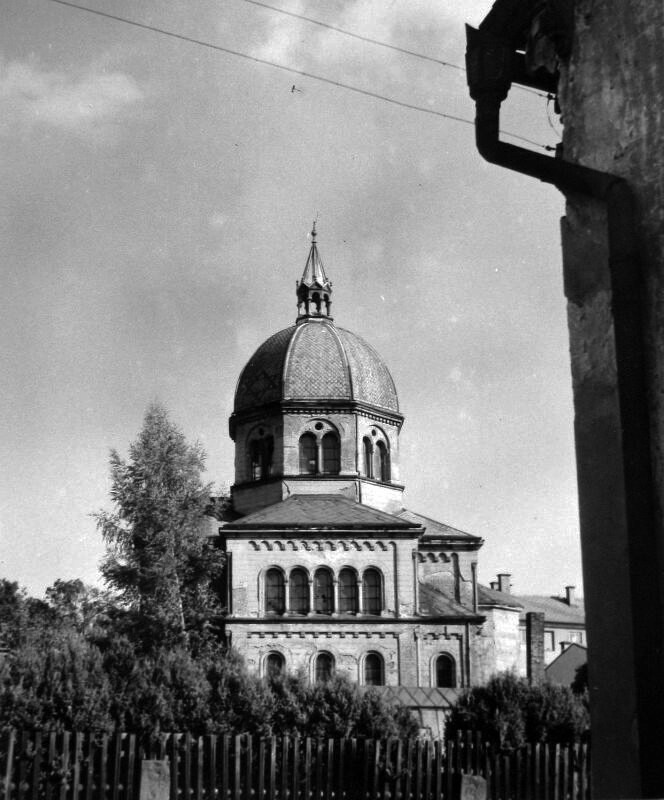
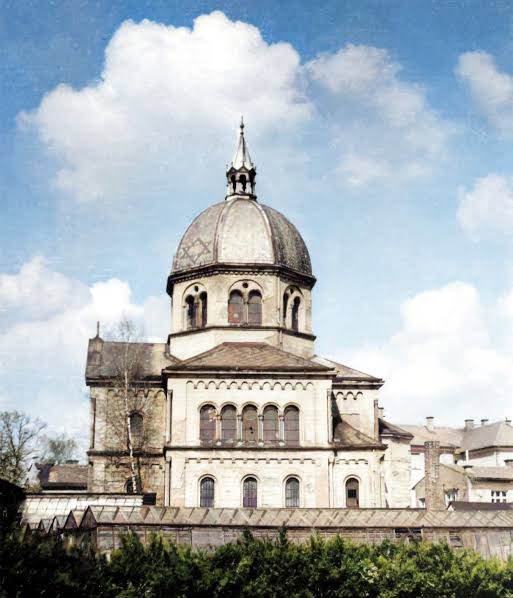
The synagogue of Dvůr Králové nad Labem, a town on the upper Elbe in north-eastern Bohemia, was built by the local Jewish religious community in 1890 and consecrated in 1891. Jewish families had begun settling in the town around 1850, many coming from nearby Velká Bukovina, and by the end of the century the community was large enough to commission a dedicated house of worship. The Prague architect Stanislav Franzen designed a Romanesque Revival building on a Greek-cross plan, crowned by a domed central tower that became one of the town's prominent landmarks. Among the rabbis who served the congregation was Gustav Sicher, from 1924 to 1928, later Chief Rabbi of Prague. The community declined in the interwar years, and after the German occupation the acting Reich Protector Reinhard Heydrich ordered all public Jewish buildings closed in 1941. Few of the town's Jews survived the Holocaust. The building itself came through the war, but in August 1965 it was compulsorily transferred to the Municipal National Committee, the communist-era town authority. Despite protests from residents, the committee demolished it between October 1965 and 28 January 1966 to make way for a new road. A small park near the crossroads now marks the location.
Where it stood for nearly 60 years
Historic: synagogue site in central Dvůr Králové nad Labem (historic street address unknown). Present: small park at the crossroads of 17. listopadu and Rooseveltova, beside the municipal police station and town baths. Location approximate; part of the footprint lies under the road.
Apri la mappa grande →La comunità ebraica
Jews were permitted to settle in Dvůr Králové after 1848, and several Jewish families arrived around 1850 from Velká Bukovina near Chvalkovice. An organised Jewish community is documented in the town by 1862. The community grew over the following decades, reaching its largest size around 1910, when 332 Jews lived in the town. The community established its own cemetery between 1883 and 1885, described as serving a Conservative or Progressive congregation. By 1890 the Jewish religious community had enough members and resources to build a representative synagogue, and it commissioned the Prague architect Stanislav Franzen. It then declined: by 1930 only 182 Jews remained. After the Munich Agreement of 1938 the town stayed within the rump Czech lands and from March 1939 formed part of the Protectorate of Bohemia and Moravia, close to the new border.
Architettura e design
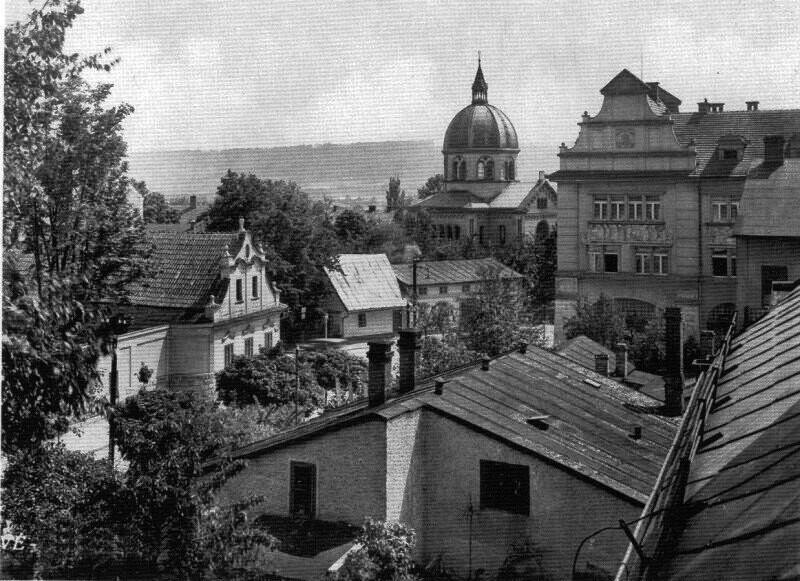
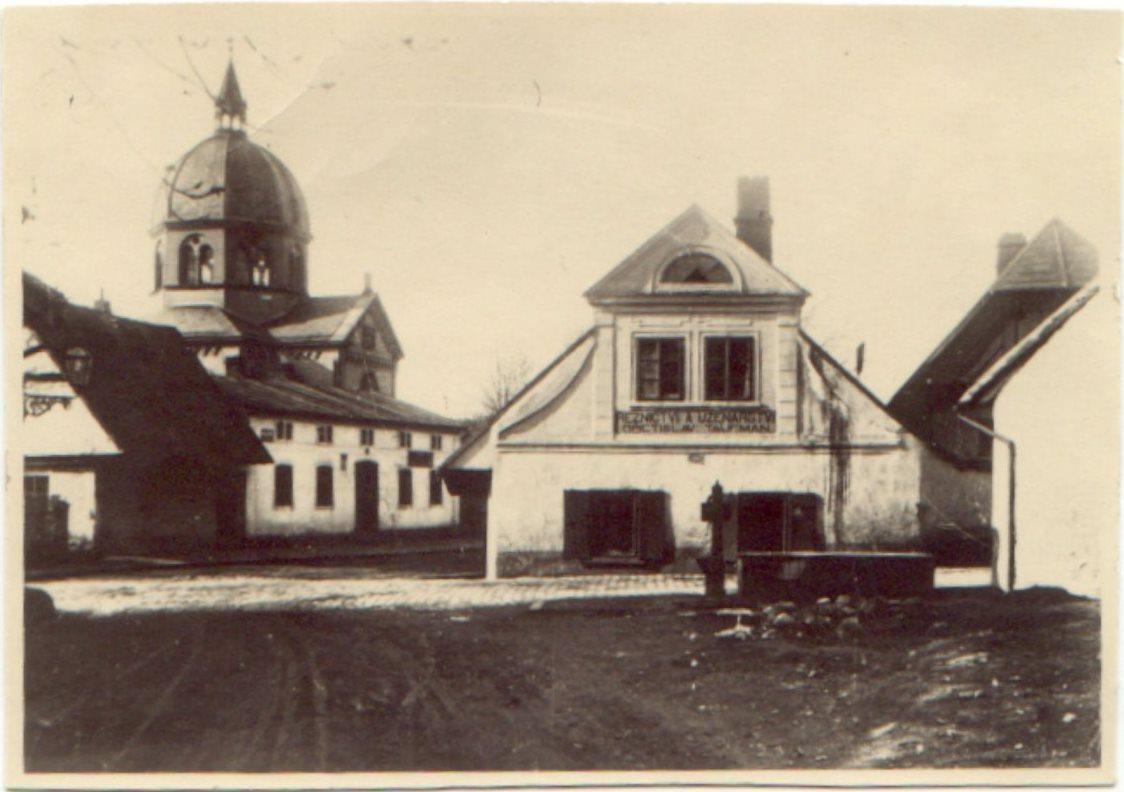
Franzen designed the synagogue in the Romanesque Revival style popular for Bohemian synagogues of the late nineteenth century, on a centralised Greek-cross plan with four arms of roughly equal length. A photograph taken about 1899 shows the building rising above the neighbouring houses: a tall central tower with an octagonal drum pierced by round-arched windows, crowned by a ribbed dome and a small lantern with a spire, and a lower gabled wing with a small gable window. Its domed silhouette made the synagogue one of the most recognisable features of the town's skyline. The building stood at what is now the crossroads of 17. listopadu and Rooseveltova streets. No detailed description of the interior, the seating arrangement or the Torah ark has been found in the sources consulted, and its capacity is not documented. Plans and construction costs likewise remain unverified.
La vita nella sinagoga
The synagogue served the small Jewish community of Dvůr Králové for half a century, from its consecration in 1891 until 1941. The community's cemetery, founded in the 1880s, is described as belonging to a Conservative or Progressive congregation, but the rite followed in the synagogue itself has not been verified from the sources consulted. The most notable religious leader associated with the building is Gustav Sicher, who served as rabbi in Dvůr Králové from 1924 to 1928 before moving to Prague, where he later became Chief Rabbi. The congregation's size, 332 members in 1910 and 182 in 1930, meant that it had a modest communal life compared with the larger Jewish centres of Bohemia. Religious use of the building ended in 1941, when Reinhard Heydrich, as acting Reich Protector, ordered all public Jewish buildings in the Protectorate closed. Records of cantors, teachers, associations and specific events held in the synagogue have not been found.
Distruzione
The synagogue survived the Second World War without being destroyed, although it was closed in 1941 on the order of acting Reich Protector Reinhard Heydrich and afterwards stood unused. After the war, with almost no Jewish residents left in the town, the building needed repair. In August 1965 it was compulsorily handed over to the Municipal National Committee (Městský národní výbor), the town's communist-era governing body. Despite protests from citizens, the committee began demolishing the synagogue in October 1965 and completed the work on 28 January 1966. The stated reason was the construction of a new road through the site, described in one source as a four-lane highway. A local history account records that the demolition cost about 146,000 Czechoslovak crowns, almost the same as the estimated cost of repairing the building, about 150,000 crowns. The names of the officials who took the decision have not been verified.
Il destino della comunità
By 1930 the Jewish population of Dvůr Králové had fallen to 182. Under the German occupation from March 1939, the town's Jews were subject to the anti-Jewish measures of the Protectorate, and their public institutions were closed in 1941. Sources state that the Jewish residents were deported and murdered during the Holocaust and that by the end of the war no Jews remained in the town. The details of their deportation, including assembly points, transport dates and numbers, have not been verified from the sources consulted. One family, that of Eva Nosková, escaped to England at the beginning of the war and returned in 1945; she is recorded as the town's only remaining Jewish resident. The Jewish cemetery was devastated between 1945 and 1947, and the Jewish community liquidated it in 1959, removing the gravestones, columbarium and walls. The synagogue was demolished a few years later.
Il luogo oggi
Nothing of the synagogue survives. The building was demolished in 1965–1966 and the new road was built across the site, at the crossroads of 17. listopadu and Rooseveltova streets. A small park beside the municipal police station and the town baths now marks the location. Since February 2008 a Holocaust memorial in the form of a Star of David has stood in this park, commemorating the synagogue and the town's Jewish residents who were deported and murdered.
Nomi importanti
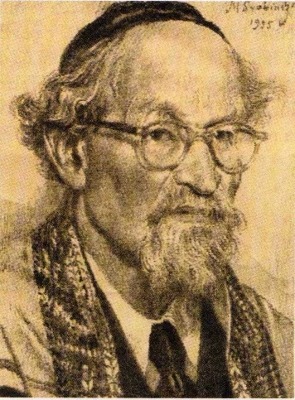
Gustav Sicher
1880 – 1960Rabbi (1924–1928)Served as rabbi of the Jewish community of Dvůr Králové nad Labem from 1924 to 1928, officiating in the town's synagogue before moving to Prague. There he later became Chief Rabbi of Prague. He is the best-documented religious leader known to have served in this synagogue, according to the local historical account of the town's monuments.
Biografia o fonte →Stanislav Franzen
Dates unknownArchitectPrague architect who designed the synagogue of Dvůr Králové nad Labem, built in 1890 and consecrated in 1891. According to the town's own publication and local historical accounts, his design was a Romanesque Revival building on a Greek-cross plan, whose domed tower became one of the town's landmarks until its demolition in 1965–1966.
Biografia o fonte →Hai qualcosa da condividere?
Fotografie, documenti, storie di famiglia o ricordi di questa sinagoga e della sua comunità aiutano a mantenerne viva la storia.
Share a memory or thought
No comments yet. Be the first to add one.