
הסיפור של Great Synagogue of Eger
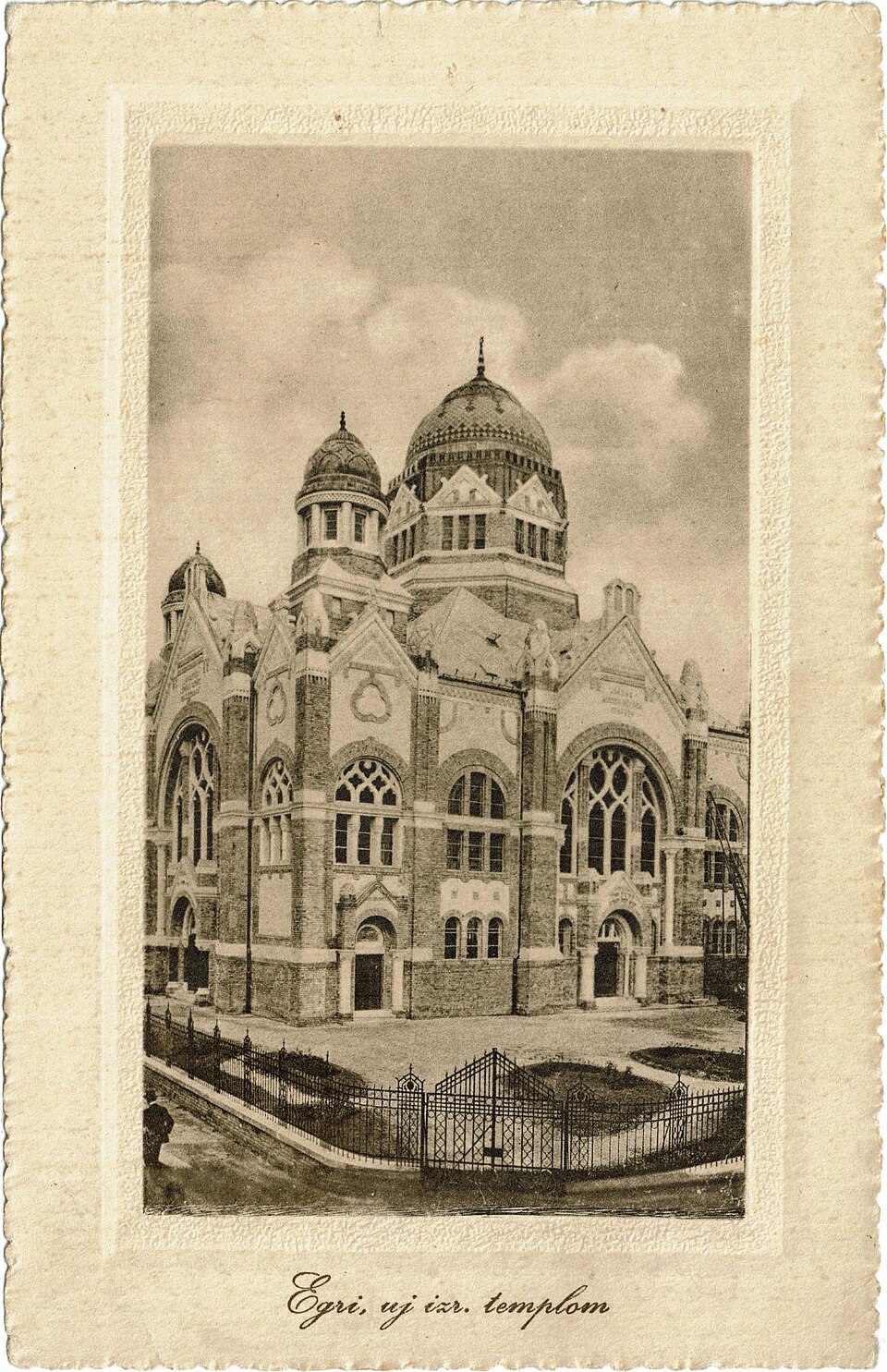
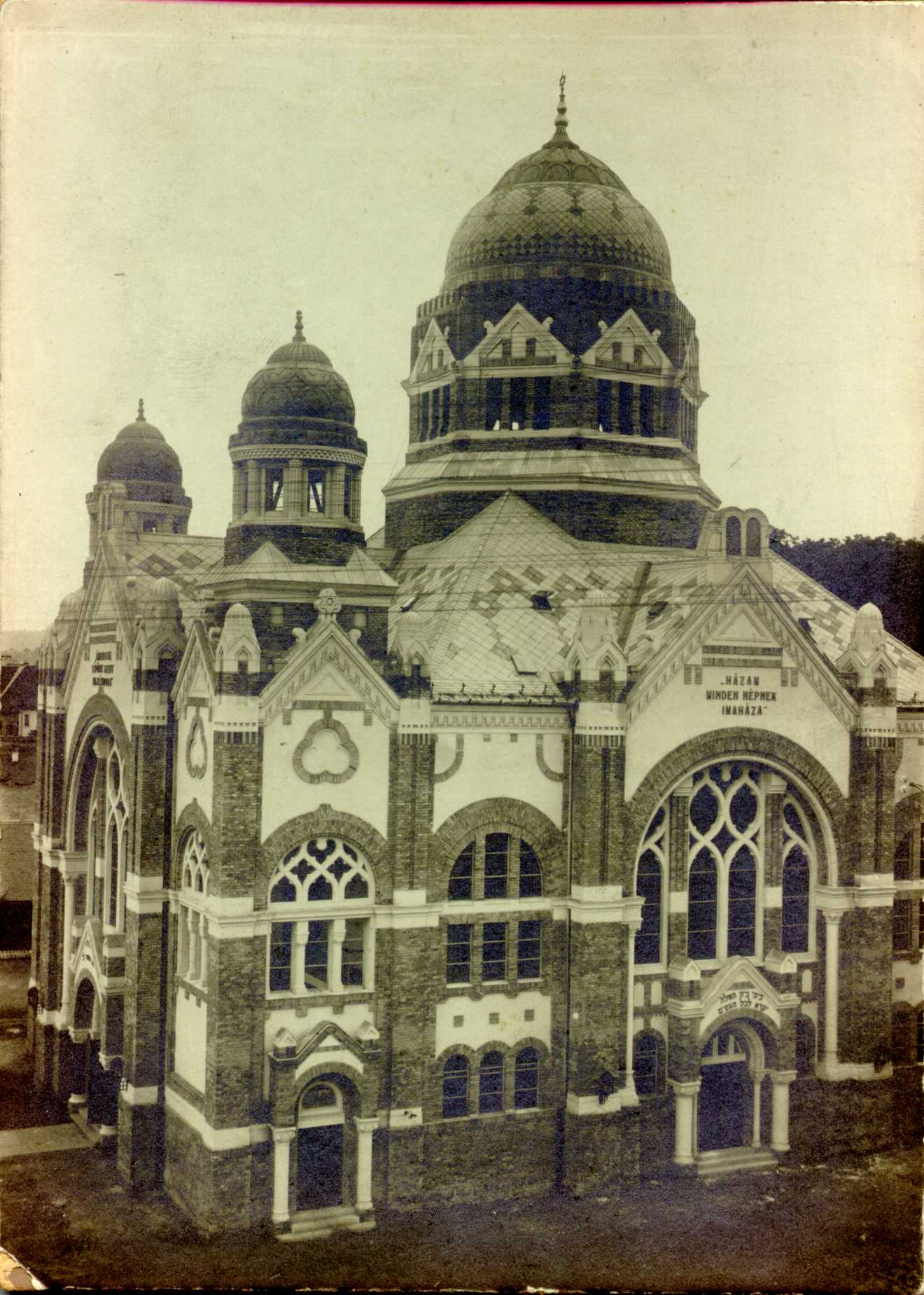
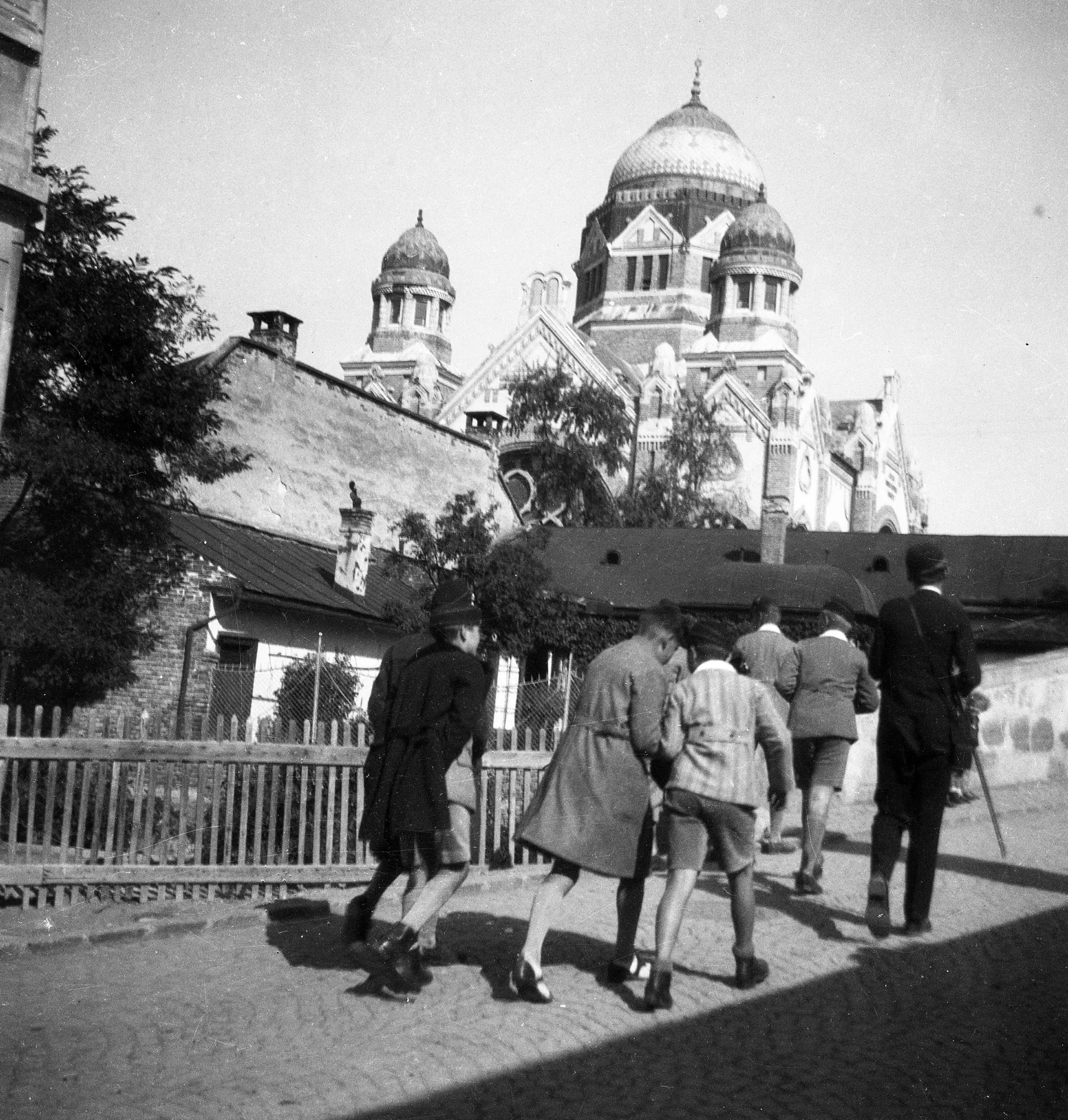
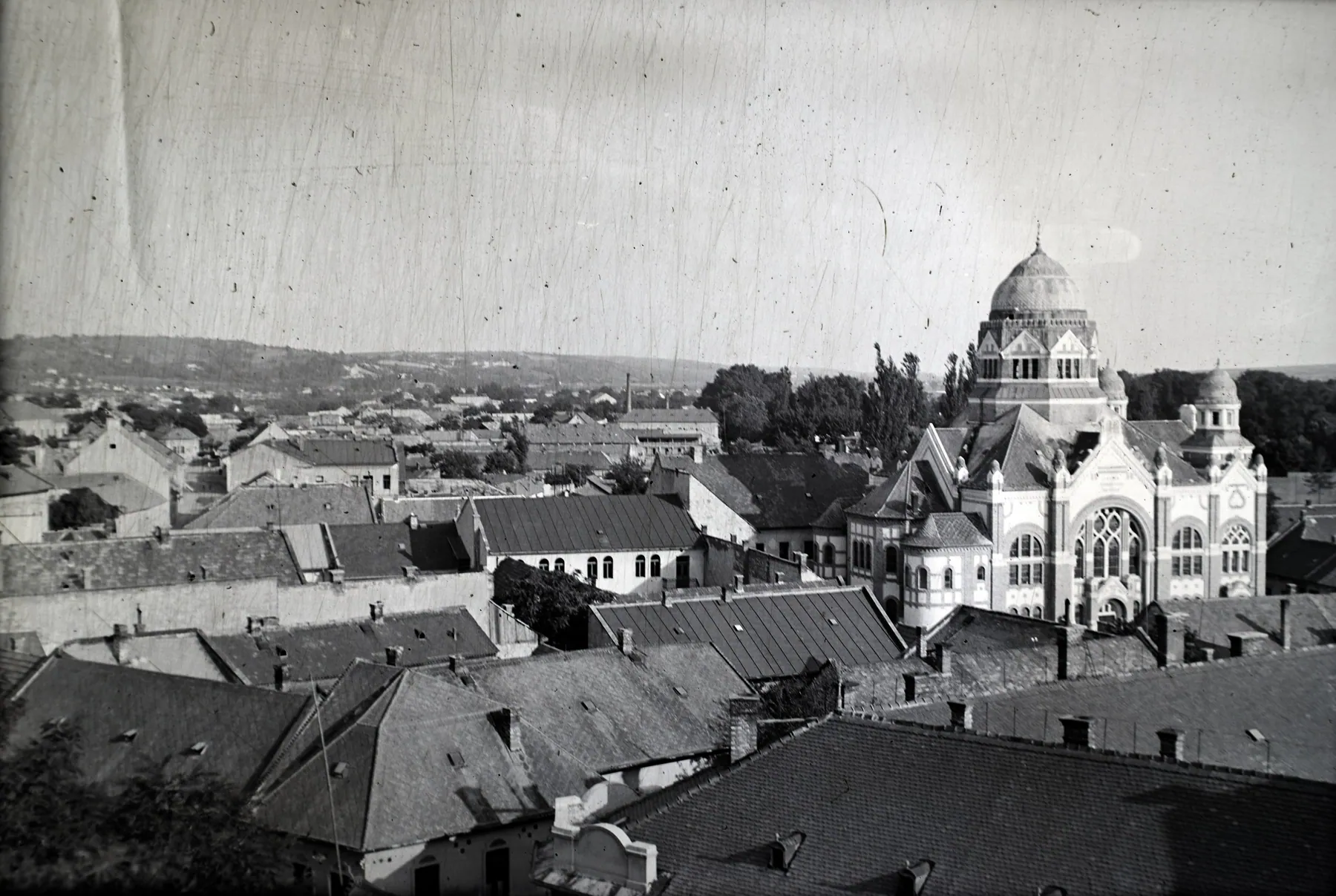
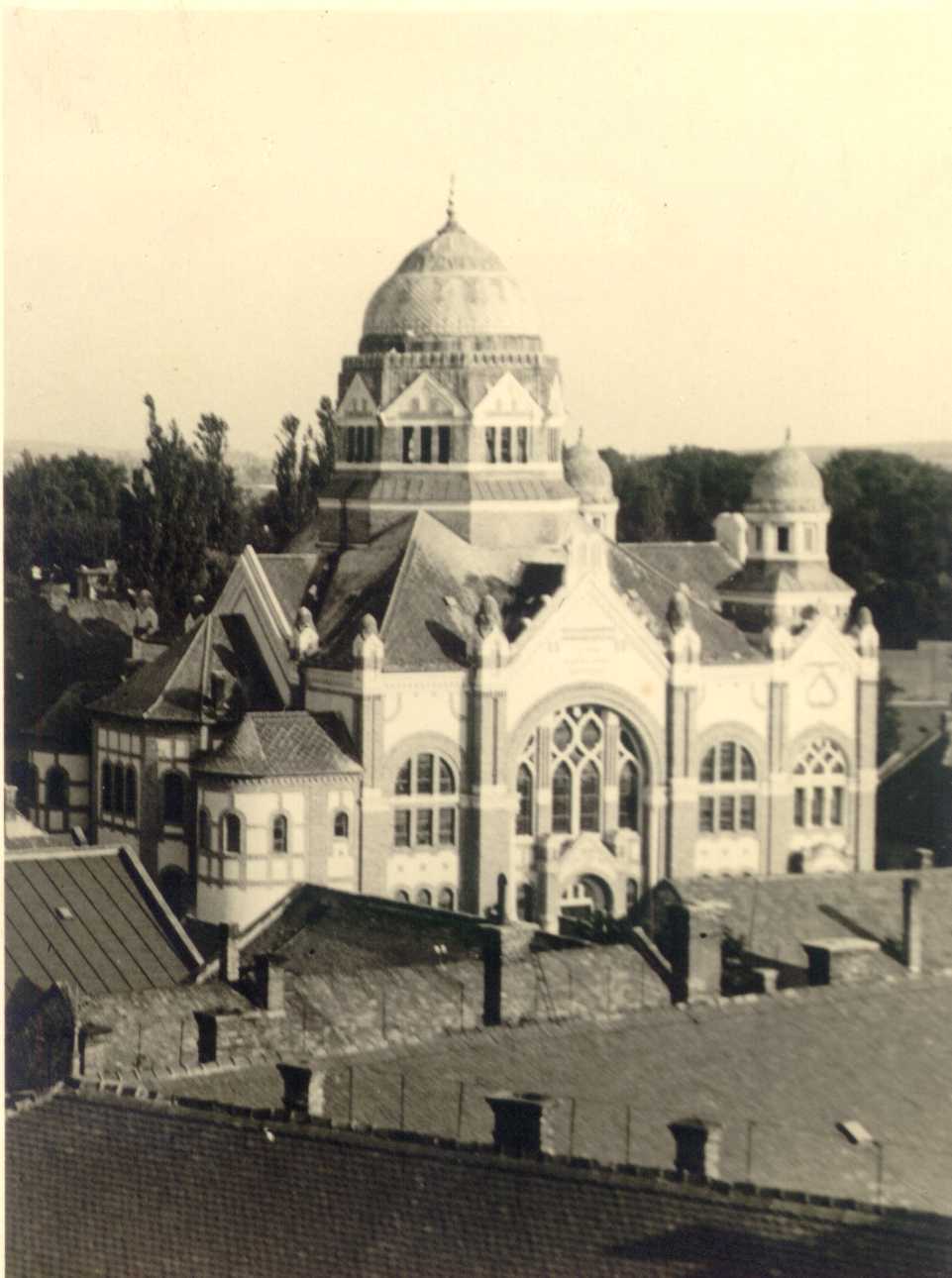
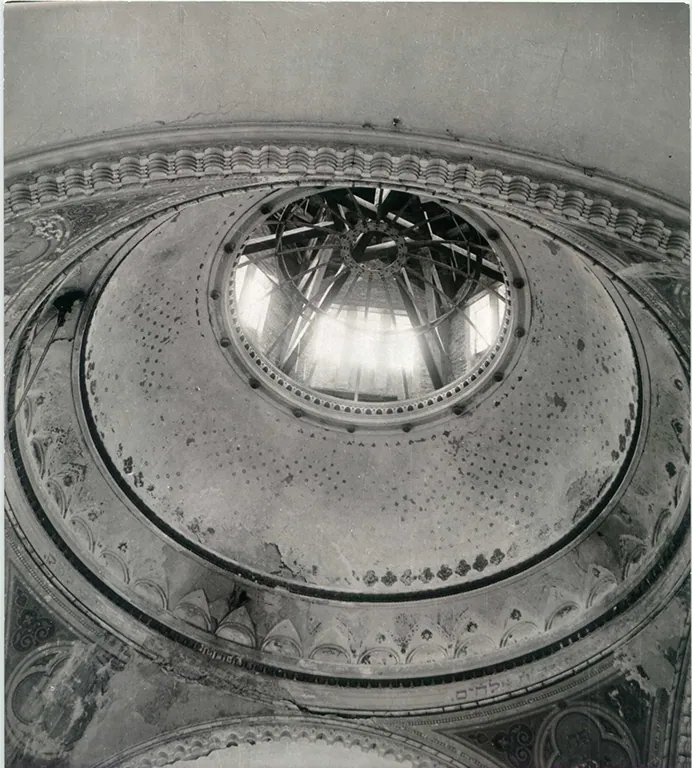
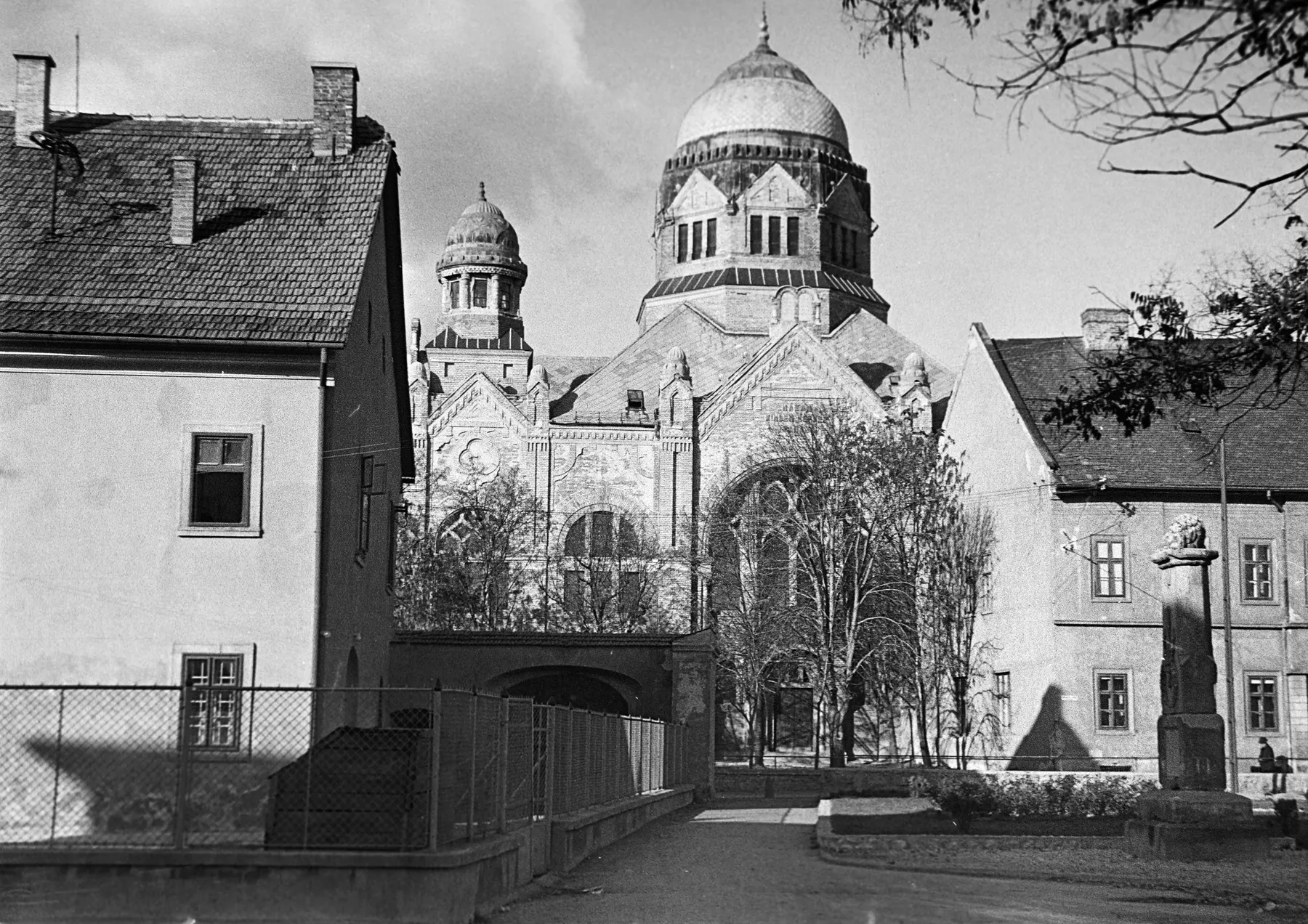
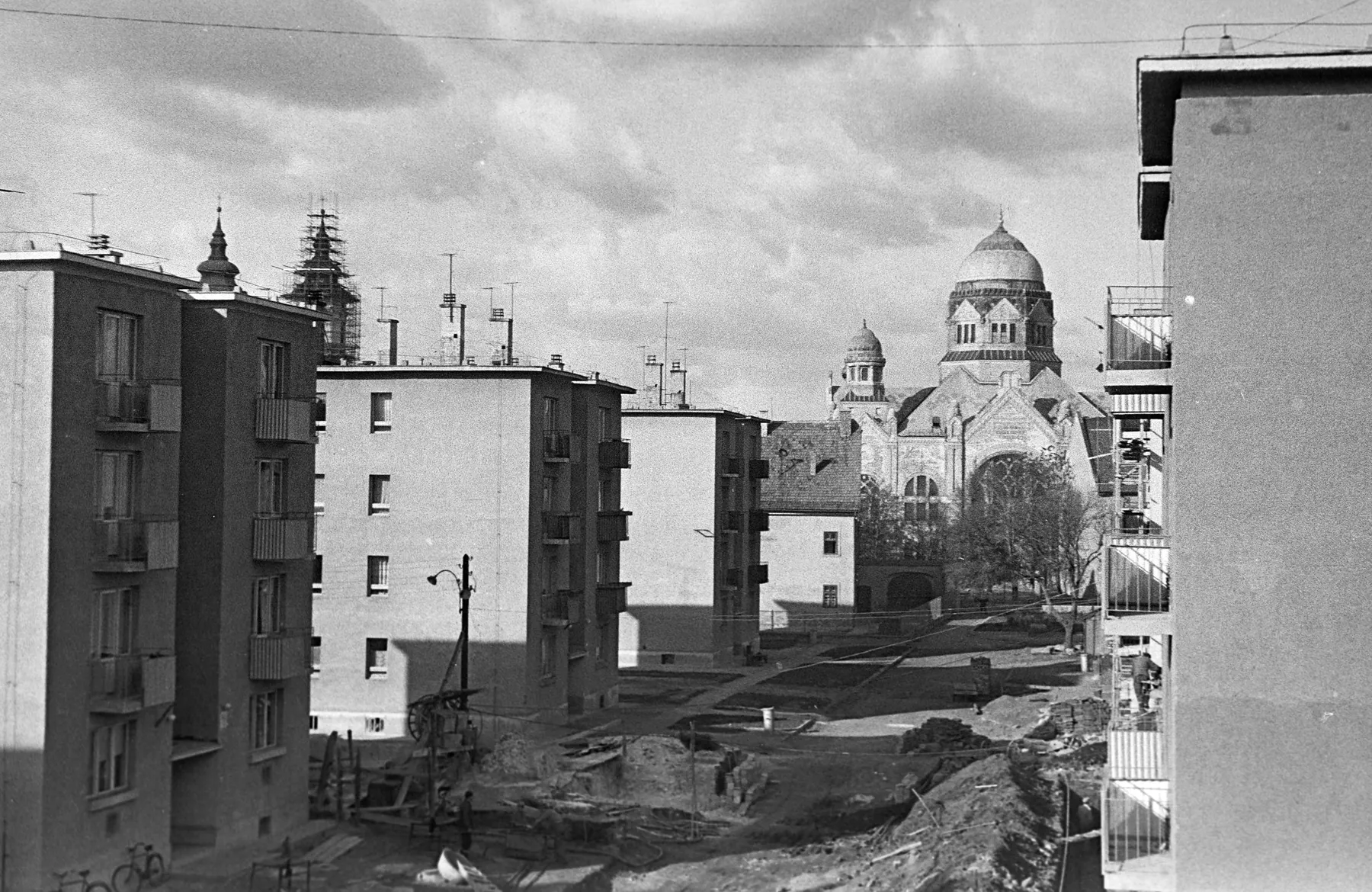
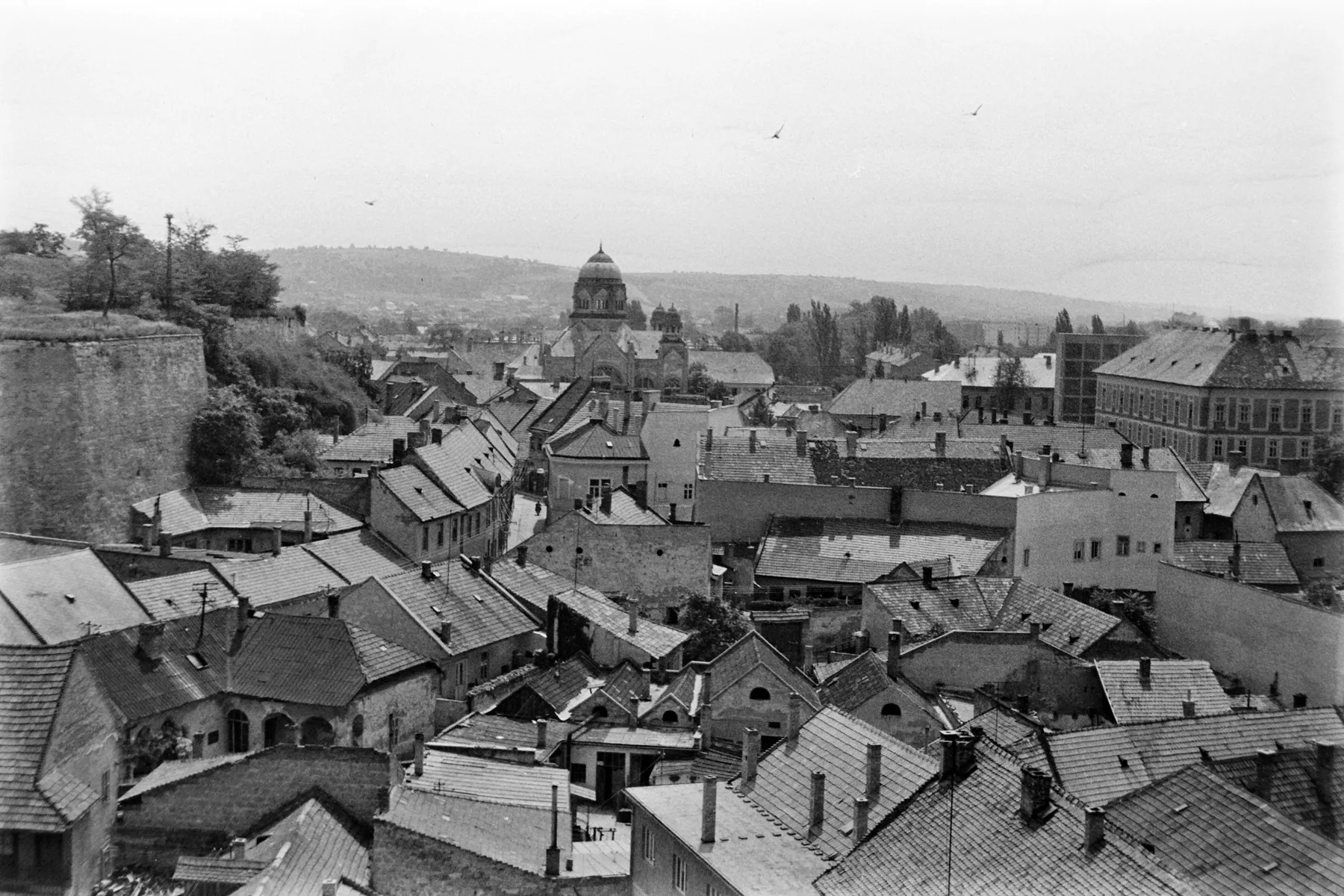
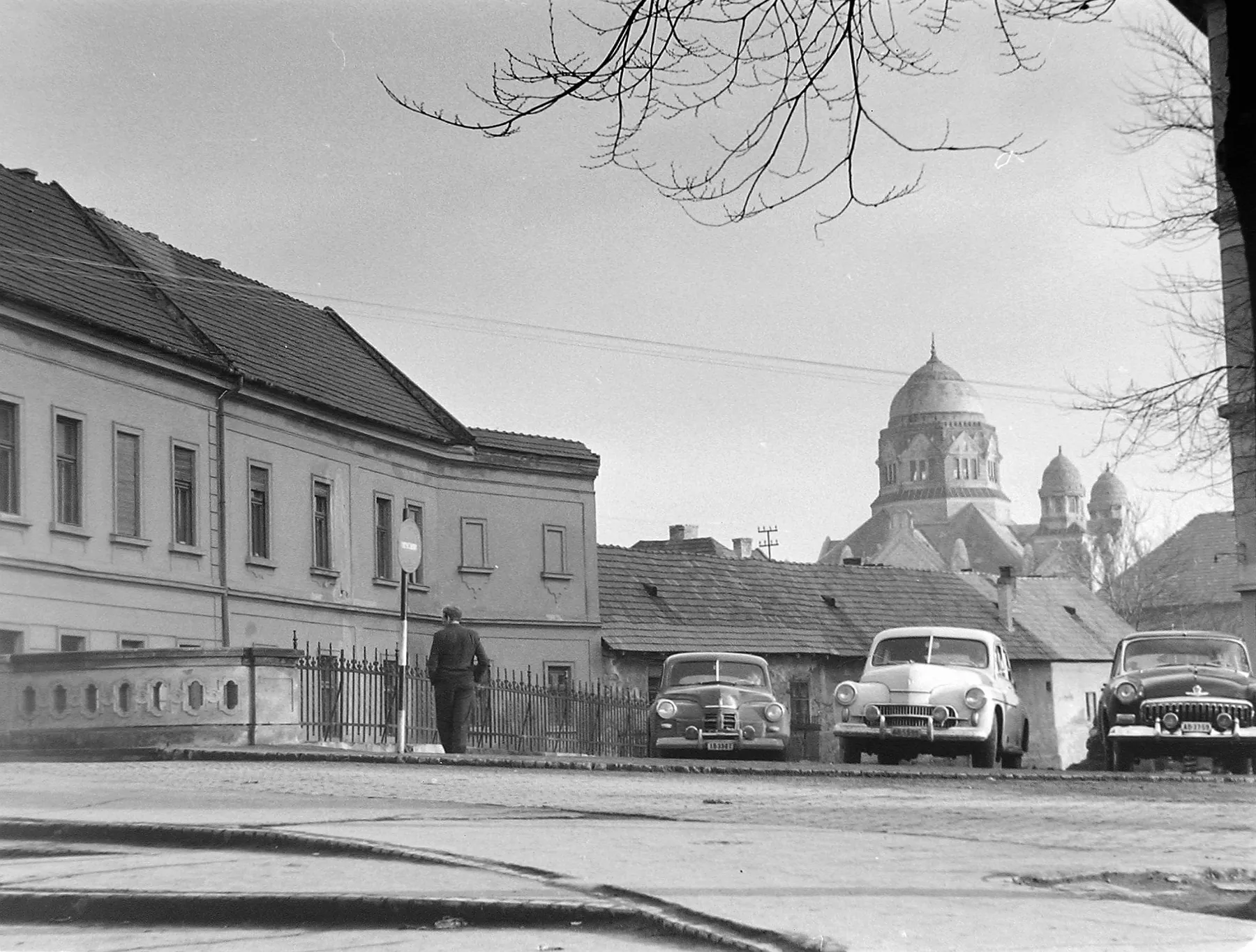
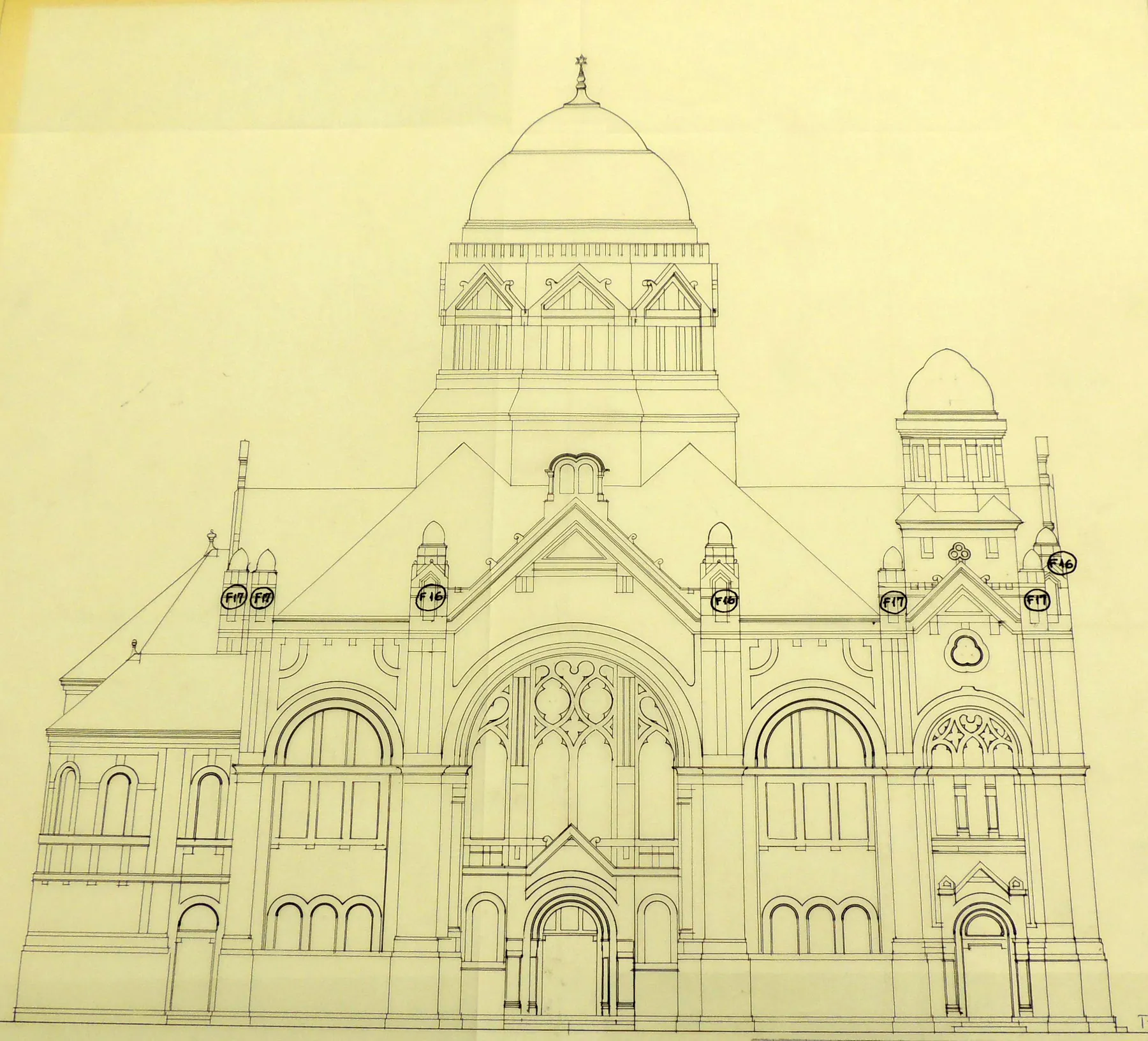
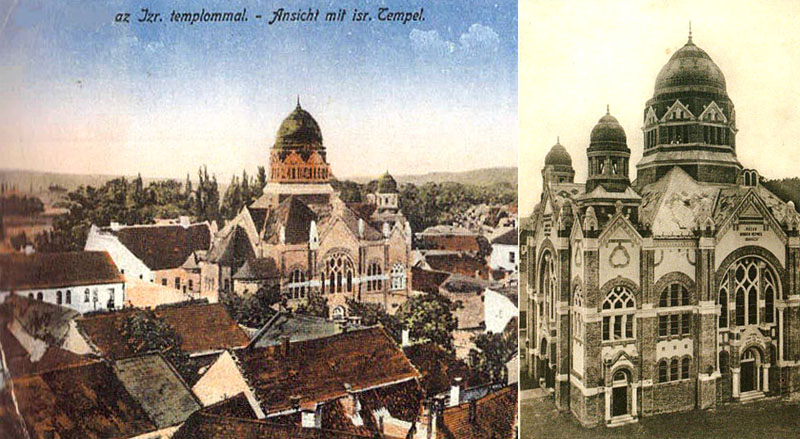
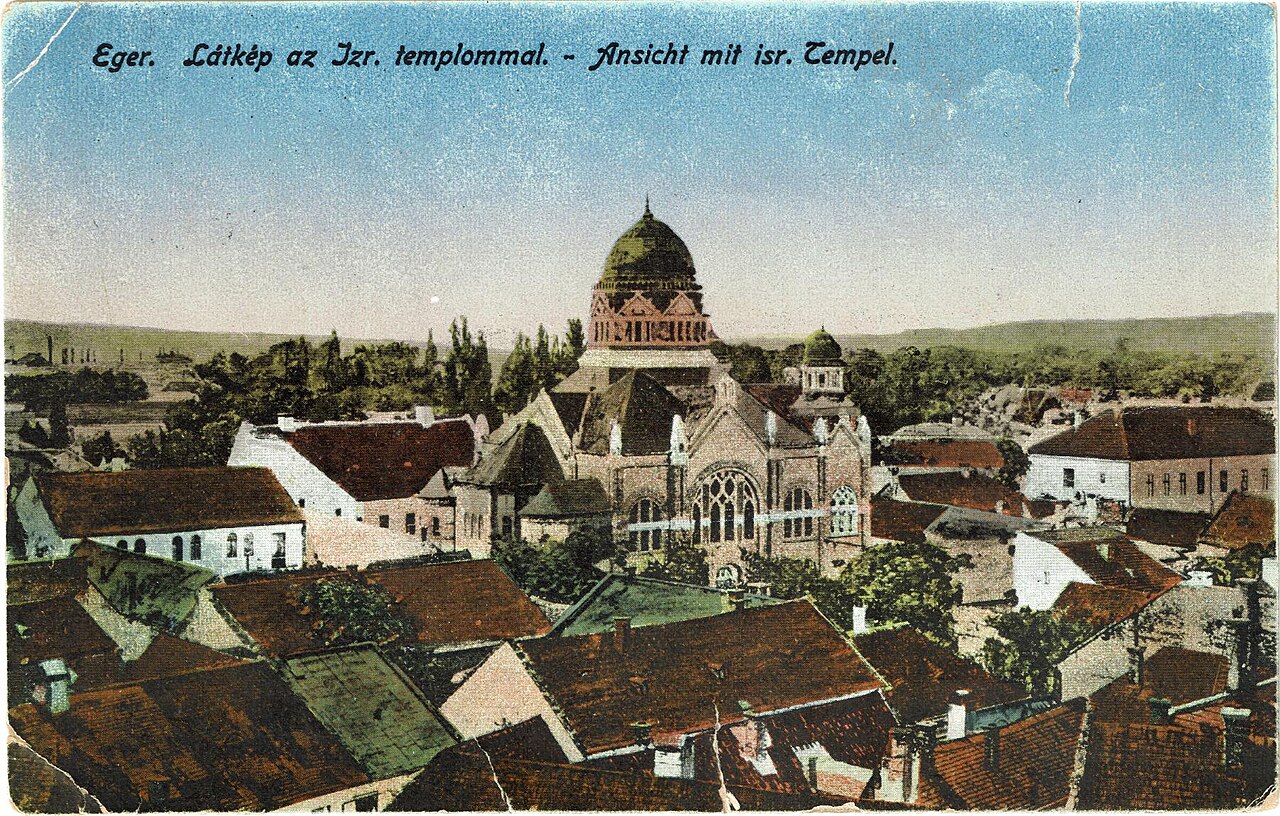
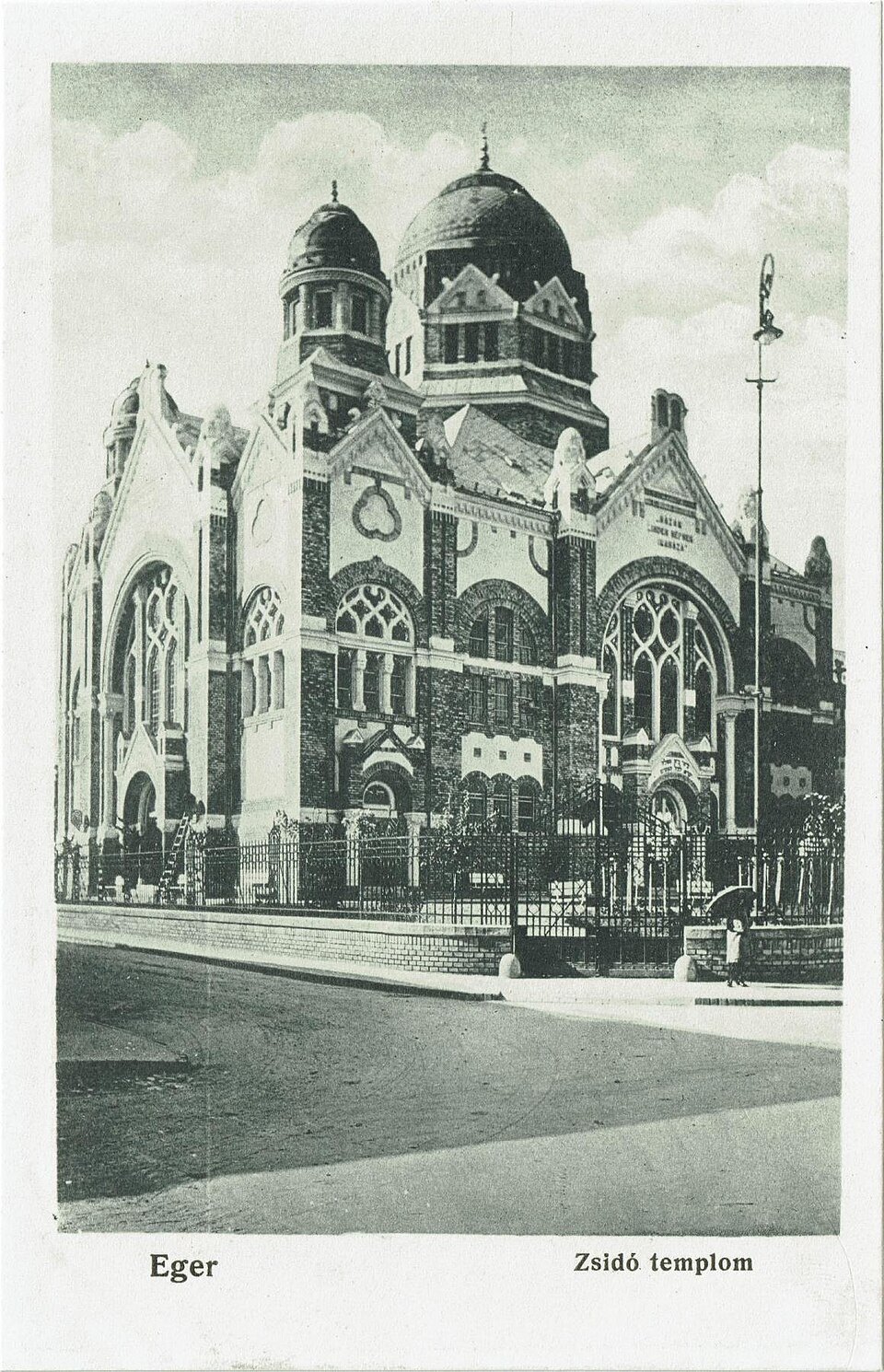
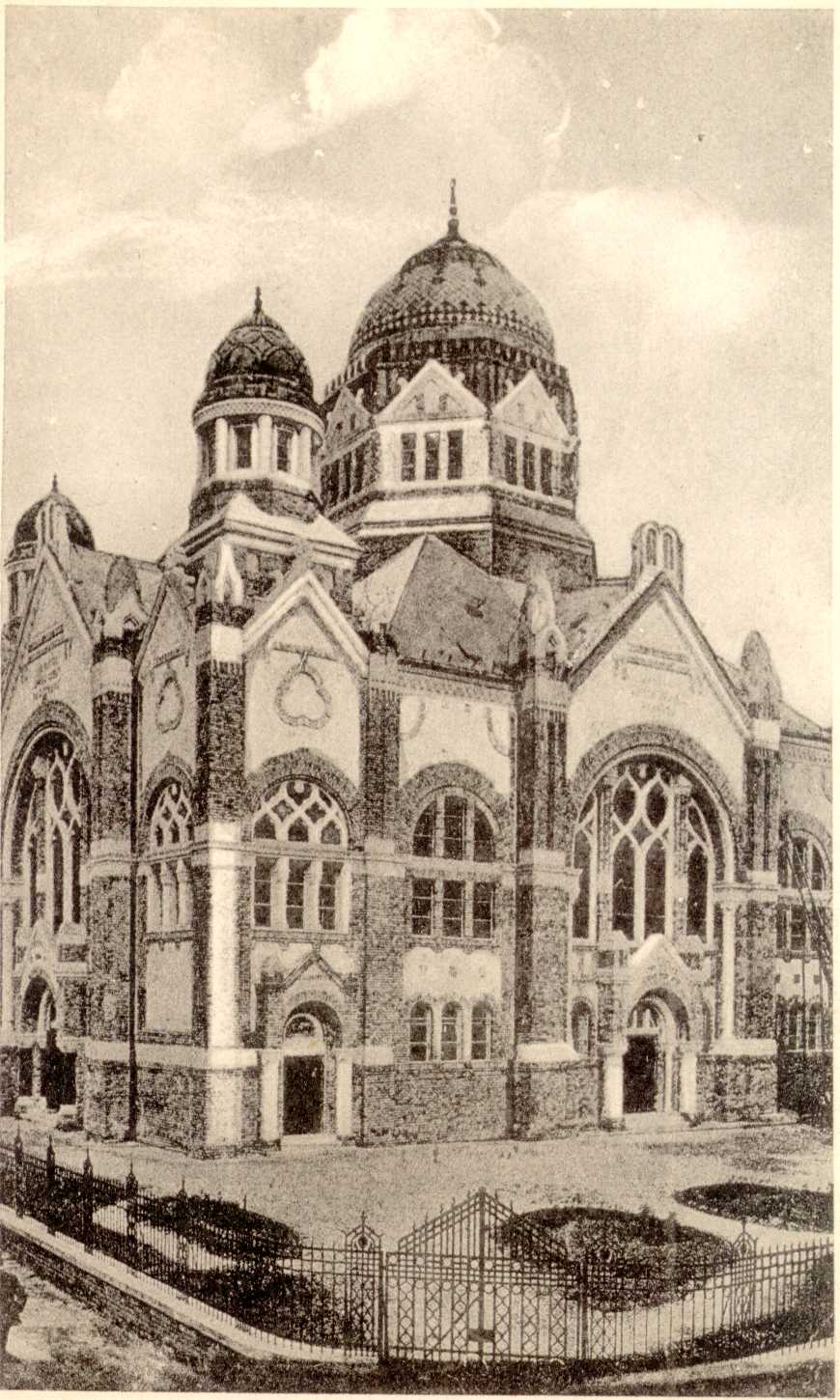
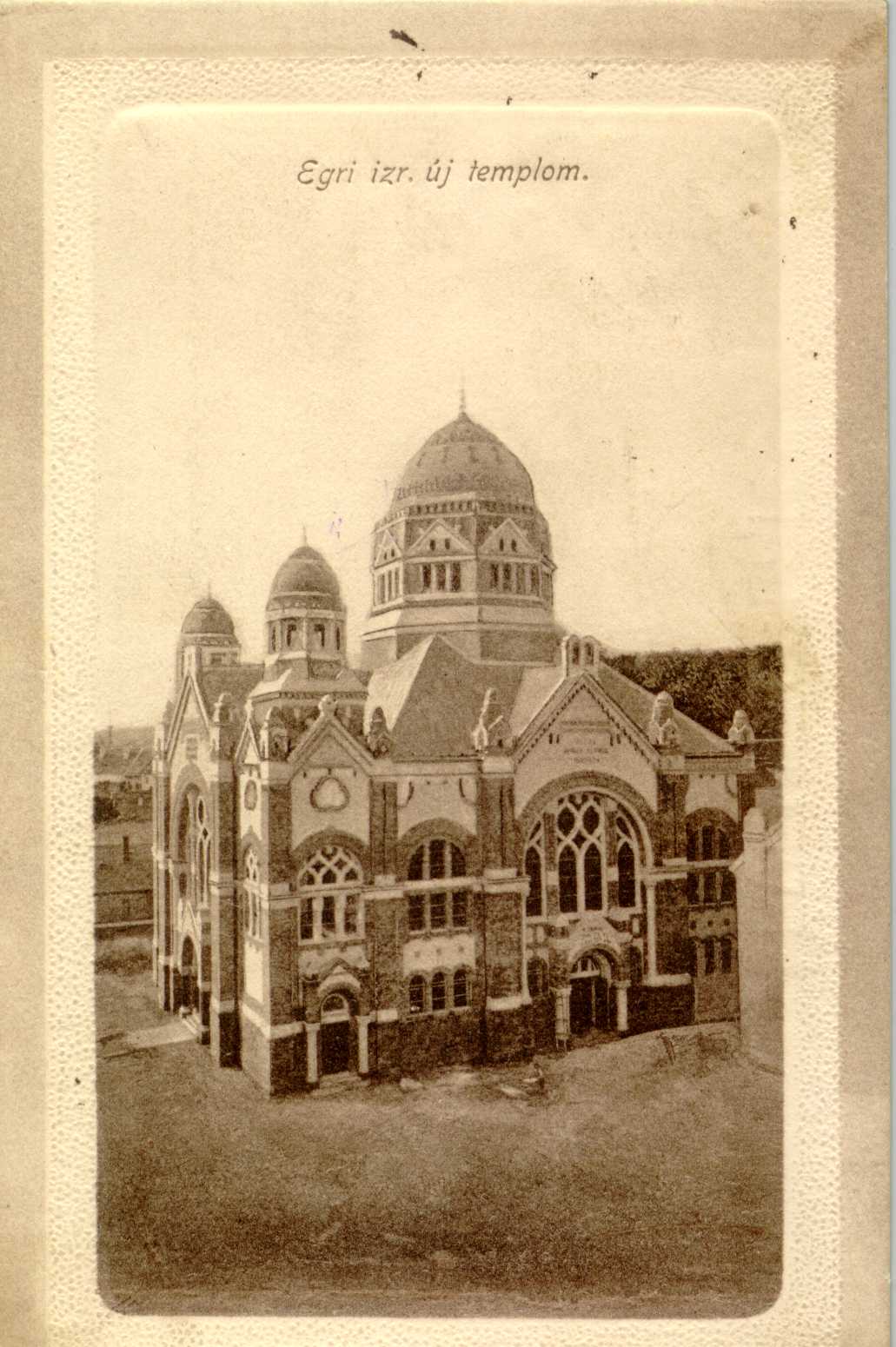
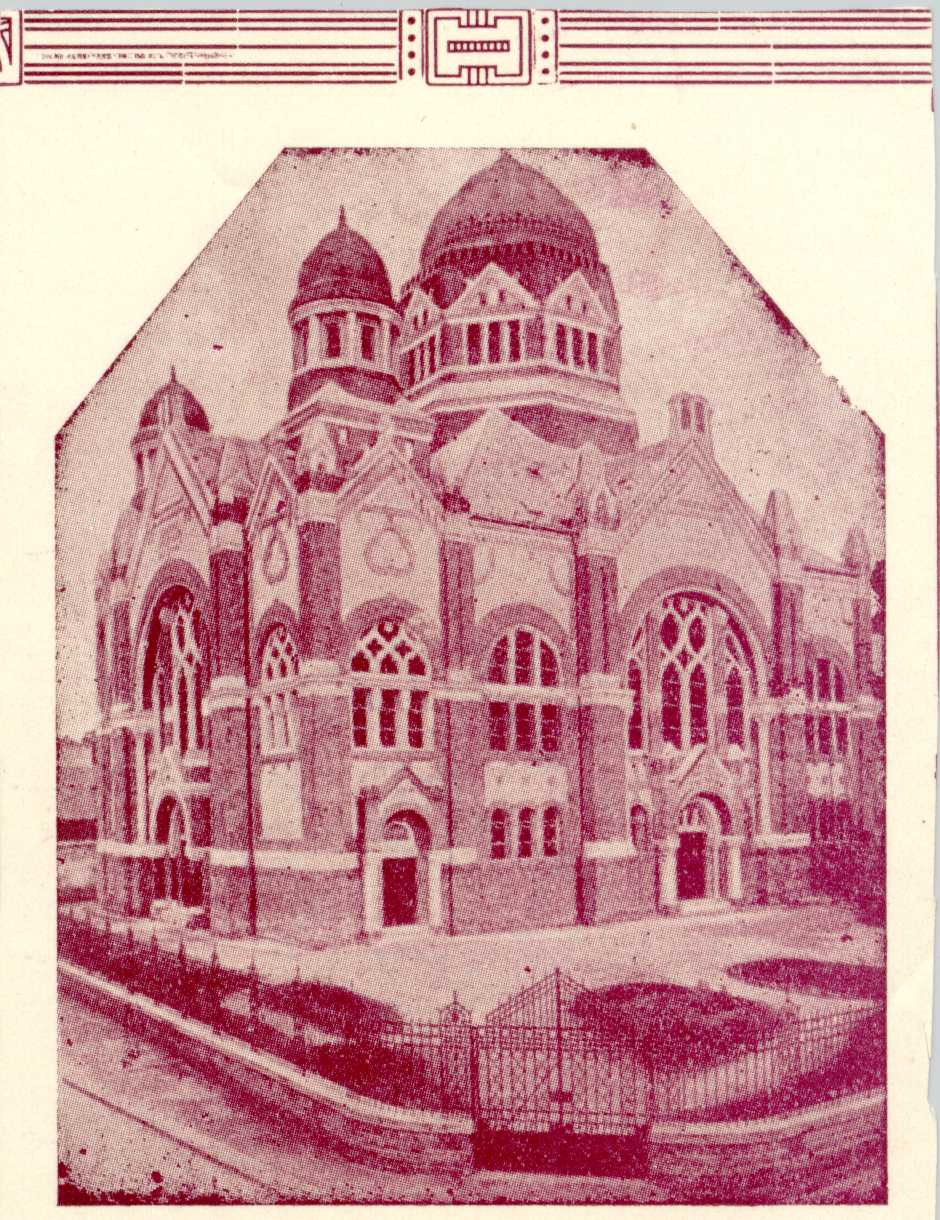
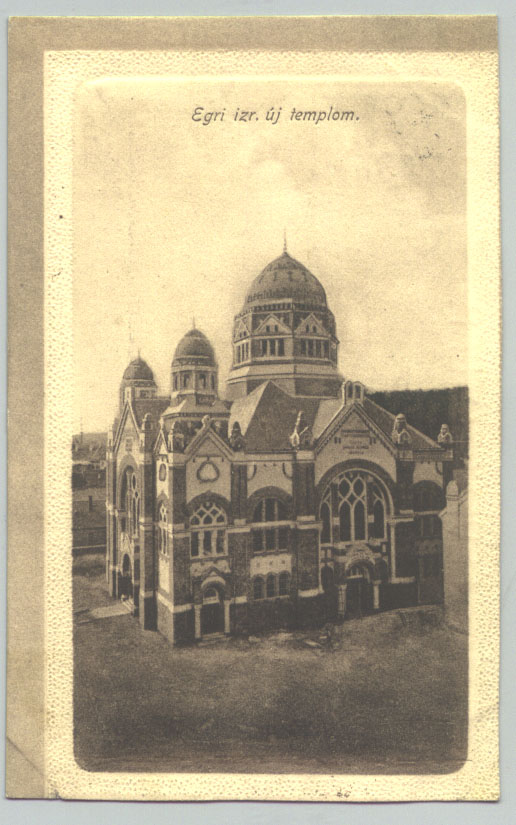
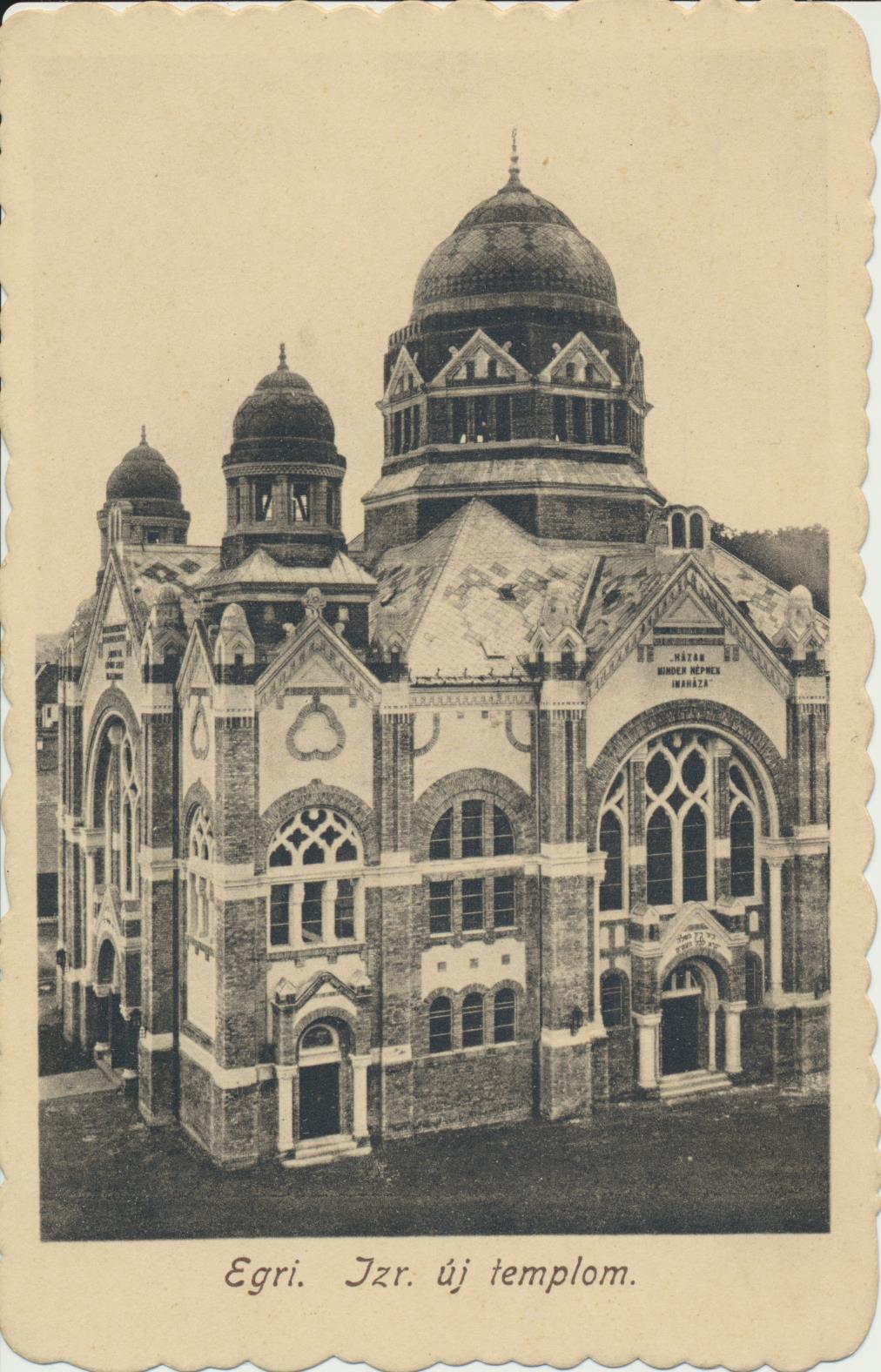
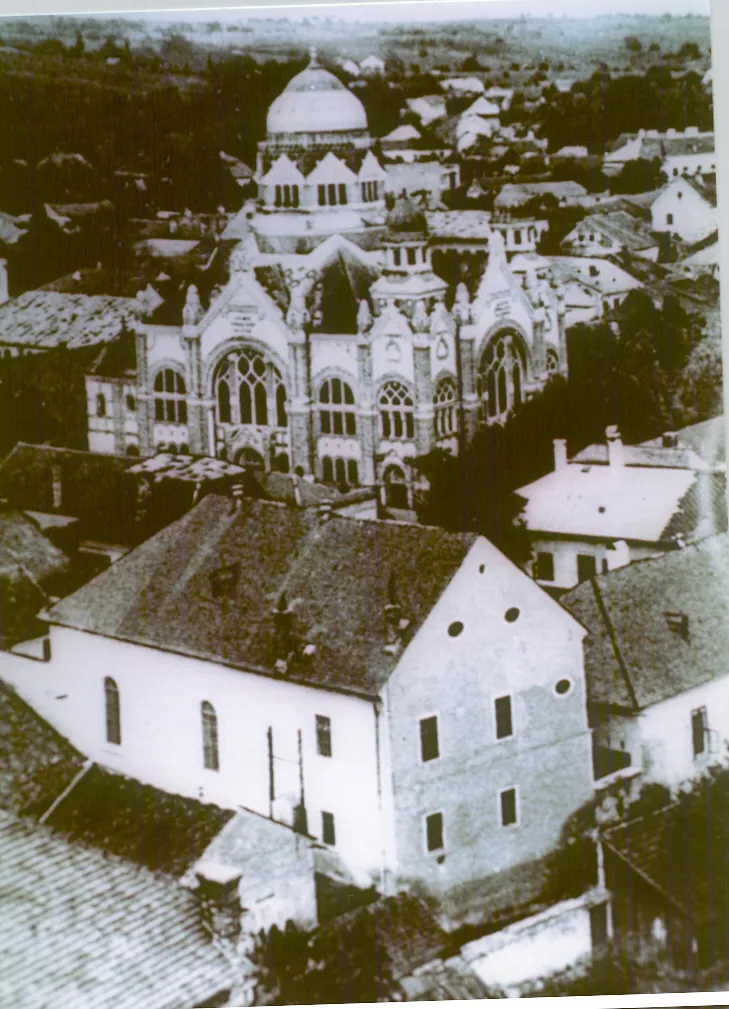
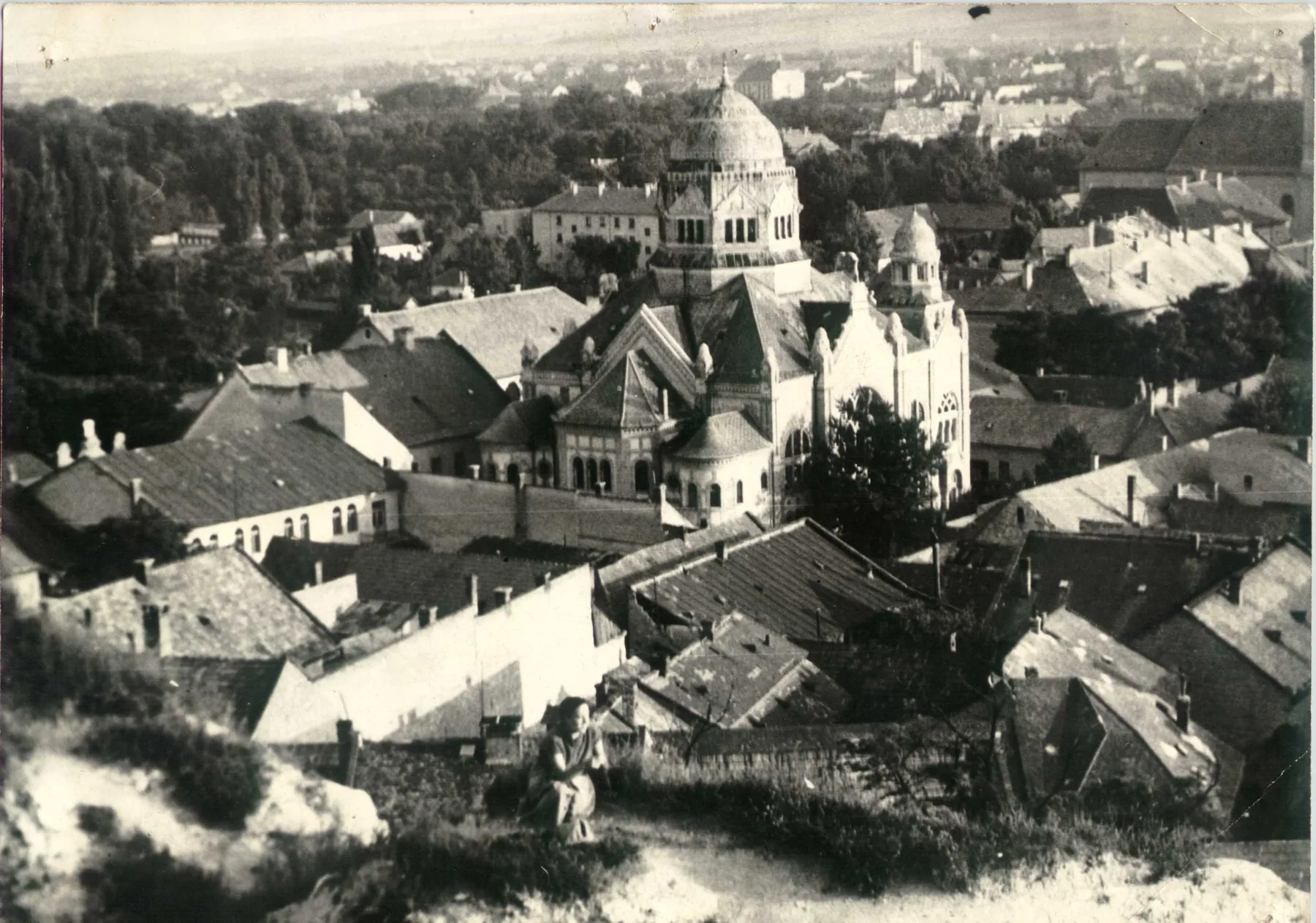
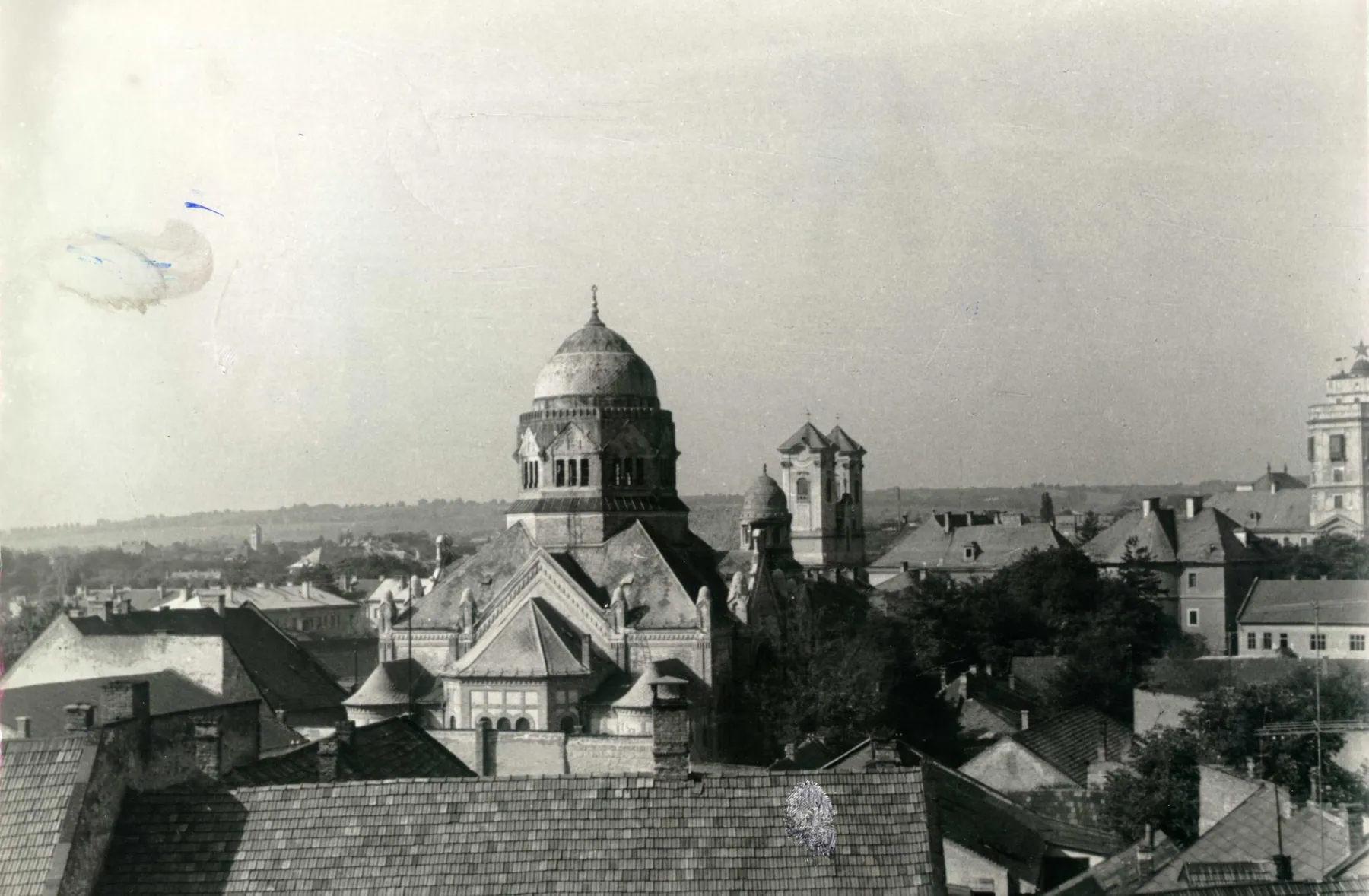
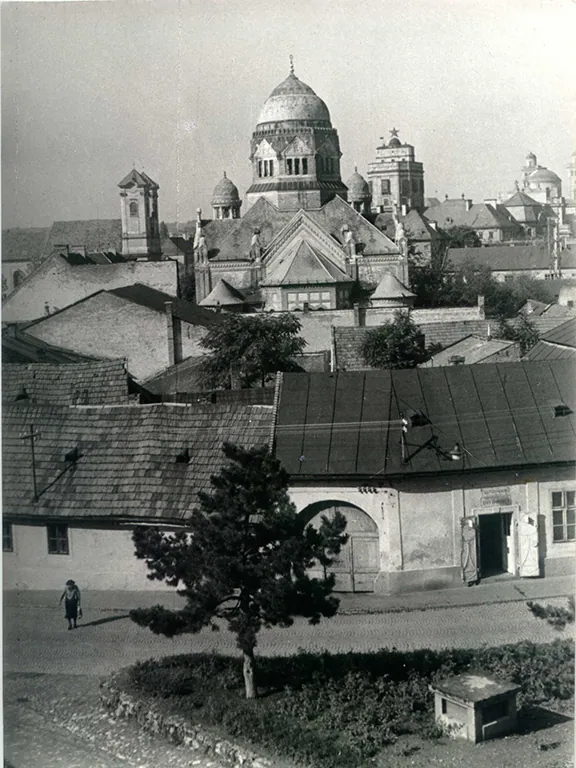
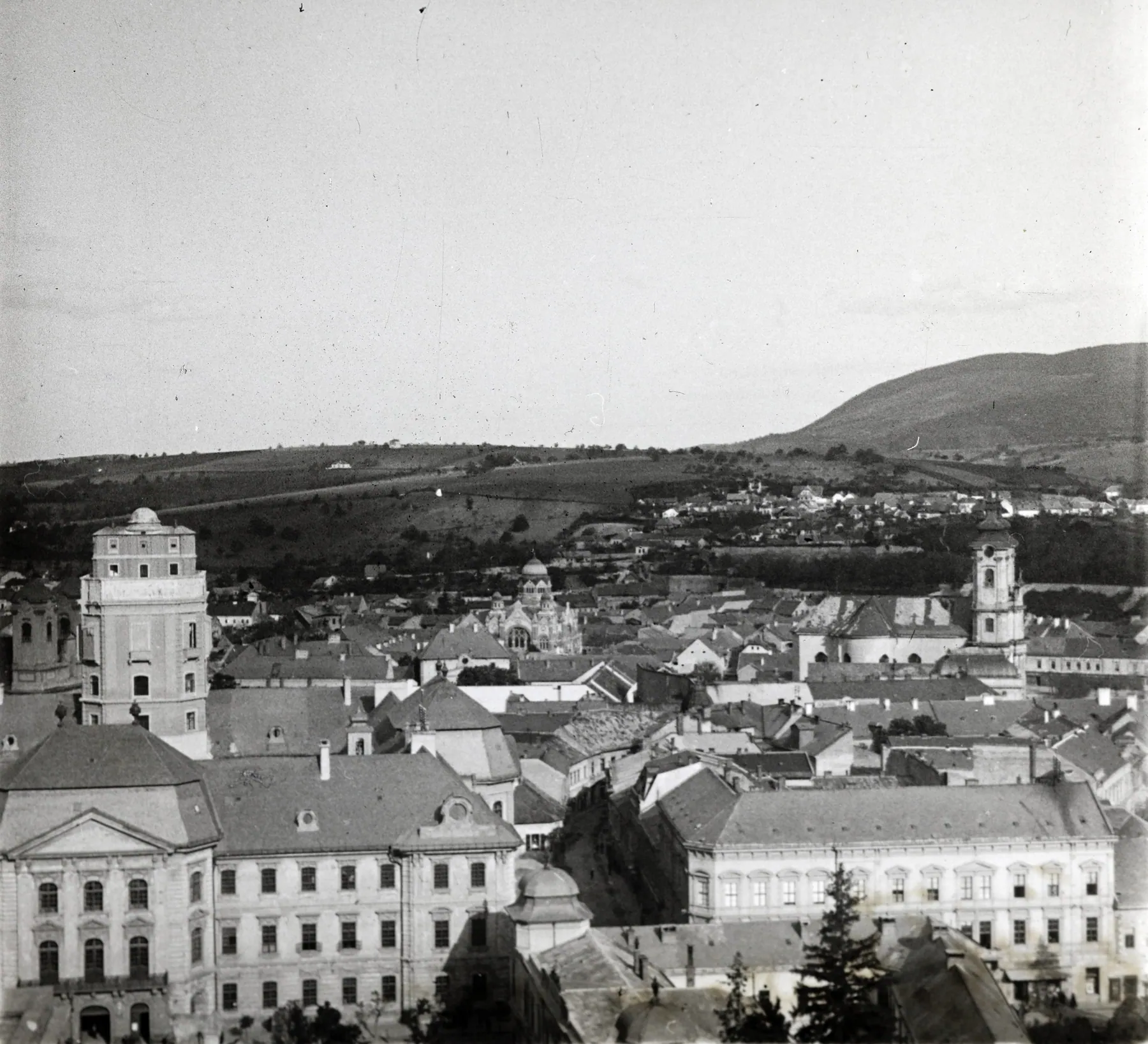
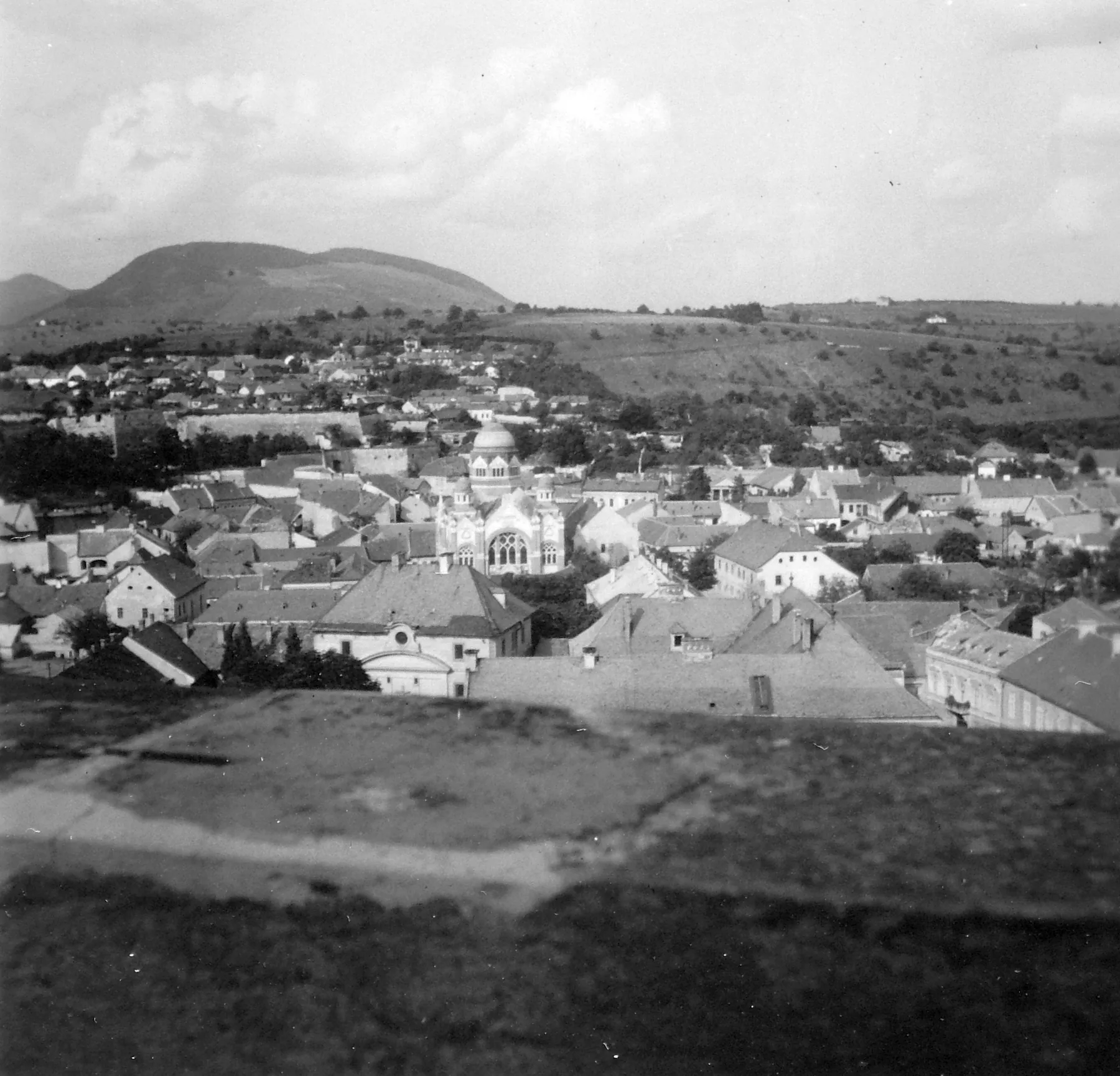
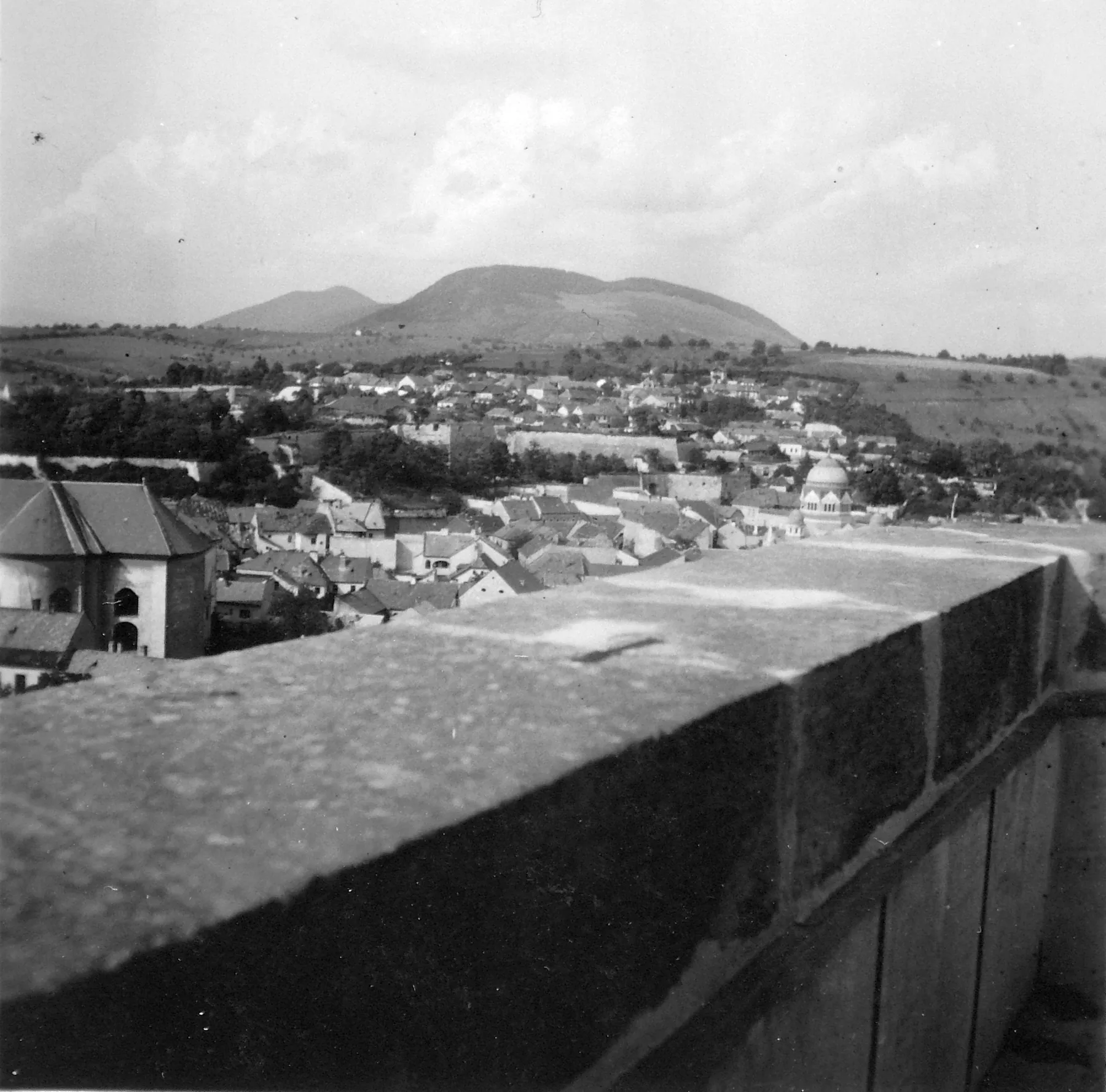
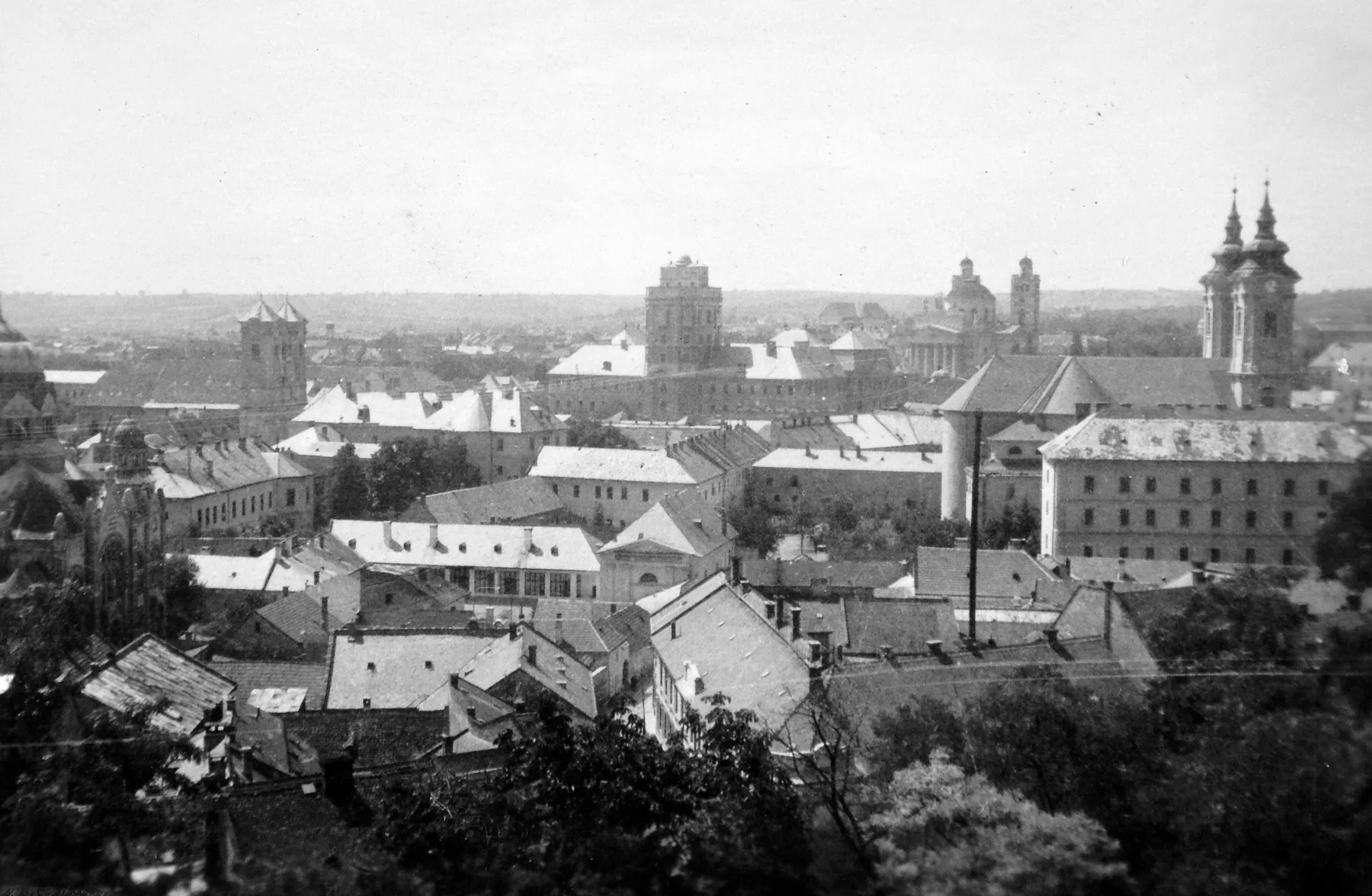
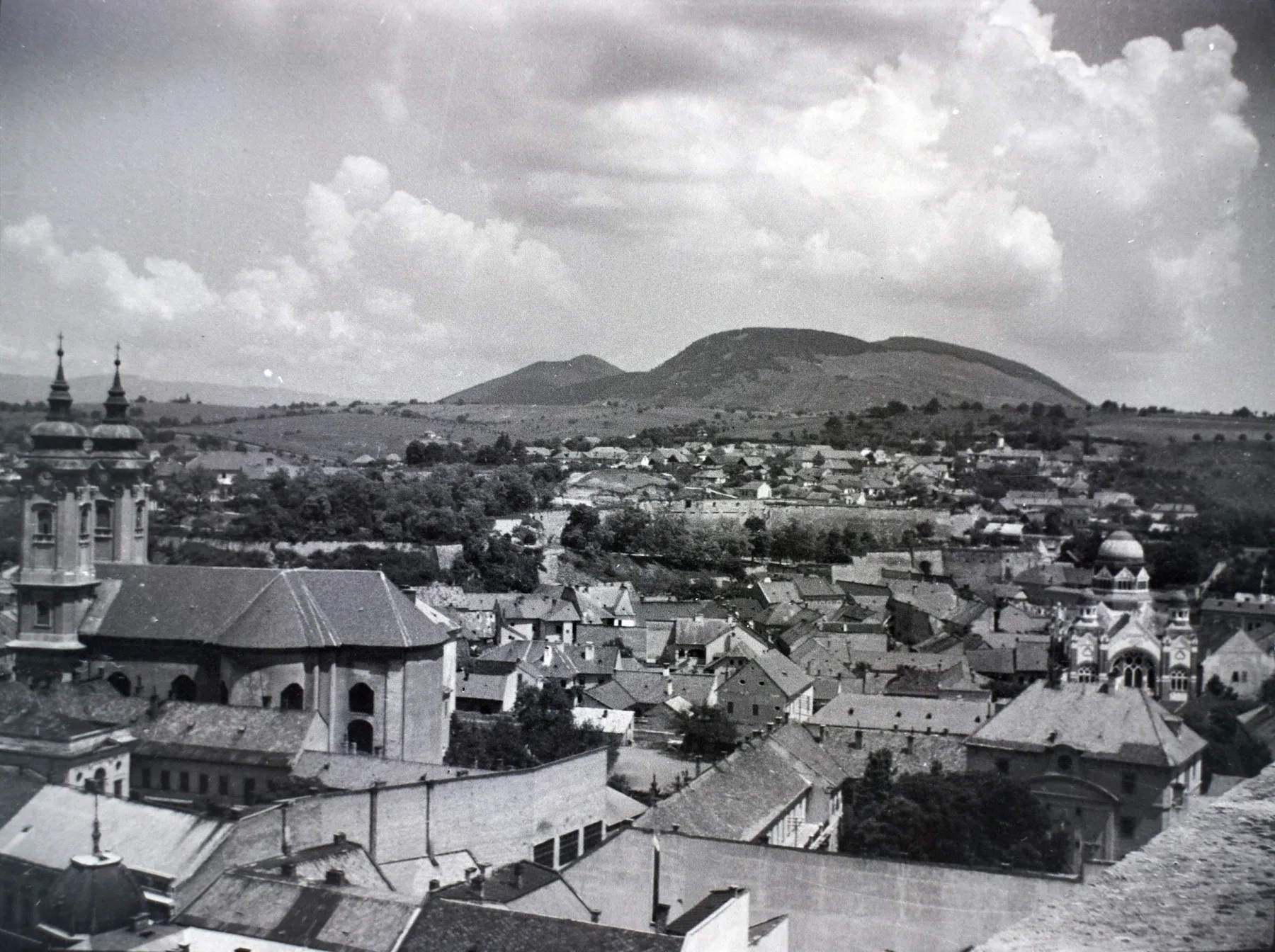
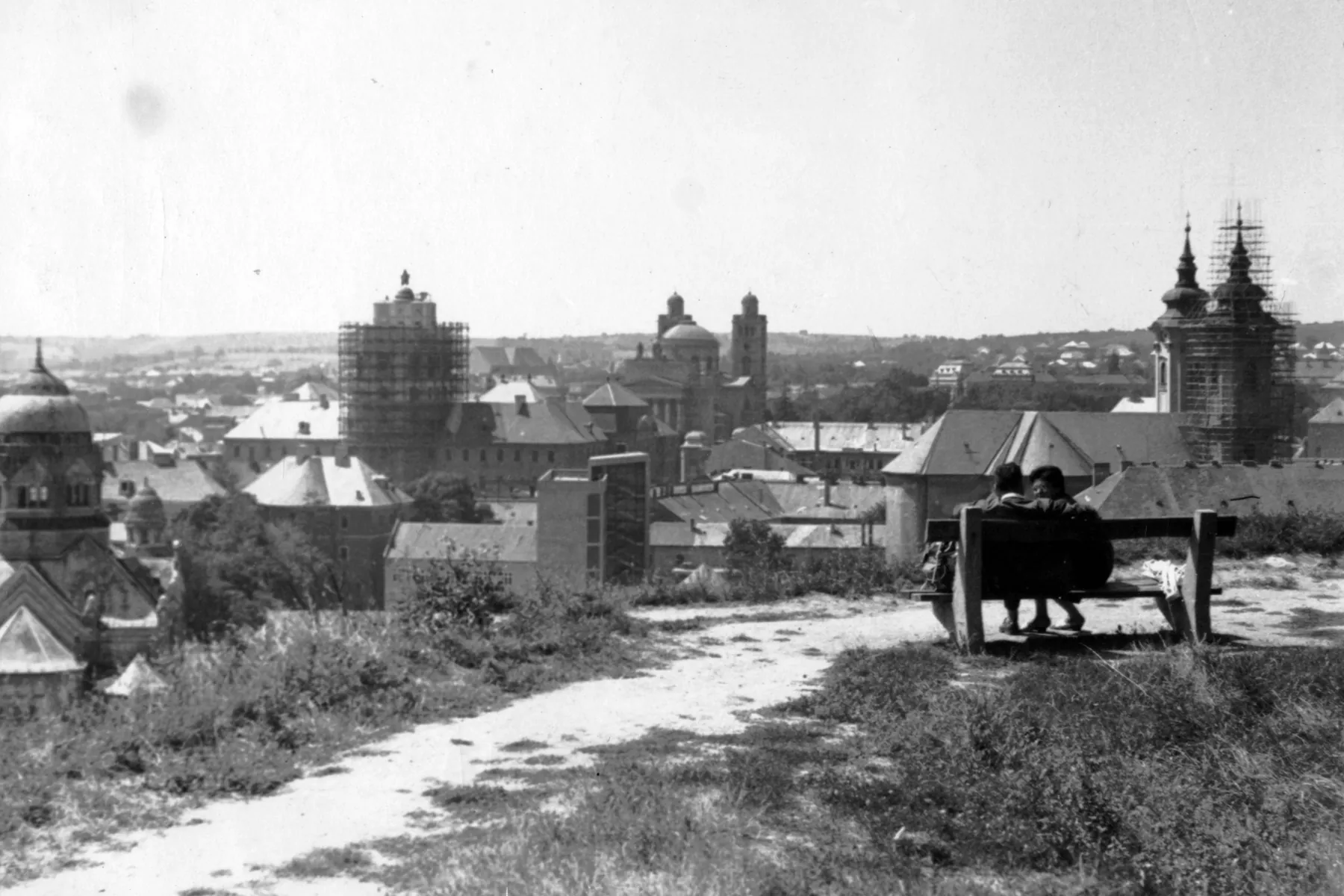
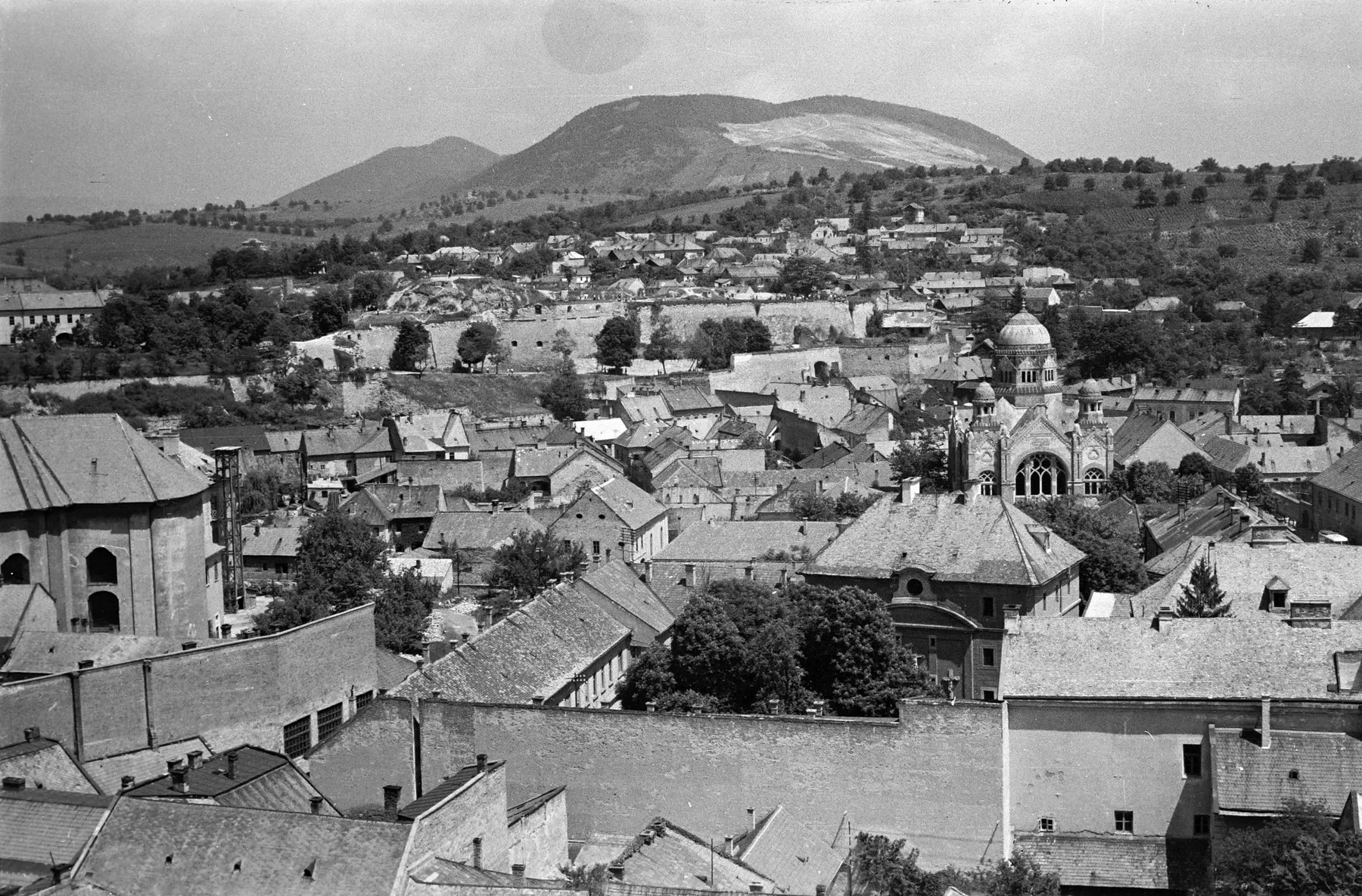
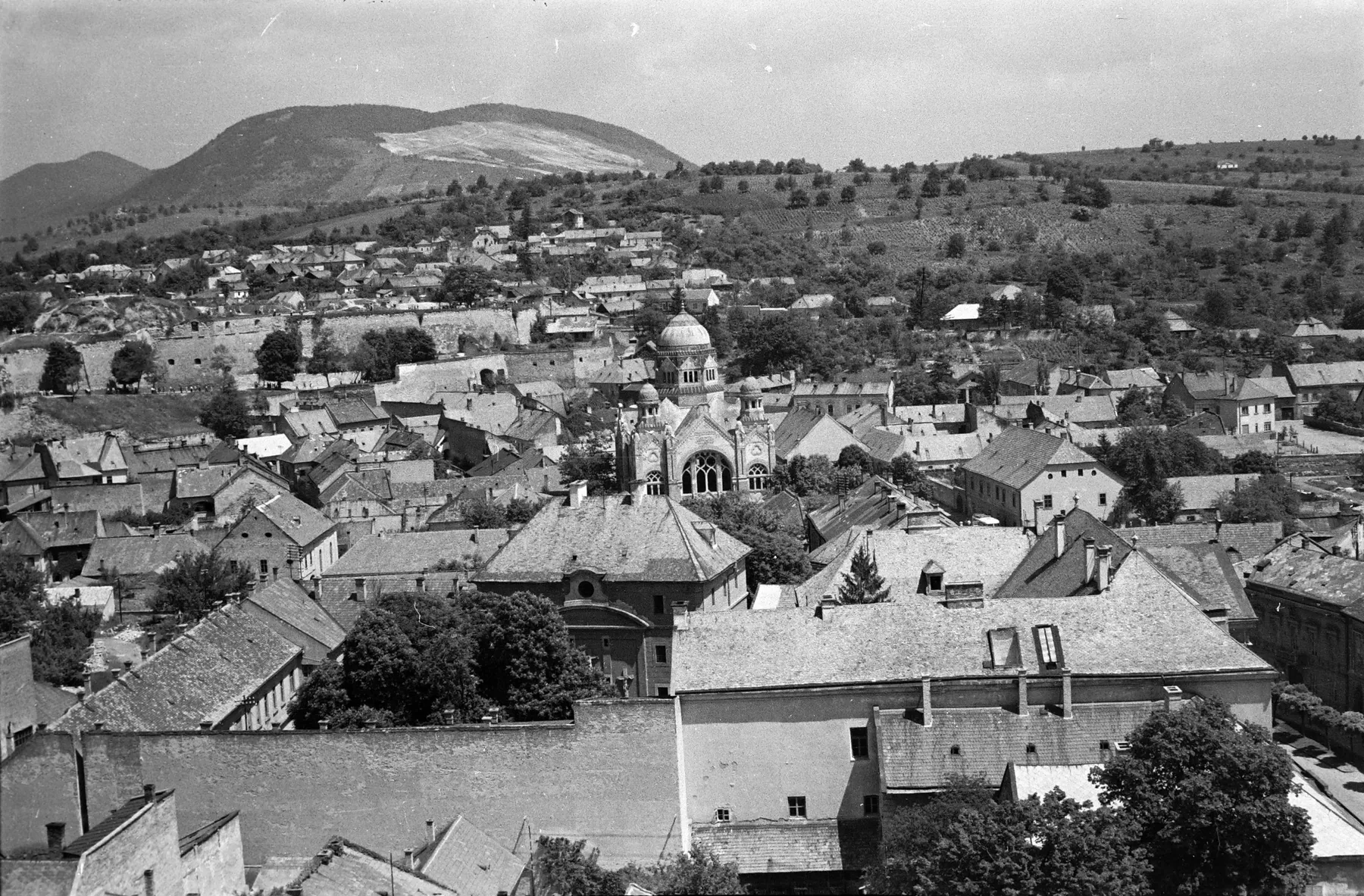
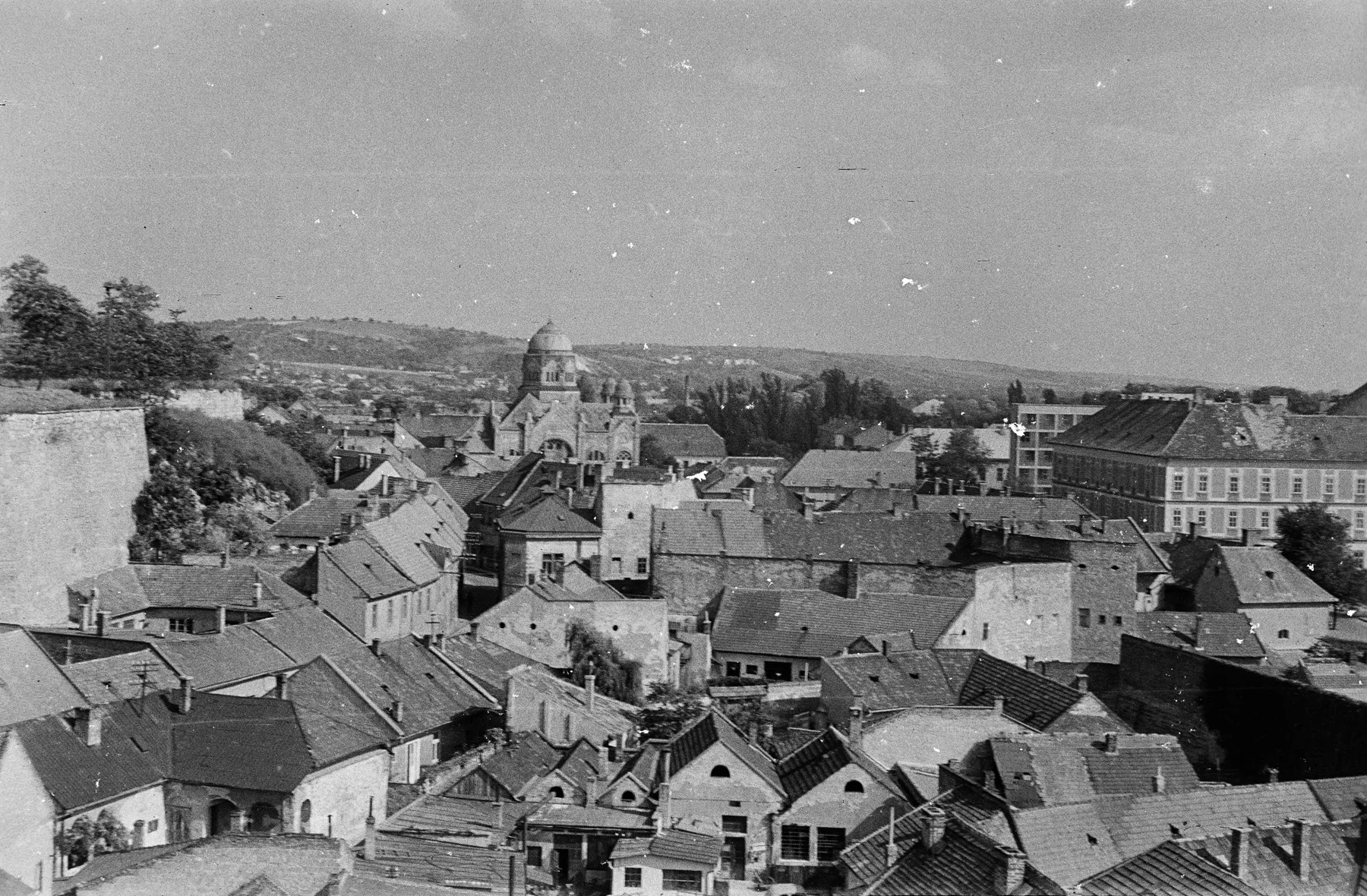
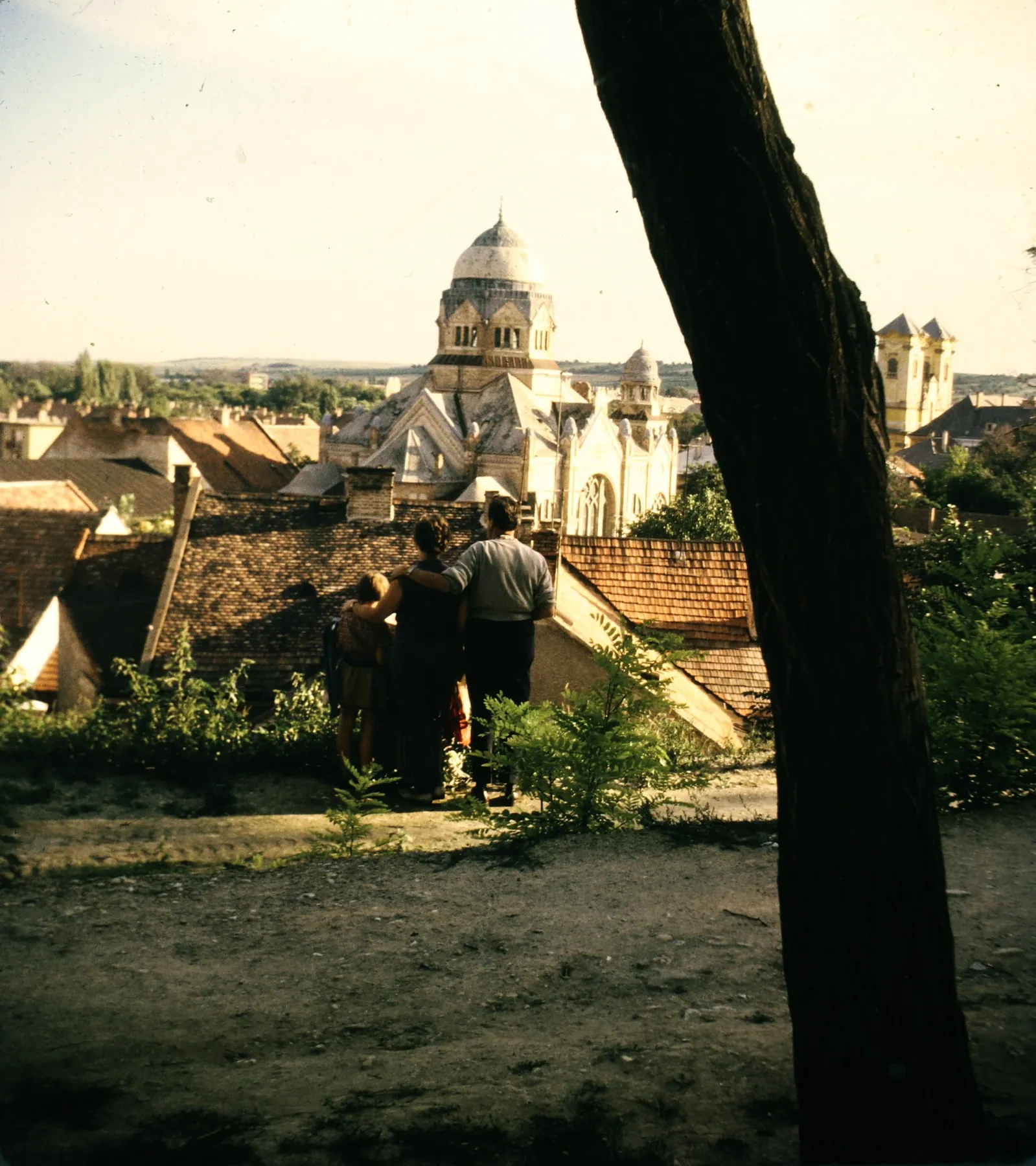
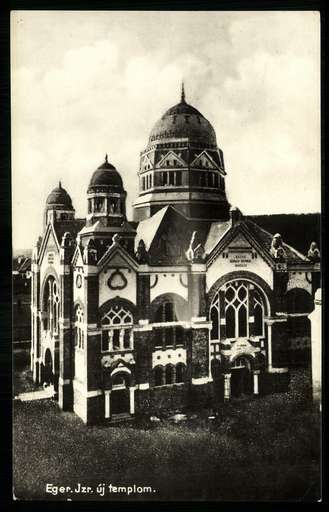
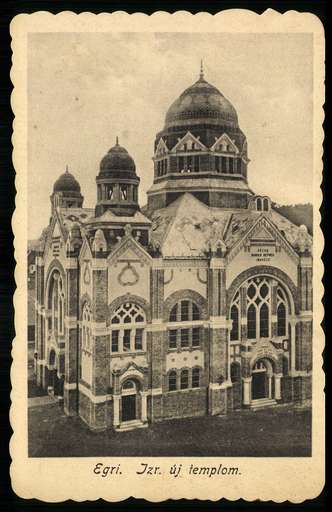
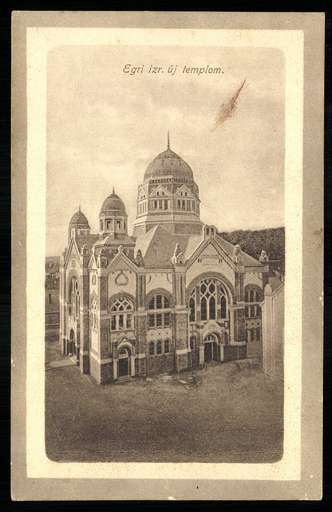
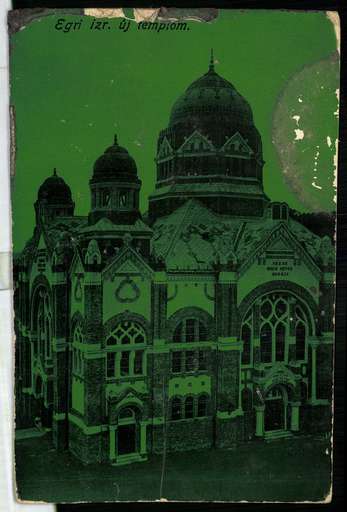
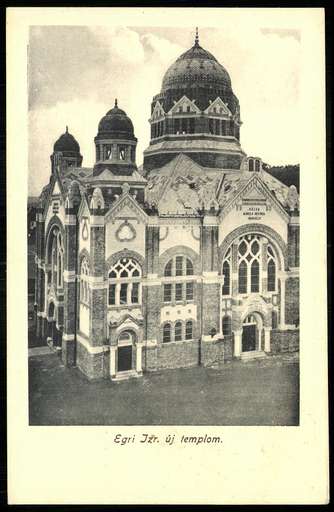
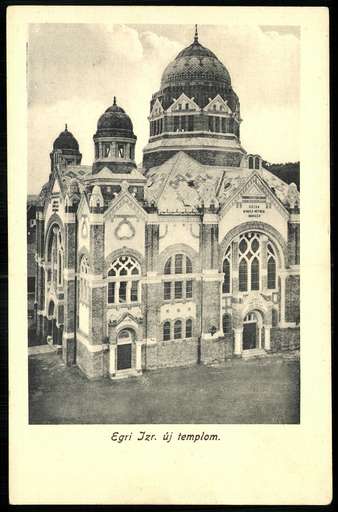
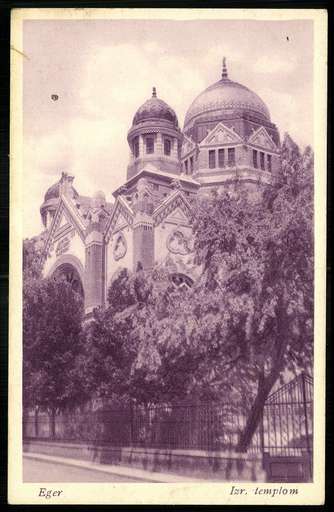
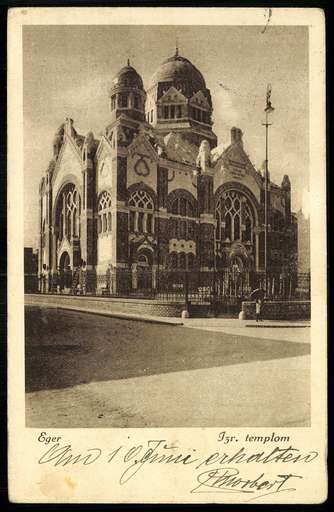
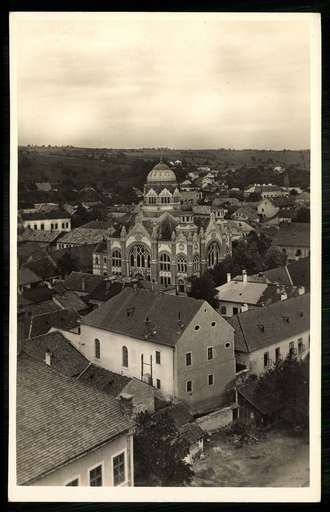
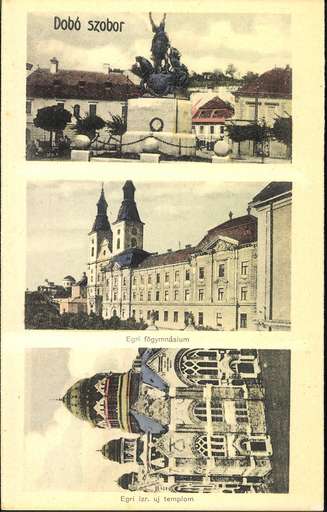
The synagogue stood at the foot of the castle hill in the centre of Eger, on the corner of Káptalan utca (now Kossuth Lajos utca) and Újvilág utca (now Dr. Hibay Károly utca), close to the congregation's old prayer house on the bank of the Eger stream. The status quo ante congregation, the larger of Eger's two Jewish communities, first applied in 1909 to build on another plot to a design by the engineer Géza Bárány, but that scheme stayed on paper. On the initiative of the congregation's president, Dezső Kánitz, a far more ambitious building was then commissioned from Lipót Baumhorn, the leading synagogue architect of Hungary. Work began in 1911 and was finished in August 1913 at a cost of 300,000 crowns, and the temple was dedicated in September 1913. Its glass-topped dome, about 35 metres high, competed on the skyline with the towers of Eger's Baroque churches and the observatory of the Lyceum. The building served its congregation for barely three decades. In 1944 Nazi German forces emptied it and used it as a store, and its members were deported to Auschwitz. The survivors could not maintain the damaged building and sold it to the town. In 1967 the Communists demolished it in the name of urban renewal, and the Hotel Unicornis opened on the site in 1969.
Where it stood for 54 years
Historic: corner of Káptalan utca and Újvilág utca, Eger. Today: corner of Kossuth Lajos utca and Dr. Hibay Károly utca (Hotel Unicornis, Dr. Hibay Károly utca 2), 3300 Eger, Hungary.
פתיחת מפה גדולה ←הקהילה היהודית
A Jewish community is mentioned in Eger in the seventeenth century, but Jews gained the right of residence only around 1840–41. A community organisation and a burial society were formed in 1843, and in 1845 the community bought a plot by the Eger stream, where it built a late-classicist prayer house. In 1858 there were 861 Jews in the town. After the Hungarian Jewish Congress of 1868–69 the majority declared itself status quo ante, joining neither the Neolog nor the Orthodox organisation; a smaller traditionalist group seceded in 1877 and later built its own Orthodox synagogue on Kossuth Lajos utca, which still stands. Many Eger Jews worked in the wine trade, commerce and the professions, and families such as the Kánitz dynasty founded banks, mills and factories. The Jewish population reached 2,559 in 1920 and stood at 1,787 in 1941. In April 1944 the status quo congregation numbered 748 members and the Orthodox 519; the former kept an elementary school with 102 pupils and several charitable societies.
אדריכלות ועיצוב
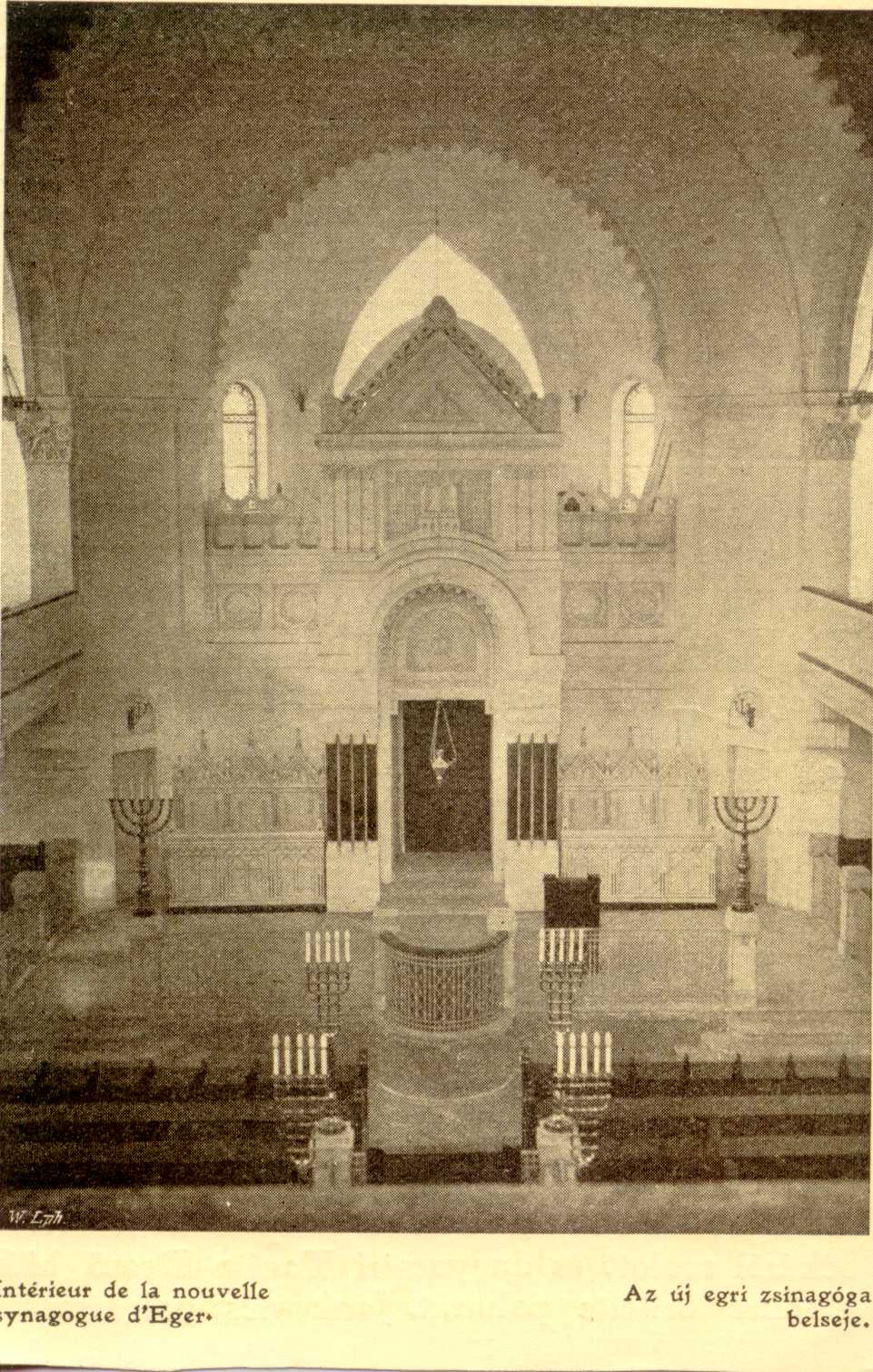
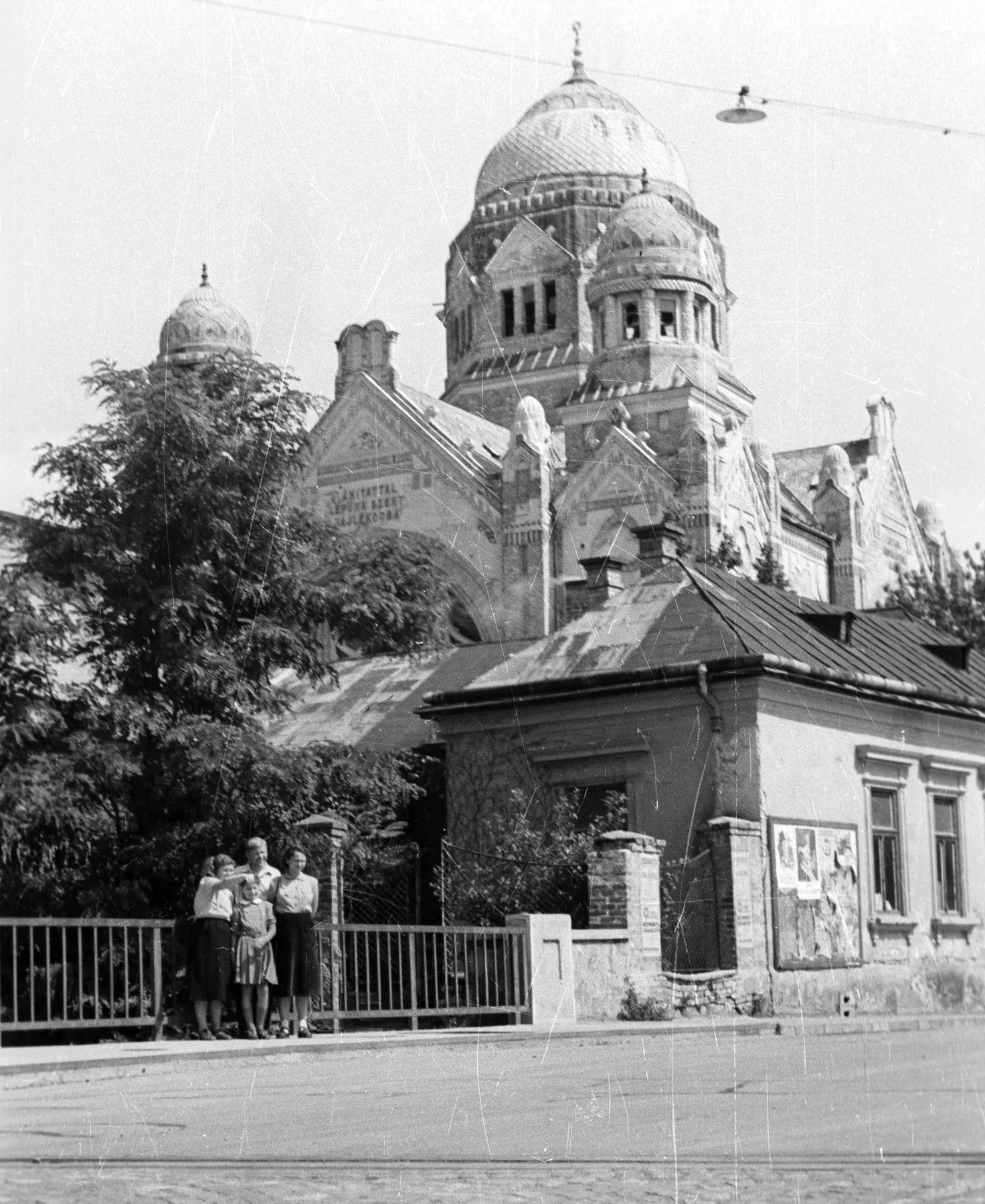
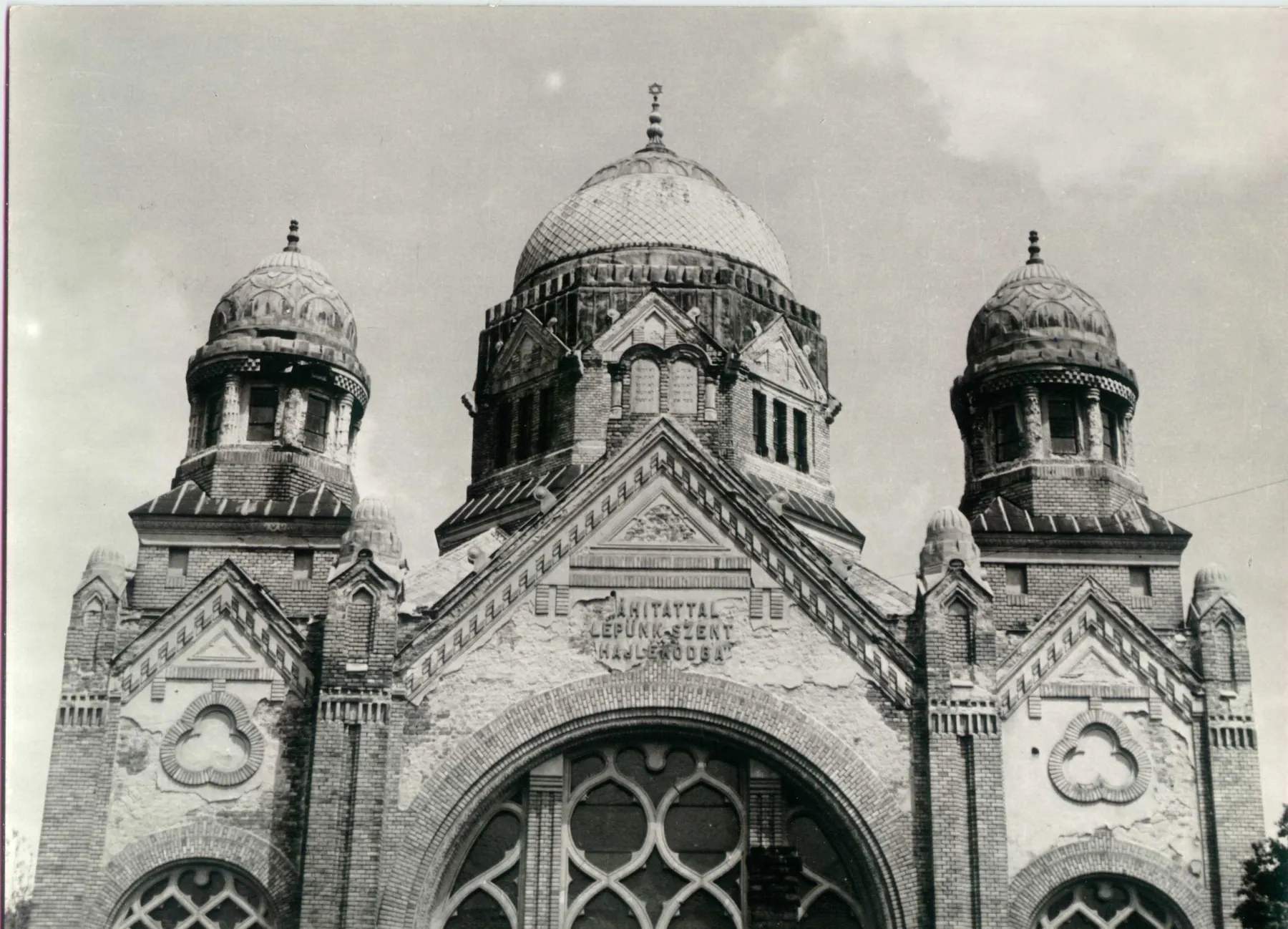
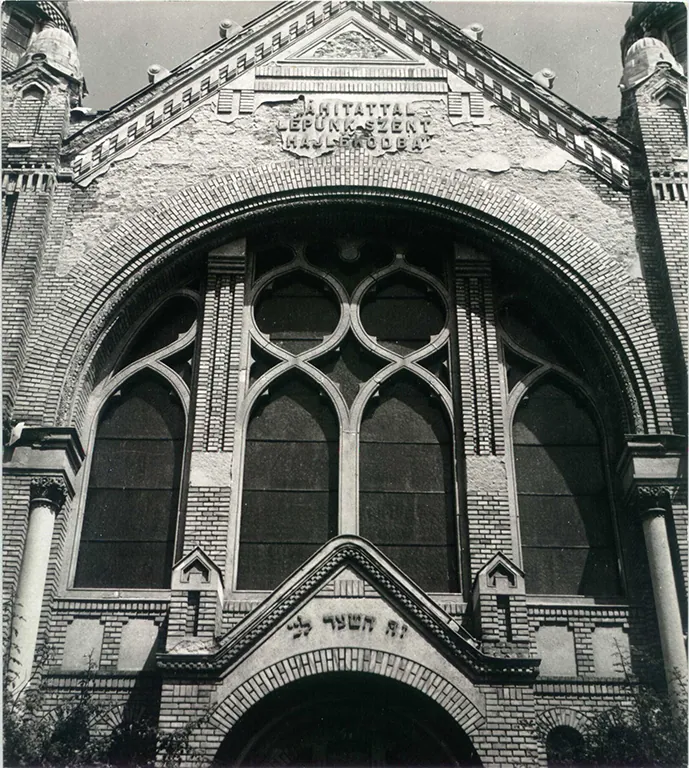
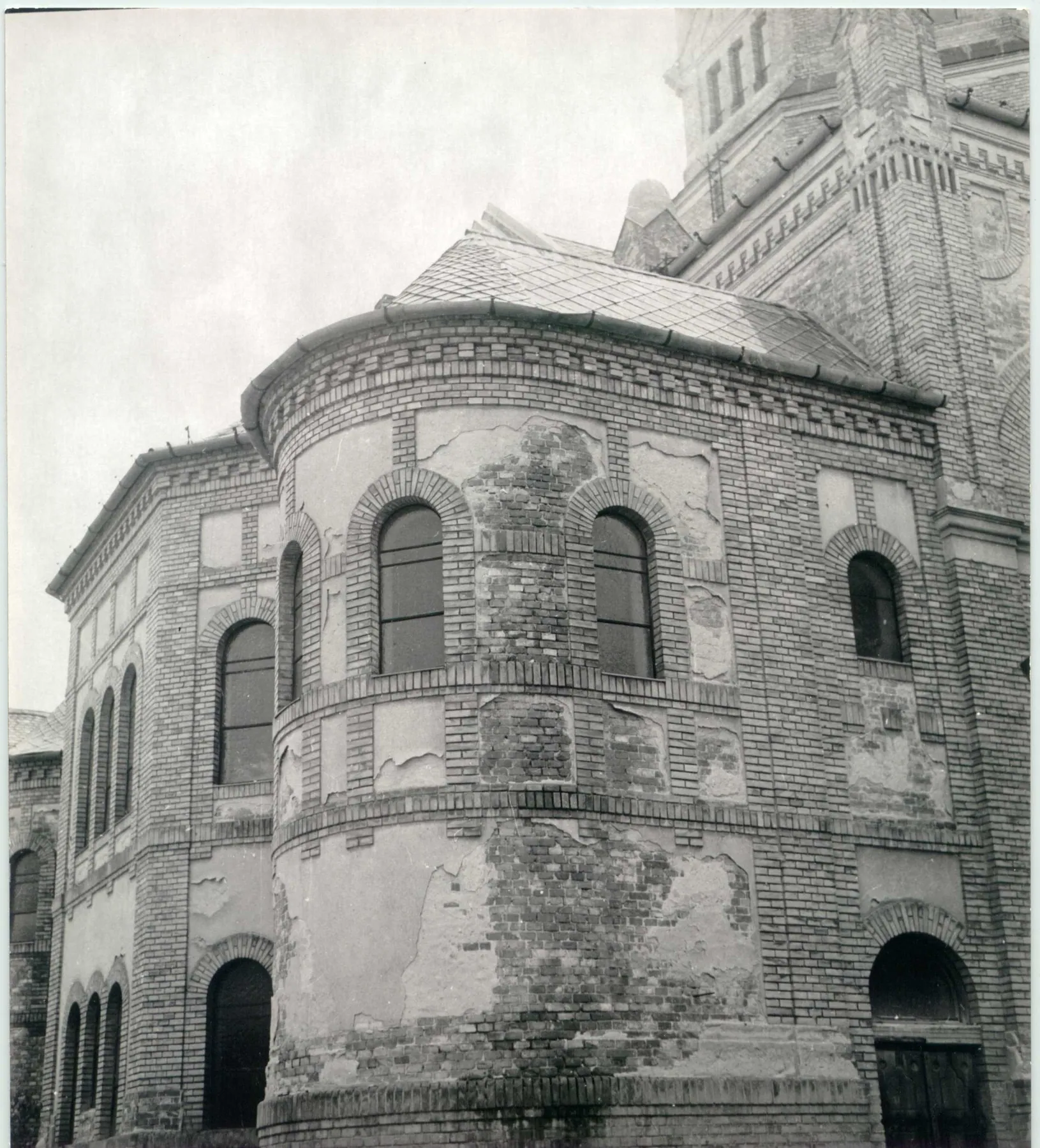
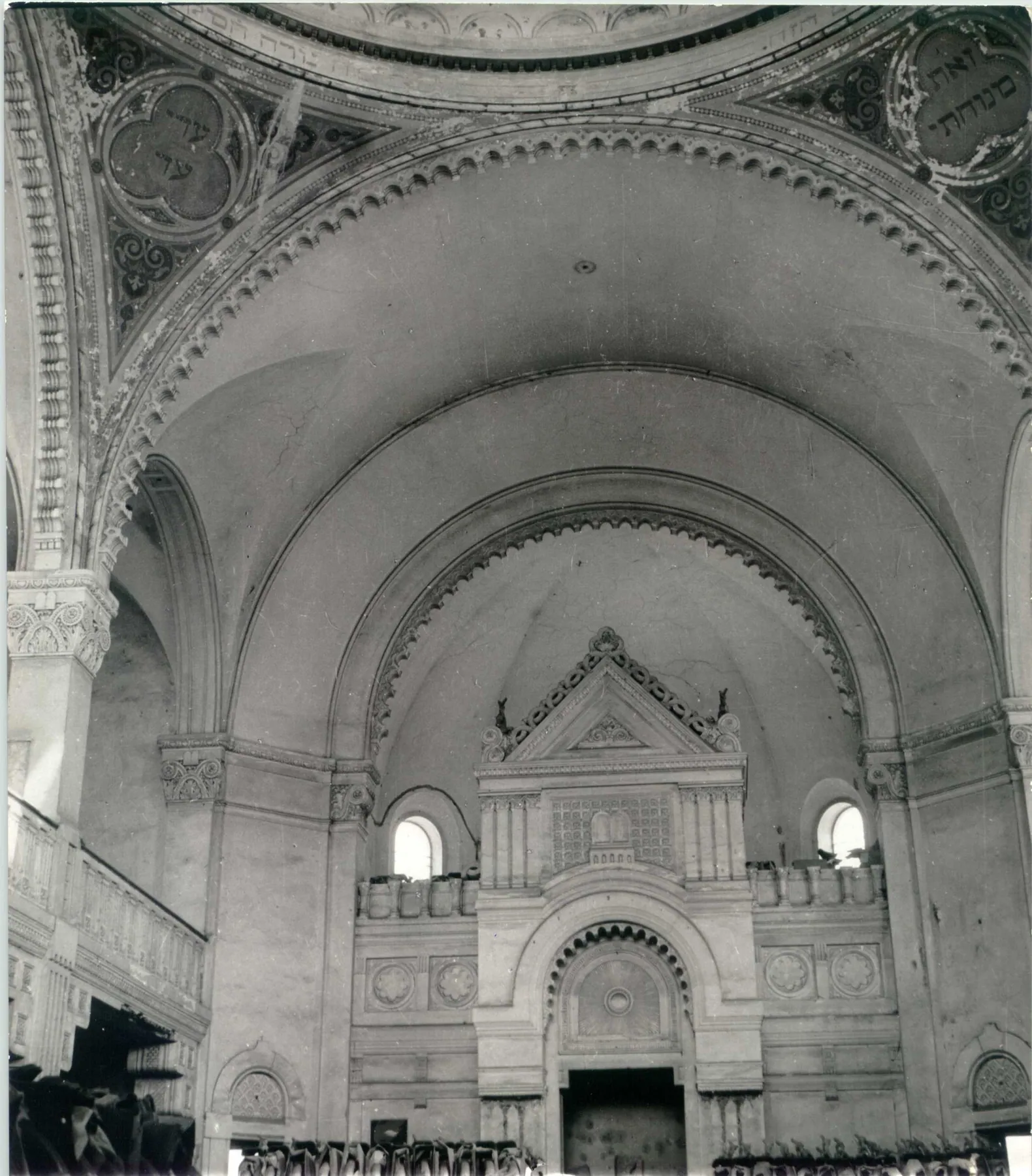
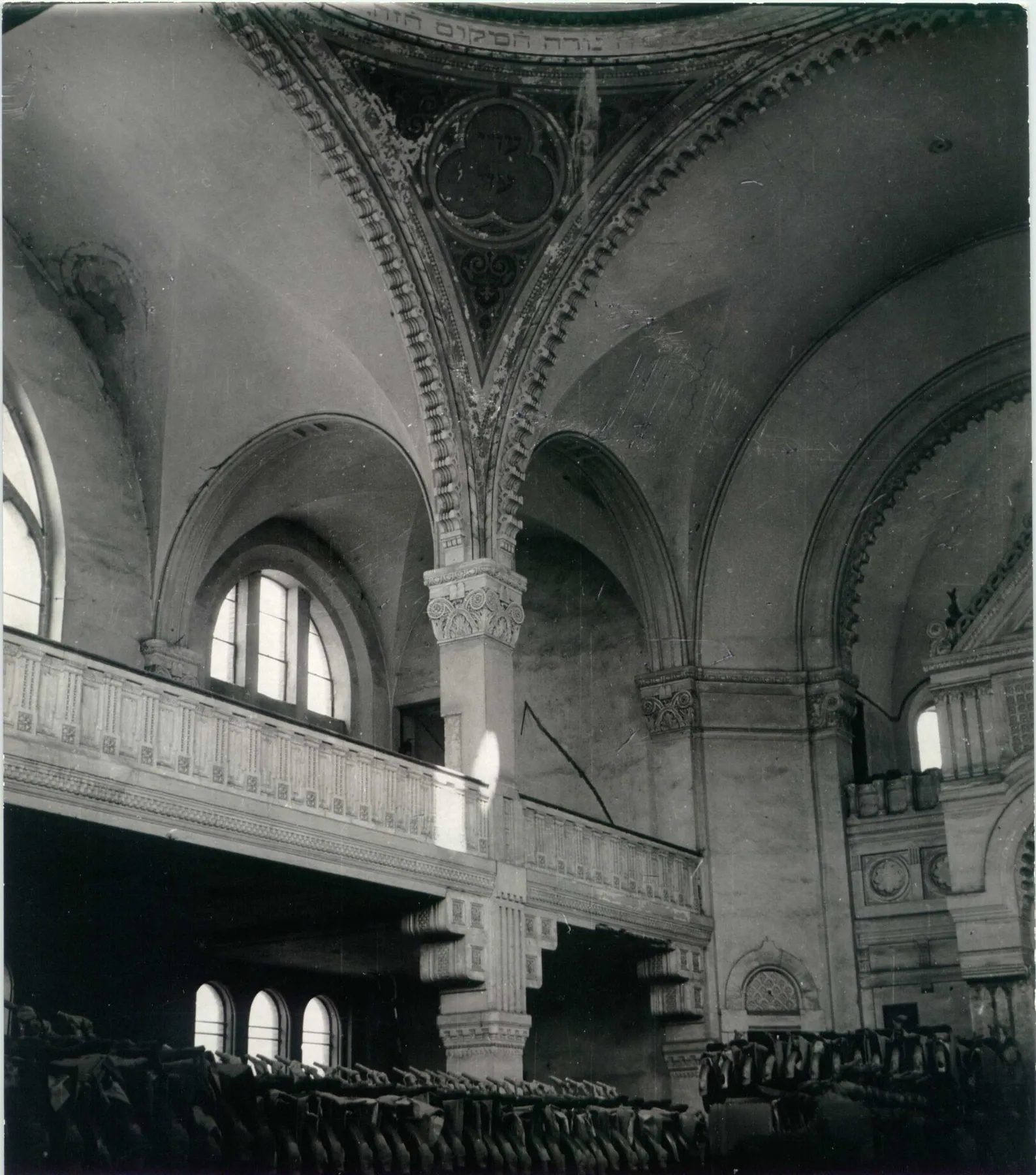
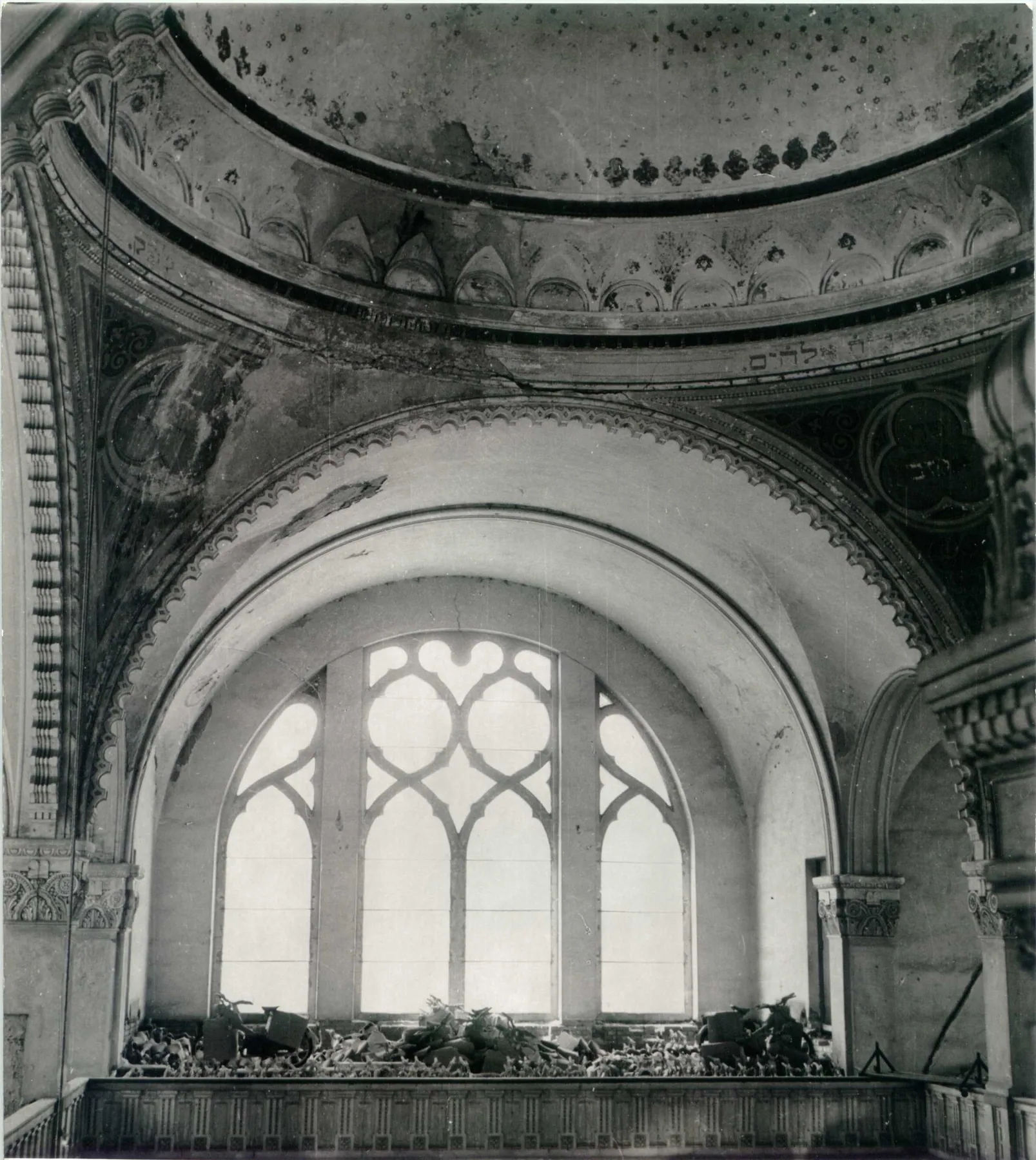
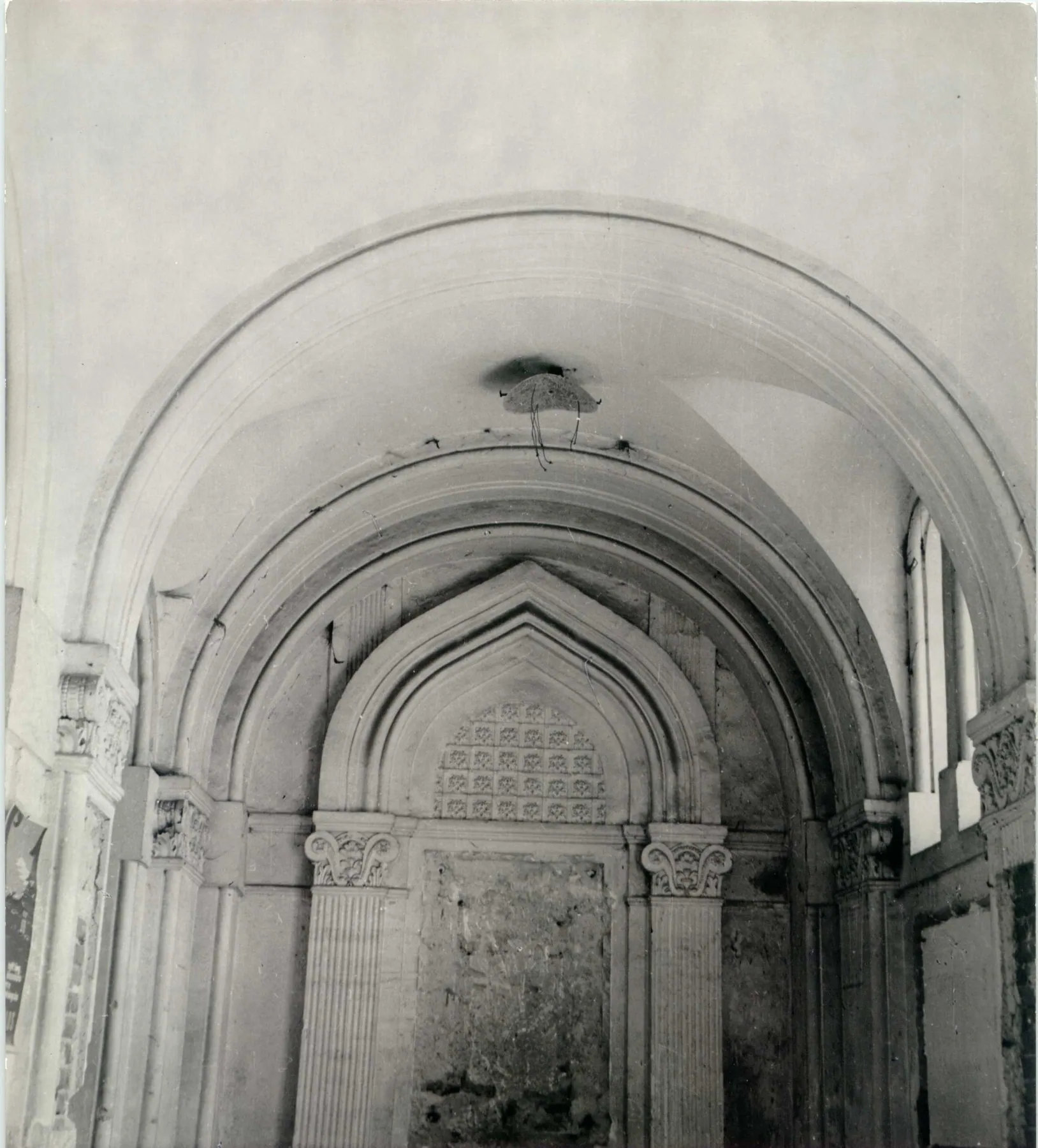
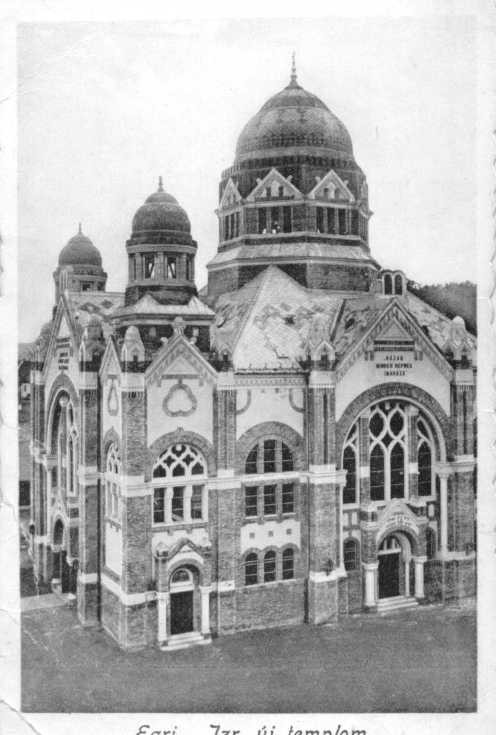
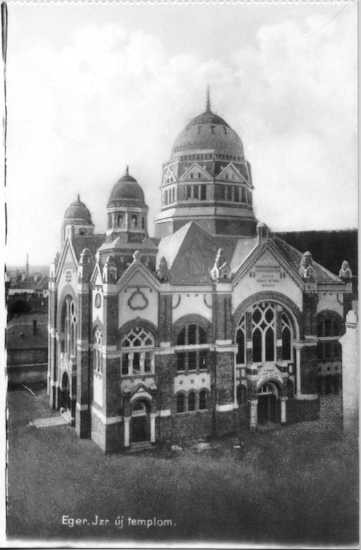
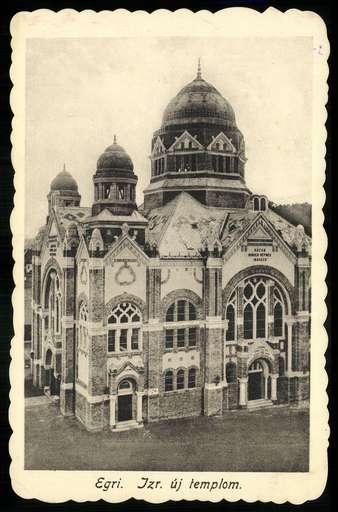
Baumhorn designed the synagogue in his characteristic blend of late Eclecticism and Hungarian Art Nouveau, and it has been compared with his synagogues in Szeged and Novi Sad. The plan combined a longitudinal hall with a centralised arrangement on a footprint of roughly 30 by 22 metres, and a dome about 35 metres high, crowned with glass, rose over the central axis. The main front stood behind a fenced forecourt. It had a great traceried window under a gable carrying the Hungarian inscription "Áhítattal lépünk szent hajlékodba" (With devotion we enter Your holy dwelling) and was flanked by two domed towers; there were further side entrances. Photographs show striped brick-and-plaster walls, a Hebrew inscription over the portal, a rounded apse, a tall Torah ark in an arched niche, women's galleries carried on columns and a raised reading platform in front of the ark. A newspaper report of 1913 admired the glass dome and the large electric candelabra. A local history notes that the building still followed Orthodox custom in its bimah. Its seating capacity is not recorded in the sources consulted.
החיים בבית הכנסת
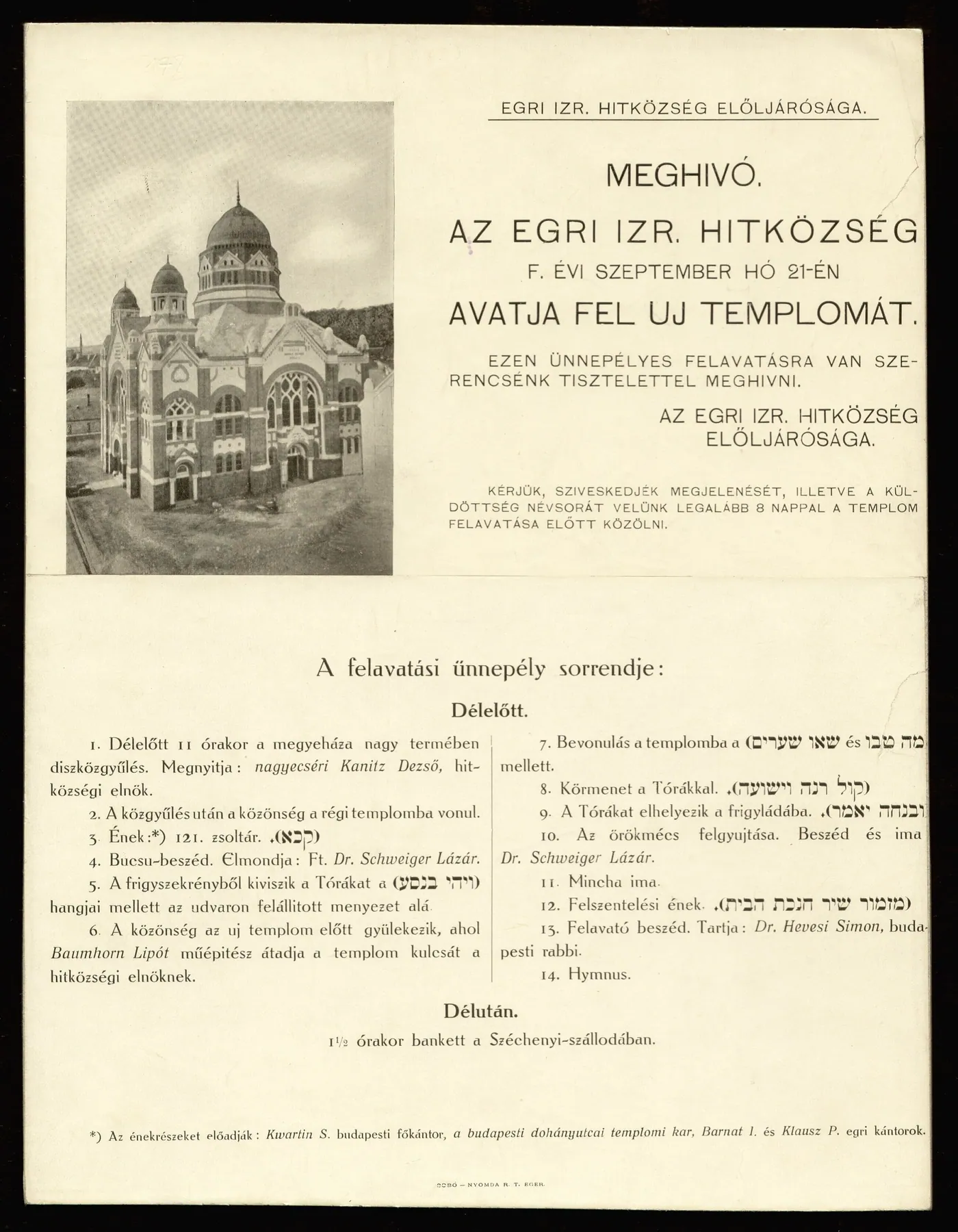
The dedication, announced on the congregation's printed invitation for 21 September 1913, began with a ceremonial assembly in the county hall opened by the president, Dezső Kánitz. Chief Rabbi Lázár Schweiger gave a farewell address in the old synagogue, the Torah scrolls were carried out under a canopy, and Baumhorn handed the key of the new temple to the president. Schweiger lit the eternal light and Rabbi Simon Hevesi of Budapest preached the dedication sermon, while Zavel Kwartin, chief cantor in Budapest, sang with the Dohány Street temple choir and the Eger cantors I. Barnat and P. Klausz. County and town officials, Catholic canons and Reformed pastors attended. Schweiger, a published scholar of ethnology who served until 1931, was followed by Emil Róth (1932–35) and Zoltán Rácz (from 1937). The old prayer house became the community's cultural centre in 1924. Shops of status quo members stayed open on the Sabbath, and the separation of women was less strict than among the Orthodox.
הרס
The synagogue came through the war as a damaged shell: in 1944 it was stripped of its pews and used as a warehouse, most of its stained glass was shattered by a nearby explosion, and it was looted in 1944–45 and several times afterwards. The surviving congregation furnished a prayer room in its school with some of the pews and never used the great temple for worship again. Unable to maintain it, the impoverished community sold it to the town, which used it as a store and left it standing open. In 1967 the Communists demolished the synagogue: Eger's Communist-era town council had it pulled down, blown up according to two accounts, during a "block reconstruction" of the centre, arguing that its size spoiled the townscape. In 1976 the architectural historian Mihály Détshy still welcomed the removal of the "orientalising, domed synagogue". One archival article dates the demolition to 1963 and one English summary to 1968.
גורל הקהילה
After the German occupation of March 1944, Nazi German forces emptied the synagogue and used it as a store, and as they retreated they blew up the nearby bridge. Eger's Jews were forced into a ghetto in the surrounding streets. The move was completed on 15 May 1944, when 1,620 people were confined there under a Jewish council chaired by the bank director Béla Lőw. About 200 young people were marched to the Kerecsend brickworks to prepare a collection camp, to which the whole ghetto was then taken. From there Hungarian gendarmes drove the prisoners on foot to Maklár station, where they were loaded into wagons and handed over to the Nazis; they were deported to Auschwitz on or about 8 June 1944. Of the 1,620 deported only seven men and twenty-five women returned, and not one school-age child survived; the other survivors were mostly men who had been in forced labour. About 150 Jews lived in Eger in November 1945, and the status quo congregation had 294 members in 1949. The two congregations had been merged on official instruction by 1950, emigration continued after 1956, and about 300 Jews remained at the end of the 1950s.
האתר כיום
A hotel was built on the cleared plot and opened on 3 October 1969 as the Unicornis, named after the unicorn in Eger's coat of arms. A hotel still occupies the corner of Kossuth Lajos utca and Dr. Hibay Károly utca, listed today as Hotel Unicornis, Dr. Hibay Károly utca 2, and nothing of the synagogue survives above ground. A local survivor's memoir complained that not even a plaque marked the site. Two other Jewish prayer houses remain nearby: the congregation's first, nineteenth-century synagogue on Dr. Hibay Károly utca, restored from 2000 and used as a contemporary art gallery, and the former Orthodox synagogue at Kossuth Lajos utca 17, also an exhibition space. Drawings of the building, including the demolition survey, are kept in the Heves County Archives.
שמות בולטים
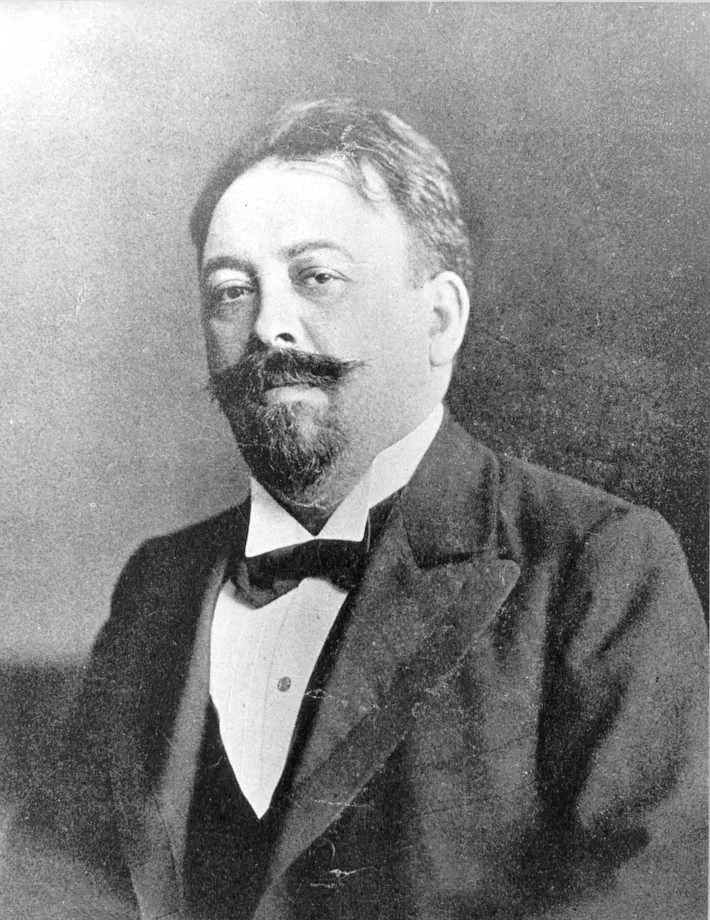
Lipót Baumhorn
1860–1932ArchitectLipót Baumhorn, the most prolific synagogue architect of pre-1918 Hungary, designed the Eger synagogue for the status quo ante congregation. It was built in 1911–13 in his late Eclectic and Art Nouveau manner and resembled his synagogues at Szeged and Novi Sad. According to the printed order of ceremony, at the dedication in September 1913 he handed the key of the new temple to the congregation's president in front of the building.
ביוגרפיה או מקור ←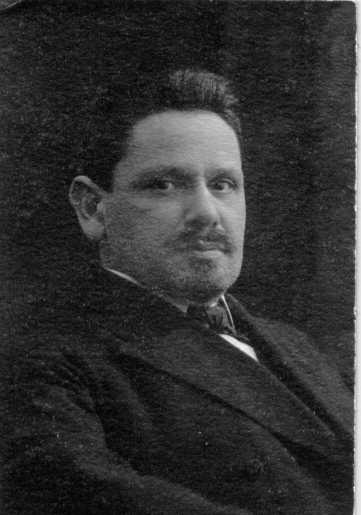
Lázár Schweiger
1872–1944Chief Rabbi of the status quo ante congregation, 1904–1931Born in Nagytapolcsány (Topoľčany) and educated in Frankfurt and at the University of Bern, Lázár Schweiger became rabbi of Eger's status quo congregation in 1904. He was chief rabbi when the new synagogue was built, gave the farewell address in the old temple and lit the eternal light at the dedication in 1913. A published scholar of ethnology, he secured a kosher kitchen for Jewish soldiers stationed in Eger during the First World War. He was called to Nitra in 1931 and was murdered with his wife in 1944.
ביוגרפיה או מקור ←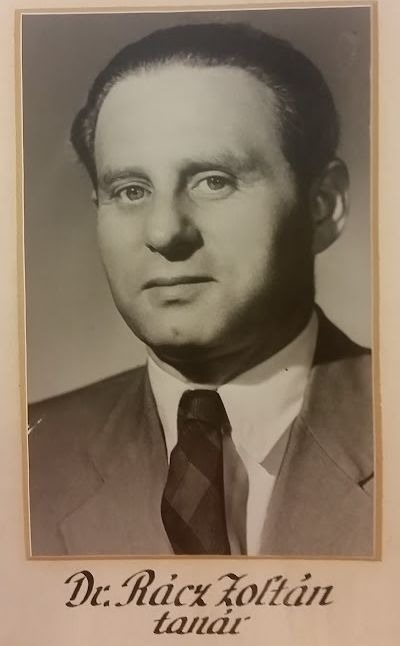
Zoltán Rácz
1905–1985Rabbi of the status quo ante congregation, 1937–1944Zoltán Rácz became rabbi of Eger's status quo ante congregation in 1937 and was its last rabbi while the great synagogue was in use; in April 1944 he led a congregation of 748 members. He was deported to Auschwitz with his community in June 1944 and survived. After the war he taught at the National Rabbinical Seminary in Budapest, where he appears on a staff tableau of the 1950s.
ביוגרפיה או מקור ←Dezső Kánitz
1856–1938President of the status quo ante congregationDezső Kánitz of Nagyecsér, a banker and landowner who founded the Heves County Agrarian Savings Bank in 1894, led Eger's status quo ante congregation for some forty years. The new synagogue was built in 1911–13 on his initiative. As president he opened the ceremonial assembly at its dedication and received the key from the architect. He was born in Eger on 3 September 1856 and died there on 2 April 1938.
ביוגרפיה או מקור ←Emil Róth
1907–1944Rabbi of the status quo ante congregation, 1932–1935Emil (Zvi Joel) Róth, born in Kunszentmárton, was ordained in 1932 after two years of study in Jerusalem and came to Eger the same year as rabbi of the status quo congregation, succeeding Lázár Schweiger in the new synagogue. In June 1935 he left to become chief rabbi of Győr, where he served until his deportation. He was murdered at Auschwitz in June 1944.
ביוגרפיה או מקור ←יש לכם משהו לתרום?
תמונות, מסמכים, סיפורי משפחה וזיכרונות מבית הכנסת ומהקהילה שלו עוזרים לשמור על ההיסטוריה שלו בחיים.
- “És készítsetek számomra szentélyt, hogy közöttük lakozzam” – Volt egyszer egy egri zsinagóga
- H. Szilasi Ágota: Egri zsinagógák, Agria 50 (2017), esp. pp. 540–546
- Vallási élet (Egri zsidók, online edition)
- VIII. Egri zsidók és a vészkorszak (Egri zsidók, online edition)
- Az egri zsidók története Egerben 1946–2023 között
- Műemlékvédelmi rombolás Eger belvárosában
- Eger
- Egri új zsinagóga homlokzata (and related items 26090–26114, 35547)
- Dr. Schweiger Lázár fényképe
- Baumhorn Lipót fényképe
- Kossuth utca, híd az Eger-patak felett, szemben a zsinagóga (1954) and other Eger photographs
- Eger; Izraelita új templom (postcards of the Zempléni Múzeum, Szerencs)
- Egri neológ zsinagóga
- Eger Synagogue
- Lipót Baumhorn
- A nagyecséri Kánitz család
- Hotel Unicornis, Dr. Hibay Károly utca 2, Eger (geocoding result)
Share a memory or thought
No comments yet. Be the first to add one.