
La historia de Füzesabony Synagogue
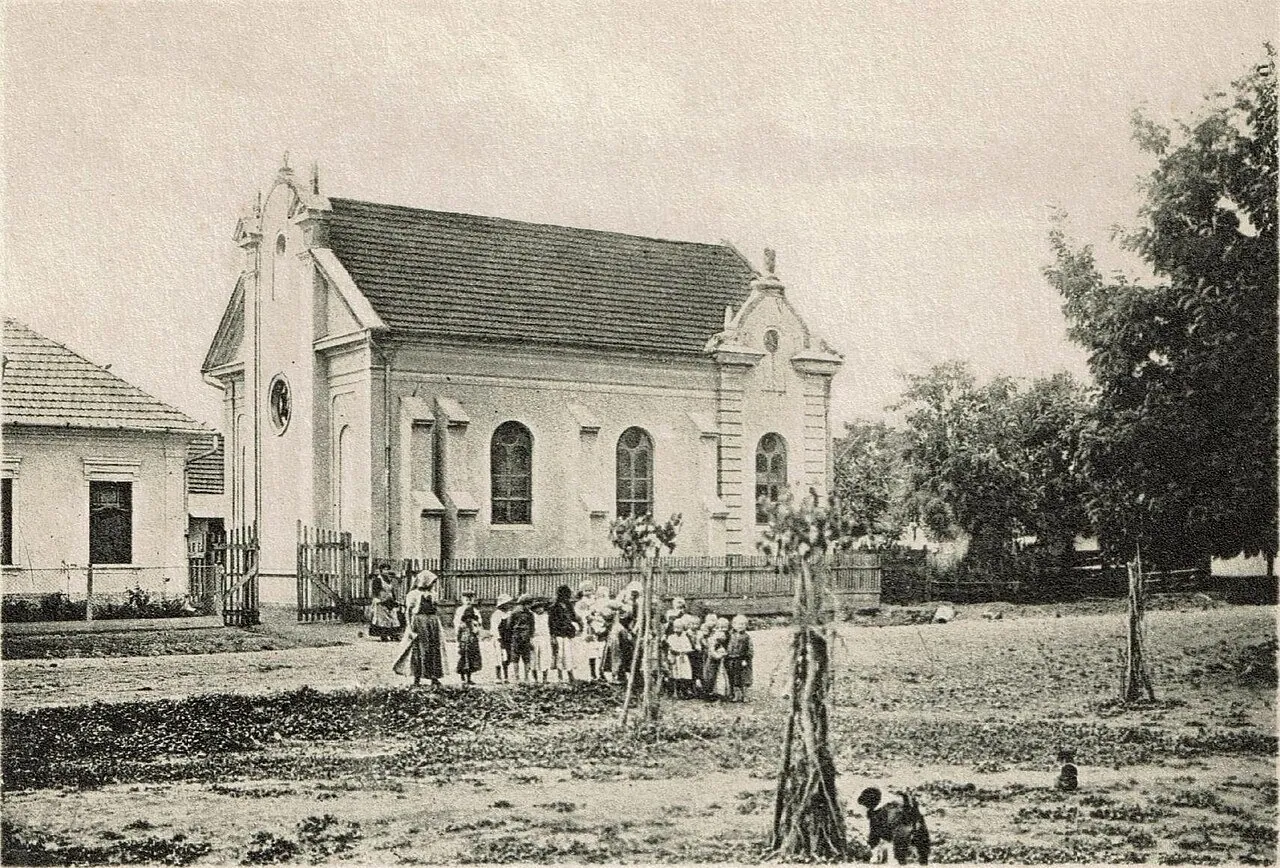
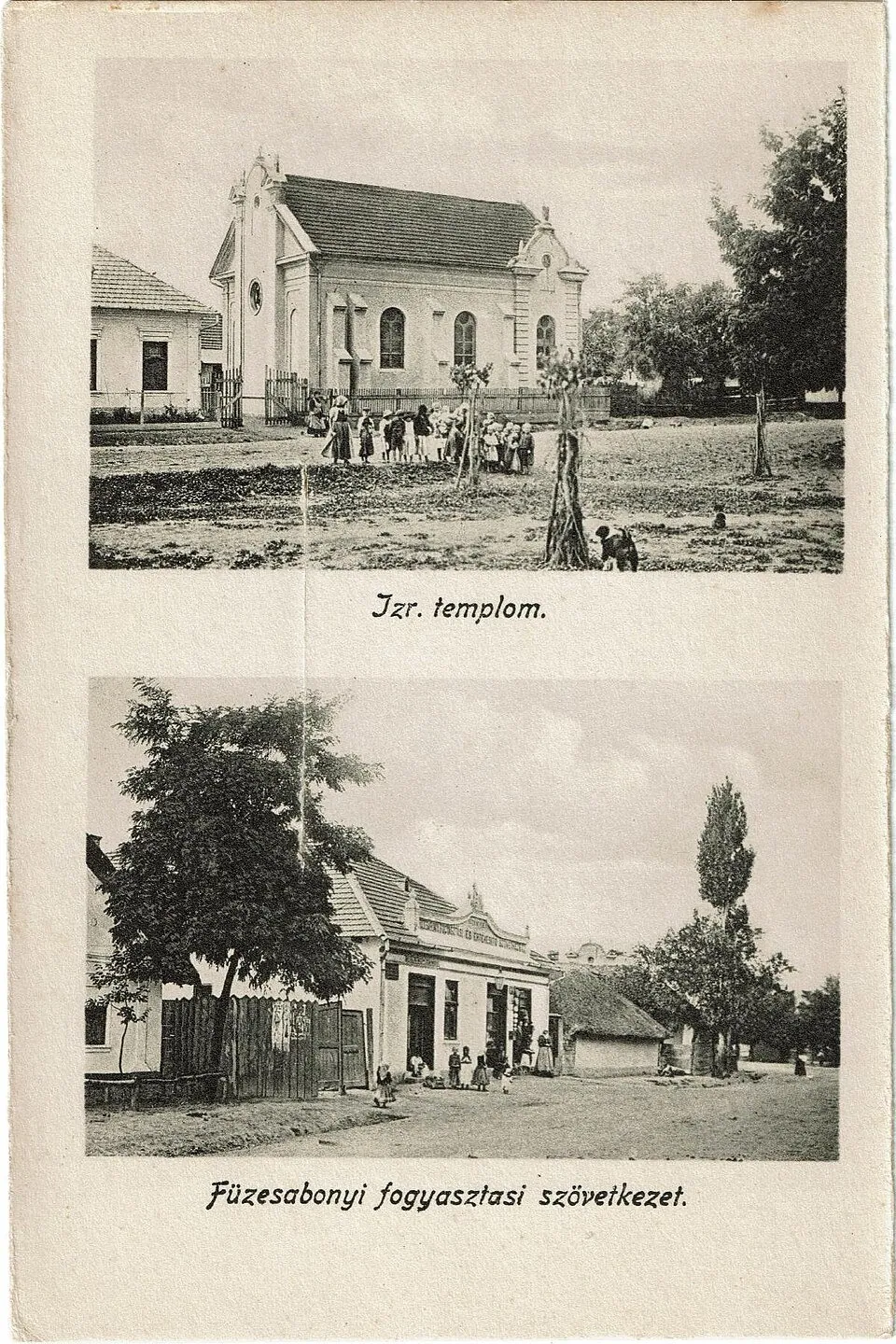
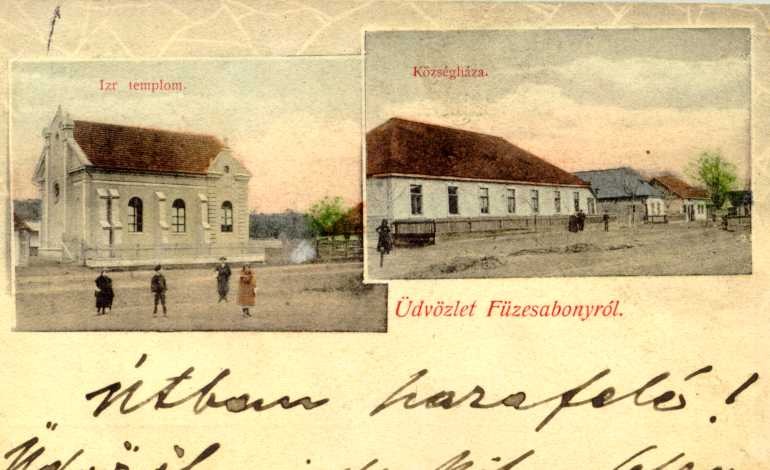
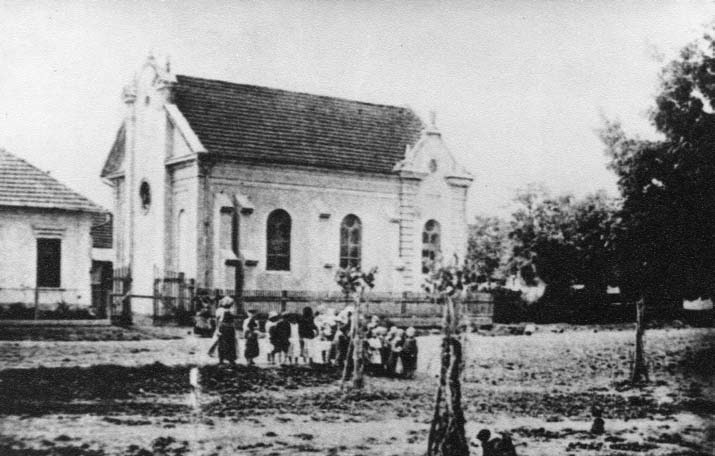
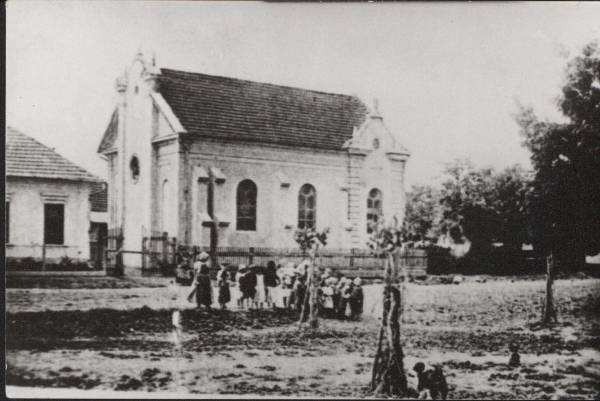
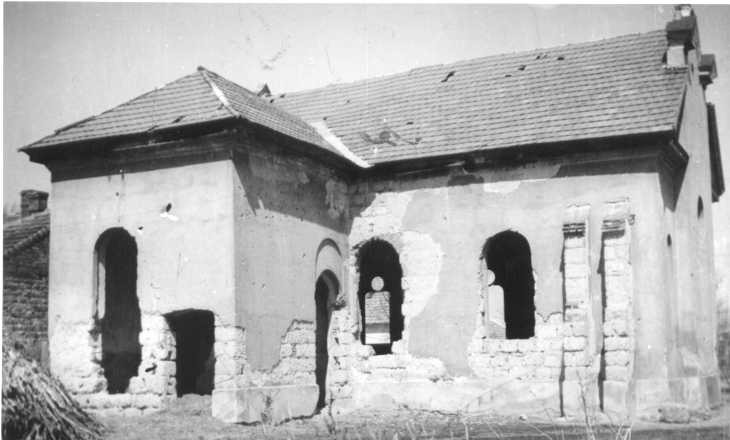
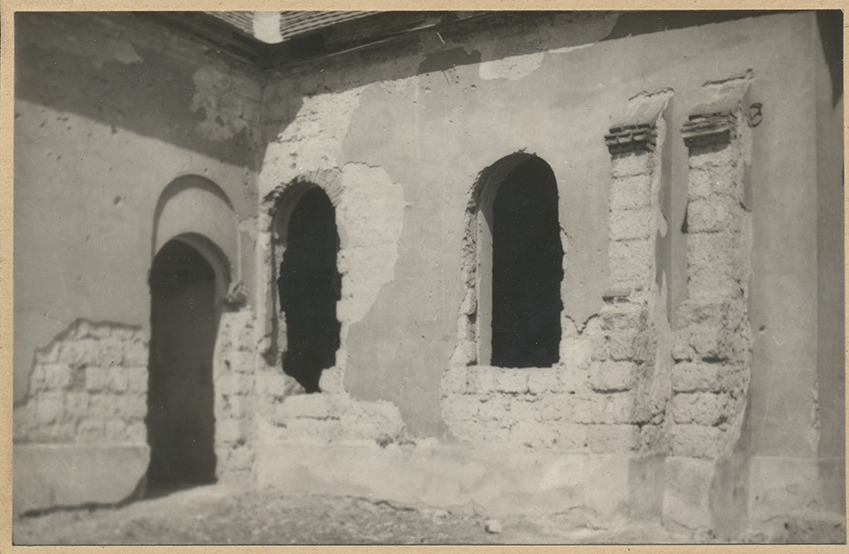
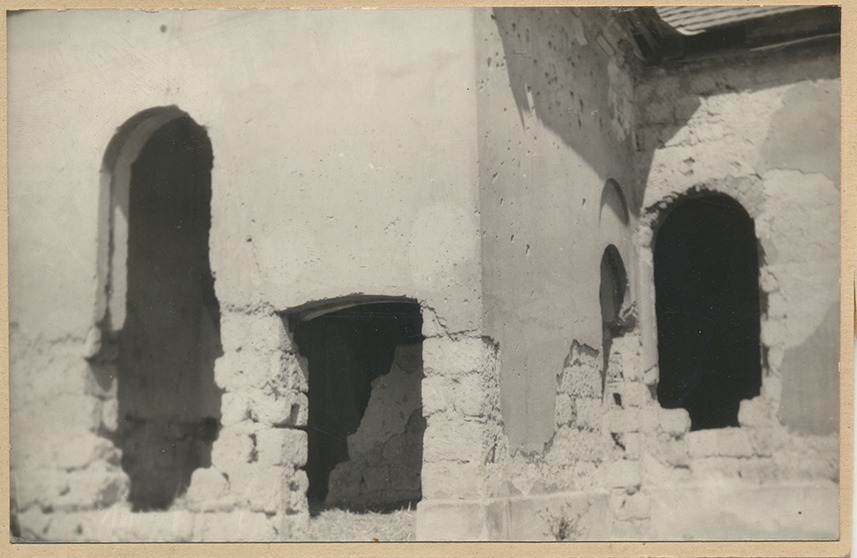
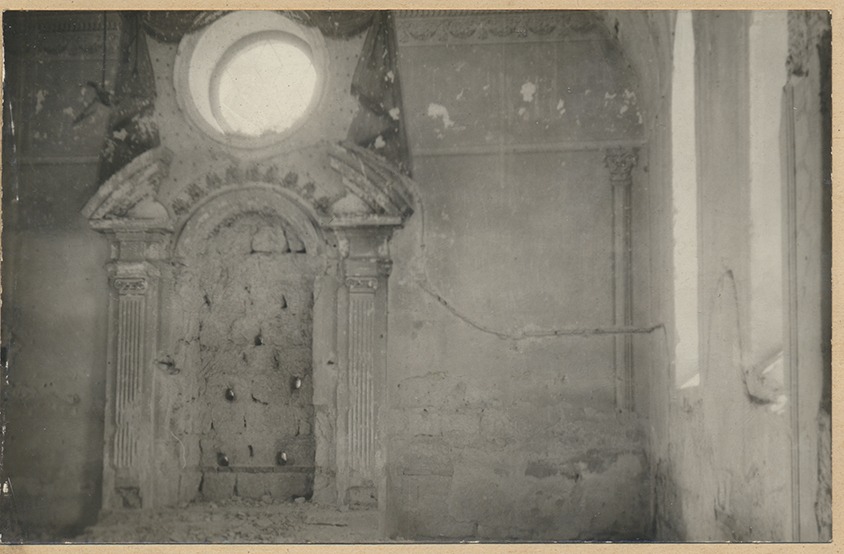
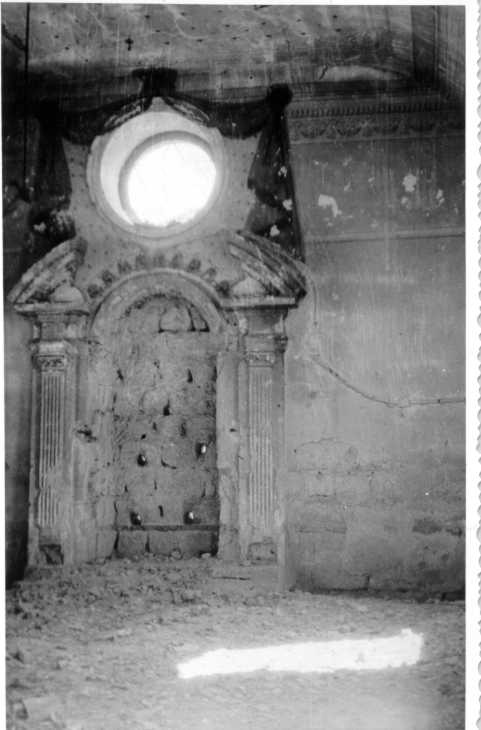
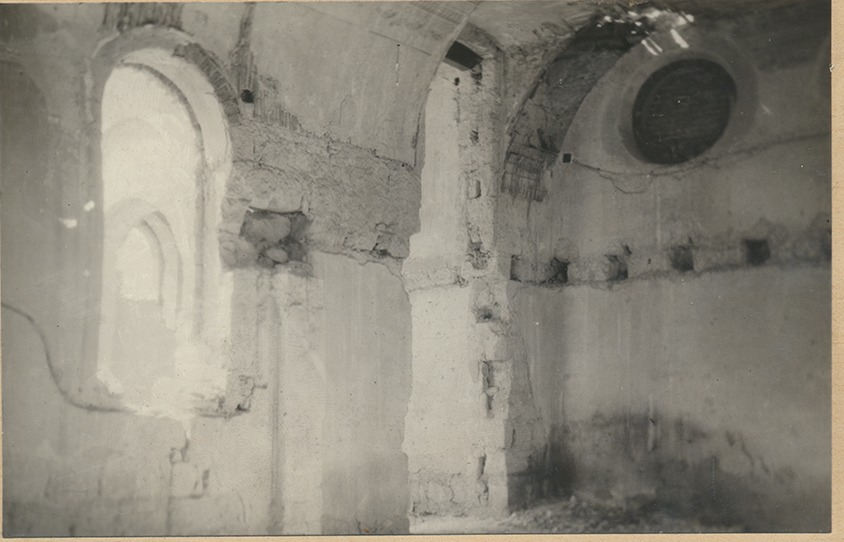
Füzesabony lies on the northern edge of the Great Hungarian Plain, south of Eger, on the Budapest–Miskolc main railway line. Its small Jewish community, about two hundred people at every census between 1880 and 1930, was Orthodox and for decades a branch of the Eger congregation. The synagogue is dated 1910 by Pinkas Hakehillot and by Anikó Gazda's national survey, and 1912 by local historians, who add that Count Mihály Károlyi, a landowner in neighbouring Kál who entered parliament in 1910, gave the congregation a large sum towards it. Old postcards show a modest single-storey hall with shaped, pinnacled gables and round-arched windows; a village teacher writing in 1935 called it 'a small prayer house'. After the deportations of 1944 only about twenty-five Jews came back. Photographs in the Hungarian Jewish Museum and Archives, dated after 1945, show the building stripped and ruinous, its ark niche empty. According to a local history issued by the town, it was demolished in the early 1950s 'for political considerations'. Its exact plot has not been identified in the sources consulted, and it is known today only from a handful of photographs and postcards.
Where it stood for nearly 45 years
Exact address unknown. Approximate location: centre of Füzesabony, near the town hall (Polgármesteri Hivatal) and the artesian well on Rákóczi Ferenc út, 3390 Füzesabony, Heves county.
Abrir mapa ampliado →La comunidad judía
Local accounts say that eight to ten poor Jewish families moved to Füzesabony from Dormánd and Poroszló between 1810 and 1815, dealing in feathers, hides and general goods, and that larger numbers arrived after 1853; another account holds that the Church, which owned the village, kept Jews out until the later nineteenth century. The foundation of the congregation is dated variously to 1835, 1880 or 1906. It joined the Eger community in 1885, followed the Orthodox rite, and became independent in 1923 or 1930, later taking in the small communities of Dormánd and Mezőtárkány. Censuses counted 197 Jews in 1880, 211 in 1910, 182 in 1920, 203 in 1930 and 170 in 1941, while the total population grew from 3,821 to 6,133. A Jewish school opened in 1883–84 but was closed because of its unhealthy premises; the congregation organised a regular school around 1903. Jews ran much of the town's trade in grain, timber, livestock and groceries, along with inns, a soda-water works and the station restaurant. In the mid-1930s the community numbered 56 families.
Arquitectura y diseño
No plans, building records or architect's name have been found, so the description rests on postcards and photographs. They show a free-standing, single-storey rectangular hall under a tiled pitched roof, set behind a paling fence on an open, unpaved square beside a low house. The entrance front had a tall shaped gable framed by piers that rose above the roof line as finials, with a round window set high in the wall. The long wall facing the camera had three tall round-arched windows between shallow buttress-like pilasters, and the rear gable repeated the scrolled, pinnacled outline on a smaller scale above quoined corners. Photographs of the ruin show a lower, hipped-roofed annexe against one end. Inside, the ark stood in a round-headed niche framed by fluted pilasters and a broken pediment, beneath a circular window around which a draped curtain appears to have been painted on the wall; a moulded cornice ran below the ceiling. The style is a plain round-arched historicism with neo-Baroque gables. A local guide records that water from the town's artesian well, drilled around 1928–30, was later piped to the synagogue for ritual bathing.
La vida dentro de la sinagoga
The congregation was Orthodox and maintained, besides the synagogue, a school, a cheder, a women's association and a ritual bath. Newspaper reports give glimpses of the building in use during the First World War. In mid-February 1915 the army rabbi József D. Schück held a service for Jewish soldiers stationed in Füzesabony in the 'Israelite prayer house', which was filled with worshippers and with townspeople of other faiths, and he returned on the king's birthday that August, preaching in Hungarian and German. In March 1916 the Jewish school staged a charity performance. Three or five members of the community, depending on the source, fell in that war. In 1936 the rabbi was Salamon Klein, the president József Weisz, the warden Elek Heller, the auditor Sándor Spitzer and the treasurer Kálmán Schlosszer; Hertz Mendelovich was the ritual slaughterer. By 1935 the one-room Jewish elementary school had no teacher and was suspended. There was no organised Zionist activity in the town.
Destrucción
The synagogue lost its congregation in May and June 1944, when the Jews of Füzesabony were taken to the Bagólyuk camp near Egercsehi and deported to Auschwitz. What happened to the building in the following months, when the front passed through the town, is not recorded. Photographs in the Hungarian Jewish Museum and Archives, dated only 'after 1945', show it still standing but gutted: windows and doors gone, the lower walls broken open, the roof holed and the ark niche stripped bare. The few survivors were in no position to restore it. Under Hungary's Communist regime the synagogue was demolished in the early 1950s; a local history issued by the town says that it was pulled down 'for political considerations'. That source does not name the office or person that ordered or carried out the work, and no document recording the decision has been found. Other local and genealogical accounts say only that the building was demolished after the Second World War, and Anikó Gazda's survey of the 1980s lists it among the synagogues that no longer stood.
El destino de la comunidad
From 1938 the anti-Jewish laws ruined the town's Jewish shopkeepers and craftsmen: licences were withdrawn, and a third of the community came to depend on relief. In 1942 fifteen young men were called up for forced labour. After the Nazi German occupation of Hungary in March 1944, ten leading members were arrested and interned; none survived. At Passover the adults were ordered to the market square with spades, abused by the district official and put to a month of earth-moving. On 9 May 1944 Hungarian authorities took the Jews of Füzesabony, 127 people including the rabbi, to the ghetto camp at Bagólyuk near Egercsehi; they were later moved to Kerecsend and deported through Kassa to Auschwitz in mid-June. That year Jewish forced labourers were also tortured and killed in the Bereg forest outside the town. About twenty-five survivors returned, reorganised the congregation and raised a memorial to the dead. A 1947 survey counted 22 members; in 1949 the Orthodox community, led by Lajos Stein, still had 22, and it dissolved soon afterwards. By 1964 only a handful of Jews, three or eight by different accounts, lived in the town.
El lugar hoy
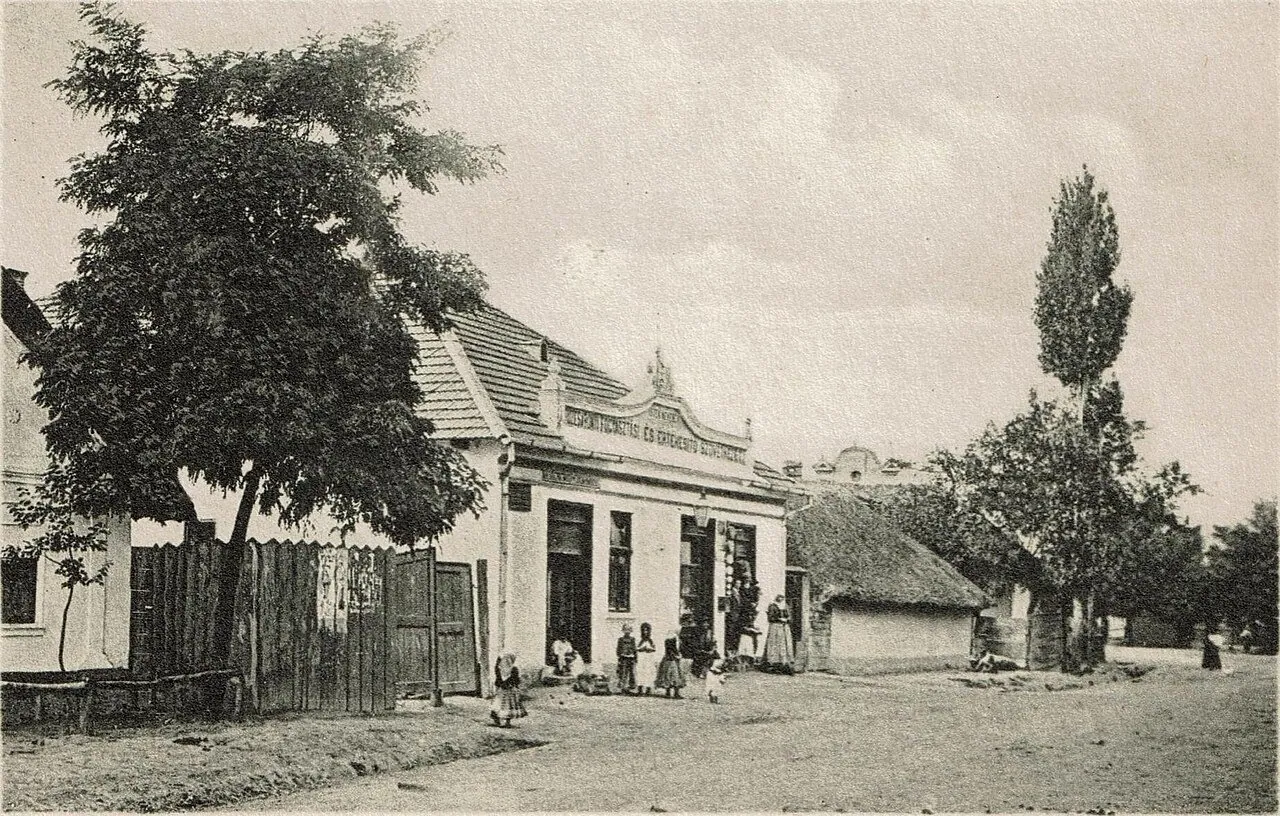
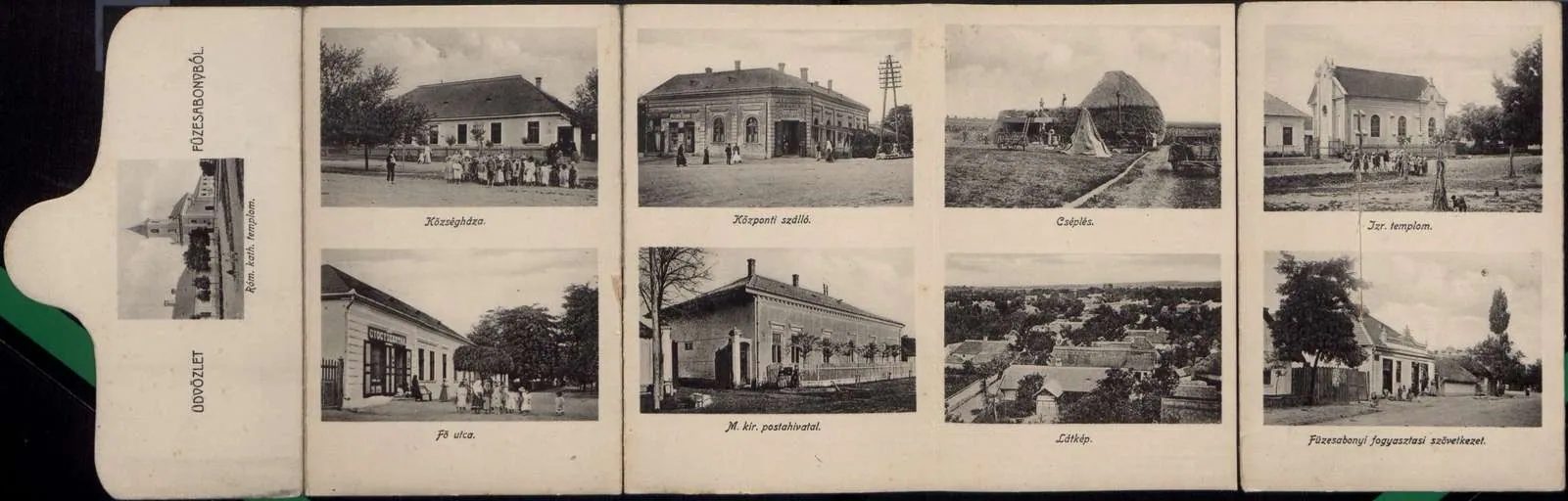
The plot on which the synagogue stood has not been identified in the sources consulted, and no remains are reported. There are two topographical clues. A local guide says that water from the artesian well, which a 1935 monograph places in front of the village hall, was piped to the synagogue for ritual bathing; and a postcard of the 1910s shows what Wikimedia Commons identifies as the synagogue's gable rising behind the shop of the Füzesabony consumer cooperative. What occupies the site today is unknown. The building survives only in postcards and photographs, some kept in the town library's local-history collection. OpenStreetMap records a Holocaust memorial stele of 2014 near the railway station on Szihalmi út. A Jewish cemetery lies at the edge of the town.
Nombres destacados
Mihály Károlyi
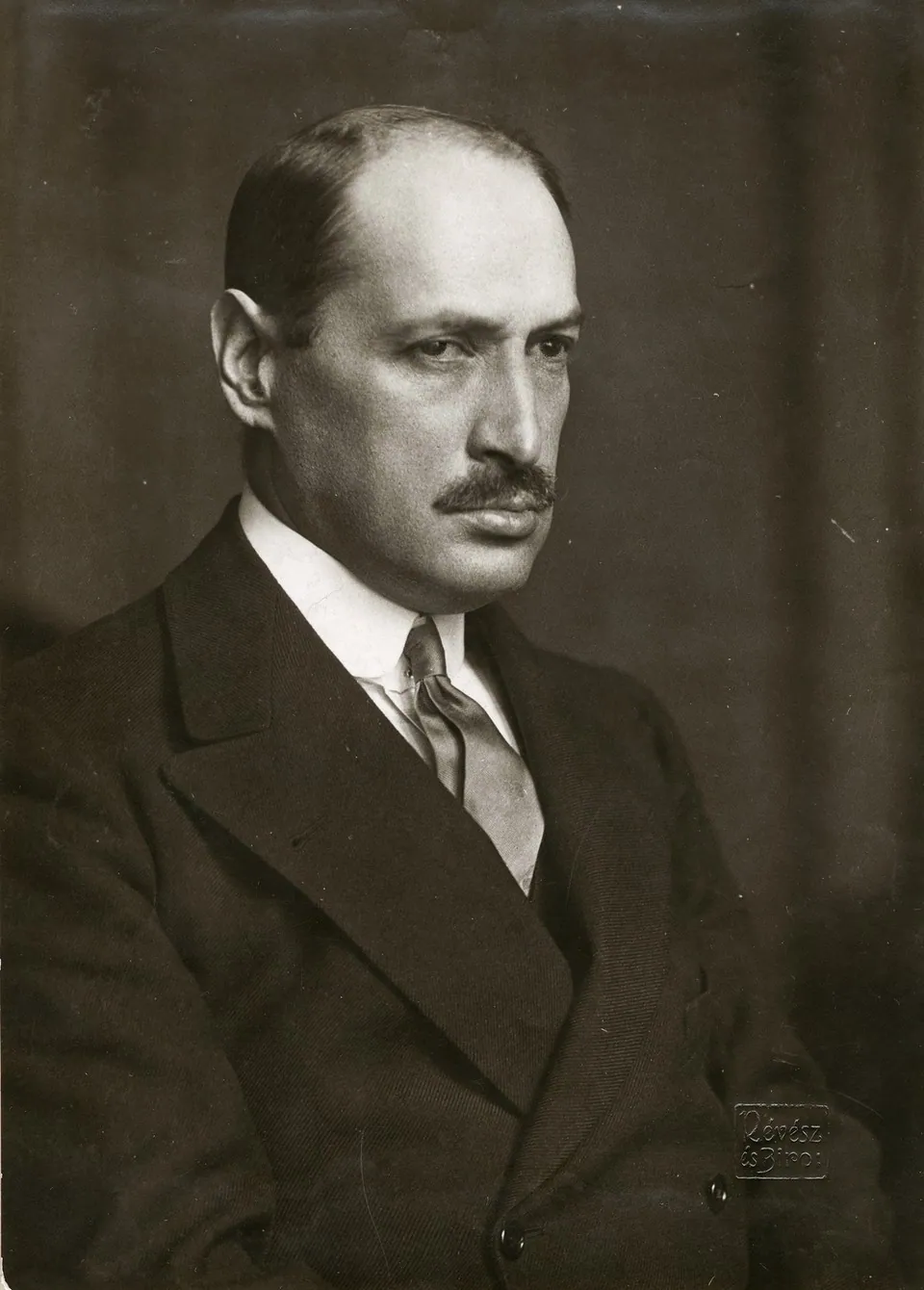
1875–1955Benefactor of the synagogue; landowner and member of parliamentCount Mihály Károlyi, a landowner in neighbouring Kál and later president of Hungary, entered parliament in 1910; a smallholder politician recalled in 1940 that his narrow majority had come from the Jewish voters of Füzesabony. Local historians write that in 1912 he gave the Füzesabony congregation a large sum, perhaps in return for that support, and that the synagogue was built with it.
Biografía o fuente →Salamon Klein
Born 1894; died in the HolocaustRabbi of FüzesabonySalamon Klein was the rabbi of the Orthodox congregation of Füzesabony in 1936, when it was still a branch of the Eger Orthodox community and was seeking independence, and he served in the synagogue until 1944. He was among the 127 Jews taken from Füzesabony to the Bagólyuk ghetto camp in May 1944. A regional victims' list records him as born at Kassa (Košice) in 1894 and associates his name with Zittau.
Biografía o fuente →József Weisz
UnknownPresident of the congregationJózsef Weisz, a grain merchant, was president of the Füzesabony Israelite congregation in 1936, alongside Rabbi Salamon Klein, the warden Elek Heller, the auditor Sándor Spitzer and the treasurer Kálmán Schlosszer. A József Weisz born in Füzesabony in 1894 is listed among the town's Holocaust victims as having died at Mauthausen; whether this was the same man has not been confirmed.
Biografía o fuente →¿Tiene algo que aportar?
Fotografías, documentos, historias familiares o recuerdos de esta sinagoga y su comunidad ayudan a mantener viva su historia.
- Helyismereti gyűjtőmunka a Füzesabonyi Városi Könyvtárban (thesis, Eger, 2000), ch. 3.4 "A zsidóság Füzesabonyban"
- Füzesabony település településföldrajza (thesis, Eger, 2008)
- Modern urbanizáció: Füzesabony város bemutatása
- Füzesabony 1935-ös monográfiája (written 1934–35; annotated edition, Füzesabony, 2012)
- Füzesabony
- Magyarországi zsinagógák (survey of 1980–87), county table for Heves
- פיזשאבון (Füzesabony)
- Füzesabonyi zsinagóga (postcard detail, inv. F70.134)
- Füzesabonyi zsinagóga romos épülete (inv. F70.135) and romos belső tere (F70.136)
- Füzesabonyi zsinagóga romos állapotban (inv. F2021.62–65), dated "1945 u."
- Üdvözlet Füzesabonyból (leporello postcard with a view captioned "Izr. templom")
- Katonai istentisztelet Füzesabonyban, Egri Újság, 17 February 1915
- Hírek, Egri Újság, 21 August 1915
- Egri Újság, 21 March 1916
- Egri Újság, 1 May 1940
- Gettómagyarország, 1944: a Központi Zsidó Tanács iratai (Budapest, 2002), daily reports from provincial ghettos
- Dokumentumok a Heves megyei zsidó lakosok kitelepítéséhez, Archívum 19 (Eger, 2010)
- Mátrai Tanulmányok (Gyöngyös, 1999), p. 91
- A zsidó népesség száma településenként (1840–1941)
- Adalékok a népiskolák és néptanítók helyzetéhez Heves megyében
- Heves Megyei Hírlap, 13 February 2020 (reprint of a 1903 county newspaper item)
- FUZESABONY: Heves
- OpenStreetMap node 2865703559 (water well, Rákóczi Ferenc út, Füzesabony)
- OpenStreetMap node 11108289702 (Holokauszt emlékmű, Szihalmi út)
- Halott munkaszolgálatosok (inv. F65.699)
- Mihály Károlyi
- File:Füzesabony - postcard. Synagogue.jpg (and the crops File:Füzesabony Synagogue.jpg, File:Füzesabonyi fogyasztasi szövetkezet. Zsinagoga.jpg)
Share a memory or thought
No comments yet. Be the first to add one.