
La historia de Great Synagogue of Danzig
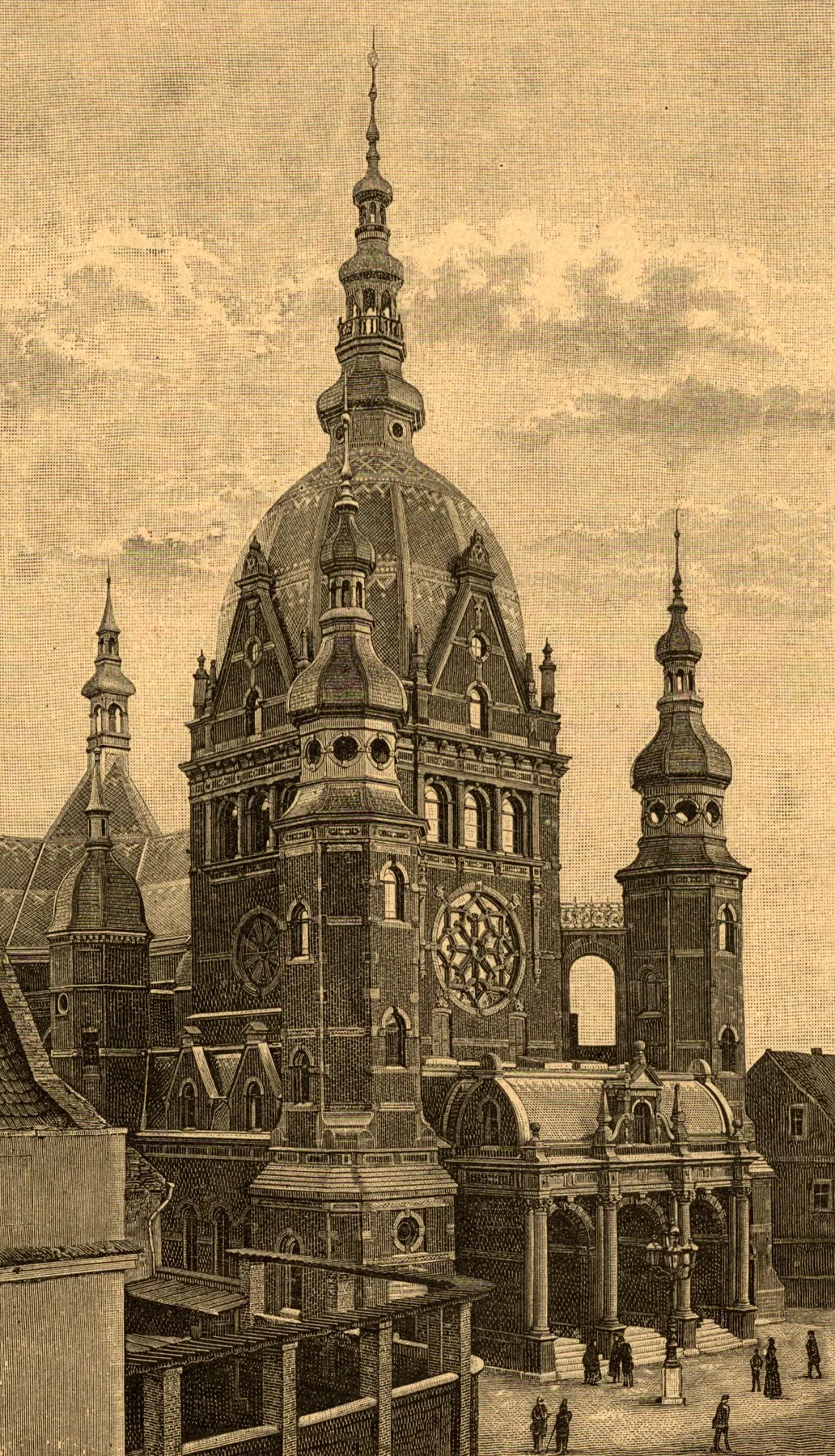
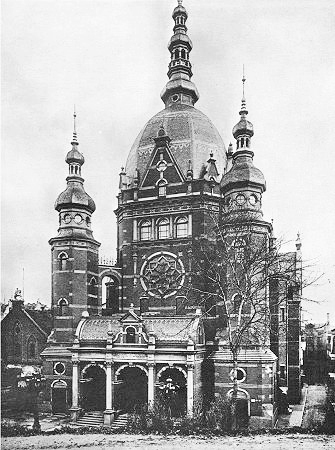
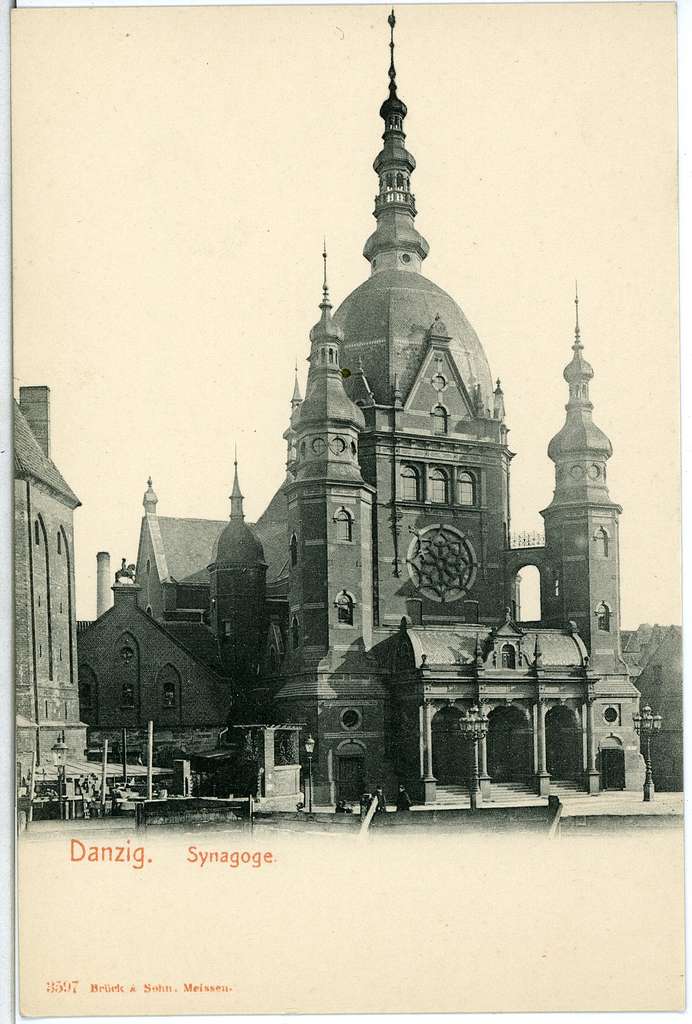
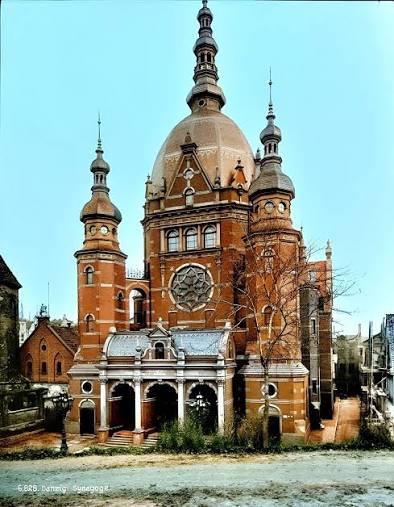
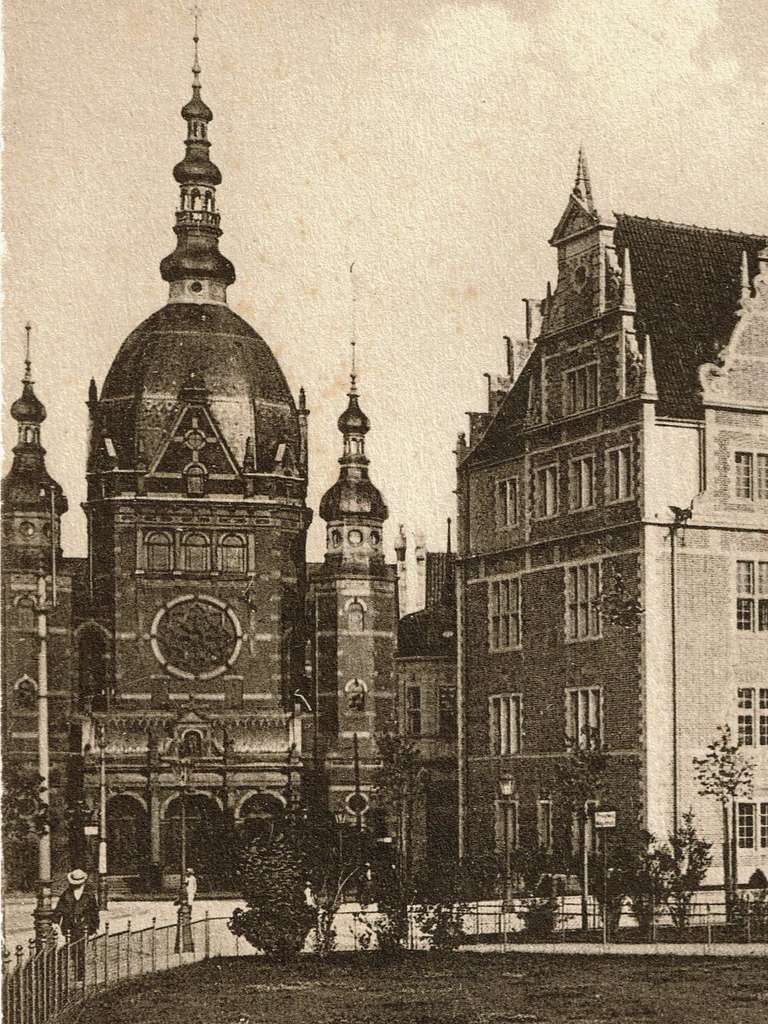
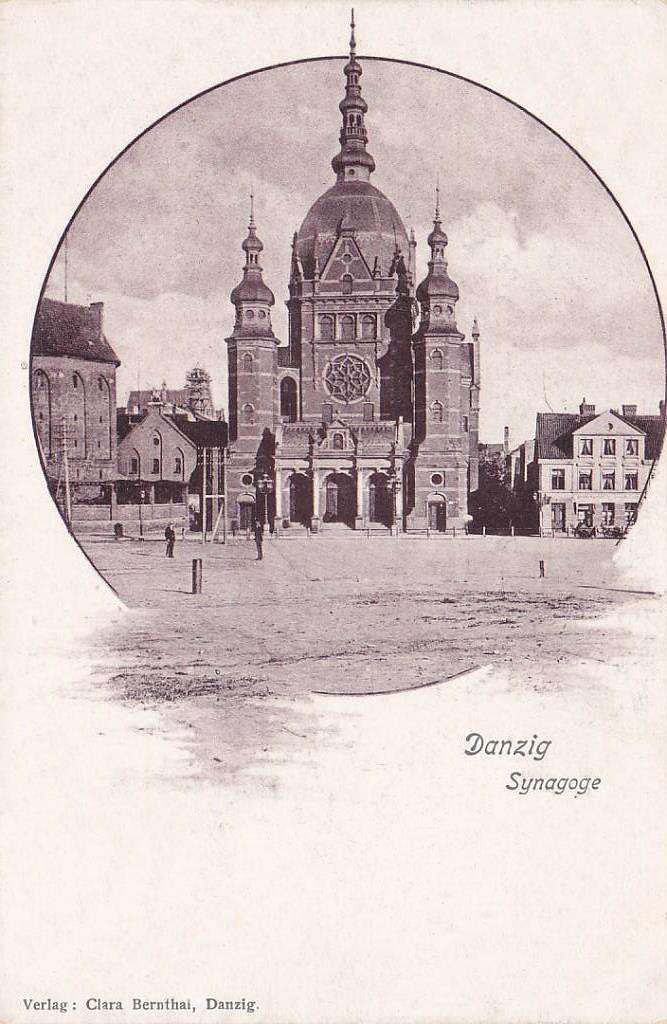
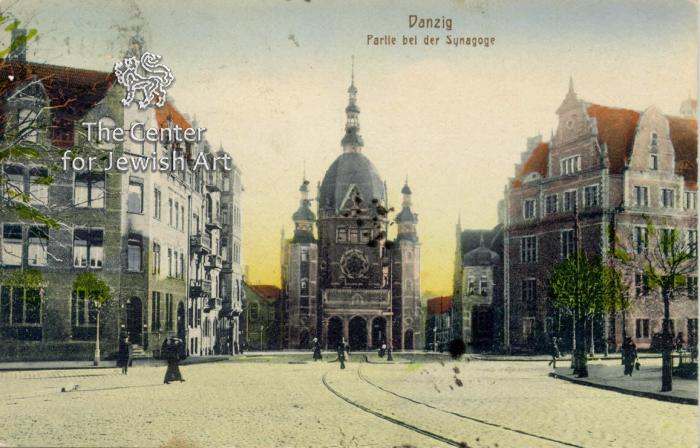
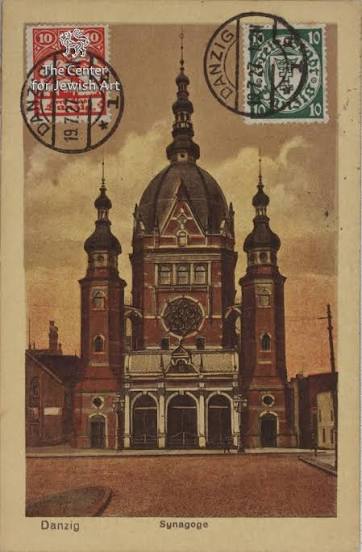
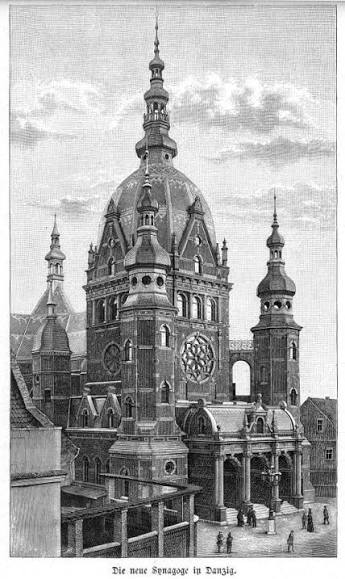
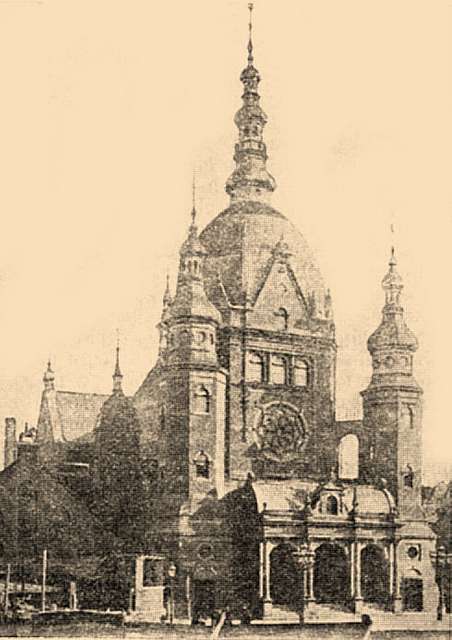
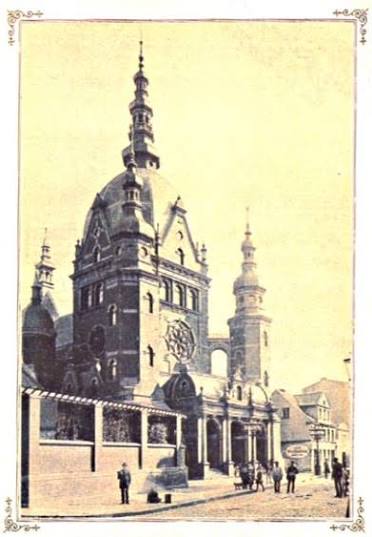
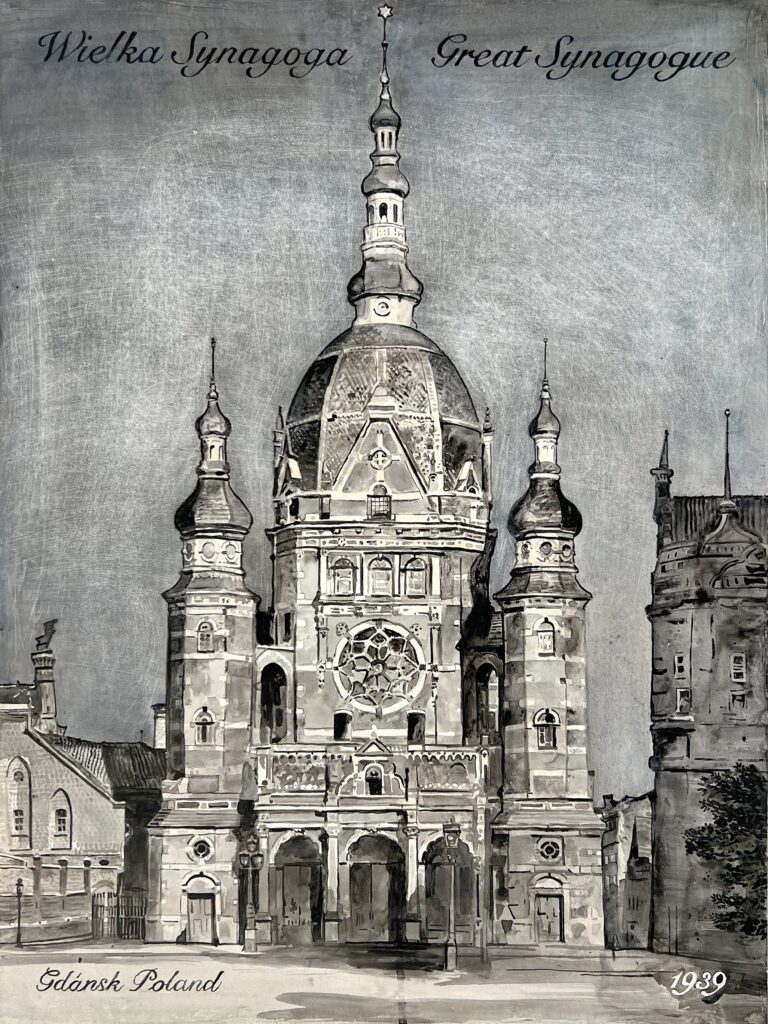
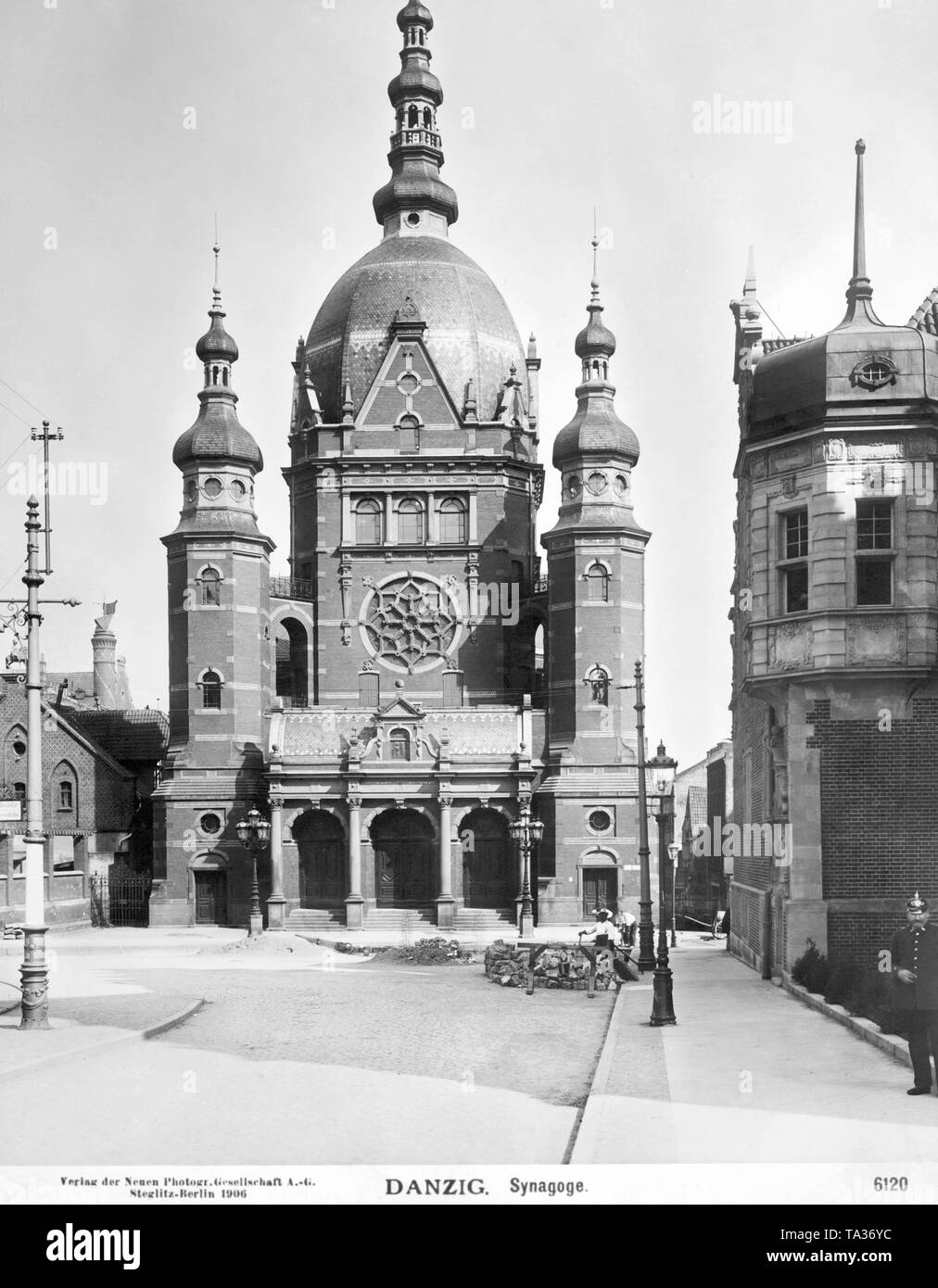
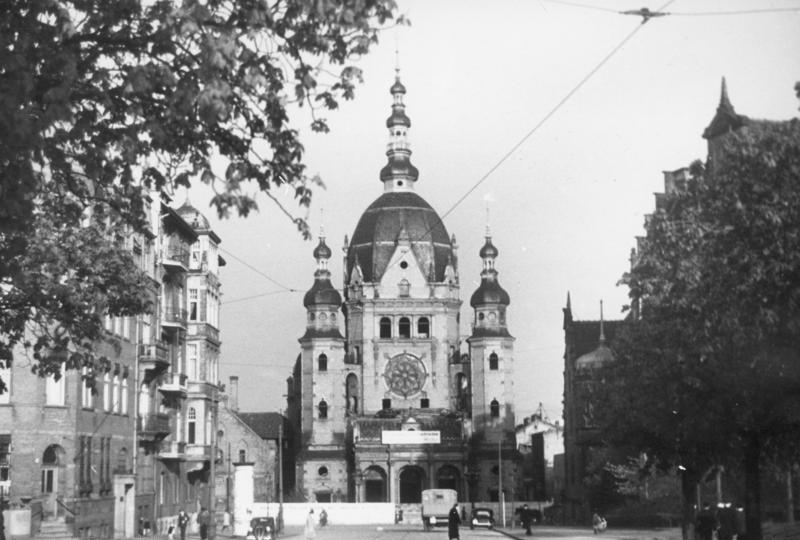
The Great Synagogue stood at An der Reitbahn 11/13 (today ul. Wojciecha Bogusławskiego) in Danzig, then a Prussian city and from 1920 the Free City of Danzig. It was built in 1885–1887 after the city's separate Jewish congregations united in the early 1880s, and it was dedicated on 15 September 1887 by Rabbi Kossmann Werner in the presence of senior civic and military officials. Designed by the Berlin architects Hermann Ende and Wilhelm Böckmann, it combined a large western dome and lantern with two towers crowned by Stars of David; sources put its overall height at roughly 54 to 60 metres, making it a landmark on the city skyline. The hall held about 2,000 people, and the complex housed an organ, a large choir and, from 1904, Lesser Giełdziński's celebrated Judaica collection. After years of Nazi pressure and an antisemitic pogrom in October 1937, the community voted in December 1938 to liquidate its property to pay for emigration. The last service took place on 15 April 1939 and demolition began at the start of May 1939. Much of its ritual collection survived because it was shipped to New York.
Where it stood for 52 years
Historic: An der Reitbahn 11/13, Danzig. Present: ul. Wojciecha Bogusławskiego, Gdańsk, on the plot partly occupied by the Gdańsk Shakespeare Theatre; wall outline marked in basalt stones. Location approximate.
Abrir mapa ampliado →La comunidad judía
Jews lived in and around Danzig for centuries, and around 1821 about 2,260 Jews made up roughly 4 percent of the city's population. For much of the nineteenth century worship was divided among several independent congregations. In the 1880s five of them merged into a single community, and the new Great Synagogue was conceived as the visible expression of that unity. The site, a former riding school on the Reitbahn close to the historic centre, was bought at the end of 1884. Construction was financed by members' contributions, a donation from the Danzig-born Berlin banker Carl Fürstenberg and a loan from a Danzig bank; one account puts the total cost at 450,000 marks. In the early twentieth century the community numbered about 2,500 people, and by about 1929 it had grown to roughly 5,870, around 2.5 percent of the Free City's population.
Arquitectura y diseño
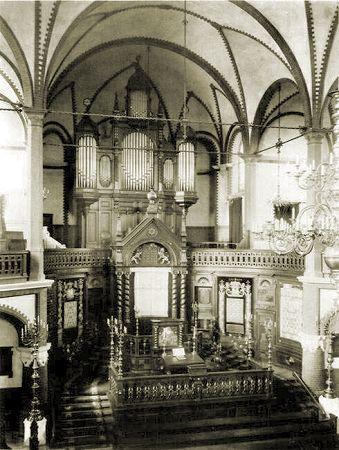
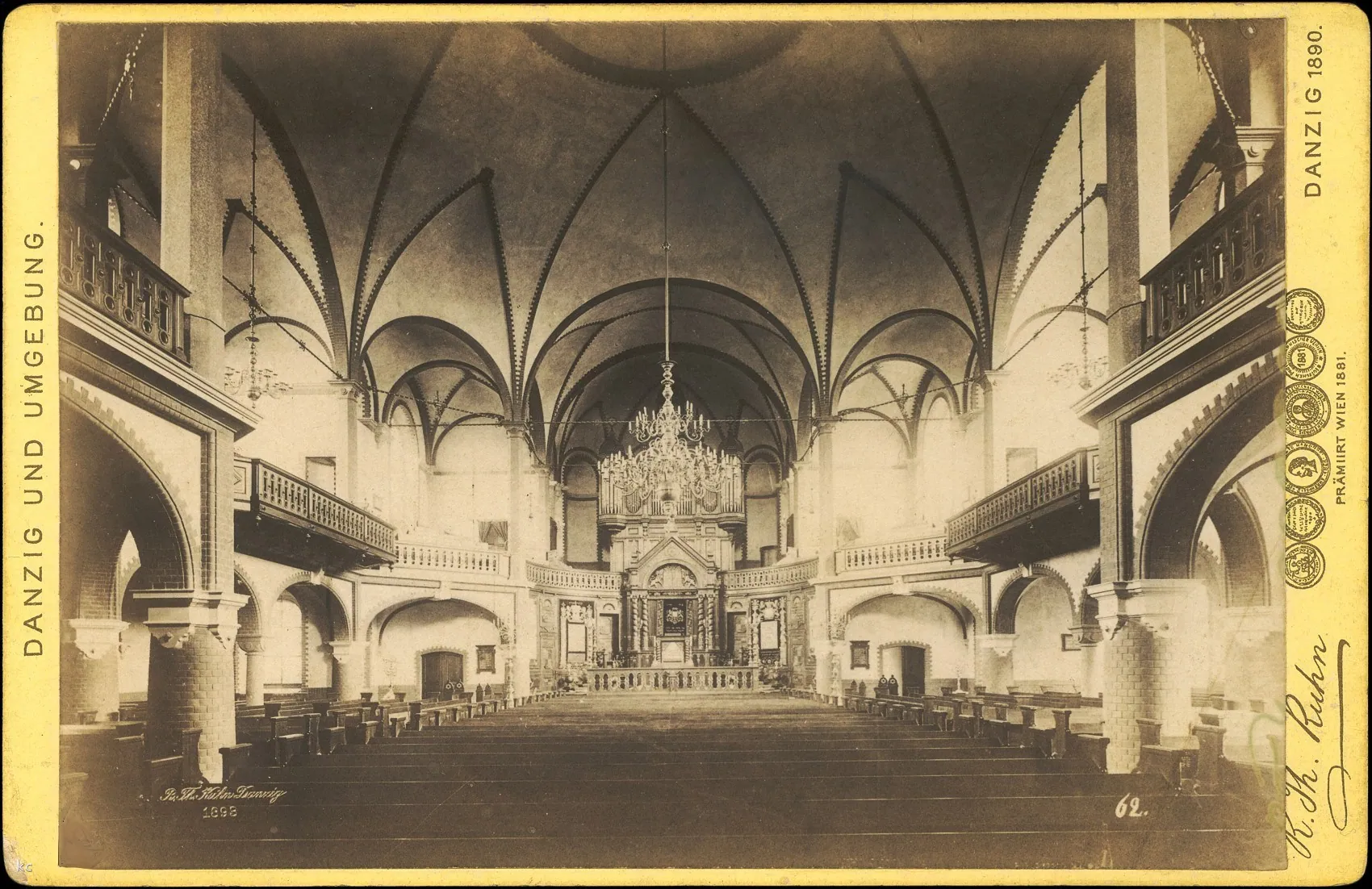
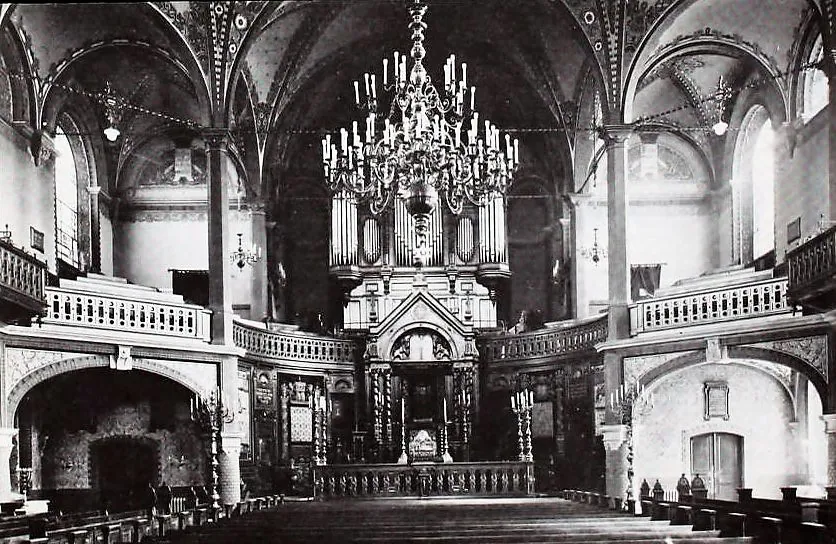
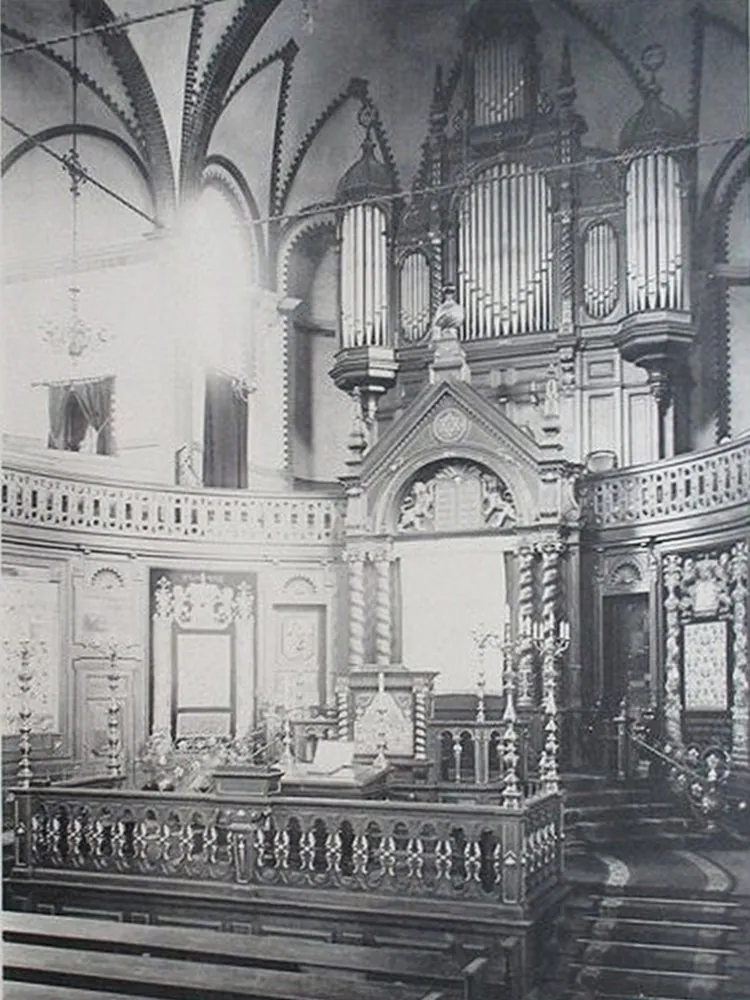
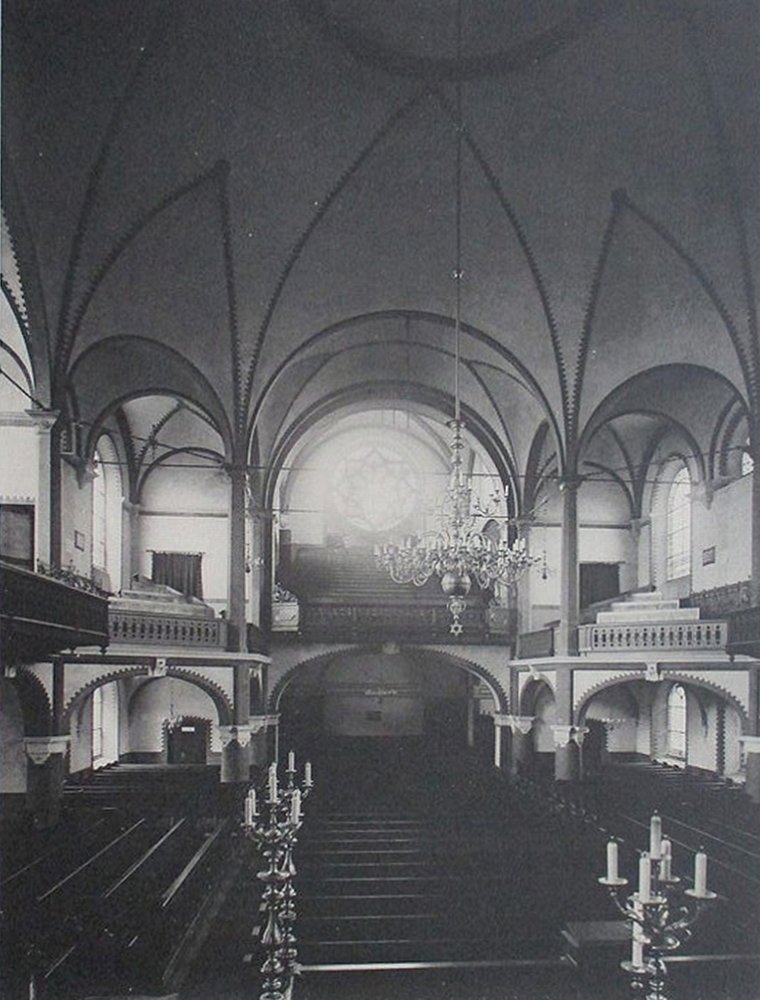
Ende & Böckmann designed the synagogue to harmonise with Danzig's historic architecture, combining the city's Neo-Renaissance idiom with Moorish or Oriental motifs; sources differ on which element dominated. The exterior was marked by a large western dome crowned by a lantern that was lit at night, two stylised towers carrying Stars of David, and a large stained-glass window centred on a Star of David. Inside, a sail-vaulted prayer hall held two blocks of benches for about 1,600 people, with arcaded galleries on columns, a women's gallery on the south side and an amphitheatre-like western gallery for about 300. In the eastern apse the Torah ark stood on a raised platform beneath the Tablets of the Law, supported by two carved lions, with the choir loft above. Large chandeliers lit the hall, and the walls carried painted biblical verses. Heating and electric light were added in the late nineteenth century, and a mikveh and burial-society building followed in 1898.
La vida dentro de la sinagoga
The Great Synagogue was the centre of Danzig's Jewish religious and cultural life, and music played an especially prominent part. Services were accompanied by an organ built by the Terlecki firm of Elbląg and by a large choir, which one account puts at 100 voices. Cantor Jacob Meisel, who served from 1906 to 1936, shaped a distinctive liturgical musical tradition. Rabbi Kossmann Werner dedicated the building, and Max Freudenthal served as rabbi from 1900. From 1904 the complex's wedding hall housed the Judaica collection of the merchant Lesser Giełdziński, then one of the largest of its kind. The synagogue also hosted civic occasions: in 1935 the community held a memorial service there for the Polish leader Józef Piłsudski. Ordinary attendance was far below capacity, with one source estimating 300 to 500 worshippers at regular services.
Destrucción
The synagogue was lost through coercion rather than a single act of arson. After the Nazi party won a majority in the Danzig government in 1933, Jews faced boycotts and segregated schooling, and a violent antisemitic pogrom in October 1937 drove about half the community to leave. In August 1938 Nazi sympathisers broke in and trampled Torah scrolls. The building escaped burning in the November 1938 pogrom, reportedly because of its proximity to the police. Under mounting pressure, the community's general assembly resolved on 17 December 1938 to liquidate its property to finance emigration, and the Nazi-dominated Senate of the Free City bought the synagogue; the city valued all Jewish communal property at only 330,000 Danzig gulden. The last Sabbath service was held on 15 April 1939. Demolition by the Nazi-controlled city administration began at the start of May 1939: a German Federal Archives photograph dated 1 May 1939 shows the work under way, while other sources give 2 May.
El destino de la comunidad
About half of Danzig's Jews had left by the end of 1937, and emigration accelerated after the sale of communal property. Before dispersing, the community sent its archives to Jerusalem, its library to Vilnius, and its ceremonial objects, including the Giełdziński collection, to the Jewish Museum in New York; the organ went to Kraków and the pews to a church in Nowy Port. By summer 1939 only about 1,700 Jews remained. After Germany annexed Danzig on 1 September 1939, those who stayed were confined in ghetto housing or sent to concentration camps. Further deportations followed in 1941, and in 1943 the remaining Jews were deported to Auschwitz-Birkenau. A Holocaust museum community profile records that only about 20 Jews survived in the city. The rescued objects were later published and exhibited as 'Danzig 1939: Treasures of a Destroyed Community' (1980).
El lugar hoy
No fabric of the synagogue stands above ground. After the Jewish Religious Community of Gdańsk sought the return of the property in 1998, the former plot was divided between the community, the Theatrum Gedanense Foundation and a state security office, with property exchanges completed in 2007. The Gdańsk Shakespeare Theatre, opened in September 2014, now occupies part of the former site. In late 2013 lines of basalt stones were laid to mark the outline of the synagogue's walls. The street, formerly An der Reitbahn, is now ul. Wojciecha Bogusławskiego.
Nombres destacados
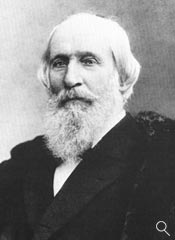
Hermann Ende
1829–1907Architect (partner, Ende & Böckmann)Berlin architect Hermann Ende was one of the two partners of Ende & Böckmann, the firm commissioned by Danzig's unified Jewish community to design its Great Synagogue, built 1885–1887. Working with the royal building office responsible for Danzig, the firm produced the domed, twin-towered design intended to harmonise with the historic city, creating one of the most prominent buildings on its skyline.
Biografía o fuente →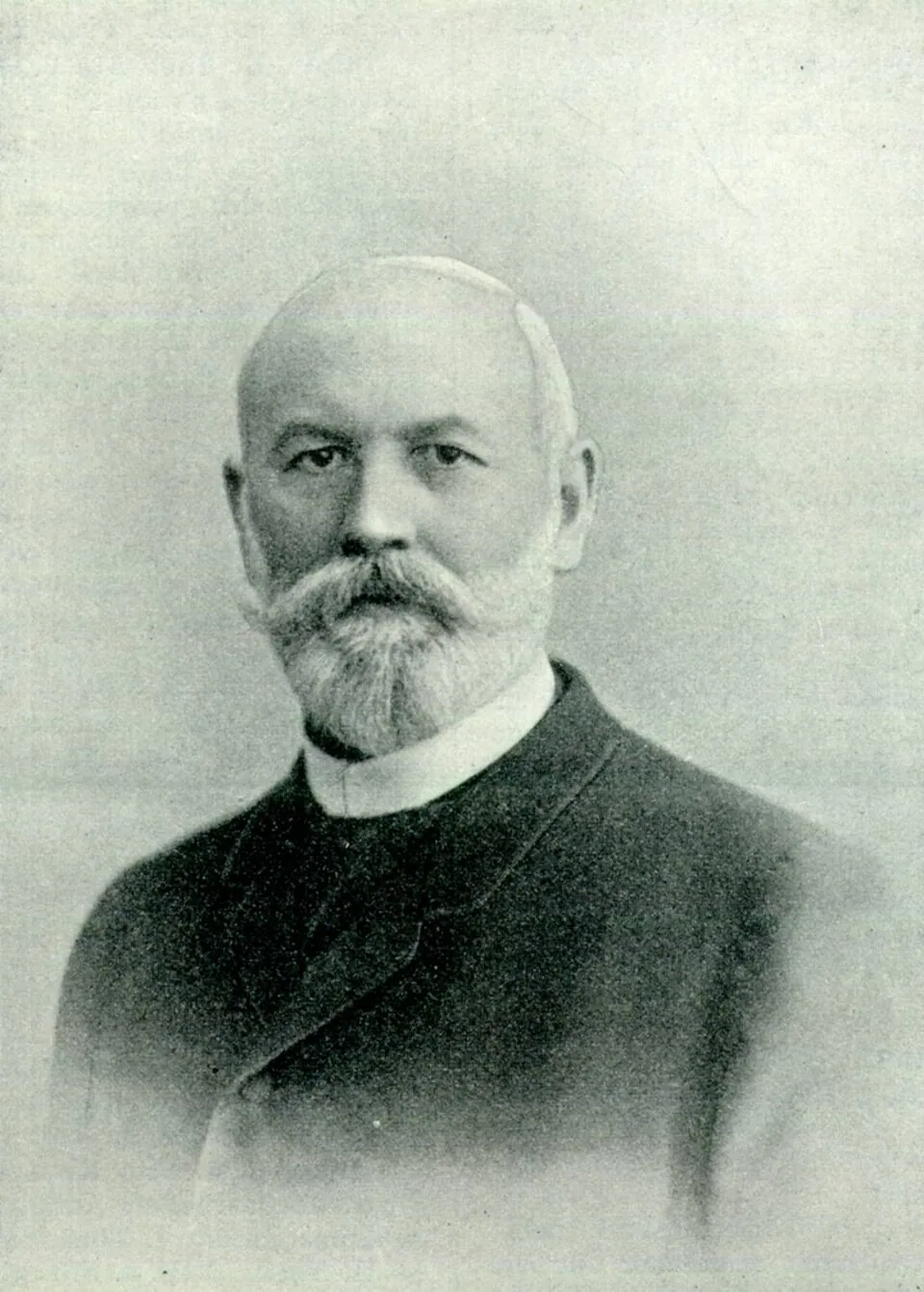
Wilhelm Böckmann
1832–1902Architect (partner, Ende & Böckmann)Wilhelm Böckmann, co-founder of the Berlin practice Ende & Böckmann, shared responsibility for the design of the Great Synagogue of Danzig. The building, dedicated in 1887, combined a large western dome and lantern with two Star-of-David towers and a sail-vaulted hall for about 2,000 worshippers, and was among the firm's notable religious commissions.
Biografía o fuente →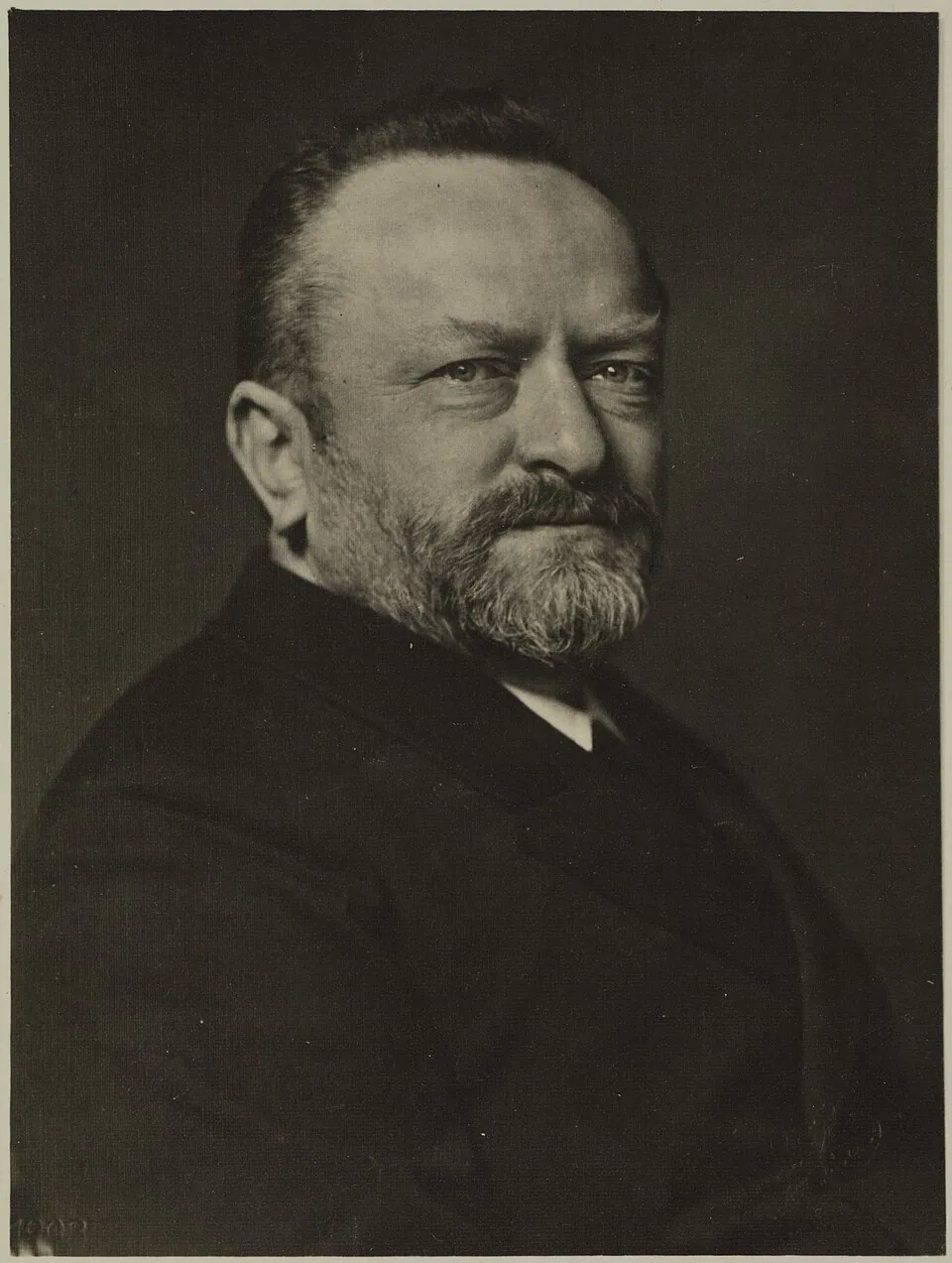
Kossmann Werner
1854–1918RabbiRabbi Kossmann (Cosmann) Werner was the chief rabbi of Danzig's unified Jewish community when the Great Synagogue opened. He led the dedication ceremony on 15 September 1887, attended by the provincial governor, the mayor and naval officers, formally inaugurating the building as the community's principal house of worship.
Biografía o fuente →
Max Freudenthal
1868–1937RabbiMax Freudenthal served as rabbi of the Danzig community at the Great Synagogue from 1900. His tenure fell in the building's most active period, when the synagogue was the centre of the city's Jewish religious and musical life and when, from 1904, it began to house the Giełdziński Judaica collection.
Biografía o fuente →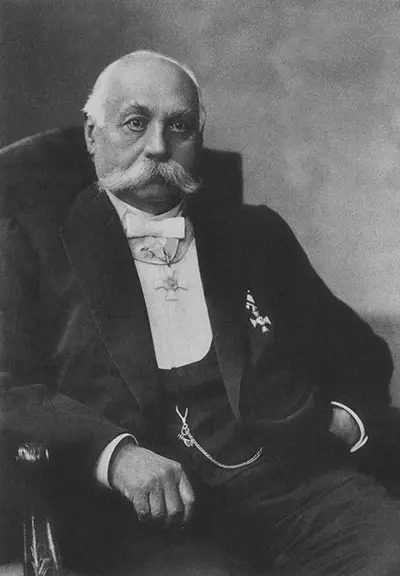
Lesser Giełdziński
1830–1910Merchant, art collector, benefactorDanzig merchant and collector Lesser Giełdziński (Gieldzinski) assembled a major collection of Judaica that, from 1904, was housed in the Great Synagogue complex, in its wedding hall. The collection became closely identified with the synagogue and, when the community dissolved in 1939, was shipped to the Jewish Museum in New York, where it survives.
Biografía o fuente →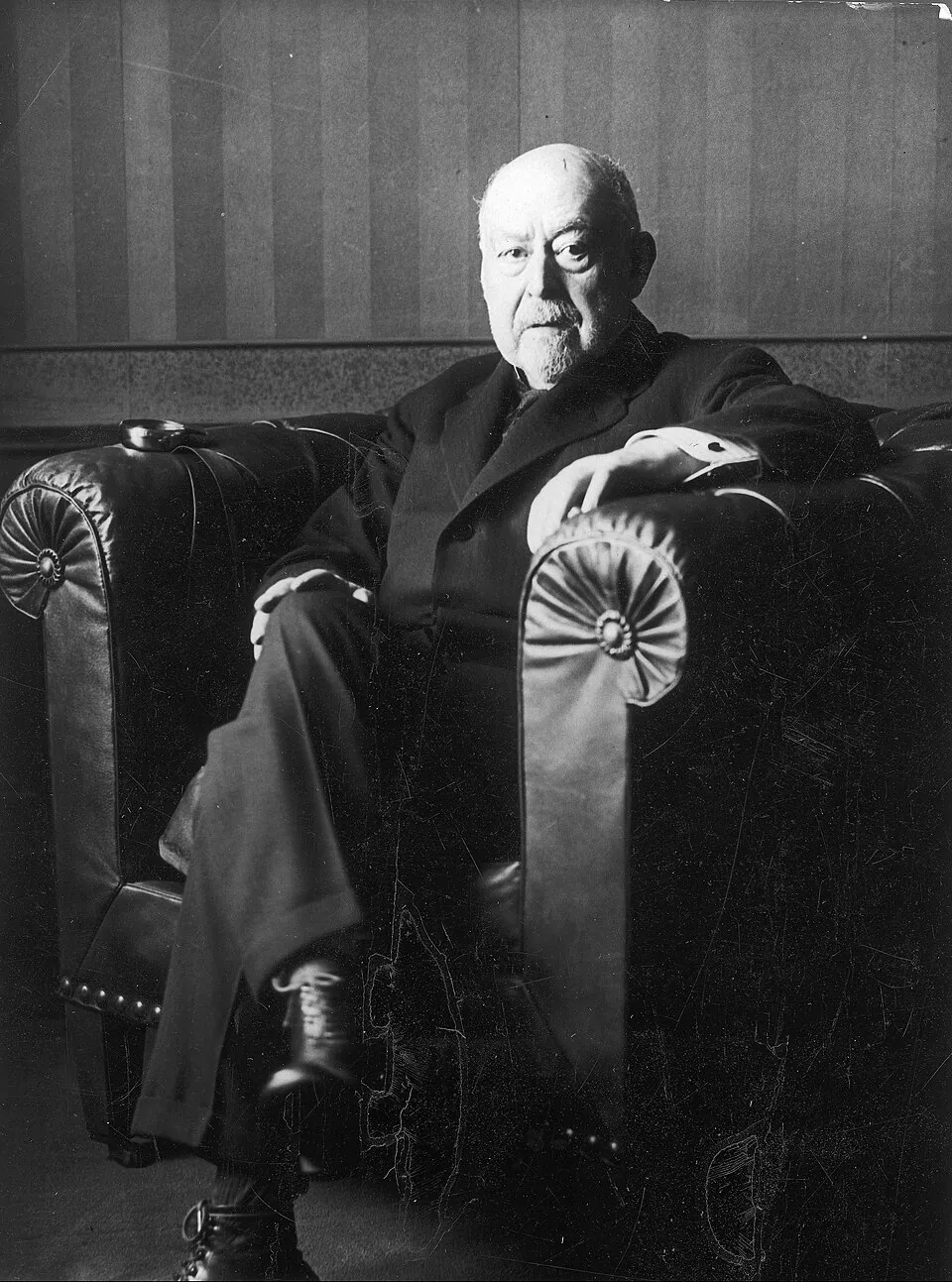
Carl Fürstenberg
1850–1933Banker, donorThe Danzig-born Berlin banker Carl Fürstenberg made a donation toward the construction of the Great Synagogue, which together with members' contributions and a loan from a Danzig bank financed the building in 1885–1887. His gift linked one of Germany's leading financiers to his native city's new communal synagogue.
Biografía o fuente →Jacob Meisel
Dates unknown (cantor 1906–1936)CantorJacob Meisel was cantor of the Great Synagogue for three decades, from 1906 to 1936. Working with the synagogue's organ and large choir, he shaped a distinctive liturgical musical tradition that made music one of the defining features of worship in the building.
Biografía o fuente →¿Tiene algo que aportar?
Fotografías, documentos, historias familiares o recuerdos de esta sinagoga y su comunidad ayudan a mantener viva su historia.
- SYNAGOGA (Wielka Synagoga)
- Wielka Synagoga
- „Wokół Wielkiej Synagogi w Gdańsku”. Opowieść o żydowskich mieszkańcach miasta
- Gdansk / Danzig – Destroyed Communities
- Blick auf die Große Synagoge in Danzig (inv. 1996/87)
- Great Synagogue (Danzig)
- Bundesarchiv Bild 146-1984-007-36A, Danzig, Synagoge
- Makieta Wielkiej Synagogi (node 10283004200)
- Cossmann Werner (Q28498334)
Share a memory or thought
No comments yet. Be the first to add one.