
История Gödöllő Synagogue
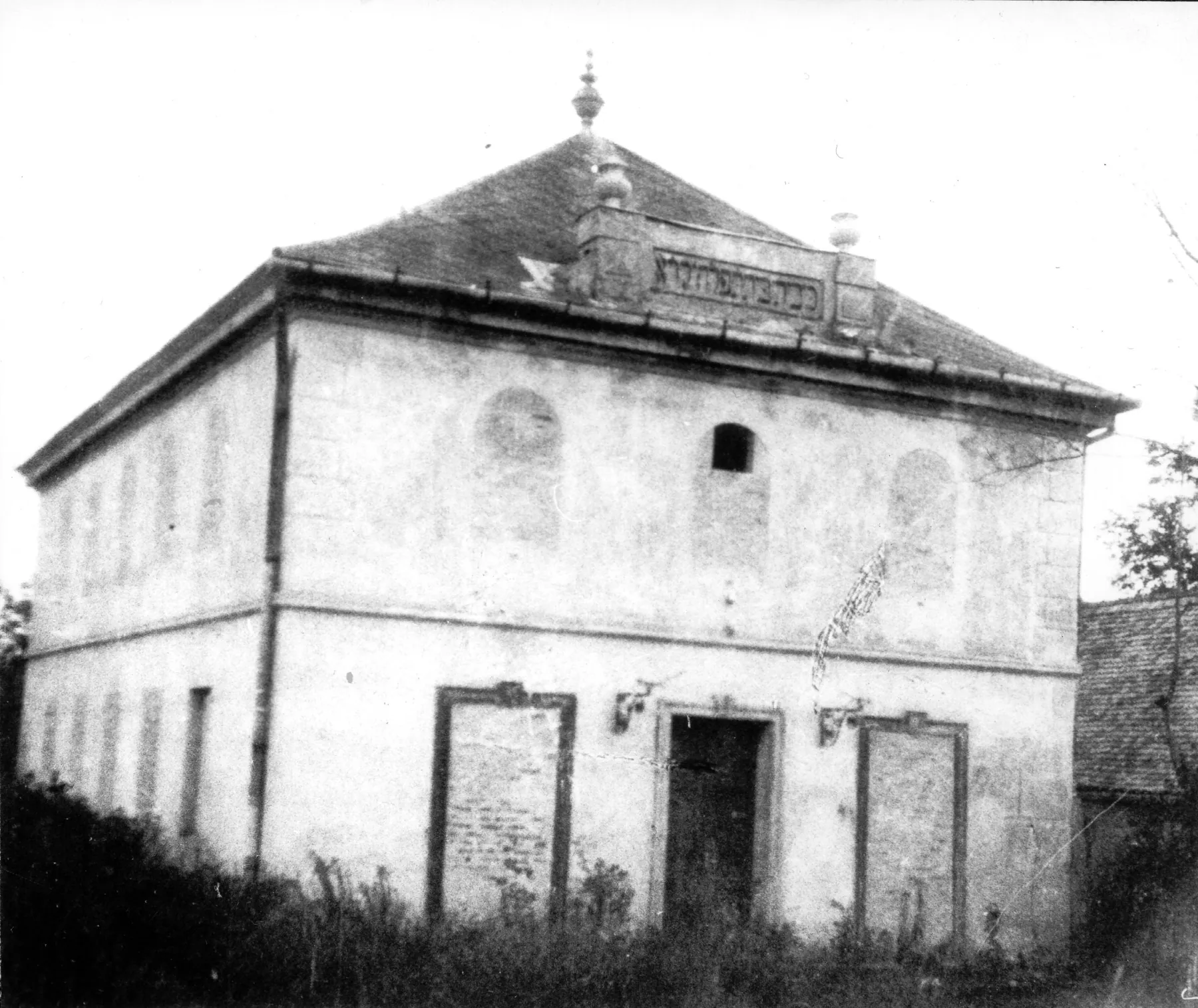
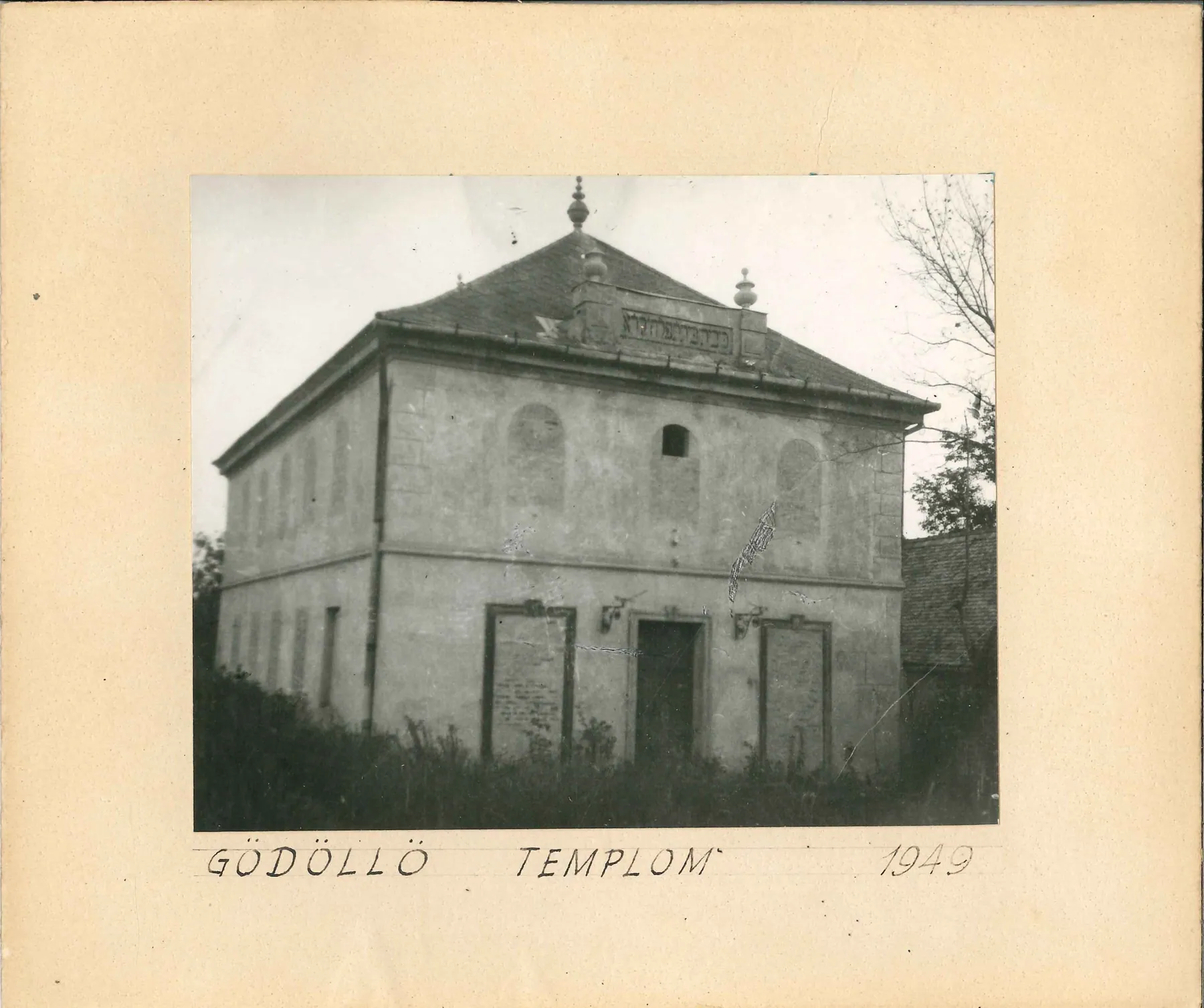
Gödöllő, a market town some 30 kilometres north-east of Budapest known for its royal palace, admitted Jews only after 1841, when the Grassalkovich family's male line died out and the estate's new owner lifted the ban on settlement. A community was organised in 1852 and joined the Neolog, or Congress, movement in 1868. In 1894 it built a synagogue on Kossuth Lajos Street, on a plot where the ritual slaughterer also lived. The only known photograph shows a plain two-storey block under a steep pyramid roof, with a Hebrew inscription on a parapet above the cornice. The rabbi of Gödöllő was also registrar rabbi for the Jewish communities of the surrounding district; József Klein held the post in the early twentieth century and Géza Eisenberger from the mid-1920s until 1944. The community reached 451 people in 1920 and then shrank steadily during the years when the antisemitic official László Endre ran the district. On 12 June 1944 the town's Jews were assembled, taken to a camp at Hatvan and deported to Auschwitz-Birkenau. Only two chose to live in Gödöllő after the war, and the community dissolved. The synagogue, said to have been hit by a bomb during the war, was photographed derelict in 1949. In the early 1950s the Communists demolished it, and a crèche built in 1953 has occupied the site ever since.
Where it stood for nearly 60 years
Kossuth Lajos utca 5–7, 2100 Gödöllő, Hungary (today the municipal crèche on the synagogue site)
Открыть большую карту →Еврейская община
While Gödöllő belonged to the Grassalkovich estate Jews were forbidden to settle there. The family's male line died out in 1841, and the new owner, Baron György Sina, lifted the restriction. In 1852 the Gráf, Spitzer, Braun, Pick, Diamant, Adler, Kohn, Gold, Focher, Blumenthal, Freiwillig, Popper and Holzer families founded a community, which set up a burial society (Chevra Kadisha) and a school and in 1868 joined the Neolog (Congress) movement. Jewish residents were among the founders of the District Credit Bank and the Gödöllő Civic Savings Bank, opened shops and a soda-water factory, and six of them sat on the municipal council as leading taxpayers. There were 334 Jews in 1910 and 451 in 1920, the highest figure recorded. From December 1919 the antisemitic László Endre served in Gödöllő as district magistrate, and as chief magistrate from 1923 to 1938 he harassed Jewish traders and summer visitors; by 1941 only 188 people of the Jewish faith remained, 1.6 per cent of the population.
Архитектура и дизайн
No plans, interior views or contemporary descriptions of the building have been found, and its architect is not recorded. Its appearance is known from a single photograph taken in 1949. This shows a free-standing, almost cubic, two-storey rendered building under a steep pyramidal tiled roof topped by a turned finial. The main front has three bays: a central doorway with a bracket for a lamp on either side, flanked by two tall framed openings, which had been bricked up by 1949. A string course divides the storeys. On the upper floor a small round-headed window sits between two blind round-arched panels, and a moulded cornice runs beneath the eaves. Above the cornice a low parapet panel carries a Hebrew inscription between two pedestals crowned by urn-shaped finials. The side wall has two tiers of tall, narrow windows, which suggests a galleried interior. The building was modest in scale and had no towers or dome. The ritual slaughterer's dwelling stood on the same plot.
Жизнь в синагоге
The synagogue followed the Neolog rite. Its rabbi was also the state-recognised registrar rabbi for the Gödöllő district and travelled to the daughter communities around the town. Dr József Klein is recorded in the post from 1901 to 1921, conducting a wedding in the new synagogue at Csömör in 1907 and dedicating a prayer house at Rákosszentmihály in 1913. At the end of 1925 the district elected Géza Eisenberger, then chief rabbi of Tapolca, by a large majority; he dedicated the prayer house at Sashalom in 1930 and served until 1944. In 1937 a local newspaper called the cantor, Hermann Heisz, the 'nationally famous chief cantor of Gödöllő'. In November 1901 thieves climbed in through a window and broke open three alms boxes. By 1931 the building was so burdened by debt that it was to be auctioned, until the Budapest philanthropist Sámuel Hersch paid what was owed. In April 1944 the community counted 143 members and 51 taxpayers and employed a rabbi, a woman teacher and a ritual slaughterer; it kept an elementary school, and its Women's Association was led by Mrs Manó Blumenthál.
Разрушение
The synagogue outlived its congregation, which was deported in June 1944. According to later local accounts the building was hit by a bomb during the Second World War; who dropped it and when is not recorded. A photograph dated 1949, now in the Hungarian Jewish Museum and Archives, shows it still standing and roofed but derelict, with its ground-floor openings bricked up. With only two Jews left in the town there was no congregation to repair or use it. In the early 1950s, under Hungary's one-party state, the Communists demolished the building; a local history study says it had to be pulled down because of the bomb damage. In 1953 a state crèche, built to a national standard plan, opened on the plot on Kossuth Lajos Street. The exact year of the demolition, between the 1949 photograph and the opening of the crèche, has not been established.
Судьба общины
After the German occupation of Hungary in March 1944 László Endre, the former Gödöllő chief magistrate, became a state secretary in the Interior Ministry and one of the organisers of the deportations with Adolf Eichmann's Nazi German staff. The county ordered the Jews of the district to be concentrated in Gödöllő, Rákoscsaba and Rákoskeresztúr, but no ghetto was set up in the town. On 12 June 1944 Hungarian authorities assembled Gödöllő's Jews in the courtyard of the banker Mór Deutsch's house, searched them, took their valuables and carried them the same day, with Jews from Szada and nearby villages, to the camp in the Hatvan sugar factory. The camp's 2,961 inmates were put on a train to Auschwitz-Birkenau. Rabbi Géza Eisenberger, the community president Aladár Gráf and Mór Deutsch were among those murdered. Dr Leo Tschöll, who hid Jews in his flat on Kossuth Lajos Street, was recognised as Righteous Among the Nations in 1968. In 1945 only two survivors, Dezső Schwarcz and Ferenc Fuchs, chose to stay in Gödöllő; others moved to Budapest or abroad, and the community ceased to exist.
Место сегодня
The plot at Kossuth Lajos utca 5–7, in the centre of Gödöllő, is occupied by a municipal crèche, first built there in 1953, and the nearby bus stop is named after it. Nothing of the synagogue survives above ground. On 21 November 1993 a marble plaque to the victims of the deportations was unveiled on the wall of the crèche; a separate Holocaust memorial was placed in front of the town's railway station in 2024. The only physical trace of Jewish Gödöllő is the Jewish cemetery on Fürdő utca. No fragments or furnishings of the synagogue are known to have been preserved, and the town no longer has a Jewish community or a place of Jewish worship.
Значимые имена
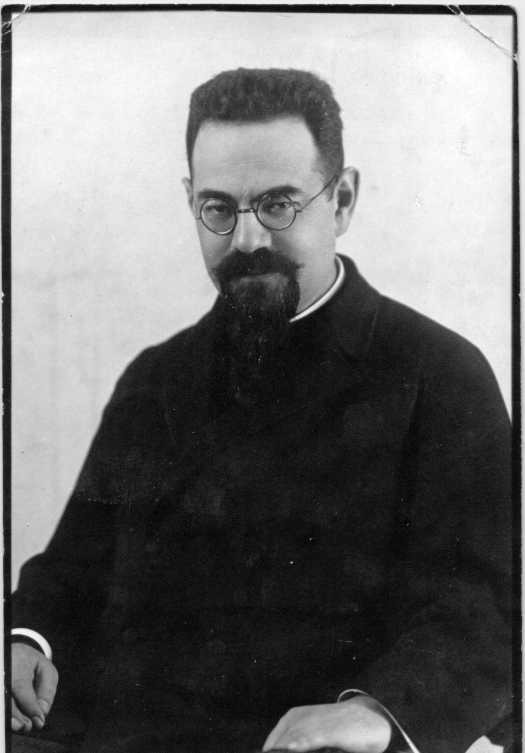
Géza Eisenberger
1892–1944Rabbi of Gödöllő and district registrar rabbi, 1926–1944Born on 28 April 1892, Géza Eisenberger was chief rabbi of Tapolca when the Gödöllő district elected him by a large majority at the end of 1925. From the synagogue on Kossuth Lajos Street he served the town and the daughter communities of the district, dedicating the Sashalom prayer house in 1930, and he was still the community's registrar rabbi in April 1944. He was deported in June 1944 and murdered at Auschwitz-Birkenau, as was his young daughter Júlia, born in 1940.
Биография или источник →József Klein
UnknownRabbi of Gödöllő and district chief rabbi (attested 1901–1921)Dr József Klein was rabbi in Gödöllő during the synagogue's first decades and is named as the town's chief rabbi in newspaper reports from 1901 to 1921. As district rabbi he also looked after the smaller communities around Gödöllő, conducting a wedding in the new synagogue at Csömör in 1907 and dedicating the prayer house at Rákosszentmihály in August 1913. His dates of birth and death and the exact years of his tenure were not found.
Биография или источник →Aladár Gráf
1875–1944President of the Jewish communityFülöp Aladár Gráf, a Gödöllő-born shopkeeper whose family name appears among the founders of the community in 1852, was president of the Neolog congregation that worshipped in the synagogue and is named in that office in the national register of Jewish communities compiled in April 1944. He was deported with his wife Margit in June 1944 and murdered at Auschwitz-Birkenau.
Биография или источник →Mór Deutsch
1869–1944Banker; warden (gondnok) of the Jewish communityMór Deutsch, a banker born in Győrsziget, was warden (gondnok) of the Gödöllő Jewish community, the congregation that maintained the synagogue. On 12 June 1944 the town's Jews were assembled in the courtyard of his house before being taken to the Hatvan camp. He and his wife Gizella were murdered at Auschwitz-Birkenau.
Биография или источник →Hermann Heisz
UnknownChief cantor (attested 1937)Hermann Heisz was cantor of the Gödöllő synagogue in the 1930s. In November 1937 the local paper Rákos Vidéke announced him as the 'nationally famous chief cantor of Gödöllő' when he sang at a benefit concert for the Rákosszentmihály branch community, at which Rabbi Géza Eisenberger gave the opening address. Nothing further about his life or fate was found.
Биография или источник →Вам есть чем поделиться?
Фотографии, документы, семейные истории и воспоминания об этой синагоге и её общине помогают сохранить её историю.
- A holokauszt Gödöllőn
- Gödöllő holokauszt emlékmű (with history of Gödöllő's Jews and list of victims)
- Gödöllő, zsinagóga (photograph, 1949, inv. F16.029)
- Magyarországi Zsidó Hitközségek 1944. április – Gödöllő anyahitközség
- Hősi halottak, sírok és emlékművek Gödöllőn
- Emléktábla az egykori zsinagóga falán – Elszakadni az előítéletektől
- Harmincéves az első bölcsőde
- Miért volt különleges a gödöllői zsidók deportálása?
- Rabbi-választás (news item)
- Váci Hirlap, November 1931 (report mentioning Sámuel Hersch)
- Templomrablások (news item)
- Rákos Vidéke, 1907 and 1913 (reports of dedications by Dr József Klein)
- Váci Hirlap, 1901 (report naming Dr József Klein, chief rabbi of Gödöllő)
- Rákos Vidéke, 1921 (reports naming Dr József Klein, district chief rabbi)
- Imaház avatás (news item)
- Rákos Vidéke, November 1937 (concert notice)
- Eisenberger Géza fényképe (inv. F66.526)
- Disznókat tartottak a gödöllői zsidó ótemető parcellái között
- 2. sz. Bölcsőde, Kossuth Lajos utca 5–7, Gödöllő (Nominatim geocoding result)
- Magyarországi zsinagógák listája
Share a memory or thought
No comments yet. Be the first to add one.