
Die Geschichte von Gorredijk Synagogue
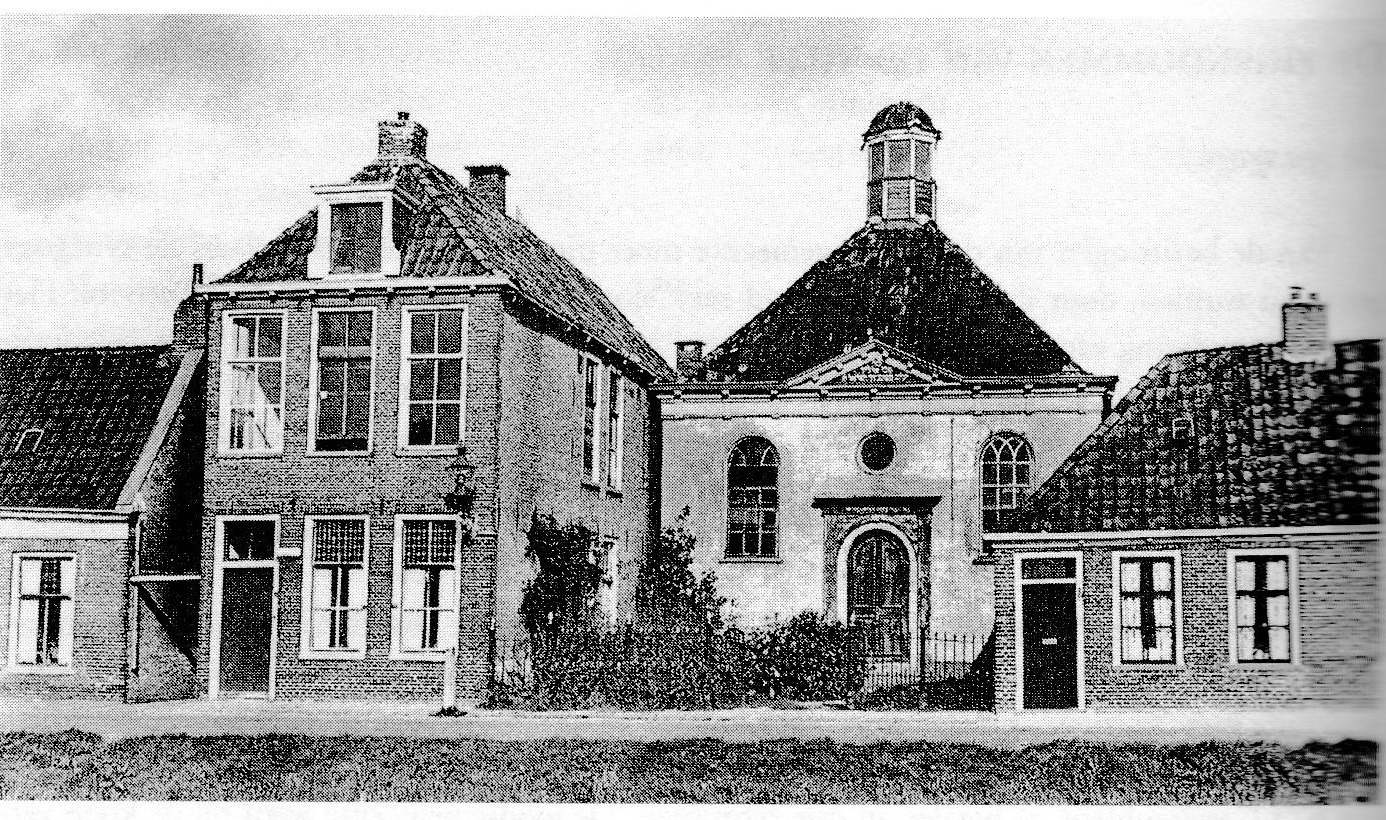
Gorredijk is a canal town in Opsterland, in the south-east of Friesland. Jews had lived in the area since the eighteenth century, and a Hebrew circumcision register kept from 1775 survives in the Frisian archives. At first services were held in a room on the Noordoost-Dubbelestraat. In 1805 the community bought two houses on the Langewal, beside the canal through the town centre; one was pulled down and the synagogue was built on its plot, while the other became the caretaker's house. The building was consecrated on 4 April 1807 (24 Adar II 5567).
In 1817 the community bought the neighbouring house to the north for a school, meeting room and cantor's dwelling, and in the same year Gorredijk became a ring synagogue under the Dutch Israelite church organisation, with Noordwolde, Heerenveen and, until 1821, Drachten attached to it. The school was rebuilt in 1856 and a separate ritual bath followed in 1893. The congregation reached 186 people in 1869 and then declined as families moved to the cities; the last cantor left in 1919, the last wedding took place in 1925 and the last service, a bar mitzvah, in June 1937. The building came through the occupation undamaged, but it was not used again. It fell into ruin and was pulled down in 1953, after its ark, bima and benches had been taken to Leeuwarden.
Where it stood for 146 years
Historic: Langewal, Gorredijk (house number unknown). Today: Langewâl, 8401 Gorredijk, Opsterland, Friesland; pin on the middle section of the street (approximate).
Größere Karte öffnen →Die jüdische Gemeinde
Jewish settlement in and around Gorredijk grew from 39 people in 1798 to 70 in 1809, 130 in 1829, 153 in 1840 and a peak of 186 in 1869. By 1899 there were 137, and by 1930 only some 40 to 47, the figures differing slightly between the two main sources. The community bought its own cemetery at Kortezwaag in 1804, replacing the older burial ground at Noordwolde. From 1817 it was the seat of a ring synagogue district under the chief rabbinate of Leeuwarden, covering Noordwolde, Heerenveen and for a few years Drachten; in 1858 its authority was limited to the Opsterland district. Communal institutions included a Talmud study society, burial societies for men and for women, a gravestone association called Mazebeth Aben and, from 1853, a Jewish almshouse. A Jewish drama group performed in 1871, and from the late nineteenth century there was a branch of the Alliance Israélite Universelle. The governing council was meant to have five members, but in the later years it became hard to fill the seats.
Architektur und Gestaltung
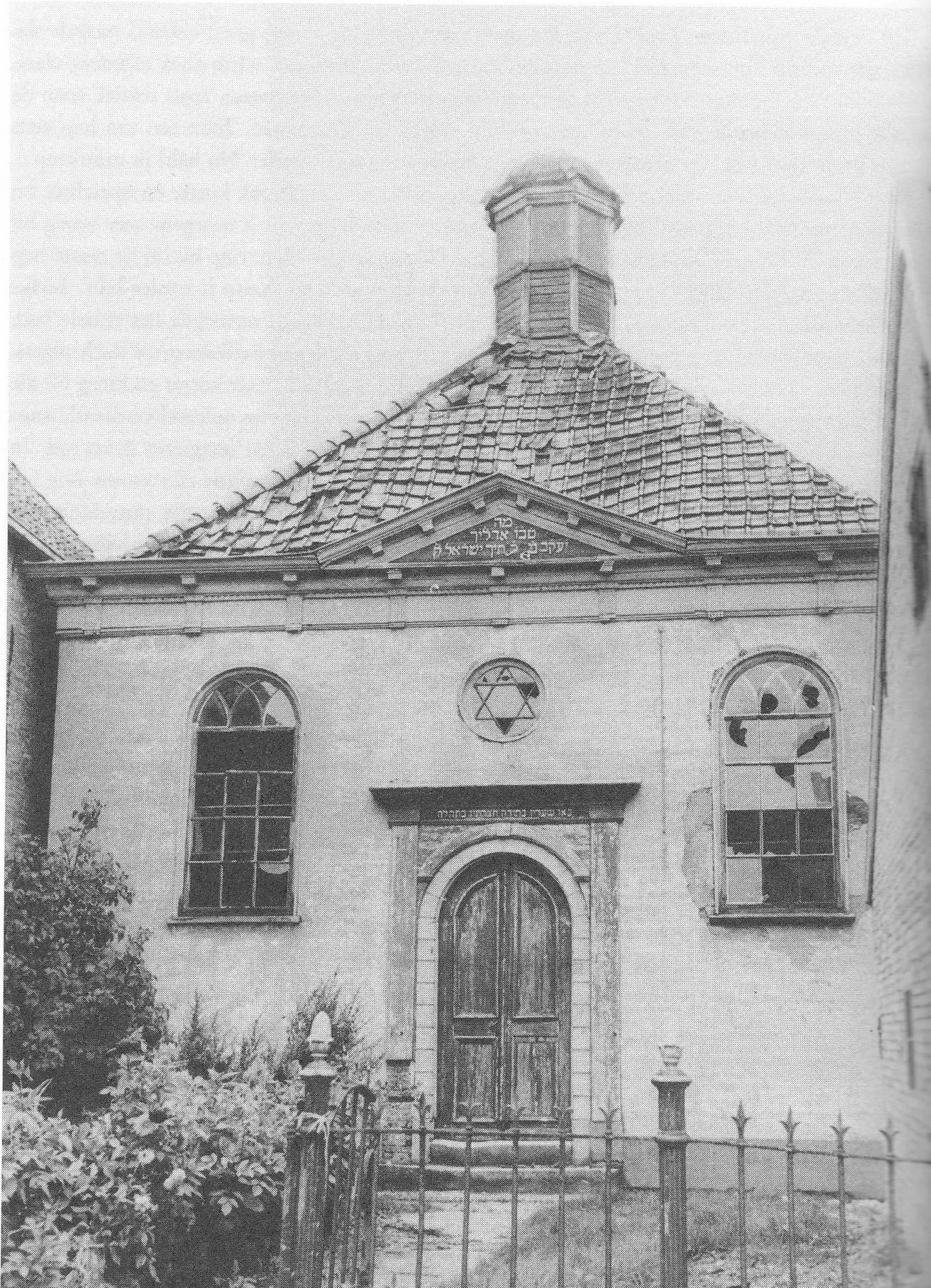
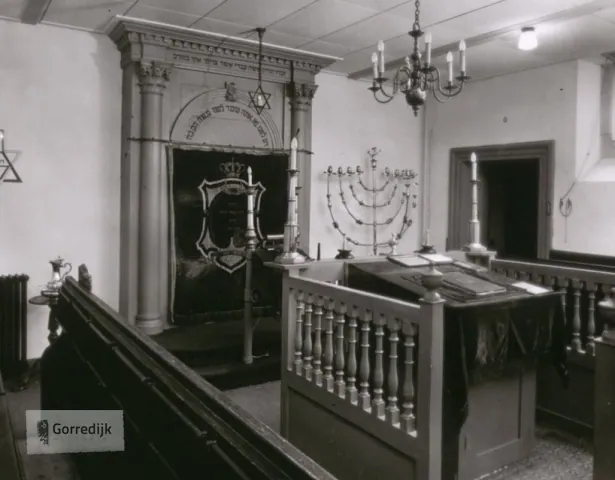
Photographs show a small, free-standing brick building set back between houses on the canal front. Its street front was a simple classical facade, rendered and crowned by a shallow triangular pediment carrying the Hebrew words of Mah Tovu, 'How goodly are your tents, Jacob'; the continuation, 'your dwelling places, Israel', was carved over the door. Behind the pediment rose a pyramid-shaped tiled roof topped by an octagonal wooden lantern or cupola with a cast-iron weather vane in the form of a stag. The arched entrance had a moulded stone surround, flanked by two tall round-headed windows, with a round window containing a Star of David between them above the door. Dutchjewry.org suggests the then recently built synagogue in Leeuwarden served as its model. Inside, the women's gallery lay over the street entrance and the ark stood against the east wall. The ark, bima and benches were in Empire style; the national monuments register dates them to 1807 and calls the ark a simplified imitation of the Leeuwarden ark. The architect, builder and capacity are unknown.
Leben in der Synagoge
The synagogue was the religious centre for the Jews of Gorredijk and, as a ring synagogue, for the small groups in the surrounding villages. The ark's doors were covered by an embroidered curtain, and the hall was lit by three brass chandeliers and several brass candlesticks; an eight-branched brass Hanukkah lamp and a brass hand-washing basin by the entrance completed the furnishings. Religious instruction was given in the adjoining school, which had 22 pupils in 1827; around 1876 the school building was enlarged with a community room on top. The congregation employed a cantor, who lived next door; Izak Josephus de Haan held the post from 1882 to 1885 before moving to Zaandam. A ritual bath was first kept in the caretaker's house and from 1893 in a separate bath house. In 1907 the community celebrated the synagogue's centenary with homage to Queen Wilhelmina and Prince Hendrik. As numbers fell, regular worship became difficult: the last cantor left in 1919, the last wedding was held in 1925, and the last service took place in June 1937 for the bar mitzvah of Heiman Leefsma.
Zerstörung
The JCK community encyclopedia states that the synagogue came through the war years undamaged, and no source read records looting or damage during the Nazi occupation. It had stood empty since 1937. After the war a delegation from the Leeuwarden congregation inspected the derelict building and found the Torah scrolls still intact in the ark, with prayer shawls and prayer books lying on some seats. The Gorredijk community was dissolved in 1948 and merged with Leeuwarden; according to dutchjewry.org the Opsterland district took charge of the building in 1949 while the Dutch Israelite church organisation kept ownership. The building was judged beyond repair. The ark, the bima, the benches and the stones with the Hebrew inscriptions were removed to Leeuwarden, and the synagogue was then pulled down because of its ruinous state. The JCK gives 1953 for the demolition and a published photograph is captioned 'shortly before the demolition in 1953', while dutchjewry.org gives 1954. Who carried out the demolition is not recorded in the sources read.
Das Schicksal der Gemeinde
In 1941 the Gorredijk congregation still had 43 members. From September 1942 most of the Jews of Gorredijk and the surrounding villages were deported under the Nazi German occupation; they were murdered in the camps. Only a few managed to go into hiding, although several dozen Jews from elsewhere found hiding places in the district during the occupation. According to dutchjewry.org only two members of the congregation survived: Heiman (Herman) Leefsma, who was liberated in Buchenwald, and his mother Rebekka Leefsma-de Vries. With almost no one left, the community was formally dissolved in 1948 and merged with the Jewish community of Leeuwarden. The Jewish cemetery at Kortezwaag, with its small purification house, survives and is maintained by the municipality of Opsterland.
Der Ort heute
The synagogue stood on the Langewal (Frisian: Langewâl), the street along the canal in the centre of Gorredijk, between the school and cantor's house on its north side and the former caretaker's house; the exact plot and its present use are not identified in the sources read. Its Empire-style ark, bima and benches survive: the national monuments register entry for the former synagogue at Sacramentsstraat 19 in Leeuwarden, registered in 1967, lists them as made in 1807 and coming from Gorredijk. A memorial plaque to the town's Jewish residents was placed on a building in the Hoofdstraat in 1956. The Jewish cemetery at Kortezwaag remains.
Bedeutende Namen
Izak Josephus de Haan
UnknownCantor (chazzan) of Gorredijk, 1882-1885De Haan served as chazzan of the Gorredijk congregation from 1882 to 1885, leading the services in the synagogue on the Langewal and living in the cantor's house beside it, before moving to Zaandam. He is one of the few officials of the congregation named in the sources read; nothing more about his life was found in this run.
Biografie oder Quelle →Heiman (Herman) Leefsma
UnknownLast bar mitzvah in the synagogue, June 1937; one of two surviving membersLeefsma's bar mitzvah in June 1937 was the last service ever held in the Gorredijk synagogue. During the occupation he was deported; he was liberated in Buchenwald and, with his mother Rebekka Leefsma-de Vries, was one of only two members of the 1941 congregation of 43 to survive the Holocaust.
Biografie oder Quelle →Haben Sie etwas beizutragen?
Fotos, Dokumente, Familiengeschichten oder Erinnerungen an diese Synagoge und ihre Gemeinde halten ihre Geschichte lebendig.
Share a memory or thought
No comments yet. Be the first to add one.