

Die Geschichte von Gush Halav Synagogue
Gush Halav, the ancient Gischala, stands on a hill in the Upper Galilee north of Meiron; the Arab village of el-Jish occupies the site today. In the Roman and Byzantine periods it was a Jewish town with two synagogues. One stood at the top of the hill, where a church was later built over its remains. The other, the subject of this entry, lies in the valley east of the village, near the spring of Ein Gush Halav, in what is now a fig orchard.
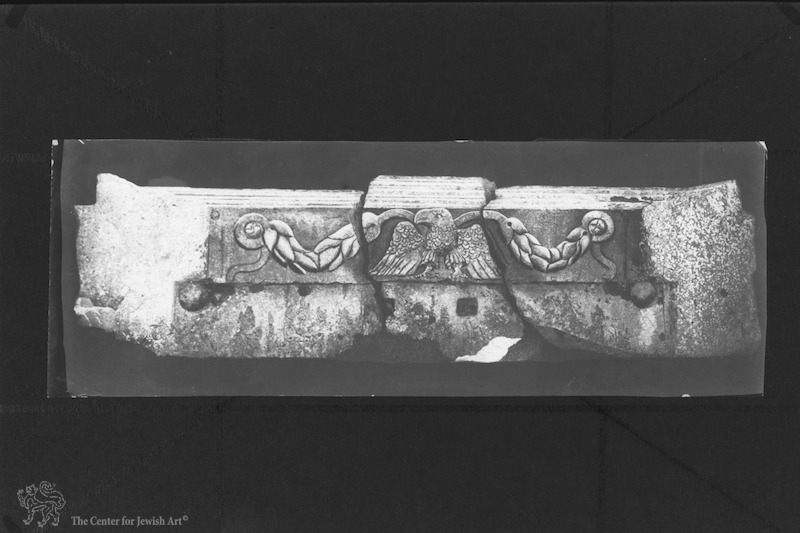
H. Kohl and C. Watzinger surveyed the valley synagogue in 1905 but misread its plan. Eric M. Meyers, Carol L. Meyers and James F. Strange excavated it fully in 1977 and 1978 for the American Schools of Oriental Research. They found an unusual, almost square basilica with two rows of four columns and a single doorway in the south wall, facing Jerusalem, crowned by a lintel carved with an eagle and garlands.
The excavators dated the first building to about 250 CE and traced repairs after earthquakes they placed in 306 and 363, renewals of the floors in the Byzantine period, and a final collapse which they attributed to the earthquake of 551. Later scholars, notably Magness, have argued for a much later foundation, in the fifth or sixth century, and for occupation into the seventh or eighth. The ruin has never been rebuilt.
Where it stood for about 300 years
Historic: lower (valley) synagogue east of Gush Halav (Gischala), near the spring of Ein Gush Halav. Today: archaeological site east of the village of Jish (el-Jish), Upper Galilee, Northern District, Israel (approximate).
Größere Karte öffnen →Die jüdische Gemeinde
Gush Halav, Gischala in Greek, was a Jewish town in the Second Temple period, set among olive groves; the region was known for its olive oil. The Jewish Virtual Library recalls that Yokhanan of Gush Halav, known in English as John of Gischala, was one of the leaders of the Great Revolt against Rome, and that when the town could no longer be held he and his men withdrew to Jerusalem. Jewish settlement continued after the revolt, and the excavators and later writers date Jewish buildings and tombs in and around the town to the third to sixth centuries CE. Jewish tradition places here the graves of the sages Shemaya and Avtalyon. According to the same source, Jews lived at Gush Halav until the fourteenth century, and the present village was founded in the eighteenth. Nothing is known of the size of the congregation that used the valley synagogue, of its officers or of its rabbis; the only member known by name is the donor of a column, recorded in an Aramaic inscription.
Architektur und Gestaltung
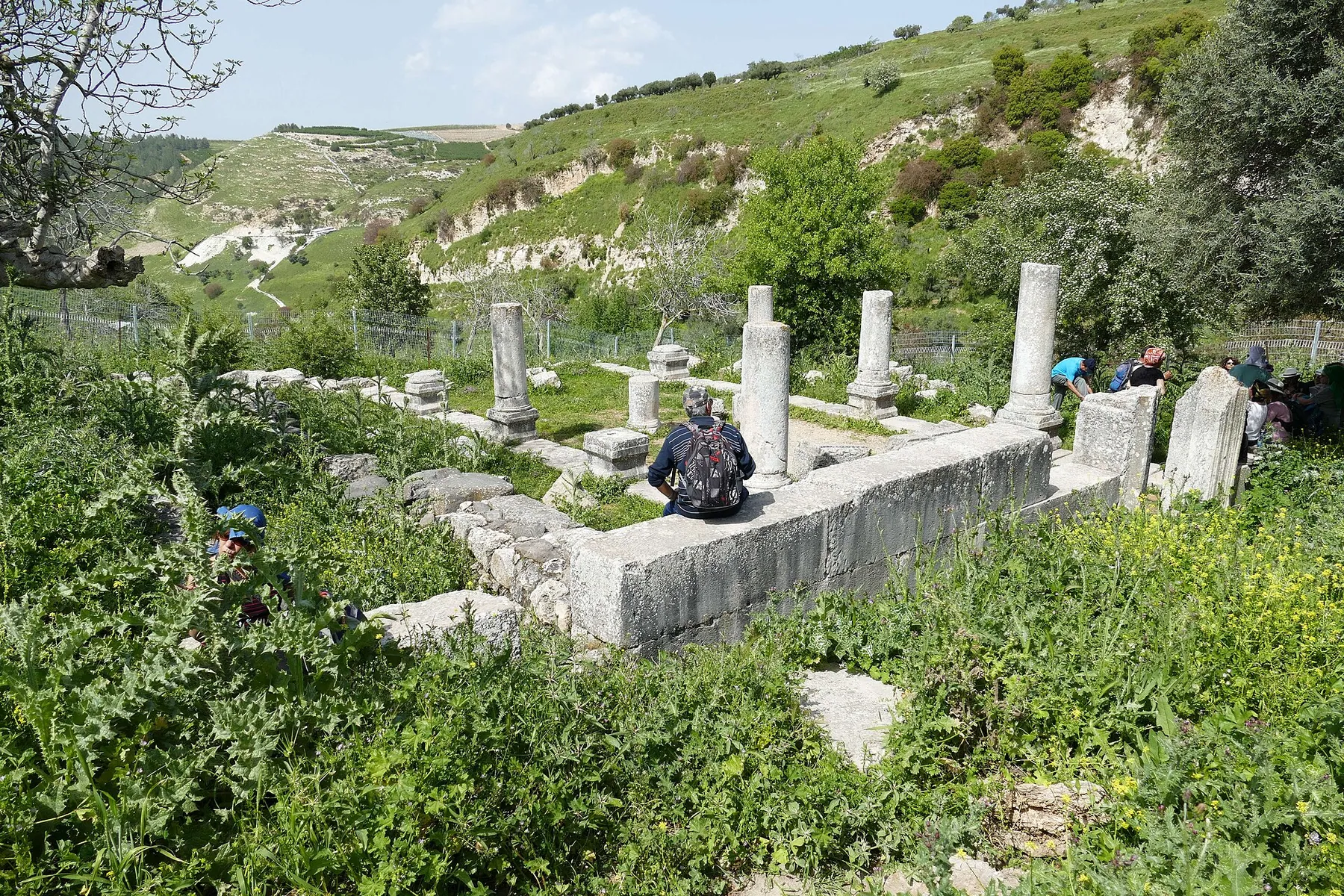
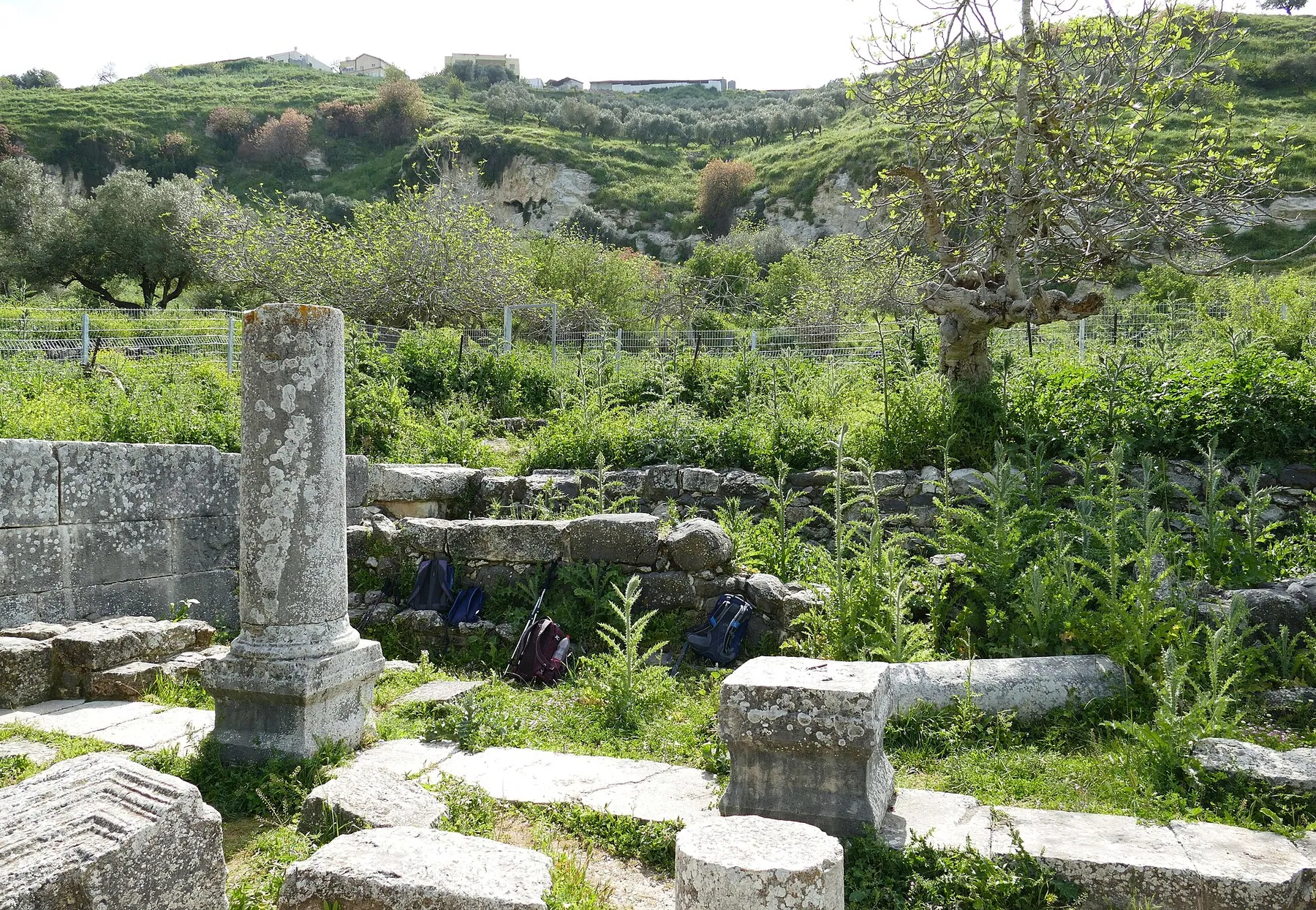
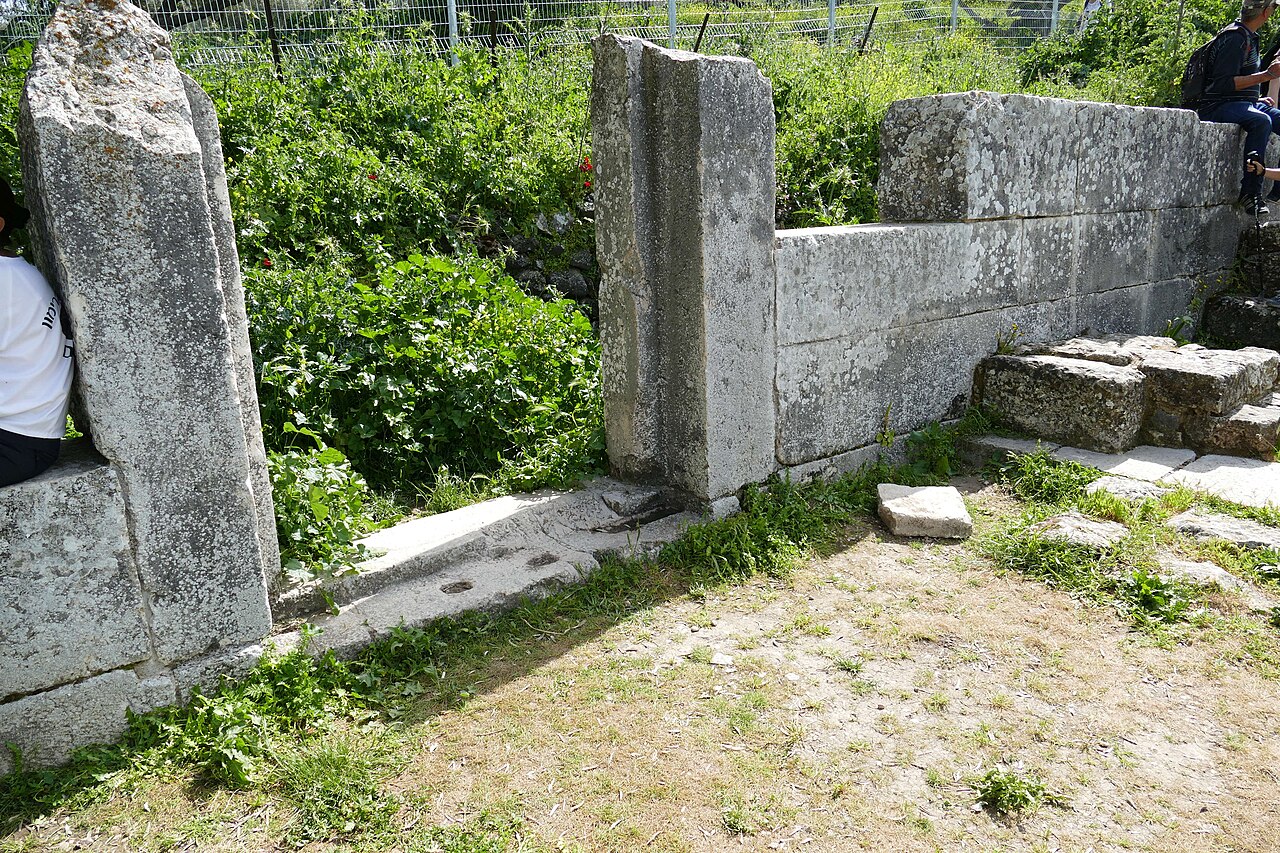
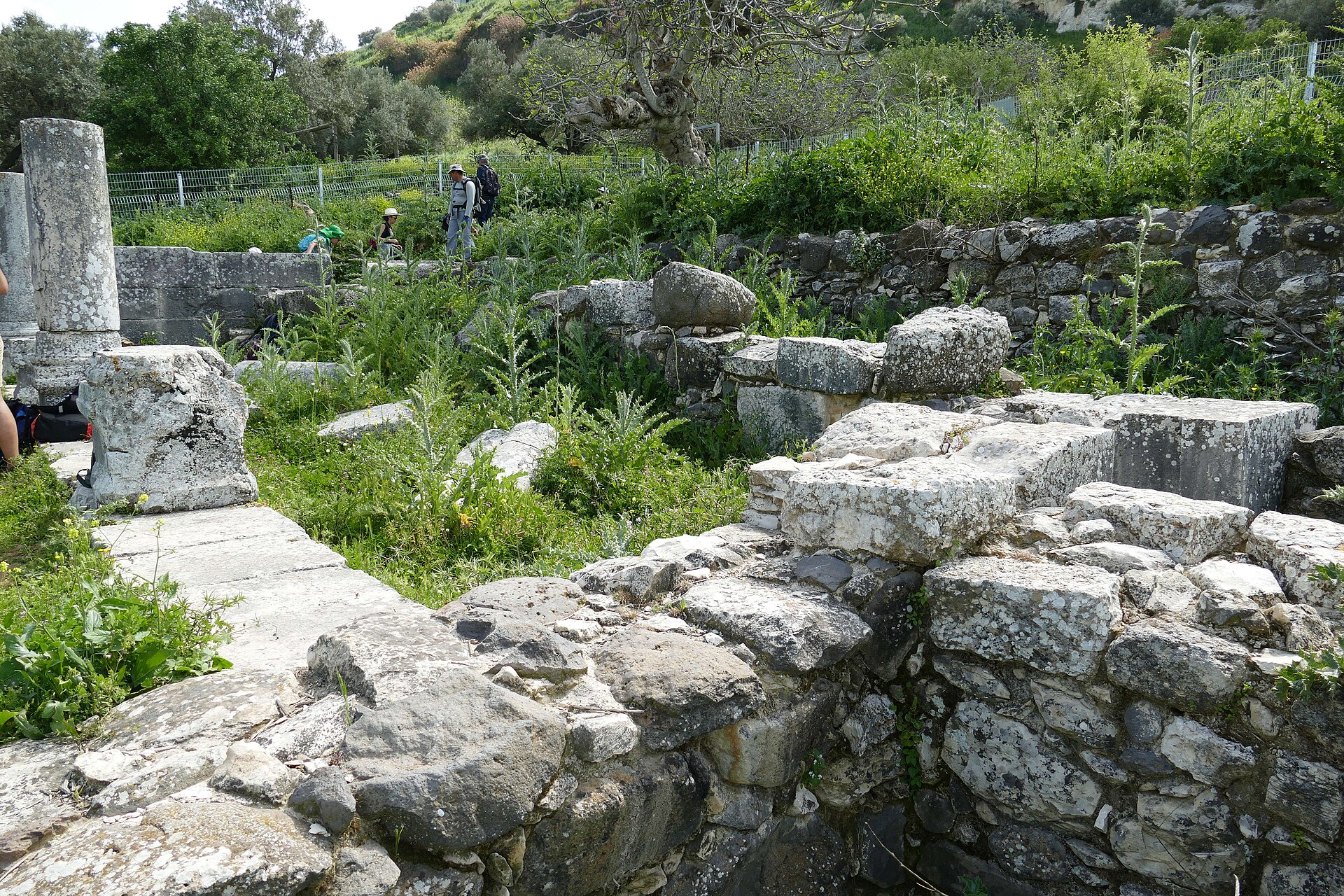
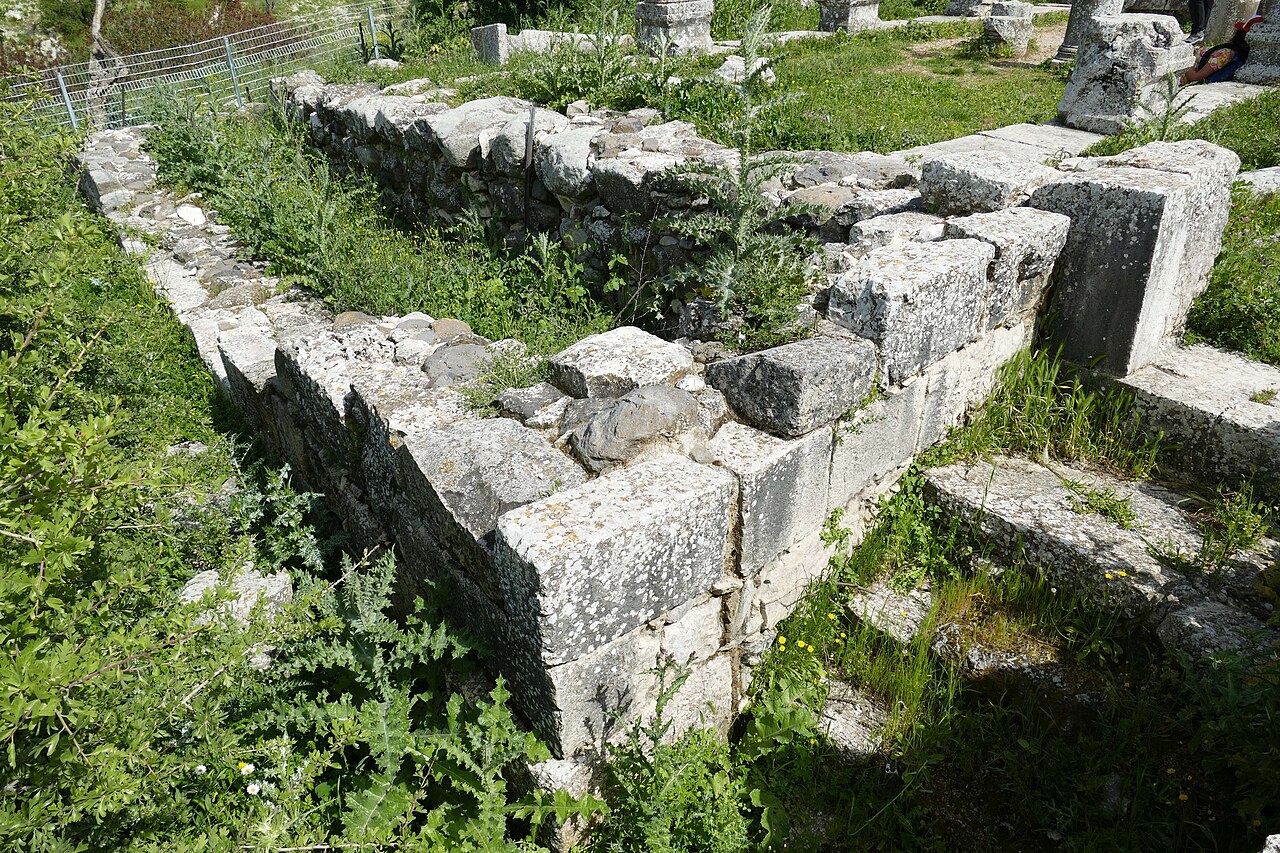
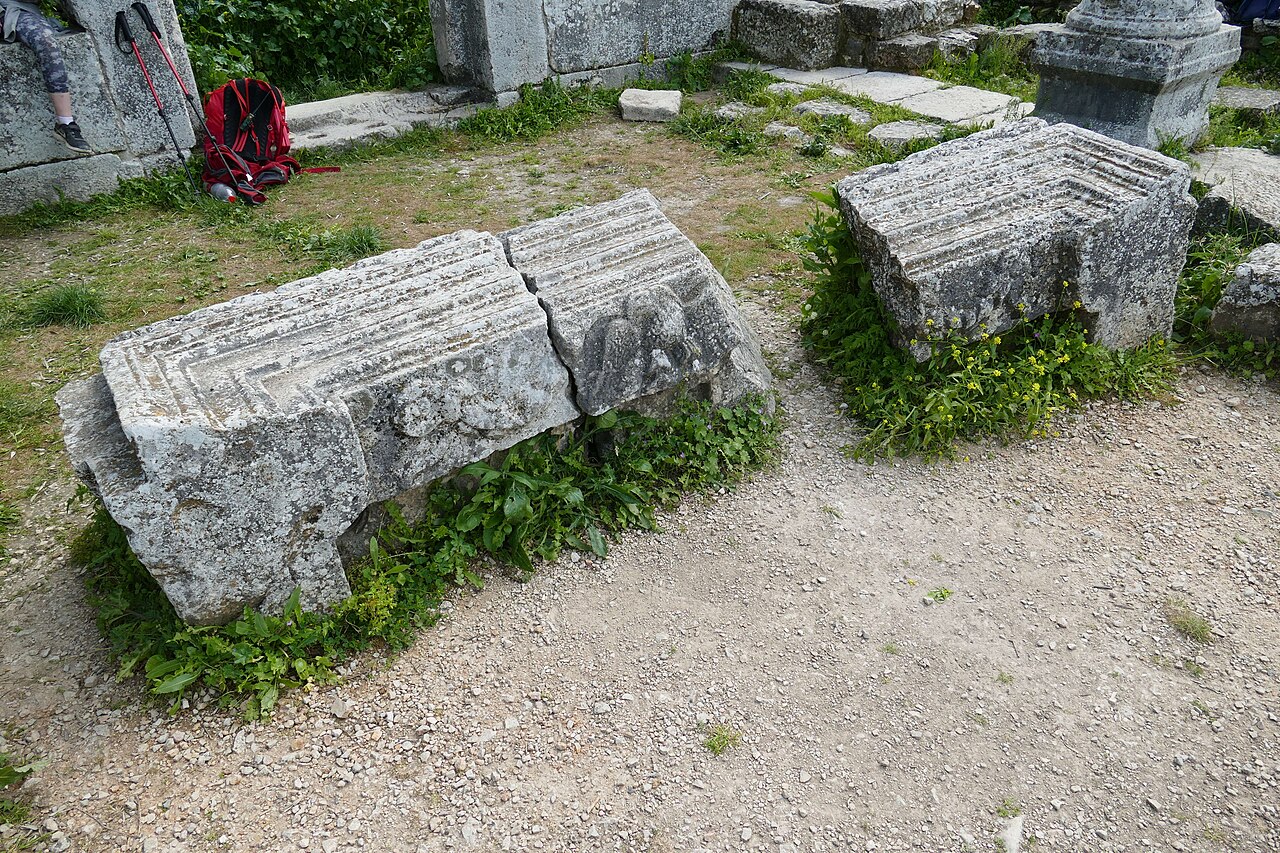
The synagogue is a basilica of an unusual, almost square plan, built of limestone ashlar; its prayer hall measured almost 14 metres from north to south and 11 metres across. Two rows of four columns, standing on stylobates, divided the hall into a nave and side aisles; the columns carried Ionic capitals. A corridor ran along the western side. The building had a single portal in the southern facade, the wall facing Jerusalem, and its lintel, which the excavators date to about 280-330 CE, was carved with an eagle with spread wings at the centre holding the ends of two garlands. The Torah was read from a bema built against the south wall in the south-western part of the hall. The excavators found an earlier, larger Roman-period bema and a smaller Byzantine one that replaced it after the earthquake of 363. One of the nave columns bears a short Aramaic dedication by its donor. The excavators judged that the plan was not substantially altered in the later building periods: after each earthquake the building was repaired along the same lines, with stylobates shored up and corners and walls strengthened. Seating capacity, roof form and any gallery are unknown.
Leben in der Synagoge
Little is recorded about worship in the building beyond what the excavation shows. The bema against the south wall marks where the Torah scrolls were kept and read, facing Jerusalem, and its rebuilding on a smaller scale in the Byzantine period shows that the congregation kept using and adapting the hall after earthquake damage. The floors were renewed several times in the last phase. One column carries an Aramaic inscription naming a donor, Yose son of Nahum, and asking a blessing for him: the kind of gift by which members paid for parts of the building. In the western corridor the excavators found a hoard of about 1,953 coins, the latest struck around 491-518 CE, which they took to have been hidden before the final collapse; one scholar has argued it may have been deposited afterwards. Jewish and Christian amulets were also found in the area, a sign of the mixed population of the Upper Galilee in the Byzantine period.
Zerstörung
No human destruction of this synagogue is recorded; by the excavators' account it was ruined by earthquakes. Meyers and his team identified damage from an earthquake they dated to about 306 CE, after which the stylobates were shored up, and from a second in 362 or 363, after which corners, stylobates and walls were reinforced and the hall was quickly brought back into use, with a new, smaller bema. They concluded that the building was destroyed and abandoned in the great earthquake of 551 CE, citing the collapse of about 19 metres of carved moulding in the western corridor in a single event. These dates are disputed. Netzer found no evidence of destruction in 363, Russell questioned the dating of the final collapse, and Magness argued that the first synagogue was not built before the second half of the fifth century and that occupation lasted until the late seventh or early eighth century. The collapsed remains were left largely undisturbed until the excavation of 1977-78.
Das Schicksal der Gemeinde
The sources consulted do not describe how or when the Jewish community of Gush Halav came to an end. The valley synagogue went out of use after its final collapse, which the excavators place in 551 CE and other scholars somewhat later. The synagogue at the top of the hill also fell out of use, and a church was later built on its remains. According to the Jewish Virtual Library, Jews continued to live at Gush Halav until the fourteenth century, so Jewish life in the town outlasted the valley synagogue by many centuries; no source read here says where that later community prayed. The present village of el-Jish was founded in the eighteenth century, according to the same source. The ruins now lie within the lands of the village.
Der Ort heute
The ruins of the valley synagogue lie in an orchard below and east of the village of Jish, near the spring of Ein Gush Halav. The Jewish Virtual Library describes the visible remains as two rows of columns with side aisles, parts of the roof structure and a column bearing an ancient inscription. Recent photographs on Wikimedia Commons show several columns standing on their bases along the stylobates and ashlar walls surviving a few courses high; no source read gives the wall height. The eagle lintel of the south door was recorded on site. Wikipedia cites a conservation project of the Israel Antiquities Authority at Gush Halav. The upper synagogue lies beneath the church of Mar Boutros in the village, with column fragments visible nearby.
Bedeutende Namen
Yose son of Nahum
Unknown (late antiquity)Donor of a column in the synagogueYose son of Nahum is known only from a short Jewish Palestinian Aramaic inscription carved on one of the columns of the nave of the lower synagogue at Gush Halav. It records that he made, that is paid for, the column and asks that he be blessed. The University of Warsaw epigraphic database, following Naveh and Beyer, reads his father's name as Nahum; English Wikipedia gives Tanhum. He is the only member of the congregation known by name.
Biografie oder Quelle →Haben Sie etwas beizutragen?
Fotos, Dokumente, Familiengeschichten oder Erinnerungen an diese Synagoge und ihre Gemeinde halten ihre Geschichte lebendig.
- Gush Halav
- Gush Halav: Introduction
- Gush Halav (Earthquake Catalog of the Dead Sea: archaeoseismic sites)
- Photograph of: Gush Halav Synagogue : lintel
- Gush Ḥalav, Israel: Synagogue Lintel (PID000501)
- Cutaway Drawing of Ancient Synagogue – Gush Ḥalav, Israel (PID000500)
- Roman and Byzantine Bemas – Gush Ḥalav, Israel (PID000502)
- Overview of Synagogue – Gush Ḥalav, Israel (PID000271)
- Inscription 124 (Gischala synagogue column)
- Geography of Israel: Gush HaLav
- Ancient Sites in Gush Halav: The History and Remains of an Upper Galilean Town
- Jish-Gush-Halav photo series (files Jish-Gush-Halav-752 to 785)
- Lower Synagogue Gush Halav (OpenStreetMap node 4825998654)
Share a memory or thought
No comments yet. Be the first to add one.