

The story of Gyönk Synagogue
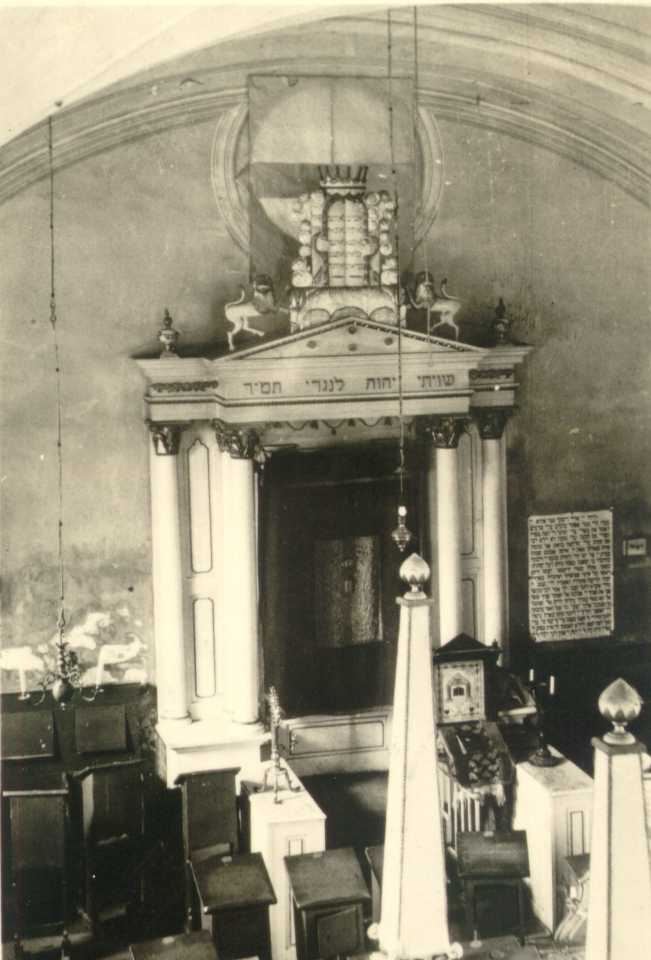
The Orthodox Jewish community of Gyönk (German: Jink or Jenk), a market village of German- and Hungarian-speaking Protestants in the hills of Tolna county, traced its foundation to 1730. Its synagogue went up in 1836, which makes it one of the earliest purpose-built synagogues in the county. The landowner Sámuel Magyari-Kossa, who was building his own mansion in the village in the same decade, gave the plot; the leaseholder Bernát Lamm supplied the materials and labour, and the congregation paid rent to him and his heirs until the building passed fully into its ownership in 1901. Two surviving photographs show a plain rendered hall with tall round-headed windows and, inside, a columned Classical ark facing a central bimah under a shallow vault. For more than a century it served a small rural congregation that nevertheless supported a rabbi, a yeshiva in its early years, a ritual bath and a burial society; Rabbi Amram Fischer held the pulpit for forty-six years. In 1944 the building was vandalised, used to store confiscated Jewish property, plundered and set alight, and its congregation was deported to Auschwitz. Only a handful of survivors returned, the community was wound up around 1949–1950, and by 1955 the synagogue had been pulled down by its new owner and replaced by a house.
Where it stood for nearly 120 years
Historic: Gyönk, Tolna county; street and plot not identified in the sources consulted. Today: Gyönk, Tolna County, Hungary; a private dwelling house was reported on the synagogue's plot in 1955.
Open larger map →The Jewish community
Jews are recorded at Gyönk from the early eighteenth century. The community's own archive dated its foundation to 1730 and named the merchants József Löbl, Márton Grosz, Ábrahám Ausch, Izsák Fischer and Bernát Lorschy as founders; the conscription of 1735 found two Jewish families in the village. Numbers grew during the nineteenth century to about 240 around 1880 and then fell as families moved to larger towns: 180 people (5.5 per cent of the population) in 1910, 76 people in 28 families in 1929 and about 70 in 1941. Most were shopkeepers and merchants, with a few craftsmen, two doctors and a lawyer. The first rabbi, Moshe Kanizsa, kept a yeshiva. The congregation built its synagogue in 1836 on a plot donated by the local landowner Sámuel Magyari-Kossa, with materials and labour provided by the leaseholder Bernát Lamm in return for an annual rent. A school building and rabbi's house followed in 1850 and a ritual bath in 1852. The Gyönk rabbinate also served Jews living in Miszla, Udvari, Keszőhidegkút, Szárazd, Varsád, Kölesd, Medina and Pálfa.
Architecture and design
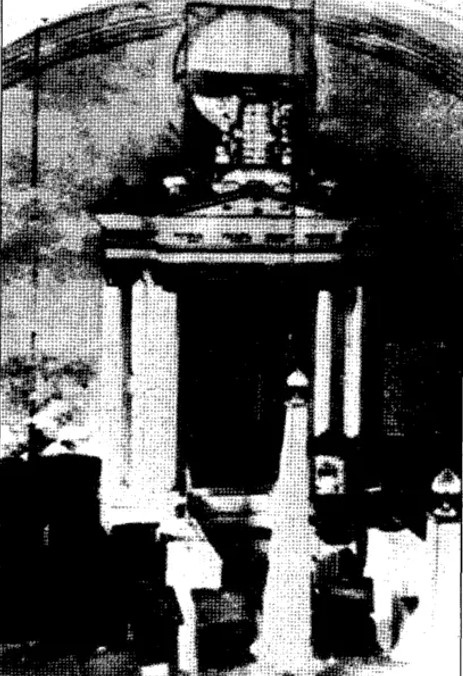
No plans, architect's name or written description of the building have been found, so what is known comes from two undated photographs in the Hungarian Jewish Museum and Archives. The exterior view shows the long side of a plain rendered hall under a simple moulded cornice, lit by tall, narrow round-arched windows. At one end a doorway in a plain stone frame has a rectangular window above it, possibly lighting the way up to a women's gallery. The character is that of a modest provincial Classicist building rather than of the later historicist synagogues. The interior photograph, apparently taken from a gallery, shows the ark wall beneath a shallow vault with a circular opening or roundel. The ark is a Classical aedicule: paired columns with foliate capitals carry an entablature inscribed in Hebrew with the verse 'I have set the Lord always before me' and a low pediment crowned by the Tablets of the Law between two carved animals, with urns at the corners. In front stands the bimah, its corner posts shaped as tall obelisks with bulbous finials, surrounded by individual reading desks; lamps hang from the vault and a framed prayer board is fixed to the wall.
Life inside the synagogue
The congregation was Orthodox: it sided with the Orthodox camp when Hungarian Jewry split, and the Hungarian Jewish Lexicon of 1929 lists it as such, although one survivor who grew up there between the wars remembered it as Neolog. Its first rabbi, Moshe Kanizsa, maintained a yeshiva, which later closed. Avraham Glasner, appointed by the Ktav Sofer of Pressburg, served from 1852 to 1863 and later became chief rabbi of Kolozsvár. Amram Fischer, a pupil of Azriel Hildesheimer and of the Pressburg yeshiva, was rabbi from 1879 until his death in 1925. In 1929 the post was vacant; a Hebrew community history names the last rabbi as Yosef Yitzhak Meisner. Next to the house of the rabbi and cantor was a kosher butcher's shop whose income supported the community. A Chevra Kadisha and a women's association were active, and part of the small annual budget went to charity. Eight members fell in the First World War. A stone tablet photographed for the Jewish Museum recorded the congregation's gratitude to Sámuel Magyari-Kossa and asked a blessing on his house.
Destruction
The sources agree that the building was lost between 1944 and 1955 but give few dates. According to a Hebrew history of Hungary's communities, when the German army arrived in 1944 many of Gyönk's ethnic German residents rioted and damaged the synagogue and the Jewish cemetery. During the ghettoisation that spring, carried out by the Hungarian authorities and gendarmerie under Nazi German occupation, the more valuable confiscated Jewish property was collected in the synagogue; the building was then plundered and set on fire. The accounts do not name those who looted and burned it. After the war the building passed to a new owner; when and how it was sold is not recorded in the sources consulted. A survey of Transdanubian synagogues made in 1955 for Sándor Scheiber, director of the Rabbinical Seminary, reported that at Gyönk the new owner had demolished the synagogue and built himself a dwelling house on the same spot out of its materials. The demolition therefore took place in the first years of Communist rule, at some point before 1955, but it is attributed to the private buyer rather than to the local council, and no exact year is recorded.
The community’s fate
About 70 Jews lived in Gyönk in 1941. A Hebrew community history gives 163 for 1944, and the county sub-prefect's return of 5 May 1944 listed 495 Jews under Gyönk, a figure that evidently covers the whole district. After the Nazi German occupation the Jews were removed from their homes by the Hungarian authorities and gendarmerie. Accounts of the route differ: one says they were sent at the end of April to the Bonyhád ghetto and from there to Pécs, another that Tolna county's Jews were entrained at Kaposvár. Both place the deportation to Auschwitz-Birkenau in the first days of July 1944, the Tolna transports arriving on 9 July; one museum summary gives 4 June instead. The last rabbi, Yosef Yitzhak Meisner, died in the Holocaust; a survivor recalled that the rabbi was taken for forced labour and his wife was taken away with their three children. She also recalled that of seventy Gyönk Jews seven came back. A small Orthodox congregation was re-formed but was dissolved in 1949 or 1950, and by 1956 only two Jewish families remained. In 1966 Rabbi Amram Fischer's remains were moved from Gyönk to Jerusalem.
The site today
The synagogue has vanished completely. The 1955 survey commissioned by Sándor Scheiber recorded that a private owner had built a dwelling house on its plot, reusing the synagogue's own building materials. The sources consulted do not give the street or house number, so the plot could not be identified on a modern map, and it is not known whether that house still stands or whether anything marks the site. What remains of Jewish Gyönk are its two cemeteries, an old one on the road towards Varsád and a newer one beside the municipal cemetery. The Hungarian Jewish Museum and Archives in Budapest holds photographs of the synagogue's exterior, its ark and a dedication tablet, as well as views of the neglected cemetery.
Notable names
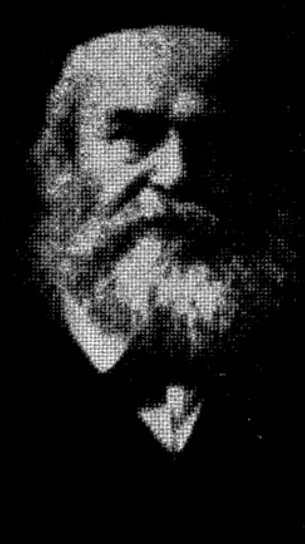
Rabbi Amram Fischer
1852–1925Rabbi of Gyönk, 1879–1925Son of Rabbi Akiva Fischer of Tét, he studied under Azriel Hildesheimer at Eisenstadt and under the Ktav Sofer at the Pressburg yeshiva. After a year as rabbi of Csabrendek he came to Gyönk in 1879 and led the congregation and its synagogue for forty-six years, until his death at Passover 1925. His rulings were printed as Divrei Amram. He was buried in Gyönk; in 1966 his remains were reinterred on Har HaMenuchot in Jerusalem.
Biography or source →Rabbi Avraham Glasner
1825–1877Rabbi of Gyönk, 1852–1863Appointed to Gyönk by the Ktav Sofer of Pressburg, Glasner served the congregation in its 1836 synagogue for eleven years, during which the community built its ritual bath. He went on to become chief rabbi of Kolozsvár (Klausenburg), where his son Moshe Shmuel Glasner, the author of Dor Revi'i, succeeded him. His wife was a granddaughter of the Chatam Sofer.
Biography or source →Rabbi Moshe Kanizsa (Kanizsa-Pscherhofer)
UnknownFirst recorded rabbi of Gyönk; head of its yeshivaNamed by the Hungarian Jewish Lexicon as the community's first rabbi, 'Reb Mose Kanizsa' also kept a yeshiva in Gyönk, which closed after his time. A Hebrew community history dates his tenure to 1826–1833, which would place him in Gyönk a few years before the synagogue was built in 1836; whether he was still in office when it opened is not confirmed.
Biography or source →Rabbi Yosef Yitzhak Meisner
UnknownLast rabbi of GyönkA Hebrew history of Hungary's communities names Meisner as the last rabbi of Gyönk and says he died in the Holocaust together with part of his congregation. A survivor recalled that the rabbi of her youth, who served only briefly, had married Hanna, daughter of Rabbi Fischer of Sárospatak, that he was taken for forced labour and that his wife was taken away with their three children.
Biography or source →Sámuel Magyari-Kossa (Magyary-Kossa)
1781–1866Landowner; donor of the synagogue plotThe Christian lord of the manor at Gyönk, who built the Classicist Magyary-Kossa mansion in the village in the 1830s, gave the Jewish community the plot on which it built its synagogue in 1836. A stone tablet photographed for the Hungarian Jewish Museum recorded the congregation's thanks for his generosity and asked a blessing on his family.
Biography or source →Bernát Lamm
UnknownLeaseholder who supplied materials and labour for the buildingAccording to the Hungarian Jewish Lexicon, the leaseholder Bernát Lamm provided the building materials and the labour for the synagogue in 1836. In return the congregation paid a yearly rent to him and afterwards to his heirs, an arrangement that lasted until 1901, when the synagogue passed entirely into the community's ownership.
Biography or source →Vilmos Engelmann
Unknown–1941President of the Gyönk Jewish communityThe Hungarian Jewish Lexicon of 1929 lists the savings-bank director Vilmos Engelmann as president of the Gyönk congregation. The survivor Kornélia Serebrenik, born Engelmann, described her father, a farmer and grain merchant, as president of the community and said he was killed in March 1941; he is presumably the same man, though her interview does not give his first name.
Biography or source →Do you have something to contribute?
Photographs, documents, family stories or memories of this synagogue and its community help keep its history alive.
- Gyönk (entry in Magyar Zsidó Lexikon, 1929)
- A zsidó emlékek Tolna megyében. Bevezetés
- Eldózerolt és megmentett zsinagógák
- Gyönki zsinagóga oldalfala (photograph, inv. F70.150)
- Gyönki zsinagóga frigyszekrénye (photograph, inv. F70.151)
- Emléktábla, Gyönk (photograph of dedication tablet, inv. F70.152)
- יינק (Gyönk), section on the Jewish community
- עמרם פישר (Rabbi Amram Fischer)
- File:פנים בית הכנסת ביינק.jpg (interior of the synagogue in Gyönk)
- File:הרב עמרם פישר.jpg (Rabbi Amram Fischer)
- Serebrenik Lászlóné (life-history interview)
- Gyönk (Destroyed Communities Interactive Learning Center)
- Gyönk
- Magyarországi zsinagógák listája
- Moshe Shmuel Glasner
- Gyönk (Cemetery Discovery Project)
- Pinkas Hakehillot Hungary, table of contents
- Nominatim search result for Gyönk
Share a memory or thought
No comments yet. Be the first to add one.