




Die Geschichte von Hatvan Synagogue
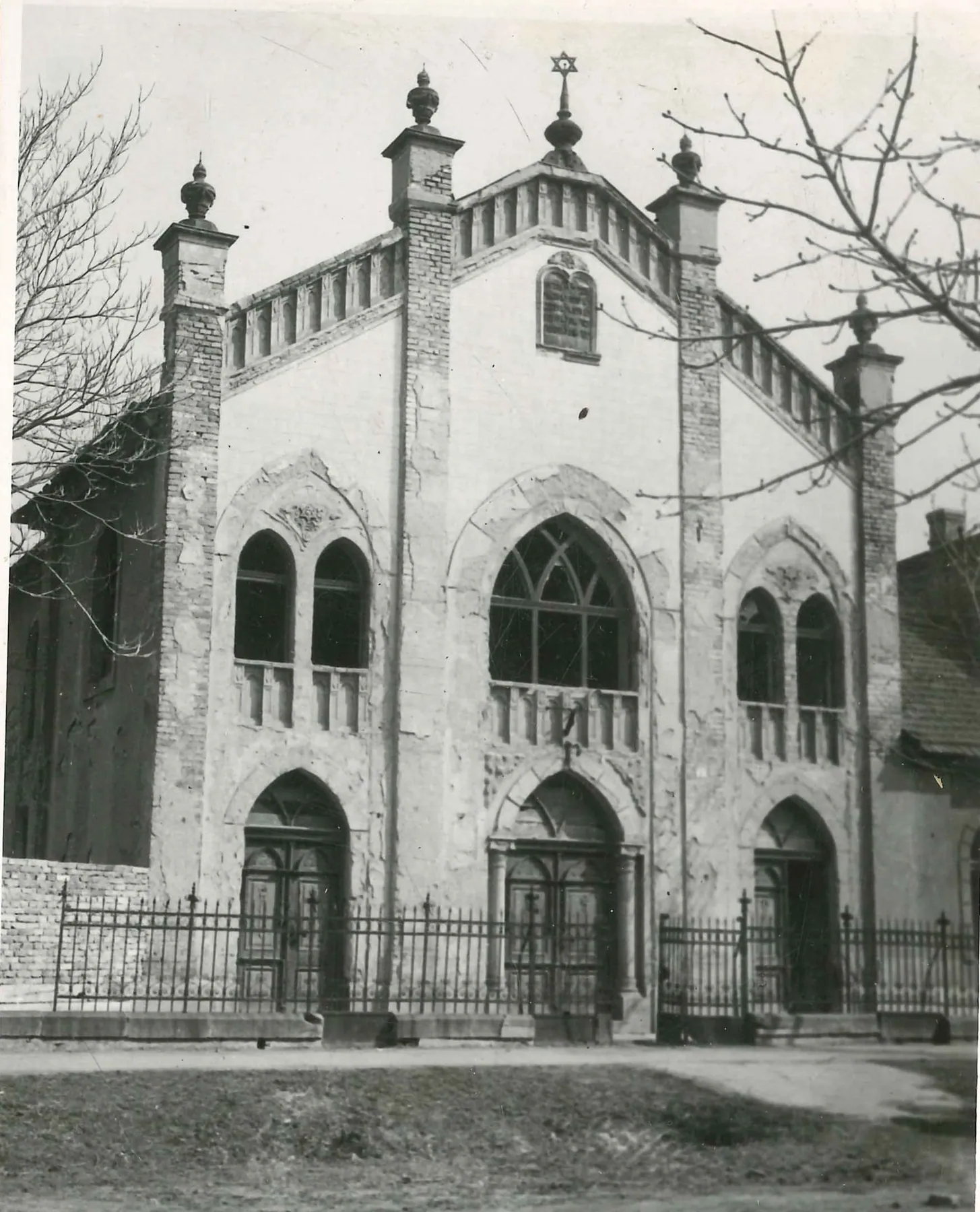
The synagogue stood in the centre of Hatvan, a railway and sugar-industry town in Heves County, on the street now called Mártírok útja, just south of the main square, Kossuth tér. It was completed in 1876 on land belonging to the Hatvany-Deutsch family and with their support, and the town contributed 200 forints. Nine years later, in 1885, the Jews of Hatvan left the Gyöngyös community and formed their own Congress (Neolog) congregation, the only one in the county. As membership grew towards 900, the building was enlarged in 1908. Ferenc Fürth and then Vilmos Adler served as its rabbis. After Nazi Germany occupied Hungary in March 1944, Hatvan's Jews were confined to a ghetto in May, moved to a collecting camp at the sugar factory and deported to Auschwitz in mid-June; only 56 returned. The synagogue was never restored. Photographs in the Hungarian Jewish Museum and Archives dated 1950 show the street front still standing but the interior stripped, and by 1955 the building was a ruin. According to the local historian Lajos Demény-Dittel, the consumer co-operative had it rebuilt as shop premises in the late 1950s; in 1991 a bookshop occupied the spot, its walls concealing what was left of the synagogue.
Where it stood
Historic: Sörház utca, Hatvan. Today: Mártírok útja, 3000 Hatvan, just south of Kossuth tér (house number not established; a bookshop stood on the spot in 1991).
Größere Karte öffnen →Die jüdische Gemeinde
Jews are first recorded in Hatvan in the tax census of 1798, and in 1835 a single family of leaseholders lived there. The community grew after the Compromise of 1867, as the railway junction and the enterprises of the Hatvany-Deutsch family, above all the sugar factory founded in 1889, turned the market town into the largest industrial centre of the county. A burial society (Chevra Kadisha) was formed in 1863; another account dates it to 1881. Until 1885 the 35 to 40 Jews of Hatvan belonged to the Gyöngyös community. In that year they founded an independent Congress (Neolog) congregation, attached to the 16th (Szolnok) district, which also served the Jews of five neighbouring villages. A women's association followed in 1890 and a new cemetery in 1903. The Jewish population peaked in 1910 at 867; a recent lecture gives 897, or 7.2 per cent of the town. In 1929 the congregation numbered about 900 people in 185 families, mostly shopkeepers, clerks, artisans, lawyers and doctors, and Béla Blumenthal, a bank director, was its long-serving president.
Architektur und Gestaltung
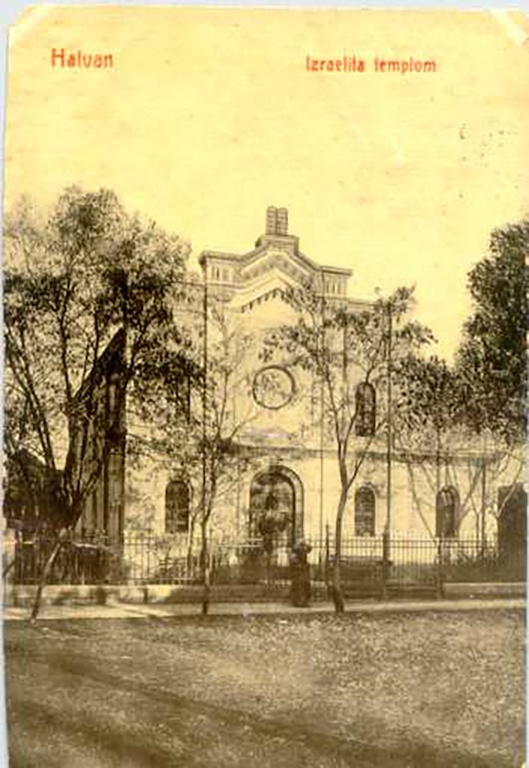
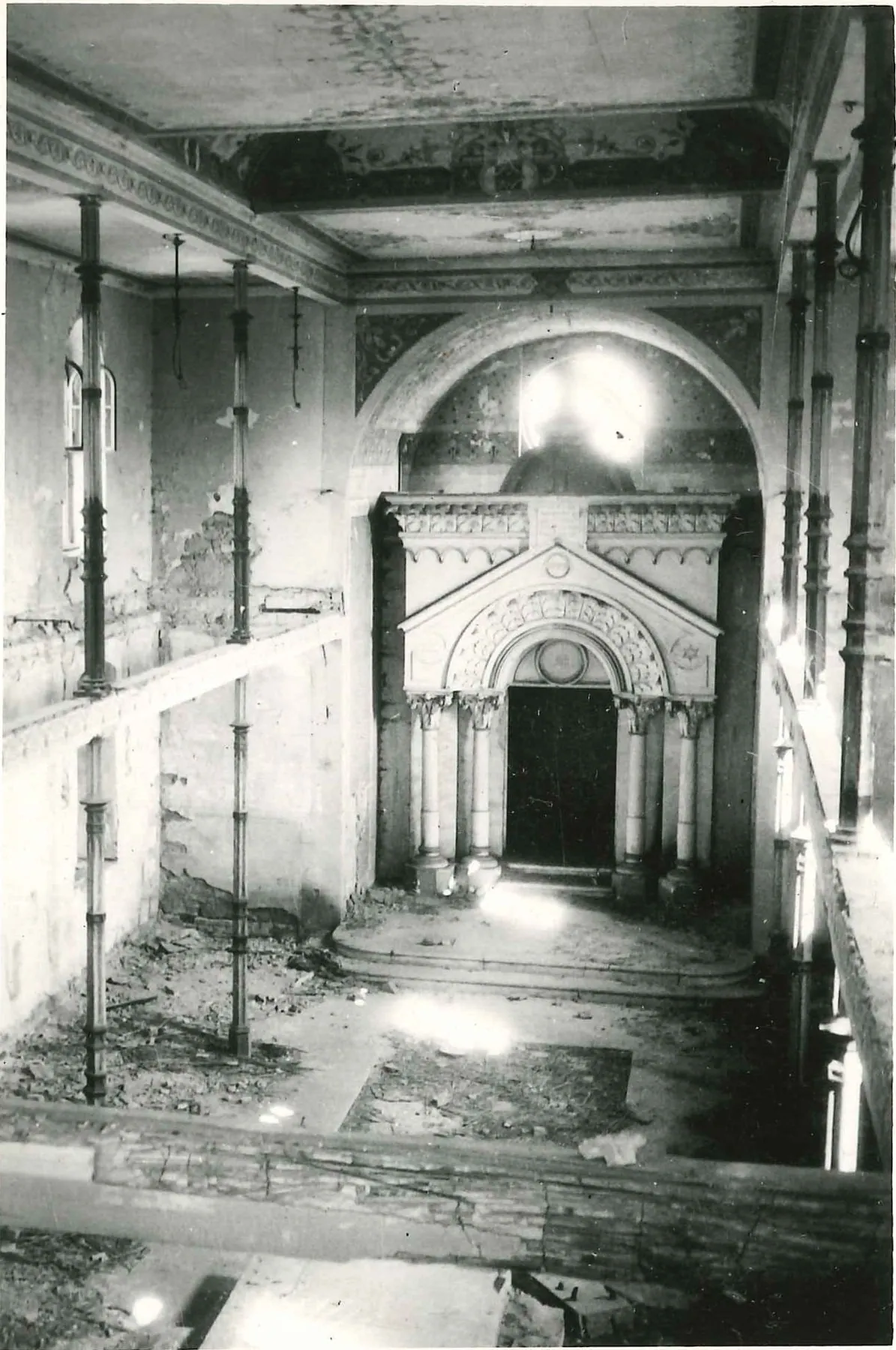
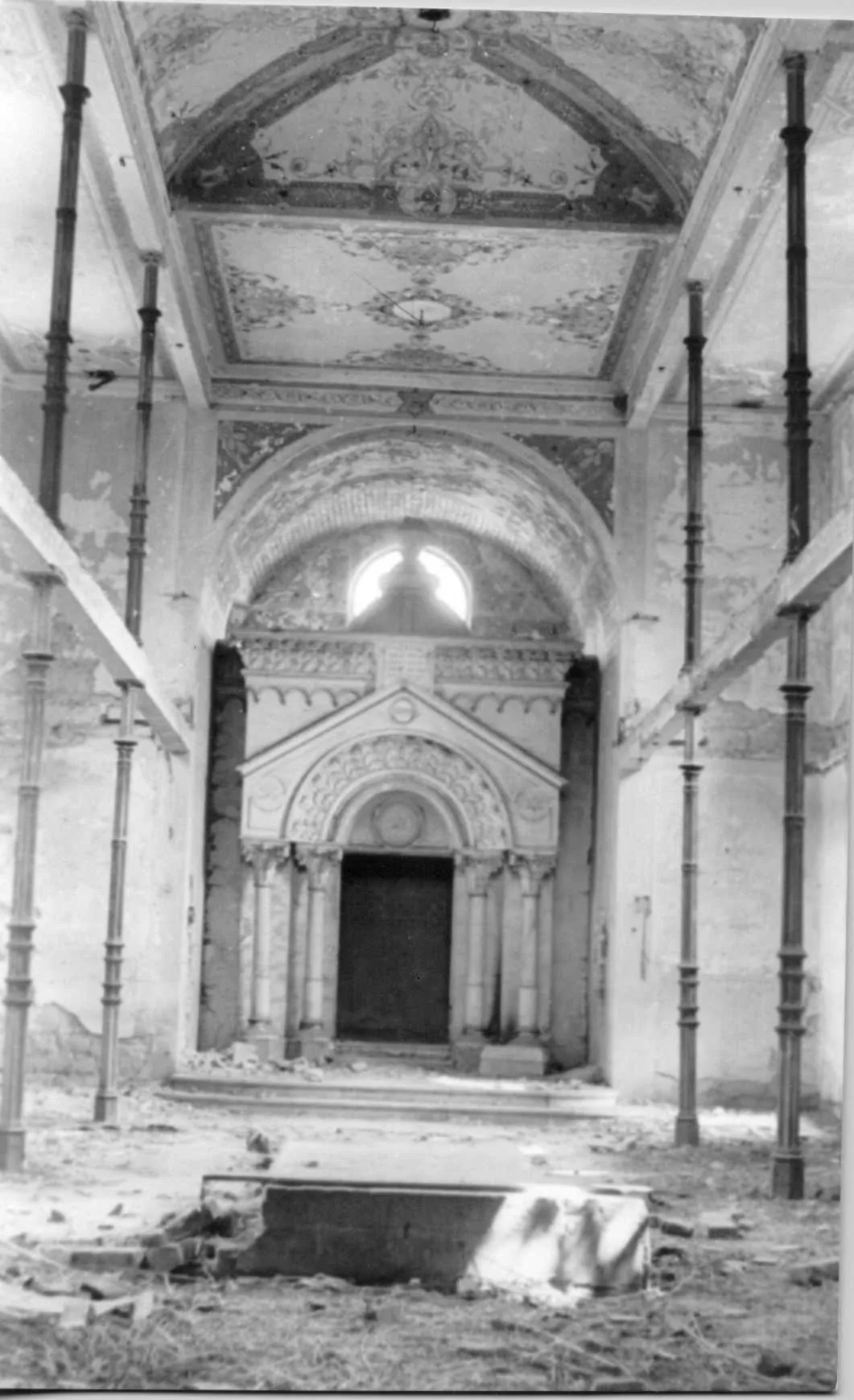
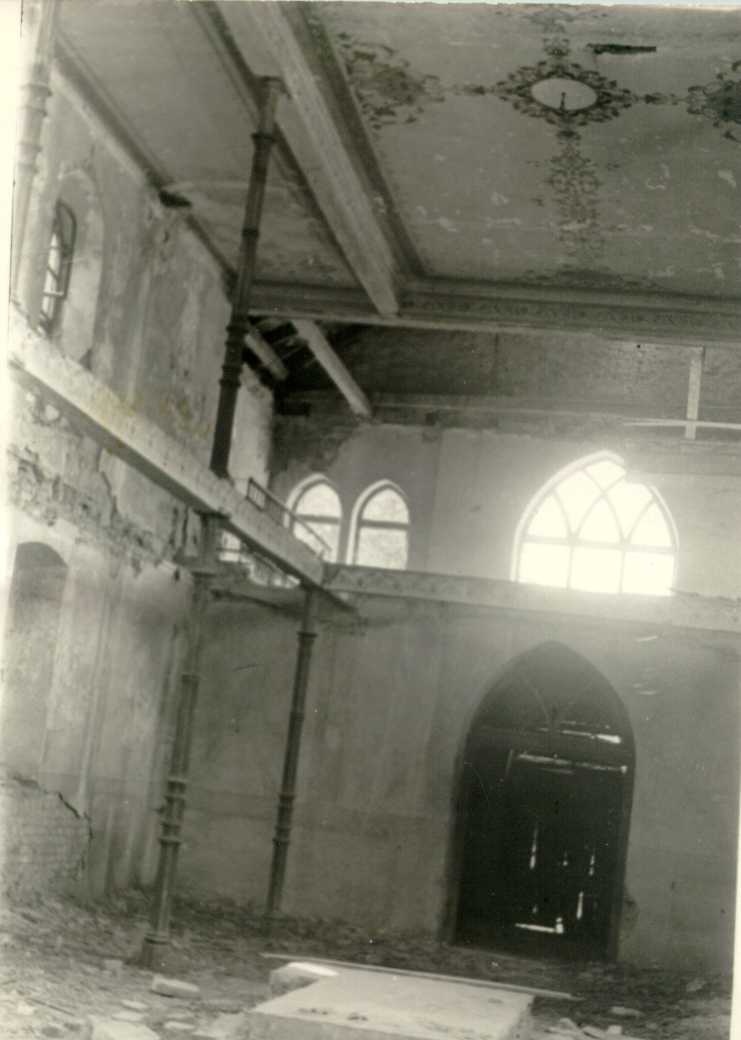
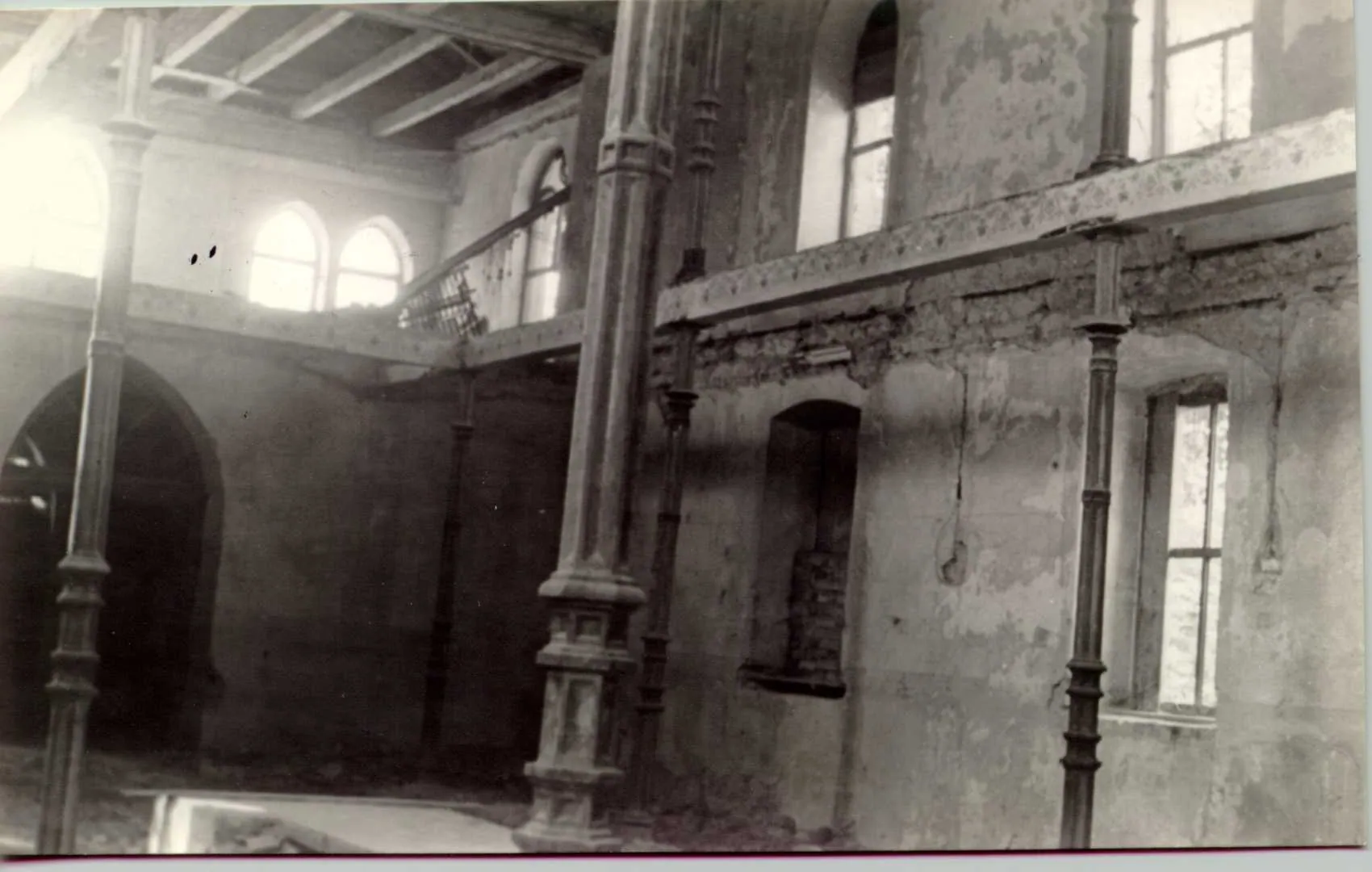
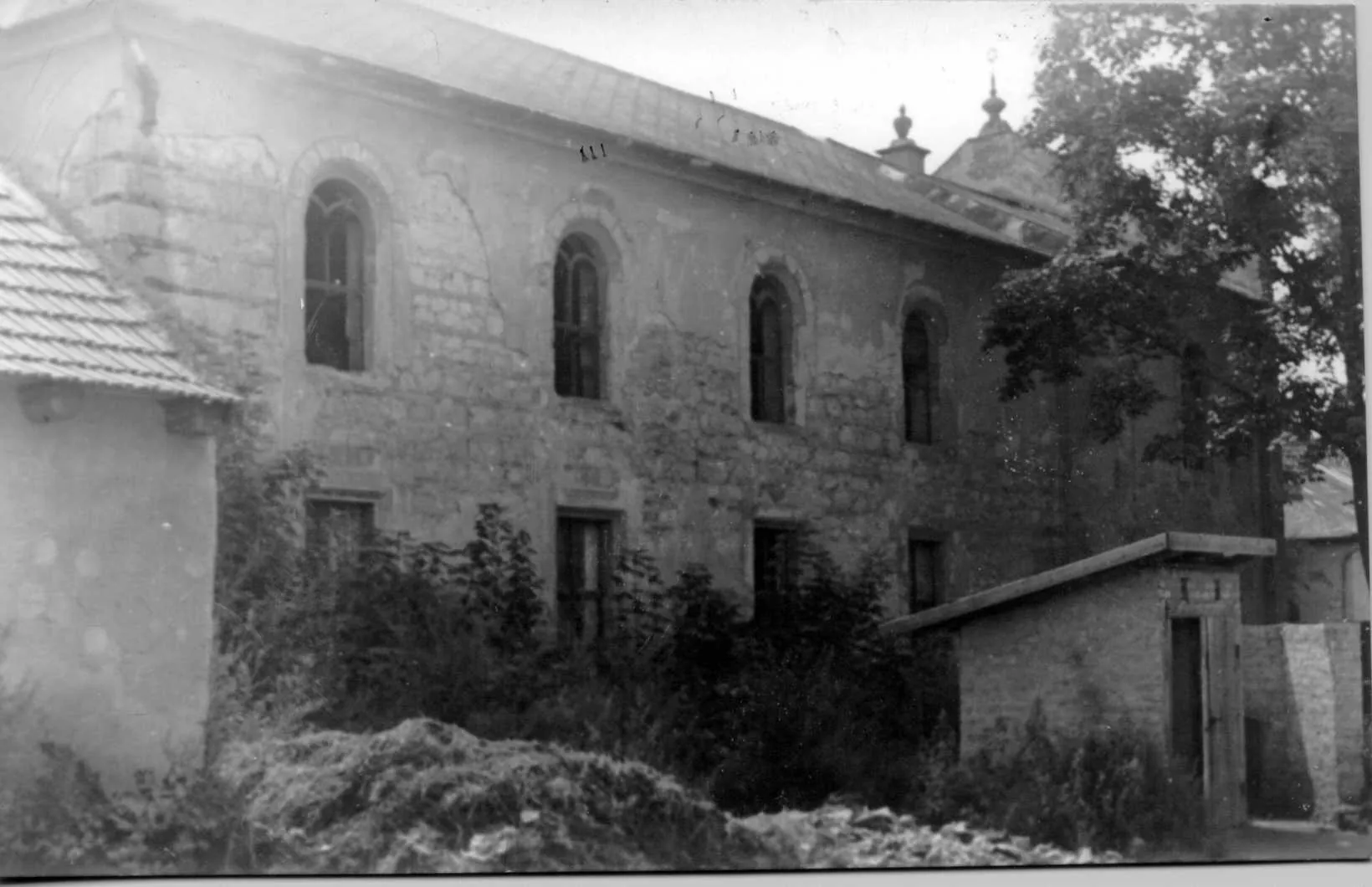
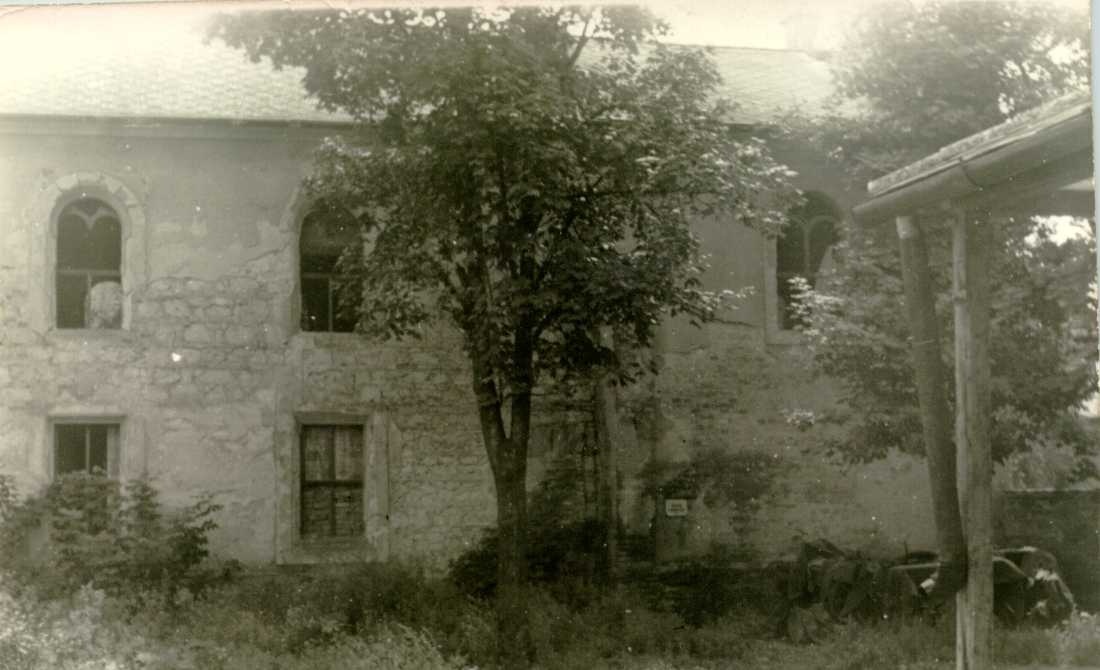
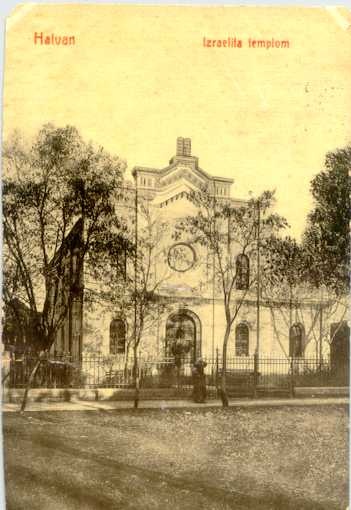
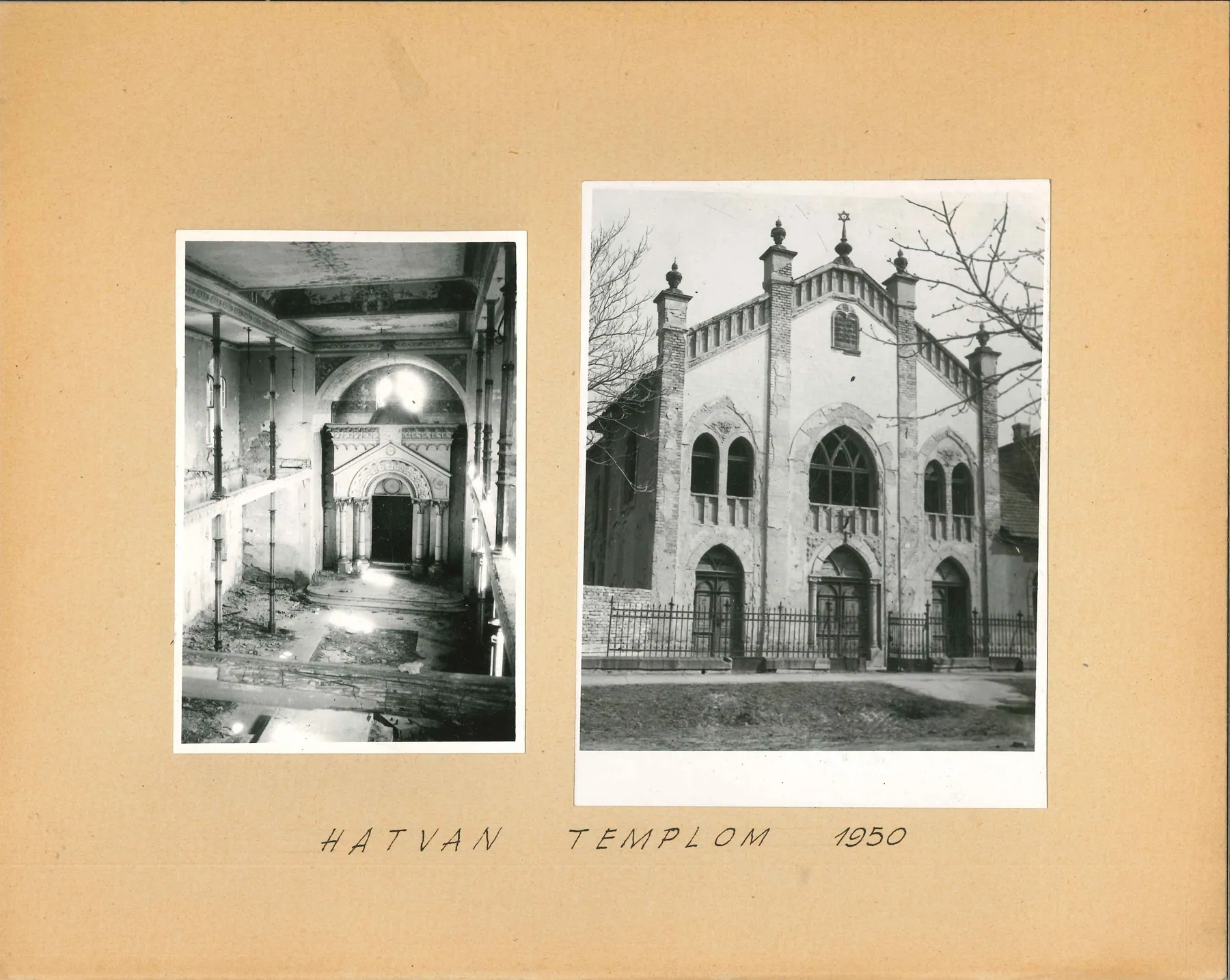
No architect or builder is recorded, and no plans are known. A postcard published by M. L. Hoffmann around 1900 shows what appears to be the original building of 1876: a rendered street front with a round-arched doorway, a circular window above it and a gable crowned by the Tablets of the Law, set behind an iron fence and a row of trees. The synagogue was enlarged in 1908, and the photographs of 1950 show a different, three-bay front: brick piers ending in urn finials, pointed arches over three doorways and over the gallery windows, an arcaded parapet, the Tablets of the Law in the gable and a Star of David at the apex. The long side walls were of plastered stone masonry with round-headed upper windows. Inside, slender cast-iron columns carried galleries along the sides and over the entrance beneath a flat ceiling painted with ornamental panels, and an arched recess at the far end framed a stone Torah ark shaped like a gabled, columned portal. The seating capacity is not recorded.
Leben in der Synagoge
The synagogue was the house of worship of a Congress (Neolog) congregation and the centre of a small group of institutions which, according to a local study, all stood on Hatvany land: a ritual bath, a prayer house, the seat of the burial society and a Talmud Torah school, where Sándor Neumann taught 37 pupils in 1929. Ferenc Fürth, elected rabbi at the age of twenty-three, served from about 1886 until 1896, when he left for Nagykároly. His successor Vilmos Adler, a graduate of the Budapest Rabbinical Seminary, led the congregation for almost half a century and published a volume of Friday-evening prayers in Hatvan in 1935. The building had its place in the civic calendar: the town's programme for 15 March 1930 lists an official service in the Israelite temple alongside those in the Catholic and Reformed churches. In October 1918 two soldiers broke in at night and were driven off by a prison guard, leaving behind a rucksack holding sixteen prayer shawls. Ninety-five members served in the First World War.
Zerstörung
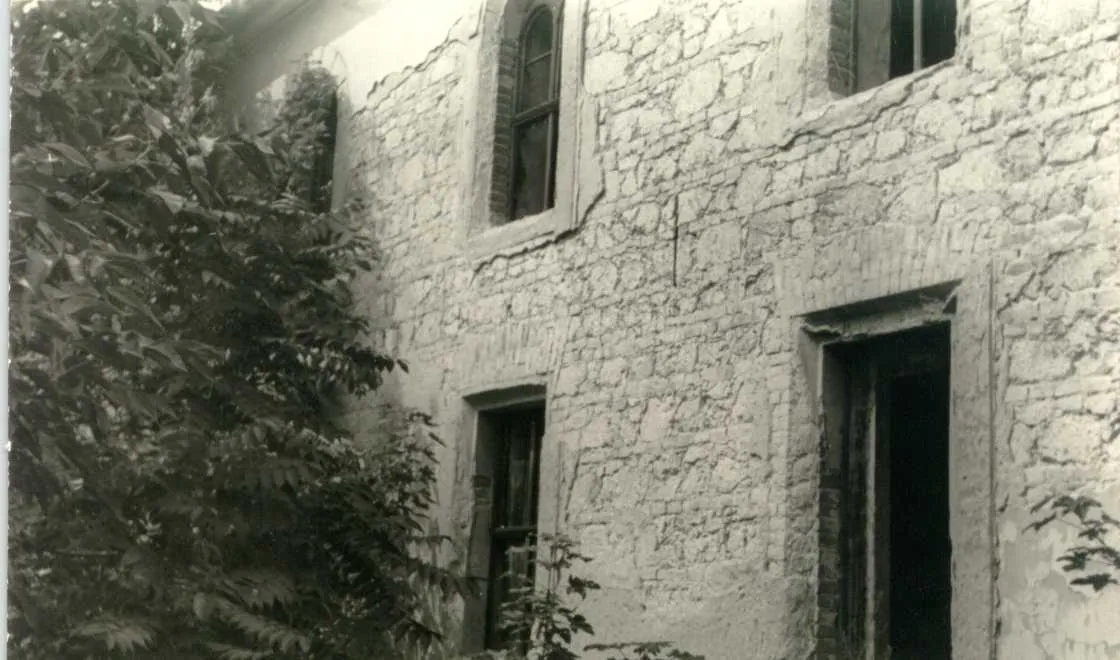
Nazi German forces occupied Hungary on 19 March 1944, and Hatvan's Jewish shops were soon sealed. On 5 May the Jews were ordered into a ghetto; after about twelve days they were marched to wooden barracks at the sugar factory, and in mid-June an SS detachment commanded by the Hungarian gendarmerie officer Márton Zöldy loaded them onto trains for Auschwitz. The emptied synagogue never returned to use. How its interior was wrecked is not recorded in the sources found, and no account says it was hit in the American and British air raid on Hatvan station on 20 September 1944. Photographs dated 1950 show the street front intact but the hall stripped of its furnishings, and by 1955 the building stood roofed but ruinous, its gallery floors gone, its windows empty and rubble on the floor. In the late 1950s, under Communist rule, the Communists erased it as a synagogue: the local consumer co-operative had the ruin rebuilt as shop premises. Its original form was lost, and only walls hidden inside the shop remained.
Das Schicksal der Gemeinde
The 1941 census counted 541 Jews in Hatvan. The ghetto set up in May 1944 was scattered over several sites, chiefly the Lili-telep housing built by the Hatvany family and a disused slate works, and Jews from the surrounding district were brought in as well. At the sugar-factory camp the prisoners were robbed of money, jewellery and wedding rings, and some were tortured by the guards. The transports left between 12 and 14 June 1944, with 70 to 80 people in each sealed wagon, and travelled via Kassa (Košice) to Auschwitz. Rabbi Vilmos Adler was among those deported and killed. Local accounts differ on the numbers: one says that 56 of 453 deportees returned, another that 453 died and 56 came back, a third that 56 of 495 Hatvan Jews survived. Younger men had been conscripted for forced labour from 1940, and many were sent to the eastern front. A Neolog congregation of about fifty members existed in 1947 and in 1949, when Béla Gáspár was its president, but it faded away; in October 1989 five Jews lived in the town.
Der Ort heute
The site lies on Mártírok útja (Martyrs' Road), formerly Sörház utca, a short street running south from Kossuth tér in the centre of Hatvan. In 1991 a bookshop, previously a vehicle shop, stood there, and the local historian Lajos Demény-Dittel wrote that its walls hid the remains of the synagogue. Whether that building, or any synagogue fabric inside it, still stands today could not be confirmed from the sources consulted, and no marker of the synagogue on the street was found. The victims are commemorated by a Holocaust memorial in the Jewish cemetery at the eastern end of Horváth Mihály út, the only property the congregation itself ever owned.
Bedeutende Namen
Ferenc Fürth
c. 1863–1912First rabbi of Hatvan, c. 1886–1896Born in Miskolc and trained in Miskolc, Putnok and at the Pozsony yeshiva, Ferenc Fürth was elected rabbi of Hatvan at the age of twenty-three, soon after the congregation became independent in 1885. He was the first rabbi to serve in the synagogue of 1876. After about nine years he was called to Nagykároly in 1896, where he was chief rabbi of the Status Quo community until his death in December 1912.
Biografie oder Quelle →Vilmos Adler
1867–1944Chief rabbi of Hatvan, c. 1896–1944Born in Paks, Vilmos Adler studied at the Budapest Rabbinical Seminary, took a doctorate in 1894 and was ordained in 1896. He succeeded Ferenc Fürth and led the Hatvan congregation in the synagogue for almost half a century, through its enlargement in 1908; the 1929 Jewish Lexicon credits him with developing its religious and cultural life. He published a book of Friday-evening prayers in Hatvan in 1935. In June 1944 he was deported to Auschwitz and killed.
Biografie oder Quelle →Béla Blumenthal
UnknownPresident of the Hatvan Jewish communityA bank director, Béla Blumenthal headed the Hatvan Congress (Neolog) congregation for decades and is named as its president in the Magyar Zsidó Lexikon of 1929, following Vilmos Lippe, Fülöp Gráf, Aladár Lakner, Lajos Rottenstein and Albert Sternberg. He also served as president of the burial society. In 1929, under his presidency, the congregation maintained the synagogue, a Talmud Torah school and several charitable foundations.
Biografie oder Quelle →Haben Sie etwas beizutragen?
Fotos, Dokumente, Familiengeschichten oder Erinnerungen an diese Synagoge und ihre Gemeinde halten ihre Geschichte lebendig.
- Hatvan, zsinagóga (album page with two photographs, 1950), inv. F16.033
- Hatvani zsinagóga épülete romos állapotban (photograph, 1955), inv. F70.160
- Hatvani zsinagóga (postcard "Hatvan – Izraelita templom"), inv. F73.164.1
- A város patinás épületei: A néhai zsinagóga, Heves Megyei Hírlap, 19–20 October 1991
- Hatvan
- Hatvan, in: Magyar Zsidó Lexikon (ed. Péter Ujvári, Budapest 1929), p. 346
- Adatok a hatvani temetők, temetkezések történetéhez, Agria 34 (1998), p. 113
- Adalékok Hatvan város felszabadulásának történetéhez, Az Egri Múzeum Évkönyve 15 (1977), pp. 337–341
- Zsidó mecenatúra Magyarországon a polgárosodás időszakában, Komárom-Esztergom Megyei Levéltár Évkönyve 1995, p. 51
- Obituary of Chief Rabbi Ferenc Fürth, Nagykároly és Vidéke, 18 December 1912
- Adler Vilmos
- A hatvani zsinagóga és a gettók történetei a falakon
- Mátrai Tanulmányok (Gyöngyös, 1999), p. 91
- History of the town of Hatvan
- Magyarországi zsinagógák listája (Heves vármegye: Hatvani zsinagóga)
- Rablók a templomban, Egri Ujság, 12 October 1918
- Március 15-e ünnepe a régmúlt idők folyamán
- Kelt: 1849. április 5-én
- A fekete szobor (1.)
- Szivarfa a rasszizmus ellen, Heves Megyei Hírlap, 27 October 2004
- File:Hatvan - Ev. ref. templom, Katholikus kör, Zsinagóga.jpg
- Mártírok útja, Hatvan (OpenStreetMap way 164643937)
Share a memory or thought
No comments yet. Be the first to add one.