

История Heenvliet Synagogue
Heenvliet is a village on Voorne-Putten, the island south-west of Rotterdam in the province of Zuid-Holland, today part of the municipality of Nissewaard. Jews settled in the villages and small towns of the island from about 1750, in Geervliet, Heenvliet, Zuidland, Zwartewaal, Hellevoetsluis and Brielle, and at first met for prayer in a small private house in Geervliet. Children were taught religion at the back of a poorhouse in Heenvliet.
In about 1805 the congregation bought an existing building on the Kerkweg in Heenvliet and converted it into a synagogue, which was consecrated in 1807. According to the Jewish Cultural Quarter's community encyclopedia it was the first synagogue on Voorne-Putten. A house for the teacher of the community's children was attached to it. The cost of buying and converting the building left the congregation in debt for decades, and in 1865 it asked the government for help; the aid it received paid for a restoration of the synagogue in 1867.
The community shrank steadily as members moved to the cities, from 62 people in 1809 to 14 in 1930, and it had ceased to function as an organised congregation before the German invasion of 1940. In 1947 it was formally merged into the Jewish community of Rotterdam. The synagogue and teacher's house were sold in 1948 and pulled down after the North Sea flood of 1953. A carved stone from the façade is kept by the Jewish Museum in Amsterdam.
Where it stood for nearly 150 years
Historic: Kerkweg, Heenvliet (Zuid-Holland); house number unknown. Today: Kerkweg, 3218 Heenvliet, municipality of Nissewaard; exact plot unknown (approximate).
Открыть большую карту →Еврейская община
The Jewish community of Heenvliet grew out of the scattered Jewish families who settled on Voorne-Putten from around the middle of the eighteenth century. Their first shared institution was the Jewish cemetery at nearby Geervliet, which dates from 1781 and was enlarged in the nineteenth century. Around 1807, when the synagogue was opened, about 135 Jews lived on the island as a whole. The congregation soon lost members to new neighbouring communities: in 1809 the Jews of Brielle and Hellevoetsluis broke away, citing the long distances and internal disputes, and the Jews of Zuidland followed in 1887. The community's own membership was counted at 62 in 1809, 41 in 1840, 54 in 1869, 19 in 1899 and 14 in 1930. Most of Heenvliet's Jews made their living as butchers, as dealers in textiles or as cattle dealers. The congregation also supported a society that collected money for the Jewish community in the Holy Land. One of its last leading figures was the cattle dealer Salomon van Blankenstein, who lived on the Wieldijk and, with his wife Elisabeth, kept the community going into the war years.
Архитектура и дизайн
Very little is recorded about the appearance of the building, and no photograph, drawing or plan of it was found in this research. The sources say only that the congregation bought an existing building on the Kerkweg around 1805 and converted it for use as a synagogue, so it was not purpose-built, and that it was restored in 1867 with government aid. A teacher's house was attached to it, and the two were sold together in 1948. The one surviving piece of the building is a rectangular stone from the pediment or façade, now in the Jewish Museum in Amsterdam. The stone carries eight lines of Hebrew inscription cut in relief; its text has not been transcribed or translated in any source read, but such stones usually recorded the dedication of the building. The architect or builder, the size of the prayer hall, the number of seats, the arrangement of the women's section and the style of the exterior are all unknown. The curtain of the Holy Ark survived the closure of the building and is now in the synagogue of Leiden, which shows that the hall had a conventional ark on its eastern wall.
Жизнь в синагоге
The synagogue served a small, largely rural congregation of cattle dealers, butchers and textile traders, drawn from Heenvliet and the surrounding villages of Voorne-Putten. Alongside regular services it was the centre of religious education: the teacher of the community's children lived in the house attached to the building, which replaced the earlier arrangement of lessons at the rear of the village poorhouse. The congregation's financial difficulties ran through its history. Having borrowed to buy and convert the building, it struggled to maintain both the synagogue and the cemetery at Geervliet, and in 1865 it petitioned the government for temporary support. The grant allowed the synagogue to be restored in 1867, but nothing was left over for the cemetery. Members also contributed to a charitable society that sent money to the poor Jews of the Holy Land. As numbers fell in the late nineteenth and early twentieth centuries, holding a regular service with a quorum of ten men must have become difficult, and by 1940 the community no longer functioned as a congregation. The community's records, kept in the building, were lost when it was demolished.
Разрушение
No source records damage to the synagogue during the Nazi German occupation of 1940 to 1945. By then the community had already ceased to function, and the building stood without a congregation through the war. After the war the few surviving Jewish institutions on Voorne-Putten were wound up: in 1947 the Heenvliet community was formally merged into the Jewish community of Rotterdam, and in 1948 the synagogue and the attached teacher's house were sold. The sources do not name the buyer or say what price was paid. According to the community encyclopedia of the Jewish Cultural Quarter, both buildings were demolished after the North Sea flood of February 1953. The sources do not say whether the flood itself damaged the buildings, nor exactly in which year the demolition took place, and who carried out the demolition is not recorded. The community's archive, still in the building, was destroyed when it was pulled down. Before demolition the carved façade stone was removed and later reached the Jewish Museum in Amsterdam, while the ark curtain had already gone to the synagogue in Leiden. What became of the rest of the furnishings is unknown.
Судьба общины
The Heenvliet congregation had dissolved before the German invasion of May 1940, but a few Jewish families still lived in Heenvliet and neighbouring Spijkenisse. Under the Nazi German occupation they were registered, stripped of their rights and, in 1942, deported. According to the Digital Jewish Monument, Salomon van Blankenstein, a cattle dealer born in IJsselmonde in 1868 and living at Wieldijk 118 in Heenvliet in April 1942, was murdered in Auschwitz on 5 November 1942, aged 74; his wife Elisabeth van Blankenstein-den Hartog, born in 1877, was also murdered in 1942. The Jewish Cultural Quarter states that all the Jews still living in Heenvliet and Spijkenisse were deported and murdered. No Jewish community was re-established on Voorne-Putten after the war. In 1947 what remained of the Heenvliet community was formally joined to the Jewish community of Rotterdam. A street in Heenvliet, the Van Blankensteinstraat, is named after the former community leader. The Jewish cemetery at Geervliet, where the last burial took place in 1940, was listed as a monument in 1971, restored in 1986 and is maintained by the local authorities.
Место сегодня
The synagogue stood on the Kerkweg in Heenvliet, the road leading to the village church, but its exact plot has not been identified in any source consulted. Both the synagogue and the teacher's house were demolished after 1953, and nothing of them is recorded as standing today. What now occupies the site is unknown. The map pin for this entry marks the Kerkweg itself, not the documented footprint of the building, and should be read as approximate. Two physical traces of the synagogue survive elsewhere: its carved Hebrew façade stone in the Jewish Museum in Amsterdam and the curtain of its Holy Ark in the synagogue of Leiden. In the village a street, the Van Blankensteinstraat, recalls the community's last leader.
Значимые имена
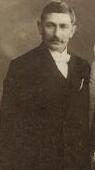
Salomon van Blankenstein
1868-1942Leader of the Heenvliet Jewish community in its last yearsA cattle dealer born in IJsselmonde, van Blankenstein lived at Wieldijk 118 in Heenvliet. The Digital Jewish Monument says he and his wife Elisabeth were a driving force of the Heenvliet Jewish community into the war, and the Jewish Cultural Quarter names an 'S. van Blankenstein' (given as 1862-1942) as a former head of the community, after whom a street in Heenvliet is named. He was murdered in Auschwitz on 5 November 1942.
Биография или источник →Вам есть чем поделиться?
Фотографии, документы, семейные истории и воспоминания об этой синагоге и её общине помогают сохранить её историю.
Share a memory or thought
No comments yet. Be the first to add one.