
La historia de Synagogue am Lappenberg
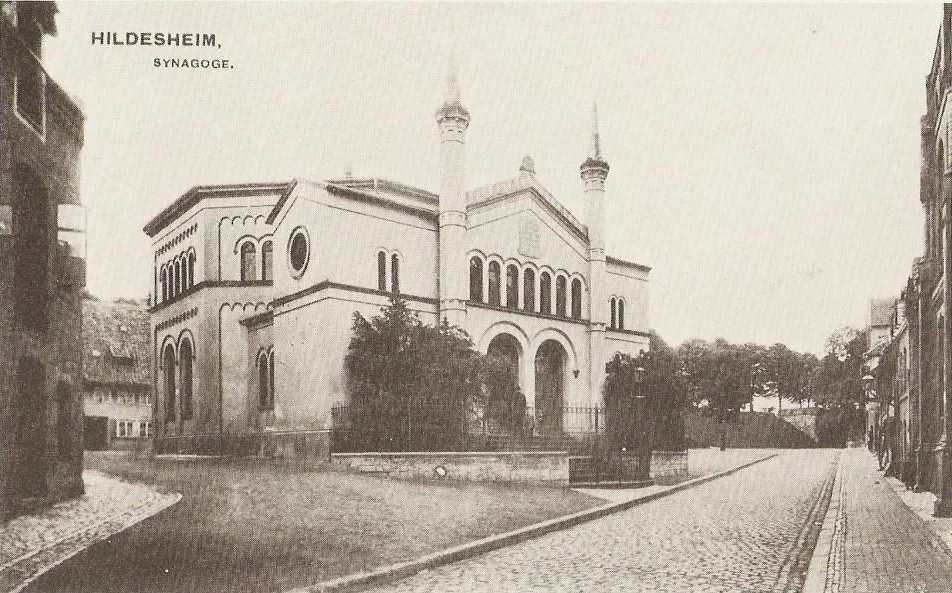
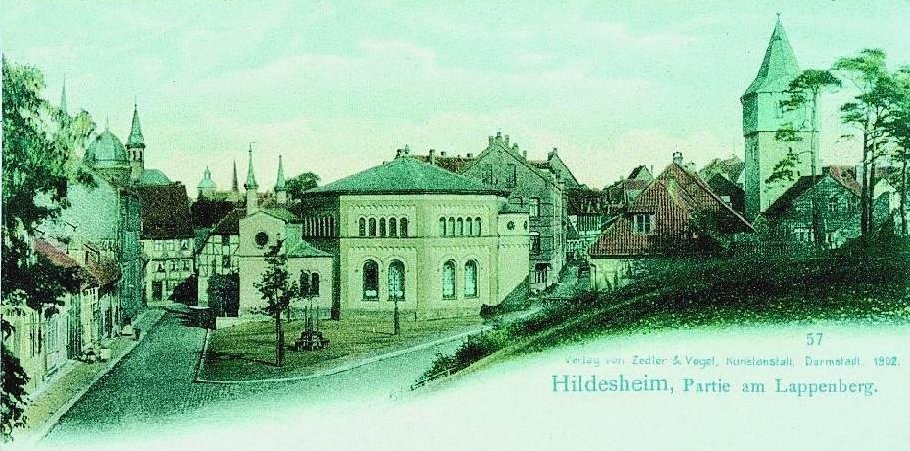
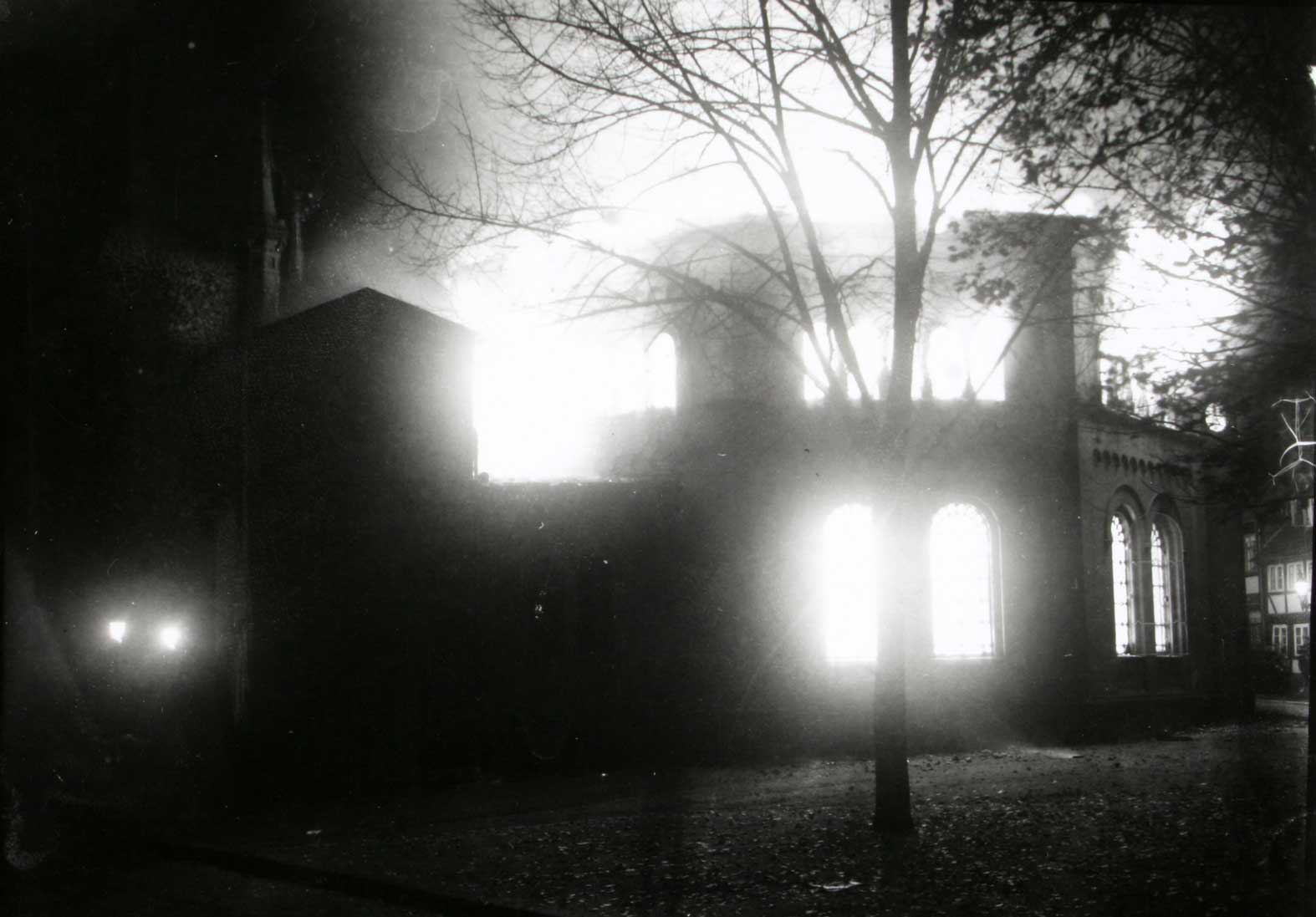
The Synagogue am Lappenberg was the main synagogue of Hildesheim, a cathedral city in Lower Saxony, from 1849 until 1938. The Jewish community began planning a replacement for its small and deteriorating prayer house in 1832 and obtained permission to build on the Lappenberg in 1833, but lacked the money to begin until 1848. The new building, a centrally planned octagon on the northern side of the triangular square, was designed by the Hanover building inspector Eduard Ferdinand Schwarz at a budget of about 10,800 Reichstaler. Regional Rabbi Meyer Landsberg consecrated it on 8 November 1849, contrasting its open, visible position with the hidden corner occupied by its predecessor. A Jewish school, built in 1859 at Lappenberg 21, stood opposite. The synagogue served a community of around 600 people at its height. During the November Pogrom, on the night of 9–10 November 1938, an SS unit acting on orders from Hanover plundered it and set it on fire. The Technische Nothilfe and forced labourers later pulled down the surviving walls, and the debris was cleared by June 1940. The school building still stands.
Where it stood for 89 years
Historic: Lappenberg (northern side of the triangular square), Hildesheim. Present: open memorial square on Lappenberg, opposite Lappenberg 21; the octagonal footprint is marked by a low wall. Location close to exact.
Abrir mapa ampliado →La comunidad judía
Jewish settlement in Hildesheim is documented from the Middle Ages, when a synagogue existed on the Judenstraße; the community was expelled in 1457 and its synagogue destroyed. Jews later returned, and from the early seventeenth century they worshipped in a building behind a private house. A benevolent society was founded in 1668, and a Jewish elementary school opened around 1812, when about seventy-seven Jewish families lived in the town. As the community grew in the nineteenth century, the old prayer house became too small and structurally unsound, and it was closed in 1842. Planning for a new synagogue had begun in 1832; several designs, including one by a Hildesheim architect in 1841, one by a Hanover building inspector in 1843 and a scheme with a rotunda, were rejected before the octagonal design won approval in 1848. The community numbered about 617 in 1900 and roughly 515 to 550 in 1933.
Arquitectura y diseño
The synagogue was a freestanding central-plan building with an octagonal prayer hall, placed on the northern broad side of the triangular Lappenberg square at what was then the edge of the town. A local-history reference describes it as a plain, grey centralised building, reflecting the restrained tastes of the period and the community's limited means; its construction budget was about 10,800 Reichstaler. The octagonal scheme was preferred in 1848 over earlier proposals, including a rotunda design. Its free position on an open square was itself significant: at the dedication the rabbi described it as a free temple on free ground, in contrast to the concealed location of the old prayer house. Photographs and postcards from about 1890 to 1911 record the exterior. The octagonal footprint is traced today by a low boundary wall. Details of the interior layout, seating, materials and decoration are not known from accessible sources.
La vida dentro de la sinagoga
The synagogue was the religious centre of Hildesheim's Jews and was associated with the district rabbinate based in the town. Regional Rabbi Meyer Landsberg, who dedicated the building, issued formal synagogue regulations in 1858; he died in 1870. A later district rabbi, Abraham Lewinsky, took office on 4 November 1892 and published studies of Josephus and of Hildesheim's Jewish history. The community supported numerous benevolent societies, one of them dating from 1668, and its Jewish elementary school moved in 1859 into the building opposite the synagogue at Lappenberg 21, which served as school and community centre until 1942. The last rabbi, Joseph Schwarz, took office in 1936 and left Hildesheim on 1 September 1938. After his departure the teacher Hermann Spier, who had no formal rabbinical training, led the congregation's religious life in the synagogue's final weeks.
Destrucción
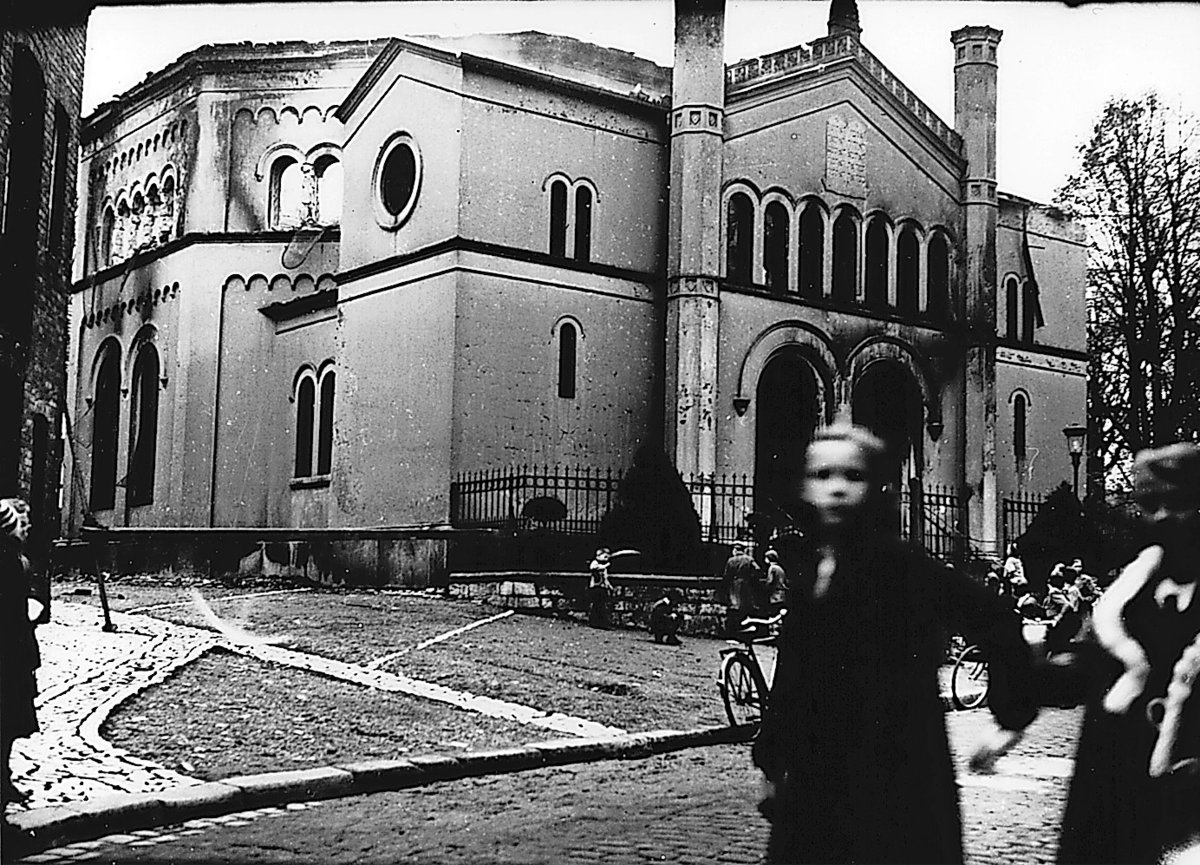
During the November Pogrom of 1938, SS-Oberführer Kurt Benson in Hanover telephoned SS-Sturmbannführer Emil Frels in Hildesheim and ordered him to set the synagogue on fire immediately. Frels sent a squad of about ten to fifteen SS men under his adjutant, SS-Oberscharführer Zander, who used petrol canisters to start the blaze at around 2 a.m. on 10 November. Frels had told the fire brigade in advance that the building would soon be in flames. The SS plundered the synagogue, which burned out completely by morning; the Jewish school opposite was spared. The same night Jewish shop windows were smashed, and on 10 November about sixty Jewish men were arrested and taken past the burning synagogue to jail under police supervision by Major Ballauf. Part of the facade survived the fire. Members of the Technische Nothilfe and forced labourers from the nearby Godehardi prison then demolished the walls, and the rubble was cleared on 14 June 1940.
El destino de la comunidad
Roughly 515 to 550 Jews lived in Hildesheim when the Nazis took power in 1933; by late 1938 only about 200 remained, many having emigrated or moved away. After the pogrom, the surviving school building at Lappenberg 21 served as the community's school and meeting place until 1942. On 31 March 1942, 62 people were deported from Hildesheim to the Warsaw Ghetto, and on 23 July 1942 a further 51 were sent to Theresienstadt. Only about four people from these two transports are known to have survived. A final group of five people was deported to Theresienstadt on 20 February 1945; all were liberated. For almost six decades afterwards there was no organised Jewish community in Hildesheim, and a new congregation was founded only in 1997.
El lugar hoy
Nothing of the synagogue survives above ground. Its location on the Lappenberg is an open square where a low stone wall traces the building's octagonal outline. A memorial stone with an inscription in Hebrew, German and English was placed at the site in 1948, and a larger memorial sculpture was added in 1988 for the fiftieth anniversary of the pogrom. Directly opposite, the former Jewish school at Lappenberg 21, built in 1859, survives and is now used as a parish building of the Catholic church of St Godehard.
Nombres destacados
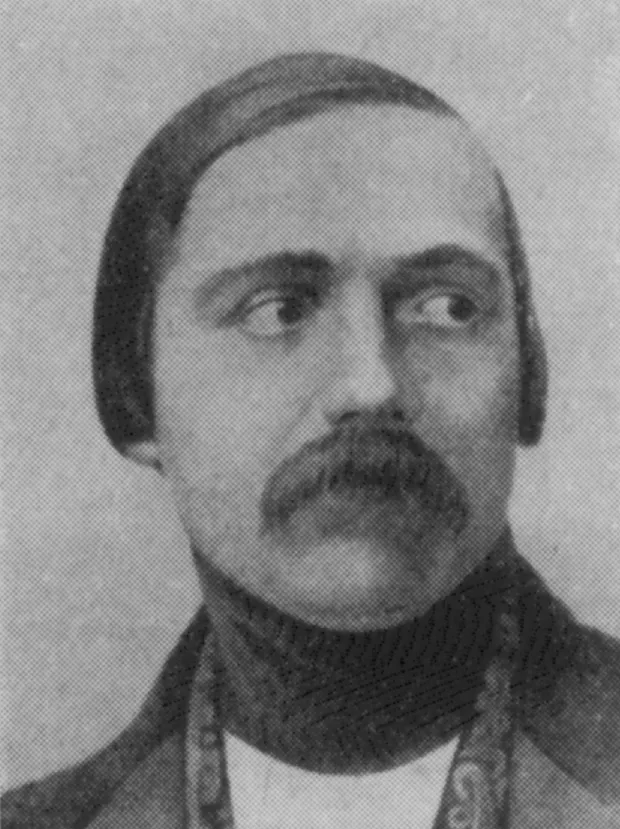
Eduard Ferdinand Schwarz
23 November 1808 – 22 April 1866ArchitectEduard Ferdinand Schwarz, a building inspector in Hanover, is credited with the design of the Synagogue am Lappenberg. His octagonal, centrally planned scheme received the community's firm approval in 1848 after several earlier proposals had been rejected, and it was built for about 10,800 Reichstaler and dedicated in November 1849.
Biografía o fuente →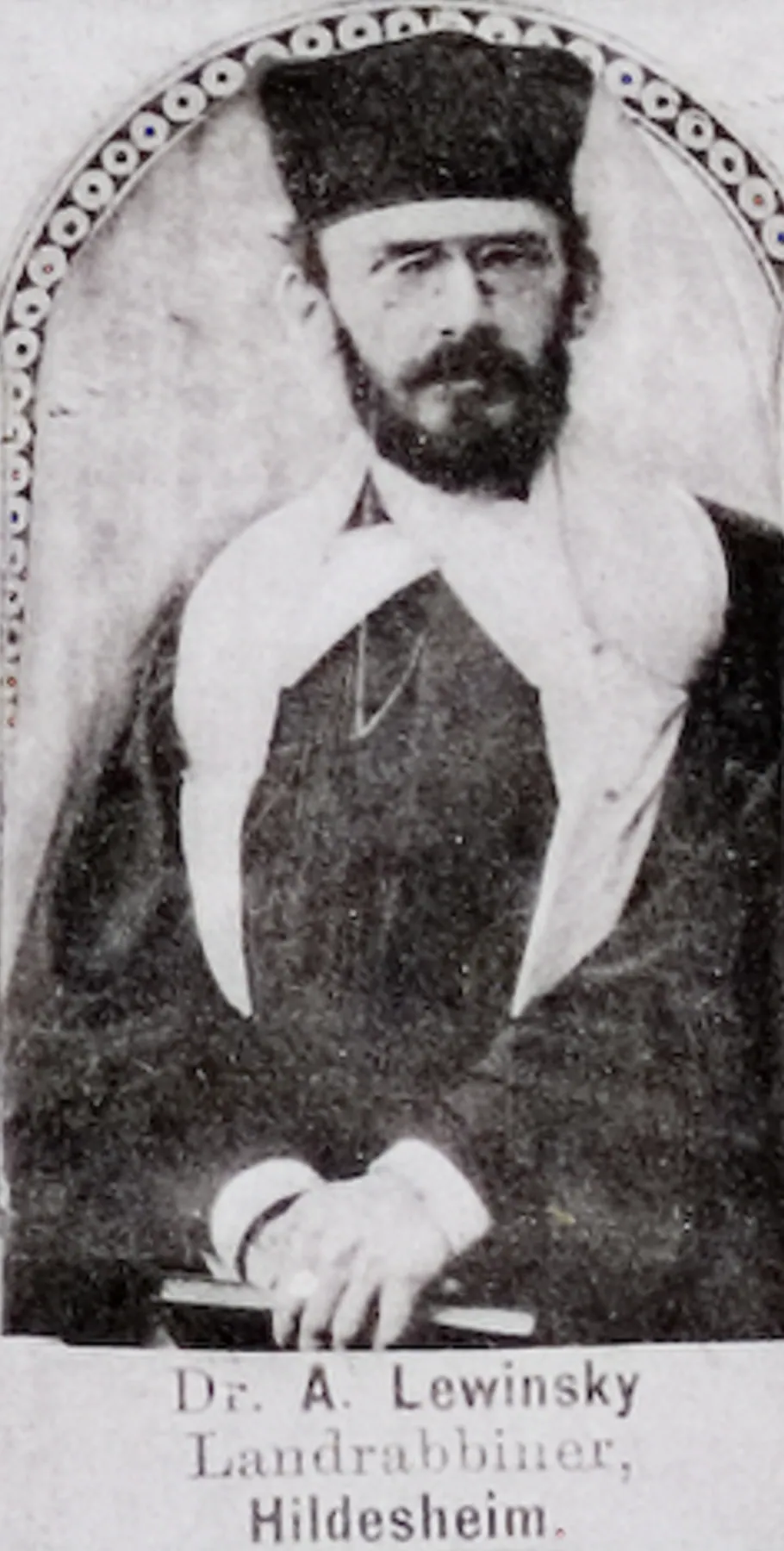
Abraham Lewinsky
1 March 1866 – 18 December 1941 (district rabbi from 1892)District rabbi and historianAbraham Lewinsky became district rabbi in Hildesheim on 4 November 1892, serving the community whose house of worship was the Synagogue am Lappenberg. A noted scholar of Josephus, he also published studies of Hildesheim's Jewish history, documenting the community whose centre was the synagogue.
Biografía o fuente →Meyer Landsberg
1810 – 20 May 1870Regional rabbi (Landrabbiner)Meyer Landsberg, regional rabbi at Hildesheim, consecrated the Synagogue am Lappenberg on 8 November 1849 and preached at its dedication, contrasting the new building's open position with the hidden prayer house it replaced. In 1858 he issued formal regulations governing worship in the synagogue.
Biografía o fuente →Joseph Schwarz
Rabbi 1936–1938RabbiJoseph Schwarz was the last rabbi to serve the Hildesheim community at the Synagogue am Lappenberg. He took office in 1936 and left the city on 1 September 1938, only weeks before SS men burned the synagogue during the November Pogrom.
Biografía o fuente →Hermann Spier
Dates unknownTeacher and lay religious leaderHermann Spier, a teacher without formal rabbinical training, took over the religious leadership of Hildesheim's Jewish community after Rabbi Joseph Schwarz left in September 1938. He was thus the community's spiritual leader in the synagogue's final weeks before its destruction in November 1938.
Biografía o fuente →¿Tiene algo que aportar?
Fotografías, documentos, historias familiares o recuerdos de esta sinagoga y su comunidad ayudan a mantener viva su historia.
Share a memory or thought
No comments yet. Be the first to add one.