
История Neuschotz Temple, Iași
Iași, the old capital of Moldavia, was one of the great Jewish cities of south-eastern Europe: Jews made up nearly half of its population in the second half of the nineteenth century, and on the eve of the Holocaust the city counted 127 synagogues. Among them the Neuschotz Temple stood apart. According to the Pinkas Hakehillot, a prayer house named Beit Yaakov, intended for the well-to-do, was built in 1865; it carried the name of its donor, Jacob Neuschotz, and was known as the Jacob Neuschotz Temple. The Federation of Jewish Communities of Romania lists it as Templul Iacob Neuschot, Beit Hadaș, and describes it as a modern building in the centre of the city.
Its best-known preacher was Jacob Itzhak Niemirower, who on returning to Iași in 1896 took his first post as rabbi and preacher of this reform synagogue, and who later became the first Chief Rabbi of Romanian Jewry. In 1944 the building was bombed. It had to be demolished, and the Federation links its demolition to the redevelopment (systematisation) of the neighbourhood. No source consulted names who bombed it, gives the date of the demolition or records its exact address, and no photograph of it has been found.
Where it stood for 79 years
Historic: centre of Iași, Moldavia; street and house number unknown. Today: unknown; placeholder pin at the centre of Iași, Iași county (approximate).
Открыть большую карту →Еврейская община
Jews lived in Iași from at least the seventeenth century, and possibly much earlier: tombstones dated 1467 and 1549 have been claimed, while the historian Meyer Abraham Halevy held that the oldest surviving stones date from 1648. In 1657 the community bought land for the Great Synagogue, the first stone synagogue in the Romanian principalities. From 1719 Iași was the seat of the Hakham Bashi, the chief rabbi of Moldavia appointed under Ottoman rule, an office abolished in 1834. The nineteenth century brought rapid growth. The Pinkas Hakehillot gives 31,015 Jews in 1859, 47.1 per cent of the inhabitants, and 39,441 in 1899, 50.8 per cent. Besides the old synagogues, many prayer houses belonged to craft guilds, and an orphanage named after the philanthropist Neuschatz, its founder, was opened in 1818. By 1930 the community numbered 35,465, a little over a third of the population, and had 127 synagogues. The Neuschotz Temple served its wealthier, more modern members.
Архитектура и дизайн
Almost nothing is recorded about the building's architecture. The Federation of Jewish Communities of Romania describes it only as a modern building in the centre of the city, built in 1865, and the Pinkas Hakehillot describes it as a prayer house intended for the well-to-do. Its name, Temple, and its description as a reform synagogue suggest that it followed the model of the choral temples of Central Europe, with a choir and a sermon in the service, rather than the traditional prayer houses of the Iași guilds; this is an inference from its name and use, not something a source states about its form. The architect, the builder, the seating capacity, the style, the plan and the interior arrangement are all unknown. No photograph, drawing, postcard or plan of the building was found in the sources consulted, and the Wikimedia Commons category for synagogues in Iași holds no image of it.
Жизнь в синагоге
The Neuschotz Temple was the synagogue of the prosperous and modernising part of Iași Jewry. The Pinkas Hakehillot calls it a prayer house intended for the well-to-do, in contrast to the many prayer houses belonging to craft groups. Its most notable preacher was Jacob Itzhak Niemirower, a native of Lemberg who had studied at the Hildesheimer Rabbinical Seminary in Berlin and taken a doctorate at Bern in 1895. When he returned to Iași in 1896 his first post was as rabbi and preacher (darshan) of this reform synagogue, Beit Yaakov, named Jacob Neuschotz Temple after its donor. Traditional and Hasidic circles in the city were hostile to him and regarded him as a Reform rabbi, which shows how the temple was seen by much of the community. In 1908 Niemirower was elected chief rabbi of the Moldavian community. The names of other rabbis, cantors and lay leaders of the temple are unknown.
Разрушение
The Federation of Jewish Communities of Romania states that in 1944 the building was bombed and that it had to be demolished, linking the demolition to the systematisation, or redevelopment, of the neighbourhood. The city was bombed from the air that year, but the source does not say whose aircraft hit the synagogue, and none of the other sources consulted describes the raid or the damage. The date of the demolition is also not given. The Federation's general remark that bombing, emigration and the systematisation of the city under the Ceaușescu regime caused the disappearance of Iași's synagogues suggests the ruin was cleared some years after the war, under Communist rule, but whether it was pulled down soon after 1944 or only during later rebuilding of the centre is unknown. Who ordered or carried out the demolition is not recorded in the sources read.
Судьба общины
On 29 June 1941 the Romanian dictator Ion Antonescu ordered the removal of the Jewish population of Iași, and the city became the scene of one of the cruellest pogroms in the history of East European Jewry. Romanian authorities counted 13,266 victims, a list compiled by the community counted 14,850, and some estimates reach 20,000. A census of April 1941 had counted 34,753 Jews in the city, while the Pinkas Hakehillot gives 33,135 for that year, against about 45,000 before the war. The survivors remained in Iași through the rest of the war. Refugees and returnees swelled the community afterwards: the Pinkas Hakehillot gives 38,000 Jews in 1947. The Federation of Jewish Communities of Romania names emigration, alongside wartime bombing and the systematisation of the city under the Ceaușescu regime, as a cause of the disappearance of Iași's synagogues. The Great Synagogue, the oldest standing synagogue in Romania, has been restored and is again used for the community's religious ceremonies.
Место сегодня
The exact site of the Neuschotz Temple has not been identified. The only location given in the sources consulted is the centre of Iași, and the Federation of Jewish Communities of Romania ties its demolition to the redevelopment of the surrounding neighbourhood, so the plot is probably covered by postwar buildings or streets. No surviving fragment and no marker on the site is recorded. The map pin for this entry is a placeholder at the centre of Iași and should not be read as the synagogue's location. Fixing the address will need old city directories, cadastral maps or the archive of the Iași Jewish community.
Значимые имена
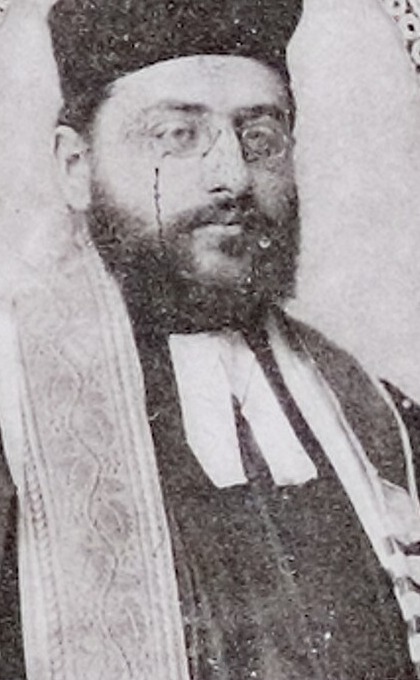
Jacob Itzhak Niemirower
1872-1939Rabbi and preacher of the Neuschotz Temple from 1896Born in Lemberg and trained at the Hildesheimer Rabbinical Seminary in Berlin, with a doctorate from Bern (1895), Niemirower returned to Iași in 1896 and took his first post as rabbi and preacher of the reform synagogue Beit Yaakov, the Jacob Neuschotz Temple. Traditional and Hasidic circles opposed him as a Reform rabbi. He became chief rabbi of the Moldavian community in 1908, the first Chief Rabbi of Romanian Jewry in 1921 and a senator from 1927, and died in Bucharest in 1939.
Биография или источник →Jacob (Iacob) Neuschotz
UnknownDonor after whom the temple was namedThe English Wikipedia article on Rabbi Niemirower states that the reform synagogue Beit Yaakov was named Jacob Neuschotz Temple after its donor, and the Federation of Jewish Communities of Romania lists it as Templul Iacob Neuschot. Nothing more about the donor, his dates or his family was found in the sources read, and it is not established whether he was connected with the philanthropist Neuschatz who founded an orphanage in Iași in 1818.
Биография или источник →Вам есть чем поделиться?
Фотографии, документы, семейные истории и воспоминания об этой синагоге и её общине помогают сохранить её историю.
- Monumente: lăcașuri de cult (Iași, no. 62: Templul Iacob Neuschot, 'Beit Hadaș')
- Iasi (Pinkas Hakehillot Romania, vol. 1)
- Jacob Itzhak Niemirower
- Iasi (Communities destroyed in the Holocaust)
- Iasi, Romania (KehilaLinks)
- Category:Synagogues in Iași
- Iași (OpenStreetMap relation 1207838)
- Oldest synagogue in Romania reopens after restoration works
- File:Dr. phil. Jacob Itzhak Niemirower Oberrabbiner u Prediger, Jassy.jpg
- Niemirower, Jacob Isaac
Share a memory or thought
No comments yet. Be the first to add one.