

История Wooden Synagogue of Janów Trembowelski
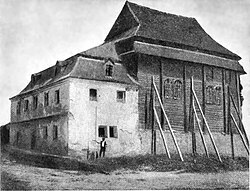
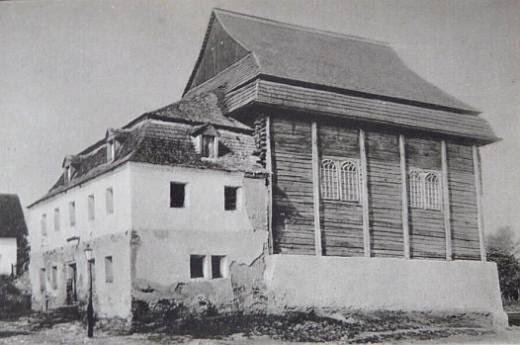
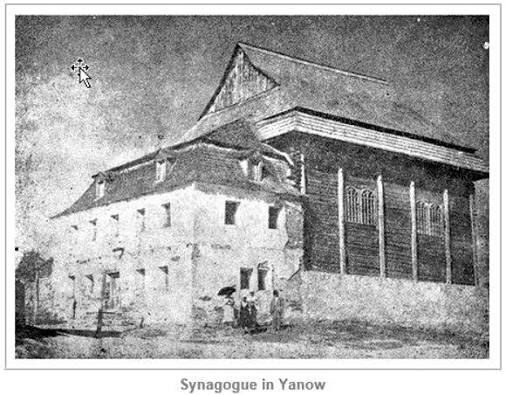
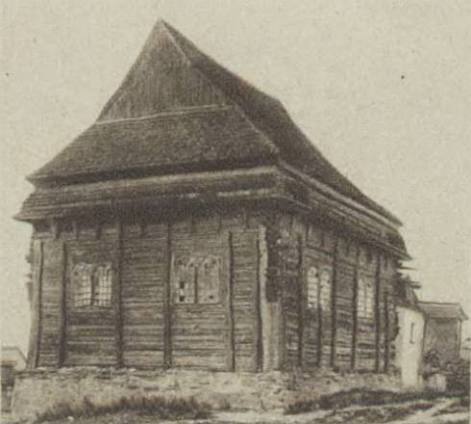
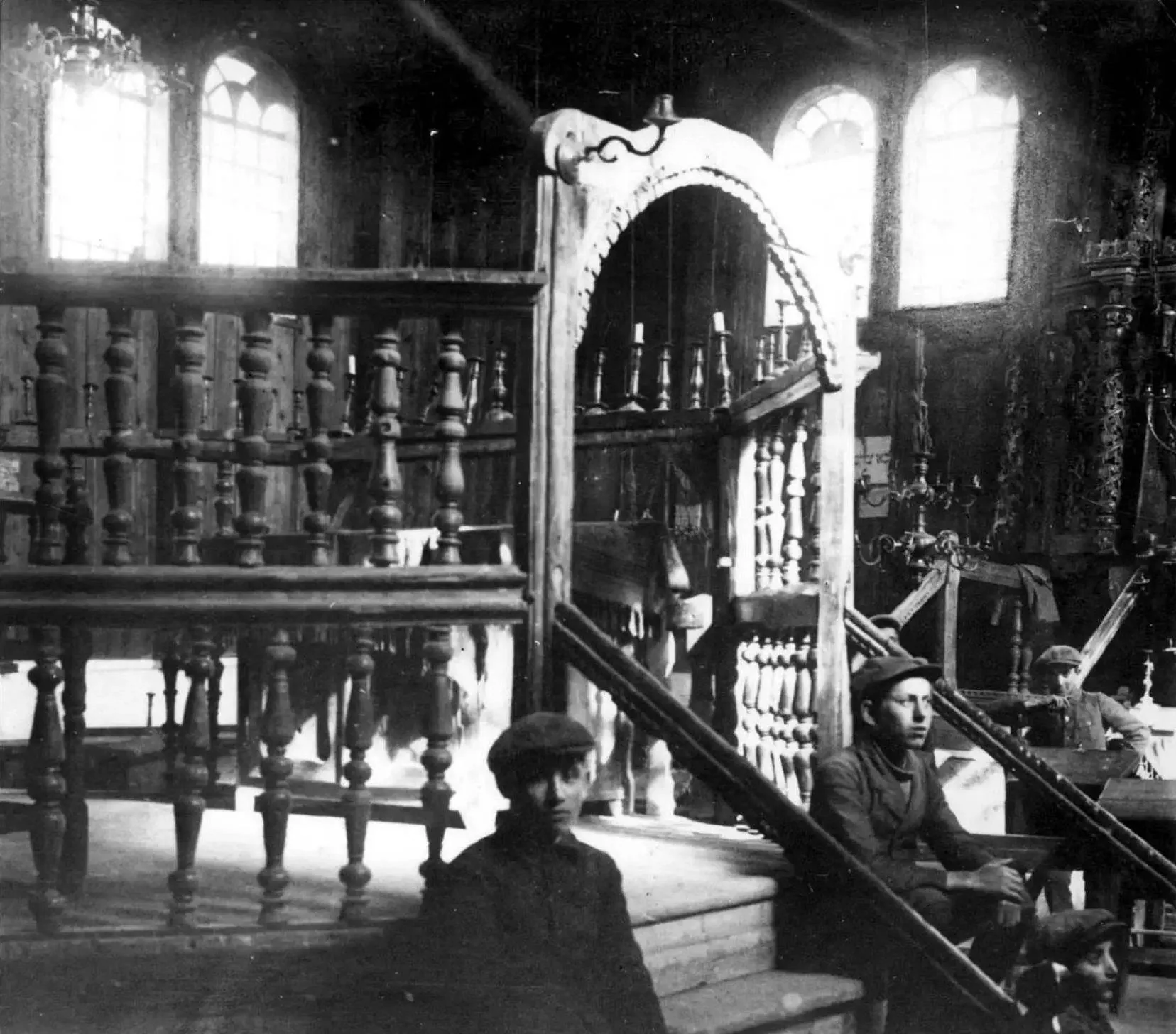
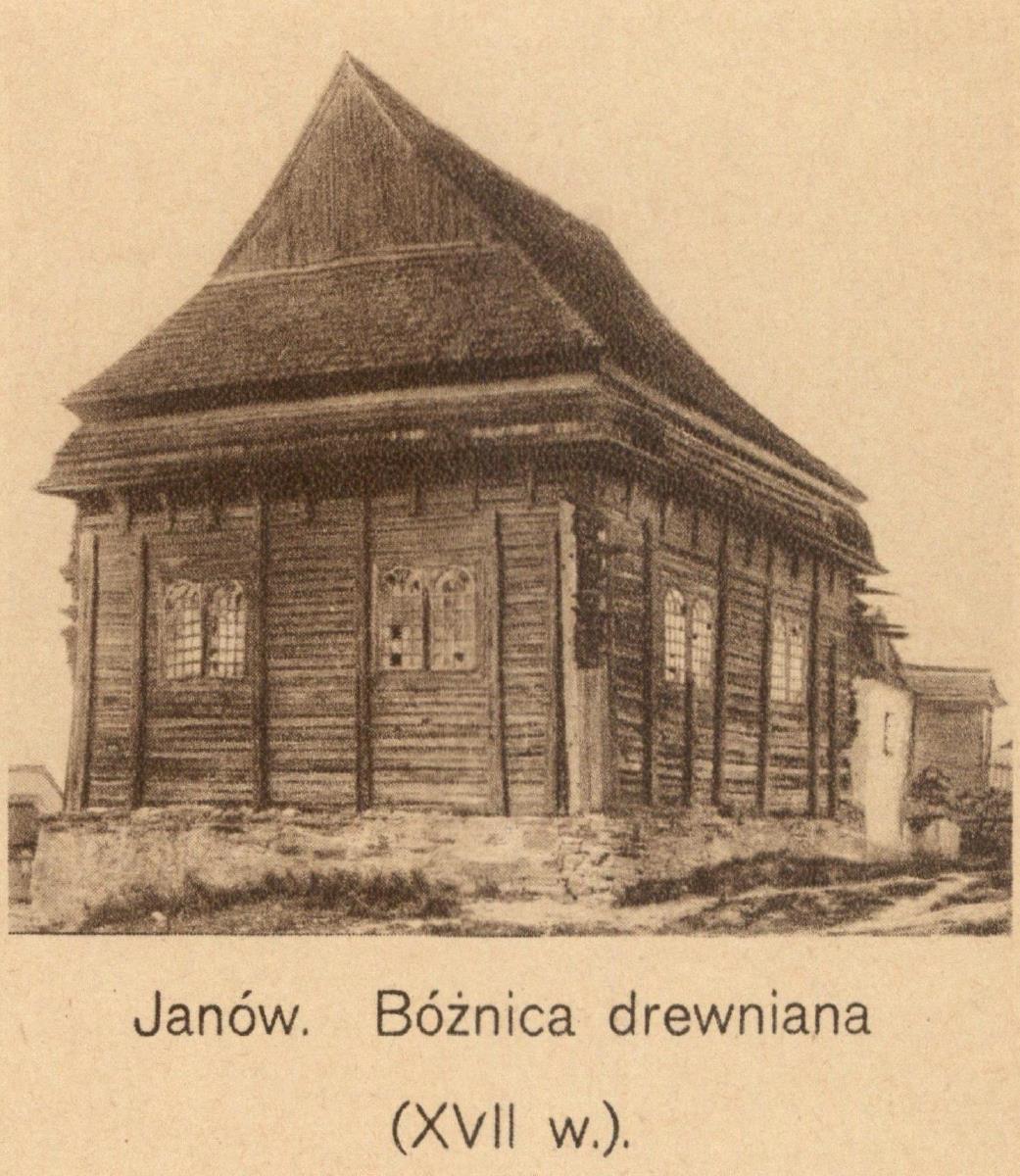
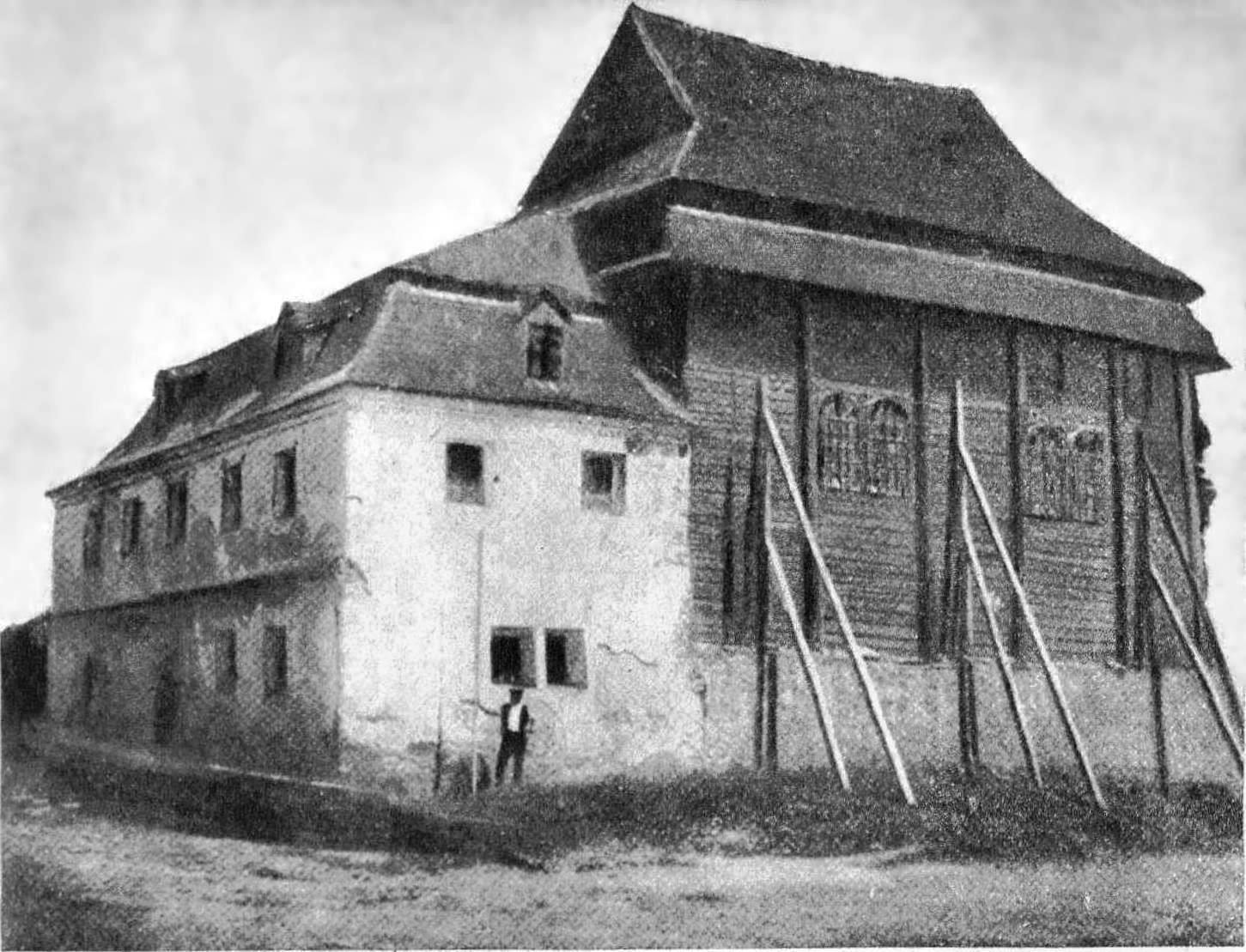
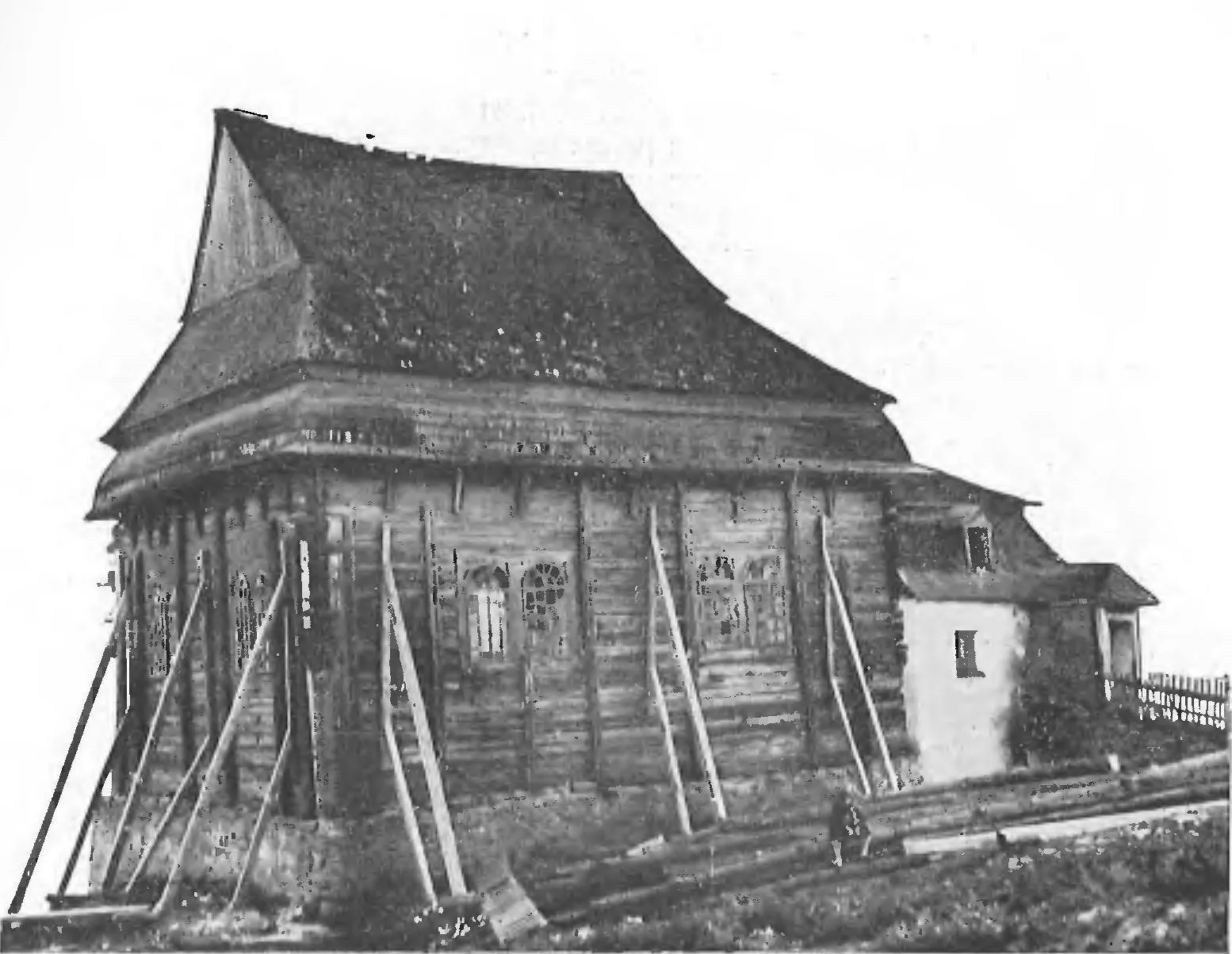
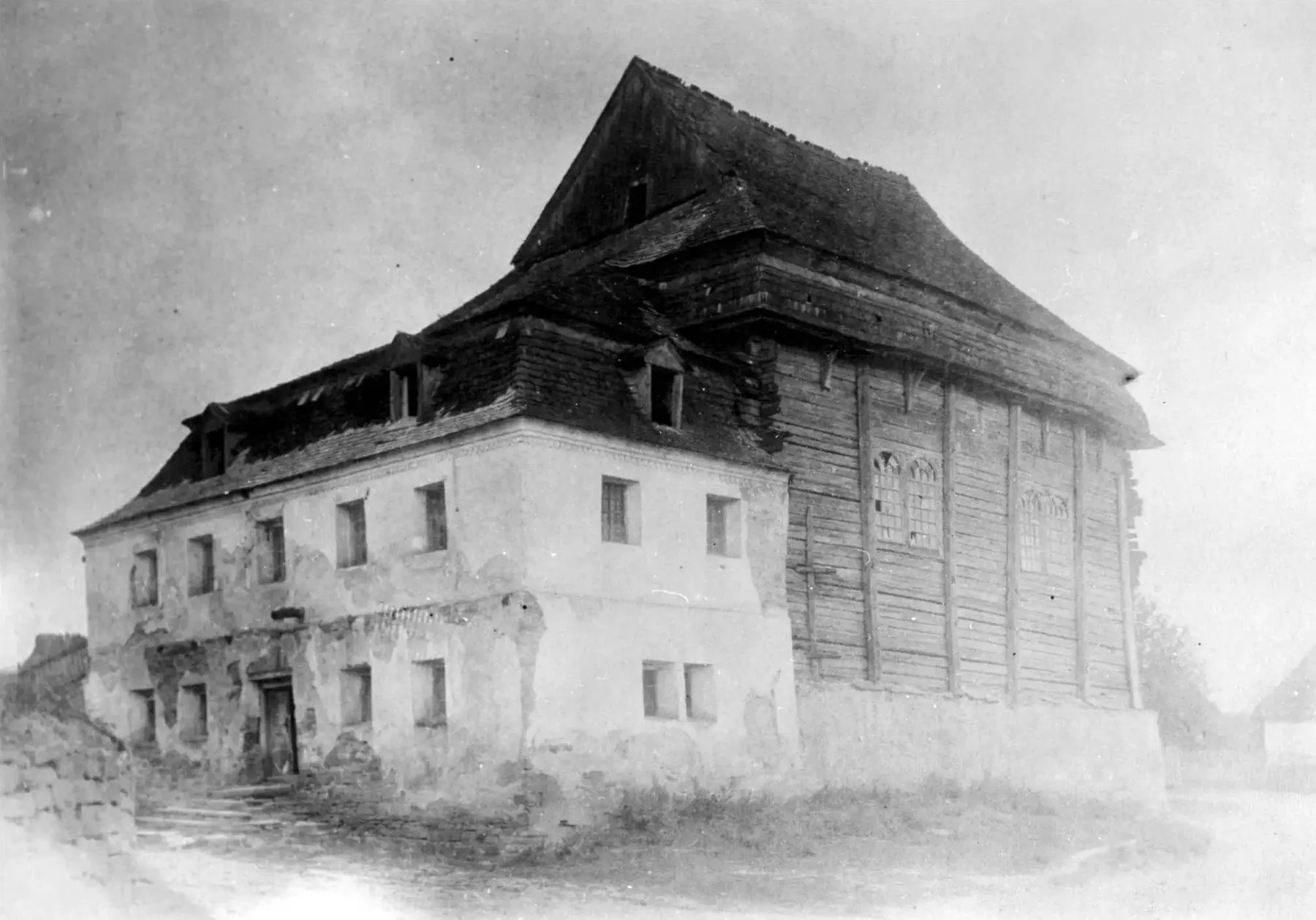
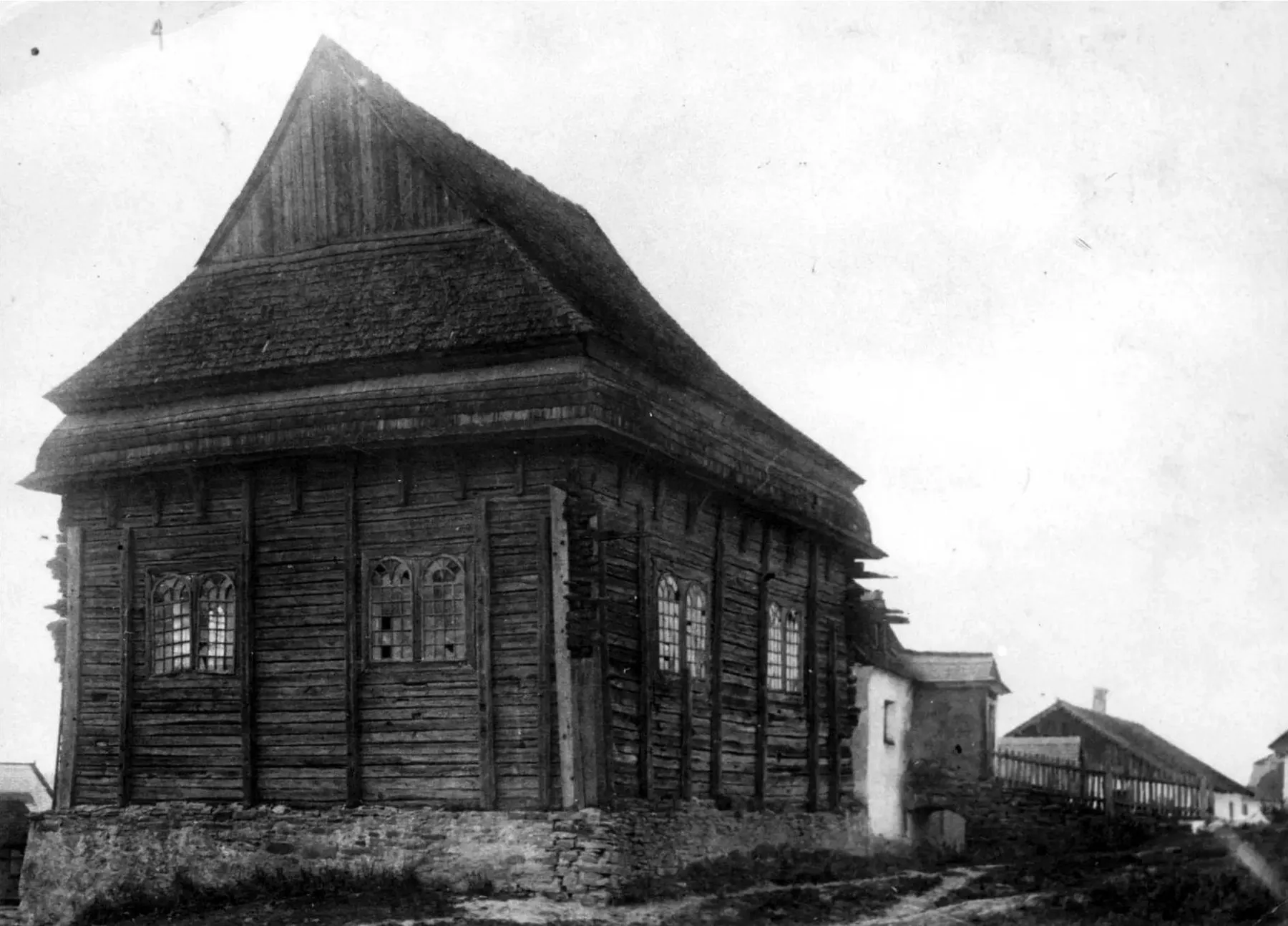
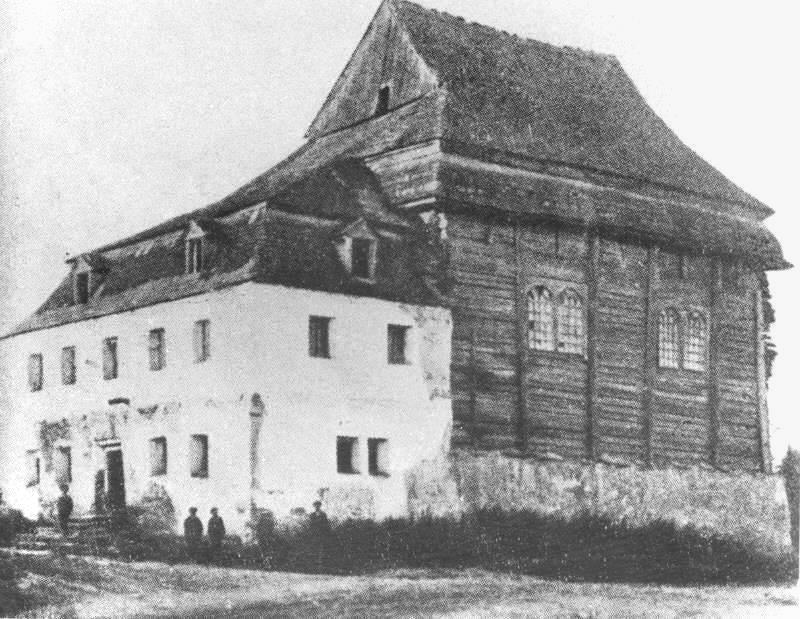
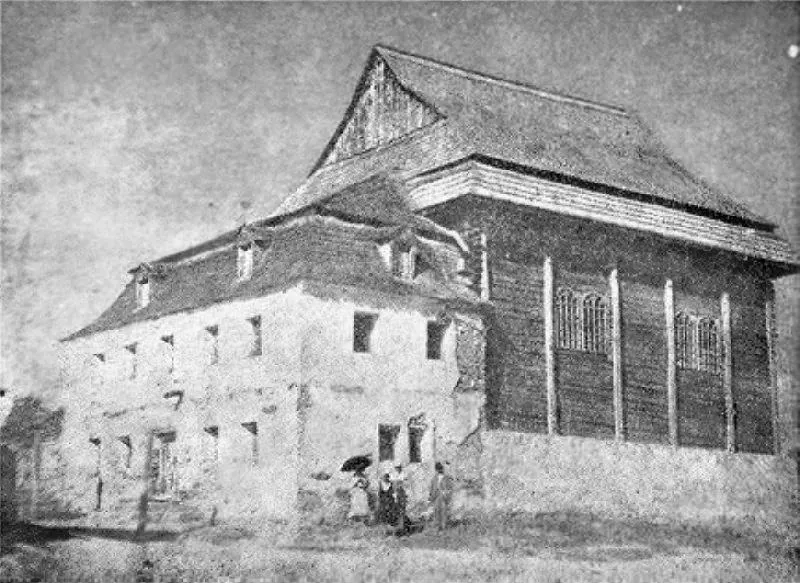
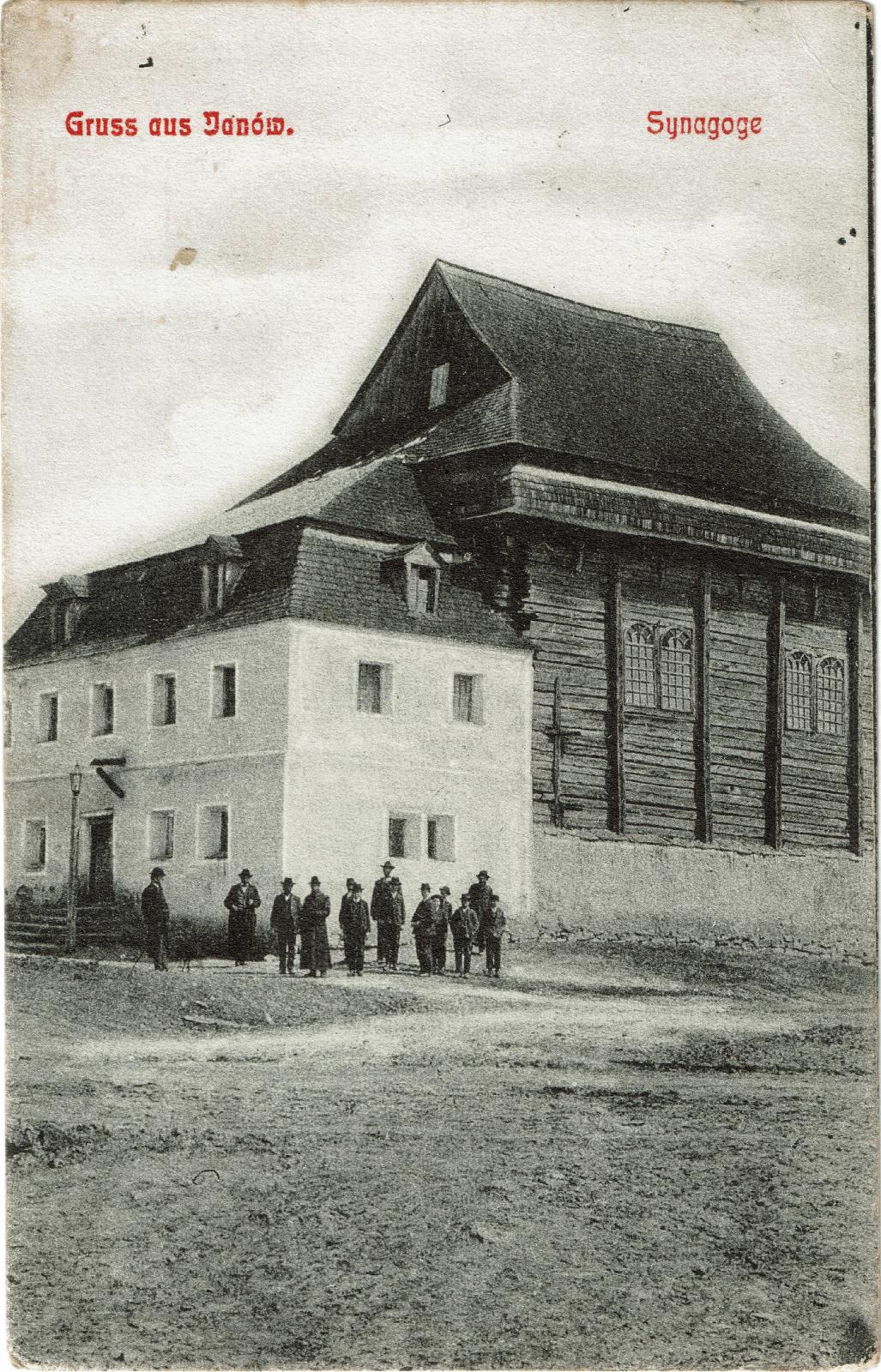
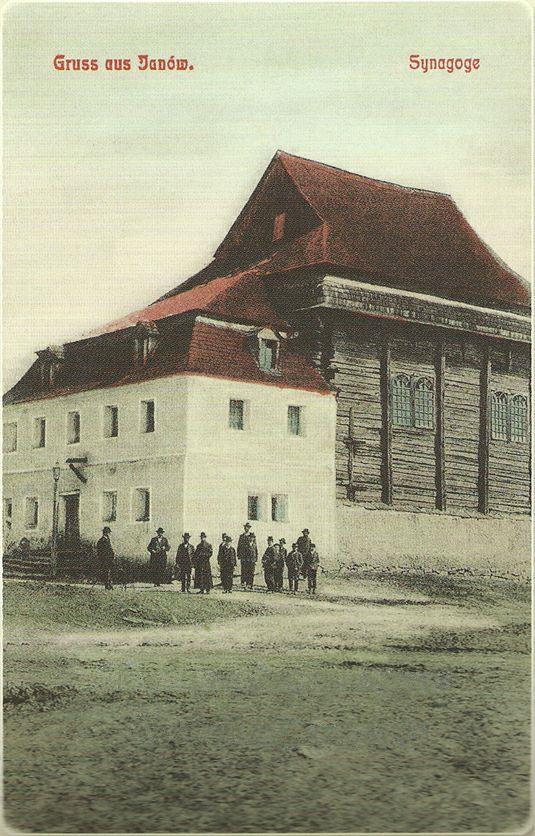
The synagogue of Janów Trembowelski stood in a small market town in eastern Galicia, about 10 kilometres south of Trembowla (today Terebovlia). The town is now the village of Dolyna in Ukraine's Ternopil Oblast. The wooden prayer hall was built around 1700 on a stone base, and some writers place it as early as the late seventeenth century, which would make it one of the earliest dated wooden synagogues of Galicia. Probably in the second half of the eighteenth century a masonry annex was added on the west side, holding an entrance porch, a small prayer room and, upstairs, a prayer room for women. Its most striking fitting was a Torah ark about 6.5 metres tall, dated 1795 and topped by a bronze eagle. In 1928 the building was classed as extremely dilapidated, and it was repaired in 1934. It was recorded in measured drawings (plan, section and perspective view), of undetermined date, that survive in the Institute of Art of the Polish Academy of Sciences in Warsaw. The town's Jewish community was murdered in 1942, and the synagogue did not survive the German occupation of 1941–1944. Its exact date and manner of destruction are not recorded in the sources consulted. No trace of the building is known to survive today.
Where it stood for nearly 150 years
Historic: Janów (Janów Trembowelski), Trembowla district, Tarnopol province, Poland; near the market square. Present day: centre of Dolyna village, Terebovlia community, Ternopil Oblast, Ukraine. Approximate: exact plot not identified.
Открыть большую карту →Еврейская община
Jews are first mentioned in Janów in a document of 1628, and an organised community existed by the early seventeenth century. In 1765 the kahal counted 390 Jews in the town and its surrounding villages. The community grew through the nineteenth century to 848 Jews in 1860 and a peak of 998 in 1880. Emigration then reduced it to 749 in 1900 and 525 in 1921. In the interwar years Janów was a small town in the Trembowla district of Poland's Tarnopol province. In 1939 about 22 per cent of its roughly 2,650 inhabitants were Jewish; most of the rest were Polish and Ukrainian. The community kept its own rabbinate from at least the eighteenth century, a cemetery and several houses of prayer. The wooden synagogue, the oldest of these, stood in the town centre, where an 1828 cadastral map marks two synagogues.
Архитектура и дизайн
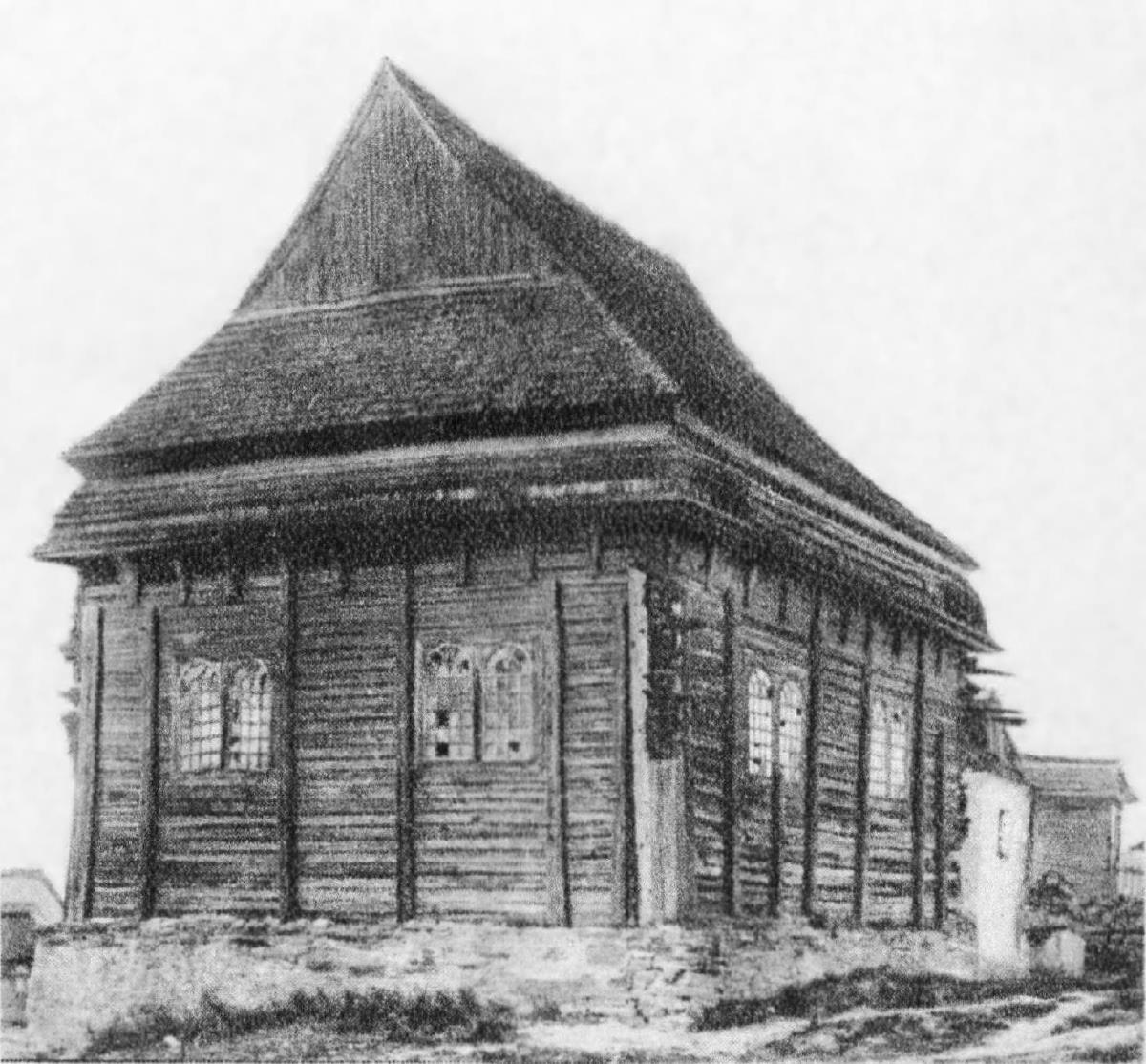
The synagogue was a log building on a stone base, with a square prayer hall measuring about 10.20 by 10.20 metres. Its walls rose 6.60 metres, and the wooden vault inside reached about 10.60 metres at its highest point. Each wall had two groups of two round-arched windows, and the doors were also round-arched. The windows on the west wall were blocked when the masonry annex was built. That annex, probably added between 1750 and 1800, was planned without regard to the older hall, so the ceiling of the women's prayer room cut across the western windows halfway up. Inside, the bimah stood in the centre of the hall, between the entrance and the steps to the Torah ark. The ark, dated 1795, rose about 6.5 metres, had multicoloured columns and was crowned by a bronze eagle. Measured drawings of the building by the Institute of Art of the Polish Academy of Sciences record its plan, section and appearance.
Жизнь в синагоге
The synagogue was the oldest of four houses of prayer in interwar Janów. A memoir by Yitzchak Kahana, published in the 1981 Trembowla yizkor book, remembers the 'Shul' as the oldest and finest, built of wood and lit by electricity. The others were the old kloyz used by the poor, the newer beit midrash of the better-off and the old beit midrash where workmen prayed. On Friday evenings shops closed and the town's Jews walked together to welcome the Sabbath. The rabbinate of Janów was held by a line of Galician scholars. Eliezer Lipman came from Żółkiew in 1775, and Dov Berish Segal taught Torah in the town for decades. Abraham Moses Summerstein served from 1875 to 1878. Shimon Babad, son-in-law of the Maharsham of Brzeżany, served for many years before moving to Budzanów in 1909. Haim Shechter was rabbi, and also a ritual slaughterer, in the last decade before the Holocaust.
Разрушение
Soviet forces occupied Janów on 17 September 1939, and German troops took the town on 5 July 1941. The sources consulted agree that the wooden synagogue was destroyed during the Second World War. A standard list of wooden synagogues gives 1941 as the year it was lost, at the start of the German occupation. No account seen for this entry names the unit or individuals responsible, or says whether the building was burned, pulled down or taken apart for timber. Local histories record that during the occupation the town's entire Jewish population was killed and Jewish houses were burned. The Nazi German occupation authorities, who ruled the area as part of the District of Galicia until the Red Army returned on 22 March 1944, therefore bear responsibility for the conditions in which the synagogue disappeared. The exact circumstances remain undocumented.
Судьба общины
Early in the German occupation, in the summer of 1941, many Jews of Janów were shot. In late 1942 the German authorities ordered the community to move within three days into the ghetto at Trembowla, about 10 kilometres away. Janów's Jews shared the fate of that ghetto. In the action of 5 November 1942 its inmates were deported to the Bełżec death camp. Few of those who remained survived. About twenty Jews from Janów survived in hiding. Thirteen of them were sheltered by the Ukrainian farmer Vladik Krivoruka and his family, whom JewishGen's town page honours as rescuers. After liberation in March 1944 the few survivors found strong hostility. A memoirist recalled that only three of dozens of Jewish children came back to school. The survivors soon left for larger cities, and later for Israel or elsewhere. No Jewish community exists in Dolyna today.
Место сегодня
Nothing of the wooden synagogue is known to survive. Historic Janów is now the village of Dolyna in the Terebovlia community of Ternopil Oblast, Ukraine. It is much smaller than the pre-war town, and the ruins of Janów castle survive nearby. The synagogue's exact plot has not been identified in the sources consulted for this entry. An 1828 cadastral map in the Central State Historical Archives of Ukraine in Lviv, published by Gesher Galicia, marks two synagogues in the centre of the town around the market square. That map could be used to find the site. The measured drawings in Warsaw and pre-war photographs are the main surviving record of the building.
Значимые имена
Eliezer Lipman
d. 1777Rabbi of JanówRabbi Eliezer Lipman came to Janów from Żółkiew and took up its rabbinate in 1775. He is the earliest rabbi of the town named in the Trembowla yizkor book's list. He led the congregation for about two years before moving to the rabbinate of Chortkiv, where he died in 1777. He served while the town's wooden synagogue was already standing, and shortly before its Torah ark was made in 1795.
Биография или источник →Dov Berish Segal
d. before 1875Rabbi of JanówRabbi Dov Berish Segal served for many decades as rabbi of Janów near Trembowla and taught Torah to the young men of the town. His halakhic correspondence is cited in responsa literature published between 1839 and 1861. His long tenure made him the dominant religious figure of the community in the mid-nineteenth century, when Janów's Jewish population was near its peak and the old wooden synagogue was its main house of prayer.
Биография или источник →Abraham Moses Summerstein
1837–1878Rabbi of JanówBorn in 1837, Abraham Moses Summerstein was appointed rabbi of Janów in 1875, after the death of Rabbi Dov Berish Segal. He died only three years later, in 1878, aged 41. Rabbi Jacob Weidenfeld of Grzymałów (Hrymailiv) came to deliver his eulogy, a sign of his standing among Galician rabbis. The yizkor book notes that his grandson was Dr. Emil Summerstein (Sommerstein).
Биография или источник →Shimon Babad
d. 1935Rabbi of Janów, later of Budzanów and BrzeżanyRabbi Shimon Babad, son of Rabbi Moshe Babad of Mikulińce, married Leah, daughter of the renowned Maharsham, Rabbi Shalom Mordechai Schwadron of Brzeżany. He served as rabbi of Janów for many years around the turn of the twentieth century. In 1908/09 he was appointed rabbi of nearby Budzanów and became known by that town's name. He later became chief rabbi of Brzeżany, serving until his death in 1935.
Биография или источник →Haim Shechter
fl. 1930sRabbi and ritual slaughterer of JanówHaim Shechter was rabbi of Janów in the last decade before the Holocaust, and he also served as the town's ritual slaughterer. The My Shtetl heritage database also lists him as the town's rabbi in 1935. He was therefore the religious leader of the congregation when the German occupation began in 1941. The community was driven into the Trembowla ghetto and deported in 1942. His own fate is not recorded in the sources consulted.
Биография или источник →Вам есть чем поделиться?
Фотографии, документы, семейные истории и воспоминания об этой синагоге и её общине помогают сохранить её историю.
- List of wooden synagogues: Dolyna (Janiv), Ternopil
- Jewish Dolyna (Yaniv)
- Rabbis of Janow, near Trembowla (Rabbi Meir Wander), in: Jewish Communities of Trembowla, Strusow, Janow and Vicinity (1981)
- The history of my life in the city of Janow (Yitzchak Kahana)
- JANÓW Dolina, Ukraine
- Janów Trembowelski, synagoga, rzut.
- Janów Trembowelski, synagoga, widok perspektywiczny.
- Janów Trembowelski, synagoga, przekrój.
- Janów (Dolyna) Center Cadastral Map 1828
- Долина | Теребовлянська громада
- Дерев'яні синагоги України (Tum Gevryk)
- OpenStreetMap place node: Долина (Janów)
- File:Janów (Dolyna). Synagogue -03.jpg (Schneelicht, 1920s)
- File:Gruss aus Janów. Synagoge (01).jpg
- Brzezany yizkor book pp.155-182 (Rabbi Shimon Babad)
Share a memory or thought
No comments yet. Be the first to add one.