

La historia de Jászberény Synagogue
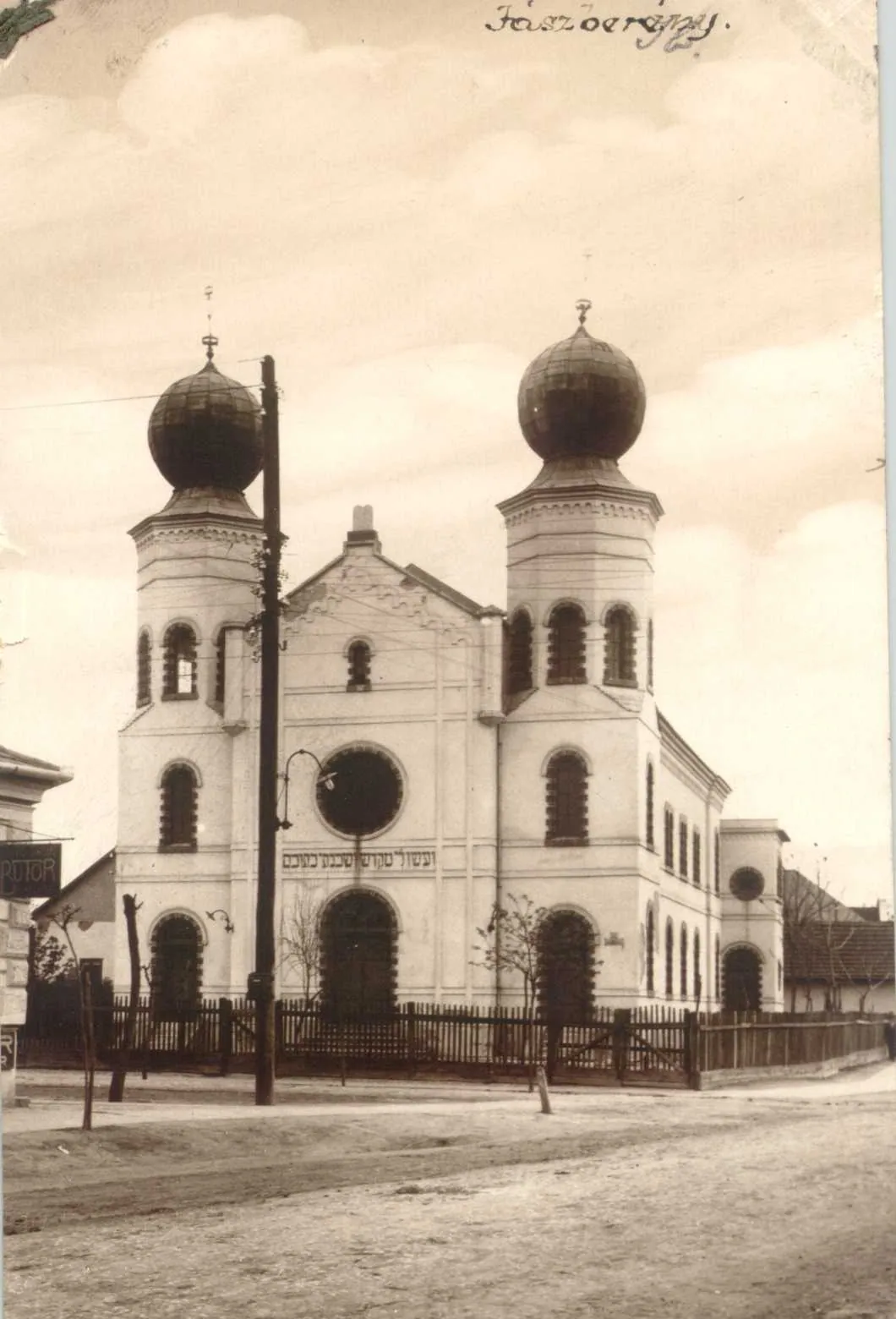
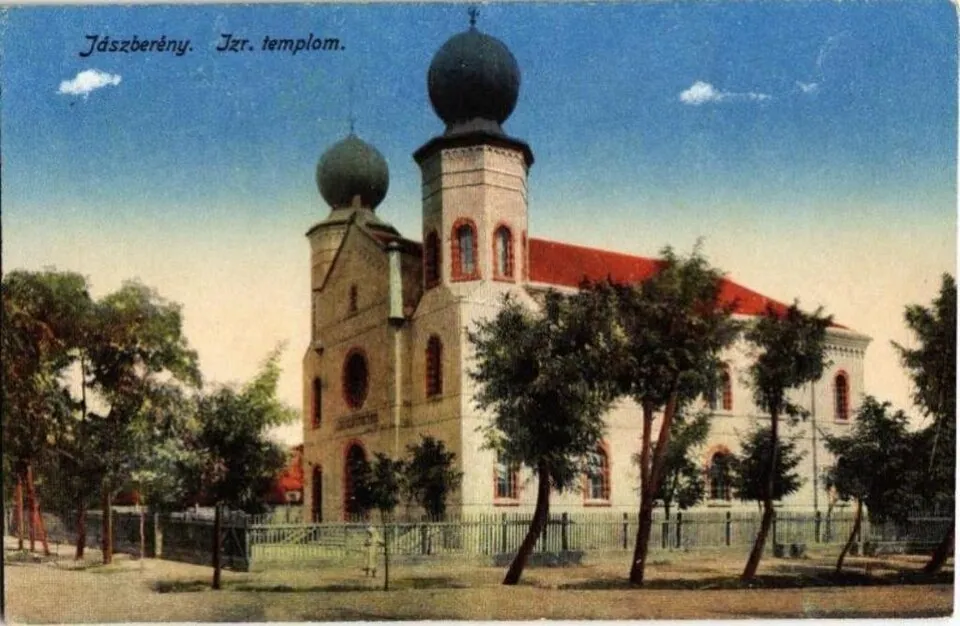
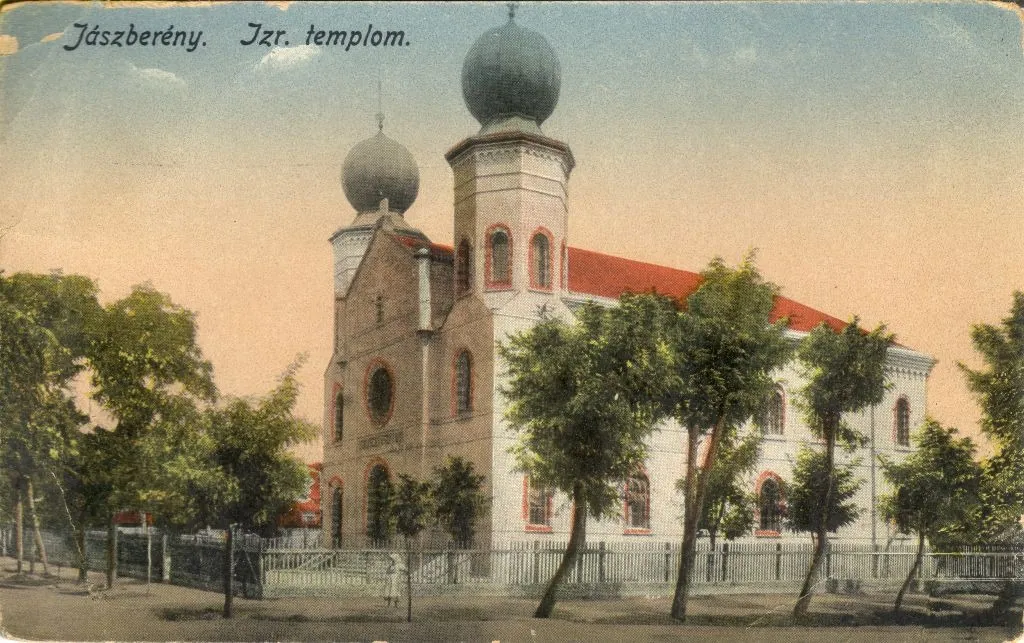
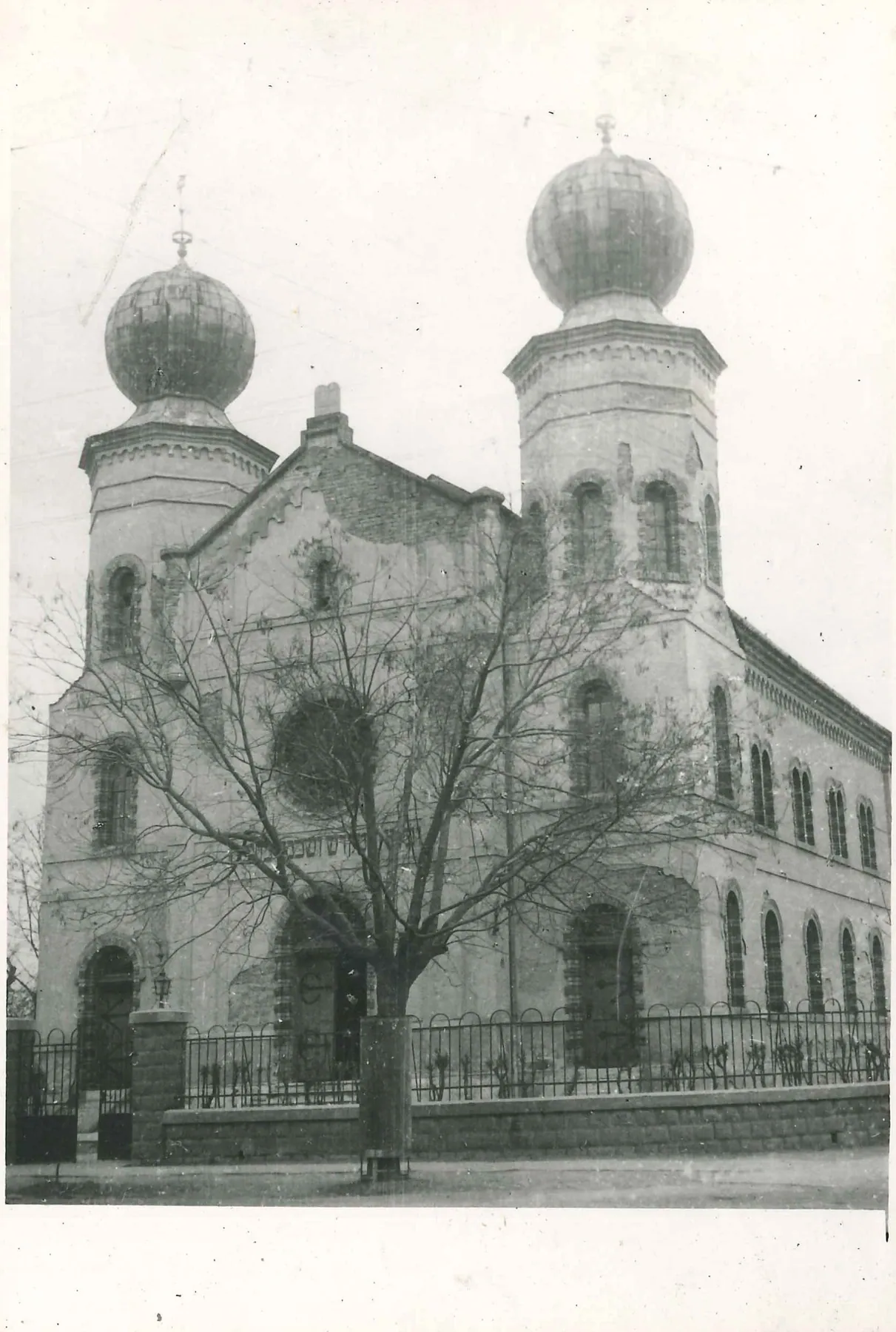
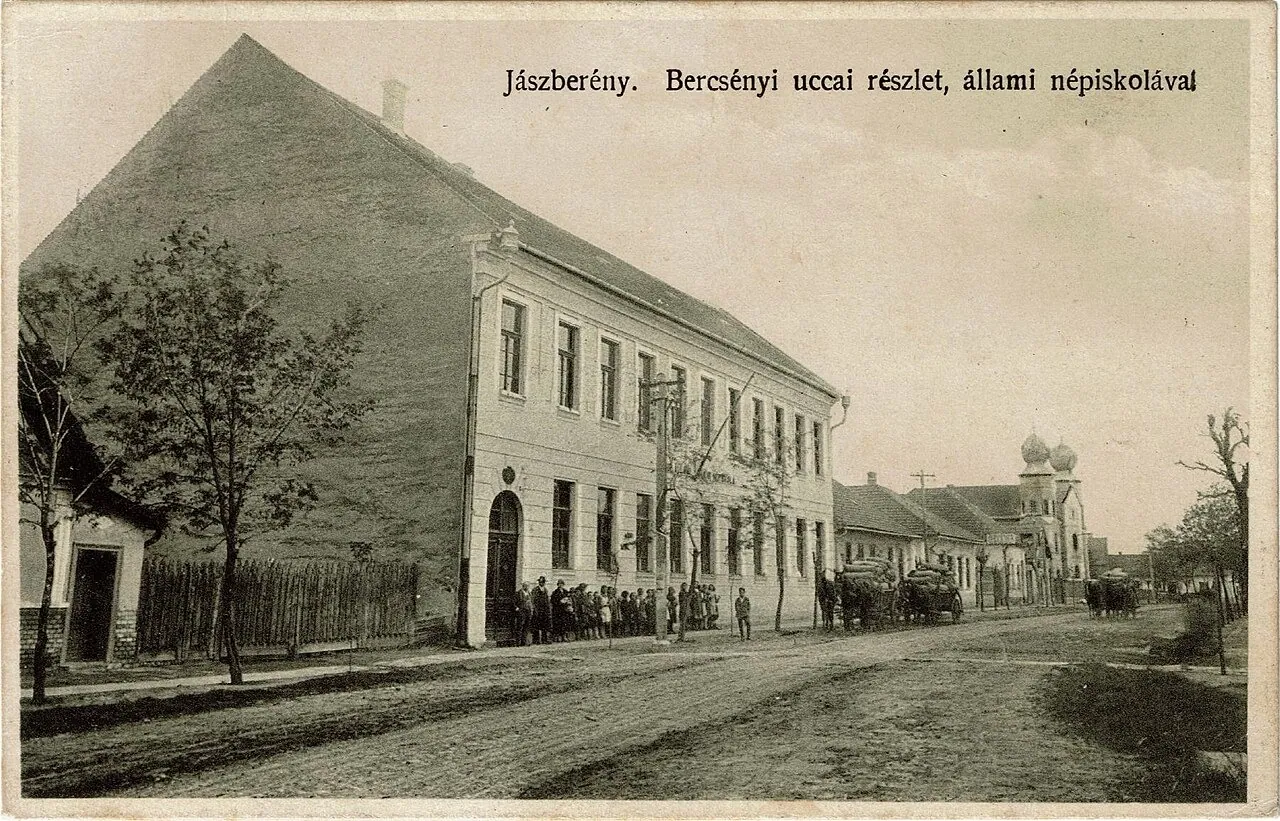
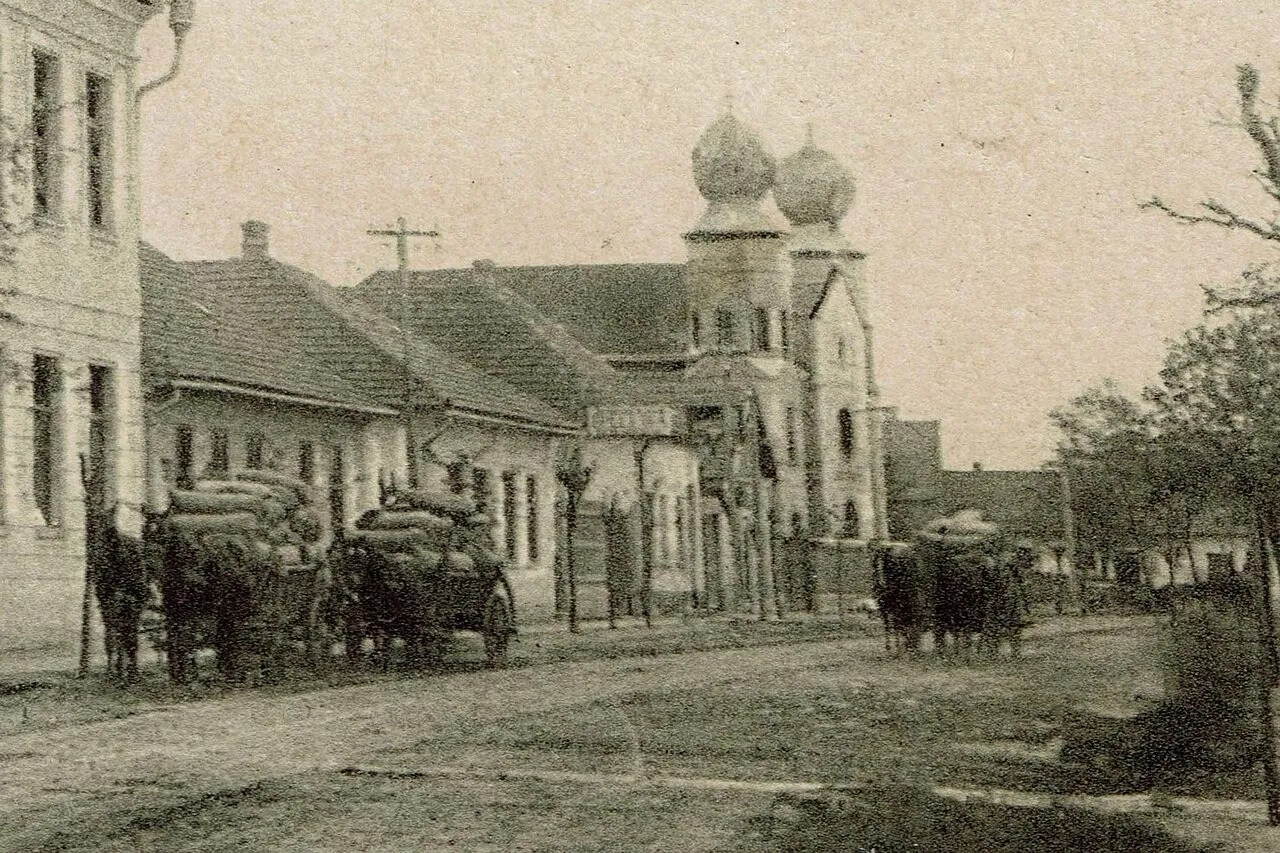
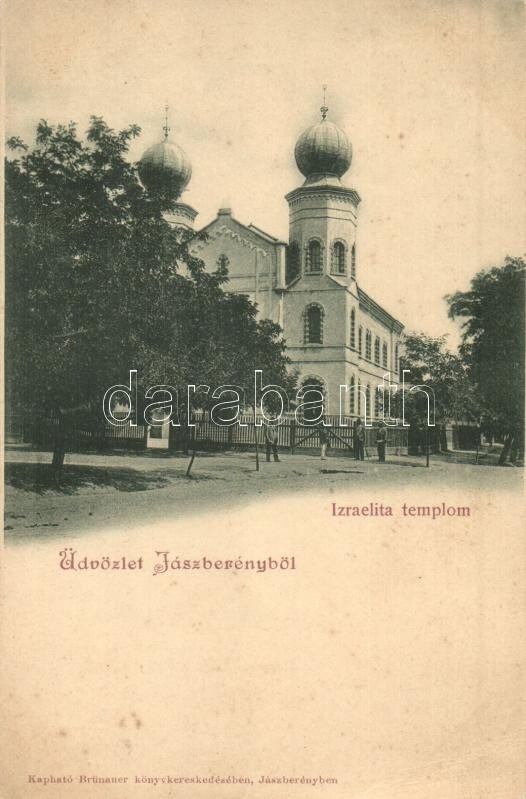
The synagogue stood on Bercsényi út, formerly Úri utca, in the centre of Jászberény, the chief town of the Jászság region east of Budapest. Jews had been barred from the privileged Jász district until 1850, and the congregation first prayed in a converted house bought in 1857. After a split of some fifteen years between Congress and Status Quo factions was healed in 1886, the reunited community bought a plot and held a design competition, won in 1887 by the young master builder Károly Kovács. The new temple, with about 500 seats and a reported cost of 26,000 forints, was consecrated on 10 September 1890 by Immanuel Löw, chief rabbi of Szeged. Its two towers crowned with onion domes became a landmark of the street and appeared on many postcards. In 1944 the building and its surroundings served as the ghetto from which the town's Jews were taken to the Monor brickworks and on to Auschwitz. Survivors used the synagogue again after the war, but the shrinking community could not sustain it. Sold to the Town Council in 1965, it was demolished in 1968, and the municipal library opened on its foundations in 1970.
Where it stood for 78 years
Historic: Úri utca, later Bercsényi utca, Jászberény. Today: Városi Könyvtár (Town Library), Bercsényi út 1, 5100 Jászberény.
Abrir mapa ampliado →La comunidad judía
Jászberény's council, pressed by the town's Greek and German merchants, kept Jews out until Gábor Buck, a trader from Aszód, won the right to settle on 19 June 1850 by appealing to the captain-general of the Jász-Kun districts. Within three months eleven families had followed; a cemetery plot was requested that September, and in 1857 a house was bought and converted into a prayer house. József Natonek, later a forerunner of Zionism, was rabbi from 1854 to 1861, followed by Áron Büchler, who served until 1914. After the Jewish Congress of 1868–69 the congregation broke into rival Congress and Status Quo bodies, which reunited on a Congress (Neolog) basis in 1886; building the new synagogue sealed the reconciliation. By 1929 the community numbered 741 people in 256 families, most of them merchants, alongside lawyers, doctors, craftsmen and farmers. It kept an elementary school, a Talmud Torah, a burial society, a women's association and a poor-relief society, and was the registry seat for twelve surrounding villages.
Arquitectura y diseño
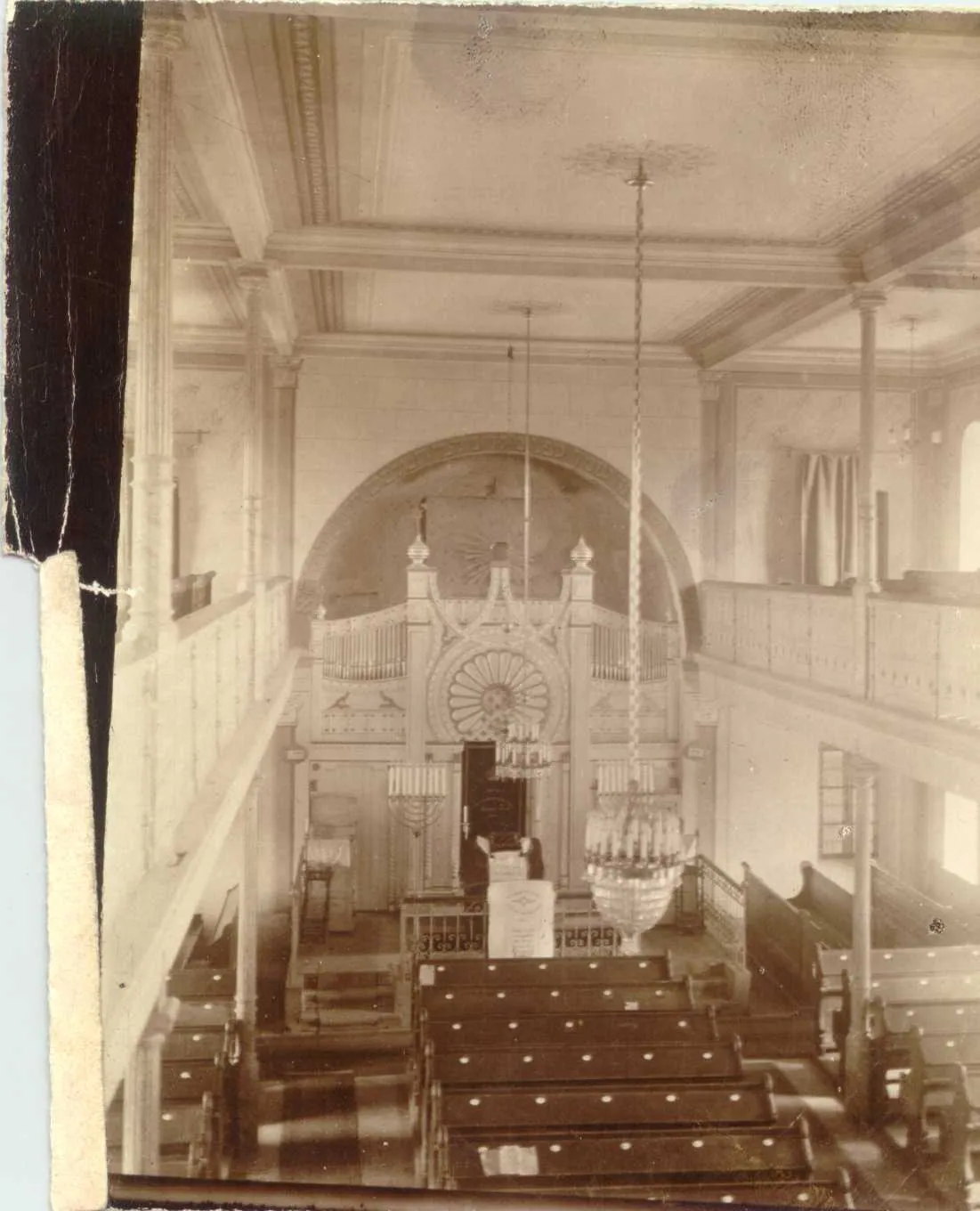
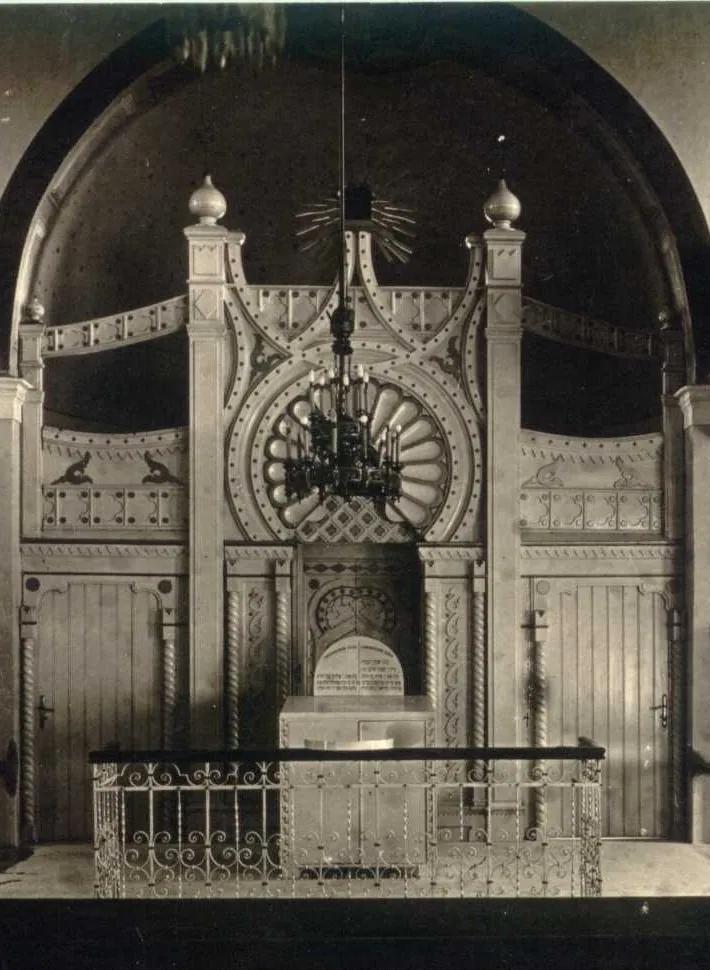
The design by Károly Kovács, chosen in a competition in 1887, was a free-standing rectangular hall in the round-arched historicist manner common to Hungarian Neolog synagogues of the period. The street front had a gabled centre with a large rose window above the main doorway and a Hebrew inscription, flanked by two projecting towers that turned octagonal at the top and carried bulbous onion domes with finials. Each tower had its own round-arched doorway. The side walls had two tiers of round-headed windows, single below and paired above, under a toothed brick cornice; coloured postcards show pale walls with red brick surrounds and a red tiled roof. Photographs of the interior show a flat panelled ceiling, women's galleries on three sides carried on slender columns, and a tall carved ark with a fan-shaped centrepiece set in an arched niche at the east end. A pre-war view shows organ pipes above the ark. Sources give about 500 seats and a cost of 26,000 forints, raised from donations and brick tickets, with 1,500 forints voted by the town in 1889.
La vida dentro de la sinagoga
Áron Büchler, district rabbi since 1861, led services in the new building until 1914. His acceptance of a merger on Congress lines had made the temple possible, and the organ pipes visible above the ark in an early photograph reflect its Neolog rite. Ödön Kálmán, a graduate of the Budapest Rabbinical Seminary, was rabbi from 1911 to 1921, served as an army chaplain in the First World War and in 1916 published the standard history of the Jews of the Jászság. Lajos Kun followed from 1921 to 1929 before moving to Veszprém, and in the 1940s the registrar rabbi was Béla Reich, before whom Jews from villages such as Jászalsószentgyörgy came to the synagogue to marry. The community's elementary school stood on the same street, and its societies included the Chevra Kadisha, a poor-relief society and the women's association founded in 1886 and led for some forty years by Lujza Leitner, widow of the community president Zsigmond Buck. In the First World War 113 members served and 23 fell.
Destrucción
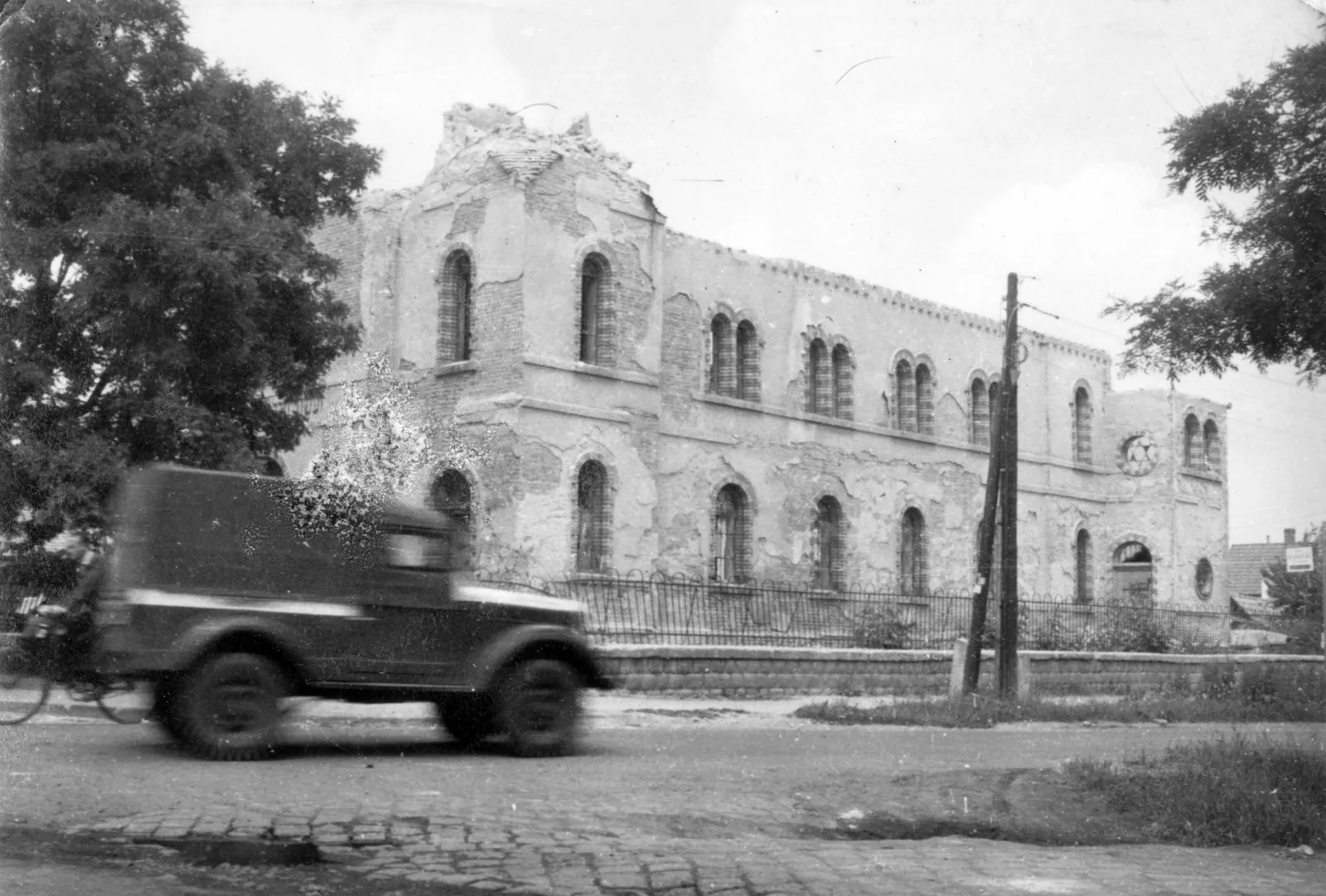
The Communists demolished the synagogue in 1968. The building had survived the war: in 1944 the Jászberény ghetto was set up in and around it, and a survivor who returned in 1945 found it desecrated; a Torah fragment he recovered there is now in the United States Holocaust Memorial Museum. The remnant community returned it to use, and photographs dated 1950 show it intact and furnished. As members died or moved away, organised religious life came to an end. On 15 April 1965 Jászberény's Town Council, the local organ of the Communist one-party state, signed a contract to buy the synagogue through the National Representation of Hungarian Israelites, intending to convert it into the municipal library. Instead of converting it, the Communists pulled the building down in 1968; a photograph dated that year shows it roofless, its towers already cut down. A flat-roofed library designed by Emilné Zsidai was raised on the old foundations and opened on 4 June 1970.
El destino de la comunidad
After the German occupation of Hungary in March 1944, Jászberény, already the headquarters of a labour-service battalion from which Jewish men were sent to Ukraine and to the copper mines of Bor in Serbia, became a ghetto centre. About 550 local Jews, together with those of Alattyán, Jánoshida, Jászalsószentgyörgy, Jászapáti, Jászfelsőszentgyörgy, Jászladány, Jásztelek, Pusztamizse and Pusztamonostor, were confined in and around the synagogue; the mayor, Sándor Pénzes, took part in the anti-Jewish measures. On 30 June 1944 they were moved under Hungarian gendarmerie guard to the brickworks at Monor, from where they were deported to Auschwitz-Birkenau in early July. Lujza Leitner, long-time head of the women's association, was murdered there aged 81. The names of 537 Jews of the town killed in the war are recorded, and local researchers estimate about 800 victims across the Jászság, with roughly one in three Jews surviving. Most survivors and their children moved away or emigrated; recent censuses count only a handful of Jews in Jászberény.
El lugar hoy
The Jászberény Town Library (Városi Könyvtár) at Bercsényi út 1 occupies the site. The flat-roofed building of 1970 was erected on the synagogue's foundations, and nothing of the synagogue survives above ground. In a rebuilding in the 2000s the architect László György Sáros gave the library a twin-towered front that recalls the lost synagogue, with a three-dimensional Star of David in the dome of the entrance hall and its outline repeated on the floor; the design is nicknamed the Librigóga. After the war tablets naming the victims hung beside the ark; today a Holocaust memorial in the town carries 537 names, and the Jewish cemetery survives on Szent Imre út. In 2023 the library presented a 3D virtual reconstruction of the synagogue's exterior by Zsolt Fodor.
Nombres destacados
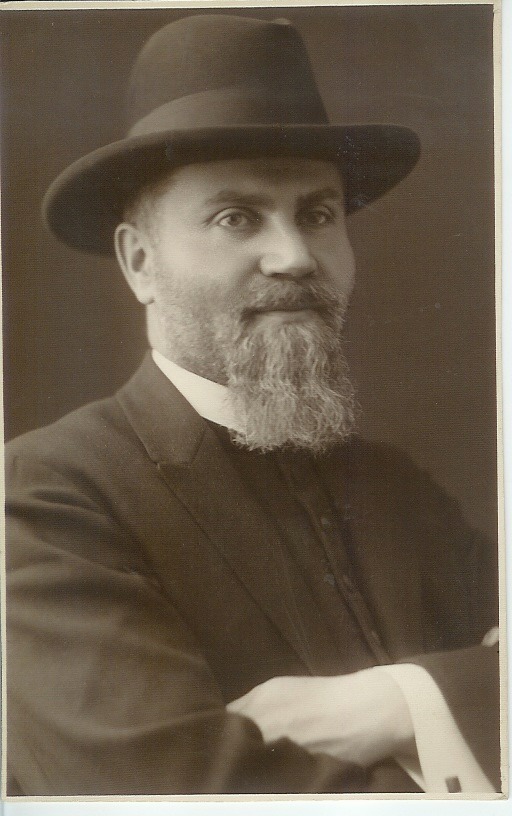
Ödön Kálmán
1886–1951Rabbi of Jászberény, 1911–1921Ödön Kálmán, born in Kunszentmárton and trained at the Budapest Rabbinical Seminary and in Breslau, came to Jászberény as rabbi and served the synagogue for ten years, with an interval as an army chaplain in the First World War. While there he wrote the history of the community, A zsidók letelepülése a Jászságban (1916). In 1921 he became rabbi of Kőbánya in Budapest and later taught at the Seminary.
Biografía o fuente →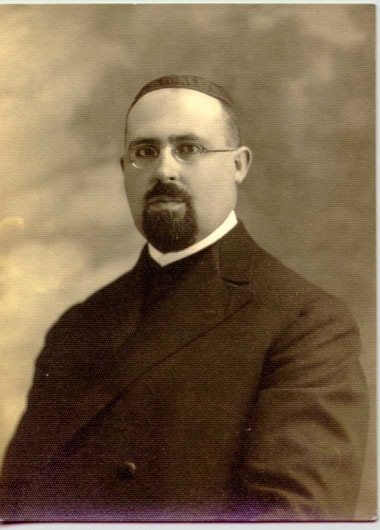
Lajos Kun
1886–1944Chief Rabbi of Jászberény, 1921–1929Lajos Kun, born in Tiszaigar and ordained at the Budapest Rabbinical Seminary in 1914, taught religion for the Pest community before becoming chief rabbi of Jászberény in 1921. He led the synagogue and taught its Talmud Torah through the 1920s, when the community numbered 741. In 1929 he moved to Veszprém, whose Jewish history he published in 1932; he served there until 1944, and the Hungarian Jewish Museum and Archives gives his dates as 1886–1944.
Biografía o fuente →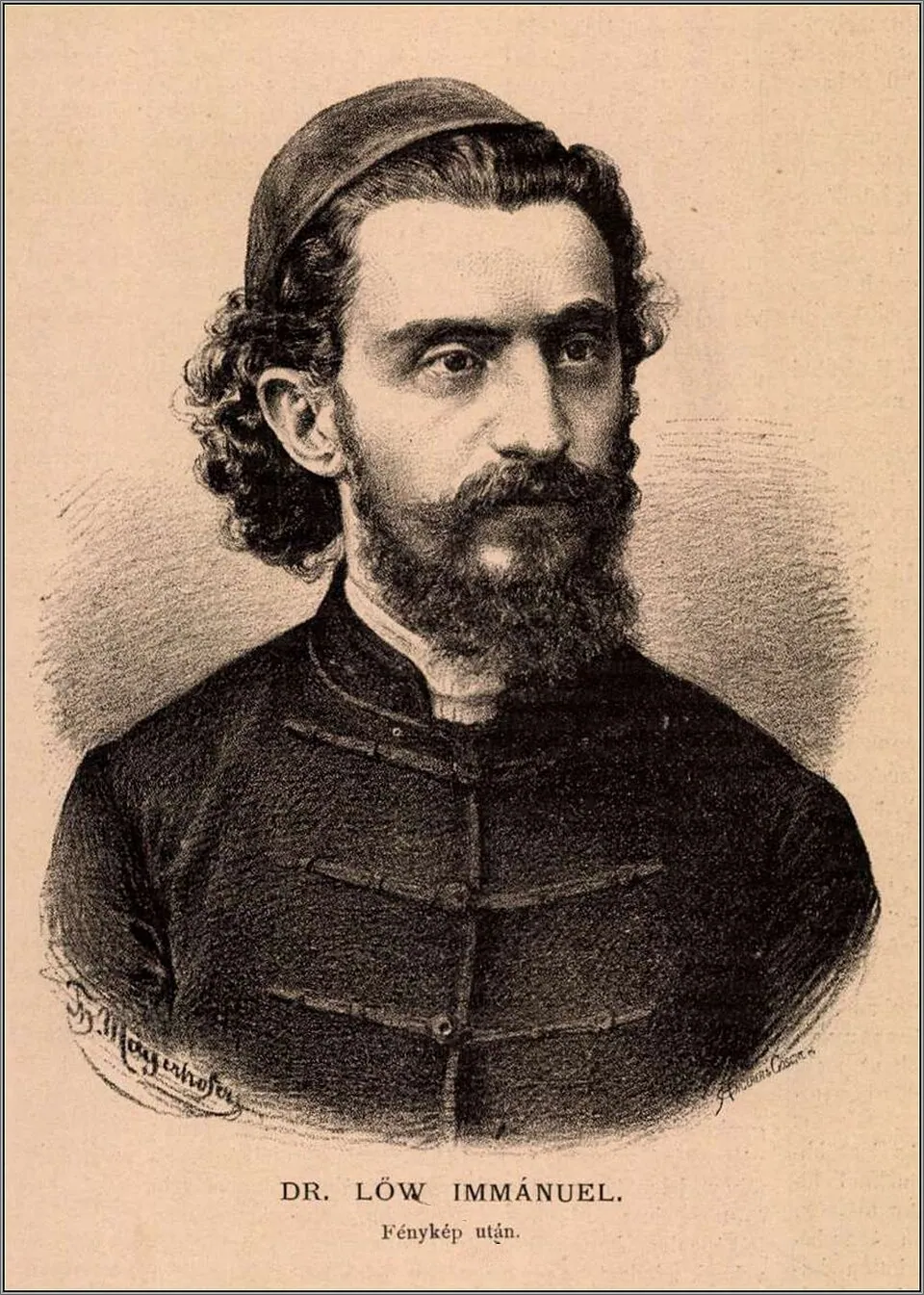
Immanuel Löw
1854–1944Chief Rabbi of Szeged; consecrated the synagogueImmanuel Löw, chief rabbi of Szeged from 1878 and one of the best-known Neolog preachers and scholars in Hungary, came to Jászberény to consecrate the new synagogue on 10 September 1890. His presence marked the reunited community's place in the Congress (Neolog) movement after years of division between its Congress and Status Quo factions.
Biografía o fuente →
Gábor Buck
1816–1889Founder of the communityGábor Buck, a merchant from Aszód, was the first Jew allowed to settle in Jászberény, on 19 June 1850, and organised its community, cemetery and first prayer house. In old age he gave 200 forints towards the new synagogue, the second-largest private donation, but died on 16 November 1889, ten months before it was consecrated. His sons Zsigmond and Dávid served the community during the building.
Biografía o fuente →Károly Kovács
1866–1940sArchitectKároly Kovács, a master builder born in 1866 into a Kispest family, won the competition held for the Jászberény synagogue in 1887, his first notable professional success, and the building was consecrated three years later. He later worked closely with the synagogue architect Lipót Baumhorn, supervising several of Baumhorn's buildings in Novi Sad, and designed and built apartment houses in Budapest into the 1930s.
Biografía o fuente →Áron Büchler
fl. 1861–1914Rabbi of Jászberény, 1861–1914Áron Büchler served as rabbi of the Jász district, and then as registrar rabbi in Jászberény, for more than half a century. Trained in the tradition of the Chatam Sofer, he sided with the Status Quo faction during the split, then agreed to reunion on Congress lines on condition that he remained rabbi. The new synagogue of 1890 crowned that settlement, and he led its services until 1914.
Biografía o fuente →Zsigmond Buck
1849–1893Lawyer; community notary and presidentZsigmond Buck, a lawyer and son of the community's founder, helped reunite the two rival congregations and was elected notary of the merged community in December 1885. He was active in building the new temple, for which the plot was bought in 1886, and after its consecration served about a year and a half as community president until his death in April 1893. His widow Lujza Leitner led the women's association for decades.
Biografía o fuente →¿Tiene algo que aportar?
Fotografías, documentos, historias familiares o recuerdos de esta sinagoga y su comunidad ayudan a mantener viva su historia.
- Jászberény (headword)
- Adatok az első jász zsidó család történetéből
- Könyvtártörténet (History of the library)
- Lélegzetelállító virtuális rekonstrukciót készítettek a ma már nem létező berényi épületről
- Virtuális sétával járható be Jászberény egykori zsinagógája
- Dinasztiák: Kovácsok és pszichoanalitikusok
- Egy makacs zsidó Jászberényben
- A népirtás politikája: a holocaust Magyarországon, 2nd ed. (1997), pp. 739–741
- Torah fragment found in the ruins of a desecrated synagogue (Jaszbereny)
- Jászberény, zsinagóga (F16.039), album page dated 1950
- Emléktáblák a jászberényi zsinagóga keleti falán (F66.798)
- Jászberényi zsinagóga belső képe (F01.310), view from the gallery
- Zsinagóga, Jászberény, 1968 (photo 26686)
- JASZBERENY: JNS (International Jewish Cemetery Project)
- A zsidóság emlékezete Jászalsószentgyörgyön
- Kálmán Ödön (headword)
- Kálmán Ödön
- Kun Lajos (headword)
- Veszprém
- Lőw Immánuel
- Jászberény
- Városi Könyvtár, Bercsényi út 1, Jászberény (way 222494403)
- List of synagogues in Hungary
Share a memory or thought
No comments yet. Be the first to add one.