
La storia di Wooden Synagogue of Jeziory
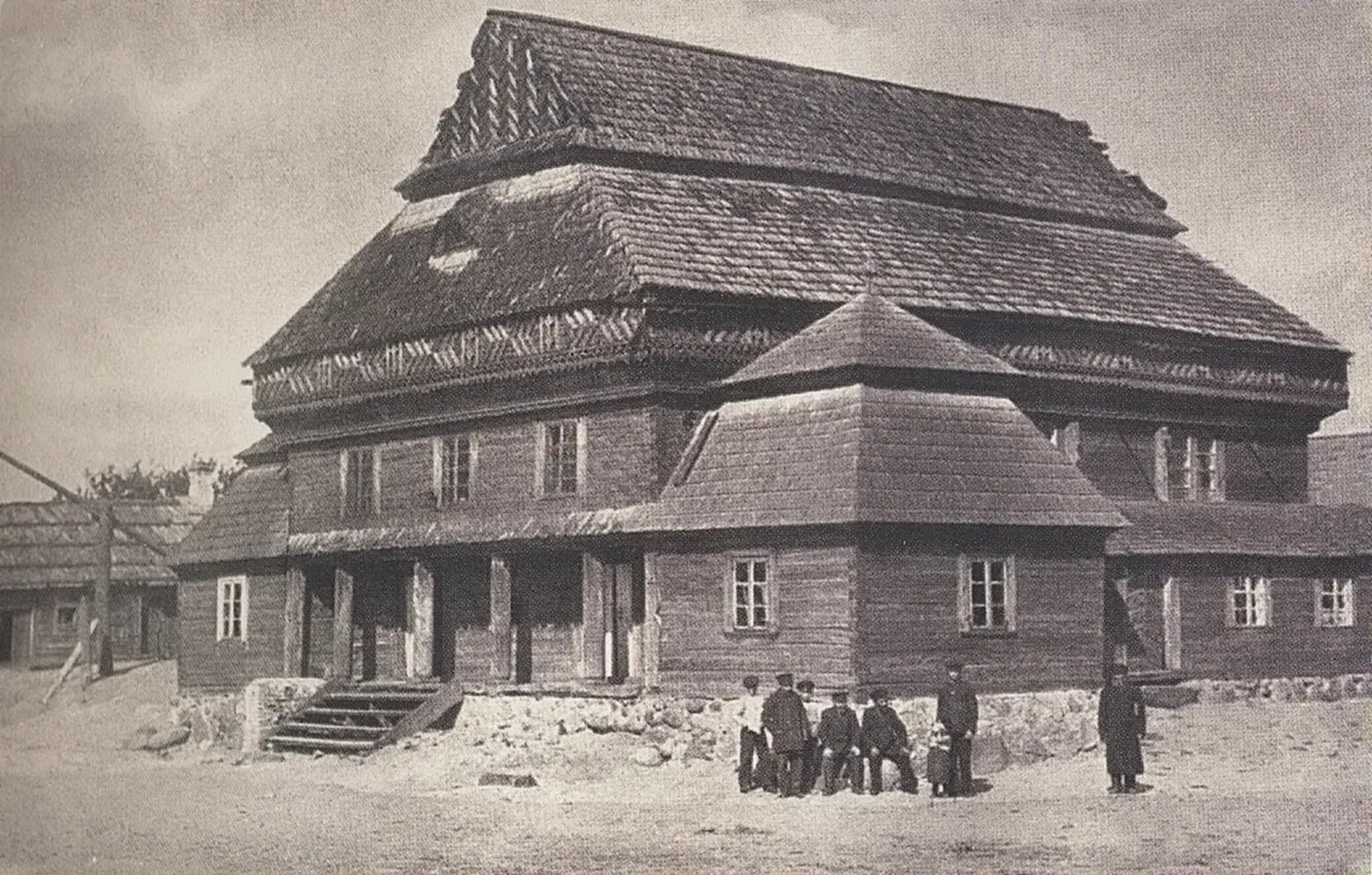
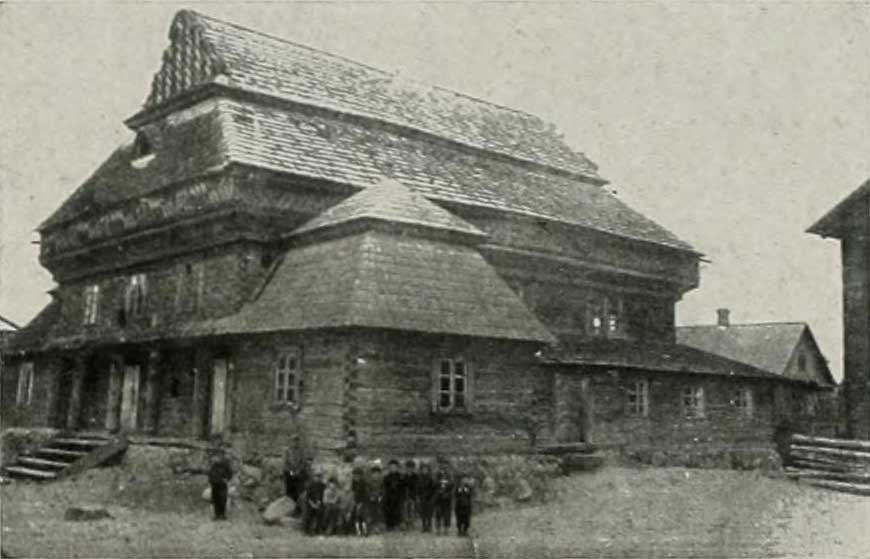
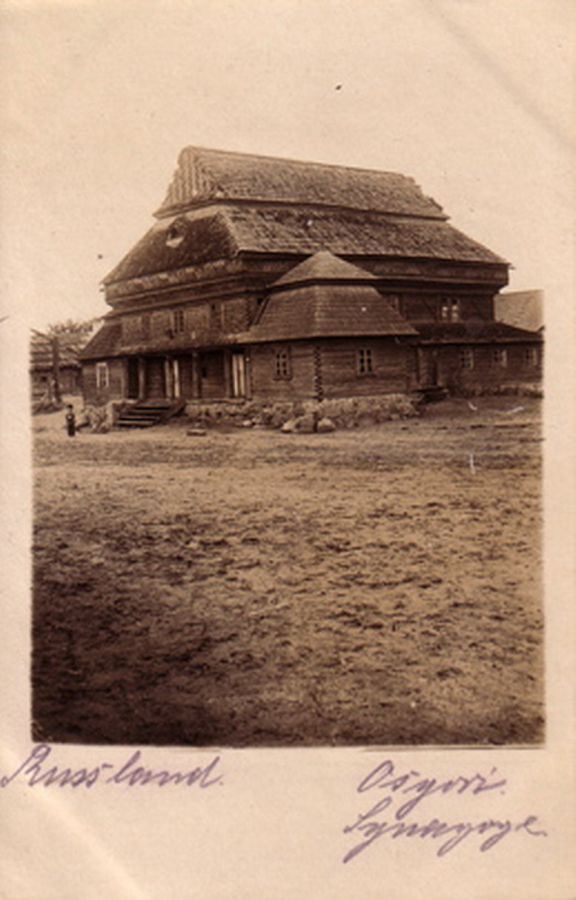
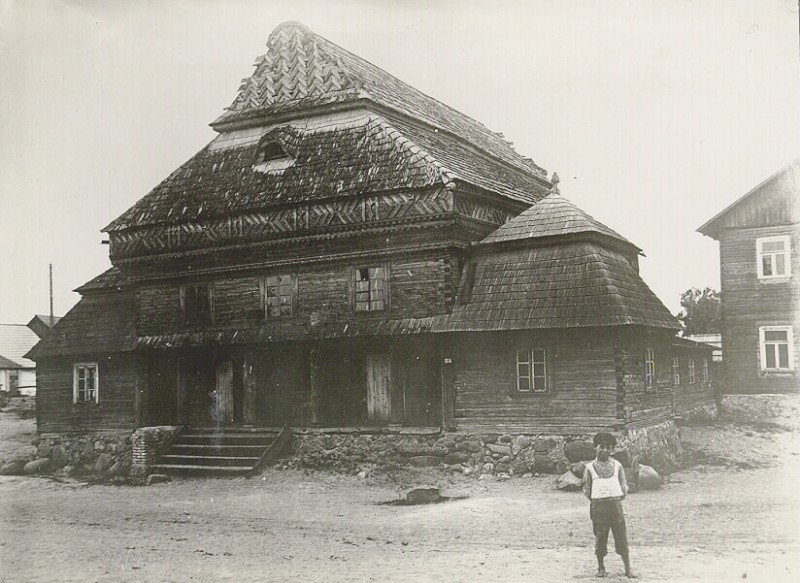
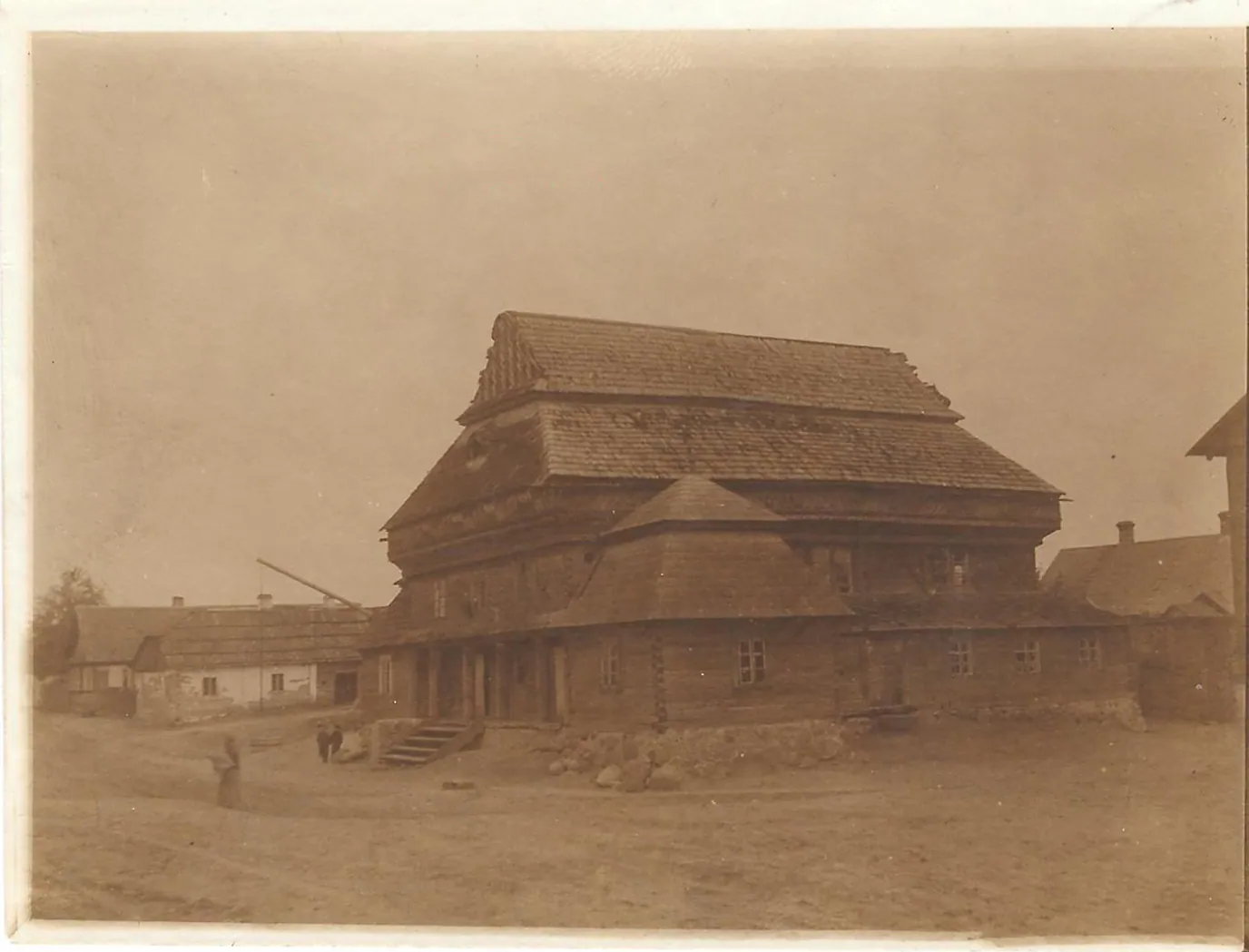
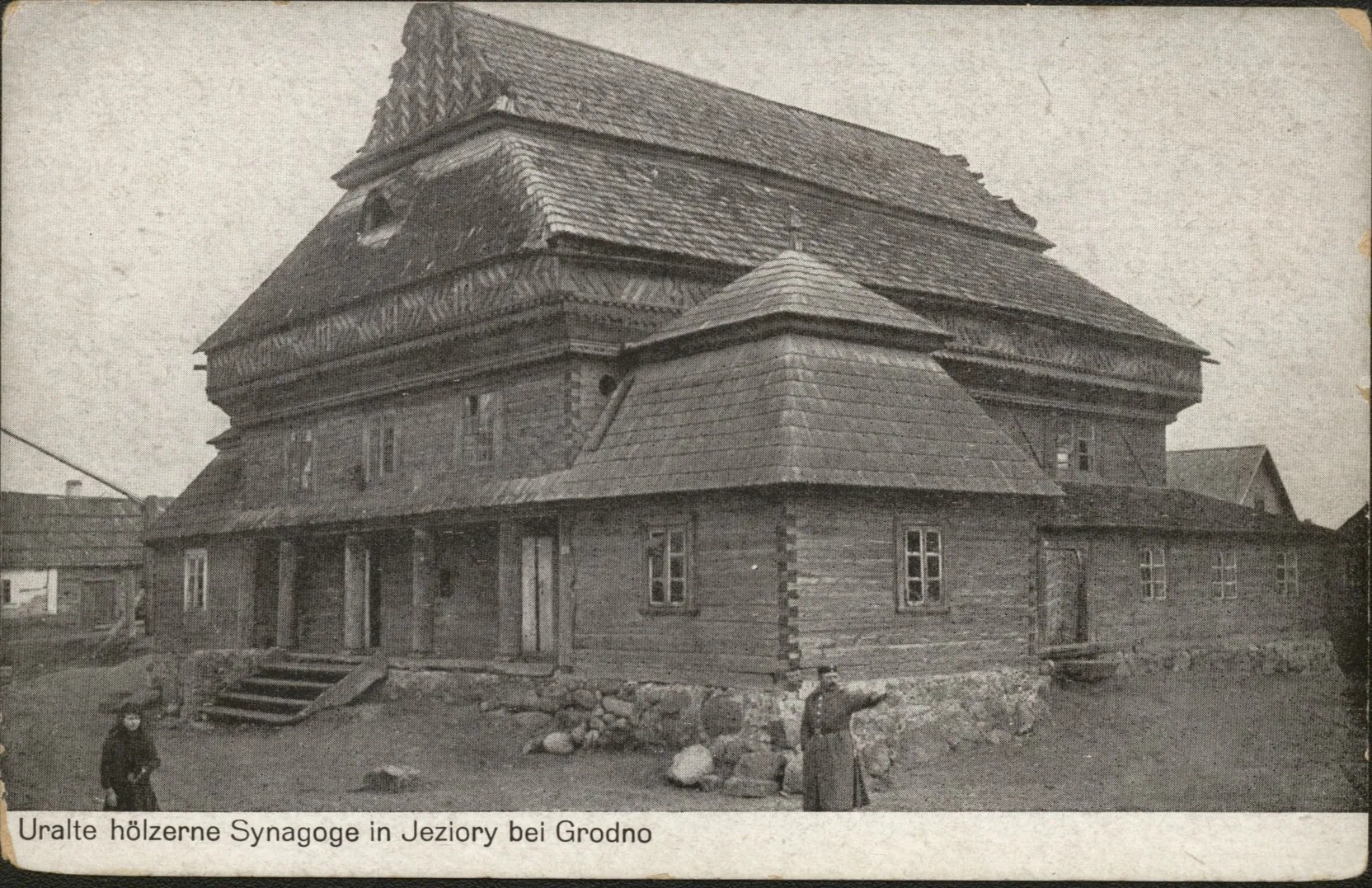
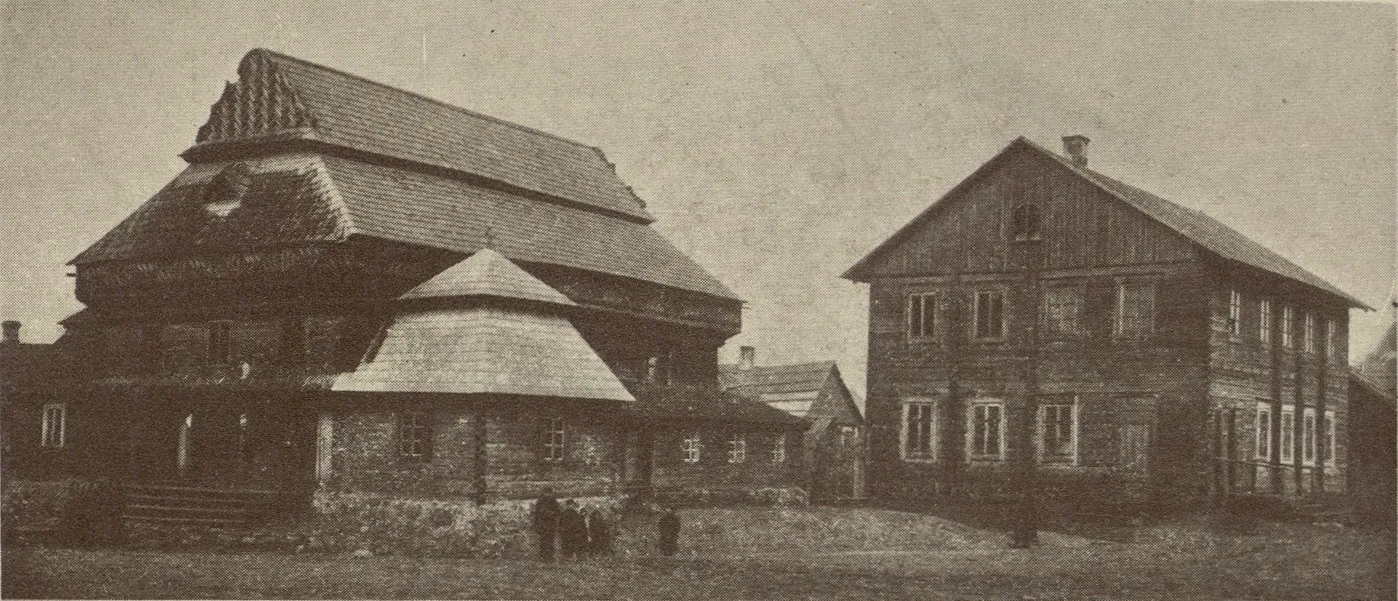
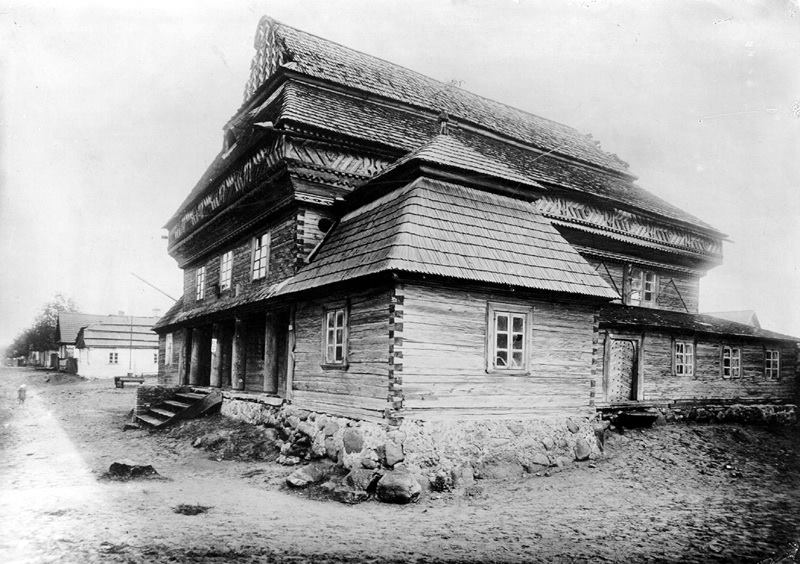
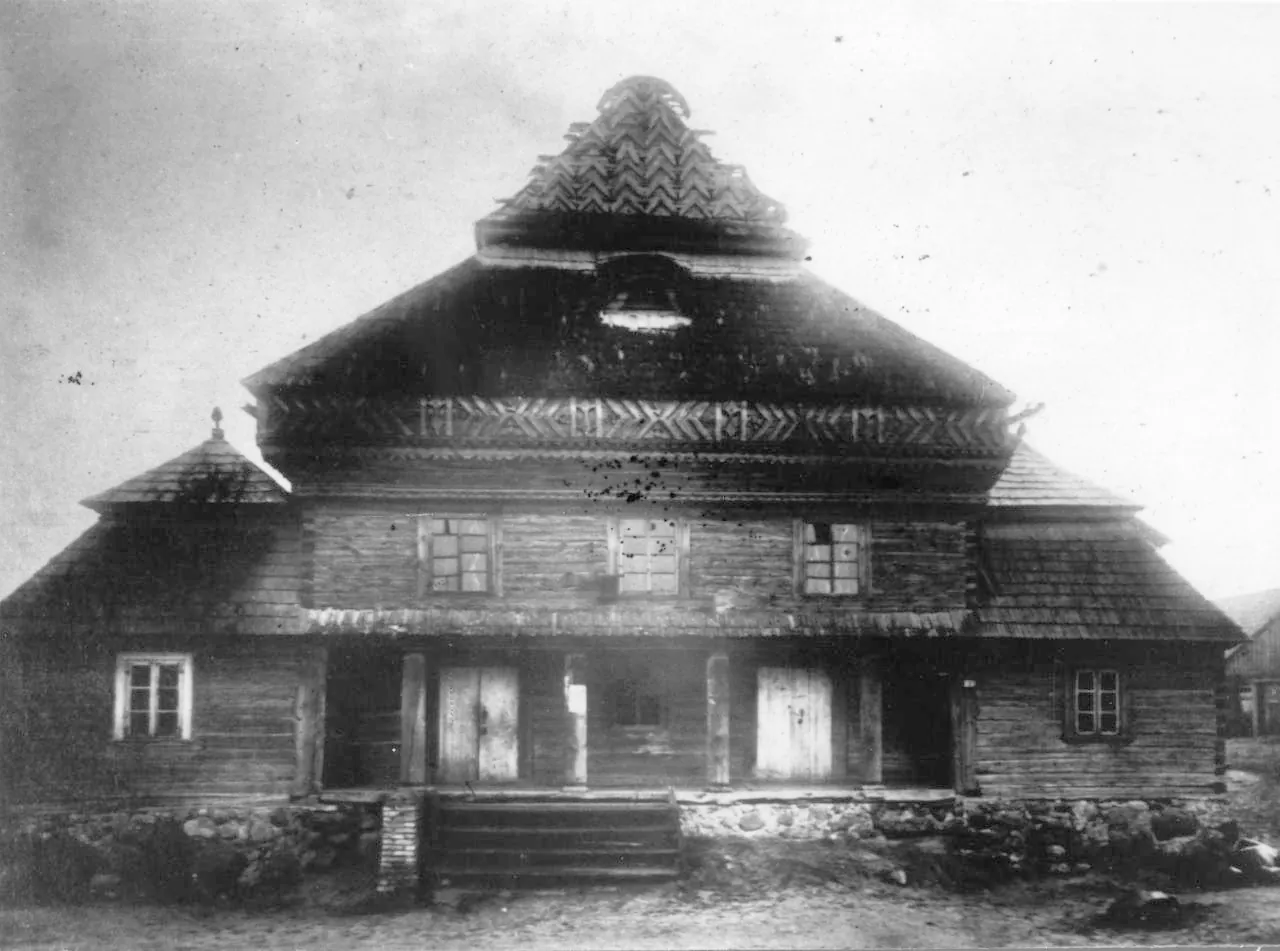
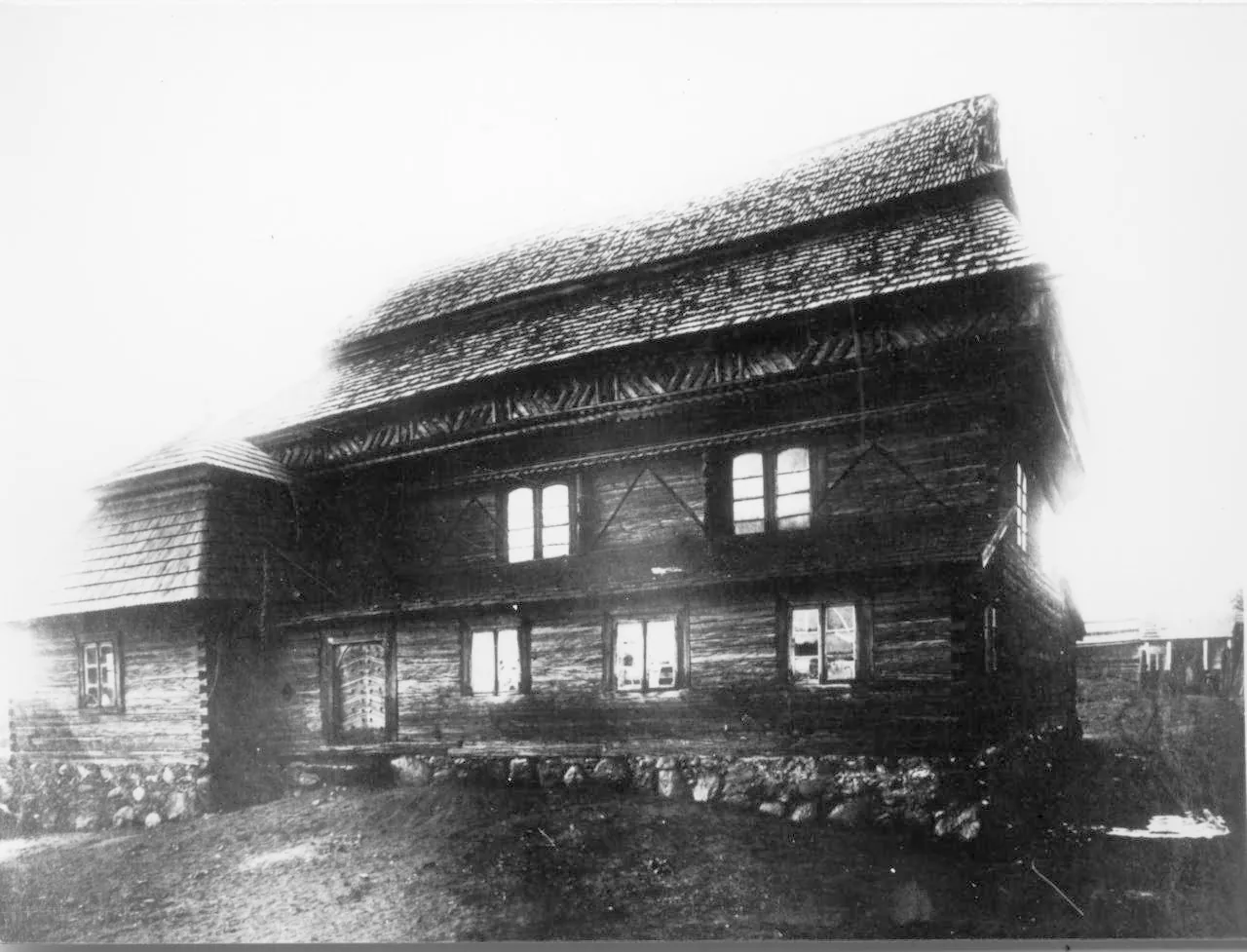
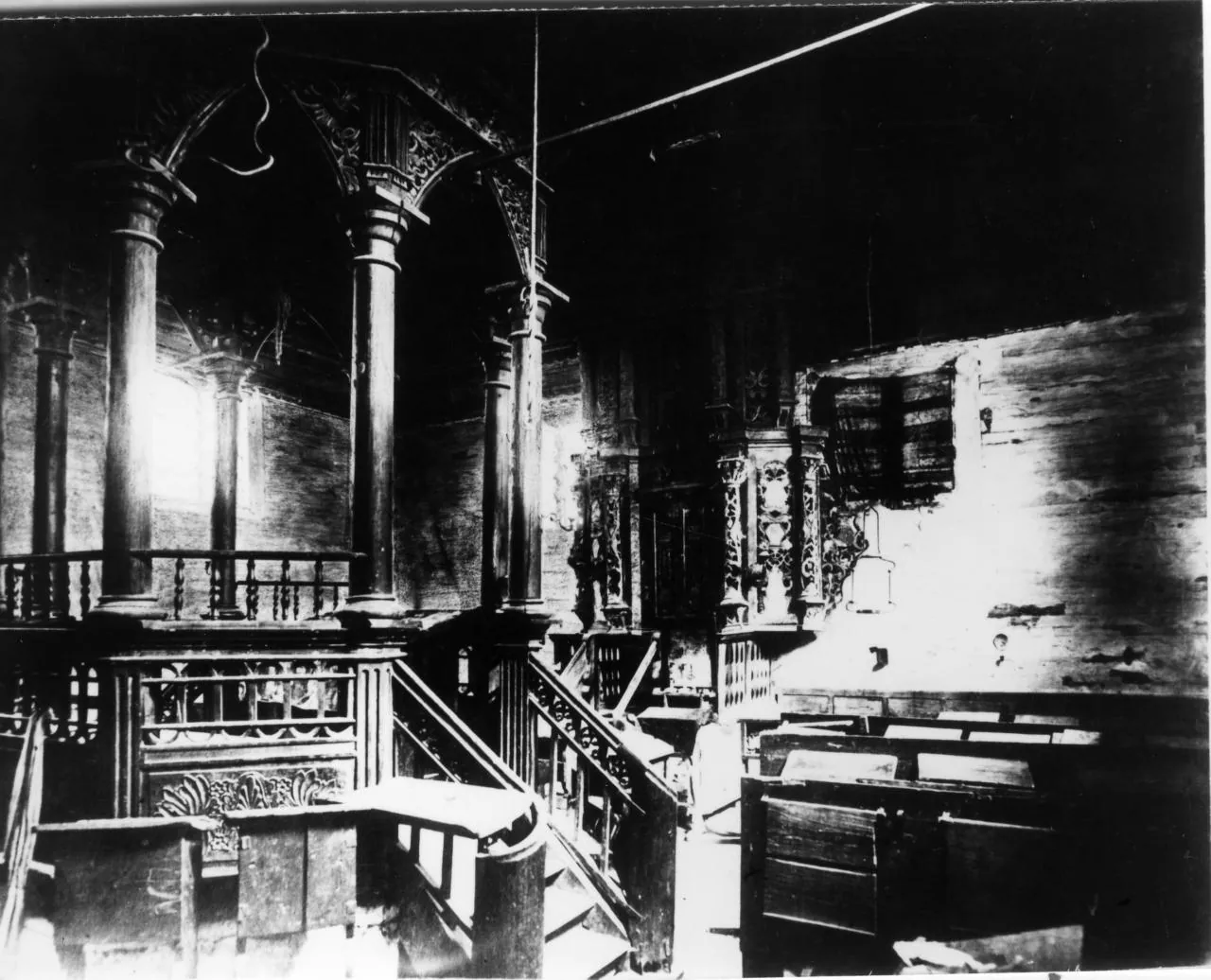
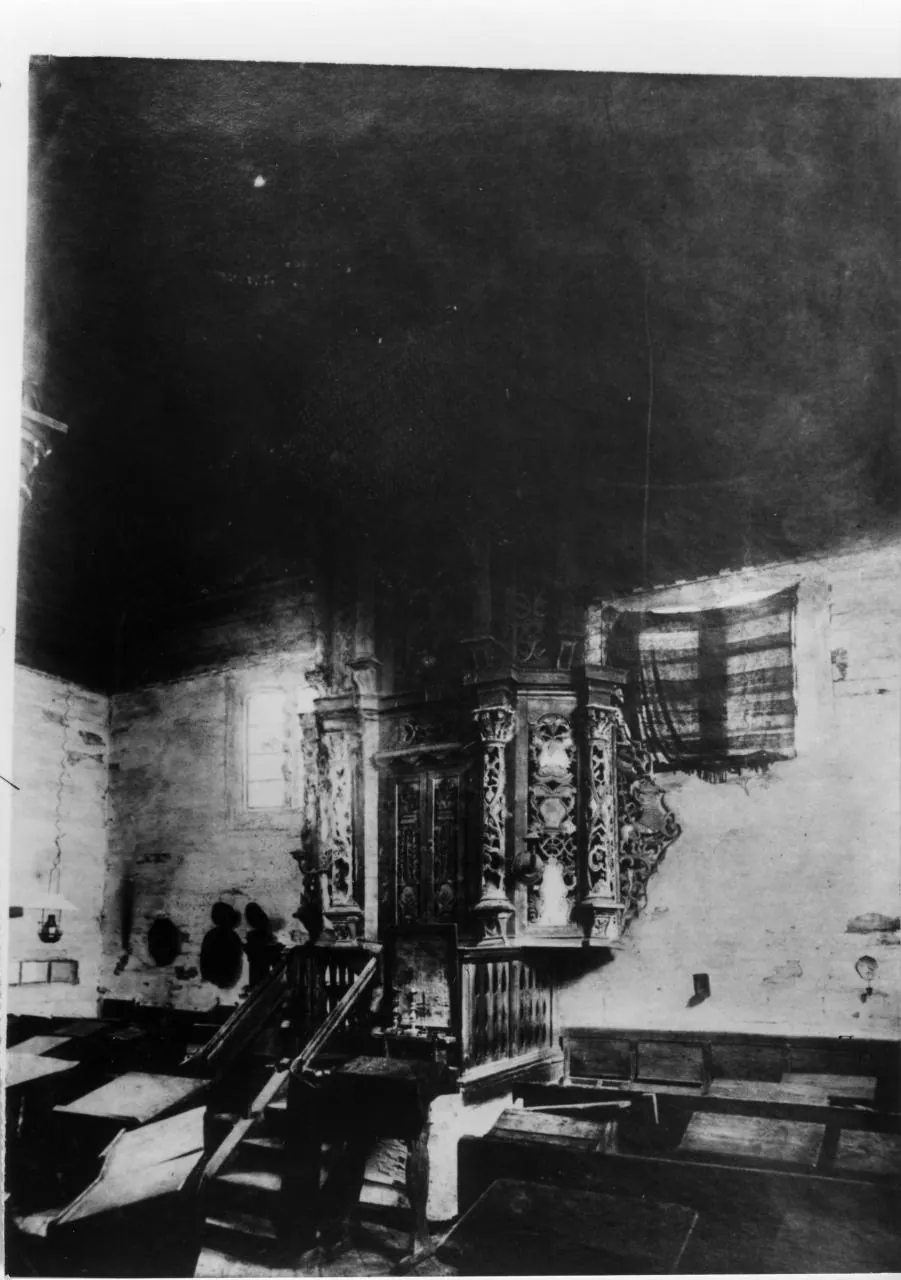
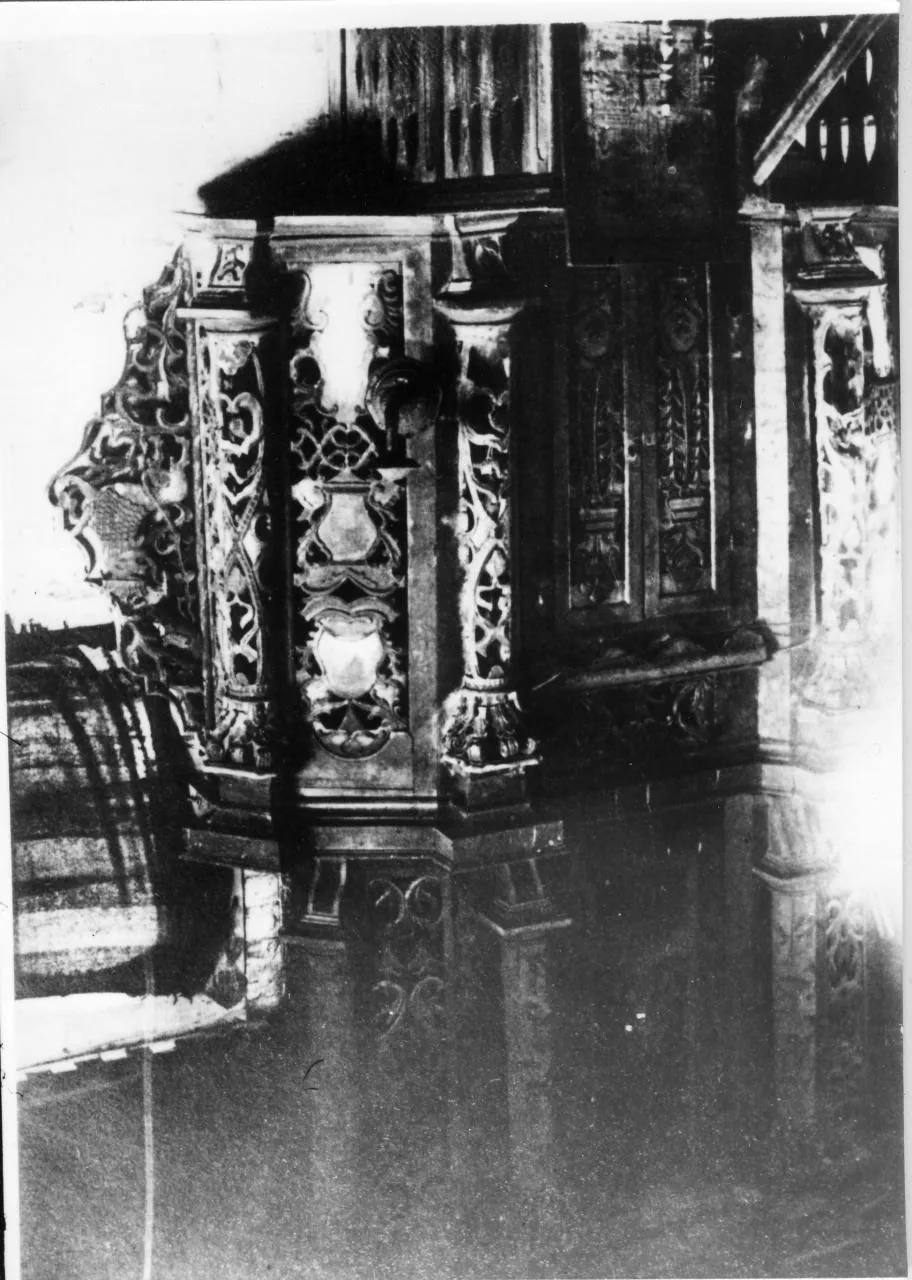
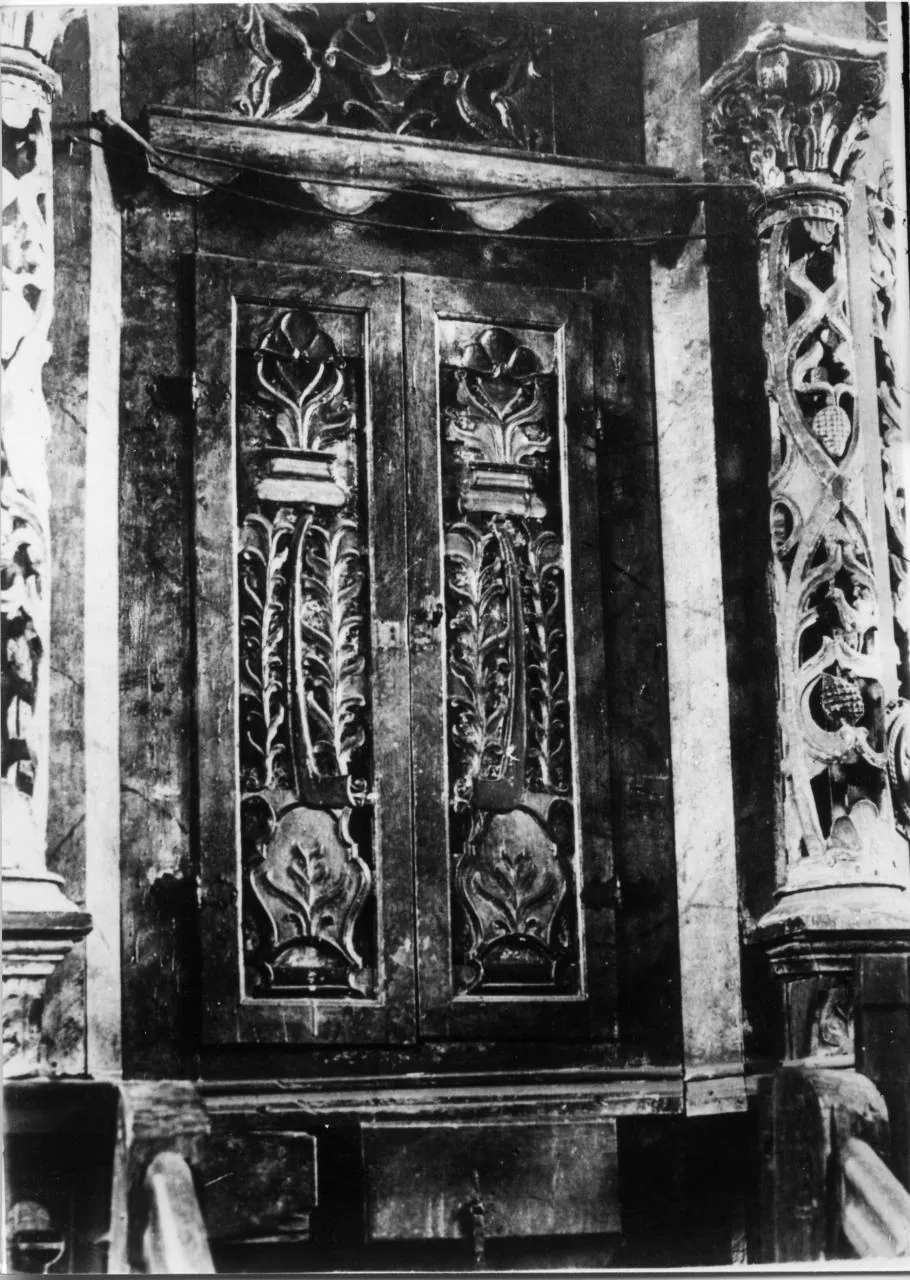
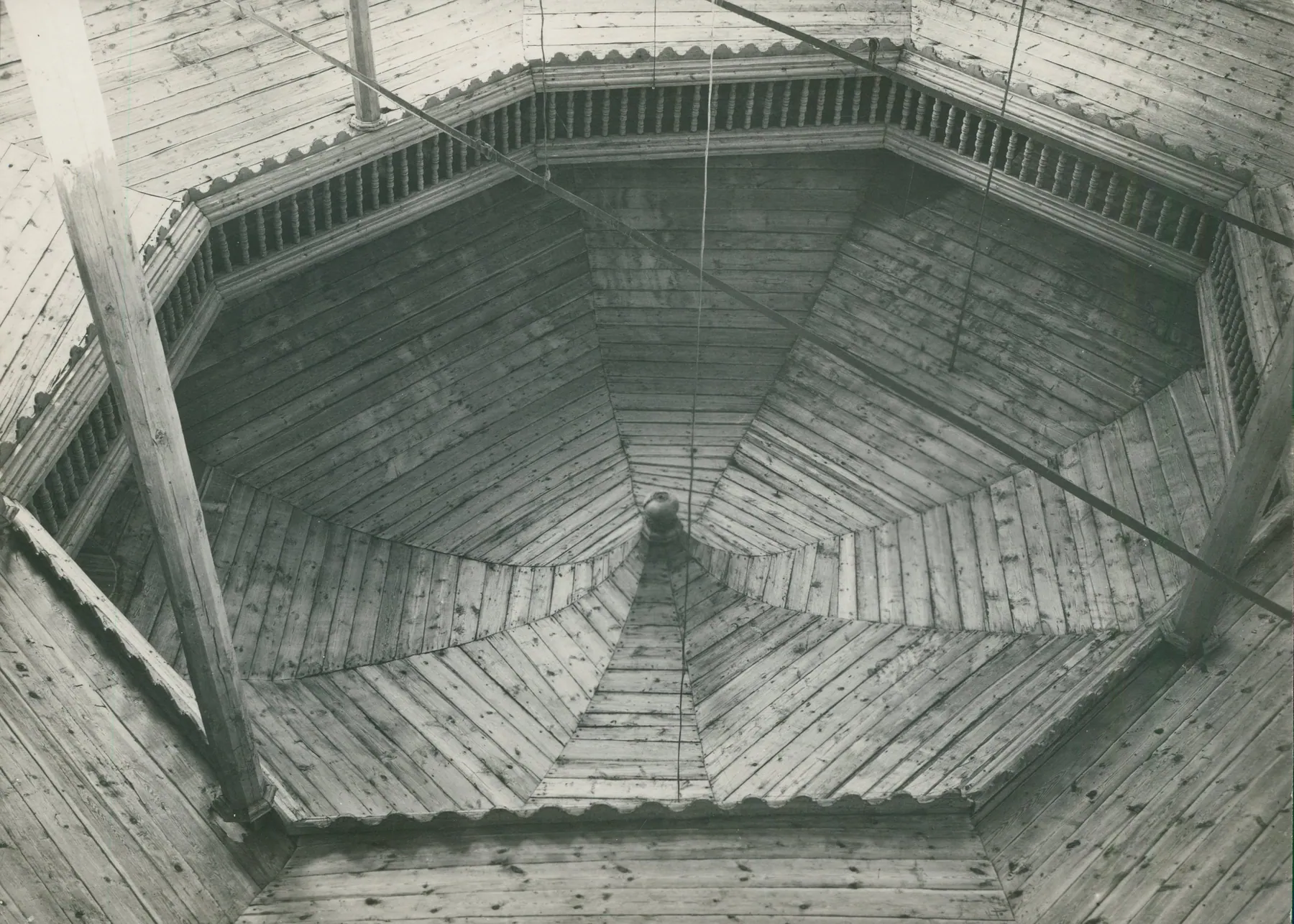
Jeziory, today the village of Aziory in Grodno District, western Belarus, lies among lakes about 30 kilometres east of Grodno. Jews settled there in the late seventeenth century, and a synagogue is mentioned in the eighteenth. The great wooden synagogue was built around the middle of the century, when the town was known as a place of Torah study. It was a massive log building under a steep tiered roof, with a band of carved boards running beneath the eaves and lower annexes with their own roofs around the base. Inside stood a carved bimah with twisted columns, a Torah ark covered in pierced carving, painted and carved doors and furniture, and an octagonal wooden vault. German soldiers photographed the building during the First World War, when it was published as an 'ancient wooden synagogue', and the Center for Jewish Art holds a set of 1930s photographs of its exterior and interior. Nazi Germany occupied Jeziory in July 1941 and murdered its Jews in 1942–1943. The synagogue did not survive the war, but the sources consulted do not say exactly when or how it was destroyed.
Where it stood
Historic: Jeziory, near the Jewish school (Školnaja / School Street), Grodno district. Present day: Aziory, Grodno District, Grodno Region, Belarus. Approximate.
Apri la mappa grande →La comunità ebraica
Jewish settlement in Jeziory began in the late seventeenth century. The community had 522 Jews in 1847 and 508 in 1878, when they made up about half of the town's 1,013 inhabitants. By 1897 it had grown to 1,392. Jews worked in the sawmills, fished the lakes, tanned hides and practised other crafts, and the town drew young men from the district to study Torah. A Jewish prayer school was added in the early nineteenth century. After the First World War the population fell to 867, and the local economy declined, especially after the sawmill was nationalised in 1929. Interwar Jeziory had an active political and cultural life, with Hechalutz, Hashomer Hatzair and Poalei Zion, a Hebrew Tarbut school and a Yiddish school. Its rabbi was David Szwarc.
Architettura e design
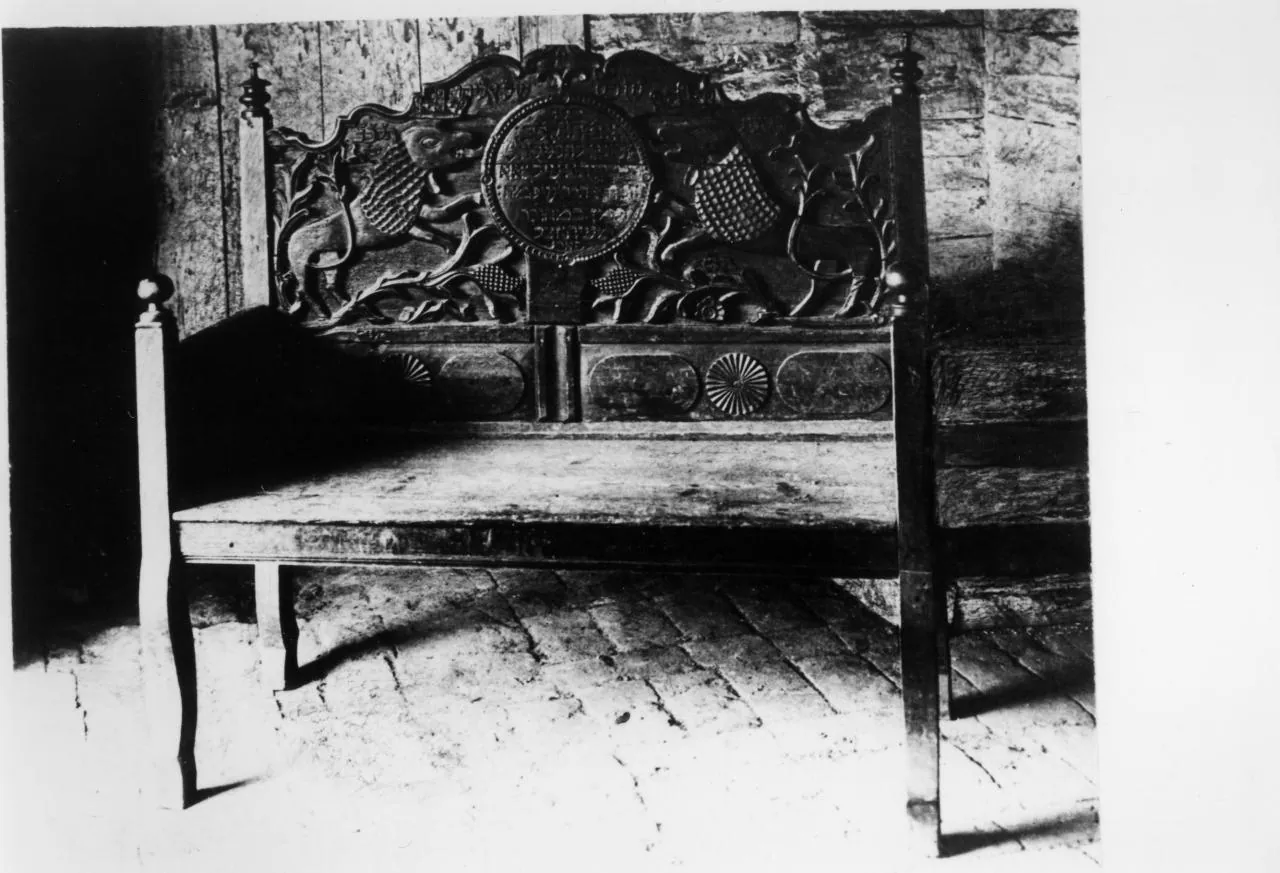
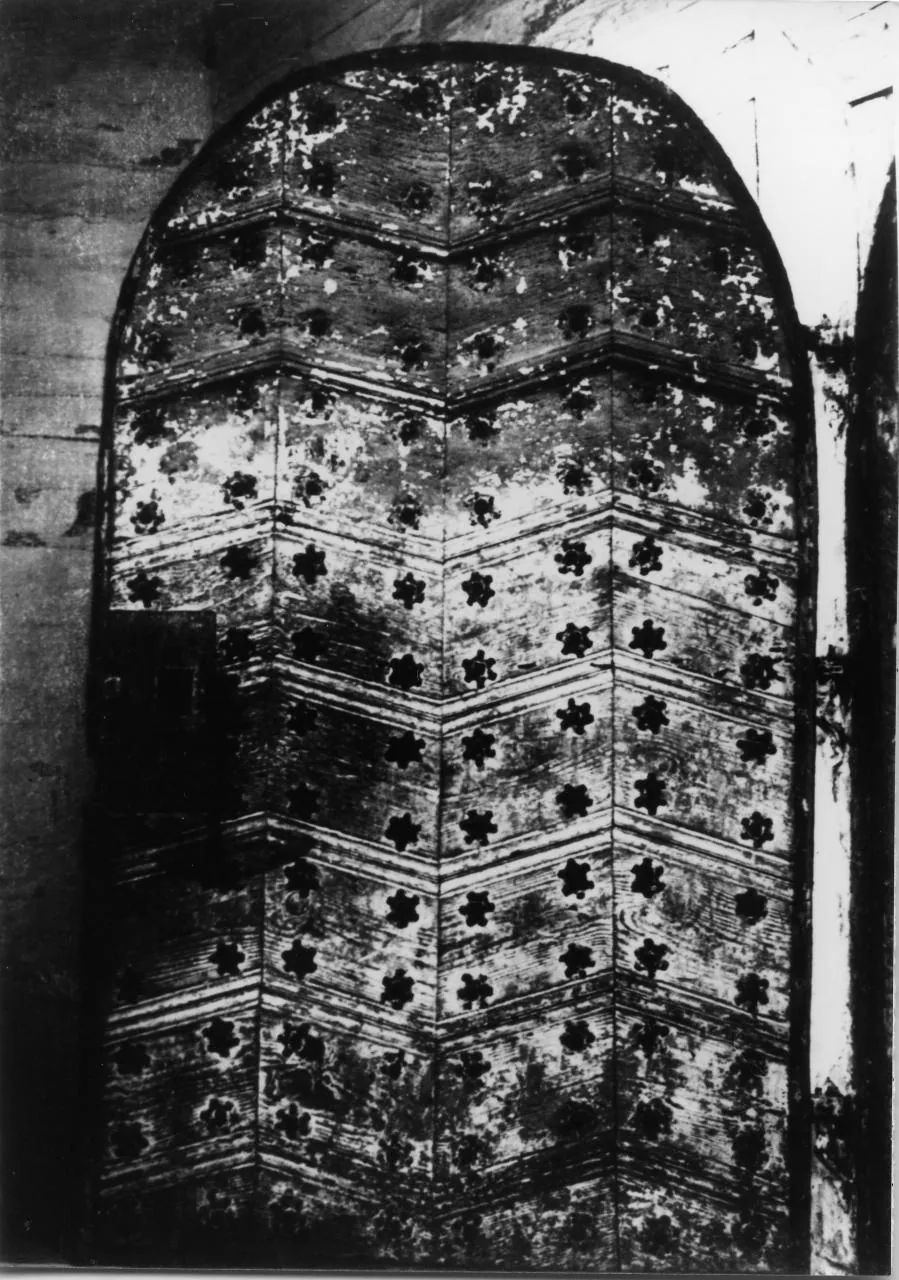
The synagogue was a large log building on a stone base. Its prayer hall rose under a steep, tall roof in several tiers, and beneath the upper roof ran a deep band of decorative carved boarding. Lower annexes on the sides and front, housing the vestibule and women's sections, had their own hipped roofs, and steps led up to the entrances. The walls were of horizontal logs with small windows. Photographs from the 1930s show a rich interior: a bimah raised on twisted columns with carved railings, a Torah ark covered in pierced floral carving flanked by carved columns, a carved wooden bench, a door studded with a pattern of stars, and an octagonal timber vault over the hall.
La vita nella sinagoga
The synagogue was the religious centre of a town whose Jews made up a large part of the population, and of a community known for Torah study. Its carved bimah and ark, benches and painted and carved doors show the care the congregation gave it over nearly two centuries. In the interwar years it served the community led by Rabbi David Szwarc, alongside the Tarbut and Yiddish schools and the Zionist youth movements. The building's age and beauty attracted attention from outsiders too: German soldiers photographed it during the First World War, and in the 1930s researchers photographed its interior in detail. The names of its builders and of most of its rabbis are not recorded in the sources consulted.
Distruzione
Nazi Germany occupied Jeziory in July 1941 and held it until July 1944. The Russian Wikipedia article on the village states that its two main wooden landmarks, the Catholic church of 1679 and the eighteenth-century synagogue, were lost during the Second World War. The Belarusian heritage database Radzima lists the synagogue as lost, with only a vague date. No source consulted for this entry says when, how or by whom it was destroyed. Photographs show it still standing in the 1930s. The Jews who had prayed in it were murdered by the Nazis in 1942–1943, so no one from the community remained to record its end. It was not rebuilt, and nothing of it survives.
Il destino della comunità
In August–September 1941 the Germans forced the Jews of Jeziory and nearby villages into a ghetto, about 1,370 people in all. Prisoners were used for forced labour. In 1942 a partisan unit briefly opened the ghetto gates, but only 17 people left with them. In November 1942 the Jews were deported to the Kiełbasin transit camp near Grodno, and from there to Treblinka and Auschwitz-Birkenau, where they were murdered. Other accounts say the last prisoners were killed in an 'action' no later than 5 March 1943. In December 2025 a memorial to the Jewish victims was unveiled in the centre of the village.
Il luogo oggi
Nothing of the synagogue survives. It stood in the centre of Jeziory, today the village of Aziory in Grodno District, Belarus. Early photographs show it near the Jewish school on today's Školnaja (School) Street, and the Radzima heritage database marks the site at 53.7233°N, 24.1780°E. In December 2025 a symbolic memorial to the Jews murdered in the Holocaust was placed in the centre of the village. Its appearance is known from photographs taken between 1907 and the 1930s, including a detailed interior series held by the Center for Jewish Art.
Hai qualcosa da condividere?
Fotografie, documenti, storie di famiglia o ricordi di questa sinagoga e della sua comunità aiutano a mantenerne viva la storia.
Share a memory or thought
No comments yet. Be the first to add one.