

הסיפור של Jihlava Synagogue
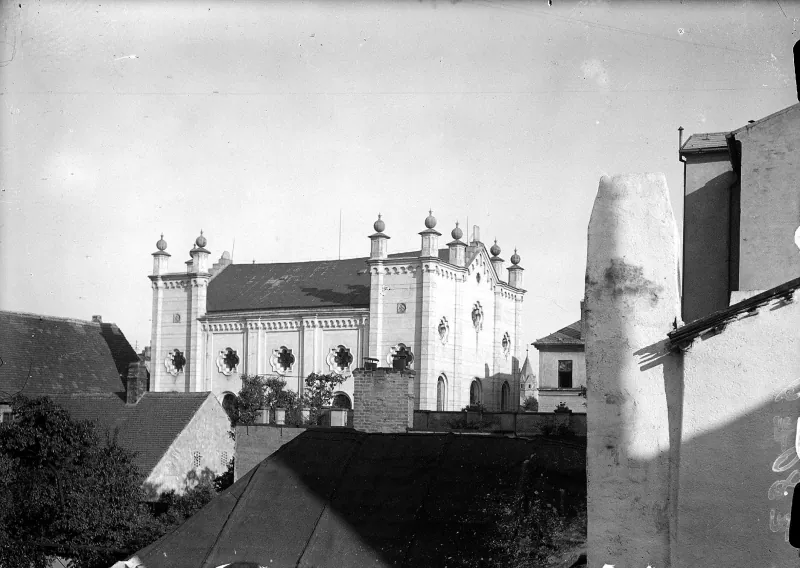
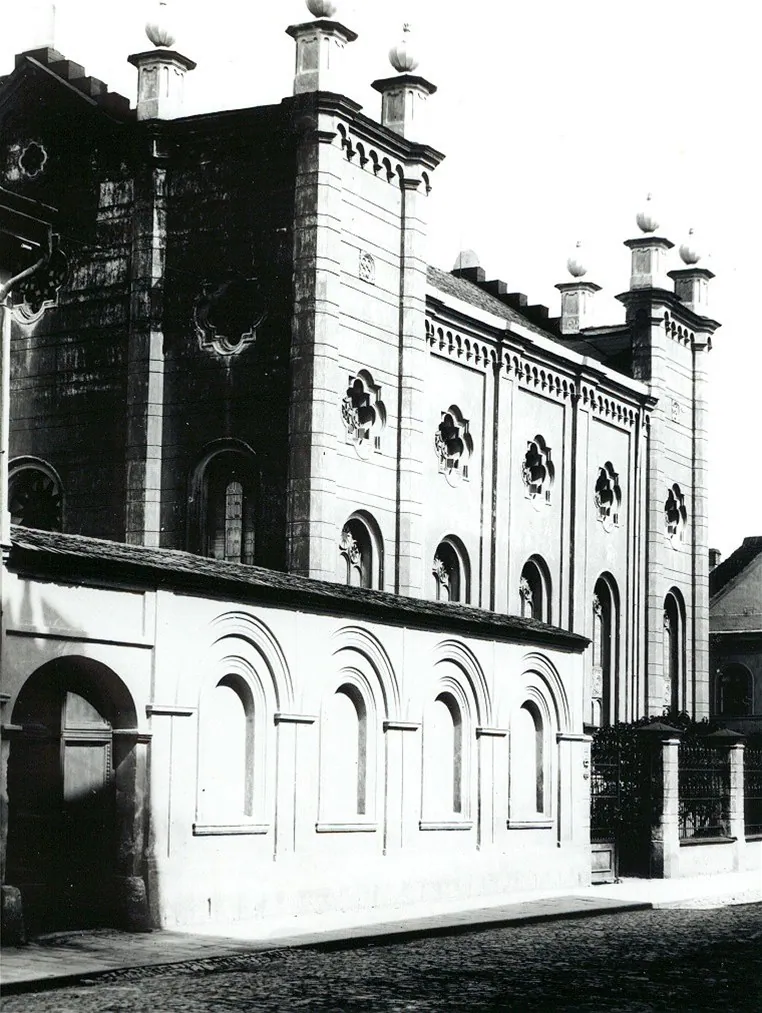
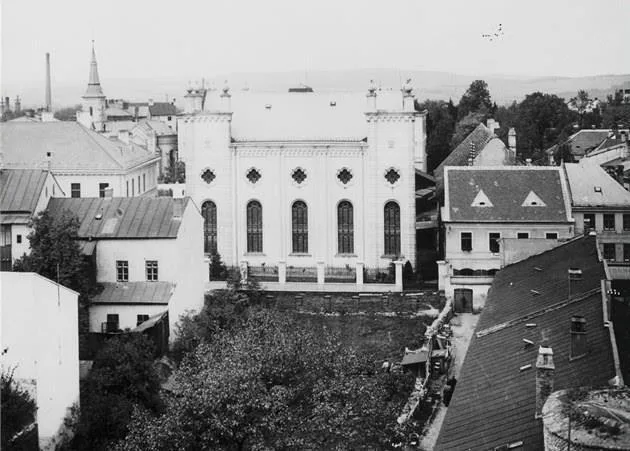
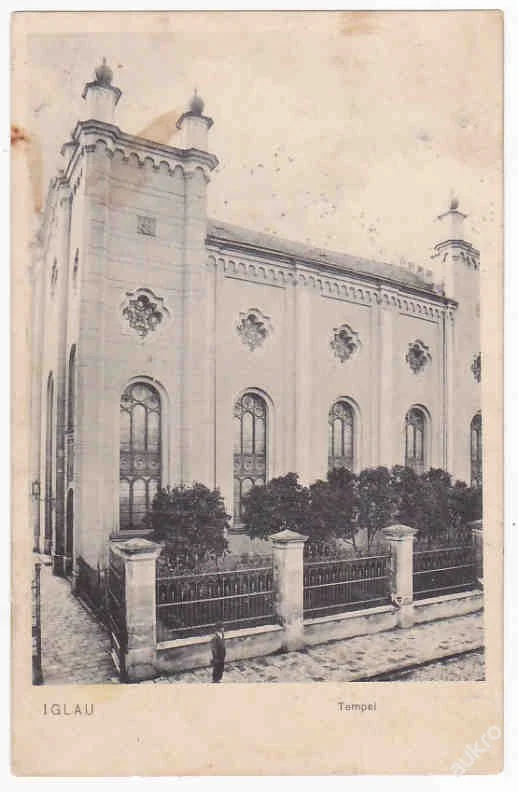
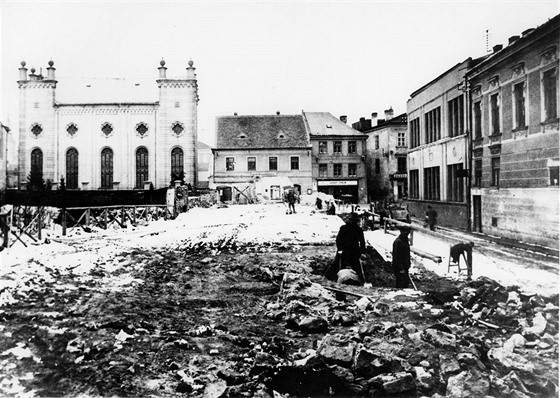
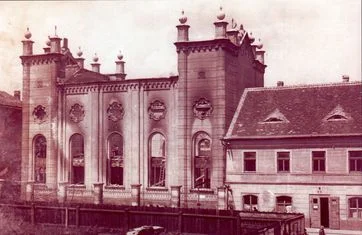
The synagogue of Jihlava (Iglau) in the Bohemian-Moravian Highlands was built in 1862–1863 for a Jewish community that had returned to the town after an absence of more than four centuries. Jews had been expelled from Jihlava in 1426, and a permanent congregation re-formed only after 1848, first worshipping in a prayer room opened in 1856. The new synagogue was built on the Obere Sacher Gasse, today Benešova Street, by the local builders Eduard Rathauský and Alexander Theurer at a cost of about 48,000 gold coins, funded partly by donations from Jewish communities throughout the Habsburg monarchy. It was consecrated on 9 September 1863: Rabbi Joachim Jacob Unger lit the eternal light and the Viennese preacher Adolf Jellinek gave the dedication address. The building was enlarged and modernised in 1886, 1896 and 1921. Among those who grew up in its congregation was the composer Gustav Mahler, whose family moved to Jihlava in 1860. Two weeks after German troops occupied the Czech lands in March 1939, Nazis set the synagogue on fire in the early hours of 30 March 1939. The city council ordered demolition of the ruins, and the Jewish community was forced to clear them. The site now forms part of the Gustav Mahler Park, where the synagogue's stone foundations are traced in the paving.
Where it stood for nearly 80 years
Historic: Obere Sacher Gasse, Iglau, Moravia. Present day: Gustav Mahler Park, corner of Benešova and Věžní streets, 586 01 Jihlava, Vysočina Region, Czech Republic. Site location exact at park level; foundations visible in paving.
פתיחת מפה גדולה ←הקהילה היהודית
Jews were recorded in Jihlava as early as the thirteenth century. In 1345 Charles IV encouraged the town to invite Jewish settlers, and between 1359 and 1420 civic records document some 2,700 transactions between Jews and Christians. In 1426 Duke Albert V expelled them for their alleged support of the Hussites, and they moved to nearby villages such as Třešť and Pirnitz (Brtnice). Only limited commercial access was allowed between 1708 and 1782. After the revolutions of 1848 lifted residence restrictions, Jews returned in growing numbers. A religious society was founded in 1858, a prayer room had opened in 1856, and the new community soon needed a proper synagogue. Joachim Jacob Unger arrived as the first rabbi in 1860 and led the construction effort; the synagogue was consecrated in 1863 and a cemetery followed in 1869. The community reached 1,179 members in 1869 and remained around 1,000 until 1930, when Jews formed 3.3 percent of the town's population.
אדריכלות ועיצוב
The synagogue was a two-storey building in the Romanesque Revival style enriched with Oriental elements, drawing on Moorish and Byzantine motifs. It was oriented to the north-east rather than due east. Its richly articulated facade was finished in coloured striped plaster and pierced by rose windows filled with stained glass, and the building was crowned by high attics and saddle roofs. The site was enclosed by an iron fence set between masonry pillars. Inside, the plan followed the traditional tripartite arrangement: men entered through a vestibule into the main prayer hall, while women reached an upper gallery by spiral staircases. A gallery was added in 1886. The walls were decorated with geometric Oriental painting. In 1896 gas lighting was installed, the interior was repainted decoratively and a new organ was supplied by the Rieger brothers of Krnov, after which the building was reconsecrated on 3 October 1896. Electric lighting and structural roof ties followed in 1921. Stone foundations uncovered on the site are now displayed in the park paving.
החיים בבית הכנסת
The synagogue's consecration on 9 September 1863 brought together the community's rabbi, Dr Joachim Jacob Unger, who kindled the eternal light, and Dr Adolf Jellinek of Vienna, one of the leading Jewish preachers of the age, who delivered the dedication address. Unger served the congregation from 1860 until his death in 1912 and was also religious instructor at the German Gymnasium, where one of his pupils was Gustav Mahler; the Mahler Foundation states that Mahler's bar mitzvah probably took place in the synagogue in 1873. The installation of a Rieger organ in 1896 indicates that services followed a modernised, organ-accompanied rite, although the congregation's formal affiliation has not been confirmed. Unger was also a scholar who published sermons, poetry and studies of Hebrew philology in Iglau. The community's institutions included the prayer room that preceded the synagogue, a religious society founded in 1858, and the cemetery established under Unger's leadership in 1869, where Mahler's parents are buried.
הרס
Jihlava was not annexed in 1938; it fell under German occupation with the creation of the Protectorate of Bohemia and Moravia on 15 March 1939. Two weeks later, at about 2 a.m. on 30 March 1939, a group of Nazis set the synagogue on fire; the Mahler Foundation identifies them as members of the SA who plundered the building before burning it. An official protocol dated 6 April 1939 recorded the fire damage and the risk that the structure would collapse. On 21 April 1939 the city council ordered demolition, and the Jewish community was compelled to remove the ruins. The Mahler Foundation states that the last remains were cleared only in 1950. Some of the synagogue's ritual equipment was preserved at the Central Jewish Museum in Prague. The Encyclopaedia Judaica gives the date of burning as 10 November 1938, but this conflicts with the documented March 1939 fire and with Jihlava's position outside the annexed Sudetenland.
גורל הקהילה
After the German occupation, persecution intensified rapidly. On 28 April 1939 Jewish shops in Jihlava were attacked, and in 1940 the remaining Jews were forced to leave the town and move to surrounding villages, the same places where their ancestors had lived after the 1426 expulsion. In May 1942 the Jews of the Jihlava Oberlandrat district were assembled at the grammar school in Třebíč. Two transports, designated Av and Aw, left on 18 and 22 May 1942 for the Terezín ghetto, carrying a total of 1,371 people from the district; only 63 of them survived. After liberation a Jewish congregation was briefly revived in Jihlava in 1945, but it was not re-established as a lasting community. The Jewish cemetery with its ceremonial hall survives and remains in use.
האתר כיום
The synagogue does not survive. After its ruins were cleared, the site on Benešova Street served for many years as a provisional fenced marketplace. In November 2009 the city opened the Gustav Mahler Park on the site, at the corner of Benešova and Věžní streets, and the park was formally dedicated around the composer's 150th anniversary in 2010. The stone foundations of the synagogue, uncovered during the works, are displayed in the park paving, giving a visible trace of the building's footprint. A statue of Gustav Mahler now stands in the park.
שמות בולטים
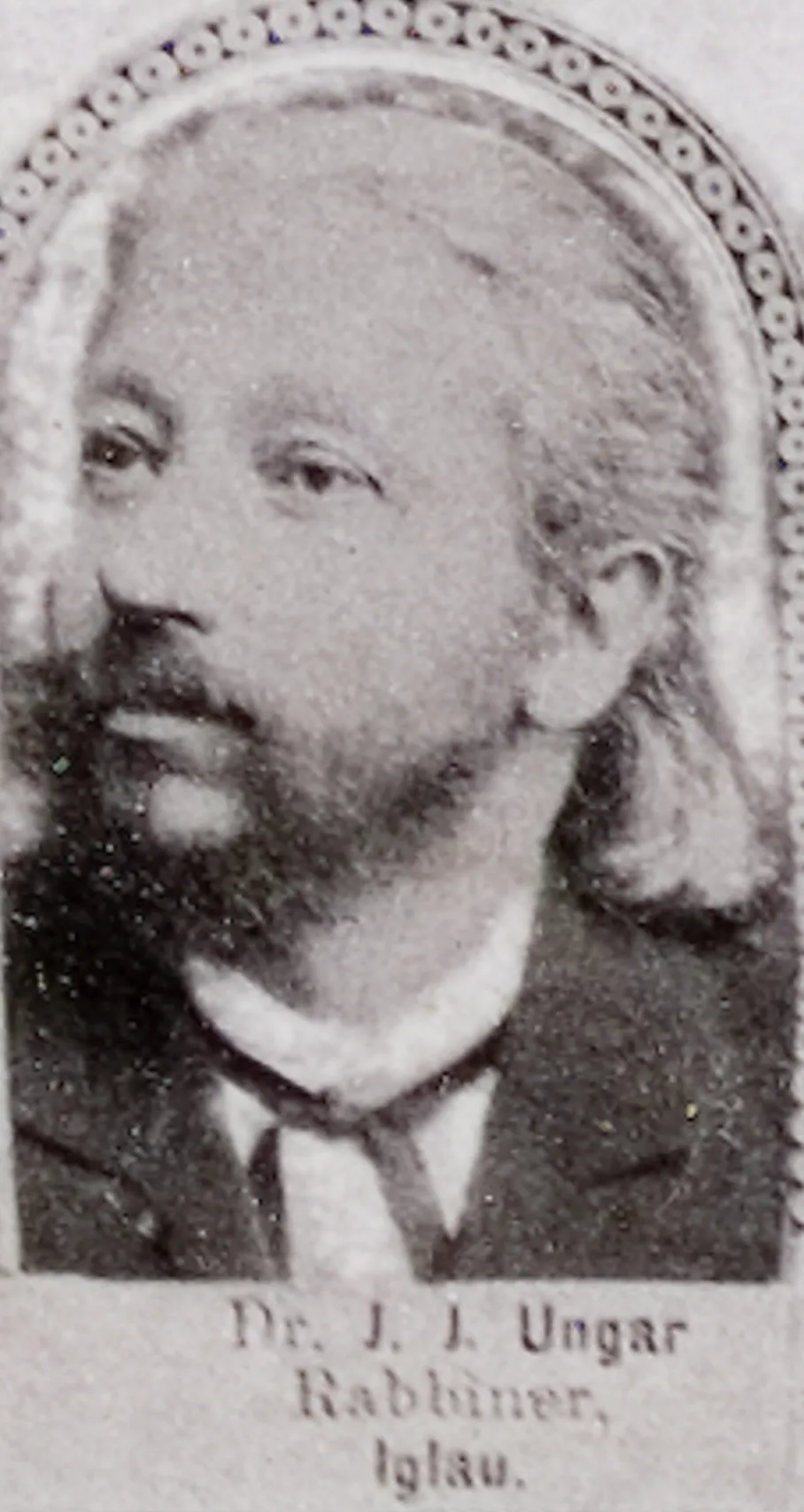
Joachim Jacob Unger
1826–1912RabbiBorn in Humenné and trained at the University of Berlin, Unger became the first rabbi of the re-founded Jihlava community in 1860 and led the effort to build its synagogue and, in 1869, its cemetery. At the consecration on 9 September 1863 he kindled the eternal light. He served until his death in 1912 and taught religion to the young Gustav Mahler.
ביוגרפיה או מקור ←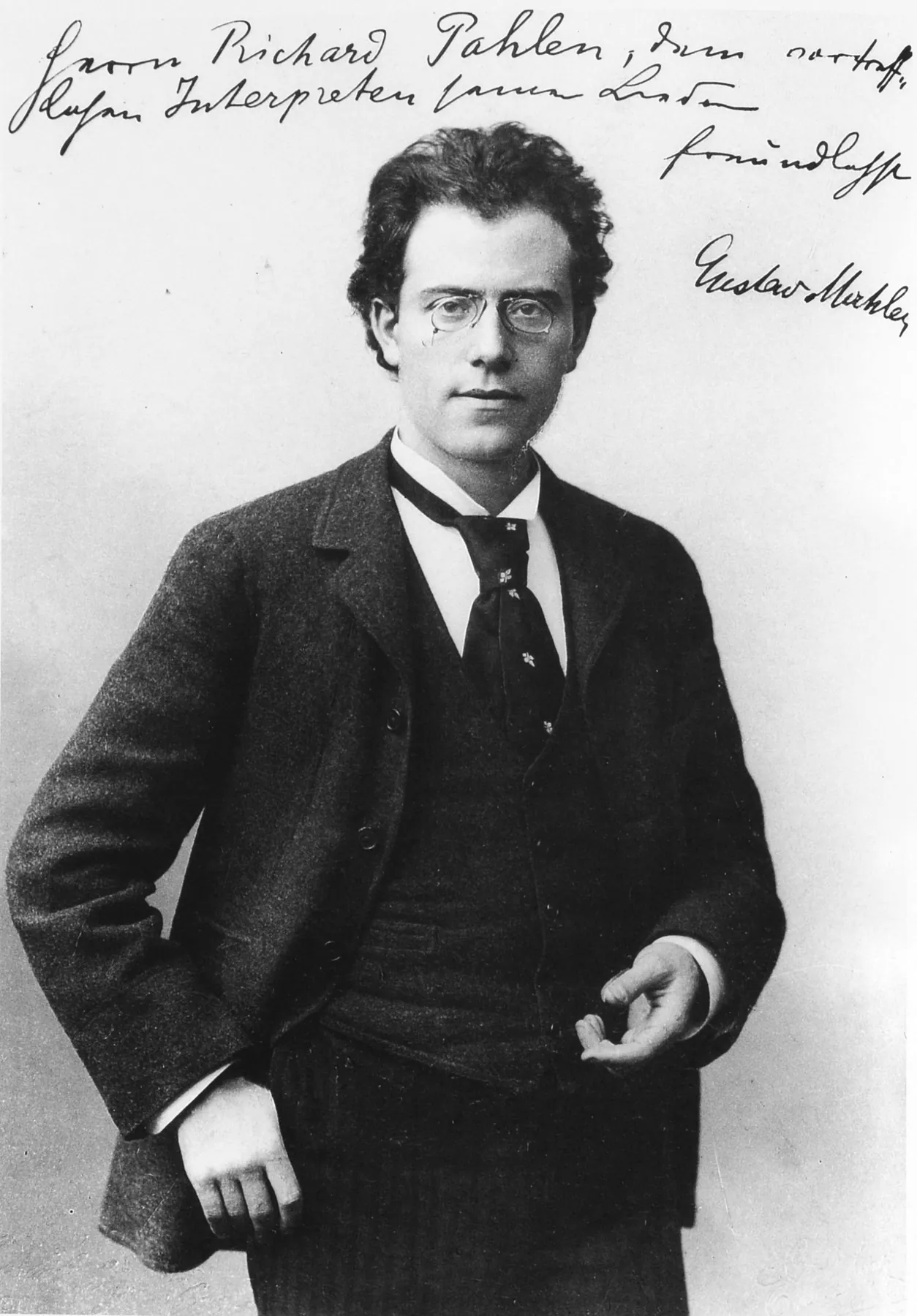
Gustav Mahler
1860–1911Member of the congregation; composerMahler's family moved to Jihlava in 1860 and belonged to its Jewish community. He received his religious education from the synagogue's rabbi, Joachim Jacob Unger, and the Mahler Foundation states that his bar mitzvah probably took place in the synagogue in 1873. His parents are buried in the community's cemetery. The synagogue site is now named Gustav Mahler Park.
ביוגרפיה או מקור ←
Adolf Jellinek
1821–1893Preacher (dedication speaker)Jellinek, then one of the most prominent Jewish preachers in Vienna, came to Jihlava to deliver the dedication address when the synagogue was consecrated on 9 September 1863, an indication of the importance attached to the re-founded community by Jewish leaders across the Habsburg monarchy, whose congregations helped finance the building.
ביוגרפיה או מקור ←Eduard Rathauský
Dates unknownBuilder / designerRathauský was one of the two local Jihlava builders credited with constructing the synagogue in 1862–1863. The Jihlava Architecture Manual names him with Alexander Theurer as the builders of the Romanesque-Moorish building on the Obere Sacher Gasse, completed at a cost of about 48,000 gold coins and consecrated on 9 September 1863.
ביוגרפיה או מקור ←Alexander Theurer
Dates unknownBuilder / designerTheurer (also spelled Theuerer) was the second of the two local Jihlava builders credited with constructing the synagogue in 1862–1863. Together with Eduard Rathauský he produced the two-storey Romanesque Revival building with Oriental decoration, rose windows and a traditional tripartite interior, which was consecrated on 9 September 1863.
ביוגרפיה או מקור ←יש לכם משהו לתרום?
תמונות, מסמכים, סיפורי משפחה וזיכרונות מבית הכנסת ומהקהילה שלו עוזרים לשמור על ההיסטוריה שלו בחיים.
Share a memory or thought
No comments yet. Be the first to add one.