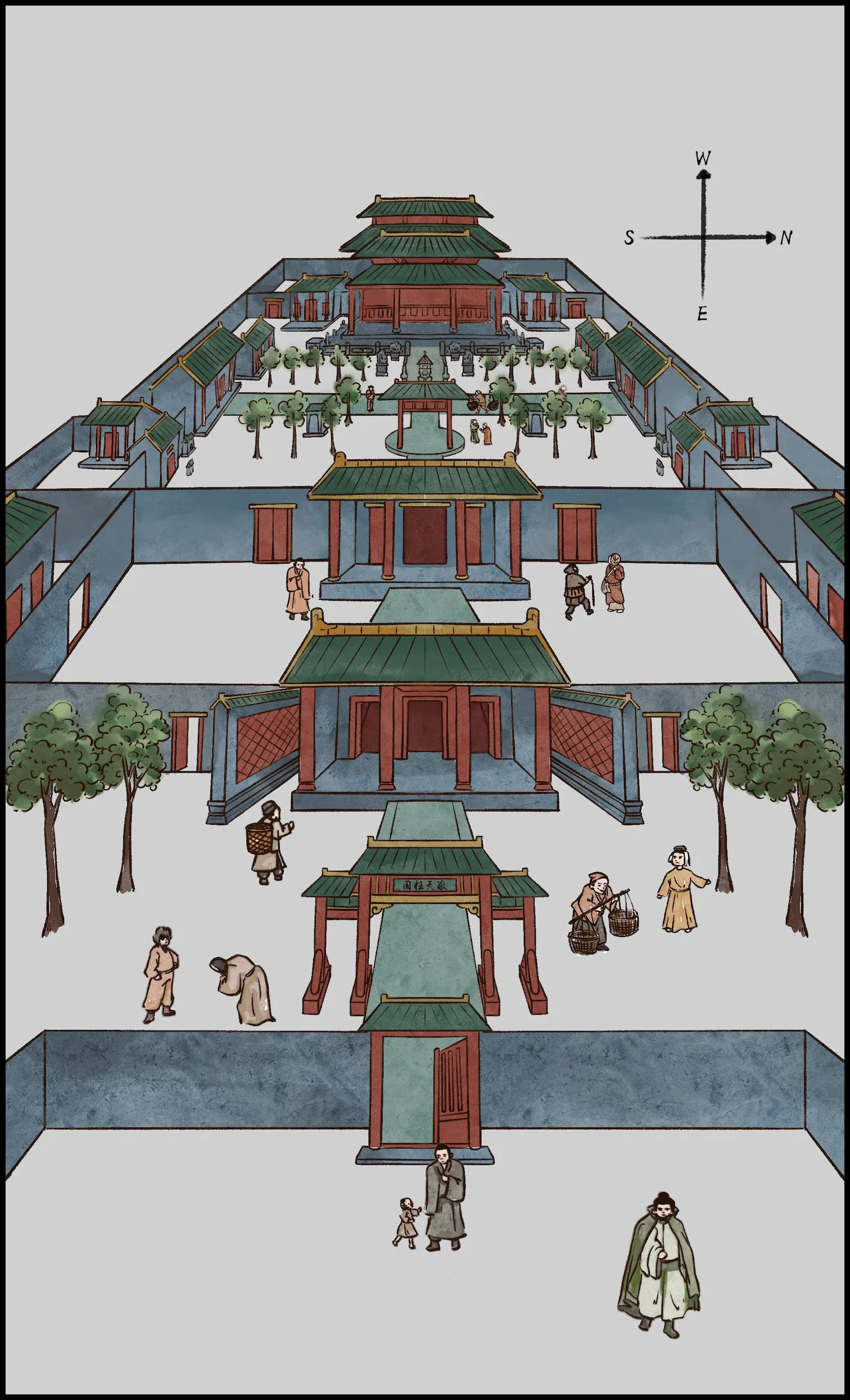
The story of Kaifeng Synagogue
The Kaifeng Synagogue—known as the Temple of Purity and Truth—was founded in 1163, when Kaifeng was a major commercial centre under the Song dynasty. Rebuilt many times after floods and fires, it remained the heart of the best-documented premodern Jewish community in China.
The story of its European documentation began by chance in Beijing in 1605. Ai Tian, a Jewish scholar from Kaifeng, visited the Jesuit Matteo Ricci and noticed an image he believed depicted Rebecca with Jacob and Esau. Their conversation gradually revealed that Ai belonged not to a previously unknown Christian community, as Ricci first suspected, but to a Chinese Jewish congregation with Hebrew scriptures and a synagogue in Kaifeng. Ricci never went there himself; in 1608 he sent a Chinese Jesuit lay brother to examine the community’s books and copy passages from them. The comparison confirmed that the texts were the Pentateuch.
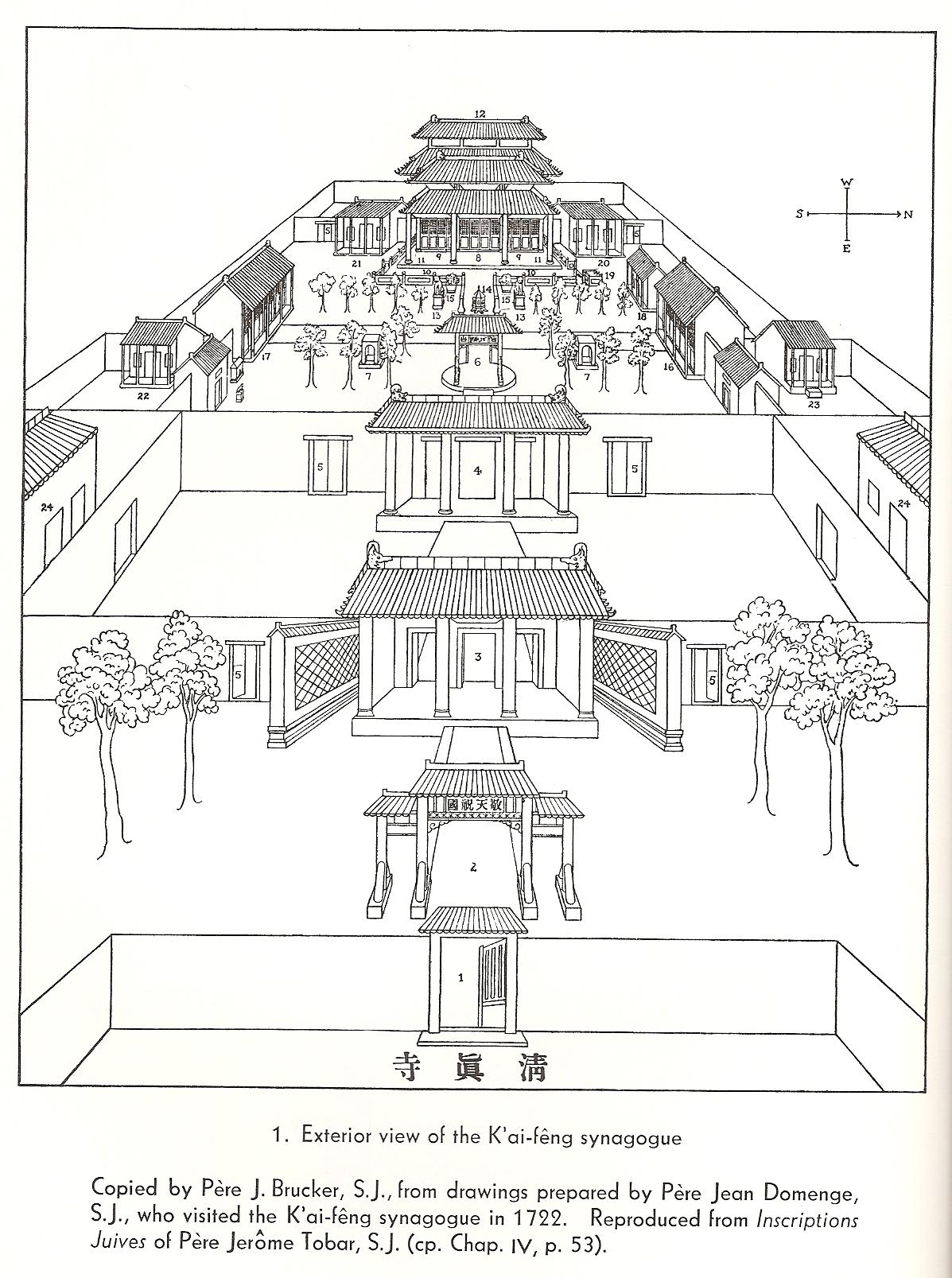
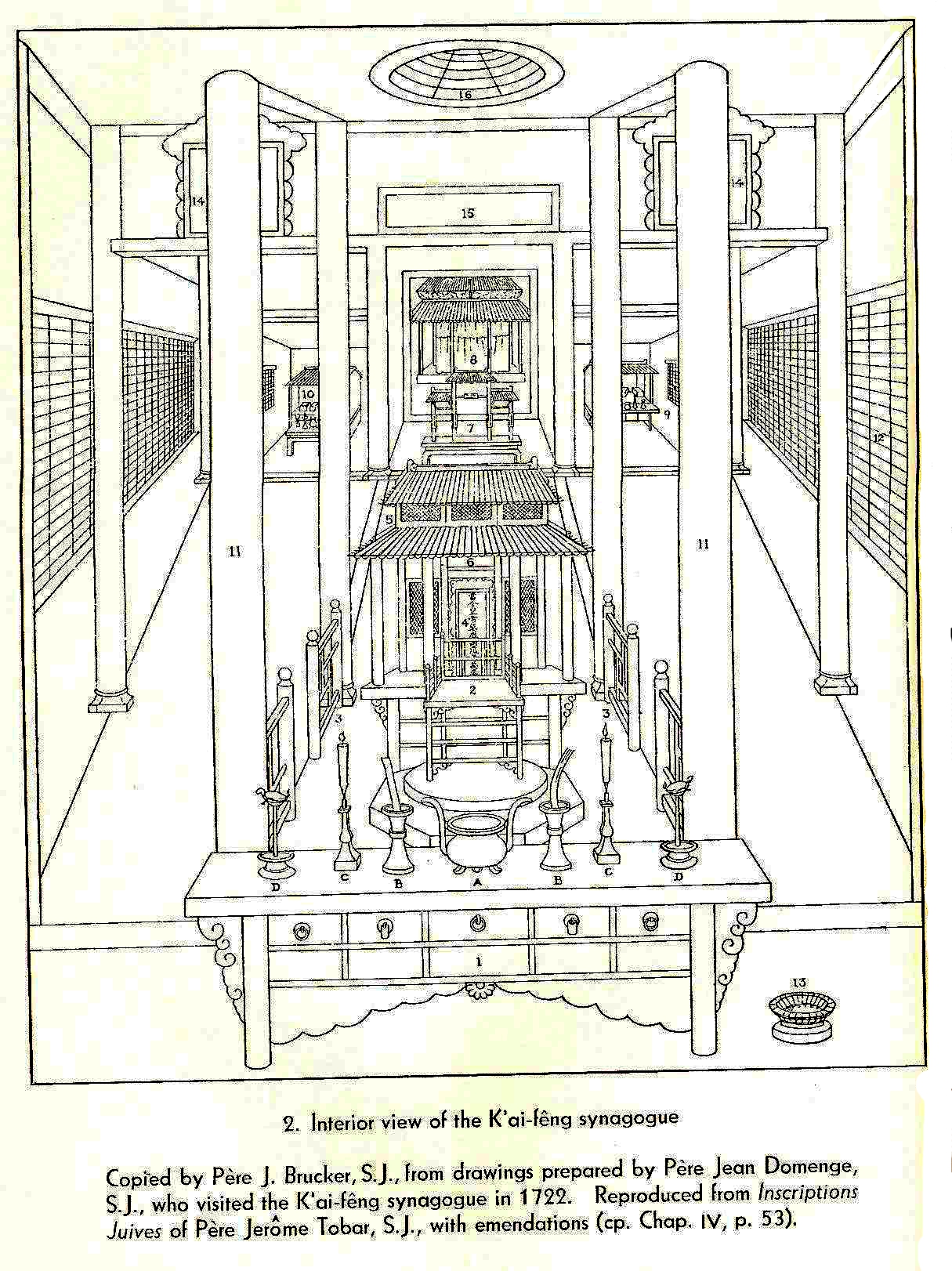
More than a century later, the French Jesuit Jean Domenge—fluent in Chinese and knowledgeable in Hebrew—was sent to investigate the community in depth. He lived in Kaifeng for about eight months in 1721 and returned in 1722. He attended worship, examined the scriptures and recorded the complex in detailed drawings of its exterior, prayer hall and Torah reading. Those drawings are now the principal visual evidence for the vanished synagogue.
The building looked unmistakably Chinese: a walled sequence of gates, courtyards and tiled-roof halls aligned on a central axis. Inside, however, its ritual geography was Jewish. Torah scrolls were kept in an ark at the western end, worshippers faced west toward Jerusalem, and Hebrew inscriptions appeared beside Chinese imperial tablets. The synagogue embodied a community that adopted Chinese language, surnames, dress and civic culture while preserving the Sabbath, festivals, circumcision, dietary practice and Hebrew scripture for centuries.
The Jewish community
Most scholars trace the Kaifeng Jews to merchants from the Persian-speaking Jewish world who reached China by the twelfth century. In Kaifeng they received Chinese surnames, entered local trades and, in some cases, passed the imperial examinations. Their own stone inscriptions presented Judaism in a Chinese moral vocabulary while recording descent from Abraham and the transmission of scripture through Ezra.
The community was never sealed off from its surroundings. Its members spoke Chinese, honored ancestors, served the state and intermarried with local families. At the same time, Judeo-Persian traces survived in their manuscripts and liturgy. By the seventeenth century the congregation may have numbered several thousand people, though estimates vary, and its synagogue stood at the centre of communal identity.
Architecture and design
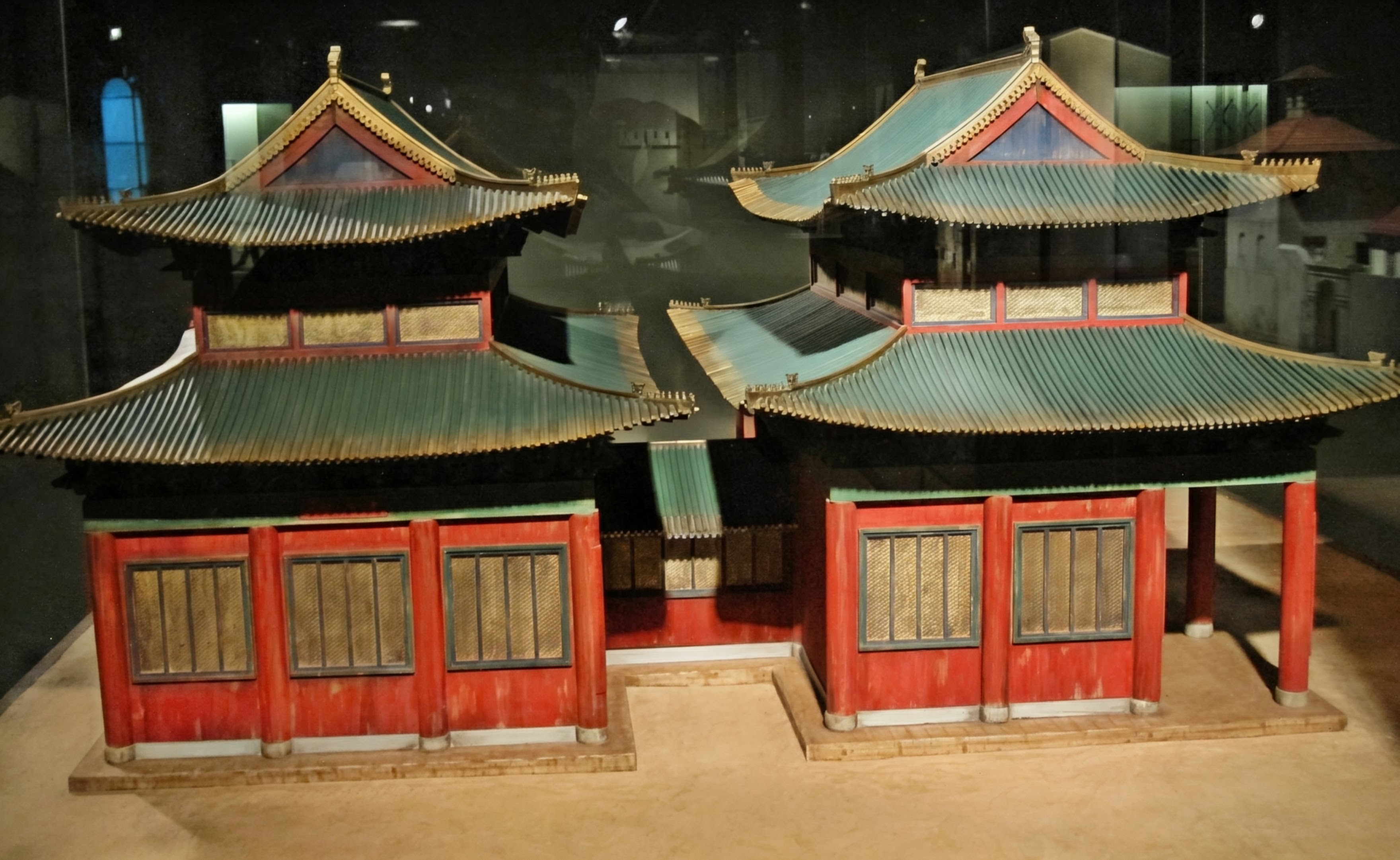
The synagogue was planned like a Chinese temple compound rather than a European basilica. Visitors passed through successive gates and courtyards toward the main prayer hall. Upturned tiled roofs, timber columns, latticework and ceremonial arches belonged to the local architectural language.
Within that form, the building was organized for Jewish worship. The Torah ark, or Bethel, stood at the western end in the direction of Jerusalem. A raised ceremonial table and the Chair of Moses occupied the hall, and Hebrew texts appeared on plaques and arches. Imperial tablets acknowledging the ruling dynasty were displayed in keeping with Chinese civic custom. Jesuit drawings made in 1722 preserve the clearest visual record of this distinctive synthesis.
Life inside the synagogue
The synagogue held the community’s Torah scrolls and was the setting for weekly prayer, Sabbath observance and the annual cycle of Jewish festivals. Community traditions included circumcision, Hebrew names, avoidance of pork and observance of Jewish dietary rules. A religious leader, called an ostād in surviving Judeo-Persian usage, guided worship and learning.
Hebrew scripture was read from the Chair of Moses, while Chinese ritual forms also shaped the space. Incense vessels, lamps, memorial tablets and reverence for ancestors coexisted with the Torah ark and Hebrew inscriptions. The result was neither a disguised foreign building nor a conventional Chinese temple, but a locally rooted Jewish sanctuary.
Destruction
The synagogue survived repeated disasters through communal rebuilding. A catastrophic Yellow River flood in 1642 devastated Kaifeng; community leader Zhao Yingcheng helped recover Torah scrolls and restore the sanctuary. Later floods and declining resources again damaged the compound.
By the middle of the nineteenth century the congregation could no longer maintain or rebuild it. The last synagogue fell into ruin and was dismantled in the 1850s or 1860s. Its timbers and stones were sold or dispersed, and the Torah scrolls and manuscripts eventually passed to collectors and libraries abroad.
The community’s fate
The loss of the synagogue accelerated a long process of religious fragmentation. With no functioning sanctuary, no trained rabbi and little knowledge of Hebrew, communal worship faded. Families continued to remember descent from the historic congregation through surnames, family traditions and practices such as avoiding pork, but most became integrated into the wider population.
Descendants in Kaifeng began publicly exploring their Jewish ancestry again in the late twentieth century. Some have studied Judaism or moved to Israel, while others preserve family memory in China. Their present-day identities are diverse and cannot be reduced to a single religious status; the legacy survives through people, manuscripts, inscriptions and renewed historical study.
The site today
No original synagogue building survives. The former compound is associated with Teaching the Torah Lane in Kaifeng, where later construction occupies the area. Historic stone stelae from the community survive in local collections, while Kaifeng manuscripts and Torah scrolls are now held by institutions in China, North America and elsewhere.
Reconstructions and scale models—based largely on the 1722 drawings of Jesuit Jean Domenge and later documentation—allow visitors to understand the lost complex. The site remains a place of memory rather than an active synagogue.
Notable names
We have not found verified portraits of the people named here, so their entries remain text-only.
Ai Tian
fl. 1605Kaifeng Jewish scholar and imperial examination graduateHis meeting with Matteo Ricci in Beijing in 1605 revealed the existence of Kaifeng’s Jewish community to European scholars and led to the earliest sustained Jesuit documentation of the synagogue.
Biography or source →Zhao Yingcheng
b. 1619Scholar, community leader and restorer of the synagogueKnown in Hebrew as Moshe ben Avraham, Zhao helped rescue scripture after the 1642 Yellow River flood and played a leading role in restoring the synagogue and recording his community’s traditions.
Biography or source →Jean Domenge
1666–1735Jesuit missionary and documentary witnessDomenge visited Kaifeng and documented the synagogue in 1722. His detailed drawings of its exterior, prayer hall and ritual furnishings preserve the most important visual evidence for the appearance and organization of the lost complex.
Biography or source →- Encyclopaedia Iranica — Kaifeng
- ANU Museum of the Jewish People — Jewish community of Kaifeng
- My Jewish Learning — The Jews of Kaifeng
- Wikimedia Commons — Exterior of the Kaifeng Synagogue
- Wikimedia Commons — Interior of the Kaifeng Synagogue
- Chinese Jewish Institute — Jean Domenge
- Chinese Jewish Institute — Kaifeng Synagogue reconstruction