



The story of Great Synagogue (Adas Yeshurun)
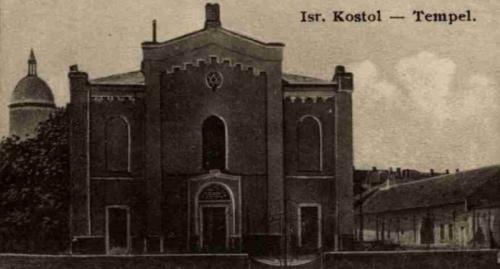
The Jewish community of Kežmarok laid the foundation stone of its main synagogue in 1881, and the building was consecrated in 1882. Built in the Moorish Revival style then fashionable for Central European synagogues, it measured roughly 22 by 15 metres and provided about 500 seats.
For six decades the synagogue was the religious centre of a community that grew from a few dozen people in the 1830s to more than 1,100 by 1940. Its long-serving rabbis came from the Grünberg family, who led the congregation from 1874 until the Holocaust.
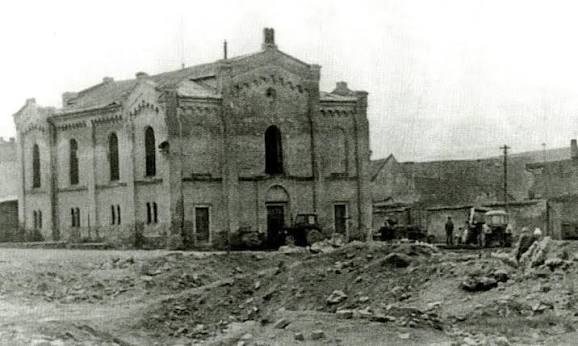
The community was largely destroyed in 1942 and 1944, when Jews from Kežmarok were deported to Auschwitz, Majdanek, Sobibor and camps in the Lublin district, and dozens more were shot in the town in September 1944. The building survived the war but was not returned to religious use. It served as a storehouse and was demolished under the communist regime, reportedly in 1961, to make way for the road towards Levoča. Sources disagree on the exact demolition date, with some placing it in the 1950s and a local history archive giving 1962.
Where it stood for nearly 80 years
Historic street address unknown. Present-day site: small park on Toporcerova street, Kežmarok, near the New Evangelical Church (Hviezdoslavova 14), where a memorial stone marks the synagogue site. Location is approximate.
Open larger map →The Jewish community
Jews were barely present in Kežmarok until the mid-19th century: the town had 29 Jewish residents in 1831. According to the JewishGen KehilaLink, the town's German burghers initially objected to Jewish settlement, which grew only from the 1850s. The Jewish population rose to 272 in 1869, 659 in 1890 and 907 in 1900, when Jews made up about 16 per cent of the town.
The community first used a modest synagogue in the 1870s and invited its first rabbi, Abraham Grünberg, in 1874. Accounts of its religious affiliation conflict. Pinkas HaKehillot records that Kežmarok joined the Orthodox organisation after the 1869 Hungarian Jewish Congress. The KehilaLink describes Orthodox and Neolog factions that merged in 1881, the year the new synagogue's foundation stone was laid. A growing population and a united congregation provided the impetus for a larger, representative building.
Architecture and design
The synagogue was a Moorish Revival building of about 22 by 15 metres. A photograph-based description on the JewishGen KehilaLink records an anteroom behind the main entrance, with staircases leading up to a women's gallery. Men and women sat separately, and a raised bimah stood in the centre of the prayer hall, a layout consistent with traditional practice.
No architectural drawings, contemporary descriptions of the interior decoration or materials, or architect's records were located. The KehilaLink's suggestion that the Viennese architect Ludwig Förster designed it cannot be correct as stated, because Förster died in 1863, nearly two decades before construction began. Pinkas HaKehillot's reference to a modest 1870s synagogue "renovated and enlarged to five hundred seats" may describe the same building's history differently, or an earlier structure. The Moorish style placed Kežmarok within the wave of oriental-style synagogues built across the Kingdom of Hungary in the later 19th century.
Life inside the synagogue
The synagogue was served by a rabbinic dynasty. Rabbi Abraham Grünberg served from 1874 until his death in 1918, a tenure of 44 years, and was succeeded by his son, Rabbi Simcha Natan Grünberg, who led the community until he was murdered in 1944.
The community built a full set of institutions around the synagogue: a chevra kadisha (burial society) from the 1860s, a cemetery and mikveh, a yeshiva with about 50 students founded in the 1880s, a Talmud Torah, a Beit Midrash, and charitable societies including Bikur Holim and Poalei Zedek. A Hasidic kloiz with about 200 seats also operated in the town. Zionist organisations were active from 1899.
No detailed records of specific services, cantors or events held in the main synagogue were located.
Destruction
No source located describes the synagogue's fate during the Slovak State (1939–1945), including any damage or desecration during the war. After the Second World War it was used as a storehouse. According to the JewishGen KehilaLink, in 1961 the communist regime demolished it to build the road to Levoča. The responsible actor was therefore the Czechoslovak communist-era authorities, though the specific agency or municipal body that ordered demolition is not identified in the sources.
The demolition date is disputed. The Slovak heritage database pamiatkynaslovensku.sk and the English Wikipedia list of Slovak synagogues place demolition in the 1950s (Wikipedia gives 1955). A local-history photo archive on Facebook gives construction as 1883 and demolition as 1962 for the road. A photograph of the building taken in 1961, credited to Mikuláš Lipták and Ze'ev Raphael, supports a date in or after 1961.
The community’s fate
In 1940 about 1,181 Jews lived in Kežmarok. Deportations under the Slovak State began in spring 1942. On 21 March, 127 young women were seized and deported to Auschwitz, followed by 102 young women on 28 March. Between 31 March and 2 April, 80 young men were sent to camps in the Lublin district. On 1 June about 800 Jews were assembled at Thököly Castle and deported to Majdanek and Sobibor, and dozens more were deported to Auschwitz on 21 September 1942.
After the Slovak National Uprising, German forces killed 30 Jews in Kežmarok on 2 September 1944. On 22 September 1944, Rosh Hashanah, 40 Jews were shot, among them Rabbi Simcha Natan Grünberg. About 90 per cent of the community perished. Figures for 1948 differ: Pinkas HaKehillot records 236 Jews, and the KehilaLink records 384. A small community continued into the 1970s. A memorial service in November 2013 gathered the town's first minyan in 65 years.
The site today
The synagogue has disappeared completely. It was demolished for the road towards Levoča, and its site lies beside today's Toporcerova street (route 66), near the New Evangelical Church, whose dome appears beside the synagogue in early postcards. A memorial stone in the small park there states in Slovak, English and Hebrew that the synagogue once stood on this spot. The Jewish cemetery in Kežmarok has been restored and is the principal surviving Jewish heritage site in the town.
Notable names
Simcha Natan Grünberg
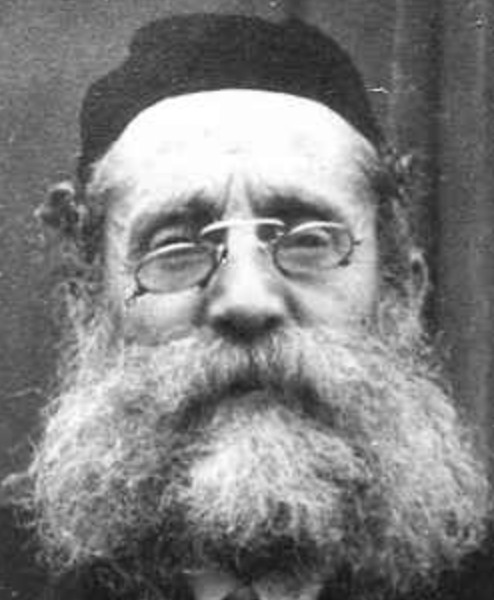
Died 1944Rabbi of Kežmarok (from 1918)Son of Abraham Grünberg, he succeeded his father as rabbi of Kežmarok in 1918 and led the congregation through the interwar years and the deportations of 1942. According to Pinkas HaKehillot, he was among about 40 Jews shot in Kežmarok on 22 September 1944, Rosh Hashanah, after the Slovak National Uprising.
Biography or source →Abraham Grünberg
1839–1918Rabbi of Kežmarok (1874–1918)Invited in 1874 as the Kežmarok community's first rabbi, Abraham Grünberg led the congregation for 44 years. He oversaw the period in which the community laid the foundation stone in 1881 and consecrated the Great Synagogue in 1882, and he served as its rabbi until his death in 1918, founding a rabbinic line that continued until the Holocaust.
Biography or source →Do you have something to contribute?
Photographs, documents, family stories or memories of this synagogue and its community help keep its history alive.
Share a memory or thought
No comments yet. Be the first to add one.