
Historia Kisbér Synagogue
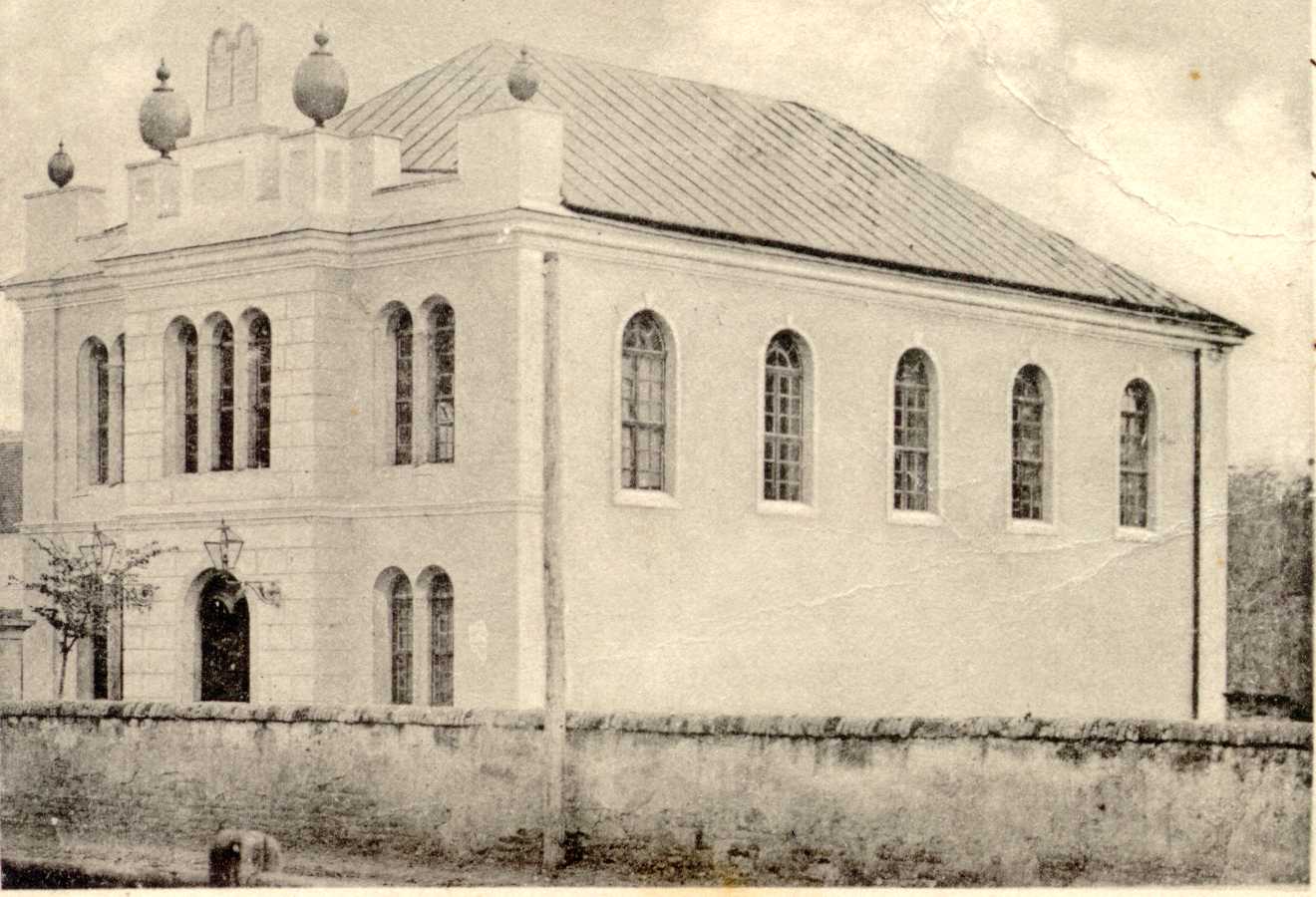
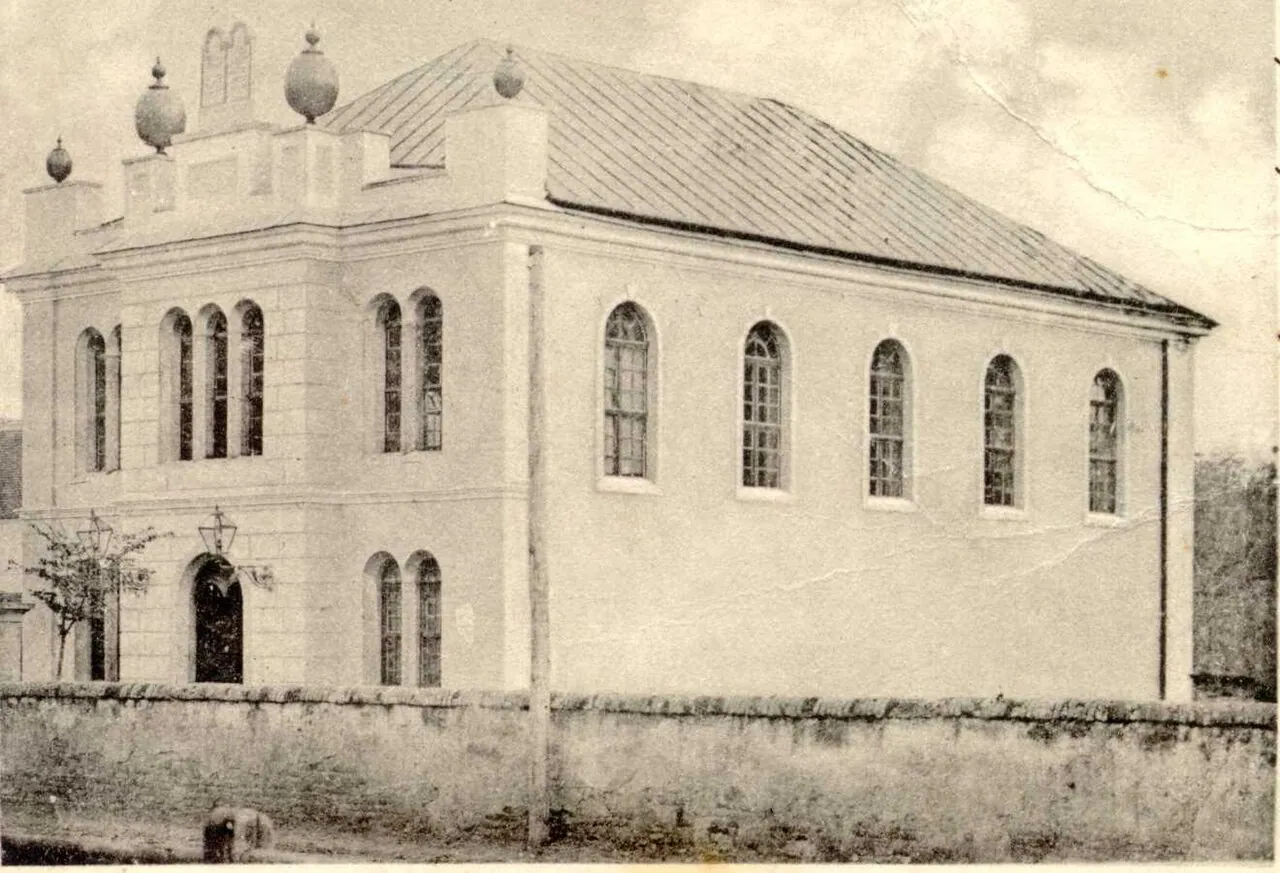
Kisbér is a small market town in north-western Hungary, best known for its Batthyány mansion and the former state stud farm. Its Jewish community was founded in 1851, when the congregation bought land for a cemetery, set up a burial society and opened a prayer room in a purchased house. In 1875 the community built a new synagogue, and the old prayer house became its school. The one view of the building found for this entry, an early twentieth-century postcard held by the Hungarian Jewish Museum and Archives, shows a plain two-storey hall with round-arched windows and a stepped parapet crowned by the Tablets of the Law. The congregation belonged to the Congress (Neolog) organisation and never numbered much more than three hundred people. Lázár Moskovits, a decorated army chaplain of the First World War, was its rabbi from 1922. In the spring of 1944 the Jews of Kisbér and the surrounding villages were shut into a ghetto in the town, moved to Komárom and deported to Auschwitz-Birkenau in June. The community was not re-established in 1945. The synagogue was pulled down at some point after the war, and a survey of the 1980s recorded it as demolished. Published sources give neither the year nor the body responsible, and the exact site of the building in the town has not been identified for this entry.
Where it stood for 70 years
Historic address not established. Kisbér, Komárom-Esztergom county, Hungary (pin on the town centre: Városháza, Széchenyi utca 2, 2870 Kisbér).
Otwórz większą mapę →Społeczność żydowska
Jews settled in Kisbér, a village with market rights, at the end of the eighteenth century, but the 1929 Hungarian Jewish Lexicon records that in the 1840s only one Jewish family, that of Izsák Stern, lived there. More arrived after 1848, and in 1851 there were enough to found a community, buy a cemetery plot and form a Chevra Kadisha. Regular registers were kept from 1853 and statutes were adopted in 1859. The community ran its own school, housed from 1875 in the old prayer house and from 1881 in a larger new building that children of other denominations also attended; it closed after the 1926–27 school year, three years after its state subsidy was withdrawn. The registry district took in Ászár, Ete and Vérteskethely. Anikó Gazda's survey gives 316 Jews in 1910 and 155 in 1941; the lexicon counted 234 people in 72 families in 1929, most of them merchants and artisans, with two doctors and a lawyer, and a county guide gives 198 for 1938. Fifty-nine members served in the First World War and seven fell. The synagogue architect Lipót Baumhorn was born in Kisbér in 1860.
Architektura i projekt
No plans, building accounts or architect's name have been found, so the description rests on a single postcard view. It shows a free-standing, two-storey rectangular block under a hipped roof, set behind a low stone wall along the street. The long side has five tall round-arched windows with small-paned glazing. The entrance front is divided by plain pilaster strips and a string course: a round-arched doorway with a lantern bracket beside it stands at ground level, with paired arched windows to the side, and above them a group of three arched windows flanked by further pairs, which probably lit the women's gallery. The front rises into a stepped attic parapet carrying the Tablets of the Law at the centre and large ball-shaped finials on the piers, the only overtly emblematic feature of an otherwise sober, rendered building. The round-arched manner is typical of small-town Hungarian synagogues of the 1870s. Capacity, dimensions and the interior arrangement are not recorded in the sources consulted.
Życie w synagodze
The congregation followed the Congress, or Neolog, rite and was attached to the twelfth Israelite district, whose presidency sat in Győr; the registers of the National Israelite Office show it sending its statutes for approval in 1881 and applying year after year for state aid for its school and community. A charitable women's society, led in 1929 by Mrs Lipót Kohn, worked beside the burial society. In that year the board consisted of the president Sándor Márkus, the vice-president Adolf Wollner, the treasurer József Fleischmann, the controller Lipót Kohn and the notary József Böhm, and the community spent about 2,600 pengő of its 6,873-pengő budget on welfare. Lázár Moskovits served as rabbi and teacher of religion from 1922, and in December 1940 the National Office thanked him for his pastoral work among Jewish forced-labour servicemen. By April 1944 the congregation had shrunk to 133 people and 37 taxpayers under the presidency of the physician Dr Arthur Böhm, with three employees; the women's society had been dissolved that March.
Zniszczenie
The synagogue was not destroyed during the Second World War. It lost its congregation in the spring of 1944, when the Jews of Kisbér and the surrounding villages were confined in a ghetto in the town and then deported, and it was left without a congregation to maintain it when the community failed to re-form in 1945. The county settlement guide published by the Komárom-Esztergom county pedagogical institute states only that the synagogue was demolished after 1945. The survey of Hungarian synagogues carried out by the architect Anikó Gazda in the 1980s marks both of the community's buildings, the prayer house of 1851 that had been turned into a school and the synagogue of 1875, as demolished. No source found for this entry gives the year of the demolition, the reason for it, or the name of the body or person that ordered or carried it out, so the actor is not recorded. What happened to the furnishings, the Torah scrolls and the Tablets of the Law from the parapet is likewise unknown.
Los społeczności
Nazi German forces occupied Hungary on 19 March 1944; that month the community's women's society was dissolved. Hungarian authorities then set up a ghetto in Kisbér, where the Jews of the town and of the surrounding district were concentrated. According to the Hungarian Jewish Museum and Archives, the people held in the Kisbér ghetto were taken to Fort Monostor at Komárom, where Jews from across the region were crowded together under the guard of gendarmes. Two trains left Komárom on 13 and 16 June 1944 carrying 5,463 Jews to Auschwitz-Birkenau, where most were murdered by the Nazis on arrival. The county settlement guide records simply that the Jews of Kisbér were deported in June 1944 and that the community was not re-established in 1945. How many of the 133 members counted in April 1944 survived, and how many returned to the town, is not stated in the sources consulted. No Jewish community exists in Kisbér today.
Miejsce dzisiaj
The location of the synagogue within Kisbér has not been established for this entry: none of the sources consulted gives a street or plot, and nothing is known of what was built on the site after the demolition. The building is recorded as demolished and no part of it is known to survive. Whether any marker stands on the site is not known. The community's cemetery, opened in 1851, was listed as the property of the burial society, together with a mortuary, in April 1944. The town's official history page today recalls the community in a few lines, noting the synagogue built in 1875 and the deportations of 1944.
Ważne postacie
Lázár Moskovits
1880–unknownRabbi of Kisbér, 1922–1944Born at Apahida in 1880 and trained in Budapest, Lázár Moskovits began his rabbinical career in 1908 and served as an army chaplain on the Russian front in the First World War, where he was wounded and decorated. From 1922 he was rabbi and teacher of religion of the Kisbér Congress community, whose services he led in the synagogue; he was still its registrar-rabbi in April 1944.
Biografia lub źródło →Sándor Márkus
UnknownPresident of the community (1929)Sándor Márkus was president of the Kisbér Jewish community in 1929, when the Hungarian Jewish Lexicon recorded its board: Adolf Wollner as vice-president, József Fleischmann as treasurer, Lipót Kohn as controller and József Böhm as notary, with Lázár Moskovits as rabbi. The community he led then counted 234 members in 72 families.
Biografia lub źródło →Arthur Böhm
1888–unknownPresident of the community (1944)Dr Arthur (Artúr) Böhm, a physician born at Tiszaszőlős in 1888 who had practised in Kisbér since 1924, was president of the congregation when the nationwide survey of Jewish communities was taken in April 1944, weeks before the ghetto was set up. The return recorded 133 members, 37 taxpayers and three employees.
Biografia lub źródło →Czy masz coś do przekazania?
Zdjęcia, dokumenty, historie rodzinne lub wspomnienia o tej synagodze i jej społeczności pomagają zachować jej historię.
- Komárom-Esztergom megye településtörténeti kalauza: Kisbér (pp. 205–206)
- Kisbér (headword, p. 481)
- Gazda Anikó: Zsinagógák és zsidó községek Magyarországon. Térképek, rajzok, adatok (Komárom megye table)
- Magyarországi Zsidó Hitközségek 1944. április: Kisbér anyahitközség (no. 295)
- Kisbéri zsinagóga épülete (postcard, F78.73)
- File:Kisbér Synagogue (01).jpg
- Komárom és Esztergom közigazgatásilag egyelőre egyesített vármegyék multja és jelene (1938): Moskovits Lázár főrabbi
- Békássy Jenő: Komárom és Esztergom vármegyék ujjáépitése Trianon után (Gesztesi járás, p. 240)
- Komárom és Esztergom ... vármegyék multja és jelene (1938): Dr. Böhm Artúr orvos, Kisbér
- “Where you are headed, you won’t need any documents” – the Tragedy of the Komárom Jews
- Az Országos Izraelita Iroda iktatónaplója 6001–8000 (1880–1883)
- Az Országos Izraelita Iroda iktatónaplója 27871–30670 (1908–1911)
- Az Országos Izraelita Iroda iktatónaplója 73856–76355 (1940–1941)
- Kisbér múltja
- Dunántúli Protestáns Lap, 28 July 1929 (no. 30), p. 136
- Nominatim / OpenStreetMap: Városháza, Széchenyi utca 2, Kisbér (way 439912241)
Share a memory or thought
No comments yet. Be the first to add one.