






The story of Komotini Synagogue (Beth El)
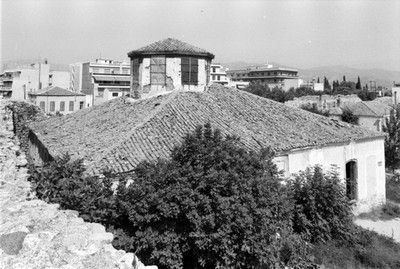
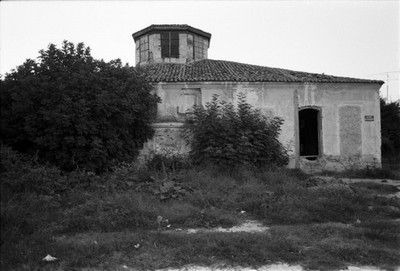
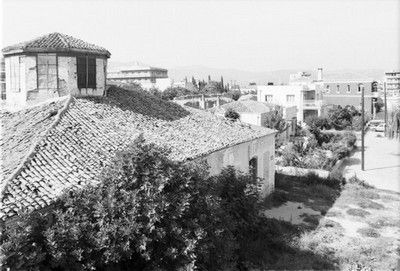
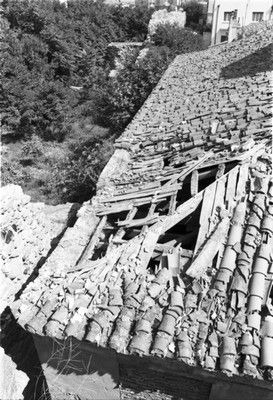
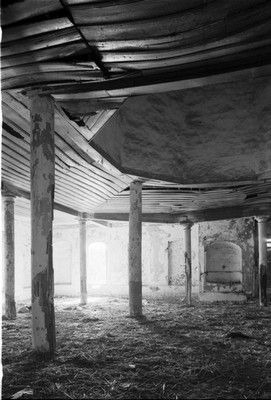
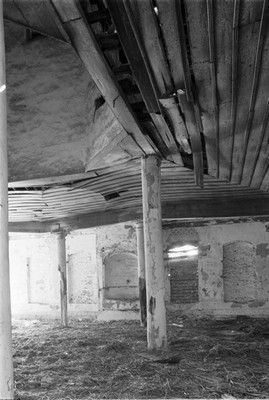
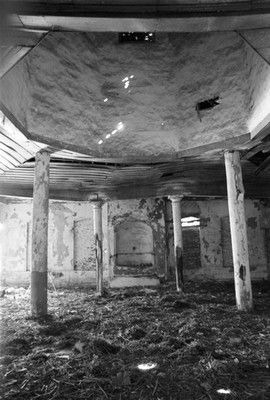
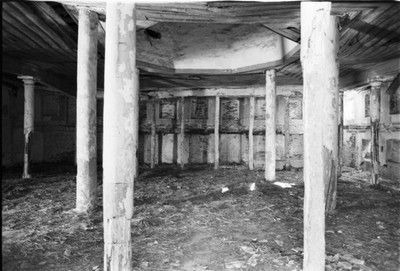
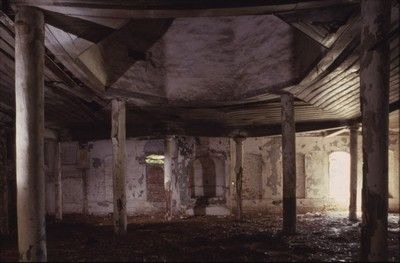
The synagogue of Komotini, known as Beth El, stood in the old Jewish quarter against the Byzantine fortress walls, at what is now Emperor Theodosius Square. The Central Board of Jewish Communities of Greece dates it to the eighteenth century; the architect Elias Messinas, who surveyed it, dated it to the early or mid-nineteenth century. It was a modest Balkan building with a hipped tiled roof, but inside a circle of columns carried a dome, crowned outside by a glazed lantern, with the bima at the centre beneath it and a women's gallery reached by a separate entrance. The Board considered it of special architectural interest, perhaps unique in the Balkans. Komotini had a Sephardi community of about 1,200 people around 1900. Bulgaria annexed western Thrace in April 1941. During the war the synagogue was used as a stable, and on the night of 3–4 March 1943 the Bulgarian authorities arrested the city's 819 Jews and deported them; most were murdered at Treblinka. The few survivors recovered the building, but it served as a store until 1980 and the community was dissolved in 1958. In the early 1990s the lantern and roof collapsed, and in 1994 the Municipality of Komotini demolished the structure, months after Messinas had recorded it. Ruins remain on the site, and in 2022 the mayor announced plans to rebuild it from Messinas's drawings.
Where it stood
Historic: Jewish quarter inside the Byzantine fortress, Gümülcine. Today: near Plateia Avtokratoros Theodosiou (Emperor Theodosius Square), off Mitropoleos Street, Komotini, Rhodope, Greece (ruins).
Open larger map →The Jewish community
Jews are recorded in Komotini, the Ottoman Gümülcine, from the early sixteenth century, when a census counted about 25 households. Most were Sephardim who came from Edirne and later Thessaloniki, and they traded in textiles, silk and wool and later worked in the tobacco industry. Families such as Carasso, Abravanel, Nahmias and Molho arrived from Thessaloniki in the 1860s. The community numbered about 200 families in 1907 and 1,159 people in 1928. It maintained philanthropic societies, a burial society and a society for visiting the sick, and from 1910 an Alliance Israélite Universelle school that taught Greek, French and Hebrew. Under Bulgarian rule from 1912 to the early 1920s and then Greek rule, it also supported Zionist and cultural clubs, including the youth club Ahdut. In 1934 Meir Dasa sat on the municipal council.
Architecture and design
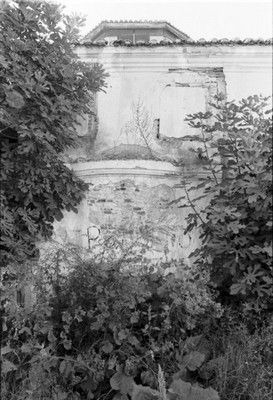
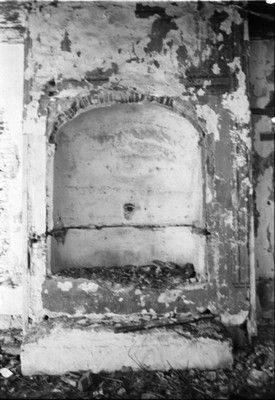
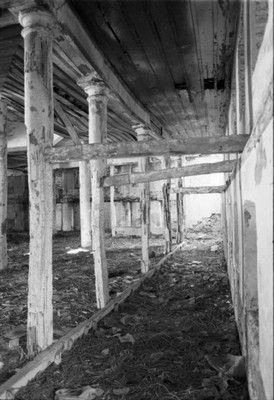
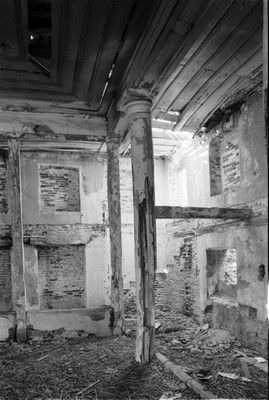
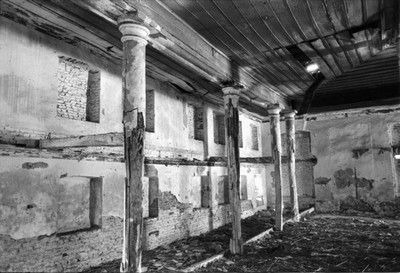
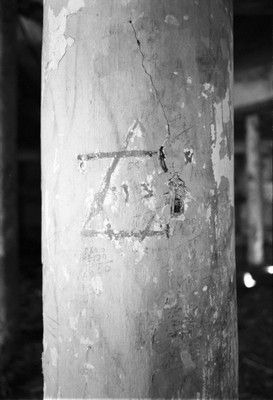
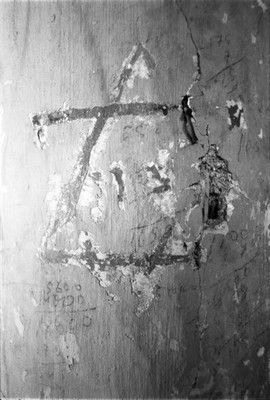
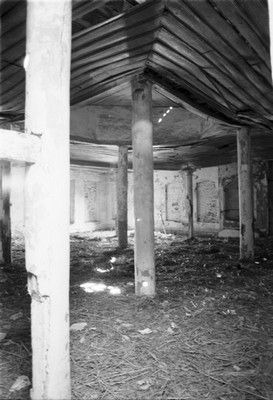
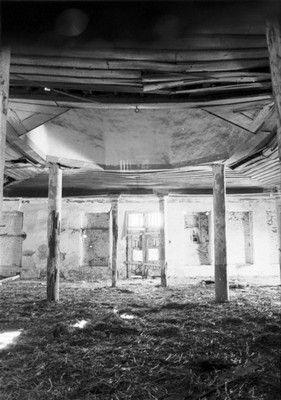
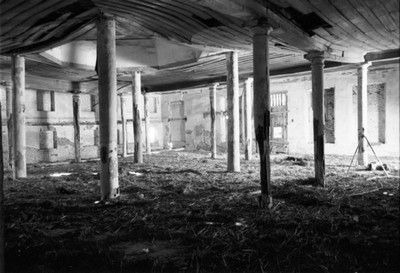
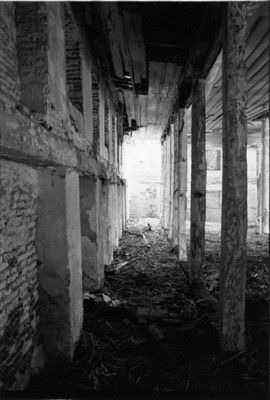
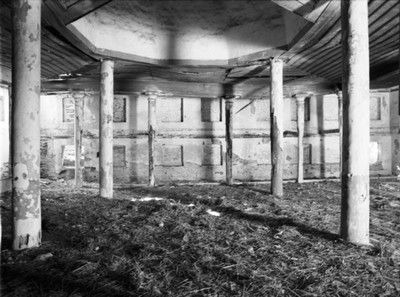
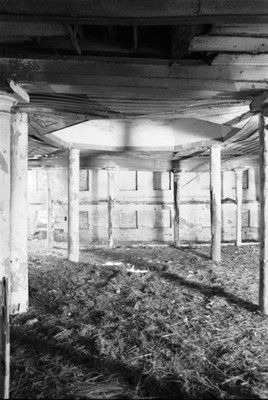
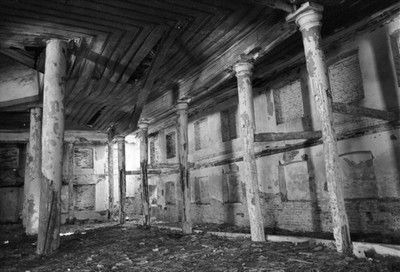
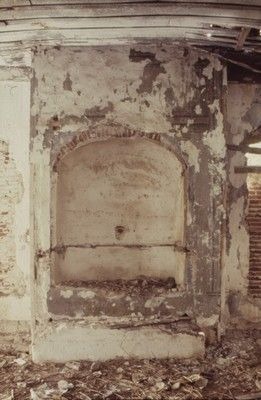
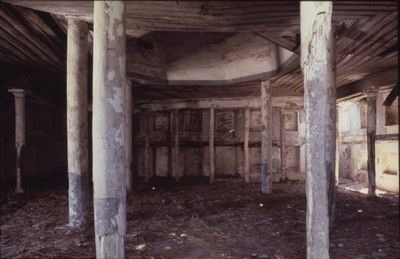
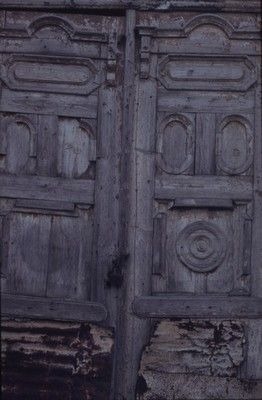
Beth El was described by the architect Elias Messinas, who surveyed it in 1993, as a fine example of Balkan construction, unique for its exposed roof lantern. Built against the city's Byzantine walls, it was a rectangular masonry hall under a low hipped roof of clay tiles. From the centre of the roof rose an octagonal, glazed lantern that lit the prayer hall below. Inside, a series of wooden columns arranged in a circle supported the roof and the central dome, beneath which stood the bima. The Torah ark was set in a niche in the east wall. A women's section, carried on timber supports, ran around the hall and was reached by its own entrance and staircase. The main door, on the north side, was a panelled wooden door. A Star of David was carved into one of the interior columns, as photographs in the Jewish Museum of Greece show.
Life inside the synagogue
Beth El was the house of prayer of a Sephardi community whose families had come from Edirne and Thessaloniki. Worship centred on the bima beneath the dome, with the women following the services from their gallery, entered separately. The community kept its own local memory: after a Turkish rebel force seized the walled town in 1786 and forced the Jews living inside to aid them, Ḥakham Jacob saved the community by bribery, and the 22nd of Elul became a day of commemoration on which no one worked; Rabbi Daniel de Avila composed a hymn for it. Around the synagogue the community ran schools, philanthropic and women's societies, a burial society, and Zionist and cultural clubs such as Ahdut and the Cercle Israélite, which staged theatrical performances.
Destruction
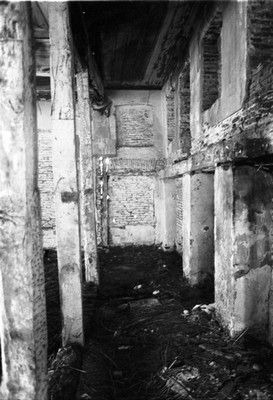
Bulgaria annexed western Thrace, including Komotini, in April 1941, and the Bulgarian occupation was harsh. During the war the synagogue was used as a stable, and the Central Board of Jewish Communities of Greece records that it suffered severe damage. After the Bulgarian authorities deported the community in March 1943, the building stood without a congregation. It was returned to the few survivors after the war but was used as a storage facility until 1980 and was then left to decay. In the early 1990s the lantern and the roof gradually collapsed. Elias Messinas surveyed and photographed the ruin in 1993 and salvaged fragments. In 1994 the Municipality of Komotini demolished the synagogue, ending what the Board called a building of special architectural interest, perhaps unique in the Balkans.
The community’s fate
In April 1941 Bulgaria annexed Thrace and imposed a harsh occupation; in early 1942 Jewish young men were seized for forced labour. On the night of 3–4 March 1943 the Bulgarian authorities arrested the 819 Jews of Komotini. They were taken in open freight cars to the transit camp at Dupnitsa in Bulgaria and then by boat along the Danube from Lom. Encyclopaedia Judaica records that Jews from Komotini and Kavala on the boat Karageorge were shot by Bulgarians and Germans, while the rest were taken via Vienna to Treblinka and murdered on arrival. The Bulgarians confiscated their property. Only 28 people survived, according to the Central Board; Encyclopaedia Judaica says 18 returned. Most left for Athens, the United States or Israel, and the community was formally dissolved in 1958.
The site today
After the demolition of 1994, only the low stone foundations of the synagogue remain in the old fortress quarter near Emperor Theodosius Square, beside the Byzantine walls; they were photographed in 2018 as a listed monument. In October 2022 Elias Messinas led a tour of the ruins when presenting his book on Greek synagogues in Komotini. In 2022 the mayor, Yiannis Garanis, announced plans to rebuild Beth El from Messinas's survey drawings, pending approval from the Archaeological Service. A Holocaust memorial was erected in 2004 in the municipal park of Agia Paraskevi.
Do you have something to contribute?
Photographs, documents, family stories or memories of this synagogue and its community help keep its history alive.
- The Jewish Community of Comotini
- Ισραηλιτική Κοινότητα Κομοτηνής
- Cuomotini
- Preserving Jewish Heritage in Greece
- The Synagogue of Komotini (photographic series)
- A Jewish renaissance in Greece: Abandoned synagogues get new life
- Η Συναγωγή και άλλες ιστορίες (book presentation text)
- Ηλίας Μεσσίνας – Το Συναγώι
- Κομοτηνή, Ερείπια εβραϊκής συναγωγής (photograph, 2018)
- Abandoned synagogues in Greece set to be restored for modern use
- Encyclopaedia Judaica: Cuomotini
Share a memory or thought
No comments yet. Be the first to add one.