
Die Geschichte von Körmend Synagogue
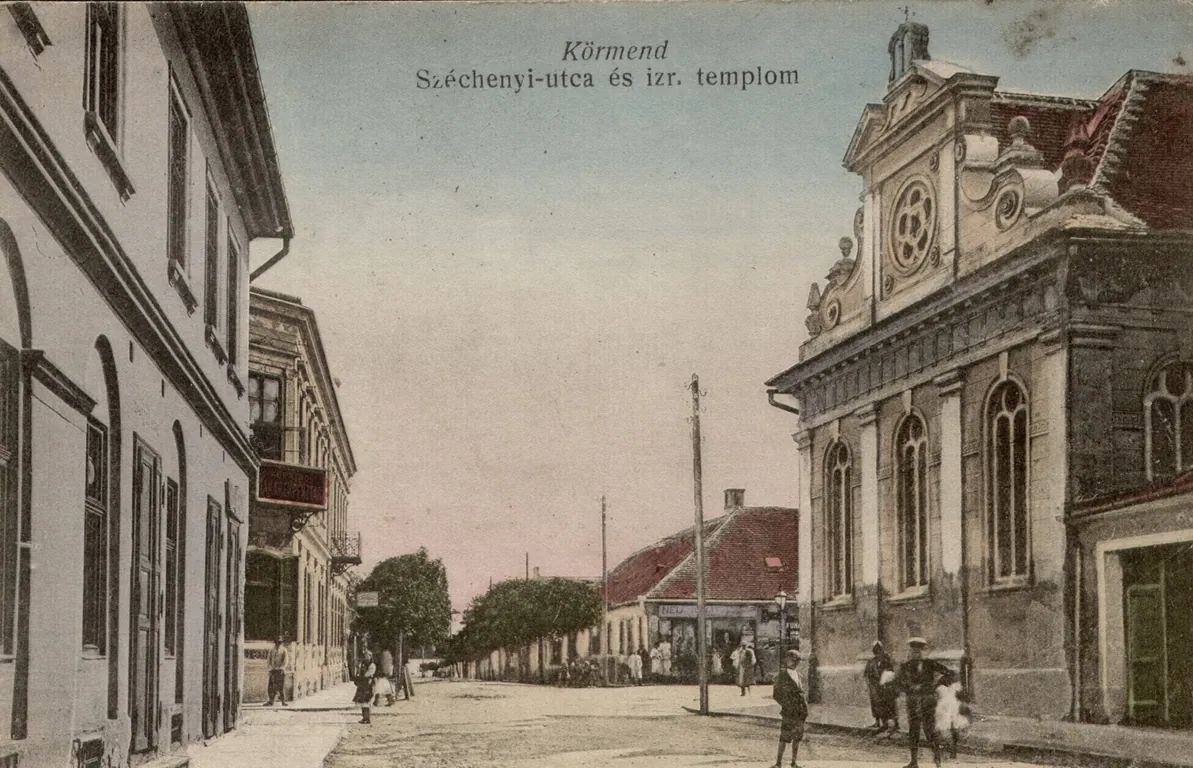
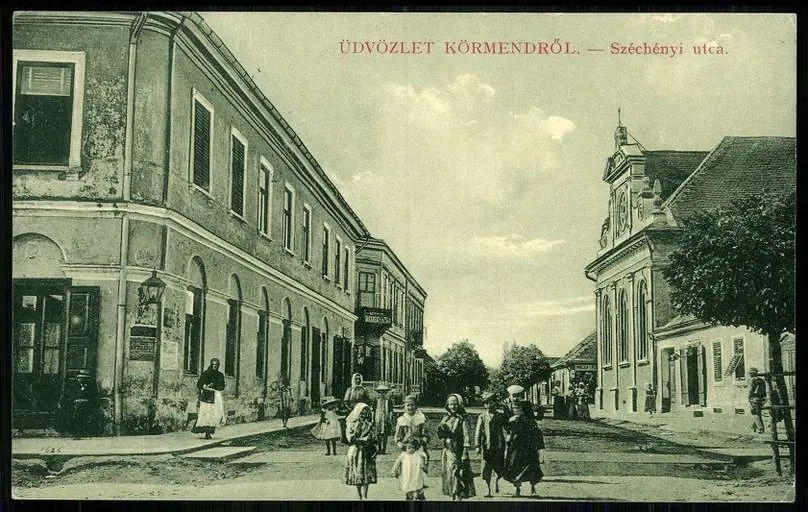
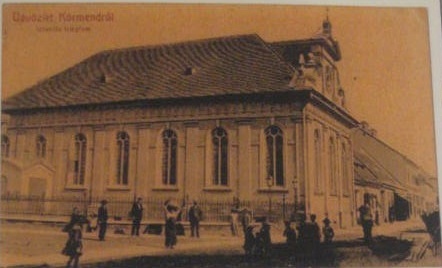
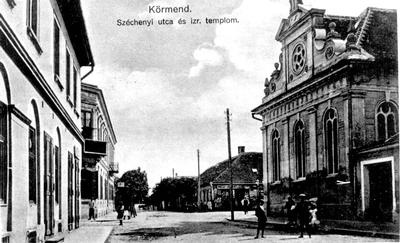
The synagogue of Körmend, a market town on the Rába in Vas county, was the main house of prayer of a Neolog congregation whose origins lay with the Jews settled on the Batthyány estates in the eighteenth century. It stood in the town centre at the corner of Széchenyi utca and Dienes Lajos utca, beside the rabbi's house, and appears on several early twentieth-century postcards as the 'izraelita templom'. Its date is not settled: the plaque put up on the site in 1990 says it was built in 1865 in Classicist style, while the JewishGen KehilaLinks history of the town gives 1888 for its building or rebuilding. It succeeded an older synagogue in Kossuth Lajos utca, which survives as a dwelling. No architect is named in the sources consulted.
In May 1944 the streets around the synagogue became the town's ghetto. The Jews were ordered to clear the building of its furniture and ritual objects so that ammunition and army supplies could be stored there. The ghetto was emptied on 19 June 1944. The synagogue burned at the end of March 1945, in the last days of the war in western Hungary; the sources do not say who set the fire. The shell was never restored, and the few survivors prayed in a flat until 1949.
Where it stood for 80 years
Historic: corner of Széchenyi utca and Dienes Lajos utca, Körmend, beside the rabbi's house. Today: north-west corner of Széchenyi István utca and Dienes Lajos utca, 9900 Körmend (about Széchenyi István utca 4 / Dienes Lajos utca 2).
Größere Karte öffnen →Die jüdische Gemeinde
Jews lived in Körmend under the protection of the Batthyány princes, at first under the authority of the Rohonc (Rechnitz) community; a few dozen were counted in the 1730s and 297 in 1799. A first prayer house is dated to 1782. When it became unsafe, Rabbi Götz Bodánszky obtained the consent of the Hatam Sofer of Pozsony to pull it down, and in the early 1820s Prince Fülöp Batthyány gave land and bricks for a successor; the community paid a token ground rent until it bought the property outright in 1891. A Jewish school was founded in the 1850s and had 143 pupils in 1894. The community numbered 740 in 1869, about the time it declared itself Neolog under Rabbi Miksa Ehrlich. The synagogue on Széchenyi utca belongs to these decades of growth and confidence, in 1865 or 1888 depending on the source. Numbers then fell as families moved to larger towns: 627 in 1910, 389 in 1930 and about 300 in 1941.
Architektur und Gestaltung
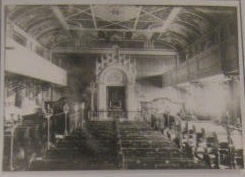
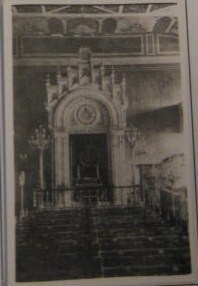
The building is known from postcards and two interior photographs. It was a rectangular, rendered masonry hall under a tall tiled roof, standing on a corner plot behind an iron railing. The long south side towards Dienes Lajos utca had a row of tall round-headed windows set between pilasters beneath a continuous entablature. The narrow front to Széchenyi utca repeated this order with three tall arched windows and carried the building's most striking feature: a curved gable with scrolled sides and urn finials, pierced by a large round window with star-patterned tracery and crowned by a small pediment and turret. The 1990 plaque calls the style Classicist; a local-history album caption calls it one of the finest Baroque-style buildings in the town. Inside, galleries ran along the side walls under a ceiling divided into painted panels. Pews flanked a central aisle leading to a railed platform and a Torah ark framed by columns and a round arch, with a circular motif in the tympanum and a pinnacled cresting; tall candelabra stood on either side. Architect and seating capacity are not recorded in the sources consulted.
Leben in der Synagoge
The congregation followed the Neolog (Congress) rite, having declared itself Neolog in 1868–69. Rabbi Miksa Ehrlich, who had studied in Prague, served from 1866 to 1916. His successor, Dr Ignác Krausz, a graduate of the Budapest Rabbinical Seminary, was chief rabbi from 1916 until the deportation of 1944; he was known as a teacher of the community's young people and as a committed Zionist, at times against the wishes of its leaders. The rabbi's house stood next to the synagogue, with the Jewish school and the ritual bath a few streets away. The community maintained a Hevra Kadisha, a women's association and a young women's association, Bikur Holim and Maskil el Dal societies for the sick and the poor, a home for the aged, a savings association and a library. A Zionist branch founded in 1935 was active until such work was banned in 1941. A photograph dated 1939 shows the interior still fully furnished, five years before it was stripped.
Zerstörung
After the Nazi German occupation of Hungary in March 1944 an SS unit was quartered in Körmend. In early May (5 or 9 May; sources differ) the Hungarian authorities confined the town's Jews in a ghetto in the streets around the synagogue, fenced with planks at the Jews' own expense. The Jews were ordered to remove the synagogue's furniture and ritual objects so that ammunition and other army supplies could be stored in it, apparently in the belief that Allied aircraft would not bomb a house of worship. It was used as a military store for the rest of the war. On 27 March 1945 (28 March according to the plaque on the site) the synagogue caught fire and burned out. The KehilaLinks history says it was set alight; none of the sources consulted names those responsible. The building was not repaired. Returning survivors found some of its furniture in the cellar of the burned synagogue. The ruin was cleared at a date not recorded in the sources consulted.
Das Schicksal der Gemeinde
More than 300 Jews from Körmend and nearby villages were held in the ghetto; the 1990 plaque gives 384. Fifteen men were taken for forced labour at Kőszeg in early June. On 19 June 1944 the rest were marched to the railway station and taken to the collection camp at Szombathely, and on 4 July they were deported with the Jews of the district to Auschwitz, in a transport of over 3,000 people in 47 cattle wagons. The round-up and deportation were carried out by Hungarian officials and gendarmes under Nazi German occupation. Rabbi Krausz was among those murdered. Thirteen women and one man came back from Auschwitz and 23 men from forced labour; 56 Jews were counted in 1946. They prayed in a flat fitted out with furniture salvaged from the synagogue, helped Jewish refugees on their way to Palestine, and held services until Sukkot 1949. A memorial stone was set up in the cemetery in 1950. By about 1960 the community had dispersed.
Der Ort heute
Nothing of the synagogue remains. Széchenyi István utca and Dienes Lajos utca still meet in the centre of Körmend, a short walk south of Szabadság tér, and the north-west corner where the synagogue stood has been built over: the KehilaLinks history says a residential building went up on the plot after the war, and OpenStreetMap today shows apartment buildings at Széchenyi István utca 2–4 and Dienes Lajos utca 2. A marble plaque placed by the town council in 1990 marks the site. The older synagogue building in Kossuth Lajos utca, north of the centre, still stands as a house and had its exterior renovated in 1989. The former Jewish school now houses a music school.
Bedeutende Namen
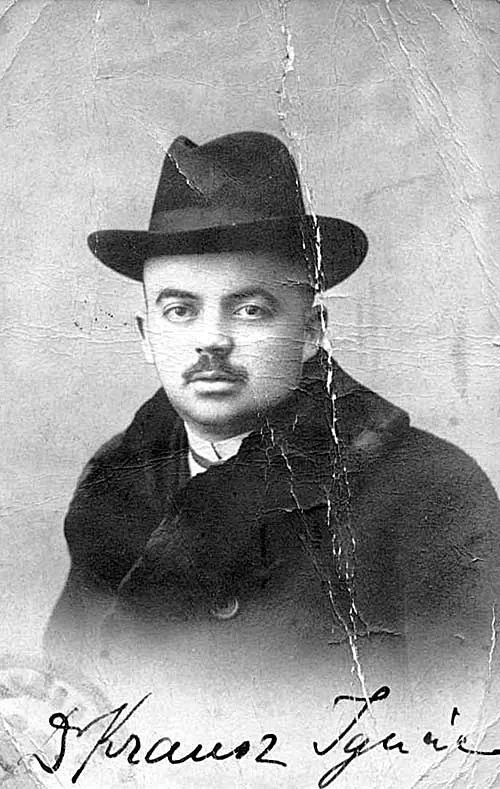
Dr Ignác Krausz
1888–1944Chief rabbi of Körmend, 1916–1944Born in Szirák and trained at the Budapest Rabbinical Seminary, with a year in Vienna, Krausz took his doctorate in 1911, was ordained in 1913 and served as assistant rabbi in Kecskemét before becoming chief rabbi of Körmend in 1916. He led services in the synagogue for 28 years, taught the community's young people and was an outspoken Zionist. His house stood next to the synagogue, inside what became the ghetto. He perished in the Holocaust in 1944 and was the community's last rabbi.
Biografie oder Quelle →Miksa Ehrlich
UnknownRabbi of Körmend, 1866–1916Ehrlich, brother of Mór Ehrlich of Rohonc, began as a teacher and studied in Prague, where he attended Rabbi Rappaport's Talmud lectures and university courses. He became rabbi of Körmend in 1866 and held the post for half a century. Under him the congregation declared itself Neolog after the 1868–69 Congress, and the synagogue on Széchenyi utca was either newly in use or, on the later dating, built or rebuilt in 1888 during his tenure.
Biografie oder Quelle →Haben Sie etwas beizutragen?
Fotos, Dokumente, Familiengeschichten oder Erinnerungen an diese Synagoge und ihre Gemeinde halten ihre Geschichte lebendig.
- History of Körmend (KehilaLinks)
- The Holocaust in Körmend (KehilaLinks)
- Site plaque, Körmend (photograph): 'Ezen a helyen állt a körmendi zsidó hitközség zsinagógája amely 1865-ben klasszicista stílusban épült. Leégett 1945. márc. 28-án.'
- Map of Jewish owned homes in Körmend 1944 ('Zsidóházak Körmenden 1944-ig')
- Körmend, in Pinkas Hakehillot Hungary: Encyclopedia of Jewish Communities in Hungary (Yad Vashem, 1975), English translation
- Körmend, in Vas megye yizkor book (pp. 47–50), English translation by Susan Geroe
- Volt egyszer egy zsidó közösség Körmenden (book notice)
- Edit Balázs, Pannon értékek nyomában – A körmendi zsidó közösség (2021), publisher's page
- Holokauszt Körmenden, Körmendi Híradó, 27 June 2014
- Körmendi zsinagóga és Széchenyi utca (coloured postcard, 1918), F08.03
- Körmend; Széchenyi utca (postcard, W. L. Budapest no. 2801, 1915), inv. 0221786
- Dr. Krausz Ignác fényképe, F66.517
- Krausz Ignác, in Magyar Zsidó Lexikon (1929)
- Körmend census and population information (KehilaLinks)
- OpenStreetMap: Széchenyi István utca 4, Körmend (building way 313693181) and Dienes Lajos utca
Share a memory or thought
No comments yet. Be the first to add one.