
La historia de Great Synagogue of Kutno
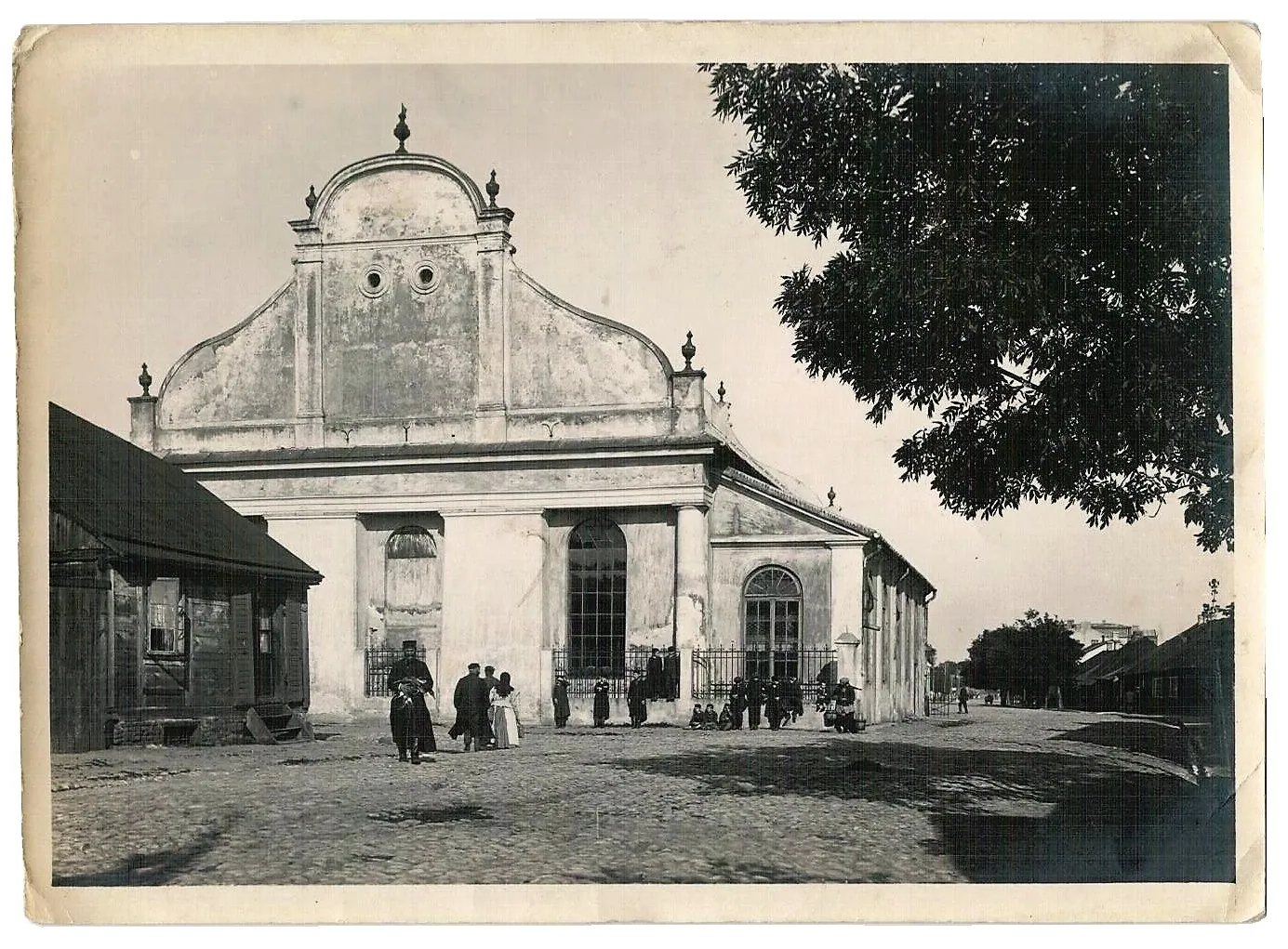
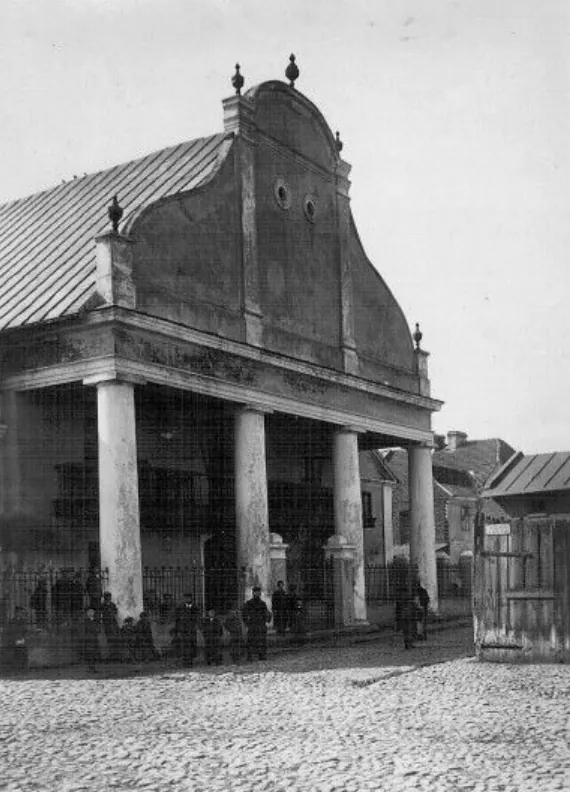
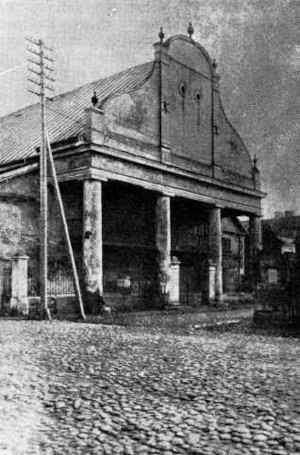
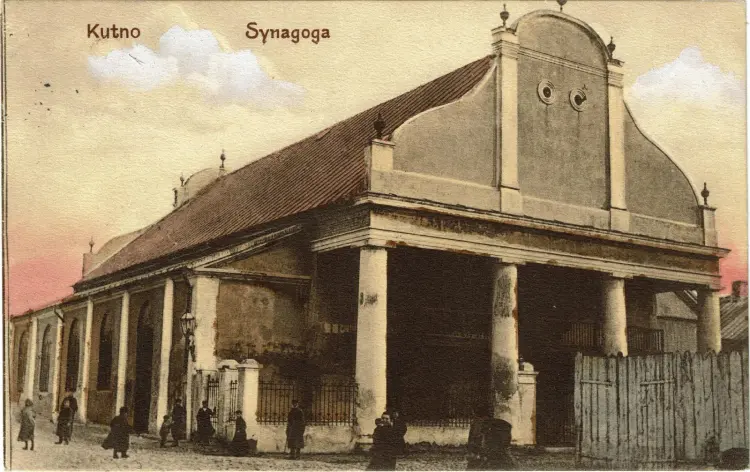
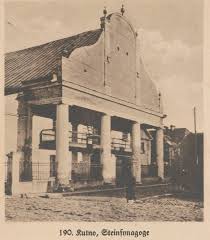
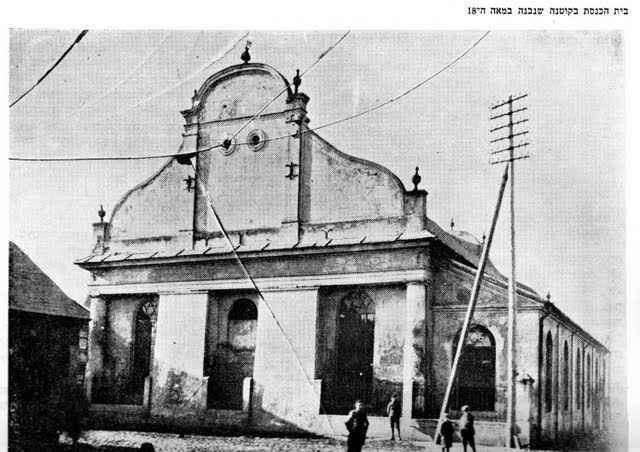
The Great Synagogue of Kutno was built between 1766 and 1799. The community's financial difficulties stretched construction over more than 30 years. It replaced an earlier wooden synagogue and became the religious centre of one of the largest and most learned Jewish communities in central Poland, a community that made up about 70 per cent of the town's population around 1800.
The brick building had a rectangular plan in the Late Baroque style, a nine-bay vaulted main hall and a monumental central bimah, with wooden annexes for women. It survived largely intact into the 20th century and was associated with celebrated rabbis, above all Israel Joshua Trunk, rabbi of Kutno from 1861.
German forces occupied Kutno on 15 September 1939 and soon set the synagogue on fire. Accounts differ on how much the fire destroyed. What remained was stripped of floors, doors, windows and benches, leaving a burned-out shell. Virtual Shtetl's community history dates the final destruction to 1940, while its object record and a local heritage society state that the Germans demolished it in 1942. Kutno's Jews were confined to a ghetto in 1940 and deported to the Chełmno death camp in March 1942. The site has since been built over.
Where it stood for nearly 150 years
Historic: Senatorska Street (German occupation name Brombergerstrasse), Kutno. Present-day: ul. Barlickiego 51, corner of ul. Joselewicza, Kutno (site now built over). Location approximate: the pin marks the building now at Barlickiego 51.
Abrir mapa ampliado →La comunidad judía
Jews lived in Kutno from the town's early history, and a 1513 document confirms their presence. About 63 Jews lived there in 1579. A fire in 1753 destroyed the town and the community's records, and the chevra kadisha's surviving records begin in 1755. By 1765 the community numbered 928 people.
The rebuilding after the 1753 fire and the community's growth led it to replace its wooden synagogue with a monumental brick building, begun in 1766. Construction dragged on for more than 30 years because of the community's financial difficulties. By 1800 the 1,376 Jews of Kutno made up about 70 per cent of the town's population, and by 1908 the community had grown to nearly 9,000. Kutno became known as a centre of Torah scholarship and later of the Haskalah (Jewish Enlightenment).
Arquitectura y diseño
The synagogue was a brick building on a rectangular plan with a gabled roof, designed in the Late Baroque style. Its main prayer hall was covered by a nine-bay vault, a type characteristic of major 18th-century masonry synagogues in the Polish-Lithuanian Commonwealth. The vault was carried around a monumental bimah placed at the centre of the hall. Wooden annexes on the north and south sides housed the women's section.
The architect is not recorded in the sources consulted, and the building's capacity, dimensions and the design of its Torah ark were not verified. According to the Kutno Friends' Society (TPZK), the synagogue survived in nearly untouched condition until the German occupation. That made it an unusually complete example of an 18th-century Polish masonry synagogue until 1939.
La vida dentro de la sinagoga
The Great Synagogue was the centre of Kutno's religious life for about 140 years. Rabbis recorded by Virtual Shtetl include Reb Towia (1789–1819), Reb Lajzer Jakub Brysz of Leszno, who served after 1819, and, most famously, Israel Joshua Trunk. Trunk served as rabbi of Kutno for more than 30 years from 1861, headed a major yeshiva and was renowned for his responsa. Moszek Pinkus Trunk served in the early 20th century.
Under these rabbis Kutno became known as a centre of Torah learning, while the town also produced figures of the Haskalah. The community maintained a chevra kadisha documented from 1755 and a range of educational and charitable institutions. In September 1939, during the German bombardment, the synagogue sheltered refugees.
Destrucción
Nazi German forces occupied Kutno on 15 September 1939 and began persecuting its Jewish population at once. Soon after the occupation, the Great Synagogue was doused with petrol and set on fire. Testimonies in Pinkas HaKehillot conflict over how much burned, and one account states that the interior did not burn. Germans and local Poles then stripped the building of its floor, doors, windows and benches, leaving only a burned-out shell. The Nazi German occupation authorities were responsible for the arson and destruction; the individual units or officials are not named in the sources consulted.
The date of final demolition is disputed. Virtual Shtetl's community history states that the building was fully destroyed in 1940, whereas Virtual Shtetl's object record and the Kutno Friends' Society (TPZK) state that the Germans demolished it in 1942, during the liquidation of the Jewish population.
El destino de la comunidad
About 6,700 Jews lived in Kutno when the Germans arrived in September 1939. In 1940 they were forced into a ghetto on the site of the ruined Konstancja sugar factory. Virtual Shtetl dates its creation to 14 April 1940, while the Encyclopaedia Judaica gives June 1940. About 7,000–8,000 people from Kutno and the surrounding county were crowded into it, where disease and hunger were rife despite the Judenrat's relief efforts.
The ghetto was liquidated from 23 March 1942, when its inhabitants were deported to the Chełmno (Kulmhof) death camp and murdered. Virtual Shtetl estimates that about 11,500 Kutno residents were murdered, including about 1,600 shot at the local Jewish cemetery. After the war about 50 Jewish survivors returned. Most left, especially after 1968, and the last Jewish resident, Aaron Ejzyk, died in 1979.
El lugar hoy
No fabric of the Great Synagogue is known to survive. After the burned-out shell was torn down during the German occupation, the site at the corner of today's Barlickiego and Joselewicza streets (historically Senatorska Street) was later built over, and the building's footprint has not been marked out or investigated archaeologically according to the sources consulted. A memorial stone placed at the corner in 1993 notes that an eighteenth-century synagogue stood here. The precise relationship between present-day buildings and the synagogue's original footprint remains unverified.
Nombres destacados
Israel Joshua Trunk
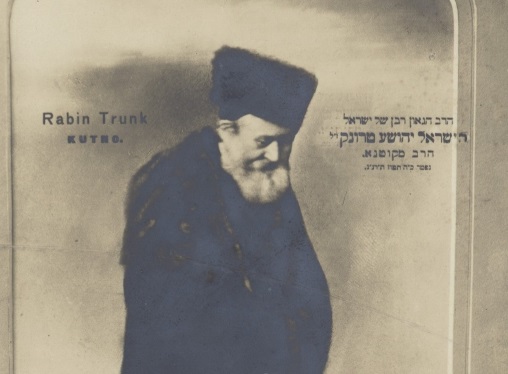
1820/1821–1892/1893 (sources differ)Rabbi of Kutno (from 1861)Israel Joshua Trunk, known in Polish sources as Szyja Trunk, was rabbi of Kutno for more than 30 years from 1861 and the most celebrated rabbi associated with its Great Synagogue. He headed a major yeshiva in the town and was renowned for his rabbinic responsa and his mastery of biblical and Talmudic texts, which made Kutno a recognised centre of Torah scholarship.
Biografía o fuente →¿Tiene algo que aportar?
Fotografías, documentos, historias familiares o recuerdos de esta sinagoga y su comunidad ayudan a mantener viva su historia.
Share a memory or thought
No comments yet. Be the first to add one.