The story of Leopoldstädter Tempel
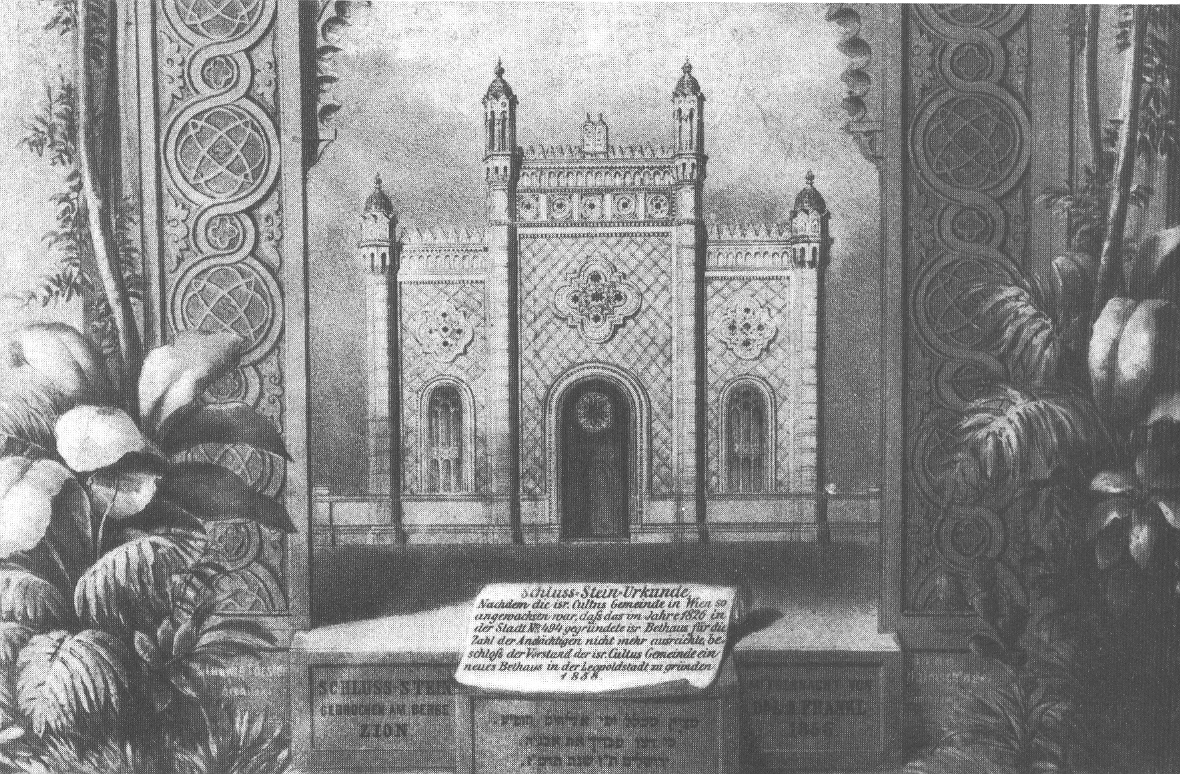
The Leopoldstädter Tempel—also known as the Tempelgasse Synagogue or Israelitisches Bethaus—was the monumental synagogue of Vienna’s second district. The Israelitische Kultusgemeinde acquired the site in 1851 because the older Stadttempel in Seitenstettengasse could no longer serve a Jewish population growing rapidly through migration, emancipation and urbanisation. Construction began in 1854 under architect Ludwig Förster. The building was consecrated on 15 June 1858, with an inaugural sermon by Adolf Jellinek. A stone from Jerusalem was incorporated into the building as a deliberate link between Vienna and the ancient Jewish homeland.
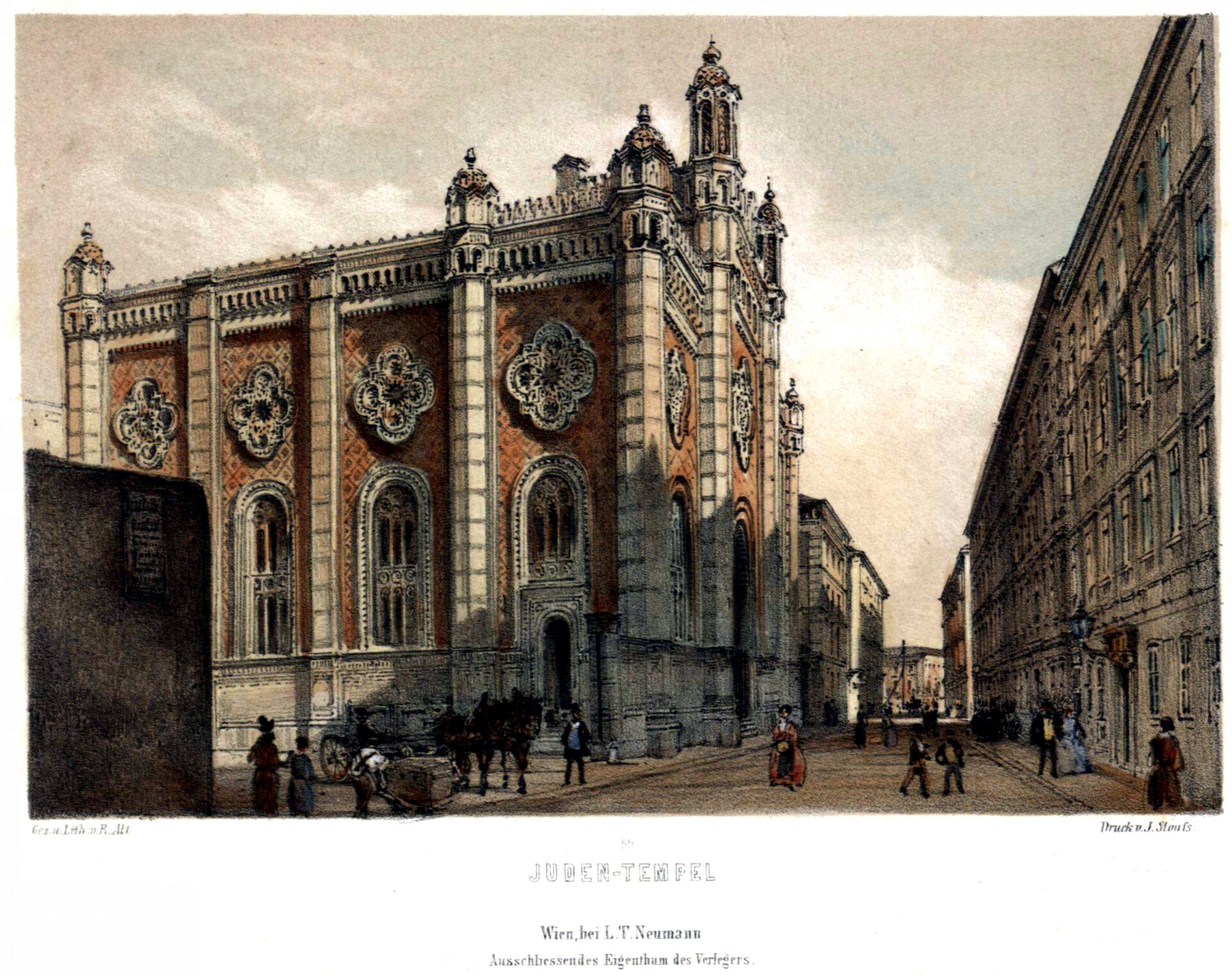
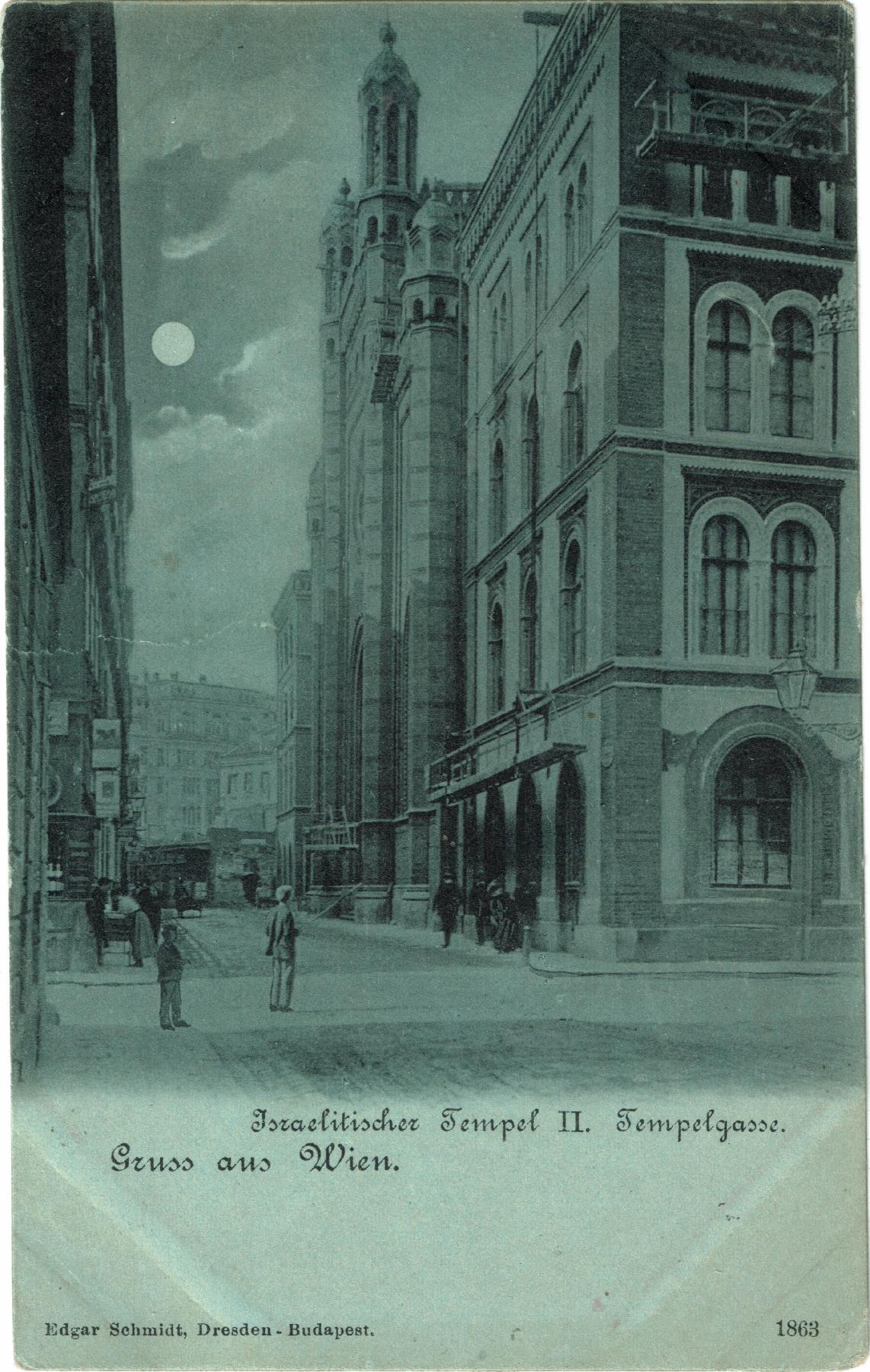
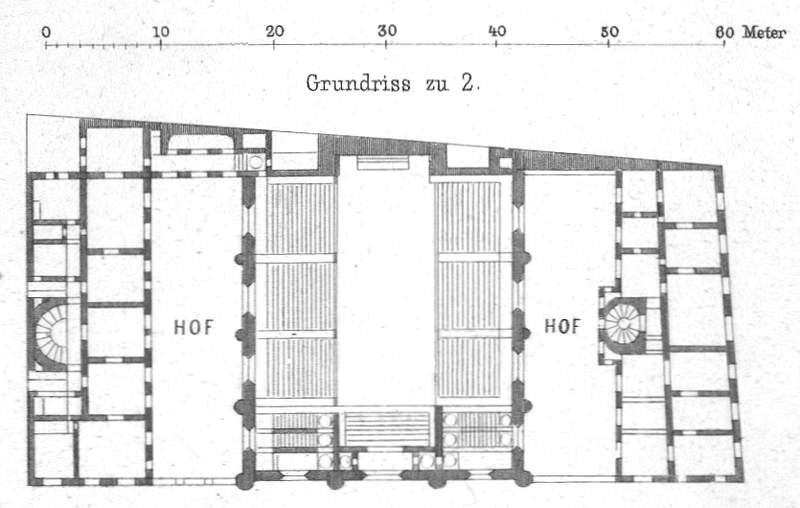
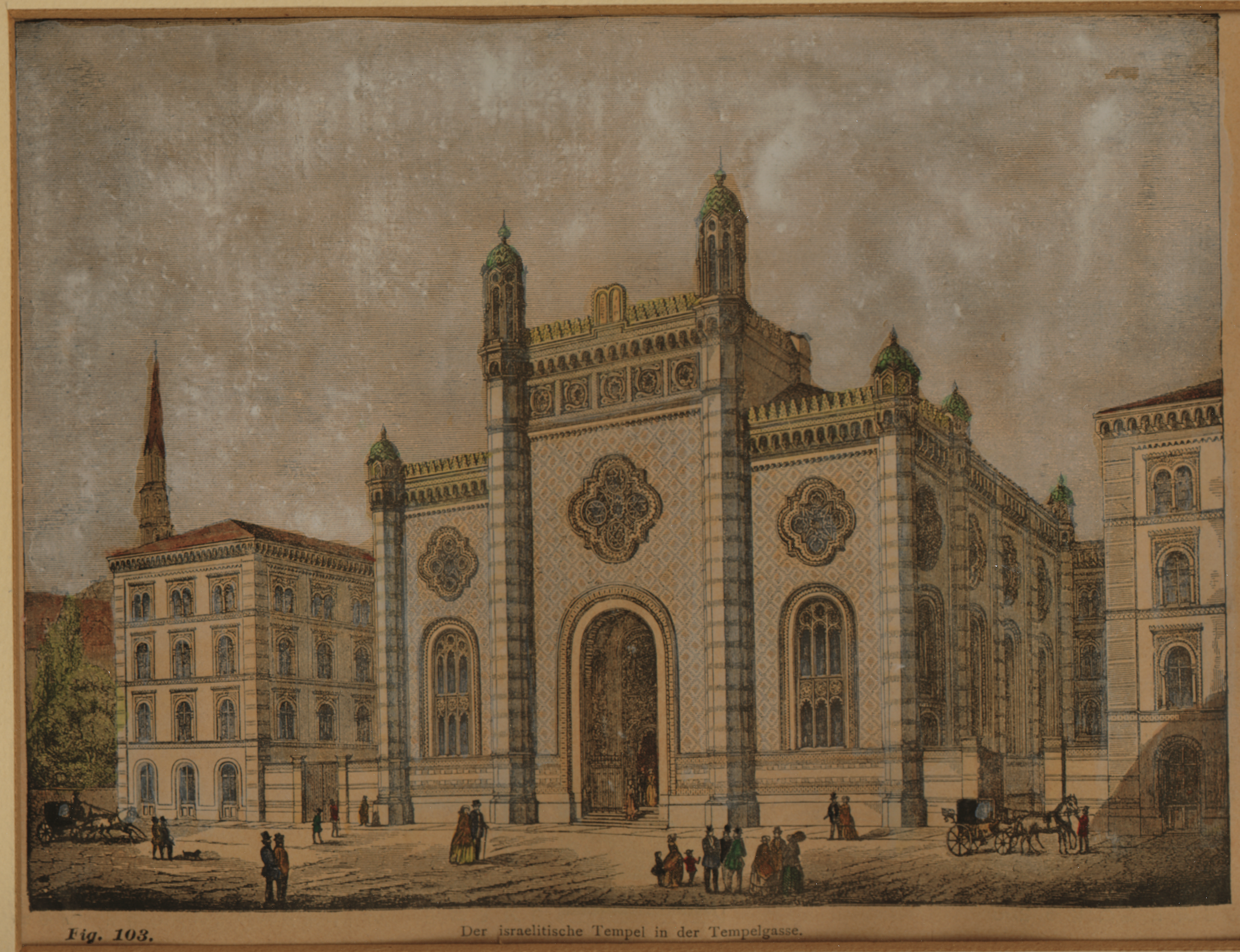
The synagogue stood behind street buildings in a long, constrained parcel at Tempelgasse 3–5. Förster turned those limitations into a ceremonial sequence: worshippers passed from the street through a forecourt toward a richly composed tripartite façade. The central hall was flanked by two-storey side wings containing communal and administrative functions. Contemporary plans document an exceptional capacity of approximately 2,240 seated worshippers with room for a further 1,500 standing, making it the largest synagogue built in Vienna.
The Tempel was both a functioning house of prayer and a public statement. Its scale and architectural confidence expressed the growing visibility of Jewish life in the imperial capital, while its Moorish-Oriental language sought a specifically Jewish monumental architecture distinct from the Christian churches around it. Its façade, basilican interior and galleries influenced later synagogues in Zagreb, Prague, Kraków and Bucharest.
Arguments over an organ, the position of the bimah, women’s-gallery screens and other ritual questions exposed tensions between reform-minded and traditional members. A major fire in 1917, after a service for Jewish soldiers, left the sanctuary unusable for several years; it reopened in 1921 after restoration. Seventeen years later, during the November Pogrom, Nazis looted and burned it. The main hall was lost, though parts of the side buildings survived.
The Jewish community
Leopoldstadt had been a centre of Jewish life long before the Tempel was built. A seventeenth-century Jewish settlement in the district was violently dissolved in 1670, when Emperor Leopold I expelled Vienna’s Jews and a church was built on the site of their synagogue. Jewish residence gradually returned, and Leopoldstadt again became the neighbourhood most closely associated with Jewish Vienna.
By the mid-nineteenth century, legal restrictions were easing and migrants from across the Habsburg lands were transforming the capital. Vienna’s Jewish population grew from approximately 6,200 around 1860 to more than 40,000 in 1870 and roughly 185,000 on the eve of the Nazi takeover. The cramped Stadttempel could not meet demand; private prayer rooms opened for the High Holy Days, but a major new synagogue was required.
The Tempel served a broad urban congregation and belonged to the Israelitische Kultusgemeinde. The northern street building contained an assembly hall, apartments and a mikvah, and from 1893 housed the Israelitisch-Theologische Lehranstalt. The complex was therefore an institutional centre throughout the week, not merely a Sabbath sanctuary.
Its congregation was religiously diverse. German sermons, choral music and ordered ritual reflected nineteenth-century Viennese public culture, yet members resisted changes they believed departed from Jewish law. An expert commission recommended an organ in 1858, but it was never installed. The compromise shows a community negotiating modern civic belonging while preserving inherited practice.
Architecture and design
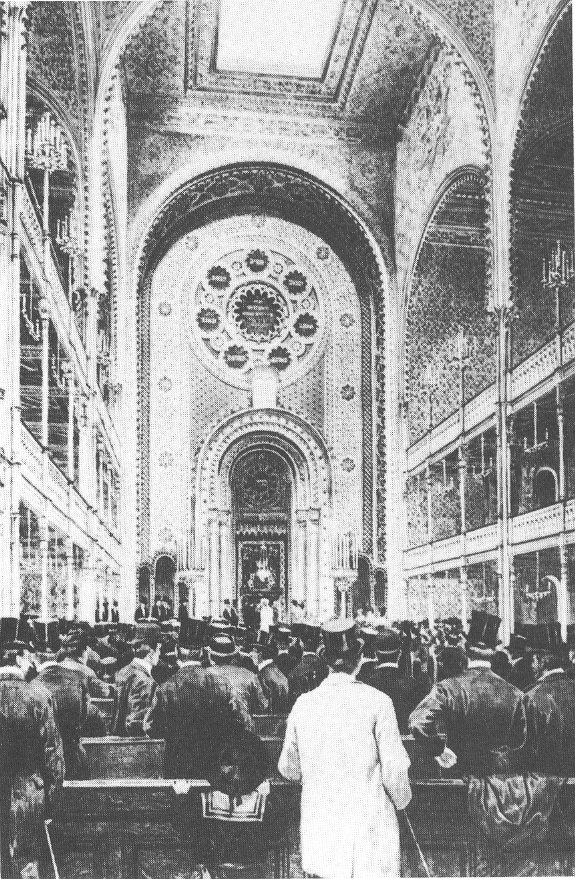
Ludwig Förster designed the Tempel as a three-aisled basilica with a high central nave, lower side aisles and two levels of women’s galleries. The main hall was set back from Tempelgasse because the sanctuary had to face east and because the urban plot was narrow and deep. Two flanking buildings framed a forecourt, creating a transition from street life to the sacred interior.
The façade was organised symmetrically in three parts. A broad central arch announced the principal entrance and great hall, while paired towers and ornament created a monumental profile. Förster drew on Islamic architecture of Spain and North Africa—horseshoe arches, geometric ornament, polychrome effects and slender columns—to fashion what contemporaries called an “Oriental” or “Moorish” style. It was a nineteenth-century search for a Jewish architectural language that evoked the biblical Temple without imitating a Christian church.
Columns at the façade recalled Jachin and Boaz, the pillars before Solomon’s Temple. Inside, the axis led toward the Torah ark; galleries wrapped the hall while iron structural elements reduced obstructive masonry supports and preserved long sightlines. The plan balanced an enormous congregation with visibility, audibility and ritual focus.
A general renovation in 1898 intensified the coloured stucco decoration, and further changes were made to the street and courtyard fronts in 1905. After the 1917 fire, restoration continued until 1921. Förster’s tripartite façade, basilican volume and Moorish vocabulary subsequently influenced major synagogues across Central and Eastern Europe.
Life inside the synagogue
On Sabbaths and festivals, thousands of worshippers gathered beneath the high nave and in the galleries. Services combined traditional Hebrew prayer with imperial Vienna’s cultivated public style: an officiating cantor, choral music and German-language sermons by some of the city’s best-known Jewish preachers. Josef Goldstein was the first chief cantor, while Adolf Jellinek’s oratory established the Tempel’s reputation from its opening.
Architecture, music and ritual were bound up with questions of identity. The proposed organ was never installed, and proposed lattice screens for the women’s galleries were likewise not adopted. These debates show worshippers actively deciding how Jewish practice should respond to modernity.
The Tempel hosted communal ceremonies, funerals, memorials and services marking civic and imperial events. After a service for Jewish soldiers on 17 August 1917, a fire severely damaged the sanctuary. It reopened in 1921. A commemorative parochet—now held by the Jewish Museum Vienna—was presented in honour of the Torah and Rabbi Max Grunwald.
The wider complex also accommodated meetings, teaching, ritual bathing, administration and housing. The theological institute in the north wing trained students from 1893 until 1938, making the Tempel a lived communal campus rather than only a ceremonial hall.
Destruction
After Nazi Germany annexed Austria in March 1938, Vienna’s Jews faced immediate public humiliation, violence, confiscation, exclusion from work and forced “Aryanisation” of property. Jewish institutions were placed under coercive control while arrests and pressure to emigrate intensified.
During the coordinated November Pogrom of 9–10 November 1938, the Leopoldstädter Tempel was looted and set on fire. With the exception of the Stadttempel—whose dense setting made a fire dangerous to neighbouring buildings—Vienna’s synagogues and prayer houses were devastated or destroyed. The roof and interior of the Tempel were consumed; photographs show the great hall gutted and the façade reduced to a blackened shell.
The attack targeted more than architecture. Torah scrolls, furnishings, archives and ritual life formed part of Jewish Vienna’s cultural infrastructure. Their destruction was intended to erase the community’s visibility and dignity. The ruins of the main hall were later cleared, and no post-war reconstruction followed.
The community’s fate
In March 1938 approximately 181,000 people belonged to Vienna’s Israelitische Kultusgemeinde, while Nazi racial laws classified still more as Jewish. The community that filled the Tempel was subjected first to dispossession and terror, then to forced emigration, deportation and murder.
Those who obtained visas, sponsors and the money demanded by the Nazi state fled to Britain, the United States, Palestine, Shanghai and elsewhere. By May 1939, about 130,000 people classified as Jewish had left Austria, often stripped of homes, businesses and savings. Families were divided permanently.
Those trapped in Vienna were expelled from schools and professions, crowded into designated housing and forced to surrender property. From 1941, deportation trains carried Viennese Jews to ghettos, killing sites and extermination camps in occupied eastern Europe. More than 65,000 Austrian Jews were murdered in the Shoah. The Tempel’s congregation shared this collective fate: murder, displacement and the destruction of networks built over generations.
Max Grunwald was briefly detained and escaped to Jerusalem. Israel Taglicht also reached Jerusalem, but the Nazis seized his library, manuscripts and historical research. Their survival preserved fragments of an intellectual tradition while exile severed it from the Vienna institutions that had sustained it.
The site today
The former synagogue address is Tempelgasse 3–5. Parts of the flanking complex survived the 1938 destruction and the site has continued to be associated with Vienna’s Jewish community, but the great sanctuary was not rebuilt.
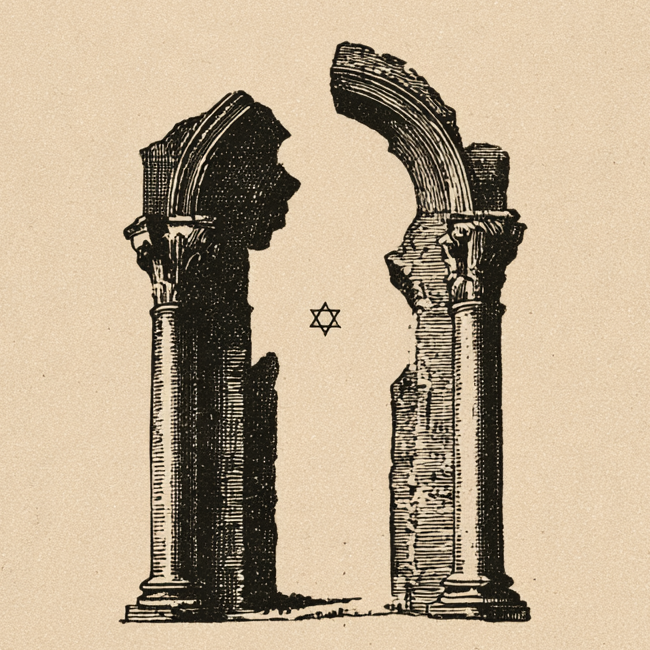
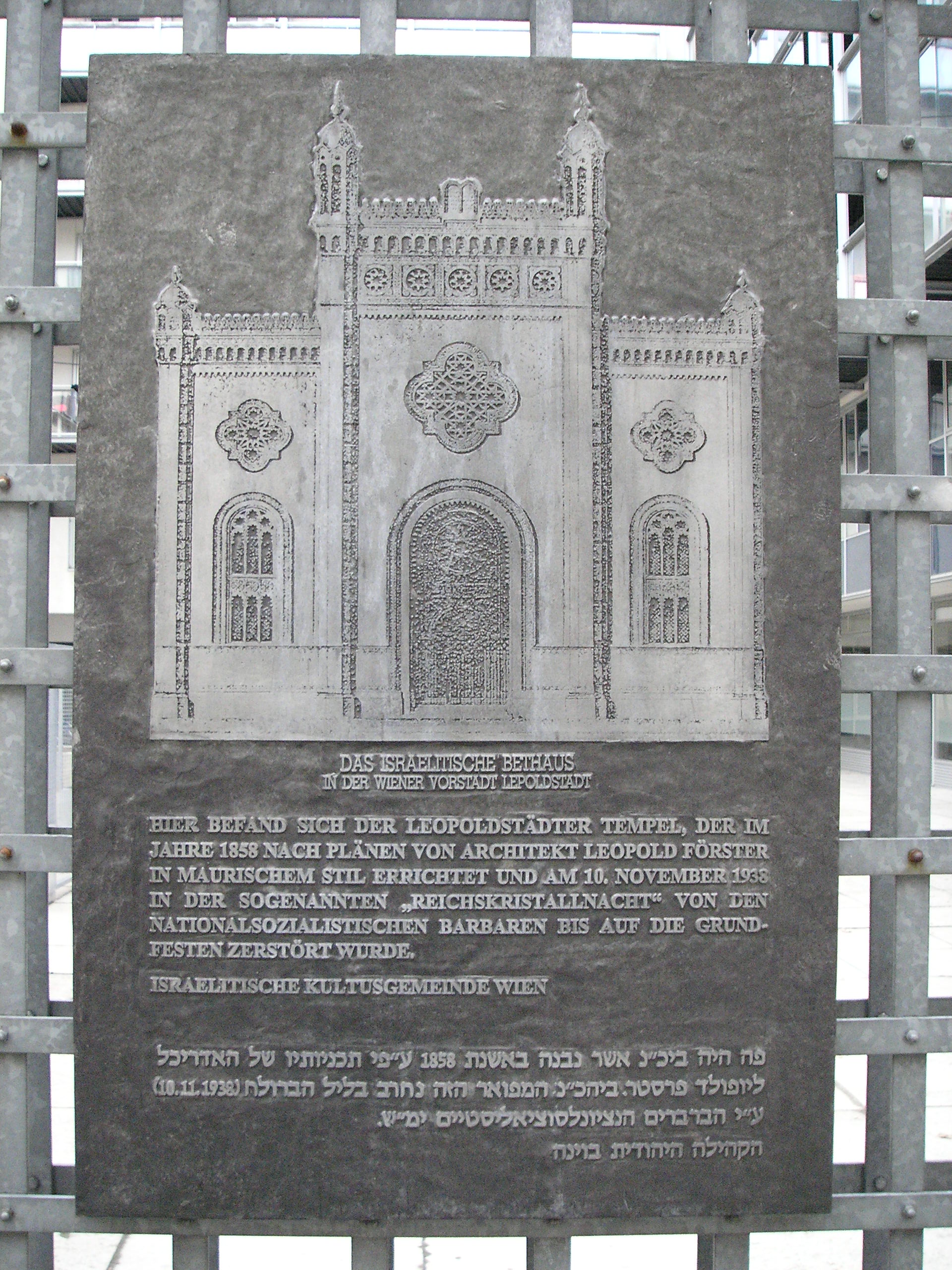
Four tall white columns now stand in the footprint of the vanished hall. Their restrained form suggests the scale and rhythm of an interior no longer present, making absence physically legible without attempting a replica. A plaque identifies the Tempel and its destruction.
The Jewish Museum Vienna preserves photographs, architectural views and ritual objects connected with the synagogue, including the parochet dedicated at its 1921 reopening. Original published designs are available through the National Library of Israel, and TU Wien researchers have produced detailed virtual reconstructions from plans, photographs and archival evidence.
Notable names
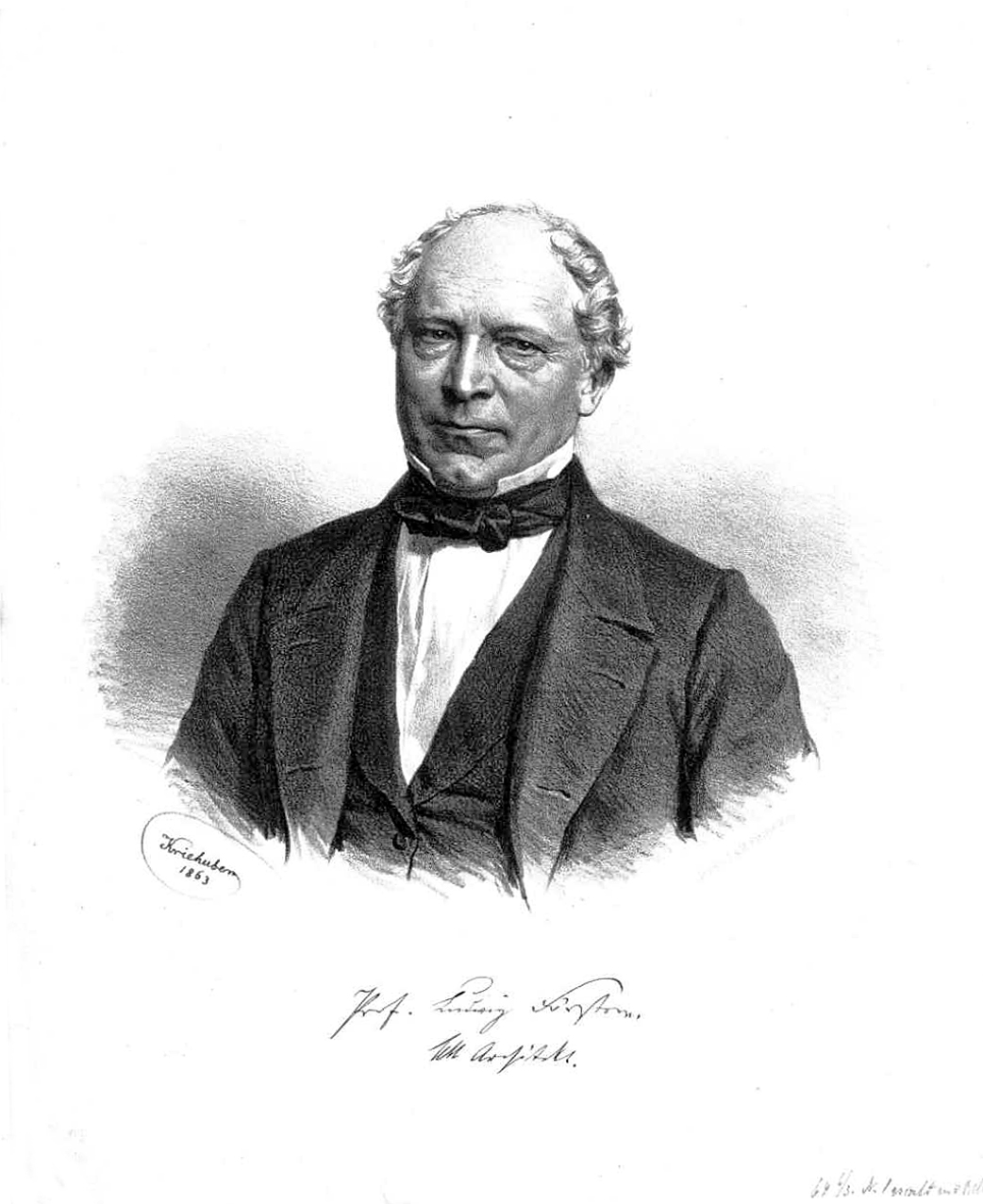
Ludwig Förster
1797–1863ArchitectA leading architect and publisher in the Habsburg lands, Förster designed the Tempel as a monumental Moorish-Revival synagogue. Its façade and basilican hall became an influential prototype across Europe.
Biography or source →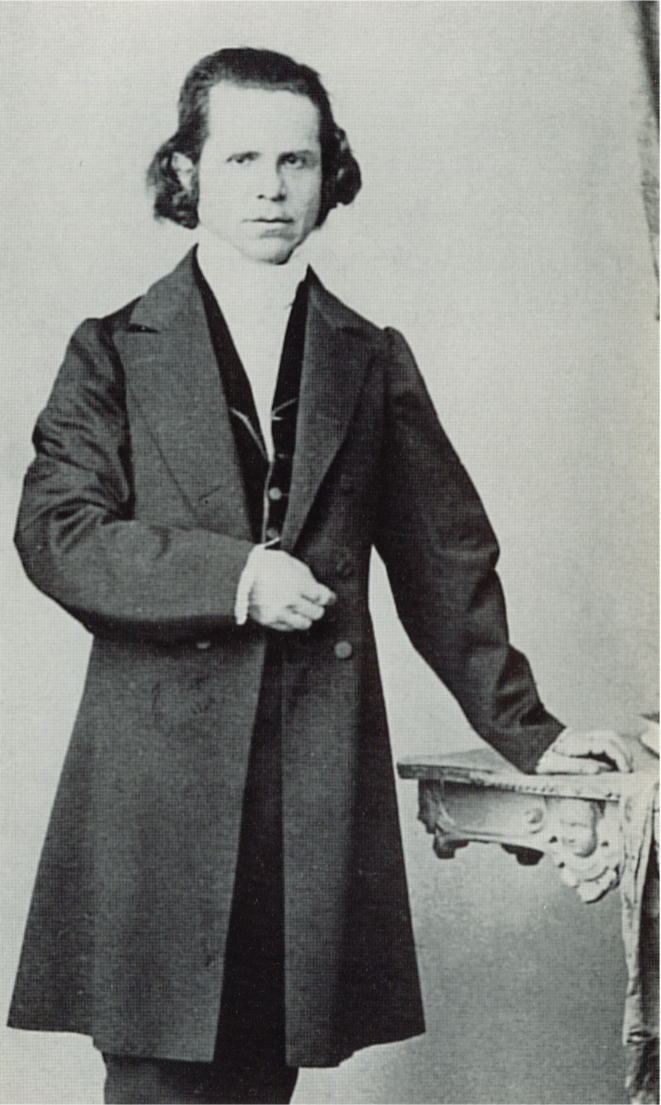
Adolf Jellinek
1821–1893First preacherThe renowned scholar and orator delivered the inaugural sermon on 15 June 1858 and shaped the synagogue’s early public identity. He later became preacher at Vienna’s Stadttempel.
Biography or source →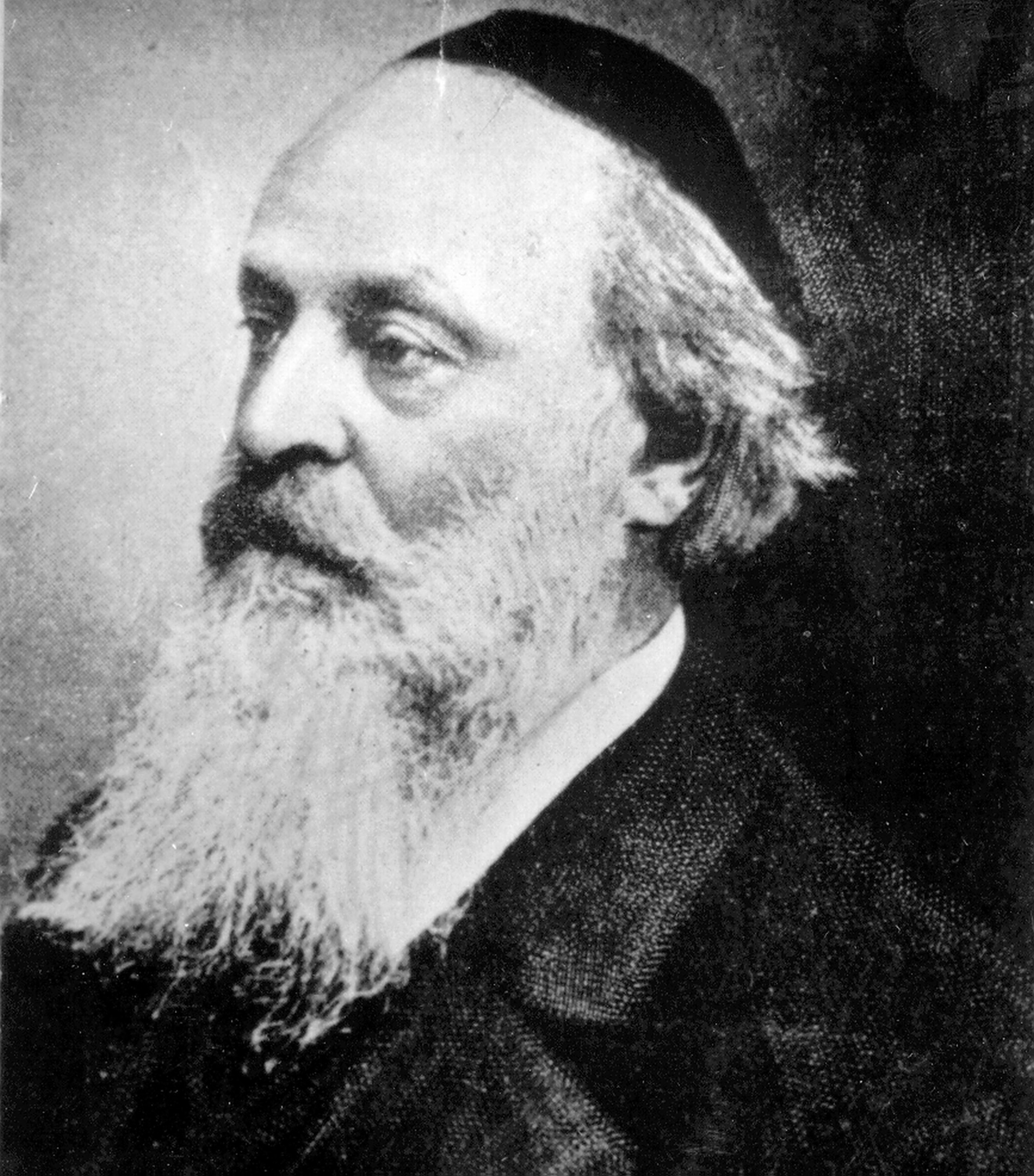
Moritz Güdemann
1835–1918Rabbi and historianGüdemann began preaching here in 1867. An important historian of Jewish education and culture, he later became Vienna’s chief rabbi.
Biography or source →
Josef Goldstein
19th centuryFirst chief cantorGoldstein was the Tempel’s first Oberkantor. His cantorial and choral music helped define worship in the enormous new sanctuary.
Biography or source →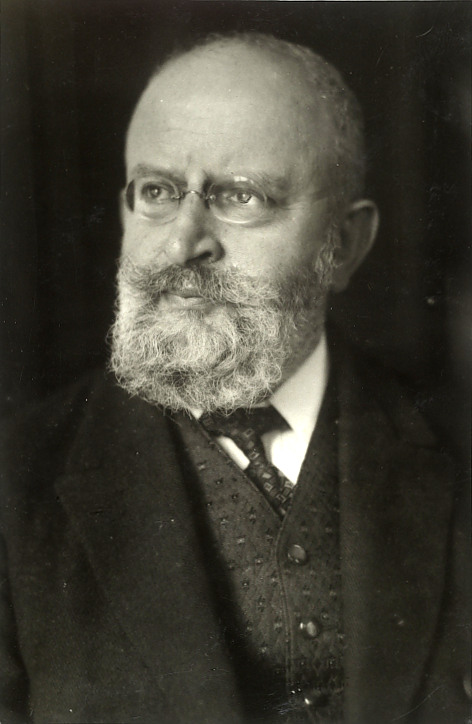
Max Grunwald
1871–1953Rabbi, historian and folkloristRabbi from 1913 to 1930, Grunwald guided the congregation through the 1917 fire and restoration. A pioneering scholar associated with the first Jewish Museum, he escaped Nazi persecution to Jerusalem.
Biography or source →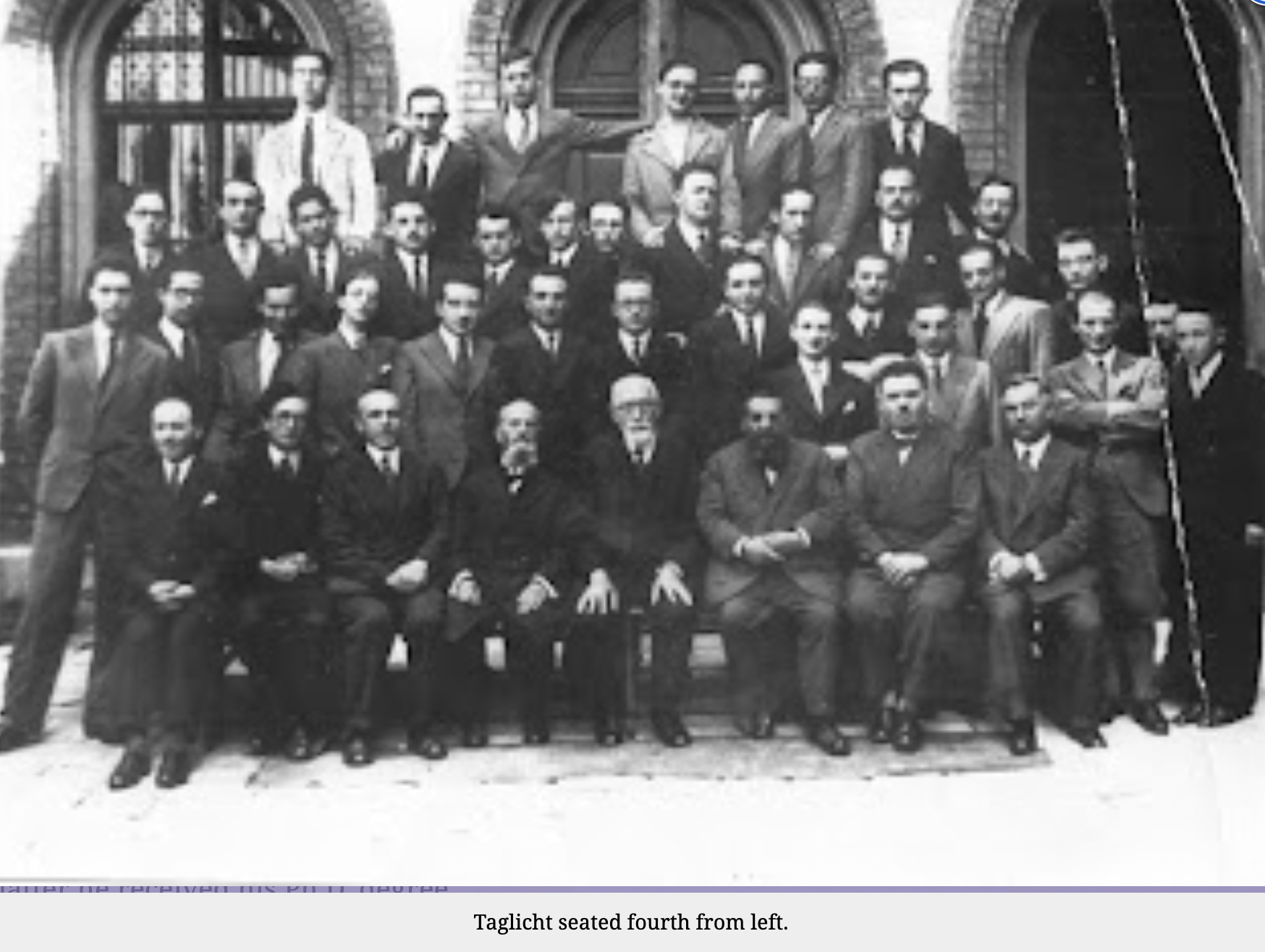
Israel Taglicht
1862–1943Rabbi and communal leaderRabbi of the Tempel from 1932, Taglicht was known for oratory and historical scholarship. The Nazis seized his library and manuscripts; he escaped to Jerusalem.
Biography or source →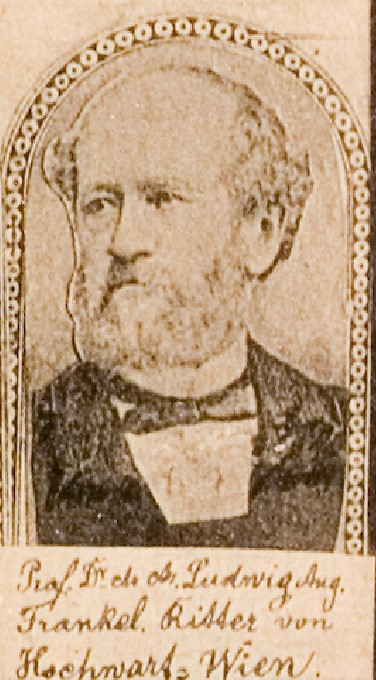
Ludwig August Frankl
1810–1894Poet and communal figureThe Viennese writer and philanthropist brought the ceremonial stone from Jerusalem that created a material link between the new sanctuary and the historic Jewish homeland.
Biography or source →- Jewish in Vienna — Leopoldstädter Temple
- Hermann David Karplus — Der Leopoldstädter Tempel (Austrian Academy of Sciences)
- Jewish Museum Vienna — The Leopoldstadt Temple: A Memorial to Reconciliation
- Jewish Museum Vienna — Parochet from the Leopoldstädter Tempel
- TU Wien — Virtual reconstruction of the Leopoldstädter Tempel
- City of Vienna — Jewish Vienna: history and National Socialism
- National Library of Israel — Ludwig Förster’s original designs
- DAVID Jewish Cultural Magazine — Der Leopoldstädter Tempel
- Wikimedia Commons — Leopoldstädter Tempel gallery
- Wikimedia Commons — Leopoldstädter Tempel category