
Historia Old Synagogue of Livorno
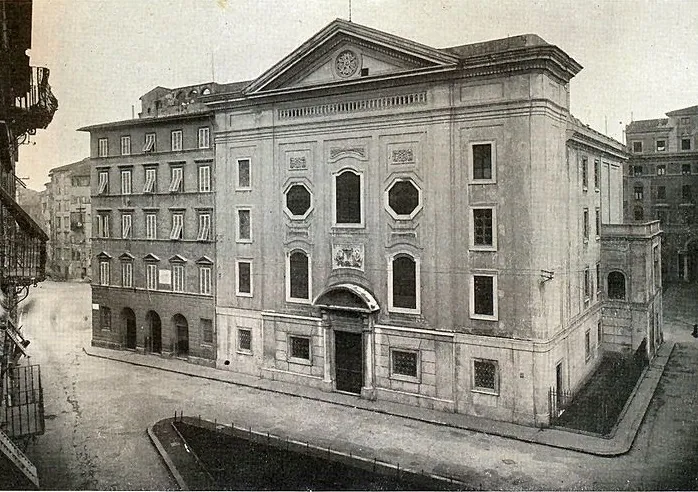
The synagogue stood near Piazza Grande, behind the cathedral, in the pentagonal new town laid out by Bernardo Buontalenti for the Medici; its site is today's Piazza Elia Benamozegh. Livorno's Jews, invited by the Grand Dukes of Tuscany under the charters known as the Livornina of 1591 and 1593, never lived in a ghetto, and their synagogue grew with their prosperity. Built in 1603 to plans by Claudio Cogorano and Alessandro Pieroni, it began as a modest hall. In 1642 Francesco Cantagallina enlarged it into a great hall with two tiers of galleries; around 1700 the interior was rebuilt with women's galleries on three sides, and after the earthquake of 1742 Ignazio Fazzi strengthened it and added a second women's gallery. It was solemnly re-inaugurated on 20 September 1789, the eve of Rosh Hashanah 5550, and a new south façade was built in the nineteenth century. Its hall measured about 28 by 26 metres, with an ark of inlaid coloured marble by Isidoro Baratta of Carrara, crowned with a silver crown, a bimah in the same technique and a gilded stucco ceiling. Grand dukes and foreign sovereigns came to see it, and in 1903 the historian Piombanti called it the most beautiful synagogue in Europe, second in size only to Amsterdam's. During the Second World War, Allied bombing of Livorno in 1943 and 1944 left it a ruin. After a long debate about rebuilding it as it had been, the remains were demolished, and Angelo Di Castro's new synagogue was built on the site between 1958 and 1962.
Where it stood for nearly 350 years
Historic: near Piazza Grande, behind the Duomo, Livorno. Today: Piazza Elia Benamozegh 1, Livorno (synagogue of 1962 on the site).
Otwórz większą mapę →Społeczność żydowska
Livorno's Jewish community was created by invitation: the Medici Grand Dukes' Livornina charters of 1591 and 1593 offered Jews, above all Sephardim from Spain and Portugal and former conversos, freedom of worship, full rights and protection. The community became autonomous in 1597, used Portuguese and Spanish as its official languages alongside the local Judeo-Italian, and grew to about 3,000 people, one of the largest in Italy. Livorno never had a ghetto. The city became a centre of Jewish printing and scholarship and a hub of Mediterranean trade with North Africa and the Levant. In 1938, when Fascist Italy's racial laws were introduced, 2,235 Jews lived in Livorno.
Architektura i projekt
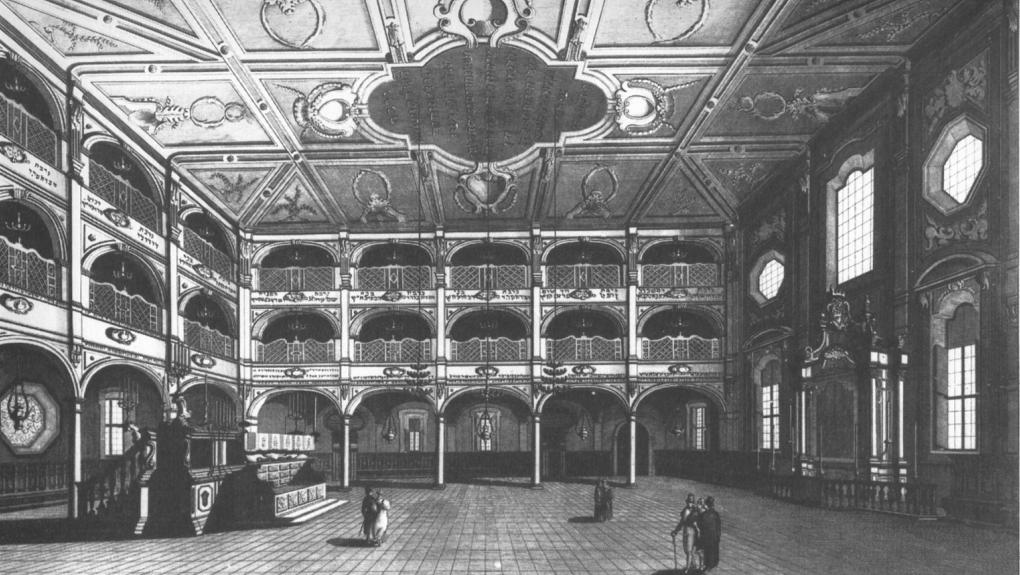
The synagogue developed in stages. Cogorano and Pieroni's modest building of 1603 was enlarged in 1642 by Francesco Cantagallina into a large hall with two tiers of galleries. Around 1700 the interior was rebuilt with women's galleries on three sides, and after the 1742 earthquake Ignazio Fazzi carried out structural works and added a second women's gallery. A nineteenth-century print shows the hall surrounded by arcaded galleries on two levels beneath a richly decorated stucco and gilded ceiling, with oval windows high in the walls. The ark, of inlaid coloured marble by Isidoro Baratta of Carrara, was crowned with a silver crown set with a topaz, and the bimah used the same technique. A new south façade was built in the nineteenth century, and the hall measured about 28 by 26 metres. The capacity is not recorded.
Życie w synagodze
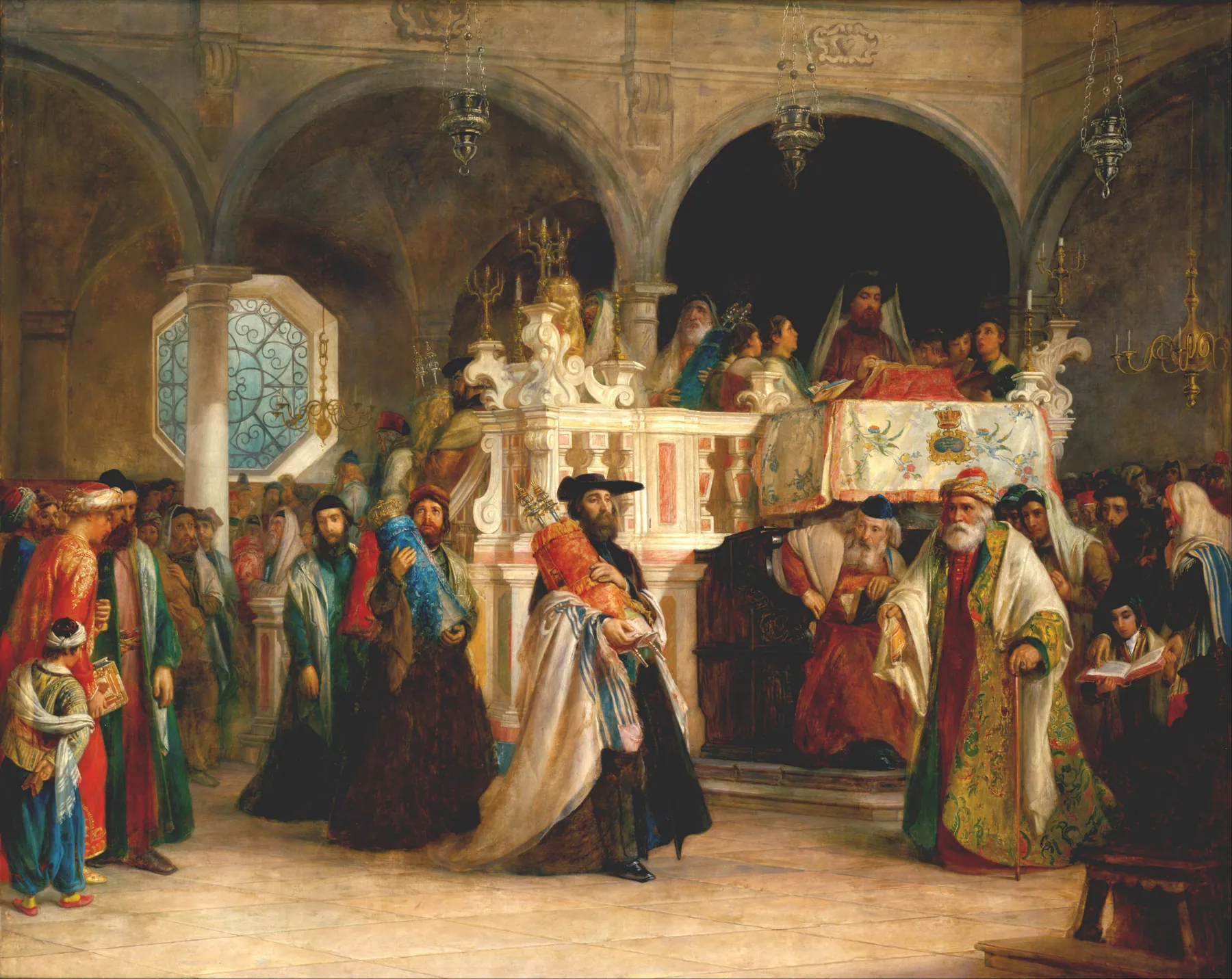
The synagogue followed the Spanish and Portuguese rite and was the centre of one of the most learned communities of the Jewish world. Its rabbis included Joseph Ergas and Malachi ha-Kohen in the eighteenth century; the scholar Hayyim Joseph David Azulai spent the last decades of his life in Livorno, and Elijah Benamozegh was the dominant rabbinic figure of the late nineteenth century. The poet Immanuel Frances and the rabbi Abraham Isaac Castello were also part of its world. Its great feasts were famous: the painter Solomon Alexander Hart depicted the Rejoicing of the Law in the synagogue in 1850. Grand dukes of Tuscany and visiting sovereigns came to see it.
Zniszczenie
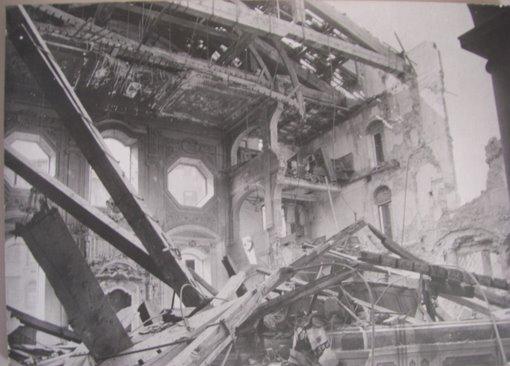
During the Second World War Livorno, a major port, was heavily bombed by the Allies in 1943 and 1944. The synagogue was wrecked in the bombing; the Encyclopaedia Judaica describes it as partially destroyed in an Allied air raid in 1944, and a photograph of the 1940s shows its interior collapsed into rubble. English Wikipedia's attribution of the destruction to German forces is not supported by its own sources. The exact date of the raid that hit it is unknown. After the war a long debate followed over whether to rebuild it 'where it was and as it was'; in the end the remains were demolished, and a new synagogue was built on the site from 1958.
Los społeczności
Fascist Italy's racial laws of 1938 expelled Livorno's 2,235 Jews from schools, the professions and public life. After the German occupation of northern and central Italy in September 1943, the Nazi and Fascist authorities hunted down Jews for deportation. From 12 November 1943 at least 119 Jews from Livorno were deported to Auschwitz, of whom only 11 survived; others were killed in the surrounding mountains. Many survived in hiding with the help of local people. A community re-formed after the war and built a new synagogue on the old site.
Miejsce dzisiaj
Angelo Di Castro's modern synagogue, begun in 1958 with funding from the Italian state and inaugurated on 23 October 1962, stands on the site in Piazza Elia Benamozegh. Marble from the old bimah was reused in the new one. Fragments of the old portal, more than 6.5 by 5.5 metres, were found in the garden of the Via Marini oratory, and in February 2025 the Fondazione per i Beni Culturali Ebraici announced a plan to re-erect the portal in front of the present synagogue.
Ważne postacie
Elijah Benamozegh
1823–1900Rabbi and philosopherElijah Benamozegh, rabbi in Livorno, was the dominant figure of the community in the late nineteenth century and taught and preached in its world around the great synagogue. The square on which the synagogue stood now bears his name.
Biografia lub źródło →Hayyim Joseph David Azulai
1724–1806Rabbi and bibliographerThe scholar Hayyim Joseph David Azulai spent the last decades of his life in Livorno, where he was a leading rabbinic presence in the community of the Old Synagogue.
Biografia lub źródło →Solomon Alexander Hart
1806–1881PainterThe English painter Solomon Hart depicted the Feast of the Rejoicing of the Law in the Livorno synagogue in 1850, one of the few records of its interior in use.
Biografia lub źródło →Czy masz coś do przekazania?
Zdjęcia, dokumenty, historie rodzinne lub wspomnienia o tej synagodze i jej społeczności pomagają zachować jej historię.
Share a memory or thought
No comments yet. Be the first to add one.