
La storia di Lovasberény Synagogue
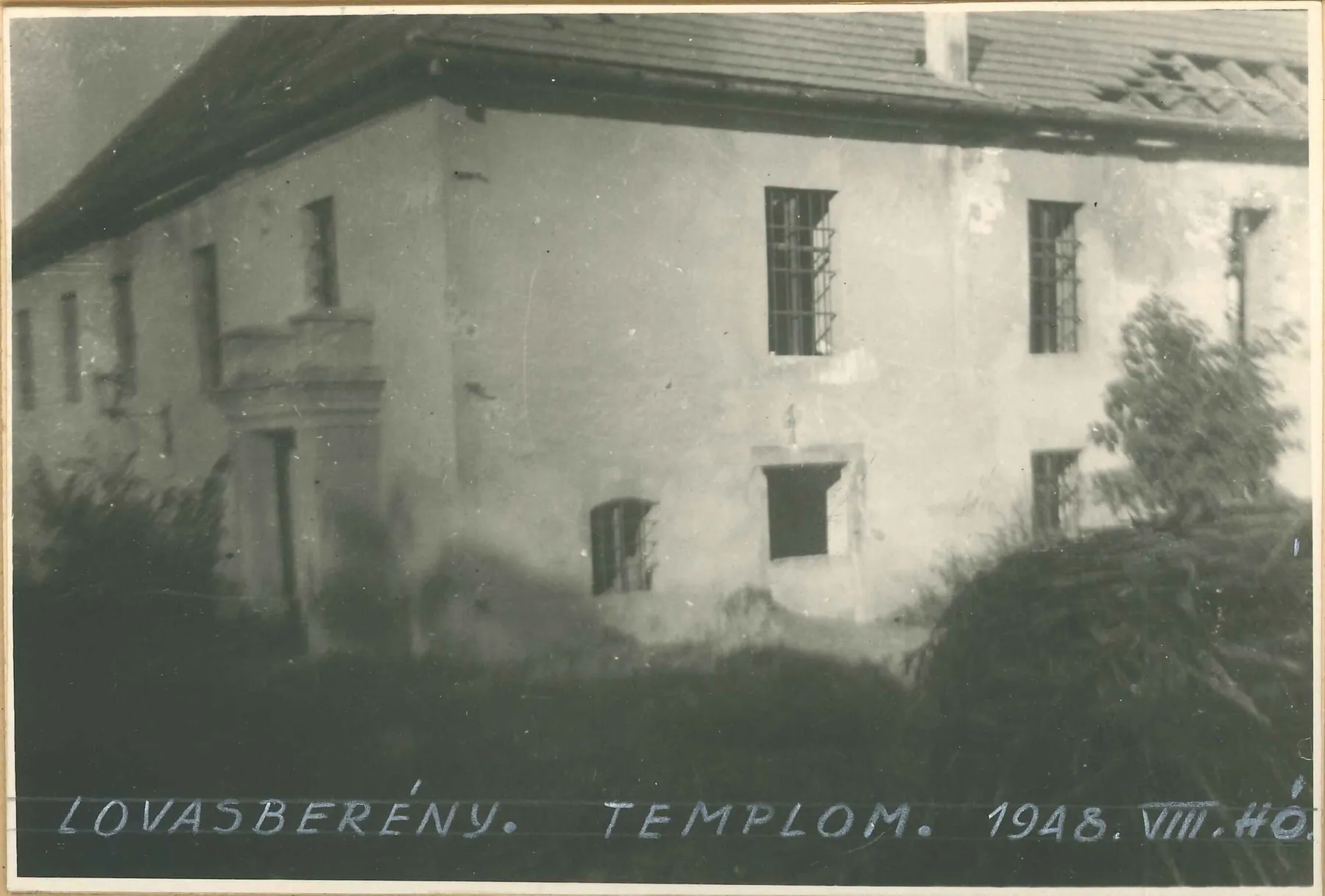
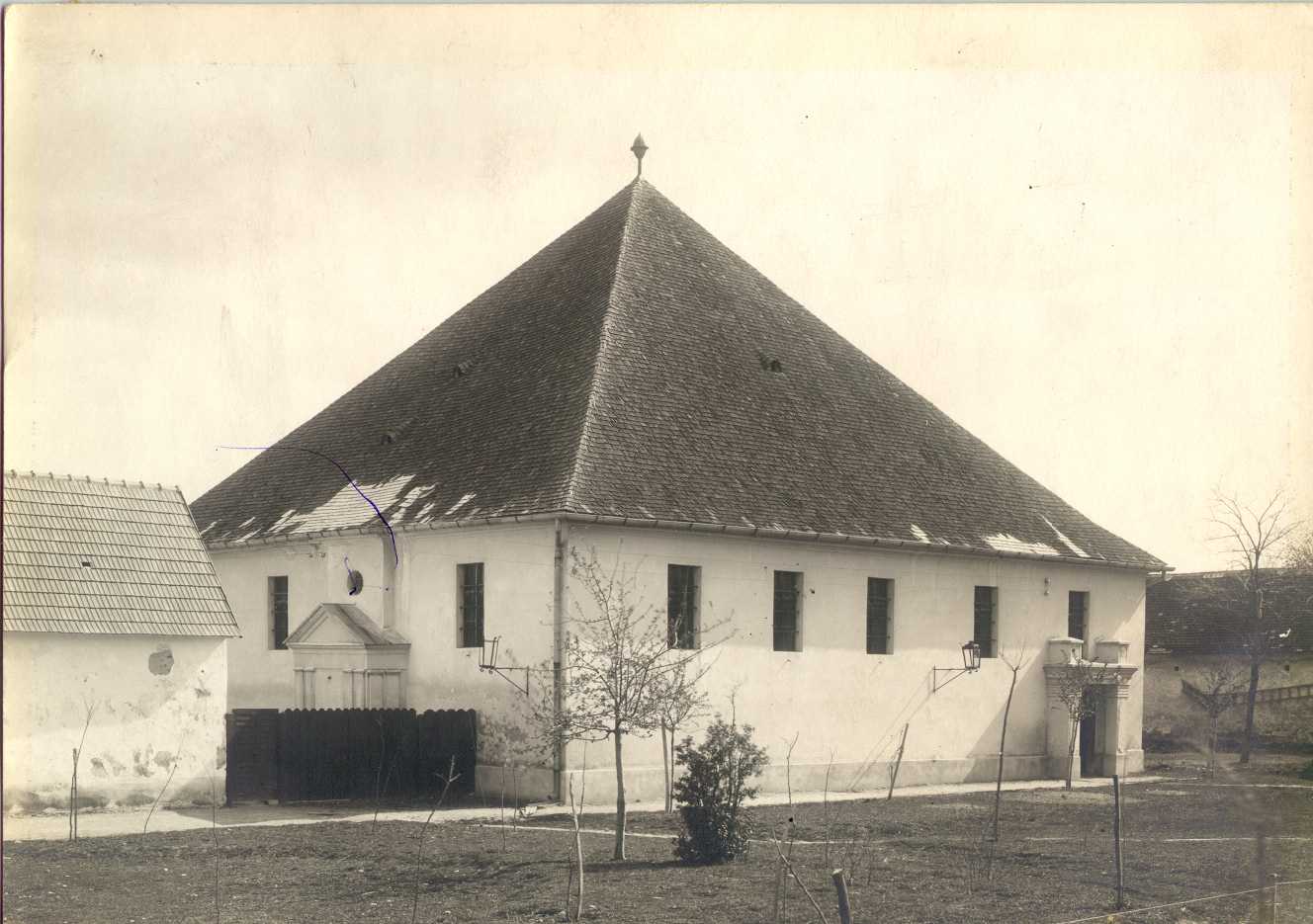
Jews settled in Lovasberény in the first third of the eighteenth century under the protection of the lords of the estate, first Baron Franz Anselm Fleischmann and from 1730 the Counts Cziráky. Hebrew communal statutes survive from 1740, a tax list of 1753 already records a payment for the synagogue plot, and a pewter hand-washing basin was given to the prayer house in 1770. The building known from photographs was put up in the late eighteenth century; local accounts give the year 1790. In 1825, when the community had grown to about 1,200 people, roughly a third of the market town, it was enlarged and renovated with a generous contribution from Count Antal Mózes Cziráky, who is thought to have had the plans drawn by József Hild, the architect of his mansion. After 1840 Jews were allowed to live in the royal free towns and the community drained away to Székesfehérvár and Pest; by 1941 only 32 Jews were left. They were deported in 1944 and nobody returned. Photographs of August 1948 show the synagogue derelict, and it was demolished in 1949. It is known today only from archive photographs kept by the Hungarian Jewish Museum and Archives.
Where it stood for nearly 160 years
Historic: Lovasberény, Fejér county; the synagogue's own plot is not identified in the sources consulted (the rabbi's house, sold in 1892, stood on the site of the later fire station). Today: pin at the Tűztorony (fire tower) and Művelődési Ház, Rákóczi utca 1, 8093 Lovasberény.
Apri la mappa grande →La comunità ebraica
The first families came from Moravia and partly from Slavonia. A census of 1736 lists 19 Jewish families and one of 1768 names 34 heads of household: half were traders, and there were two tailors, a barber, a glazier and a cobbler, the rest serving the community as rabbi, slaughterer or schoolmaster. Count László Cziráky regulated the community's rights and dues by contract in 1775, and his son Antal Mózes Cziráky did so again in a letter of privilege in 1798. The lords gave land for the synagogue and for the cemetery, where Jews from Baracska, Felcsút, Mány, Pátka and Velence were also buried. Until 1840 Lovasberény served as a satellite of Székesfehérvár, which did not admit Jewish residents, and the 1830s were its high point, with about 1,200 Jews (1,240 in 1840). This growth is the reason given for enlarging the eighteenth-century synagogue in 1825. Emigration followed: 446 Jews were counted in 1869, 53 in 1930 and 32 in 1941.
Architettura e design
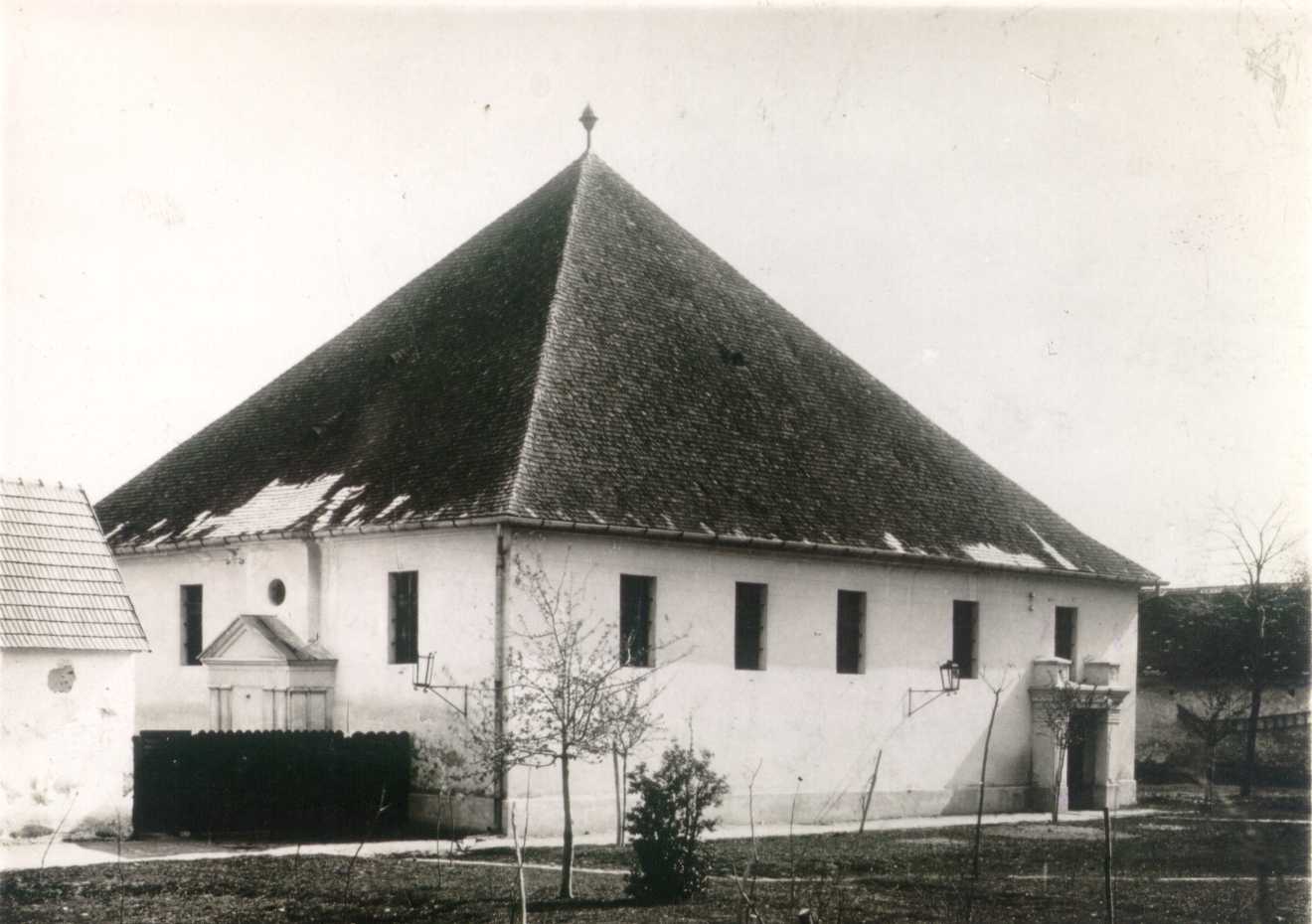
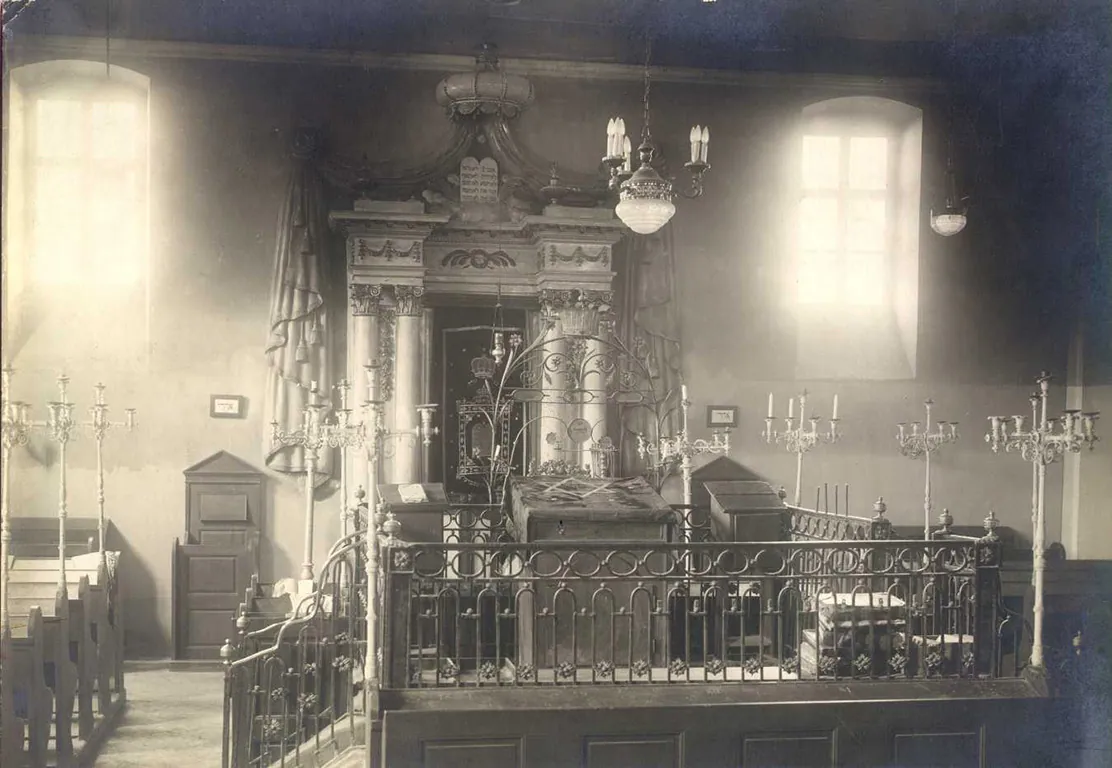
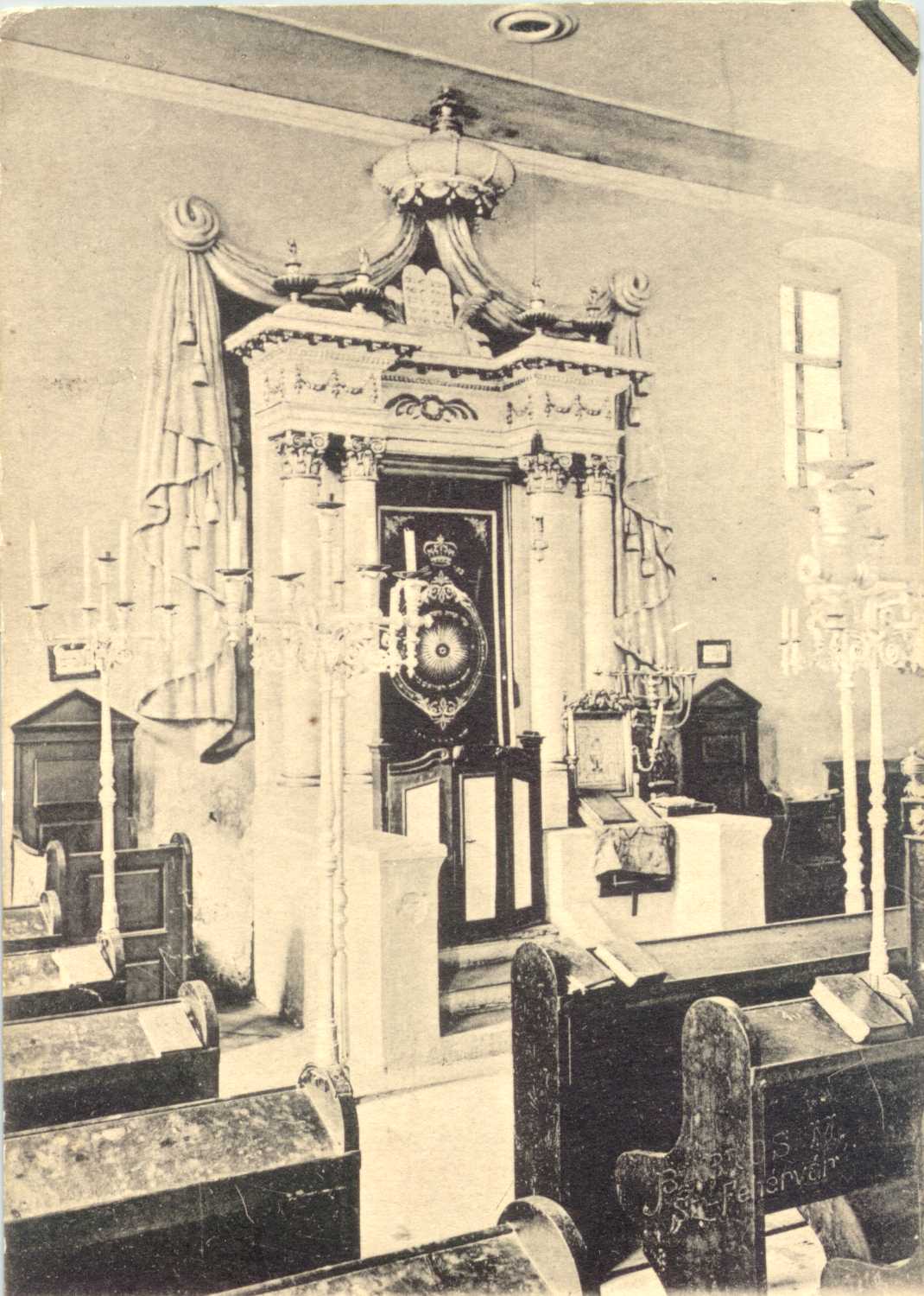
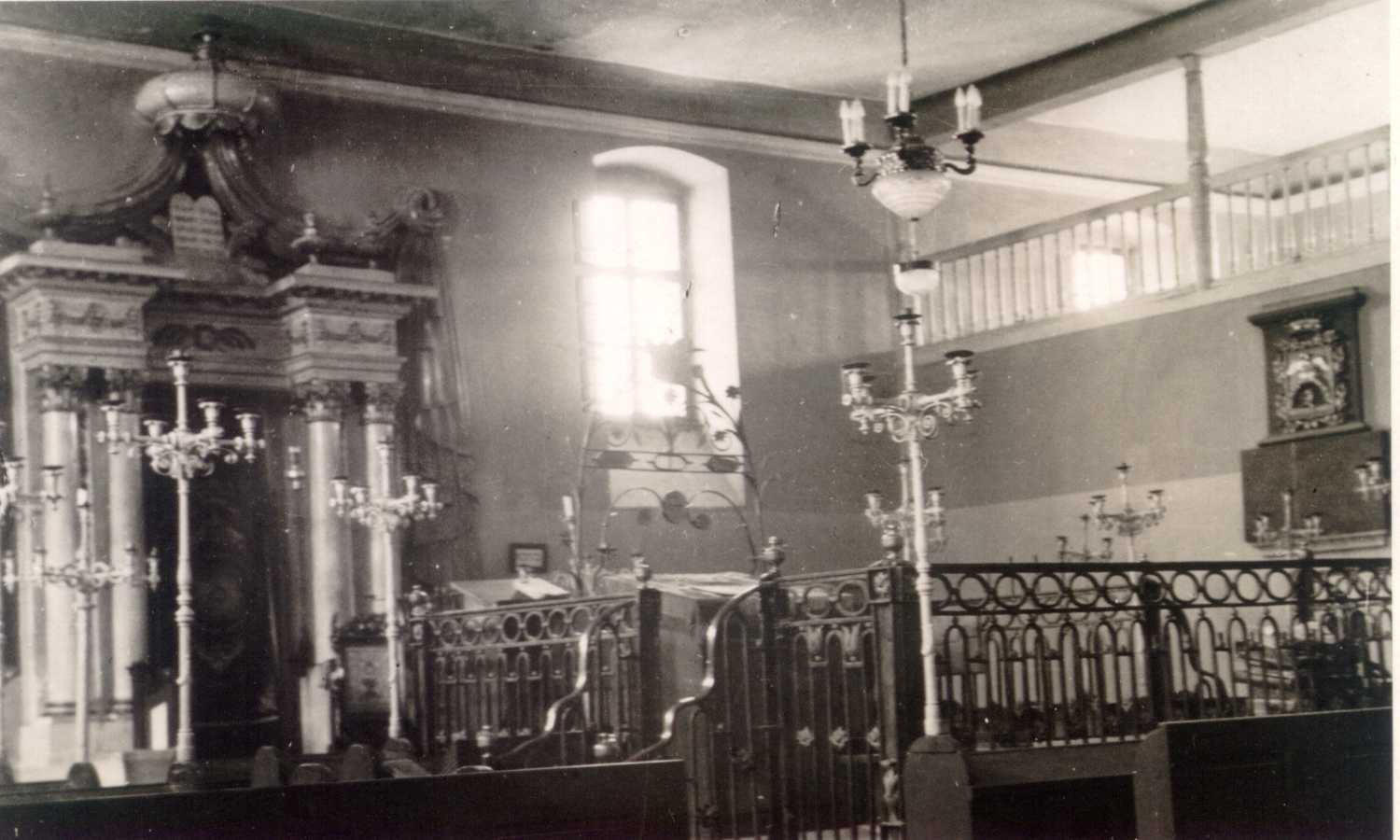
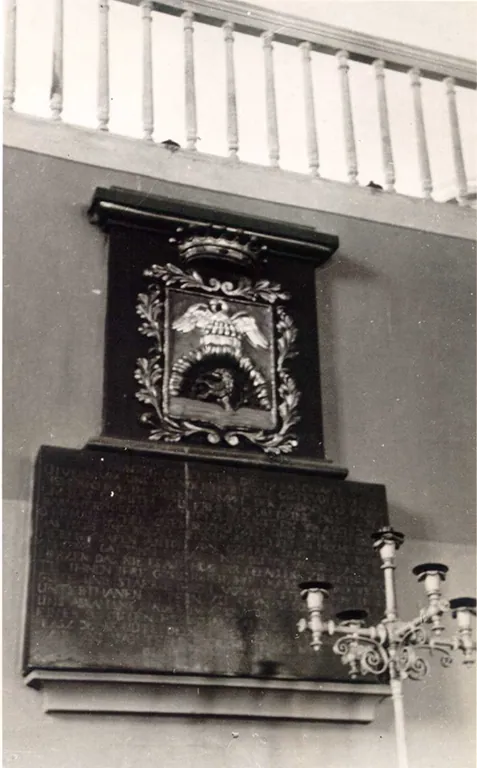
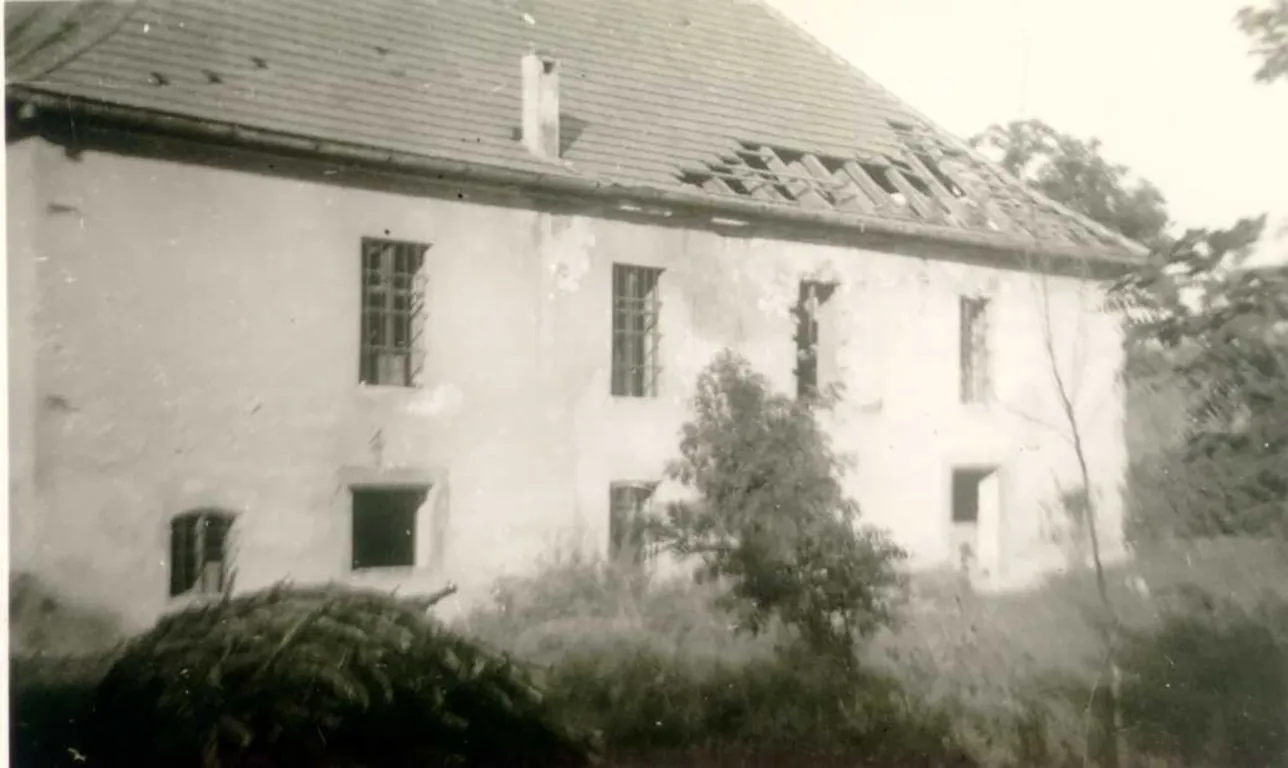
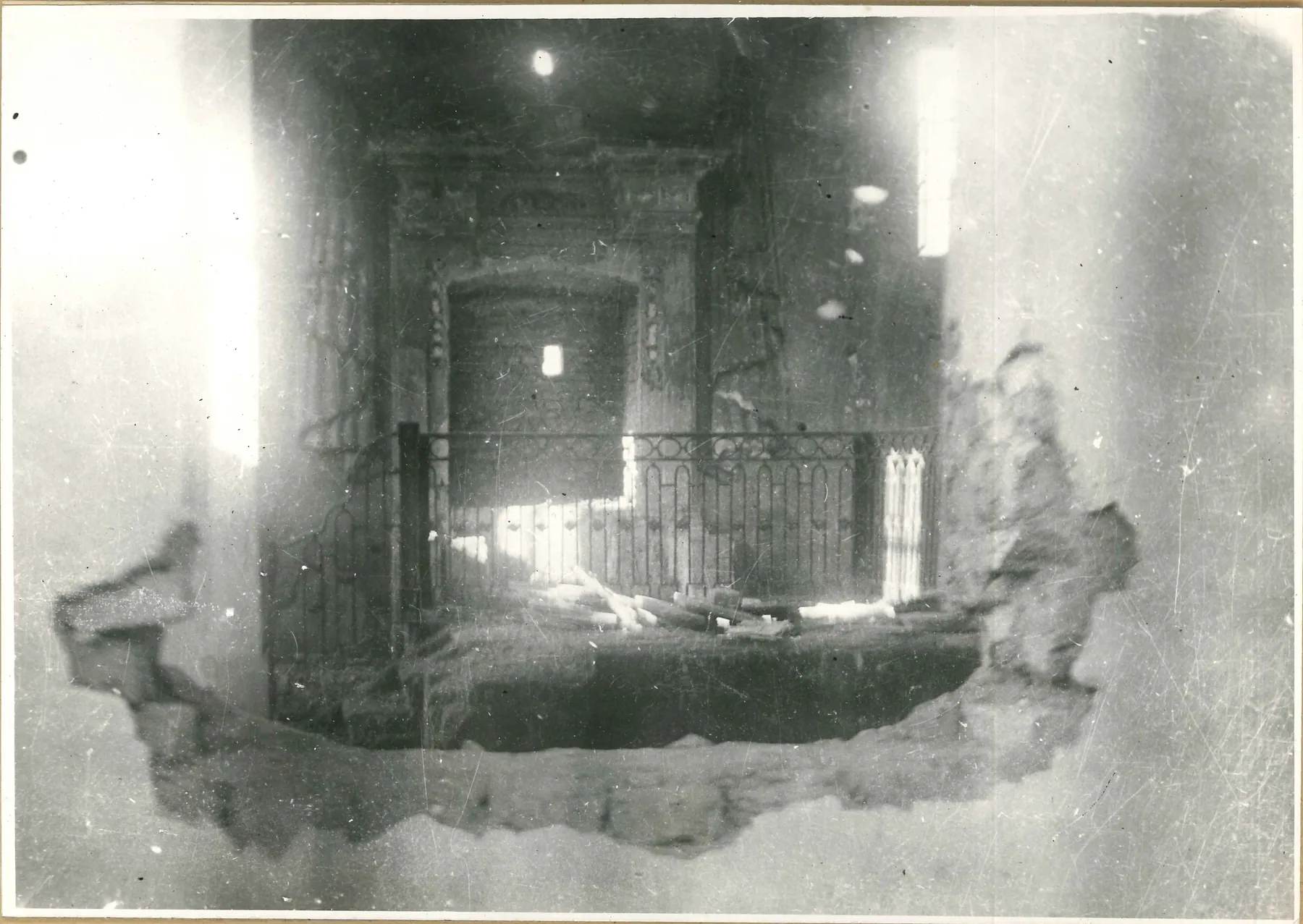
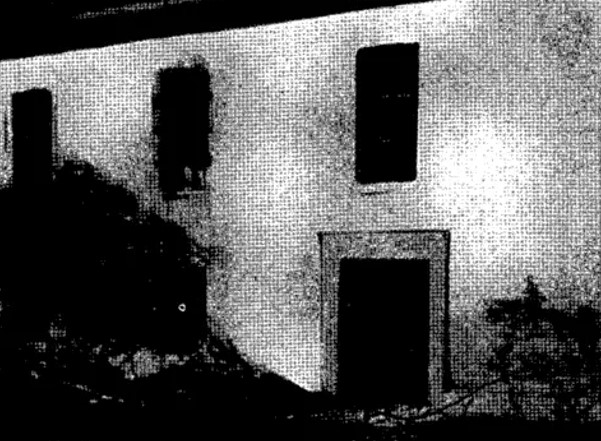
Photographs taken by József Glück of Győr in the mid-1930s show a broad rectangular block with plain whitewashed walls under a very tall hipped tile roof with a ball finial. Small rectangular windows with grilles sat high in the walls. On one short side the Torah niche was marked on the outside by a projecting aedicule with paired pilasters and a triangular pediment beneath a round window, a feature Rudolf Klein connects with the 1825 remodelling. A stone-framed doorway with a tall cornice stood at the far end of the long side, and photographs of 1948 show a second doorway and low ground-floor windows on another side. Inside was a single hall with a flat ceiling and deep arched window recesses. The ark had paired columns with Corinthian capitals, an entablature with swags, the Tablets of the Law and a crown, all beneath a canopy of sculpted drapery. The central bimah was enclosed by an ornate wrought-iron railing and ringed by tall many-branched candelabra. The women's gallery had a turned wooden balustrade, with an inscribed tablet under a crowned coat of arms mounted below it. A local account that calls the building Moorish is not borne out by the photographs.
La vita nella sinagoga
The congregation lived by Hebrew statutes drawn up in 1740 and had its own rabbinical court; the gravestone of Rabbi Joszéf ben Meir Leipnik, who died in 1771, calls him head of a yeshiva. The burial society, the Chevra Kadisha, was among its oldest institutions, and its building burned down on 5 June 1878 together with the community's records. An elementary school teaching in Hungarian, German and Hebrew was organised in 1845 under Rabbi Simon Wiener, who served for 38 years and also acted as postmaster for the estate; the school closed in 1882. From 1891 the minutes were kept in Hungarian. In 1892 the rabbi's house was sold to the village, which turned it into a fire station, to pay for renovating the synagogue. Rabbi Jakab Taub, styled district rabbi on his seal, led the congregation from 1879 to 1928. From 1934 the few remaining members were attached to Kápolnásnyék under Rabbi Henrik Fisch. In 1936 and 1941 the community gave documents and ritual objects to the Hungarian Jewish Museum. Its affiliation after the schism of 1868–69 is not stated in the sources consulted.
Distruzione
The synagogue outlasted the deportation of its last members in 1944, which was carried out by Hungarian authorities and gendarmerie under Nazi German occupation. From December 1944 until 20 March 1945 Lovasberény was a battlefield, and 72 houses in the village were damaged; no source consulted says what happened to the synagogue in those months. Photographs dated August 1948 show it abandoned. Roof tiles are missing over one corner, windows stand open and a hole has been broken through a wall. Inside, the ark stands empty and stripped of much of its ornament, and rubble lies behind the bimah railing. Whether this was war damage, plunder or neglect is not recorded. No Jewish survivors returned to the village, and the building was demolished in 1949, in the first years of Communist rule in Hungary. The sources consulted give only the year: they do not say whether the Communists of the local council or some other party ordered the demolition, or what became of the materials.
Il destino della comunità
By 1930 only 53 Jews lived in Lovasberény, and the census of 1941 counted 32, plus one person classed as Jewish under the anti-Jewish laws. After the Nazi German occupation of March 1944, Hungarian authorities and gendarmerie began concentrating the Jews of the Székesfehérvár gendarmerie district on 5 June 1944. Jews from the villages of Fejér county were held with those of Székesfehérvár in a tile works and a cavalry barracks, 2,743 people in all, and deported to Auschwitz in June. The route taken by the Lovasberény families is not spelled out in the sources consulted, but gravestone inscriptions and death-register entries name members of the Laufer and Bleyer families as killed at Auschwitz in 1944. The village counts 51 Holocaust victims; a list of 56 names in the Fejér County Archives probably includes people from neighbouring villages. As far as is known, no Jew came back to live in Lovasberény and the community ceased to exist. Rabbi Henrik Fisch survived and later became chief rabbi of the Dohány Street Synagogue in Budapest.
Il luogo oggi
Nothing of the synagogue remains, and the sources consulted do not identify its plot or say what stands there now. The map pin marks the old fire station and its tower on Rákóczi utca, built on the plot of the rabbi's house that the Jewish community sold in 1892 and now part of the village cultural centre. The one surviving Jewish monument is the cemetery, in use from at least 1742 and holding 737 gravestones. It is a protected monument, was restored in 2002–2003 by a local foundation with support from German Catholic donors, and reopened on 1 October 2003. Objects from the synagogue, among them the statutes of 1740 and a pewter hand-washing basin of 1770, are kept in the Hungarian Jewish Museum and Archives in Budapest.
Nomi importanti
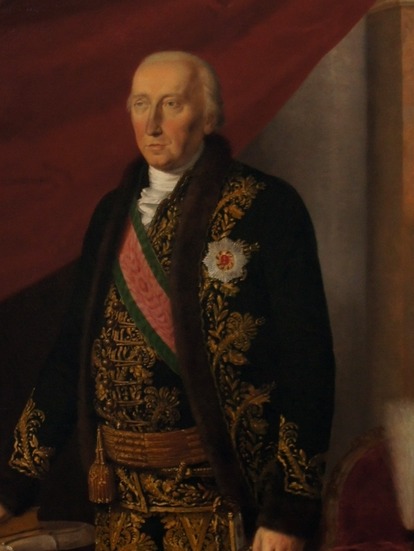
Count Antal Mózes Cziráky
1772–1852Lord of Lovasberény, judge royal; patron of the 1825 rebuildingHead of the family that owned Lovasberény from 1730 and protected its Jews. In 1798 he set out the community's rights and dues in a letter of privilege, and in 1825 he contributed generously to the cost of enlarging and renovating the synagogue. He is thought to have had the plans made by József Hild, the architect of his mansion.
Biografia o fonte →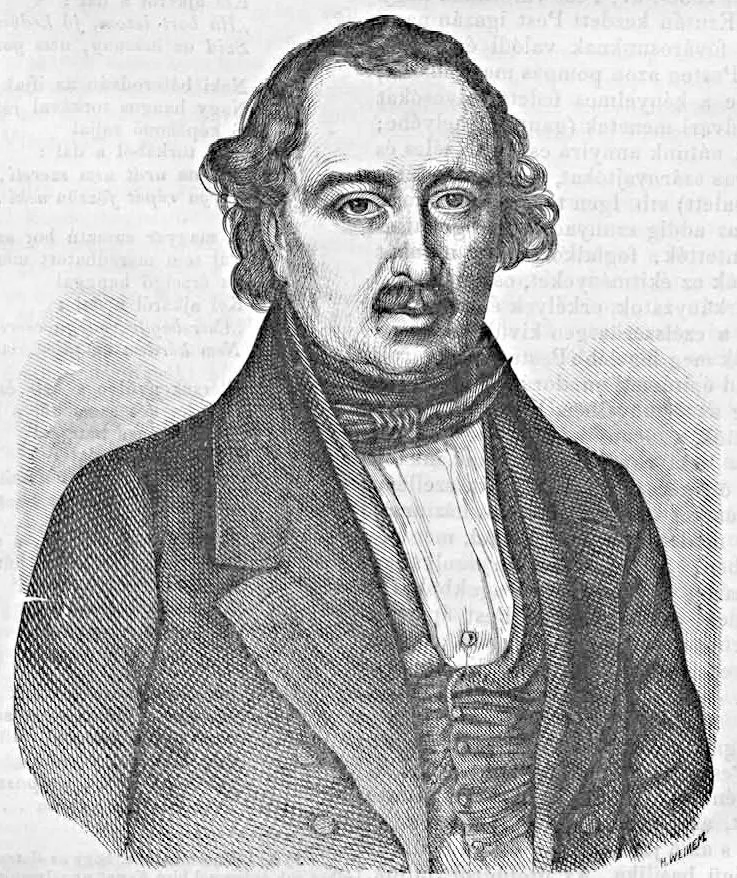
József Hild
1789–1867Architect to whom the 1825 enlargement is attributedA leading architect of Hungarian Neoclassicism who worked on the Cziráky mansion at Lovasberény. Kormos and Bányai write that Count Cziráky presumably had him draw the plans for the 1825 enlargement and renovation of the synagogue. The attribution is not documented, so it should be treated as probable rather than certain.
Biografia o fonte →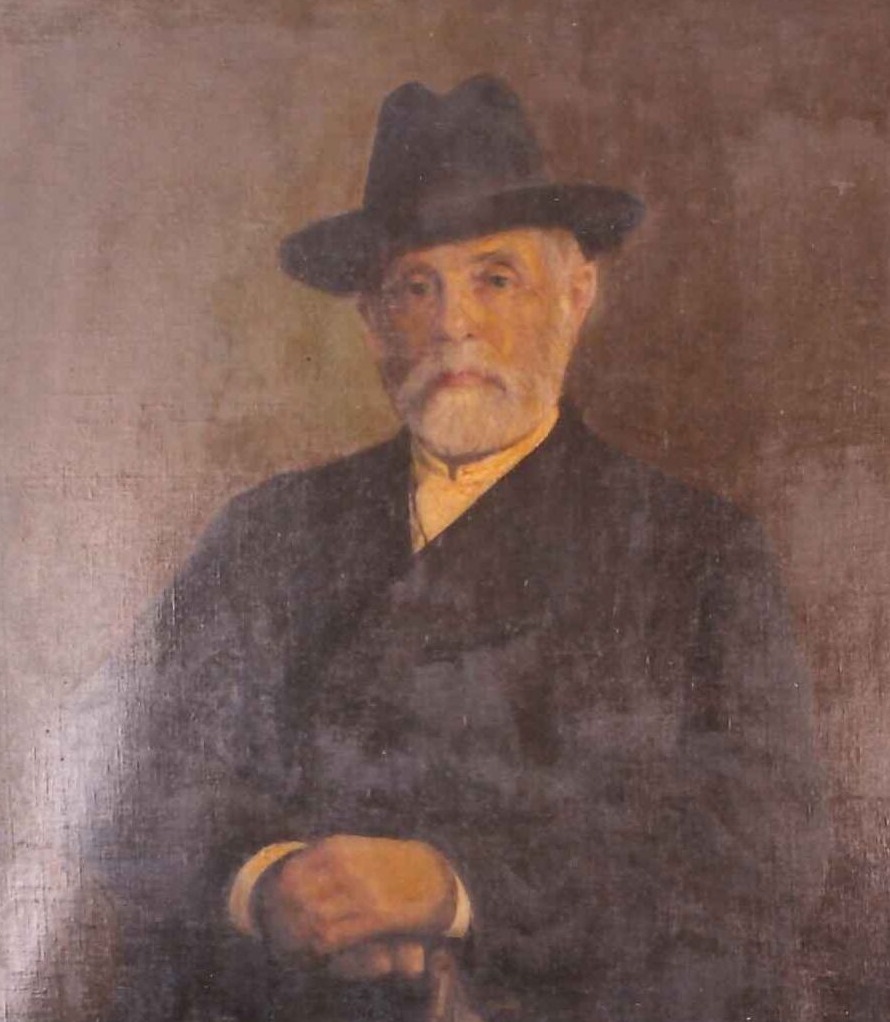
Nátán Halász (born Fischer)
1834–1910Teacher at the community school, 1858–1860Educator and textbook author who taught at the Lovasberény Jewish community's elementary school from 1858 to 1860, early in his career, while the congregation worshipped in the enlarged synagogue under Rabbi Wiener. He later taught in Győr and Sátoraljaújhely and became headmaster of the Pest Jewish community's girls' school.
Biografia o fonte →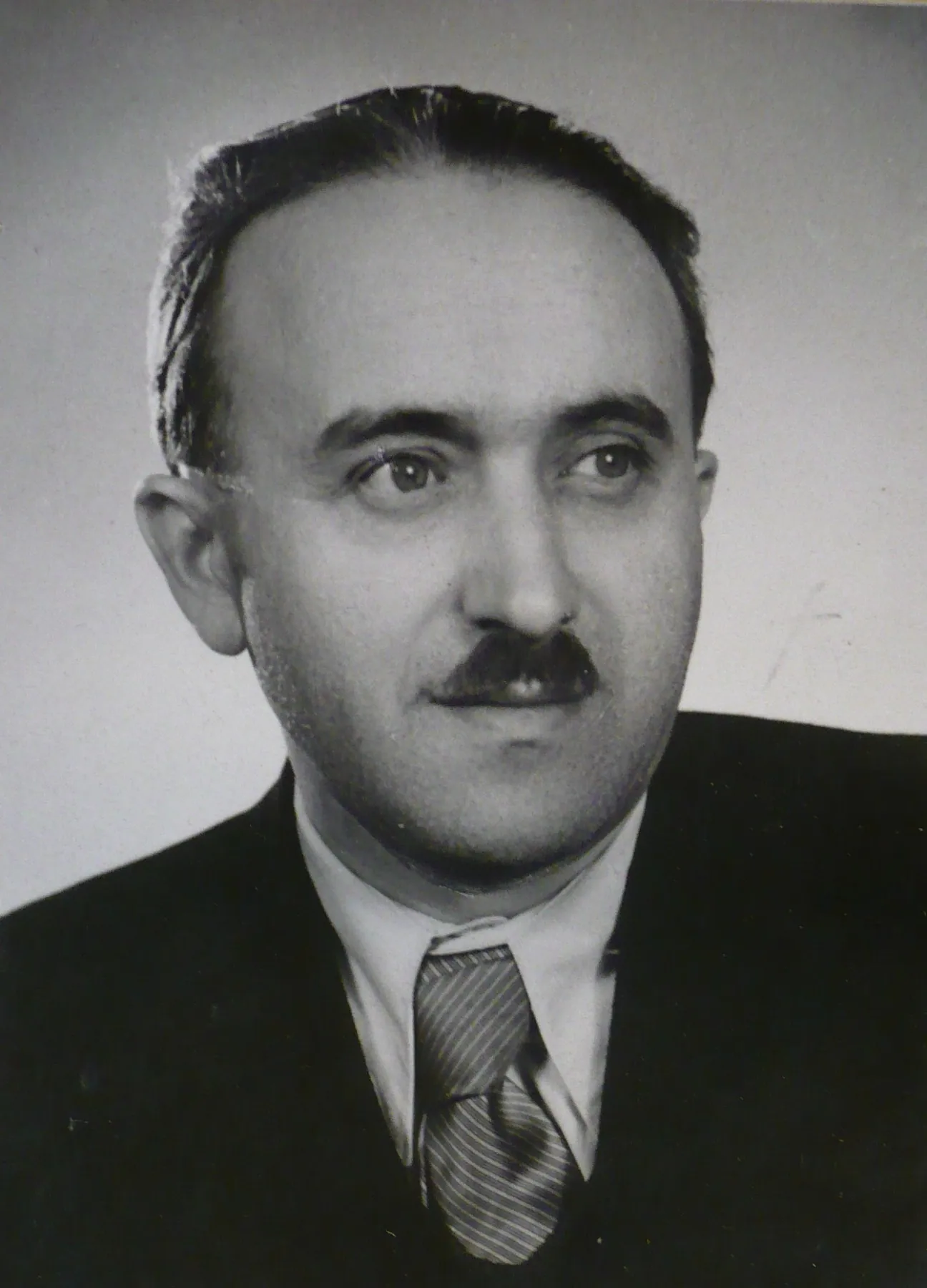
Dr Henrik Fisch
1907–1986Rabbi of Kápolnásnyék, in charge of Lovasberény 1934–1944As rabbi of Kápolnásnyék he was responsible for the handful of Jews left in Lovasberény from 1934 until the deportations of 1944, and so was the last rabbi responsible for the congregation and its synagogue. He survived the Holocaust, worked in Budapest from 1950 and was chief rabbi of the Dohány Street Synagogue from 1960 to 1972.
Biografia o fonte →Ávrahám Mordekhaj Benet
Unknown–1794Rabbi of LovasberénySuccessor of Rabbi Joszéf ben Meir Leipnik, who died in 1771, and head of the community's rabbinical court. He died on 27 January 1794, so if the local date of 1790 is right he was rabbi when the synagogue was built. His gravestone in the Lovasberény cemetery praises him at length with images from the Psalms.
Biografia o fonte →Ávrahám Cvi (Cvi Hirs) Tében
Unknown–1819Rabbi of Lovasberény, 1798–1819The fourth rabbi of the community in order of time. He took office in 1798, the year of the Cziráky letter of privilege, and led the congregation for about twenty years until his death on 15 September 1819. In his will he forbade any praise on his gravestone, an instruction the inscription both obeys and quietly gets round.
Biografia o fonte →Simon Cvi Markbreit
Unknown–1832Rabbi of LovasberényBorn in Mattersdorf (Nagymarton), he had been rabbi in several communities before Lovasberény, his last post. He followed Rabbi Tében, who died in 1819, and so was probably in office when the synagogue was enlarged in 1825, though the year he arrived is not given. He was the son-in-law of Mordechai Benet of Nikolsburg, chief rabbi of Moravia, and died on 16 May 1832.
Biografia o fonte →Simon Wiener
c. 1769–1871Rabbi of Lovasberény, 1833–1871Also from Mattersdorf, he was rabbi in Szentgrót for 19 years and then in Lovasberény for 38, from 1833. In return for a salary from the Cziráky estate he also worked as the local postmaster. The community's Hungarian, German and Hebrew elementary school was organised under him in 1845. He died in 1871, reportedly aged 102.
Biografia o fonte →Jakab Taub
1852–1928Rabbi of Lovasberény, 1879–1928Rabbi of the shrinking congregation for fifty years from 1879, styled district rabbi (Bezirksrabbiner) on his brass seal, which the community later gave to the Hungarian Jewish Museum. During his time the rabbi's house was sold in 1892 to pay for renovating the synagogue. He died on 14 December 1928 and is buried in the top row of the cemetery.
Biografia o fonte →Mór Grünwald
1859–1933Rabbi of Lovasberény, c. 1928–1933Followed Jakab Taub and is named by Kormos as one of the community's last two rabbis, serving the few families who still used the old synagogue. He died on 10 March 1933 aged 74 and is buried beside Taub. Kormos gives his term as five years, while his gravestone speaks of eight; after his death the community was attached to Kápolnásnyék.
Biografia o fonte →Hai qualcosa da condividere?
Fotografie, documenti, storie di famiglia o ricordi di questa sinagoga e della sua comunità aiutano a mantenerne viva la storia.
- A lovasberényi zsidó temető (Hungaria Judaica 29), chapter 'Hitközség-történeti séta a temetőben', lists of Holocaust martyrs and English abstract
- A lovasberényi zsidó temető (repository record)
- A lovasberényi zsidó temető (publisher's summary)
- Izraelita temető: A lovasberényi zsidó hitközség és a temető rövid története
- Településtörténet
- Tűztorony
- Tűztorony, Rákóczi utca, Lovasberény (geocoding result)
- Lovasberényi zsinagóga (exterior photograph by József Glück, 1935)
- Lovasberényi zsinagóga külső képe
- Lovasberényi zsinagóga (interior photograph by József Glück, Győr)
- Lovasberényi zsinagóga Tóraszekrénye (postcard, c. 1910)
- Lovasberényi zsinagóga belső képe
- Lovasberény, zsinagóga (album sheet with two photographs, August 1948)
- Lovasberényi zsinagóga (photograph, August 1948)
- Zsinagógai szabályok / Regulation for synagogue (1740)
- Zsinagógai kézmosó / Synagogue hand-wash basin (1770)
- Pecsétnyomó: Jacob Taub Bezirksrabbiner Lovasberény
- Halász Nátán portréja
- Fisch Henrik portréja
- A népirtás politikája: a Holocaust Magyarországon, vol. 1, chapter 20 (Zone III), pp. 656–660
- Lovasberény (JewishGen Cemetery Discovery Project / IAJGS)
- Lovasbereny Jewish Cemetery
- File: בית הכנסת בלובשבריני.jpg (Lovasberény Synagogue)
- Magyarországi zsinagógák listája
- File: Hild József.jpg
- File: Cziráky Antal.jpg
Share a memory or thought
No comments yet. Be the first to add one.