
Die Geschichte von Luka Synagogue
Luka, called Luck in German, is a village now belonging to the municipality of Verušičky in the Karlovy Vary district. Jews are documented there from the sixteenth century, and local tradition places their arrival much earlier; a Jewish place of worship is recorded in 1432. In the eighteenth and nineteenth centuries Luka had a yeshiva, Jewish schools and a reputation for learning, and in the mid-nineteenth century the Jewish community counted more than a thousand people, by some accounts most of the village.
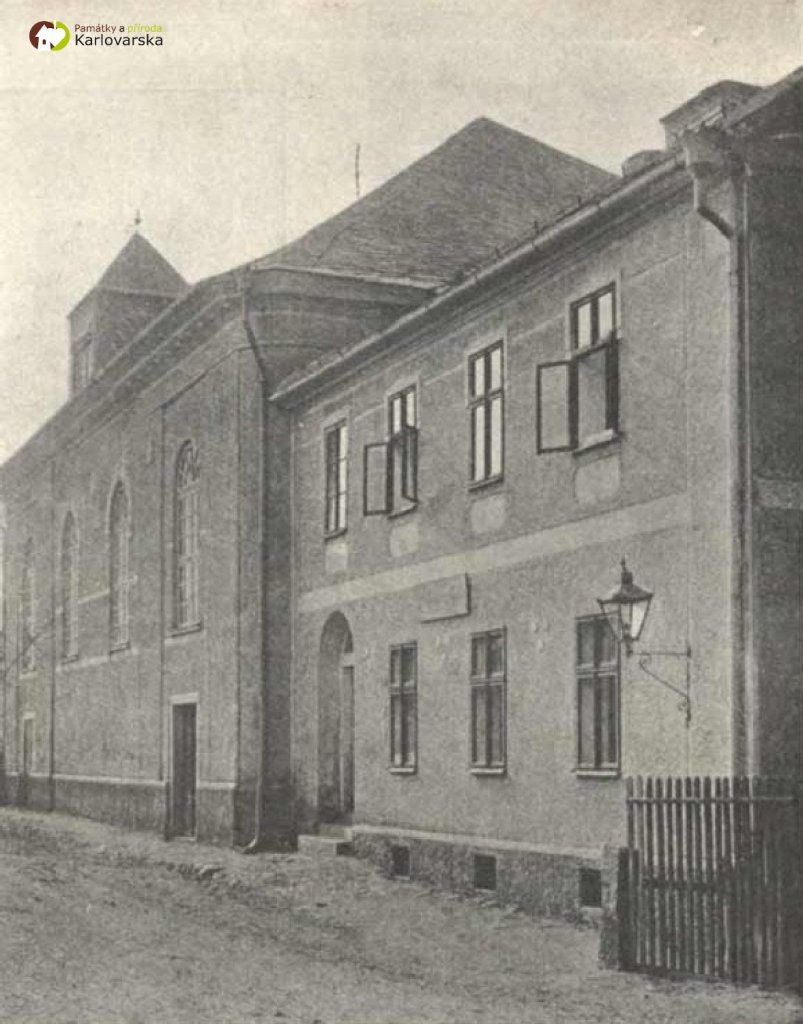
In 1842 a fire swept the Jewish quarter and destroyed the old synagogue together with many houses and the community archive. The same year the community built a new synagogue on the old site, on the road to Verušičky in the east of the village, to a design by an unknown architect. N. Buxbaum, Philipp Kohn and Efraim Löbl are named as the men who brought the project about. A community house with the rabbi's flat, the rabbinate office and a board room was added beside it.
From the 1870s most families left for larger towns, and by 1930 only 21 Jews remained. On 12 November 1938 the Nazis desecrated, looted and burned the synagogue. Its surviving walls stood for about two more decades and were demolished, probably in 1960, together with the community house.
Where it stood for nearly 110 years
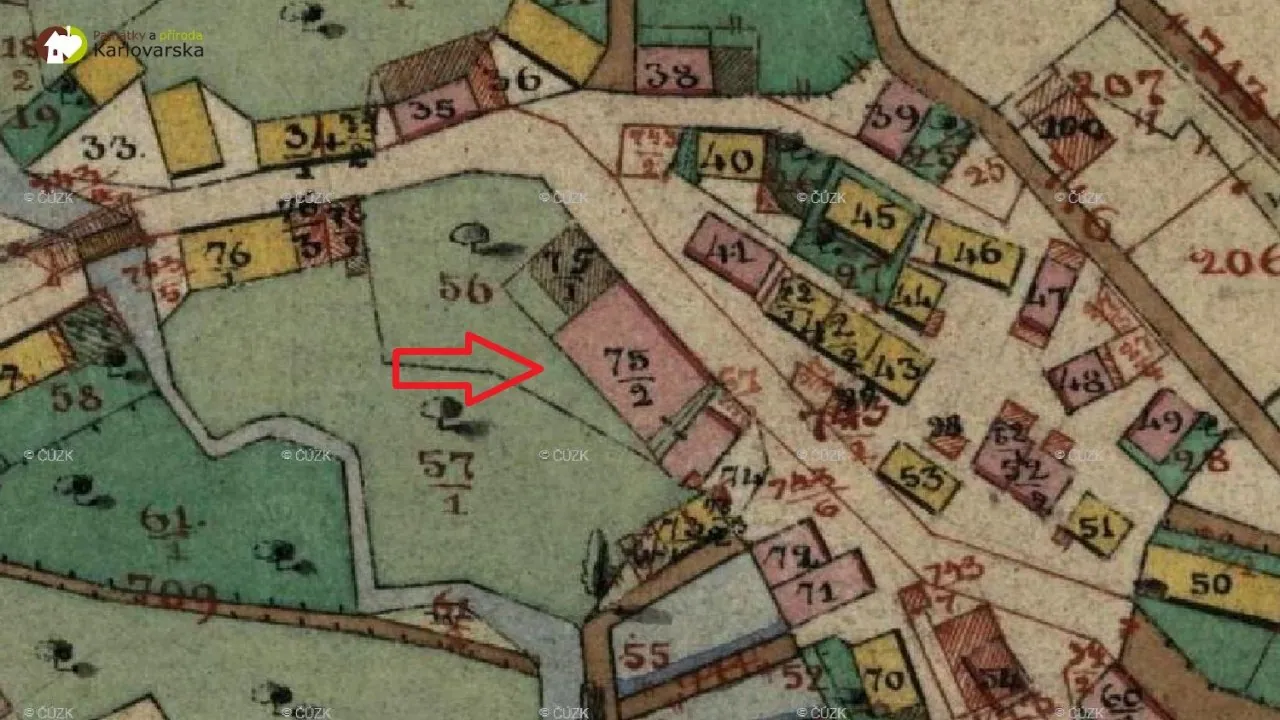
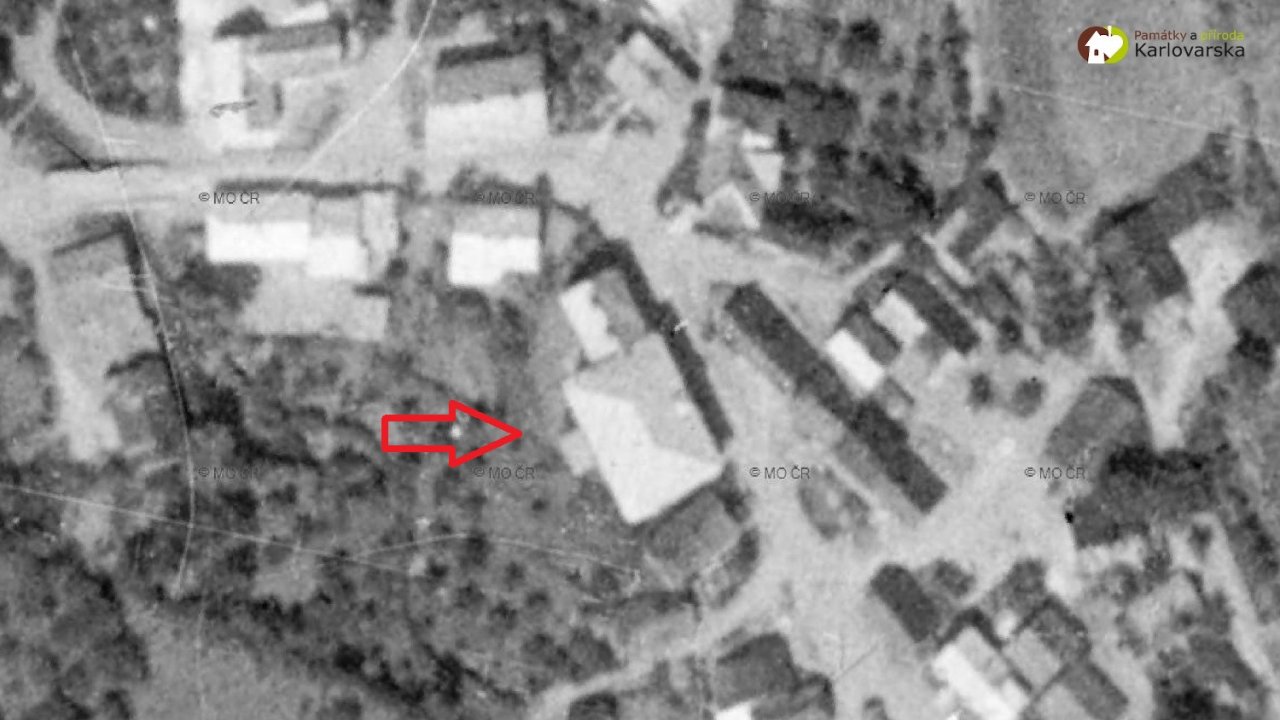
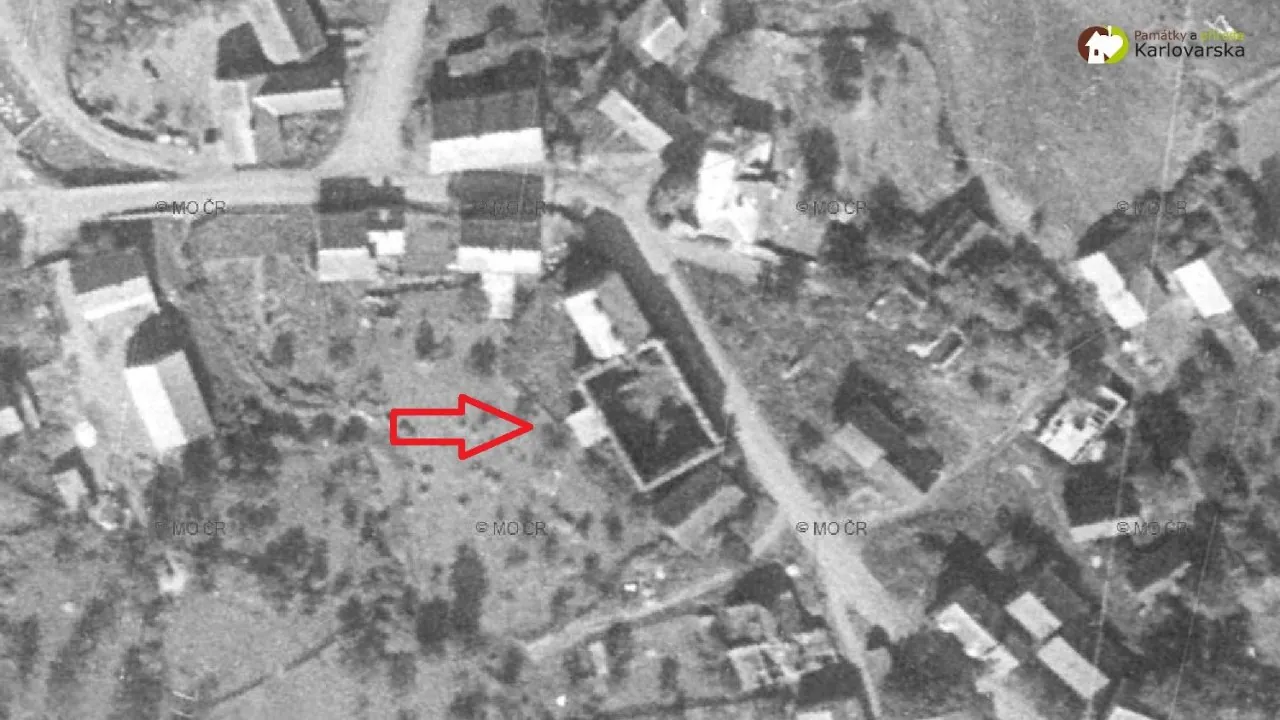
Historic: Jewish quarter of Luck (Luka), on the road from the bridge over the Pstruží potok (Kleinmühlbach) to Verušičky; stable cadastre plot 75. Today: land parcel no. 75, left side of the road to Verušičky, eastern part of Luka, 364 56 Verušičky (exact, from the heritage website's coordinates).
Größere Karte öffnen →Die jüdische Gemeinde
The Jewish settlement at Luka is documented in writing from the sixteenth century; the Encyclopaedia Judaica repeats a tradition that Jews from Bavaria founded the place and mentions them in 1198, and Jüdische Gemeinden notes a prayer place from the mid-fifteenth century. Between the mid-seventeenth and early eighteenth centuries about nine Jewish families lived there, and 17 in 1793. Unlike Jews in neighbouring villages, those of Luka enjoyed the favour of the manorial lords. The figures for the nineteenth century disagree: the Encyclopaedia Judaica gives 1,150 Jews in 1850, about 80 per cent of the population, and 446 in 1869, while the Karlovy Vary heritage website gives about 1,300 people in the wider community around 1850 but only 171 Jews in 30 houses in 1870. Under Philipp Kohn, community head from 1850 and later mayor, Luka became a market town with its own post office, a new bridge and a paved market square, and the mikveh and kosher slaughterhouse were rebuilt. After emancipation in 1867 families moved to Ústí nad Labem and other towns; there were 86 Jews in 1900 and 21 in 1930.
Architektur und Gestaltung
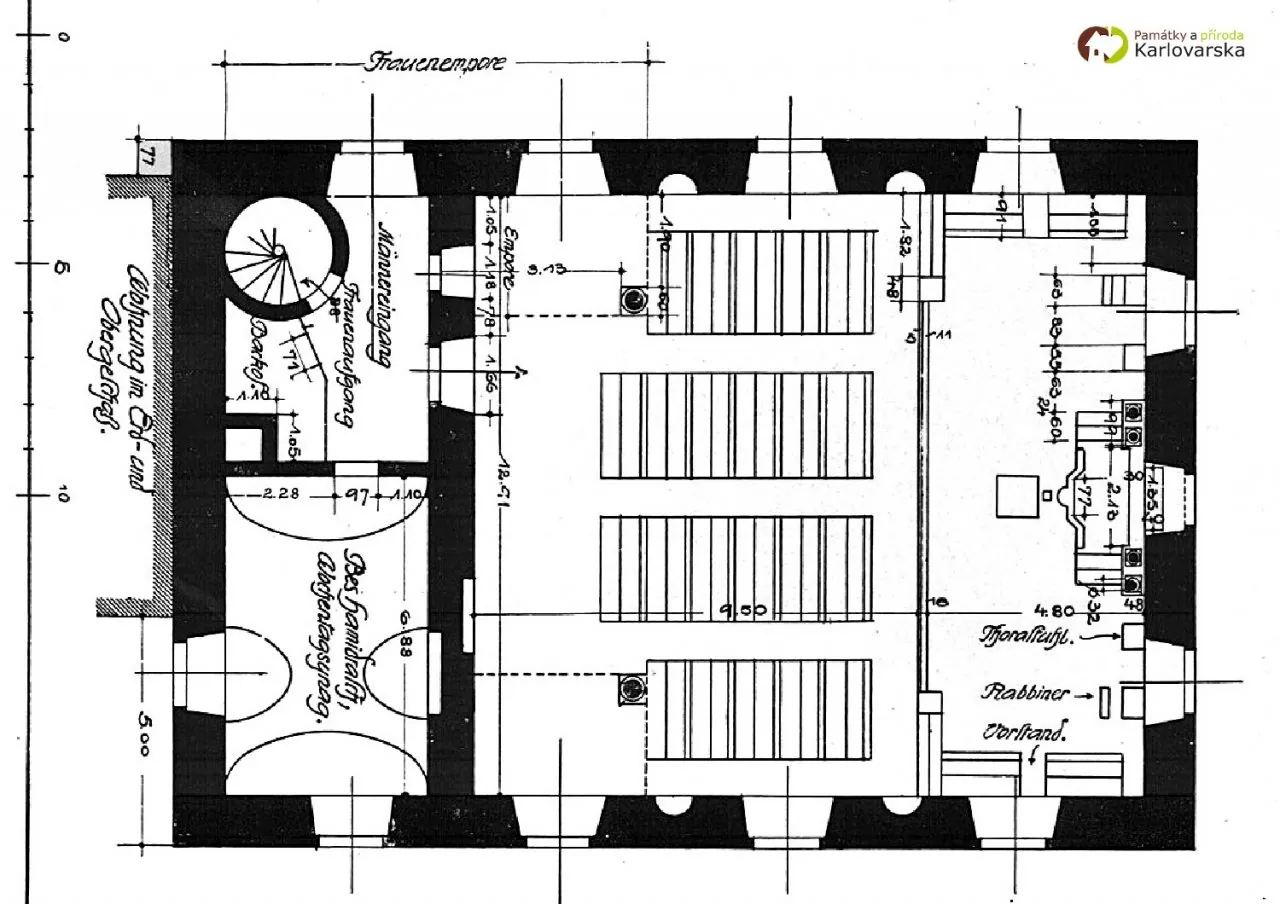
The synagogue was a large classicist building on a rectangular plan with rounded corners, covered by a hipped roof with a low square turret above the east front. The northeast street front and the opposite southwest front each had four bays of tall round-headed windows, with rectangular doors in the outer bays of the street front; the southeast wall had two windows and a small round window on its axis. Pilasters divided the outer walls, which ended in a heavy projecting cornice. A surviving photograph shows the two-storey community house set against the street in front, with the taller hall and its turret rising behind. Inside were three spaces: an entrance hall with a spiral stair to the women's gallery and a walled-off oven for baking matzah; a study room with a barrel vault and lunettes; and the main prayer hall, with a flat ceiling, taking about two thirds of the floor area. The mikveh may have been in the basement of the synagogue or of the community house. The architect and the seating capacity are unknown.
Leben in der Synagoge
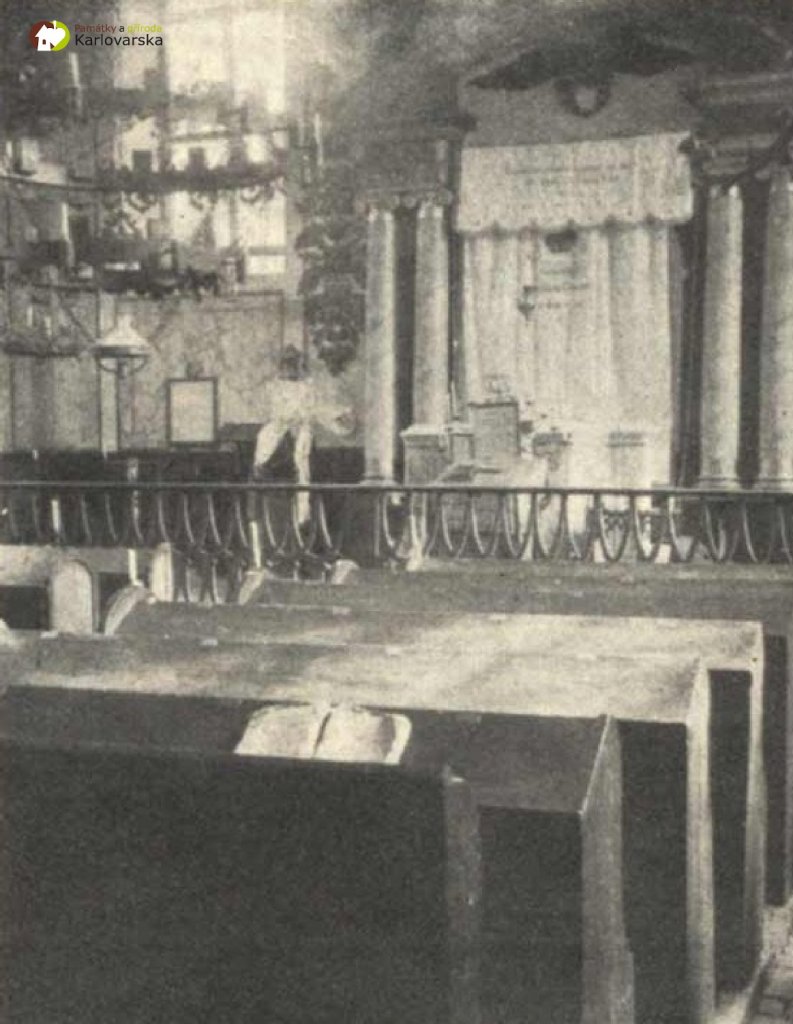
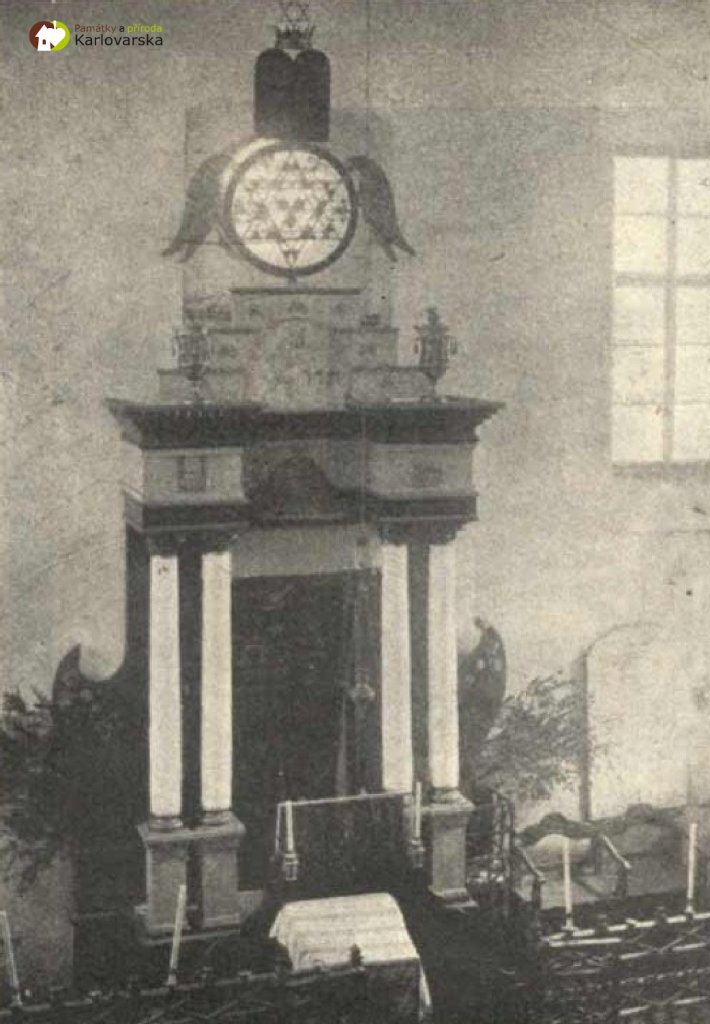
The Torah ark stood against the southeast wall, facing Jerusalem. Its shrine, covered by an ornamented parokhet curtain, was flanked by a pair of columns, and the crowning piece carried a Star of David with the Tablets of the Law and a crown in front of a round window, so that it appeared in a field of light. An eternal lamp hung before the ark, near the reader's desk, and the bimah was enclosed by a wrought-iron rail. Wooden pews stood in four rows, as in a church, which the heritage website takes as a sign of a Reform rite; the Encyclopaedia Judaica says the community had both an Orthodox rabbi and a Reform preacher. The preacher Israel Friedländer also taught in the Jewish school opened in 1860 upstairs in the community house. At Passover several women and a baker spent two weeks baking matzah in the oven in the vestibule, supplying Karlovy Vary, Ústí nad Labem and Prague. On 18 September 1932 hundreds of natives and descendants gathered for the building's 90th anniversary, when Rabbi Ignác Ziegler of Karlovy Vary gave the address.
Zerstörung
On 12 November 1938, in connection with Kristallnacht, the Nazis desecrated the synagogue, plundered its interior and set the building on fire. Several firemen intervened at once but could not save it. The Encyclopaedia Judaica dates the burning to 10 November 1938. During the Nazi occupation that followed, the neighbouring community house served as the municipal office and gendarmerie station, and the burned-out outer walls of the synagogue were reportedly given a temporary roof and used as a joinery workshop. After the expulsion of the German population at the end of the Second World War, the former community house served a state farm as offices and storage; Jüdische Gemeinden says the former synagogue was used as a warehouse. A military aerial photograph of September 1956 still shows the burned torso beside the community house. Probably in 1960 the by then badly decayed community house and the synagogue ruin were pulled down and the ground levelled; an aerial photograph of October 1961 shows the site empty. Who ordered or carried out the demolition is not recorded in the sources read.
Das Schicksal der Gemeinde
The community was already small before the war: 21 people declared the Jewish faith in Luka in 1930, too few for a regular minyan. Early in 1938 some of them sold their property, and some moved to Prague and others to Karlovy Vary. The last head of the religious community was Albert Hirsch. The Nazis sold the gravestones of the Jewish cemetery to a stonemason, according to the Encyclopaedia Judaica, and JewishGen's cemetery survey records that tombstones were taken away before the Second World War and that the last stone was stolen after 1965. What happened to the last Jews of Luka after they left, and how many of them were later deported and murdered, is unknown: no source read names victims from the village, and no deportation from Luka itself is recorded. No Jewish community was re-established after 1945, and no Jews live in Luka today. Most of the former Jewish houses of the village were demolished in the Communist period, according to Jüdische Gemeinden.
Der Ort heute
The site of the synagogue and the community house lies on the left side of the road to Verušičky in the eastern part of Luka. It is land parcel no. 75, 797 square metres, registered as a demolition site and owned by the municipality of Verušičky. Photographs taken in April 2020 show uneven, overgrown ground, and much rubble from the buildings is still there. The plot is freely accessible. Nothing of the synagogue stands above ground. The Jewish cemetery about 800 metres west of the village survives only in remnants, with its gateway and enclosing wall but no gravestones.
Bedeutende Namen
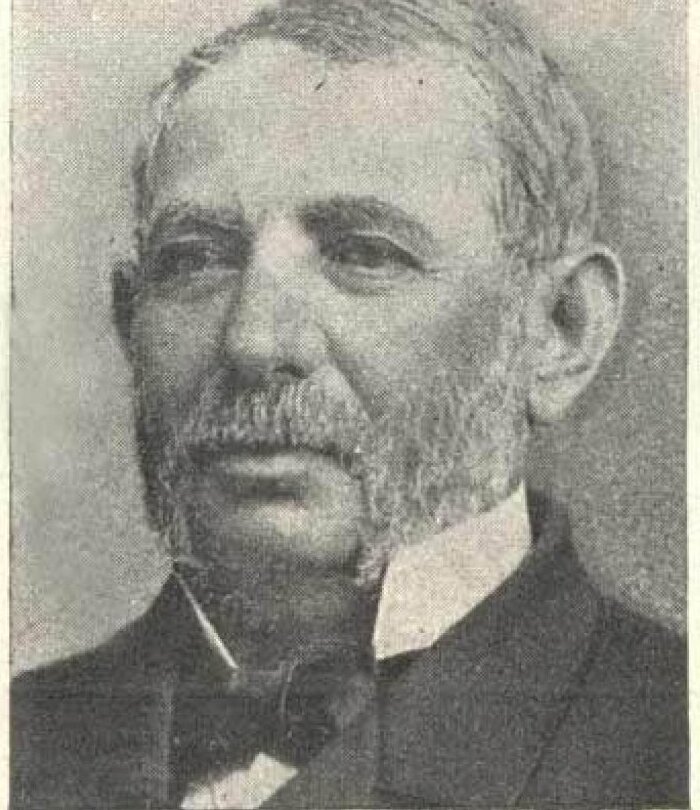
Philipp (Feiwel) Kohn
UnknownCo-builder of the synagogue; head of the Jewish community from 1850 and mayor of LukaKohn is named with N. Buxbaum and Efraim Löbl as one of the men who brought about the building of the new synagogue in 1842. Elected head of the Jewish community in 1850 and a member of the representation of Bohemian Jewry, he became mayor of Luka, which under him became a market town; the mikveh and kosher slaughterhouse were rebuilt and the burial society given new statutes. He was made an honorary citizen and moved to Prague in 1879.
Biografie oder Quelle →Israel Friedländer
UnknownPreacher of the Luka congregation and teacherThe heritage website names Israel Friedländer as the community's own preacher in the later nineteenth century. In 1873, when he was teaching in the Jewish school on the upper floor of the community house beside the synagogue, the school was declared a public one-class school with German as the language of instruction. Leopold Friedländer is also mentioned as active at the time. Nothing more about his life was found.
Biografie oder Quelle →Albert Hirsch
UnknownLast head of the Luka Jewish religious communityAlbert Hirsch is named as the last head of the religious community of Luka, which by 1930 numbered only 21 people and used the 1842 synagogue until it was burned in November 1938. Early in 1938 several members sold their property and moved to Prague or Karlovy Vary. Nothing further about his life or his fate after 1938 was found in the sources read.
Biografie oder Quelle →Haben Sie etwas beizutragen?
Fotos, Dokumente, Familiengeschichten oder Erinnerungen an diese Synagoge und ihre Gemeinde halten ihre Geschichte lebendig.
Share a memory or thought
No comments yet. Be the first to add one.