
История Second Synagogue of Magdala
Magdala, called Migdal in Hebrew, was a large Jewish town on the north-western shore of the Sea of Galilee about two thousand years ago. Josephus used it as his main base in the Galilee during the revolt against Rome, and Christian tradition makes it the home of Mary Magdalene. In 2009 the Israel Antiquities Authority uncovered a synagogue on the eastern side of the ancient town, the one known for the Magdala Stone with its carved seven-branched menorah.
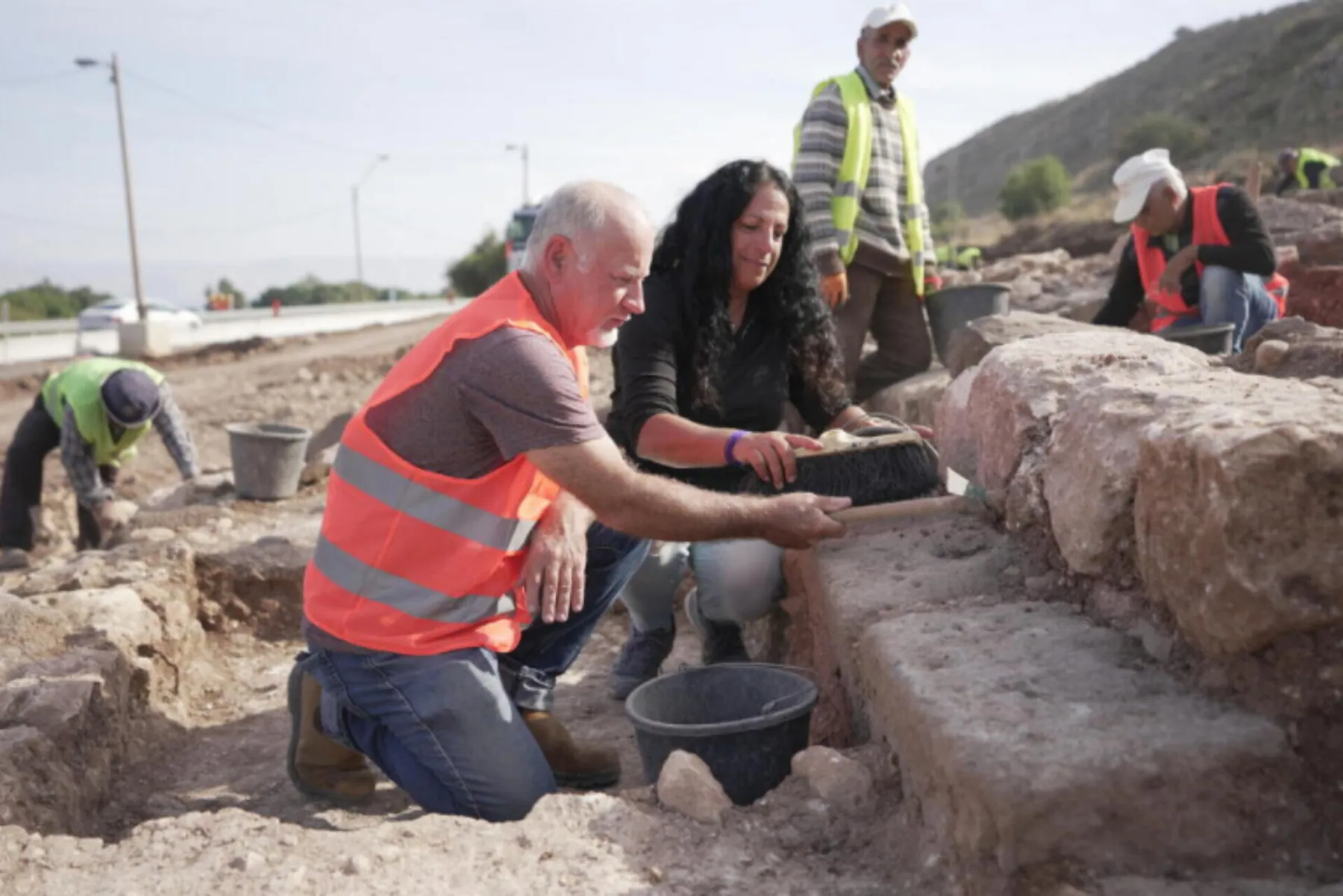
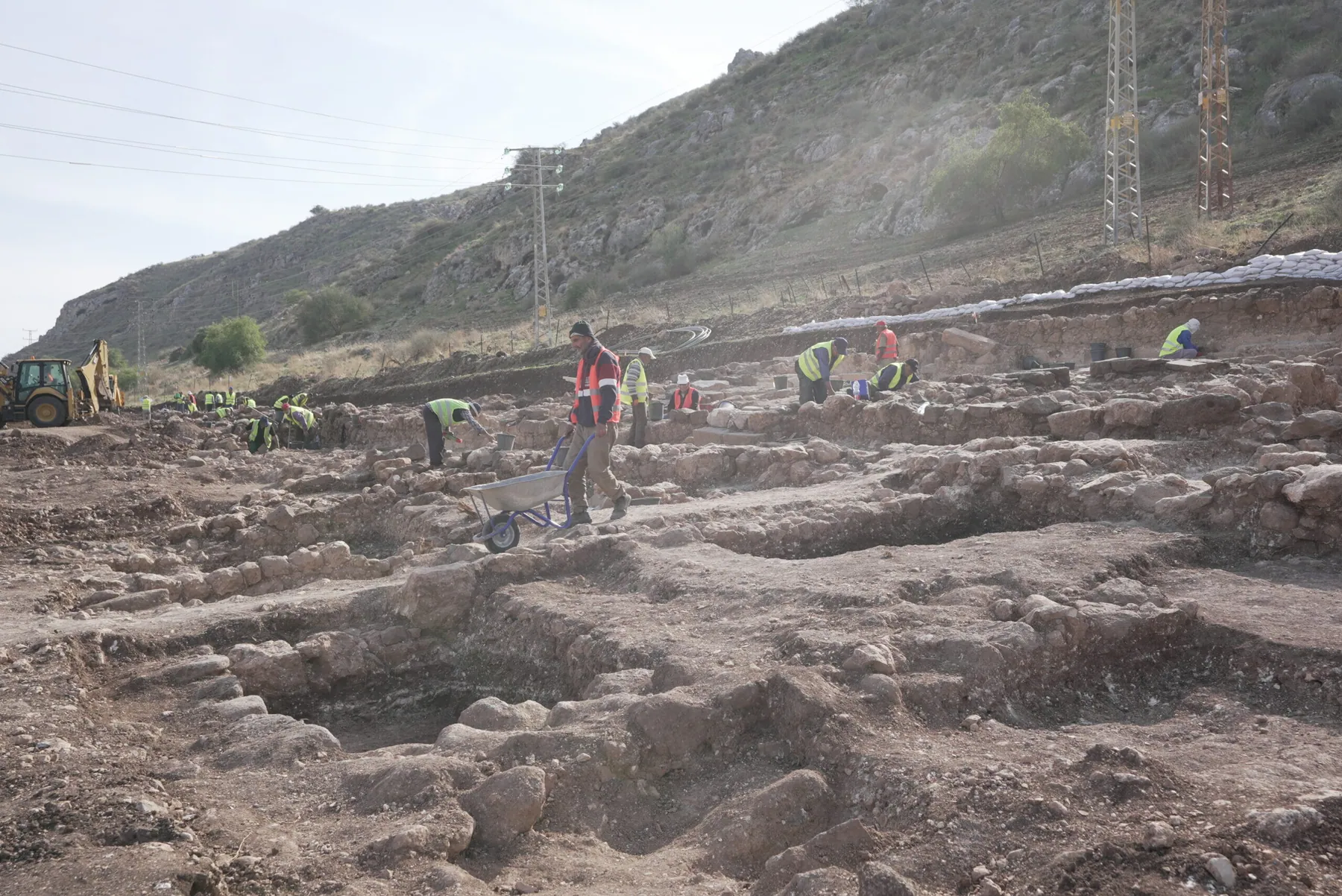
At the start of 2021 an Israel Antiquities Authority test dig for Netivei Israel, the national roads company, ahead of widening Route 90 at the Migdal junction, exposed part of a Roman-period public building. A salvage excavation by Y.G. Contract Archaeology under Yehuda Govrin, with the Zinman Institute of Archaeology at the University of Haifa as academic sponsor and Dina Avshalom-Gorni among its directors, identified it as a synagogue. The find was announced on 12 December 2021. The excavators called it the first case of two synagogues of the Second Temple period found in one settlement. They described a square hall with plastered walls and a plastered stone bench, two side rooms, and a stone shelf that may have held scrolls. No source read gives its exact date, its size or the end of its use, and no final report has been found.
Where it stood
Ancient Magdala (Migdal), western sector, beside a residential street of the Roman-period town; today next to the Migdal junction of Route 90 and Route 807, Migdal, Sea of Galilee shore (approximate).
Открыть большую карту →Еврейская община
The congregation that built and used this synagogue is known only from the archaeology of Magdala itself. Press reports of the 2021 discovery describe Migdal as a large Jewish town of several thousand residents in the late Second Temple period, with ritual baths, streets, a market and industrial installations uncovered in earlier excavations. The excavators stress that this synagogue stood beside a residential street, whereas the synagogue found in 2009 was surrounded by an industrial area, and they take this as a sign that local synagogues grew up inside the social fabric of the town rather than as a single central institution. Dina Avshalom-Gorni linked the finds from the building to the town's close ties with Jerusalem and the Temple. Adi Erlich suggested that the two buildings show Jews of the period looking for places for religious and probably social gatherings. No inscription, donor or office-holder of this congregation is recorded, and its size is unknown.
Архитектура и дизайн
According to the University of Haifa and the excavators, the synagogue was a broad, square building of basalt and limestone. It had a central hall and two additional rooms. The walls of the hall were coated with white and coloured plaster, and a stone bench, also plastered, was built against the walls of the hall. The roof was probably of wood and clay and rested on six columns; two of their stone bases were found in place. A small room on the south side held a plastered stone shelf that the excavators think may have been used to store scrolls. No measurements, plan or orientation have been published in the sources read, and no mosaic or inscription is reported. The 2021 photographs show a heavy wall of large dressed blocks with a plastered bench at its foot. An earlier note that the building was less ornate than the 2009 synagogue rests only on a Wikipedia summary.
Жизнь в синагоге
The excavators interpret the building as a place for reading and studying the Torah and for community gatherings. Dina Avshalom-Gorni said the discovery reflects the need for a dedicated building for Torah reading and study and for social meetings, and that local activity took place in the shadow of Jerusalem, which remained the religious centre. The small southern room with its plastered stone shelf may have been where the scrolls were kept. Finds reported from the excavation include clay oil lamps, mould-made glass bowls, coins and stone vessels of the kind used to keep ritual purity, which the excavators read as evidence of the inhabitants' connection with the Temple. Nothing in the sources read describes the prayers, the officials or any decoration with religious symbols in this building, and the dates of the coins have not been published in what was read.
Разрушение
No source read says how or when this synagogue went out of use. The 2021 reports date it to the Second Temple period, when the Temple in Jerusalem was still standing, which means it was built before 70 CE, but none of them describes a destruction layer, burning or deliberate demolition in the building. Magdala was Josephus's main base in the Galilee during the Jewish revolt against Rome, and the English Wikipedia article on the town says it was destroyed by the Romans in that war, citing a collapse layer of the Second Temple period; the same article notes that Mordechai Aviam found no fortifications or destruction layer in the large excavations. Whether the second synagogue was ruined in the Roman campaign, abandoned, or reused later is therefore unknown. The building survived only as low walls, benches and floors buried under later soil until the road works of 2021 exposed it. No perpetrator is named in any source read.
Судьба общины
The fate of the people who used this synagogue is not recorded in the sources read. Magdala's Jewish population was drawn into the revolt against Rome that began in 66 CE, and the town served as a base for Josephus, who commanded the rebels in the Galilee. The Wikipedia article on Magdala says the town was destroyed by the Romans during that war and that coins of the revolt years were found in excavations in the 1970s, but it gives no account of casualties, captives or survivors for this neighbourhood. Some scholars identify Magdala with the Taricheae described by Josephus, but the identification is disputed, so his account of fighting at Taricheae cannot be applied to this congregation with certainty. Nothing is known of whether anyone returned to use the building after the war.
Место сегодня
The remains lie beside the Migdal junction on Route 90 at the western edge of ancient Magdala, between 160 and 200 metres from the synagogue excavated in 2009. When the find was announced in December 2021 the excavation was still in progress. Yehuda Govrin said all parties intended to preserve the synagogue in place and to open it to visitors, and Eli Escosido, director of the Israel Antiquities Authority, said a decision on developing the site would be taken within weeks. No later source was found saying whether the remains were conserved, opened to the public or covered again, so their present state is unknown. The pin marks the road junction, not the building itself.
Вам есть чем поделиться?
Фотографии, документы, семейные истории и воспоминания об этой синагоге и её общине помогают сохранить её историю.
- Second ancient synagogue found in Magdala
- Remains of a second synagogue from the Second Temple Period sheds light on Jewish life 2,000 years ago
- Migdal synagogue
- בית כנסת שני מימי בית שני נמצא בחפירות במגדל
- Israeli Archaeologists Unearth 2,000-Year-Old Synagogue
- Road work leads to discovery of 2nd 2,000-year-old synagogue at Migdal
- Ancient synagogue uncovered in northern Israel
- Second synagogue from Temple era excavated in Migdal near the Kinneret
- בית כנסת שני מימי הבית השני נמצא בחפירות במגדל
- 2nd-Temple-period synagogue found where Gospel's Mary Magdalene was born
- Magdala
- Migdal junction (OpenStreetMap node 5210707654)
Share a memory or thought
No comments yet. Be the first to add one.