
История Medieval Synagogue of Mainz
Mainz, called Magenza in Hebrew, had one of the oldest and most learned Jewish communities north of the Alps. Documents mention Jews there from the first half of the tenth century, and around the year 1000 Gershom ben Judah made its academy a centre of Talmud study. With Speyer and Worms it formed the ShUM league of communities. The Jewish Virtual Library states that the synagogue is first mentioned in 1093. It was not one unchanged building: sources record that it was burned in May 1096, desecrated and burned in 1281, repaired in the 1270s, and caught up in the burning of the Jewish quarter in August 1349. A building inscription of 1271 found in 1907 on Schusterstraße shows where at least one phase of the synagogue stood. The community was expelled by the city in 1438, and the synagogue was turned into a municipal coal store. Jews returned briefly in 1445 but were expelled again in 1462 and 1470 to 1471, and in 1473 Archbishop Adolf II had the synagogue converted into an All Saints chapel. When and how that chapel disappeared is unknown in the sources read. No remains of the medieval Jewish quarter are visible today, and the site lies under the modern city centre near Schusterstraße.
Where it stood for 345 years
Historic: Jewish quarter around Schusterstraße, Stadthausstraße and Flachsmarkt, Mainz. Today: site of the former Tietz/Kaufhof department store, now Galeria, Schusterstraße 41-45, 55116 Mainz (approximate).
Открыть большую карту →Еврейская община
The Jewish Encyclopedia notes a legend that Jews came to Mainz under Roman rule but finds documents only from the first half of the tenth century. The Kalonymus family founded an academy there in the tenth century, and under Gershom ben Judah it reached its peak; his pupils and contemporaries included Judah ha-Kohen, Eliezer ben Isaac, Jacob ben Yakar and Isaac ha-Levi. Rabbinical synods met in Mainz in 1150, 1223, 1245, 1307 and 1381. The community was governed by a council of Jews headed by a 'Bishop of the Jews' appointed by the archbishop. At the end of the thirteenth century 54 Jewish houses are recorded. There was no walled ghetto: Ulrich Hausmann places the synagogue, ritual bath and Jewish bakehouse in a quarter around Stadthausstraße, Schusterstraße and the Flachsmarkt that Christians also lived in, and in 1414 twenty-seven houses rented by Jews stood in Betzelsgasse, Stadionerhofstraße and Schusterstraße near the synagogue. Moses Molin reorganised the ShUM league in 1381, and his son Jacob Molin, the Maharil, who died in 1427, was the leading rabbinic authority of his time.
Архитектура и дизайн
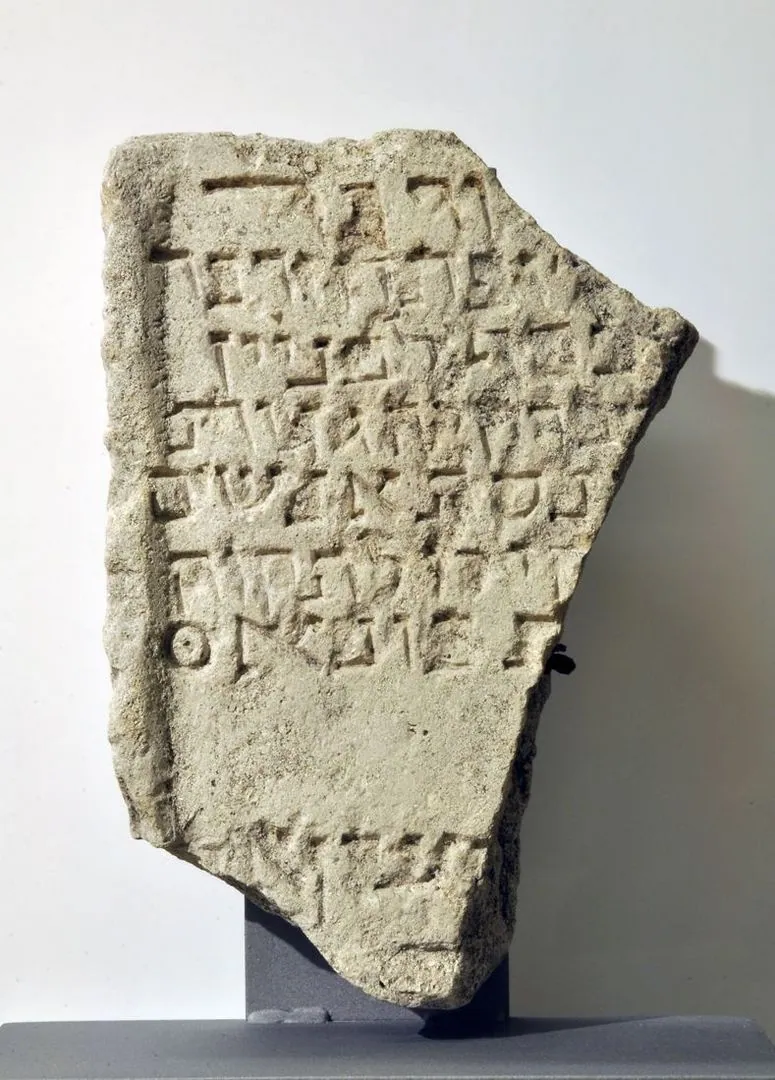
No plan, drawing or view of the medieval synagogue of Mainz was found, and its architect, size and style are unknown. The only physical evidence located in this research is a fragment of a building inscription in yellowish limestone, 44 cm high, now in the Landesmuseum Mainz (inventory UKH 2007/18(a)). It was found on 10 March 1907 while the foundations of the Tietz department store on Schusterstraße were being dug, and the museum dates it to 1271. In the museum's reconstructed reading it records that David, son of Avraham the scholar, gathered eight marks of silver for this building to repair damage to the roof and the gate of the men's and the women's synagogue. The text therefore shows that the building of the 1270s had a separate women's synagogue alongside the men's hall and that it had a roof and entrance in need of repair. Whether the synagogue used after 1349 and seized in 1438 stood on the same plot or was a new building is not stated in the sources read.
Жизнь в синагоге
The sources read say little about worship inside the building itself, but Mainz was one of the main centres of Ashkenazi learning. Gershom ben Judah, called 'Light of the Exile', taught there and issued ordinances that governed Jewish life in the region for centuries. Rabbinical synods met in the city five times between 1150 and 1381. The 1271 inscription records a congregation that raised money among its members to keep its synagogue in repair, naming the donor David, son of Avraham the scholar, his wife Bonas and a rabbi Yosef, whose name survives only in part. The building served both men and women, each with their own section and entrance. In the late fourteenth and early fifteenth centuries the community was led by Moses Molin and then by his son Jacob Molin, the Maharil, whose book of customs records the liturgical practices of the Rhineland communities. A ritual bath stood near the synagogue. Synagogue officials such as cantors and sextons are not named in the sources found.
Разрушение
The synagogue was attacked several times. On 27 May 1096 Crusaders under Count Emicho of Leiningen and a mob attacked the Jews of Mainz, who until then had been under the archbishop's protection; the Jewish Encyclopedia counts more than 1,100 dead, and the Jewish Virtual Library states that the synagogue and quarter were burned on 29 May. In June 1281, after a blood libel, the synagogue was desecrated and burned and Rabbi Meir ben Abraham ha-Kohen was killed; the Landesmuseum also records the synagogue at Schusterstraße as destroyed in 1281. In August 1349, during the Black Death persecutions, nearly the whole community perished and the Jewish quarter was set on fire. The building's use as a synagogue ended with the expulsion of 1438: the city council drove the Jews out by 25 July and confiscated the synagogue and cemetery, and the synagogue became a municipal coal store. After a further expulsion in 1470 to 1471, Archbishop Adolf II had it converted in 1473 into an All Saints chapel to make the expulsion final. Who later demolished the chapel, and when, is unknown.
Судьба общины
The Black Death pogrom of August 1349 destroyed almost the entire community; the Jewish Virtual Library gives a figure of about 6,000 dead, a figure not confirmed elsewhere, and the city council confiscated Jewish property. Jews were allowed to resettle, and in 1414 Archbishop Diether's regime readmitted them after the old city government fell. On 25 July 1438 the city council expelled the community, ploughed up the Judensand cemetery and reused its gravestones as building material. A few Jews were readmitted in the summer of 1445, but Archbishop Adolf II expelled them again in 1462 and from the whole archdiocese in 1470 to 1471. Jews were again living in Mainz in the sixteenth century: a prayer house in the Judengasse is recorded between 1526 and 1545, a new community was founded in 1583, and a synagogue was built in the Judengasse in 1684. The medieval cemetery was partly restored as a memorial cemetery in 1926 and is today part of the ShUM World Heritage site.
Место сегодня
No part of the medieval synagogue is known to survive above ground, and the city states that no remains of the medieval Jewish quarter are visible. The 1271 building inscription was found in 1907 on the site of the Tietz department store on Schusterstraße, later Kaufhof and now the Galeria department store at Schusterstraße 41-45, and the Landesmuseum describes that site as the place where the synagogue stood. The later chapel's exact plot is not recorded in the sources read. The ShUM heritage body notes that locating the medieval ritual bath and other remains has not been a priority. The inscription fragment is shown in the Landesmuseum Mainz.
Значимые имена
Gershom ben Judah (Rabbenu Gershom, Me'or ha-Golah)
c. 960-1028Head of the Mainz academyGershom ben Judah, called 'Light of the Exile', taught in Mainz around the year 1000 and brought its academy to its height. His ordinances (takkanot) governed Ashkenazi Jewish life for centuries, and his pupils included Judah ha-Kohen, Jacob ben Yakar and Isaac ha-Levi. The ShUM organisation gives his death as 1028 in Mainz. A medieval memorial stone for him stands in the Judensand cemetery. No source read describes his role in the synagogue building itself.
Биография или источник →Kalonymus ben Meshullam
fl. 1096Parnas (lay leader) of the Mainz communityThe Encyclopaedia Judaica article on Mainz names Kalonymus ben Meshullam as the parnas, the elected lay head, of the Mainz community. He led the congregation at the time of the First Crusade, when in May 1096 Crusaders under Count Emicho of Leiningen attacked the Jews of Mainz and the synagogue and Jewish quarter were burned. No medieval chronicle account of his own fate was read in this research, so it is not given here.
Биография или источник →David son of Avraham
fl. 1271Donor for the repair of the synagogueDavid, son of Avraham the scholar, is named in the building inscription of 1271 found in 1907 on Schusterstraße. In the Landesmuseum Mainz reading, he began and gathered eight marks of silver for this building, to repair the damage to the roof and the gate of the men's and women's synagogue. His wife Bonas is also named, together with a rabbi Yosef whose name survives only in part. Nothing more is known about him.
Биография или источник →Jacob ben Moses Molin (Maharil)
c. 1355-1427Rabbi of MainzJacob Molin, known as the Maharil, is described by the Encyclopaedia Judaica as the Mainz rabbi and by Ulrich Hausmann as the leading rabbinic authority of his time. He was the son of Moses Molin, who reorganised the ShUM league in 1381. His Sefer Minhagim records the customs of the Rhineland communities. He died in 1427, eleven years before the expulsion of 1438 ended the synagogue's use. Sources give his birth as about 1355, 1356 or 1375.
Биография или источник →Вам есть чем поделиться?
Фотографии, документы, семейные истории и воспоминания об этой синагоге и её общине помогают сохранить её историю.
- Mainz (Mayence)
- Mainz, Germany
- Leuchte des Exils - Zur Geschichte des jüdischen Mainz (in Zeugnisse jüdischen Lebens in Mainz und Bingen, sample pages)
- Magenza, a medieval center of Jewish culture
- Magenza (brochure, 2023)
- Bauinschrift einer Synagoge in Mainz (Fragment), UKH 2007/18(a)
- ShUM: Mainz
- Alter Jüdischer Friedhof Judensand
- Galeria, Schusterstraße 41-45, Mainz (OpenStreetMap way 24318085)
Share a memory or thought
No comments yet. Be the first to add one.