

La historia de Makó Neolog Synagogue
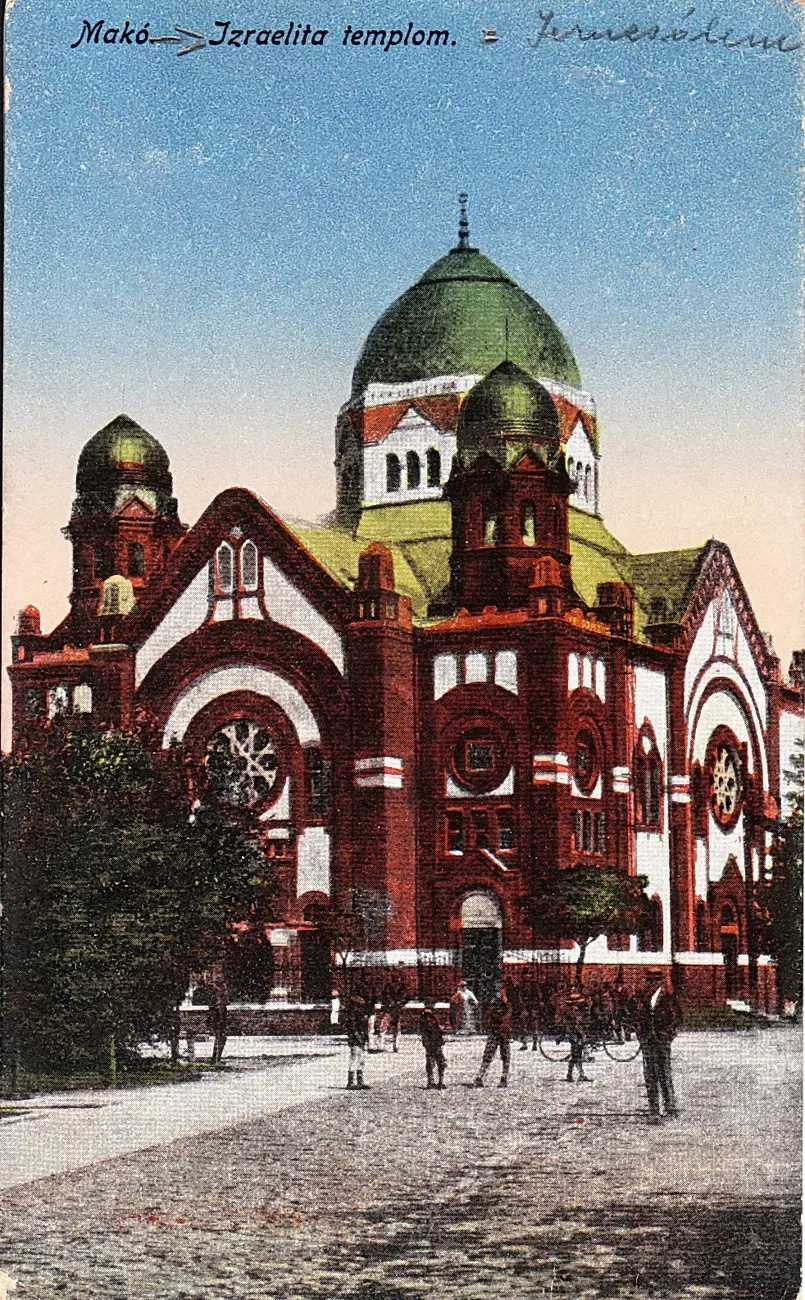
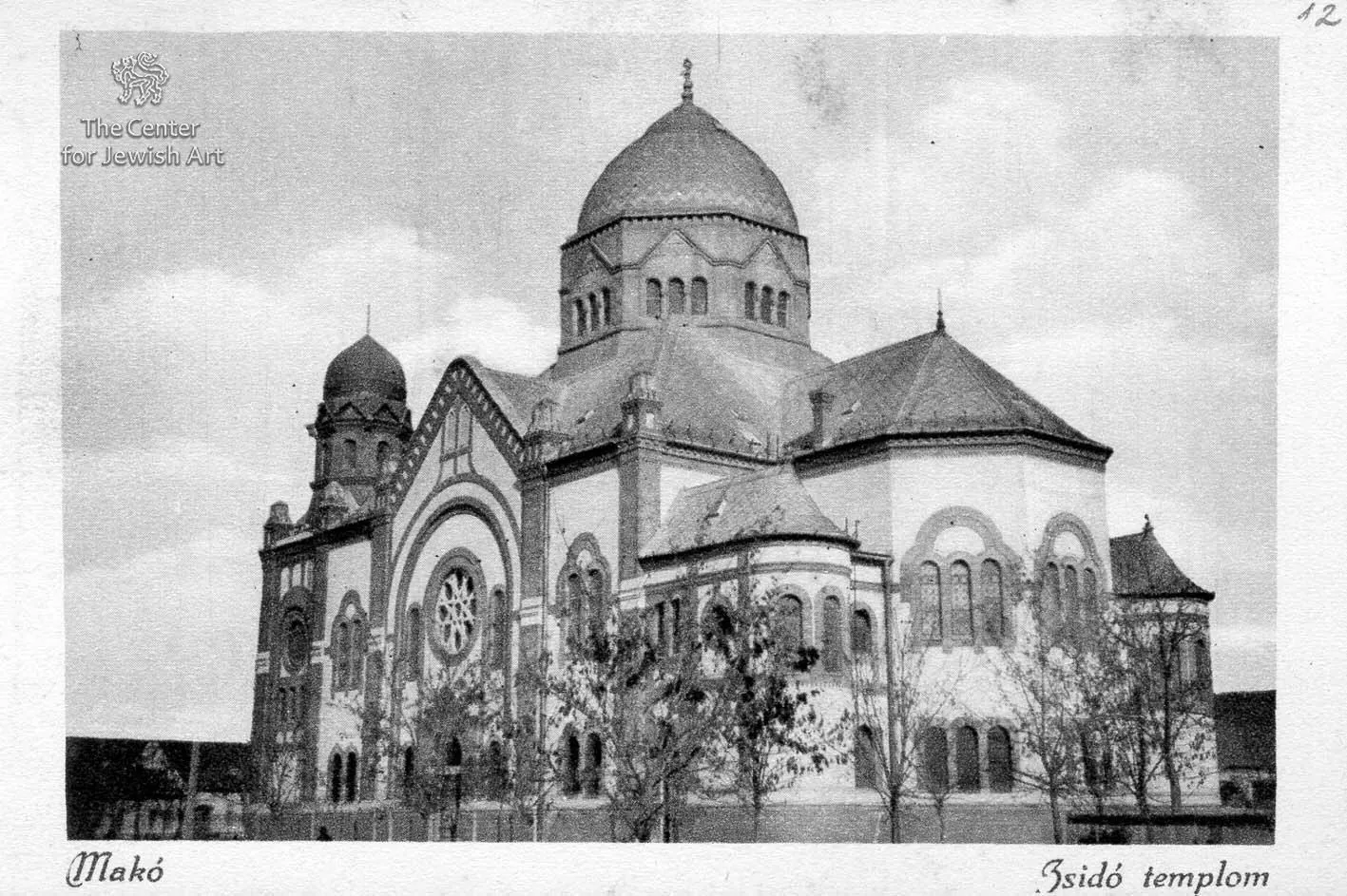
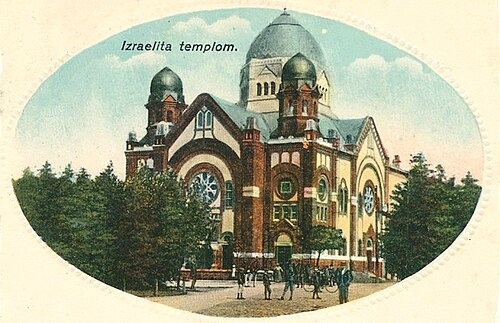
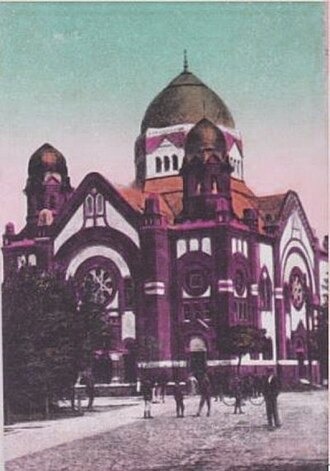
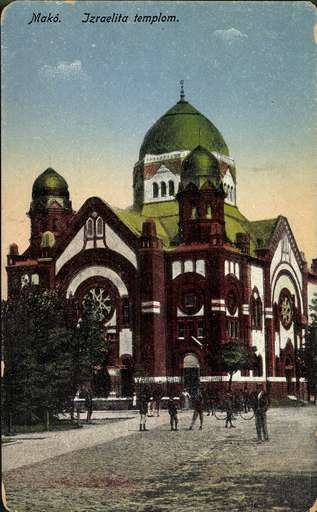
The synagogue stood in the historic Jewish quarter of Makó, a market town on the River Maros in south-eastern Hungary, on Eötvös utca beside Csanád vezér tér. Makó's Neolog congregation decided in 1893 to replace its plain late eighteenth-century synagogue, announced a design competition in 1907 and gave the commission to Lipót Baumhorn, the designer of some 22 synagogues across the Kingdom of Hungary. The foundation stone was laid on 5 October 1911 and Chief Rabbi Ármin Kecskeméti consecrated the building in early September 1914, weeks after the outbreak of the First World War. With its large central dome, two onion-domed turrets and striped brick façades it was described as the most beautiful building in the town. Inside, an organ and choir stood behind the ark and sermons were preached only in Hungarian. On 16 June 1944 Hungarian gendarmes assembled the Jews of the Makó ghetto around the synagogue before deporting them. A small congregation of survivors used the building after the war, but its dome decayed and the town closed it in the early 1960s. In the spring of 1965 the Communists demolished it. The Orthodox synagogue of 1895, a short walk away, still stands.
Where it stood for 51 years
Historic: Eötvös utca 1 (formerly Fürdő utca), Makó, beside the old synagogue at Deák Ferenc utca 6. Today: Makó Police Headquarters (former Communist Party building), Eötvös utca / Csanád vezér tér, 6900 Makó.
Abrir mapa ampliado →La comunidad judía
Jews were settled in Makó around 1740 by Miklós Stanislavich, bishop of Csanád, and a burial society was founded in 1748. The first synagogue was built around 1791 between today's Deák Ferenc and Eötvös streets, and local tradition holds that the first Hungarian-language sermon in the country was given there in 1814. The community numbered about 1,120 in the mid-nineteenth century, 1,928 in 1910 and 2,380 in 1920, roughly five to six per cent of the town, which was nicknamed Little Jerusalem. After the Hungarian Jewish Congress the congregation led by Chief Rabbi Antal Enoch Fischer (in office 1864–1896) took the Congress, or Neolog, path, while the Orthodox formed their own community and built a synagogue in 1895. The Neolog members, about a third of Makó's Jews, were largely lawyers, doctors and merchants, prominent in civic life and in the onion trade that made the town known. The congregation kept an elementary school, a girls' school from 1880, a women's charitable society and a Chevra Kadisha. In April 1944 it had 550 members; the Orthodox community had 1,179.
Arquitectura y diseño
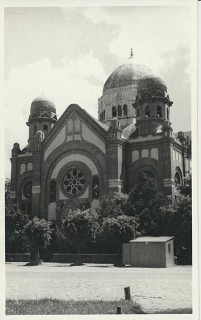
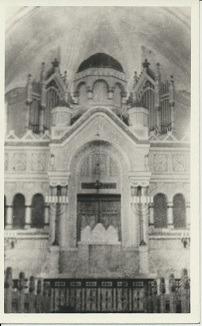
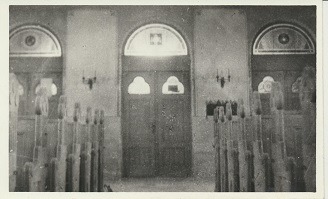
Baumhorn set the new synagogue next to the old one, on the site of the former bathhouse, with its long axis at right angles to Eötvös utca. The architectural historian László Gerő described a centrally planned building: a square core carrying a dome on an octagonal drum, a half-octagonal eastern wing flanked by two chapel-like stair buildings, and triple round-arched windows, closely resembling Baumhorn's synagogue in Eger. The dome rested on four wall piers. Old postcards show brick façades banded with pale render, broad gables with rose windows on the west and side fronts, and a pair of onion-domed turrets flanking the main entrance. Local historians call the style Moorish Art Nouveau; Hungarian Wikipedia lists it as eclectic. The interior followed Neolog reforms: the bimah stood directly in front of the ark, with the organ and choir behind it, and women's galleries ran along both sides and over the main entrance. Blue and gold dominated the decoration, and the coloured glass windows carried Old Testament themes. In 1926 the building was fenced and its yard planted as a garden. Its seating capacity is not recorded in the sources consulted.
La vida dentro de la sinagoga
Ármin Kecskeméti, chief rabbi of the Neolog community from 1898, championed the building and consecrated it during the presidency of Dr Sámuel Dózsa. Kecskeméti, a historian of Jewish literature and later a lecturer at the University of Szeged, preached only in Hungarian and held Sabbath services for the pupils of the Jewish school. A mixed choir was organised for the new synagogue on 14 February 1914, months before the consecration, and an eighteen-voice women's choir sang under chief cantor Ármin Weisz, accompanied by the organ; Mór Strausz also served as cantor. In 1922 a tablet to the congregation's dead of the First World War was unveiled in the building. On 16 June 1944 gendarmes drove the ghetto's inhabitants to the area around the synagogue, separated men from women, and finance officials took their last valuables; women over seventeen were subjected to invasive body searches inside the synagogue. Returning survivors worshipped there again after 1945, and in 1947 the congregation placed marble tablets with the names of its dead in the vestibule.
Destrucción
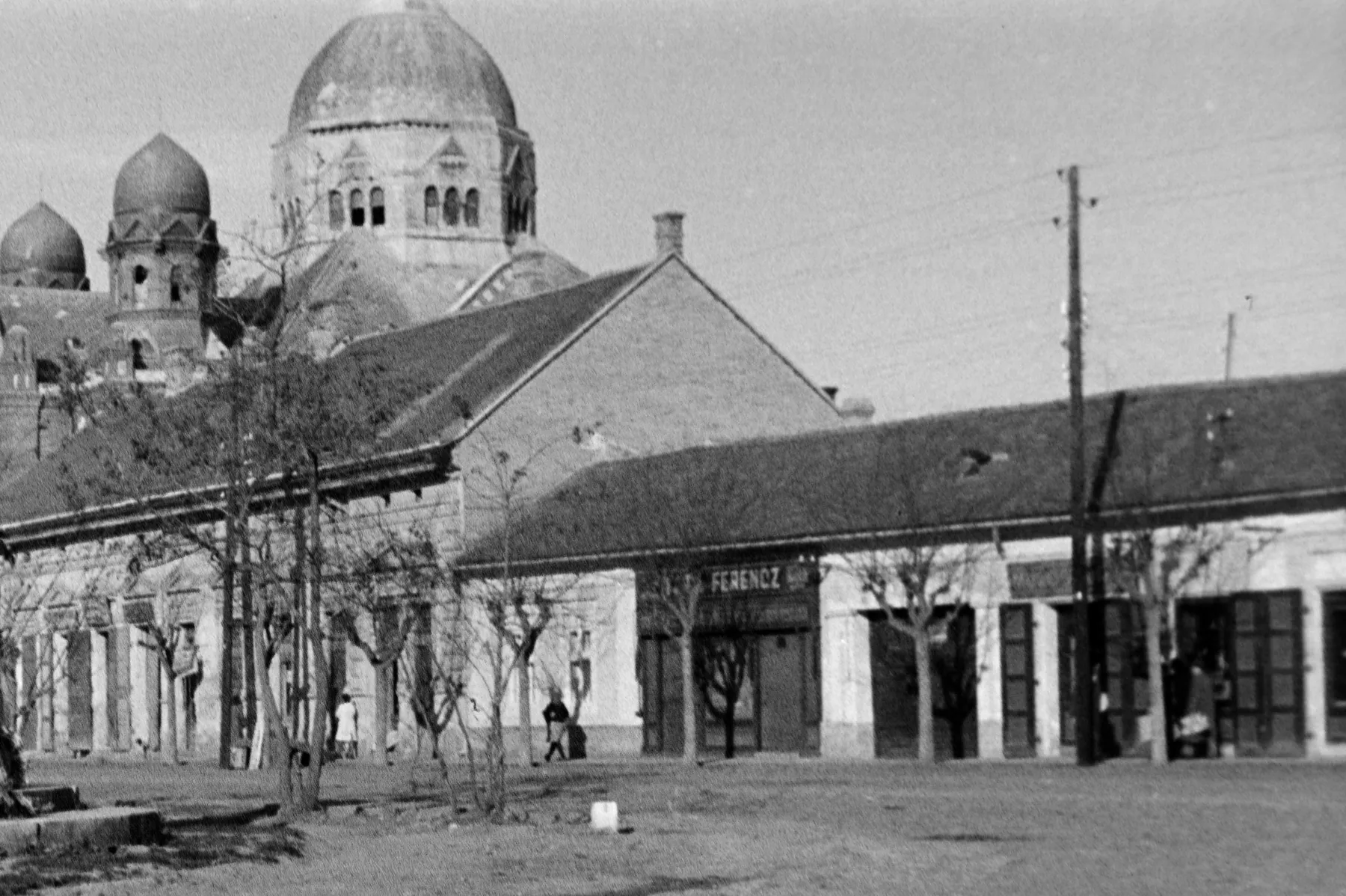
The synagogue came through the Second World War standing, although its dome was slightly damaged and was never repaired. The shrunken Neolog congregation used it after 1945 but could not pay for major works, and by the early 1960s the timber structure of the dome had become dangerous. The town declared the building life-threatening and closed it. Restoration was put at more than a million forints, which neither local nor national Jewish bodies could raise. Proposals to reuse it as a library or concert hall were turned down by the town's Communist leadership, which pressed for demolition. Local party and council leaders then agreed with the National Representation of Hungarian Israelites (MIOK) that the building would go, and MIOK sold it for demolition to the Kossuth agricultural cooperative for 500,000 forints, without consulting Makó's Jews and despite their protests. In the spring of 1965 the Communists demolished the synagogue. The cooperative reused the material, among other things, to build stables.
El destino de la comunidad
After the Nazi German occupation of Hungary in March 1944, Makó's 1,729 Jews were marked, stripped of their property and, between 17 and 23 May, forced into a ghetto in the old Jewish quarter. The Orthodox chief rabbi, Mózes Vorhand, was beaten at the police station and died soon afterwards in Budapest. On 16 June 1944 Hungarian gendarmes emptied the ghetto and sent 1,606 people by rail to Szeged. From the Szeged brickworks three trains left on 25, 27 and 28 June: the first went to Auschwitz-Birkenau, while part of the second and the whole of the third were sent to Strasshof in Austria, where families were put to forced labour and many survived. Rabbi Kecskeméti was deported with his congregation and did not return. Between 1,150 and 1,200 Jews from Makó were killed. Survivors re-established both congregations, but emigration began in 1948, the Orthodox left after 1956, and the rabbinate ended that year. Only 98 Jews lived in Makó in 1970 and about 30 in 1984; after 1985 the last worshippers met in a rented room until the minyan failed.
El lugar hoy
Nothing of the synagogue remains. After the demolition a headquarters for the local committee of the Communist Party was built on the plot; the same building now houses the Makó police headquarters, on Eötvös utca beside Csanád vezér tér. The marble tablets of 1947 naming the Neolog congregation's Holocaust dead were taken to the Old Synagogue in Szeged in 1965 and brought back to Makó in the 1980s. A memorial to the synagogue, the town's Jewish communities and the victims of the Holocaust was unveiled on Csanád vezér tér, close to the site, in 2014. The restored Orthodox synagogue of 1895 stands nearby on Vorhand rabbi tér, and a neighbouring street bears Rabbi Kecskeméti's name.
Nombres destacados
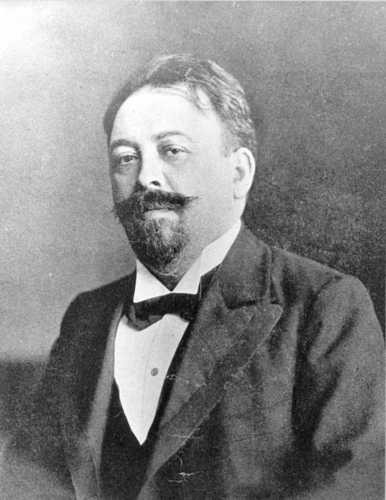
Lipót Baumhorn
1860–1932ArchitectLipót Baumhorn, who trained in the office of Ödön Lechner and designed some 22 synagogues across the Kingdom of Hungary, was commissioned after the Makó Neolog community's 1907 competition. His domed design, built between 1911 and 1914, resembled his synagogue in Eger. He also designed the New Synagogue in nearby Szeged and those of Esztergom, Szolnok, Gyöngyös and Újpest.
Biografía o fuente →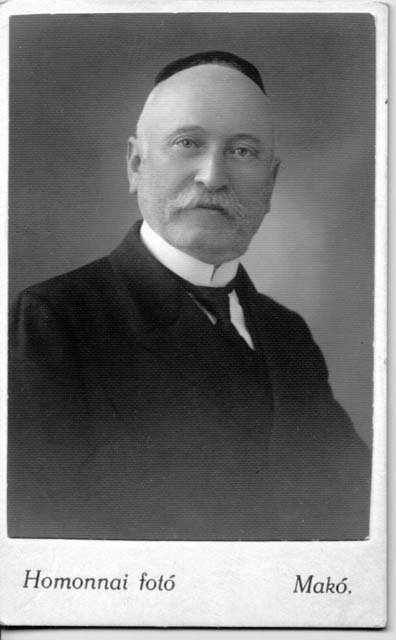
Ármin Kecskeméti
1874–1944Chief Rabbi of the Makó Neolog community, 1898–1944Ármin Kecskeméti, historian of Jewish literature and later lecturer at the University of Szeged, led Makó's Neolog congregation for 46 years. He championed the new synagogue, wrote that the old temple had become too small and unsafe, and consecrated Baumhorn's building in September 1914. He introduced a choir and organ and preached in Hungarian. Deported with his congregation on 16 June 1944, he died that year, at Strasshof or Auschwitz.
Biografía o fuente →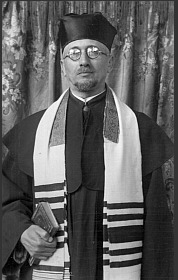
Mór Strausz
1883–1945Cantor of the Neolog communityMór Strausz is recorded as cantor of Makó's Neolog congregation, which worshipped in the Baumhorn synagogue. The Makó Jewish heritage society publishes his portrait in cantorial robes and prayer shawl, captioned as the Neolog cantor, with the dates 1883–1945; the circumstances of his death are not given in the sources consulted.
Biografía o fuente →Sámuel Dózsa
UnknownPresident of the Makó Neolog communityDr Sámuel Dózsa was president of the Neolog community when the synagogue was consecrated in September 1914; local historian Zsolt Urbancsok records that the building was inaugurated under his presidency. His wife led the congregation's charitable Israelite Women's Association, which supported poor families, needy pupils and the marriage of poor girls.
Biografía o fuente →Ármin Weisz
UnknownChief cantorChief cantor Ármin Weisz directed the music of the new synagogue. A mixed choir was organised on 14 February 1914, several months before the consecration, and an eighteen-member women's choir then sang under his direction, accompanied by the organ placed behind the ark. The choir and organ were among the Neolog reforms that set the building apart from Makó's Orthodox synagogue.
Biografía o fuente →Sándor Hetényi
UnknownPresident of the Neolog community, 1944Sándor Hetényi was president of the Neolog congregation in 1944. Instead of setting up a Jewish Council, Makó's mayor Bertalan Bécsy appointed the presidents of the two congregations, Hetényi for the Neolog and Fülöp Paskesz for the Orthodox, as administrative heads of the ghetto, weeks before its inhabitants were assembled at the Neolog synagogue and deported on 16 June 1944.
Biografía o fuente →Manó Szemere (Schwarz)
UnknownPresident of the Neolog community after 1945Manó Szemere, born Schwarz, led the Neolog congregation of survivors who returned to worship in the synagogue after the war. Under his presidency in 1947 the community had the names of its Holocaust dead carved on marble tablets set up in the synagogue's vestibule; after the demolition of 1965 they were taken to Szeged and later brought back to Makó.
Biografía o fuente →¿Tiene algo que aportar?
Fotografías, documentos, historias familiares o recuerdos de esta sinagoga y su comunidad ayudan a mantener viva su historia.
- A neológ zsinagóga (Makói zsinagógák és temetők)
- A makói neológ közösség
- Az ózsinagóga
- Neológ rabbik
- A makói zsidóságról
- Történet: Makói zsidóság a számok tükrében
- Szépülő Kis-Jeruzsálem: zsidó szakrális terek megújulása Makón
- Nagy elődeink: Dr. Kecskeméti Ármin főrabbi (1874–1944)
- Egyszervolt „kis Jeruzsálem” Makón
- Volt egyszer egy makói zsinagóga
- Tíz éve áll a makói neológ zsinagóga emlékjele
- Makói zsidóság a vészkorszakban
- The Jews of Makó are Deported
- Jewish Life in the City of Makó
- Makó
- Neolog Synagogue in Makó, Hungary – Postcard, 1926 (Obj. ID 43804)
- Makói neológ zsinagóga
- Makó Neological Synagogue
- Makói Neológ zsinagóga külső (F09.08); tóraszekrénye (F09.07); belső bejárata (F09.06)
- Fortepan photo 186899: Makó, Csanád vezér tér, 1945
- Makói Rendőrkapitányság (OpenStreetMap way 242562781)
- Kecskeméti Ármin
- Makó – Vallási vezetők
- Lipót Baumhorn
Share a memory or thought
No comments yet. Be the first to add one.