


Historia Marcali Synagogue
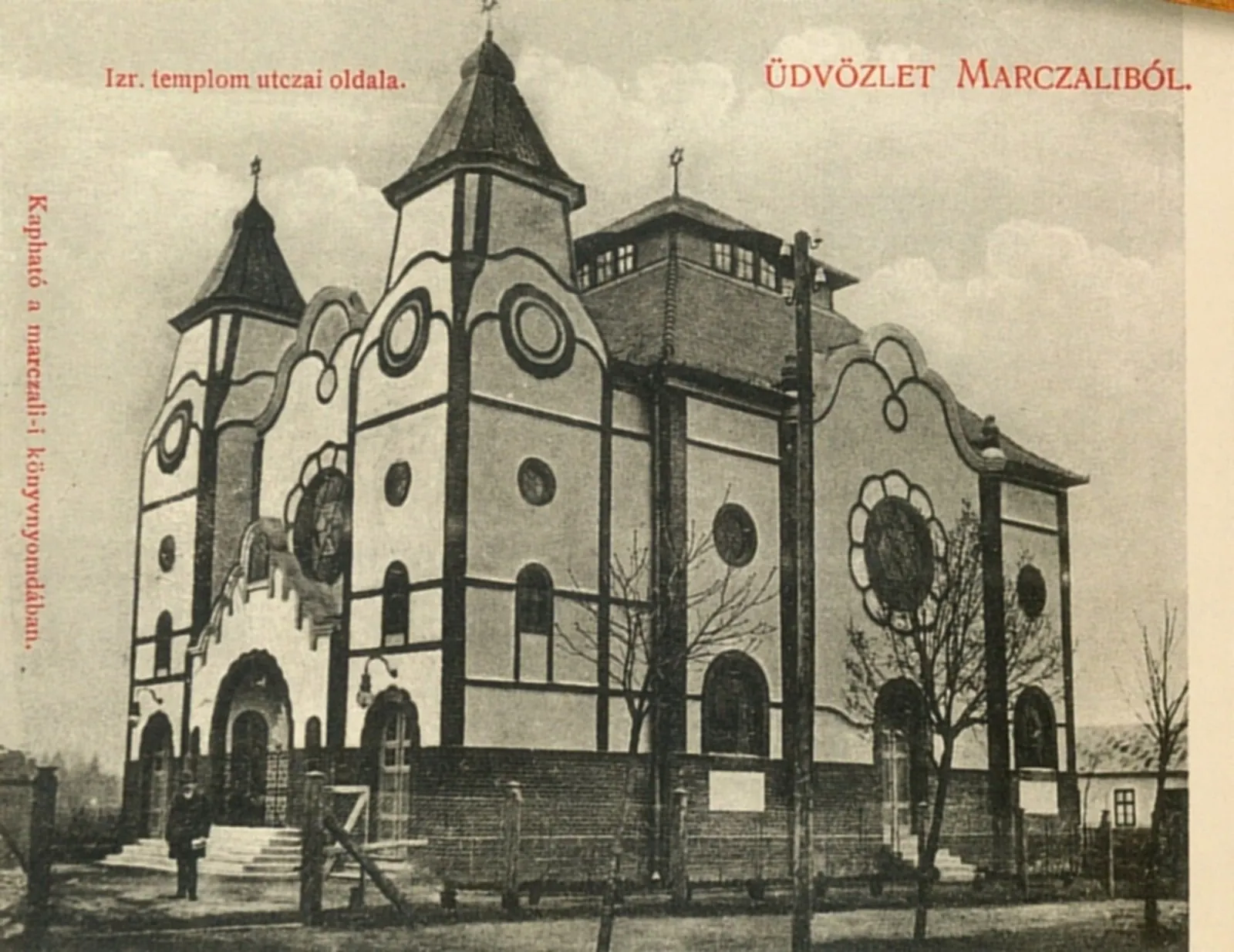
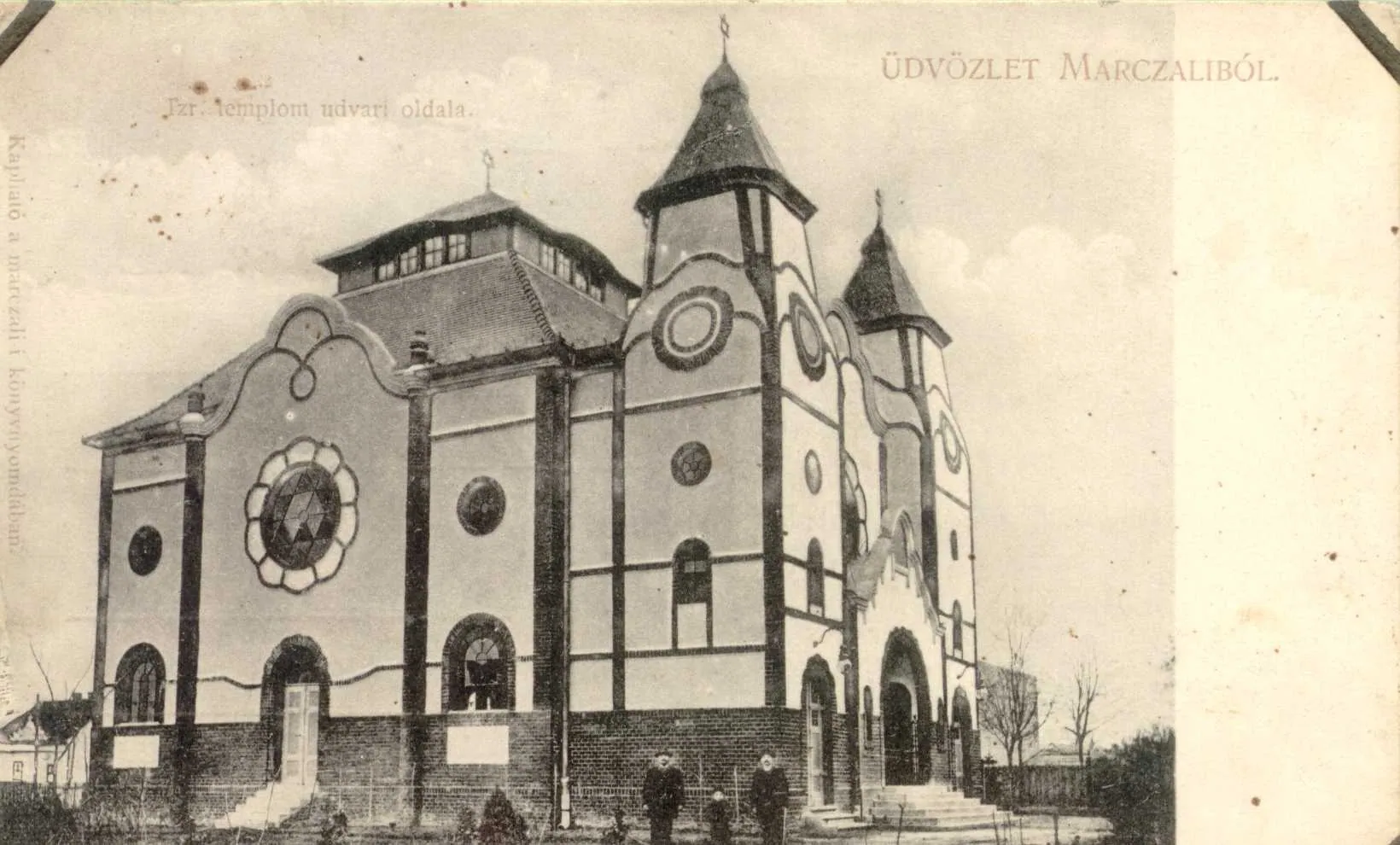
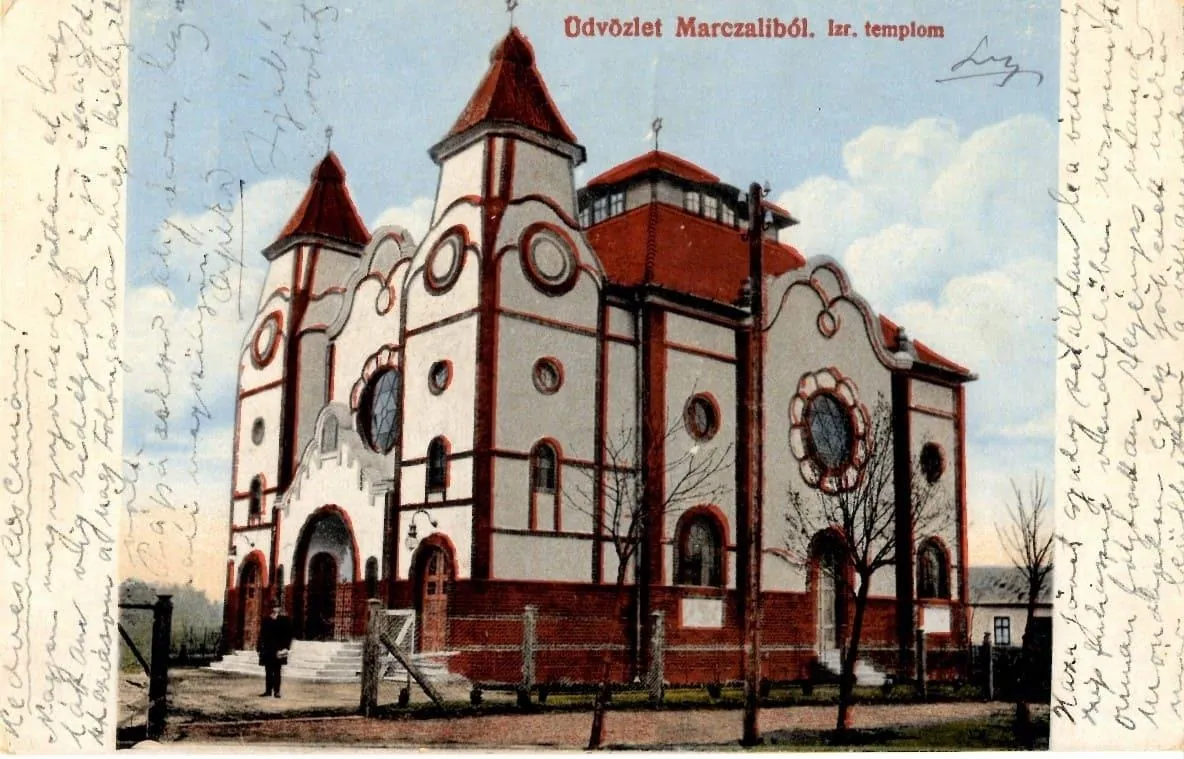
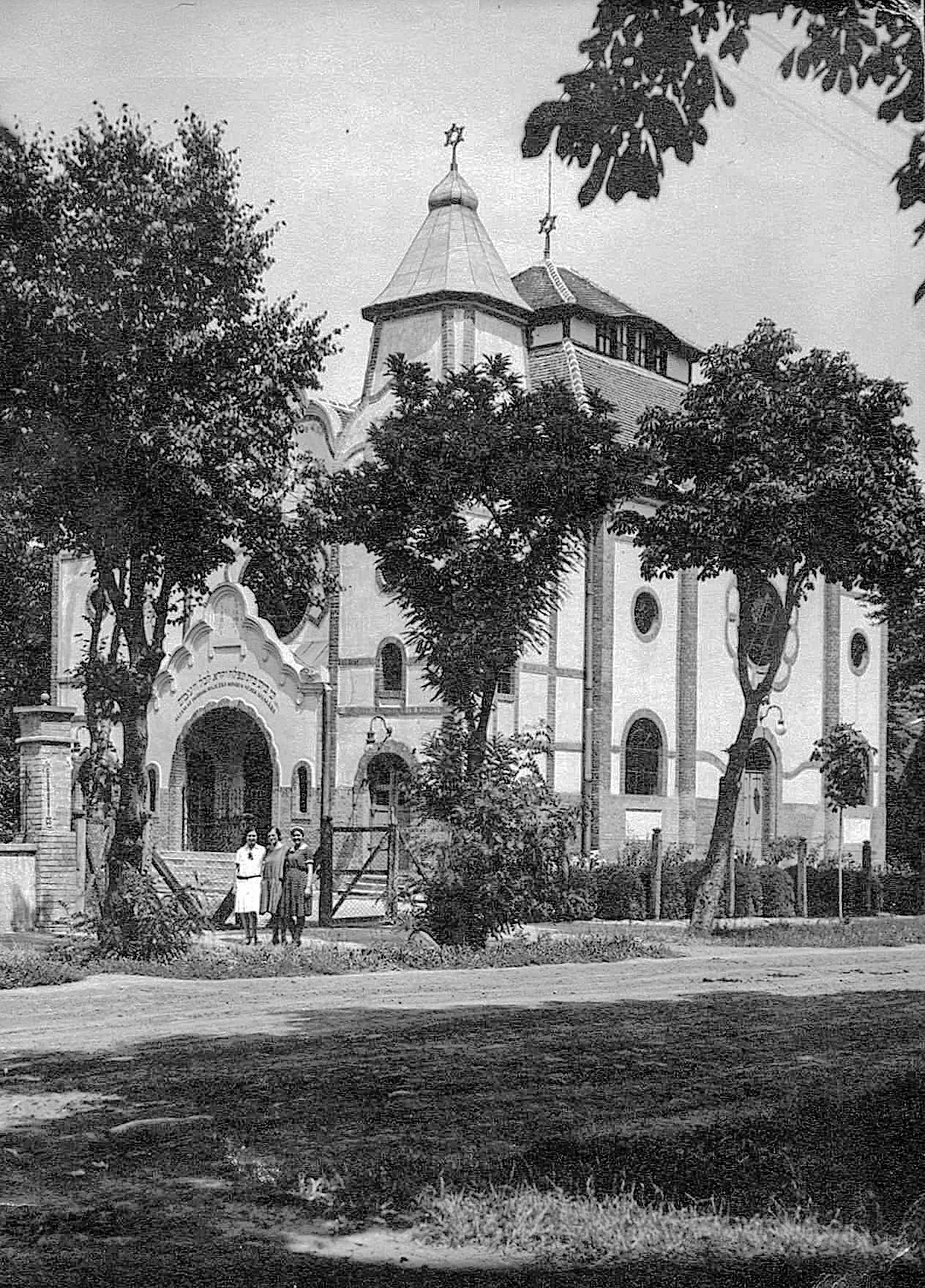
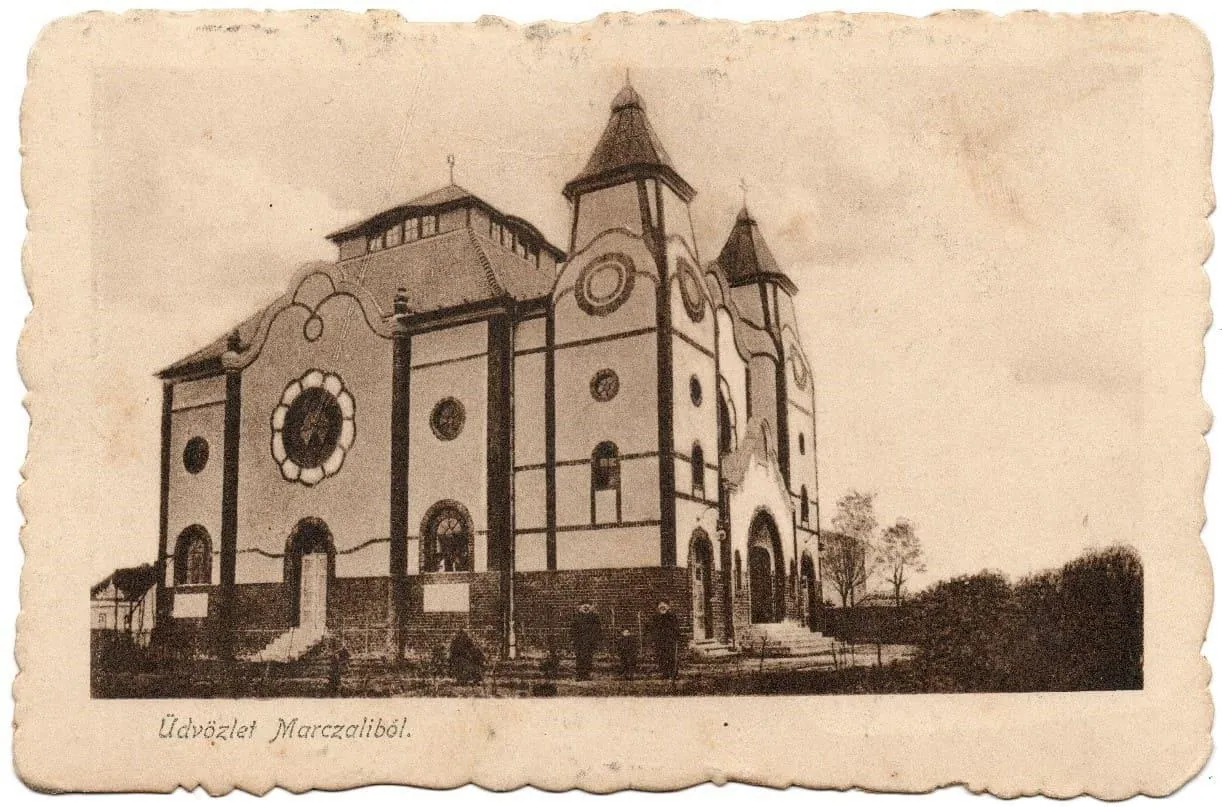
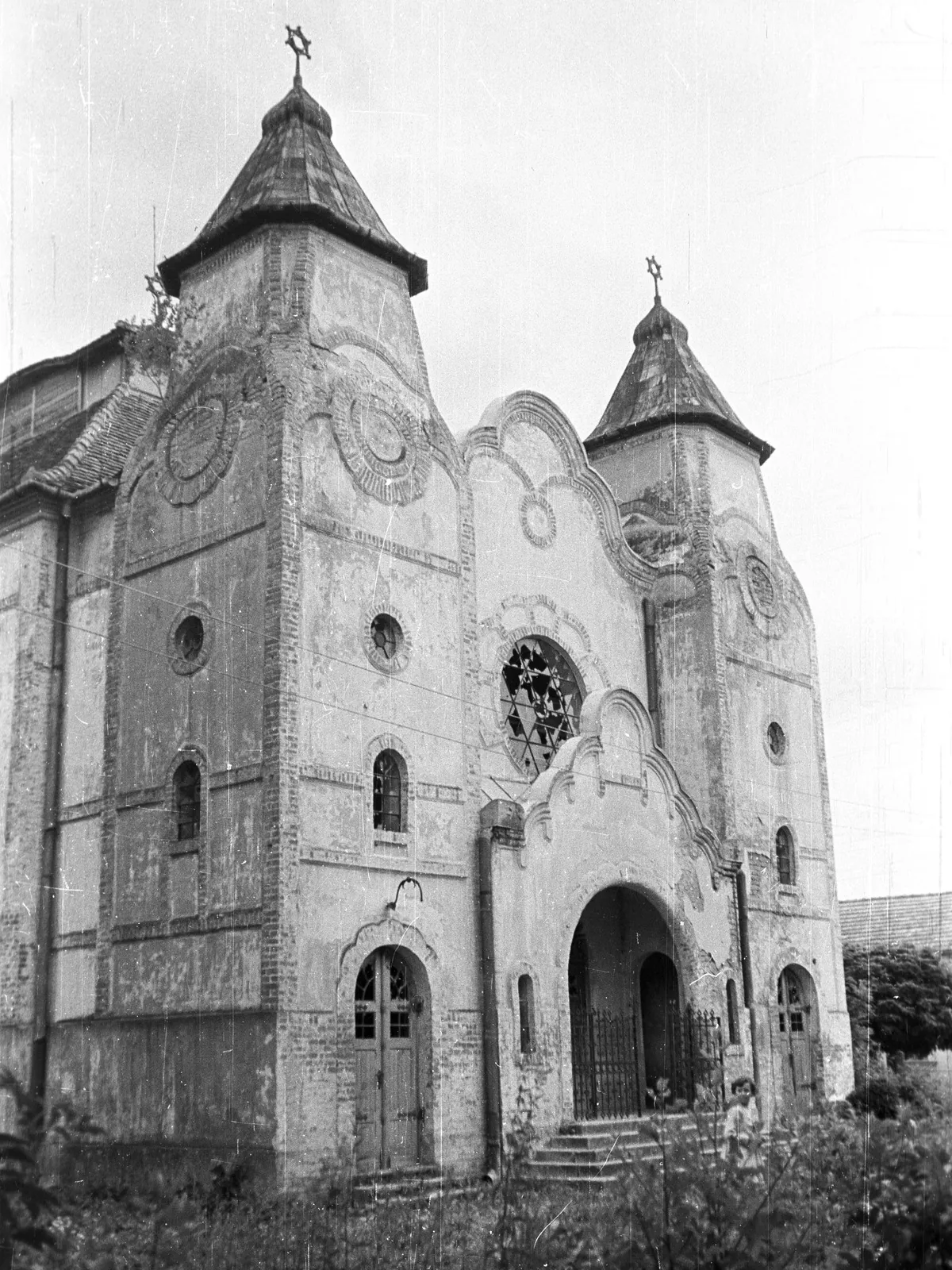
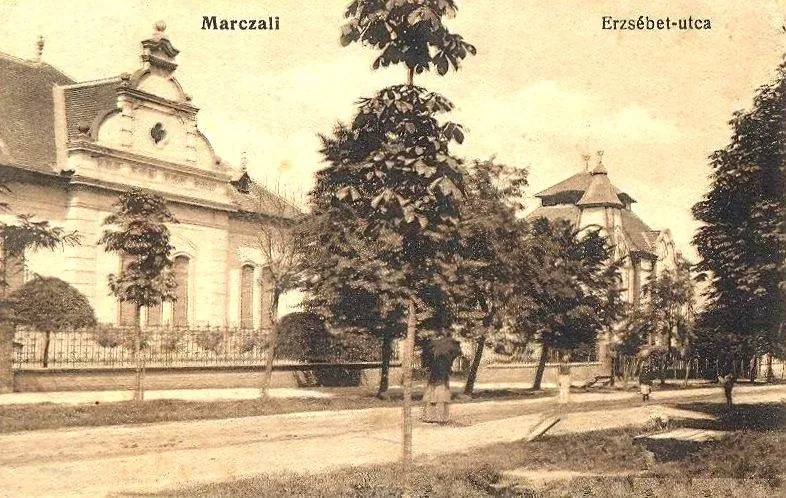
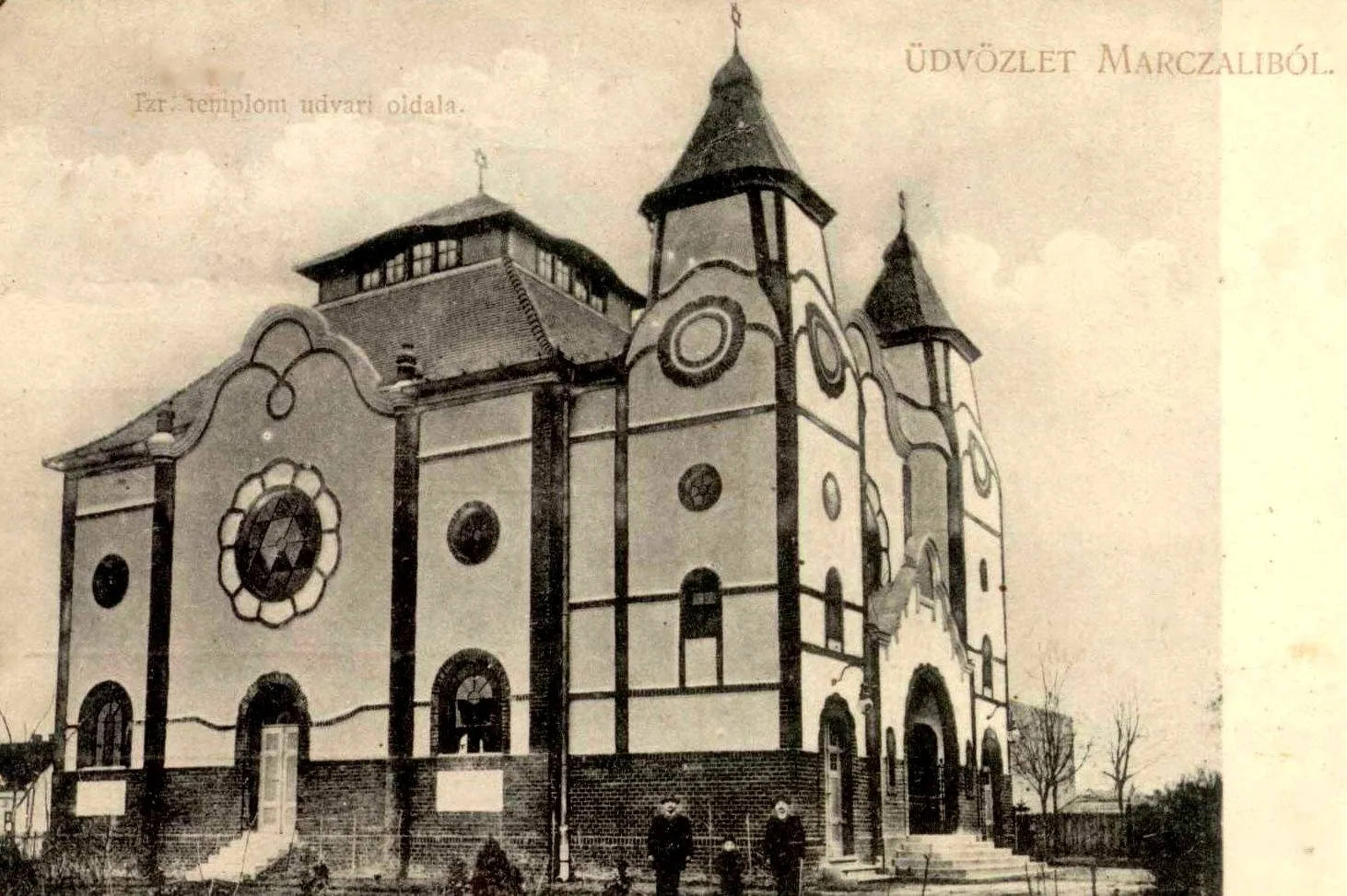
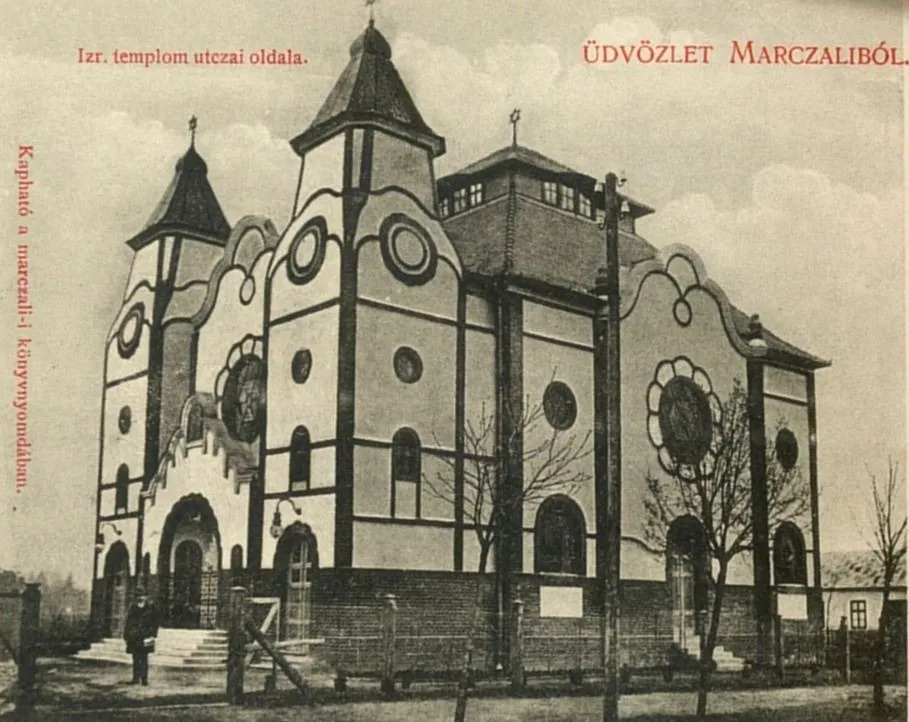
The synagogue stood on Erzsébet Street (first called Vasút, or Railway, Street; today Petőfi Sándor utca), the road that linked the centre of Marcali, a district seat in Somogy County, with the railway station opened in 1893. It replaced a hall synagogue built around 1840 beside the Kátyó stream, which flooded repeatedly and was finally closed by the county administration as damp and unsafe. The Neolog community began collecting for a new building in 1896, proposing a loan of 15,000 forints in a thousand 15-forint bonds. Construction started on 5 September 1905, was interrupted by a builders' strike in June 1906, and ended with the consecration on 28 October 1906 by Rabbi Sándor Büchler of Keszthely. Designed by the Budapest architects Marcell Komor and Dezső Jakab, it was one of the few synagogues in the Hungarian Secession style, and the local newspaper judged that it had scarcely an equal in the county. Services continued until the deportation of Marcali's Jews in 1944, after which the building was used to store the deportees' belongings and was looted. The few survivors could not maintain it. In 1962 the Communist-era council of Marcali bought it for 140,000 forints; by April 1963 most of it had been pulled down, and a grammar school opened on the site in September 1964.
Where it stood for 57 years
Historic: Erzsébet utca (earlier Vasút utca), Marcali; the rabbi's house on the same plot was Erzsébet utca 16. Today: Petőfi Sándor utca 16, 8700 Marcali (Marcali Berzsenyi Dániel Gimnázium).
Otwórz większą mapę →Społeczność żydowska
The first Jew is recorded in Marcali in 1725, and a Catholic church register of 1774 already mentions a prayer room behind a leased shop on Kanizsai Street. Although fewer than twenty Jews lived in the town in 1840, they were able to build a hall synagogue near the parish church. Mihály Morgenstern, later Marczali, rabbi from 1851 until his death in 1889, founded the Jewish elementary school in 1852, preached in Hungarian from about 1860 and was the father of the historian Henrik Marczali. Under him the community grew from 42 people in 1851 to 350 in 1890. It followed the Neolog (Congress) rite and from 1887 was the mother community of a registry district of some forty villages. There were 413 Jews in 1902, 379 in 1910 and a peak of 478 in 1916, among them merchants, lawyers, doctors and craftsmen who played a large part in the town's economic and civic life. Numbers then fell to 279 in 1930 and 231 in 1941.
Architektura i projekt
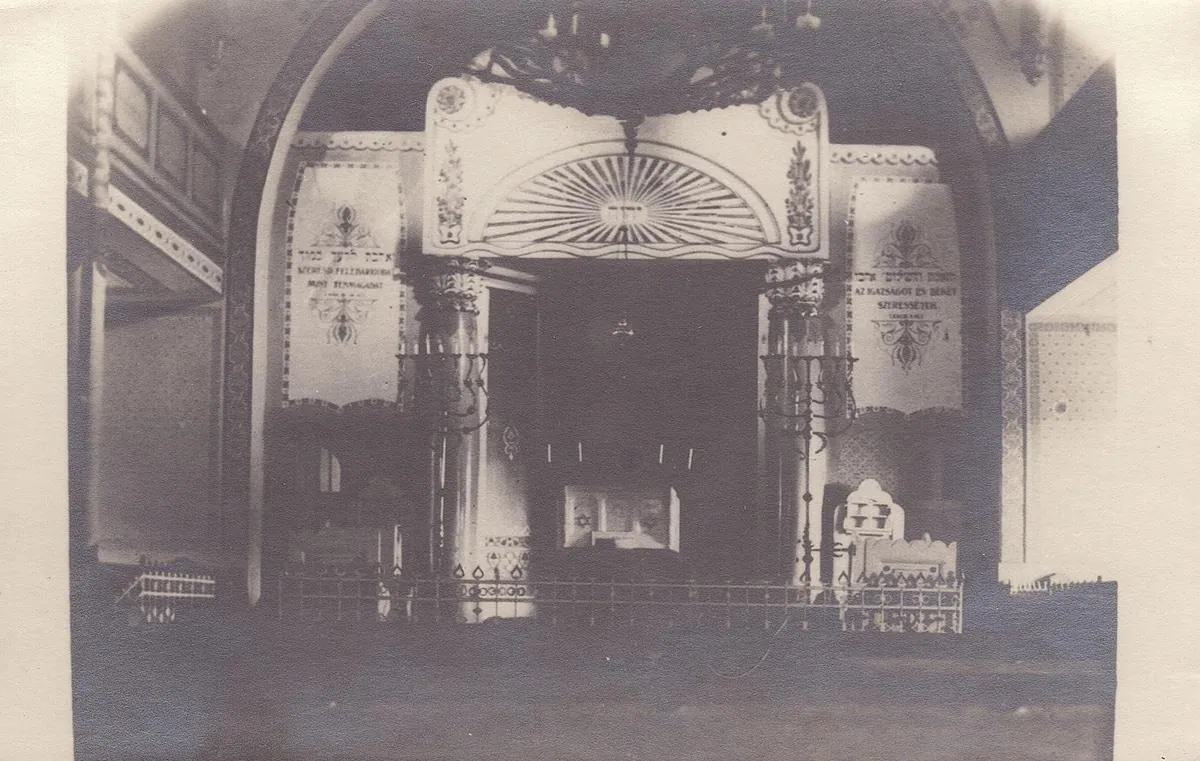
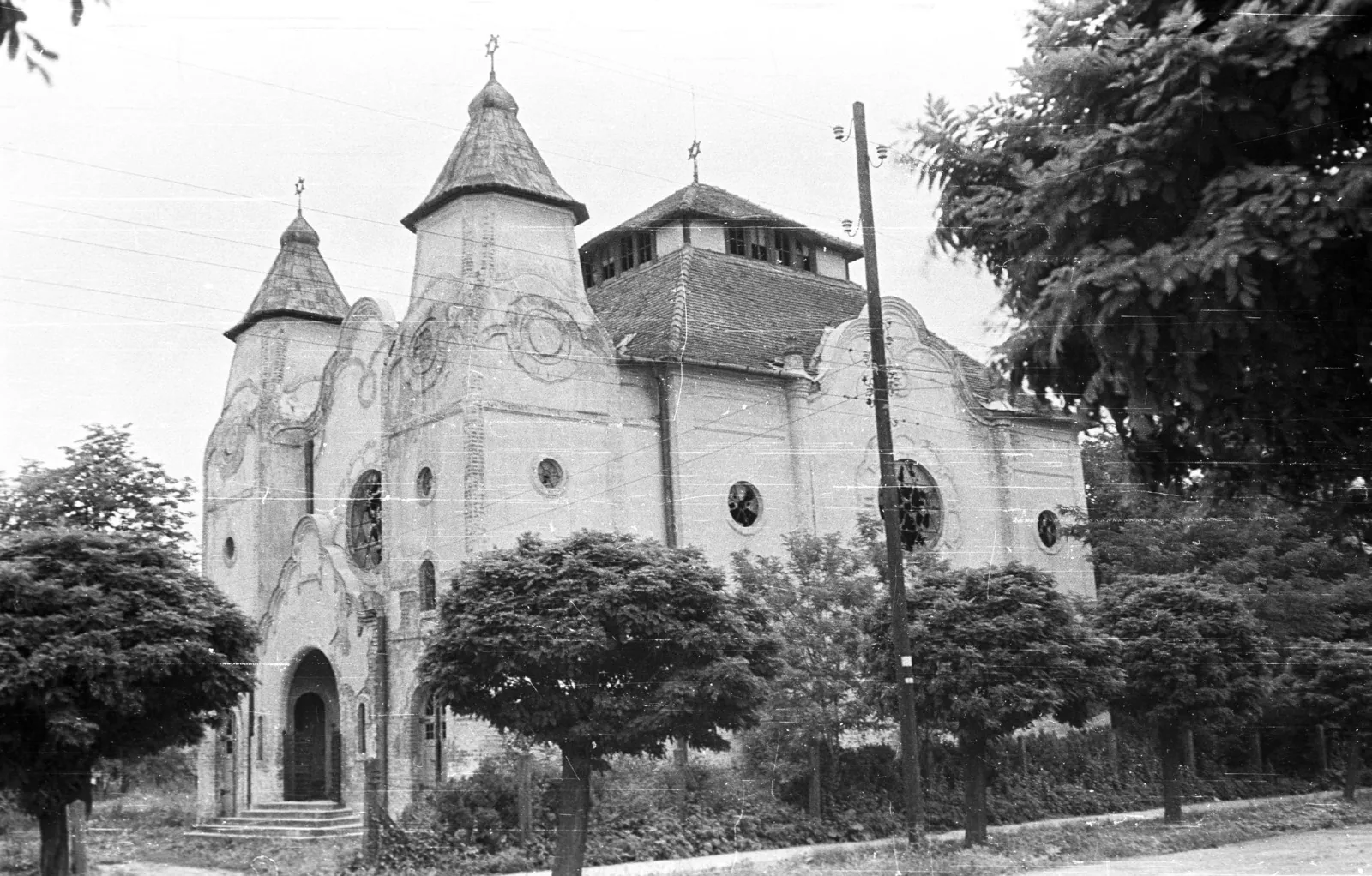
Komor and Jakab, followers of Ödön Lechner, combined Hungarian folk motifs with Art Nouveau forms; the building's model, its 'big brother' in the words of the historian Mihály Huszár, was their Subotica synagogue of 1902. It was centrally planned. Two towers of unequal height with steep pyramidal roofs, each topped by a Star of David, flanked a gabled entrance porch; undulating gables closed each front, and a square, windowed lantern with a tent roof rose over the middle of the hall. Rose windows with Star of David tracery, small round windows and curving plaster bands stood out against pale rendered walls above a brick plinth. Over the door was the verse 'For my house shall be called a house of prayer for all peoples'. Inside, the ark stood in a columned aedicule under a sunburst panel, flanked by painted Hebrew and Hungarian texts ('Love your neighbour as yourself'); there was a women's gallery, and the lighting was by water gas, then a novelty. The Marcali master builder János Francsik built it and the joiner Ambrus Melhardt made the woodwork. It cost about 50,000 crowns, raised from donations.
Życie w synagodze
When the synagogue opened the community had no rabbi: the chief cantor Salamon Weisz acted as deputy rabbi until Dr Manó Enten was elected in July 1910. Enten, who also taught in the town's civic school and spoke out against the war in March 1915, left for Kassa that year, and for almost two decades rabbis from Nagykanizsa, Keszthely and Kaposvár, among them Ernő Winkler and Sándor Büchler, officiated in turn. On 8 September 1924 a tablet naming the sixteen Jewish war dead of the district was unveiled in the synagogue. Adolf Lőwy arrived as a rabbinical student in 1934 and was installed as chief rabbi on 23 October 1938 in the presence of the district's officials and Christian clergy, with cantor József Gelb singing. Lőwy revived communal life: a girls' confirmation with organ and choir in June 1939, a mixed choir re-formed that July by the choirmaster of the Rumbach Street synagogue in Budapest, guest preachers, and Hanukkah celebrations.
Zniszczenie
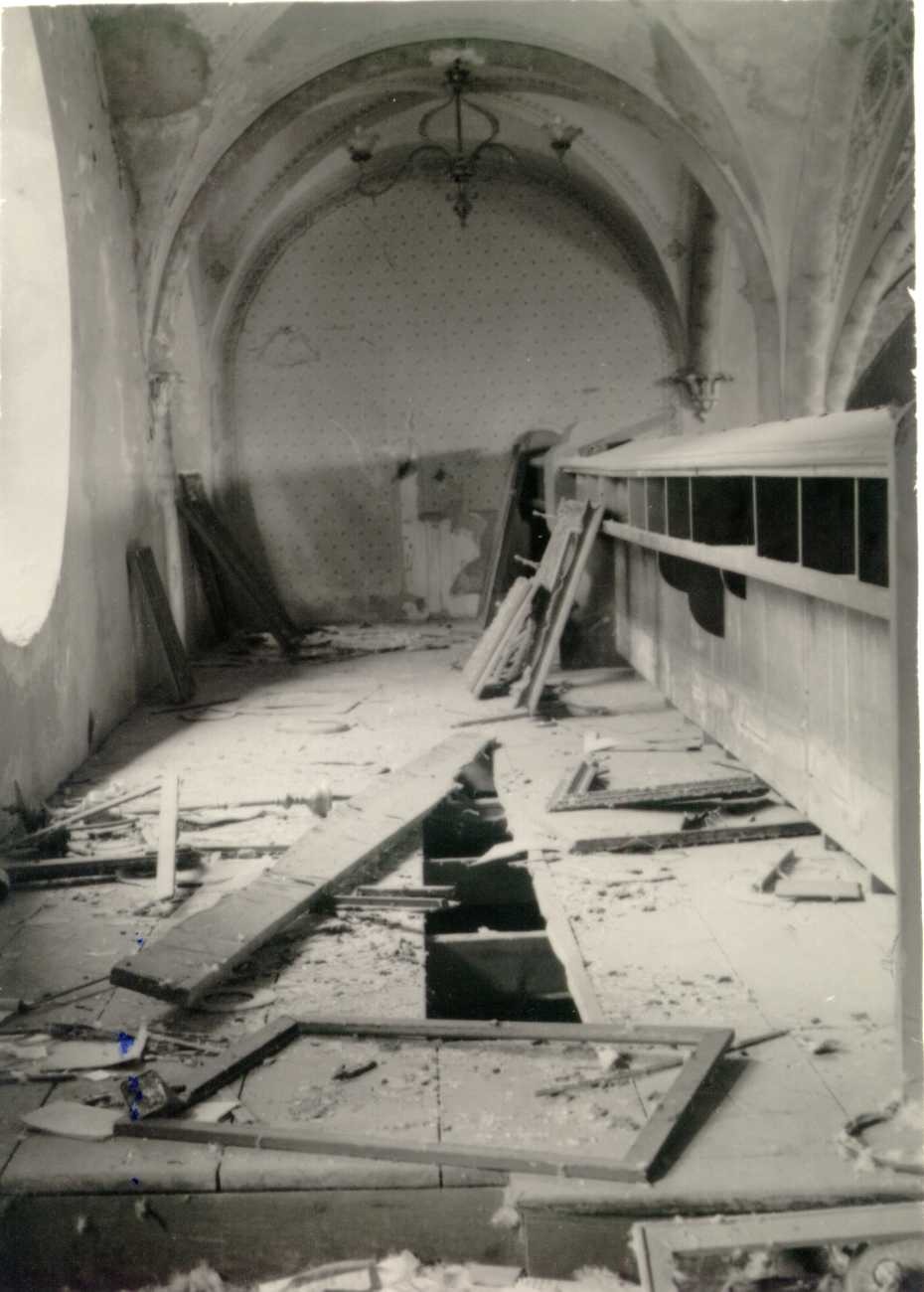
The Communists demolished the Marcali synagogue in 1963, nineteen years after its congregation was deported. In 1944 the empty building was used as a store for the deportees' belongings; it was probably looted that autumn and suffered minor damage during the fighting around Marcali between December 1944 and March 1945. Photographs taken in 1944–45 show the ark forced open and the gallery wrecked. A survey of 1955 found it abandoned but not ruinous, its furnishings damaged yet usable and its windows repeatedly smashed; by then it belonged to the national Jewish organisation. In 1961–62 the plot was chosen for a new twelve-classroom grammar school. The Communist-era council of Marcali bought the synagogue in 1962 with state funds for 140,000 forints, and its minutes of 11 April 1963 record that most of the building had already been taken down. The former Jewish school and neighbouring houses were cleared by that autumn. The salvaged material went into semi-detached houses on Berzsenyi Street.
Los społeczności
A list drawn up in spring 1944 names 229 members of the community living in Marcali. No ghetto was set up in the town. Between 27 and 31 May 1944 the Hungarian authorities took the Jews of Marcali and its district, about 400 people, in cattle wagons to the collection ghetto at Tab; the Marcali community left from the town's station on 31 May. Several people took their own lives at Tab. On 3 July about 1,400 people were moved to the barracks ghetto in Kaposvár, and on 4 July they were deported to Auschwitz, where the transports arrived on 7 July and Nazi German forces murdered about four-fifths of them on arrival. The historian Mihály Huszár counts 255 people deported from Marcali and puts the community's total loss at 199. Rabbi Adolf Lőwy died at Gunskirchen on 20 April 1945; his wife and three-year-old son were killed in 1944. Thirty-four survivors re-formed the community in 1945; by 1951 only 21 Jews remained and it was classed as a scattered community.
Miejsce dzisiaj
The Marcali Berzsenyi Dániel Gimnázium at Petőfi Sándor utca 16, a standard-plan two-storey school of twelve classrooms opened in September 1964, covers the synagogue plot and the neighbouring plots cleared with it. Nothing of the synagogue survives on the site. Six pieces of its wooden furnishings, saved at the time of the demolition by József Mandelbaum, who lived opposite, were given to the Marcali Museum in 2014. The tablet to the Jewish dead of the First World War disappeared when the building was pulled down. A memorial plaque was placed on the school wall in 2012.
Ważne postacie

Marcell Komor
1868–1944ArchitectThe Budapest architect Marcell Komor designed the Marcali synagogue with his partner Dezső Jakab; it was built in 1905–06. A follower of Ödön Lechner, Komor worked in the Hungarian Secession style, and the Marcali building was modelled on the partners' much larger Subotica synagogue of 1902. He died on 29 November 1944 at Sopronkeresztúr (Deutschkreutz), a victim of the Holocaust.
Biografia lub źródło →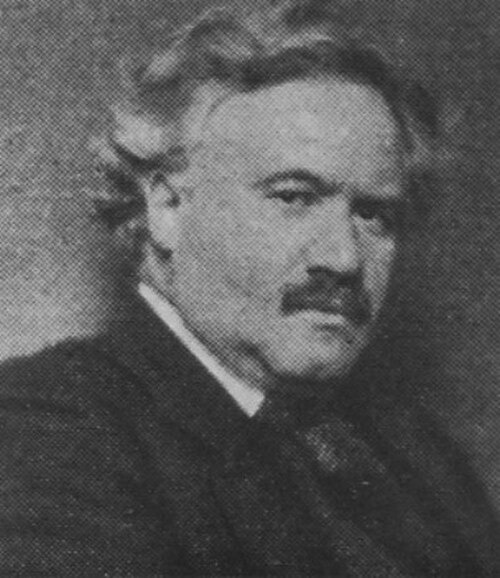
Dezső Jakab
1864–1932ArchitectDezső Jakab was co-designer of the Marcali synagogue with Marcell Komor, with whom he worked from 1897 and shared a Budapest office until 1923. Together they designed the Subotica synagogue and town hall and the Palace of Culture in Marosvásárhely; the Marcali synagogue of 1905–06 was one of their smaller works in the Hungarian Secession style.
Biografia lub źródło →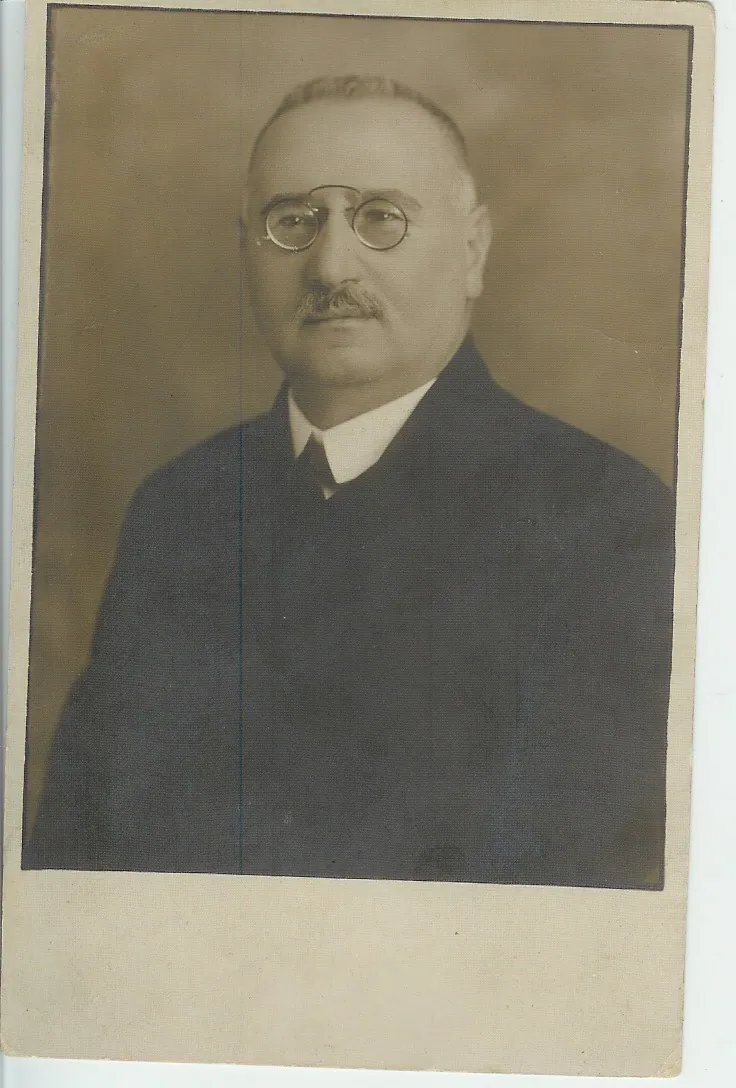
Sándor Büchler
1869/1870–1944Rabbi of Keszthely; consecrated the synagogueDr Sándor Büchler, rabbi of Keszthely from 1897 and a leading historian of Hungarian Jewry, consecrated the Marcali synagogue on 28 October 1906. During the long vacancy of the Marcali rabbinate between 1915 and 1934 he was one of the neighbouring rabbis who regularly officiated there. He was deported with his own community in 1944 and murdered at Auschwitz.
Biografia lub źródło →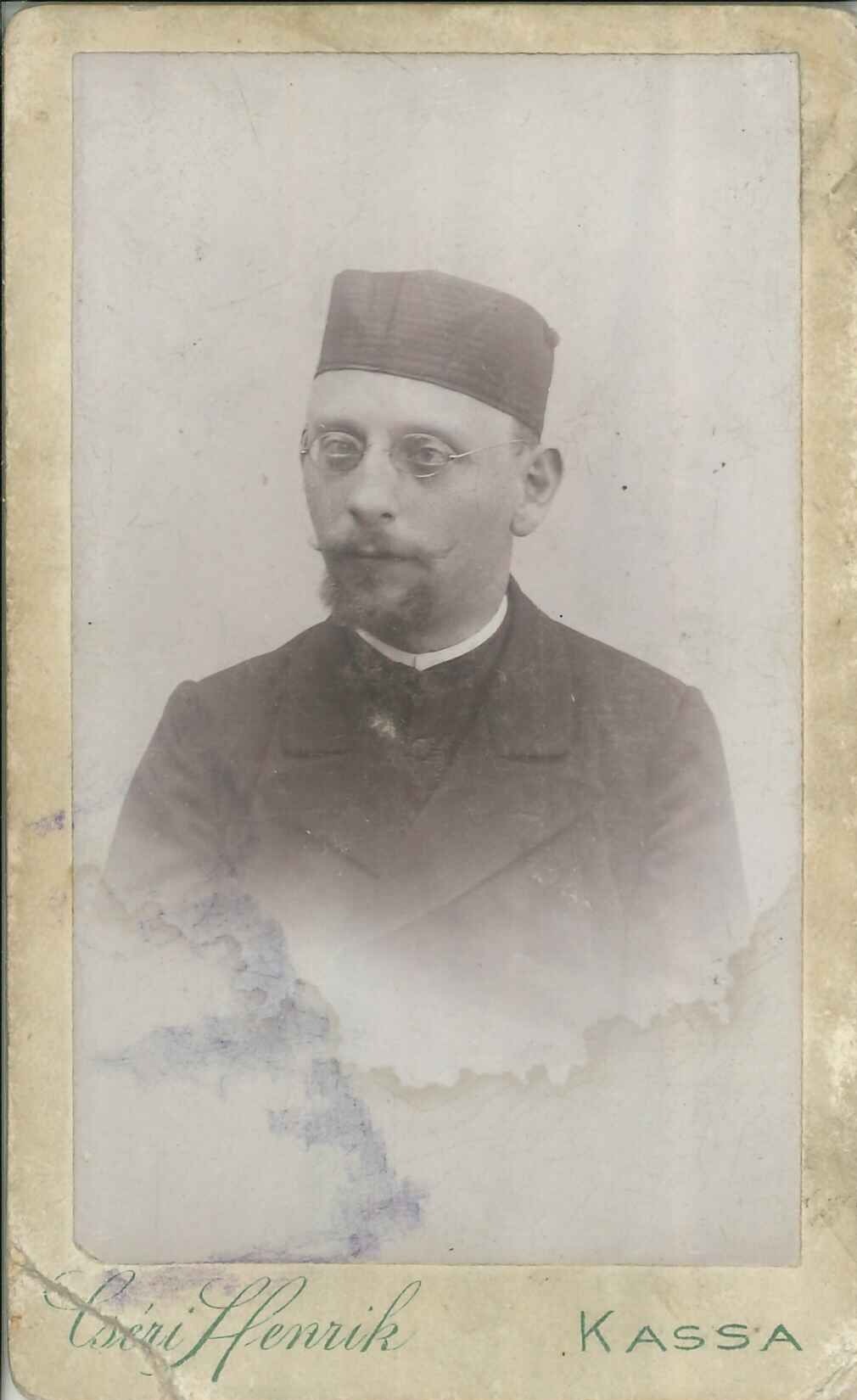
Manó Enten
1886–1944Chief Rabbi of Marcali, 1910–1915Dr Manó Enten, a graduate of the Budapest Rabbinical Seminary, was elected rabbi of Marcali on 10 July 1910, the first rabbi to serve in the new synagogue. He taught in the town's civic school and gave an anti-war address in March 1915 before leaving for Kassa (Košice), where he was chief rabbi until he was deported to Auschwitz with his community in 1944.
Biografia lub źródło →Salamon Weisz
UnknownChief cantor and deputy rabbi, 1896–1910Salamon Weisz, chief cantor in Marcali from the mid-1890s, carried out the rabbi's duties after Rabbi József Klein left in 1896 and was formally named deputy rabbi in 1898. He was therefore the community's religious leader when the new synagogue was built and opened in 1906, and he remained chief cantor after Manó Enten's election in 1910.
Biografia lub źródło →Simon Münz
UnknownCommunity president; chairman of the building committeeSimon Münz (also spelt Müncz), recorded as president of the Marcali Jewish community in 1898, was chairman of the committee that from 1896 raised money for the new synagogue, appealing to other communities to subscribe to a 15,000-forint bond issue. The ten-year collection he led made it possible to begin building in 1905.
Biografia lub źródło →Adolf Lőwy
1912–1945Last Chief Rabbi of Marcali, 1938–1944Born in Tokaj, Dr Adolf Lőwy came to Marcali in 1934 while still a rabbinical student and was installed as chief rabbi in the synagogue on 23 October 1938. He revived its services, choir and youth ceremonies. Deported in 1944 with his wife Katalin and their small son, who were both killed, he was sent on to Buchenwald and died at Gunskirchen in Austria on 20 April 1945.
Biografia lub źródło →Czy masz coś do przekazania?
Zdjęcia, dokumenty, historie rodzinne lub wspomnienia o tej synagodze i jej społeczności pomagają zachować jej historię.
- Marcali zsidók. Egyén és a közösség szerepe a magyar-zsidó történelemben (doctoral dissertation)
- A marcali izraelita hitközség rabbijai 1889 és 1944 között (Rabbis of the Jewish Community of Marcali Between 1889 and 1944)
- Élethelyzetek a Morgenstern/Marczali család levelezéséből (1875–1877)
- „A Ti zsidó lelketekben, a Ti igaz magyar szívetekben…” Dr. Lőwy Adolf, Marcali utolsó főrabbija
- Marcali zsinagóga (postcard, F96.405 / F70.268)
- Marcali zsinagóga frigyszekrénye (photograph, F70.269.1)
- Marcali zsinagóga belső képe: a karzat (photograph, F70.269.2)
- Fortepan photo 32358: Marcali, zsinagóga, 1959 (series 32357–32359)
- New Synagogue in Marcali, Hungary (Obj. ID 35247)
- Marcali zsinagóga
- Marcali Synagogue
- Marcali zsinagóga
- Marcali Berzsenyi Dániel Gimnázium, Petőfi utca 16 (way 992280578)
- Komor Marcell
- Jakab Dezső
- Büchler Sándor
- Büchler Sándor portré (F16.117)
- Enten Manó (XIX_317_F075)
Share a memory or thought
No comments yet. Be the first to add one.